
Li Auto I6 Export Buying Guide for Dealers and Fleets
Compare Li Auto I6 trims, export pricing, shipping and compliance, then choose new or used vehicles with a practical checklist for overseas dealers and fleets.
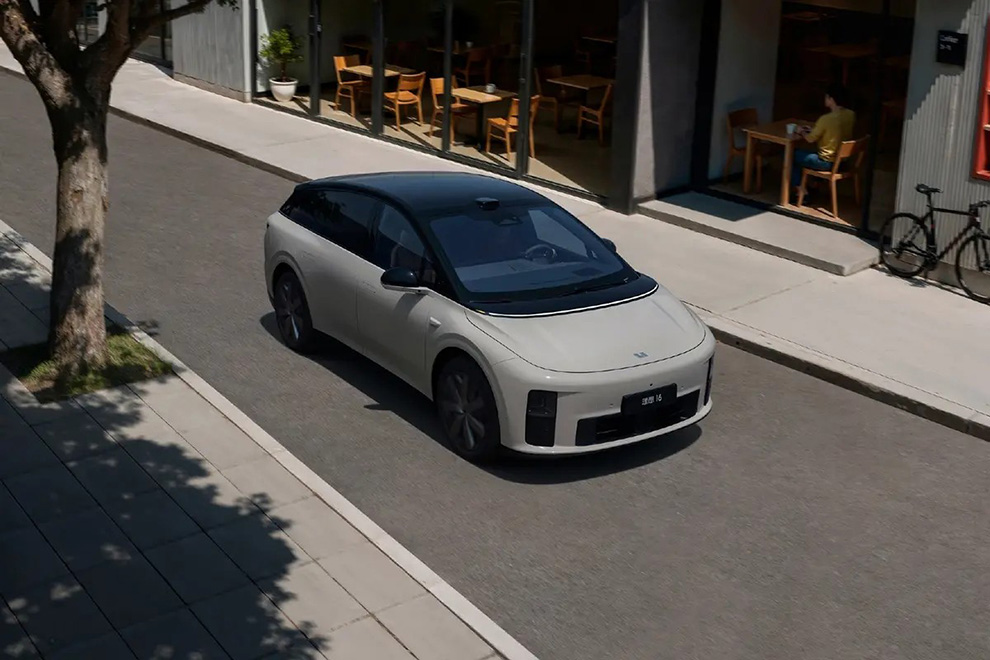
At a glance
- The I6 is a pure-electric family SUV suited to dealers building differentiated imported-EV inventory.
- Export naming includes two-wheel-drive and four-wheel-drive variants, but translated trim labels need reconciliation.
- New units simplify specification matching, while used units demand battery health, repair-history and warranty evidence.
- A defensible export price comparison requires matching trim, battery, condition, Incoterm and currency.
- MOQ, unit price and availability are live listing terms; request a written, destination-specific quotation.
Why the Li Auto I6 matters for export markets
The Li Auto I6 is a battery-electric family SUV positioned between compact premium models and larger three-row crossovers. That middle ground makes it relevant to overseas dealers seeking a practical imported-EV offering rather than a low-end city car or a large, costly flagship. Its strongest export audiences are buyers who value cabin packaging, electric daily running, and contemporary Chinese vehicle technology while accepting that local support may be less mature than for established global brands. The I6 therefore works best in markets with credible charging access and a dealer able to manage imported-EV servicing.
Demand should be assessed at segment level. Dealers often ask whether the I6 can compete with familiar premium electric crossovers on design, software and road presence, even when its home-market price advantage is substantial. Yet export economics can absorb that apparent advantage through freight, insurance, homologation, warranty provisioning and local taxes. The model is most persuasive when the importer can combine a competitive vehicle specification with transparent delivery, inspection and after-sales support rather than selling on brochure specifications alone. This matters especially for smaller-volume trial orders in the destination market.
For fleet buyers, the I6 can suit executive transport, company-car programs and rental operations that need a quiet, modern vehicle with straightforward charging requirements. Dealers should test it against their actual duty cycle: daily mileage, charging access, payload, climate and expected resale. A strong Chinese-market product is not automatically a strong export product; local repair capability, parts planning and software support determine whether the initial purchase becomes a sustainable resale asset. That makes a pre-sale service assessment as important as the vehicle comparison itself before a launch decision is made.
Model range, trims and powertrain variants: how the lineup is structured and how to choose
The export naming needs careful normalization. The I6 listings represented in the market use labels such as 2WD Base Model, 4WD Base Model, Two-Wheel-Drive Standard Type and Four-Wheel-Drive Standard Type. Those are translated trim descriptors, not necessarily evidence of a simple two-version catalogue. Buyers should match the original Chinese trim, motor configuration, battery version and equipment list before treating two advertisements as the same vehicle. Ask for a photograph of the vehicle plate and a written configuration sheet that reconciles every translated label, especially where a seller uses inconsistent terminology.
Two-wheel drive is the logical starting point for buyers focused on efficiency, urban travel and fleet cost, while four-wheel drive adds a traction-oriented choice for regions with poor surfaces, snow, heavier loads or buyers who prioritize all-weather confidence. The trade-off should not be assumed from the badge alone: confirm motor output, range rating, tyre specification and any drive-mode or suspension differences in the live unit. Those checks can change the value proposition more than cosmetic trim naming. Your charging pattern and annual route profile should guide the final decision carefully.
There are two range-oriented questions for an overseas buyer: which battery and range variant is fitted, and which homologated figure will be used in the destination market. Chinese-market CLTC figures should not be presented as real-world overseas range or confused with WLTP figures. Ask for the battery capacity, rated range, charging architecture and test standard tied to the VIN. If those details are absent, treat the unit as unverified and request them in writing before paying a balance. This prevents an attractive catalogue range from becoming a misleading procurement assumption.
- Normalize translated trim labels.
- Match drive layout to duty cycle.
- Verify battery and charging details.
New vs used Li Auto I6: how export inventory is structured and how buyers choose
New and used I6 vehicles can serve different export strategies. A new example is generally easier to reconcile by factory specification, condition and warranty, making it attractive for fleet launches, demonstration fleets and dealers seeking consistent presentation. A used example can make sense where the buyer needs a specific configuration at a lower acquisition commitment, provided that battery condition, repair history and remaining warranty are fully documented. Neither status is a substitute for unit-level inspection. The export offer should identify condition, production date, ownership and service history on every quotation.
For a used BEV, the inspection should go beyond paint, interior condition and odometer reading. Request battery state-of-health reporting, evidence of regular charging, any accident or flood repair, replacement parts history and confirmation that high-voltage faults have not been concealed. Review software versions, warranty transfer and recall completion. If the seller cannot provide battery diagnostics or service records, price the uncertainty into the decision and avoid treating the vehicle as a fleet-ready demonstrator. A clean title is helpful, but it does not replace technical evidence about how the pack has been used.
For a new I6, verify that the agreed battery, drivetrain, paint, interior and equipment specification is the one physically delivered. Check production timing, transport instructions, warranty start rules, accessory inclusion and whether the vehicle is intended for China or export. A new designation can still carry a shipping or PDI-related condition record, so inspect the actual unit and document handover. The safest buyer turns model choice into a signed specification, inspection and payment sequence rather than relying on a listing photograph and does not release funds before the agreed inspection and export handover.
- New: verify specification consistency.
- Used: inspect battery and repair history.
- Document every handover.
How export pricing works: the factors behind a live listing price, and how to read one
Export pricing is not a fixed market value. The vehicle amount changes with model year, trim, 2WD or 4WD layout, battery specification, mileage, condition, production date, options and whether the unit is new or used. The currency rate applied by the seller also matters, as do payment timing and the volume being purchased. A buyer comparing two advertisements should first confirm that their drivetrain and condition are equivalent; otherwise the visible amounts are not comparable. Request the quotation on the same Incoterm and currency so freight, insurance, duties and tax treatment remain visible.
Read a live listing as the starting point of a landed-cost calculation, not necessarily the amount payable on delivery. Depending on the Incoterm, the seller may quote the vehicle alone, vehicle plus export handling, cost and insurance to a named port, or a delivered service. International freight, marine insurance, terminal handling, documentation, customs brokerage, inland transport, destination taxes and dealer preparation may sit outside the displayed figure. Ask which charges are included, excluded or estimated. This discipline prevents a low vehicle figure from disguising a higher total acquisition and operating commitment.
Exchange-rate movement, container space, sailing schedules, port congestion and the chosen delivery term can all change a quote between inquiries. Payment structure may also affect the final amount, especially when a deposit, documentary release and balance are separated. Use the current ChinaCarDirect I6 inventory as the binding reference for each unit, then request a written quote with validity period and a complete charge schedule. For a fleet purchase, compare offers at the same specification and delivery point rather than ranking them by headline amount alone across shortlisted sellers without unnecessary confusion.
- Compare like-for-like vehicles.
- Confirm Incoterm, currency and validity.
- Separate vehicle and landed costs.
MOQ, ordering and payment: single units vs consolidating a container
Some I6 sellers accept a single-unit order, while others set a minimum quantity or prefer consolidated purchasing. The applicable MOQ is therefore a commercial term of each live listing or written quotation, not something a buyer should infer from the model name. A single vehicle can be sensible for a dealer test, a fleet pilot or an individual buyer, but it may not produce the best freight economics. Before comparing offers, confirm whether the quoted price is for one unit, whether the MOQ applies per trim, and when it is measured clearly.
Ordering mechanics should be documented before payment. A typical sequence is specification approval, deposit, production or stock confirmation, inspection, balance payment and release against agreed shipping documents. Used vehicles may instead move directly into inspection and payment. The contract should state the VIN or unit identifier, trim and options, condition, handover point, inspection standard, refund triggers and who bears storage or demurrage if shipment is delayed. Never rely on a verbal assurance that a deposit has secured a particular vehicle. A refund clause also protects you if inspection findings are not corrected.
Consolidating several units may improve freight utilization and give a dealer stronger inventory control, but it increases pre-shipment cash, storage and model-mix risk. Align production or stock selection, inspection slots, payment deadlines and shipping dates before committing to a group order. If units have different trims, batteries or conditions, present them as separate line items rather than a blended wholesale rate. That preserves traceability for retail pricing, customs records, warranty registration and later resale. It also makes it easier to reconcile shortages, damage claims and the final bill before container release.
- Check the listing's MOQ.
- Use a VIN-linked sales contract.
- Align group orders before balances.
Shipping, homologation and market compliance caveats: LHD/RHD and import rules by country
I6 exports may move by roll-on/roll-off vessel, container or specialist vehicle carrier, depending on origin, destination and unit availability. An EV requires secure stowage, correct isolation and handling instructions, while the battery must be declared and documented under the carrier's dangerous-goods rules. Shipping preparation should cover keys, charging equipment, tyre condition, underbody protection and fluid levels. The freight plan should also identify any restriction on battery state of charge and define who bears delay, damage and inspection costs. Confirm these responsibilities at both the loading port and final destination before dispatch.
Steering configuration is a destination-specific purchase decision, not a cosmetic preference. Left-hand-drive and right-hand-drive availability must be confirmed for the exact vehicle, and some Chinese export units may be supplied in only one configuration. Import rules can also require local type approval, emissions or safety compliance, vehicle identification, customs documentation and registration. Buyers should appoint an importer or broker to map requirements before paying, rather than assuming that a Chinese-market I6 can simply be driven or registered in the destination country. Rules differ by country: right-hand-drive markets include the UK, Japan, Australia and New Zealand, while many continental European and Gulf markets use left-hand drive. Confirm each destination's current requirements in writing.
EV-specific market checks include charging connector and voltage compatibility, onboard software language, driver-assistance feature availability, cybersecurity or data rules, recall completion and local warranty support. Do not assume every China-market function will be enabled, localized or legally approved overseas. The importer should also establish battery transport treatment, high-voltage repair training and emergency procedures. A landed vehicle without charger access, service capability or compliant software is not a complete market solution, even if the unit itself performs well. The homologation file and handover records should therefore be treated as part of the vehicle.
- Confirm steering configuration early.
- Appoint a local compliance importer.
- Plan charging and high-voltage support.
Who should buy the I6 — and who should pick a different vehicle
The I6 best fits an overseas buyer seeking a modern, family-oriented BEV SUV and a dealer prepared to build a local service proposition around Chinese vehicles. It is particularly relevant for company-car pilots, executive fleets, premium rental programs and importers targeting customers who value cabin comfort, electrified commuting and a distinctive alternative to global-brand products. The vehicle also suits buyers who can charge predictably and manage a planned import schedule rather than expecting immediate registration and broad workshop support. A structured parts and warranty plan should be in place from day one.
Choose a different vehicle if local homologation, right-hand-drive supply or high-voltage service cannot be secured. Very large urban fleets may prioritize low purchase cost, rapid parts delivery and standardized telematics over the I6's comfort and technology positioning. Buyers needing extensive towing, severe off-road ability, seven-seat capacity, extreme cold-weather range certainty or a long-established residual-value network may also be better served by another body style or powertrain. These are use-case constraints, not blanket judgments about vehicle quality. A locally certified hybrid can also reduce charging and range-planning complexity for cross-border users.
A practical decision matrix should rank homologation and aftersales first, then charging and duty-cycle fit, then total landed cost, then trim preference and appearance. Test the chosen configuration with a local charging provider, obtain written parts commitments and model warranty workflow before placing a fleet order. For an individual buyer, the same logic applies: compare expected annual cost, repair access and resale prospects, not only the vehicle's Chinese-market specification. A vehicle that is wrong for the market can lose value even when its equipment list looks strong on paper alone.
- Strong for planned BEV fleet pilots.
- Weak where homologation or service fails.
- Alternatives for seven seats or towing.
Main rivals and how the I6 compares
The I6 competes in a crowded upper-mainstream electric SUV segment, so the closest alternative depends on the destination's approved model list and dealer support. Tesla Model Y, XPeng G9 and BYD Sea Lion 07 EV are useful reference points because each offers a battery-electric SUV alternative with a different balance of global recognition, technology focus and aftersales reach. They do not need to match the I6 on price or equipment. The useful question is which rival's charging, software, warranty and service model best fits the importing market and customer base.
Against Tesla Model Y, the I6 can appeal to buyers seeking a more family-car-oriented Chinese alternative and a different design and technology proposition. Model Y generally carries the advantage of broader global brand recognition, a large used-vehicle market and a more familiar dealer and charging network in many countries. The I6 may be more attractive where its specification is competitive and the importer can solve parts, software and warranty support, but those capabilities must be demonstrated properly during dealer onboarding rather than assumed from the vehicle itself well in advance.
XPeng G9 is a closer technology-led comparison, while BYD Sea Lion 07 EV is another relevant Chinese-brand alternative. The choice often turns on assisted-driving features, cabin interface, charging expectations, software localization, local approvals and the strength of each brand's service network. The I6 can be the stronger fit for a buyer prioritizing family-oriented packaging and a distinctive imported-EV offering, provided its support plan is credible. If proven resale liquidity and ubiquitous service are the priorities, the better rival may be the more established local option. Dealers should test each vehicle locally.
Live Li Auto I6 export inventory
View all listings →Real units currently on ChinaCarDirect with per-unit asking prices and MOQ. Availability updates live from the catalogue.
How to buy a Li Auto I6 from China
-
1
Set the operating brief
State the destination, preferred steering side, route profile, charging access, expected annual mileage and required quantity before comparing vehicles.
-
2
Shortlist equivalent live units
Review the current ChinaCarDirect I6 listings and shortlist comparable 2WD and 4WD vehicles. Record each unit's condition, trim label, battery information and seller.
-
3
Normalize the exact specification
Request the VIN, original trim designation, motor and battery version, range test cycle, dimensions and equipment list. Resolve inconsistencies before treating listings as equivalent.
-
4
Request a destination-specific quotation
Ask for the unit price, MOQ, currency, Incoterm, quote-validity period and a schedule of included and excluded charges. Use the same comparison basis for every seller.
-
5
Inspect and document the vehicle
Complete a pre-purchase inspection covering exterior, interior, mileage, battery condition, software, service history and disclosed repairs. Record discrepancies against the agreed specification.
-
6
Clear compliance and arrange transport
Have the destination importer confirm steering configuration, type approval, registration, charging and software requirements. Then agree the carrier, battery declaration, loading process and insurance coverage.
-
7
Approve payment and handover
Use a written contract covering the identified unit, deposit, balance, inspection, documents, refund triggers and release conditions. Retain handover and transport records for registration and warranty claims.
I6 vs rivals
| Tesla Model Y | A globally familiar battery-electric SUV that can be easier to support where Tesla's dealer and charging network is mature. The I6 offers a more family-oriented Chinese alternative and may suit importers seeking a distinctive product, provided parts, software and warranty support are established locally. |
|---|---|
| XPeng G9 | A direct Chinese-market electric SUV alternative often considered by technology-focused buyers. The I6 is a sensible alternative for fleet and family buyers prioritizing packaging and drivetrain choice rather than selecting solely on software or brand image. |
| BYD Sea Lion 07 EV | Another relevant Chinese-brand electric SUV benchmark with different trim, equipment and dealer arrangements. Compare approved specifications, local service coverage, charging compatibility and resale prospects before choosing between it and the I6. |
Frequently asked questions
How is Li Auto I6 export pricing determined?
The live ChinaCarDirect I6 listings show the seller's current unit price and commercial terms. The figure normally reflects the vehicle and may change with trim, battery version, condition, exchange rate and order structure. Freight, insurance, port charges, customs, inland delivery and taxes may be separate, so request a written landed quotation using a named Incoterm.
What powertrain and range does the Li Auto I6 use?
The I6 is a battery-electric SUV, and export naming identifies both two-wheel-drive and four-wheel-drive versions. Battery capacity, motor output and the applicable range figure depend on the exact configuration and must be checked in the live listing. Treat a Chinese CLTC figure as a test-cycle value, not as guaranteed real-world range in another country.
Should buyers choose a new or used Li Auto I6?
A new I6 is generally easier to match to factory specification, condition and warranty, while a used I6 can offer a different acquisition and residual-value proposition. For used units, request battery state-of-health evidence, service and repair history, mileage, accident checks and warranty transfer. Select the route that gives your importer the strongest documentation and the lowest lifecycle uncertainty.
How does MOQ work for Li Auto I6 orders?
MOQ is a commercial term set by the seller or listing; an eligible unit may be available individually, while a container order may be preferred or required. Check the MOQ shown on each current live listing and confirm it in the written quote before paying. Clarify whether it applies per model, trim, color or shipment, and whether mixed units count toward the minimum.
What affects Li Auto I6 shipping time and cost?
Shipping time and cost depend on origin and destination ports, carrier schedule, container or vehicle-carrier space, port handling, customs clearance and inland delivery. Battery declaration, loading restrictions, weather, congestion and documentation can add time and charges. The selected Incoterm determines which party carries each cost and risk, so compare delivered and port-based quotations carefully.
Can spare parts be ordered with the vehicle?
Spare-parts support is vehicle-specific and should be confirmed before purchase. Ask whether the seller can supply maintenance items, tires, body panels, charging accessories and high-voltage components, and whether parts orders can be matched to the VIN. International buyers should also establish local stock, import lead times, software compatibility and the authorized repair pathway for warranty work.
Is right-hand-drive Li Auto I6 availability confirmed?
Right-hand-drive availability varies by unit and destination, so it must be confirmed for the exact listing rather than inferred from the model name. UK, Japan, Australia and New Zealand buyers normally require a right-hand-drive vehicle, while many other markets use left-hand drive. Steering configuration alone does not replace local type approval, registration, charger compatibility or an importer's compliance check.
How do I order a Li Auto I6 from China?
Start with the live ChinaCarDirect I6 inventory, then send the seller or RFQ desk the destination, steering requirement, trim, quantity, expected condition and delivery term. Ask for the VIN-level specification, inspection evidence, unit price, MOQ, payment schedule and freight scope. Approve those terms in writing before paying a deposit, and retain the inspection, handover and transport documents for registration and warranty claims.
Ready to source the Li Auto I6?
Review the live I6 listings and send your destination, trim, quantity and delivery terms for a unit-specific export quotation.
Request a quote