
Li Auto I8 Export Buying Guide for Overseas Dealers
Plan a Li Auto I8 export purchase with practical guidance on trims, new and used vehicles, pricing, MOQ, shipping, compliance and key rivals for dealers.
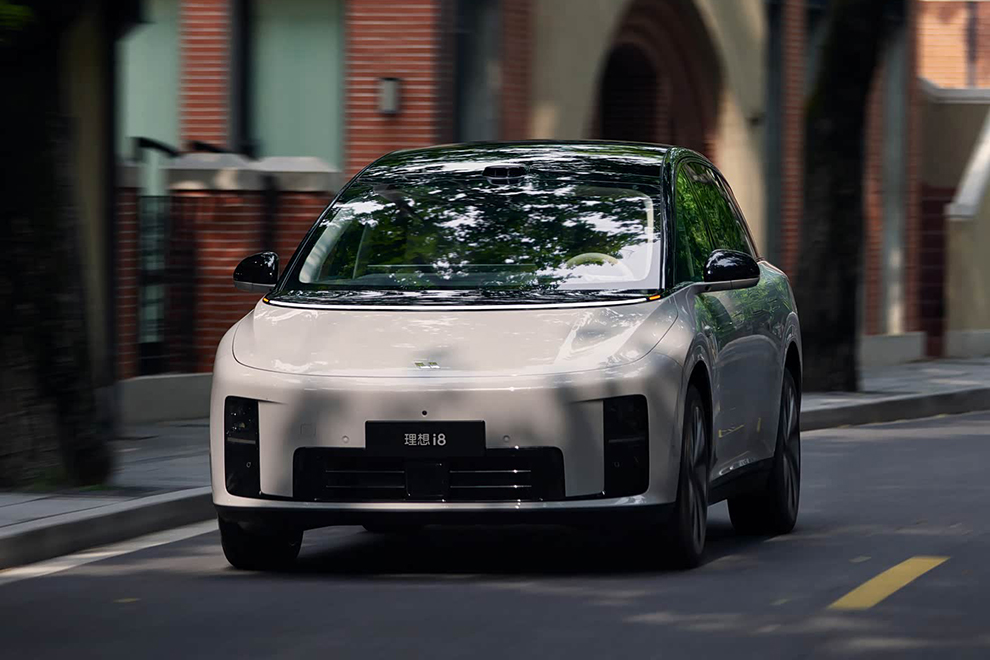
At a glance
- The I8 is a family-focused battery-electric SUV positioned against premium electrified crossovers.
- Single- and dual-motor versions should be selected around range, performance, charging and fleet use.
- New and used I8 purchases require different checks: configuration continuity versus battery health and service history.
- Export quotes vary with the exact vehicle, Incoterm, freight, exchange rates and destination charges.
- A successful import depends on homologation, RHD availability, charging compatibility and local aftersales support.
Why the Li Auto I8 matters for export markets
The Li Auto I8 occupies a distinctive export position: a family-oriented battery-electric SUV from a Chinese marque associated with long-distance mobility solutions. For overseas dealers, it combines electrified powertrain appeal, generous-family-vehicle thinking and Li Auto’s emphasis on comfortable travel. The model can give importers a premium Chinese alternative to established European, Japanese and Korean brands, especially in markets where charging infrastructure and EV incentives are mature, although local service capability remains decisive. Its export case is commercial as well as technical: the vehicle must fit infrastructure, regulations and aftersales expectations.
Global demand for the I8 should not be inferred from China alone. The relevant comparison is with other premium electric family SUVs that overseas buyers can homologate, support and resell. Because range tests and charging systems differ by market, a model that is compelling in China may not offer the same operating economics elsewhere. Buyers should compare usable charging speed, home-charging access, battery warranty coverage, parts logistics and dealer repair capability before treating China-market demand as transferable to their own country. That assessment is more reliable than assuming every Chinese EV has global demand.
The I8 is most persuasive to buyers who understand Chinese vehicles as a channel opportunity rather than a drop-in import. It can suit a dealer building a premium EV range, a fleet specialist focused on executive or family transport, or an importer with the compliance experience to prepare a China-built car correctly. It is less suitable to operators expecting a ready-certified global specification, an extensive established parts network or immediate resale without local homologation. Export value comes from matching the vehicle to a clear customer and service plan in that market.
- Family-focused electric SUV positioning.
- Import case depends on local service support.
- Compare against homologated premium alternatives.
Model range, trims and powertrain variants: how the lineup is structured and how to choose
Li Auto’s I8 is a pure battery-electric SUV, and listings for it may use labels such as “Standard Edition” and “Model Standard Version.” Those names should be matched carefully because a Chinese-market trim label does not necessarily describe every equipment item, option or certification available overseas. For specification decisions, treat the listing name as the starting point, then request the VIN, build sheet, battery version, motor configuration, range rating and equipment list. Do not assume two similarly named vehicles are identical. Trim naming is a request for clarification, not proof of specification equivalence.
Range choice should follow duty-cycle analysis, not headline distance alone. The I8 family is known in single-motor and dual-motor forms, and the selected version can materially change efficiency, performance and charging demand. CLTC range shown on a China-market listing is a laboratory figure under Chinese testing conditions; it is not directly interchangeable with WLTP or EPA figures. Overseas buyers should request the applicable certified figure for their destination, then test whether the on-board range still meets route requirements after accounting for towing, climate, speed and full battery charging time comfortably.
Drivetrain choice is equally practical. A single-motor car may suit fleets prioritising simplicity, efficiency and operating cost, while a dual-motor version can suit buyers who value stronger traction or performance and accept the likely energy, tyre and battery implications. Those are buying principles rather than a substitute for the exact listing. Confirm motor output, driven wheels, battery capacity, onboard charger, charging-port format, heat-management equipment and warranty with the seller before placing a deposit, especially if your charging network differs from China’s. The imported configuration may not match domestic advertising verbatim.
- Verify exact trim label and VIN.
- Compare CLTC data with destination cycles.
- Confirm motor, battery and charging configuration.
New vs used Li Auto I8: how export inventory is structured and buyers choose
Export inventory can include both new and used I8 vehicles, and the two categories should be read as different products rather than simple quality tiers. New examples may offer a warranty path and predictable delivery configuration; used examples may be attractive where a buyer wants a specific battery or motor variant, lower initial acquisition cost, or an established vehicle for immediate refurbishment. The listing should explicitly state condition, ownership history, mileage, service records and whether the battery warranty remains transferable. Do not infer these conditions from a new or used label alone.
For a used I8, the battery is the centre of the technical file. Ask for a state-of-health report, charge-cycle history, evidence of DC fast charging, and confirmation that the high-voltage system has not been repaired after a collision or water incident. Review remaining warranty, recall completion and whether the odometer is consistent with maintenance records. Photos should cover body condition, tyres, windscreen, interior, charging port and underbody, with an independent inspection arranged for any consolidated shipment. Also verify that software, keys and charging accessories are complete before the vehicle leaves its origin.
New inventory is generally the simpler route for a first-time importer because configuration and warranty can be documented more consistently at the factory stage. It does not remove logistics risk: shipping damage, port charges, homologation work and local mark-up can still change the final economics. A used vehicle may be the better choice for a buyer with a specific homologation plan, a technician, or a defined refurbishment programme. Decide from total ownership cost and readiness, not from the condition label alone. A clear handover checklist remains necessary for every purchase.
- Request battery health for used vehicles.
- Verify warranty transfer and service history.
- Compare readiness, not labels alone.
How export pricing works: the factors behind a live listing price, and how to read one
A Li Auto I8 export price should be read as a vehicle-specific transaction quote, not a permanent model price. Year, exact trim, battery and motor version, mileage, condition, ownership history, colour or equipment differences, exchange rates, inland transport, export documentation, freight, insurance and the selected Incoterm all affect the number. The same model name can therefore support materially different totals. Buyers should compare like with like and request a written quotation that identifies the exact unit and every charge included. Ask whether tax, terminal handling and destination charges are separate.
When reading a live listing, distinguish the advertised vehicle amount from the landed cost. Check whether the seller identifies the production year, trim wording, battery version, odometer status, condition, VIN availability and included accessories. A listing that lacks these details should be treated as a starting reference rather than a purchase-ready offer. Confirm the currency, quotation validity, payment status and whether the vehicle is reserved. The live ChinaCarDirect inventory is the binding place for current per-unit pricing and availability. Never rely on a saved search result as a final commitment.
Price comparison should use the same commercial boundary. Compare one quoted ex-vehicle amount with another, or two delivered amounts with another, and state which taxes, ocean freight, insurance, inspection, documentation, port charges and dealer margin are excluded. Exchange rates can move between quotation and settlement, so confirm the currency and validity period. A lower headline number may still be more expensive if it omits battery documentation, inspection, compliant charging hardware or export paperwork required for your destination. This is why an export price guide should explain method, not publish a fixed figure.
MOQ, ordering and payment: single units vs consolidating a container
MOQ for a Li Auto I8 wholesale order depends on the seller, vehicle and shipment plan and must be confirmed for the specific listing. A dealer may be able to purchase a single unit for trial, resale or fleet validation, while a full-container order normally offers better freight economics. The relevant question is not simply how many vehicles can be ordered, but whether the supplier accepts mixed configurations, how units are allocated, and which quantity qualifies for the quoted commercial terms. Ask whether one-unit orders draw from the same production batch.
A sensible ordering process begins with a written specification and commercial sheet, followed by a deposit or agreed commitment documented in writing. Before full payment, require the VIN or production identity, photos, title and export documents, battery and warranty records, and a sales contract stating the Incoterm. Payment milestones should correspond to verifiable events: document approval, vehicle readiness, inspection and shipment. For a first order, one vehicle can expose the exporter’s documentation quality before a larger fleet transaction creates greater exposure. Use a verified business account and record every amendment.
Consolidating a container can improve freight efficiency and bargaining power, but it adds allocation and uniformity risk. Different battery, motor, trim, colour or odometer specifications may not appeal to the same target customers, and a single damaged vehicle should not block the balance of the shipment. Agree the allocation method, inspection standard, damage claim process, replacement remedy and release timing in advance. For first-time importers, a mixed but specified container is often safer than assuming every unit will be identical. Match the mix to pre-sold demand, not just available space.
Shipping, homologation and market compliance caveats: LHD/RHD and import rules by country
The I8 is a China-built vehicle, and steering-hand configuration is an early check in the import plan. Do not assume a right-hand-drive I8 is available simply because a destination prefers RHD; an RHD conversion adds cost, homologation complexity and potential warranty or safety issues. If the destination only permits the original configuration, source an RHD example where one can be verified. Left- and right-hand-drive approvals, vehicle width, axle loads and local registration rules should be confirmed with the relevant authority before committing. Brokers can assist with paperwork, but cannot replace regulatory approval.
Homologation is more than adding a local charging adapter. Depending on the country, the importer may need type approval, emissions and noise compliance, electrical and battery safety, cybersecurity and software-data rules, recall traceability, labelling, insurance approval and registration documents. A China-market infotainment system may lack required language, app, connectivity or radio functions, and charging hardware may use a different connector or protocol. Obtain a country-specific compliance checklist from an accredited technical adviser before paying a balance to any seller. The responsibility may sit with importer, distributor or local dealer, so assign it early.
Shipping must be planned around the vehicle’s size, charging equipment, declared value, destination port and delivery window. Confirm whether the quoted freight covers vehicle carriers, Ro-Ro or container handling, securing, insurance, export clearance, destination terminal charges and delivery to the dealer. For battery-electric vehicles, the carrier and freight forwarder should confirm packing, documentation and port acceptance for the battery and vehicle combination. Use a marine-insurance policy where appropriate and photograph loading, lashing and condition before the vehicle leaves the yard. Keep the bill of lading, export declaration and inspection record together.
- Confirm LHD or RHD before contracting.
- Build a country-specific homologation checklist.
- Price origin and destination charges separately.
Who should buy the I8 — and who should pick a different vehicle
The I8 is a strong candidate for a dealer targeting customers who value a large, technology-focused electric family SUV and can support it locally. It may suit premium passenger-car showrooms, hotel and executive-fleet buyers, or importers looking to broaden beyond hybrids and Chinese combustion models. The business case improves when the dealer already has EV-trained technicians, access to parts and charging installers, and a clear route to battery warranty support. In those conditions, the I8 can serve as a credible flagship product. Local customer test drives can validate demand before scaling.
Certain buyers should choose another vehicle. Operators needing the broadest repair network, lowest acquisition cost, predictable residual values or established local certification should favour a mainstream model already sold in the destination. A buyer without high-voltage training, workshop equipment, diagnostic access and charging support may be better served by a hybrid. Those needing a proven seven-seat configuration, heavy towing duty or rugged off-road capability should verify those requirements rather than assuming a family SUV can meet them. A smaller local EV may also be easier to finance, insure and stock.
The final decision should compare total ownership economics, not only the vehicle’s purchase quote. Include freight, tax, compliance work, charging installation, insurance, software support, tyres, servicing, battery warranty and expected depreciation. For fleets, calculate route energy consumption, charging downtime and replacement procedures. For dealers, model the likely age of the target buyer and the availability of parts when warranty work arises. If the I8 does not improve the proposition after those adjustments, a rival may be the lower-risk choice. The best export vehicle is the one you can support profitably.
- Best for premium EV dealers and fleets.
- Requires high-voltage service capability.
- Reconsider for budget, towing or off-road needs.
Main rivals and how the I8 compares
The I8’s closest alternatives are premium electric SUVs that combine Chinese value or technology with enough scale for export comparison. The right rival depends on whether the buyer prioritises a larger family cabin, brand familiarity, charging ecosystem, performance, software or the lowest delivered cost. Comparing only headline range can obscure differences in seat count, boot usability, charging access, local certification and aftersales. Overseas buyers should shortlist the I8 against models they can actually inspect, import and support in the destination market. A locally sold model may therefore be the more rational purchase.
Against the Tesla Model Y, the I8 can offer a more family-oriented and premium cabin proposition, including a six-seat-oriented market position where applicable. The Model Y, however, benefits from broad international recognition, a mature charging and service ecosystem in many markets, and simpler buyer familiarity. The decision often comes down to I8 space and value versus Tesla resale confidence, charging access and local support. Neither brand’s Chinese-market specification should be assumed to carry into an export configuration. For fleet managers, local charging, service and insurance availability may outweigh either vehicle’s badge.
The XPeng G9 and Zeekr 7X are more direct Chinese-brand alternatives for buyers comparing premium electric-SUV technology, comfort and export support. The G9 places emphasis on a premium cabin and technology ecosystem, while the 7X is positioned around a more performance-led, premium mid-size SUV brief. The I8 should be judged on family packaging and the exact version available, not on badge alone. Before choosing, request a side-by-side specification using the same destination-certified range, drivetrain, dimensions, warranty, charging and delivered-cost criteria. The winner is the vehicle whose strengths and support network fit your customers.
- Compare family packaging against local support.
- Match destination-certified range and charging.
- Use total delivered cost, not badge value.
Live Li Auto I8 export inventory
View all listings →Real units currently on ChinaCarDirect with per-unit asking prices and MOQ. Availability updates live from the catalogue.
How to buy a Li Auto I8 from China
-
1
Define the destination and operating requirement
Confirm local import rules, charging compatibility, steering configuration, homologation duties, route needs and aftersales support before selecting a vehicle.
-
2
Shortlist exact live units
Use the live Li Auto I8 listings as the working inventory, then compare trim wording, motor and battery version, mileage, condition and VIN availability. Treat the live listing page—not a saved screenshot—as the source for current unit availability.
-
3
Request a written quotation
Send an RFQ naming the destination, selected unit or specification, preferred Incoterm, freight requirement and expected shipment window. Ask for included charges, excluded charges and quotation validity.
-
4
Verify identity, documents and history
Obtain the VIN or production identity, build sheet, ownership documents, export records, warranty terms and service history. For used vehicles, request battery state-of-health information and evidence of maintenance and high-voltage work.
-
5
Complete a pre-shipment inspection
Use an independent inspector to check bodywork, tyres, underbody, high-voltage system, charging equipment, software and battery condition where accessible. Record every defect before payment or shipment release.
-
6
Contract payment and compliance documents
State the exact vehicle, Incoterm, inspection standard, payment milestones, warranty coverage, document package, claims process and release conditions in the sales contract. Keep payment steps tied to verifiable events.
-
7
Book freight and complete clearance
Engage a specialist forwarder to confirm vehicle and battery handling, loading equipment, insurance, export clearance, terminal charges and destination delivery. Photograph loading and retain shipping, inspection and customs records.
I8 vs rivals
| Tesla Model Y | The Model Y is a more globally familiar five-seat electric SUV with an established local footprint in many markets. The I8 is the stronger choice for buyers prioritising a larger, family-oriented cabin and Chinese premium value; Tesla may suit buyers prioritising local support and easier resale. |
|---|---|
| XPeng G9 | The XPeng G9 is a close Chinese premium-EV comparison with a strong technology and comfort focus. It may be preferable where its exact configuration, parts support or charging compatibility are stronger, while the I8 may suit buyers seeking its family packaging and Li Auto’s travel-focused proposition. |
| Zeekr 7X | The Zeekr 7X competes as a premium mid-size electric SUV with a more performance-oriented image. The I8’s case is family usability and a range-oriented product concept, whereas the 7X may appeal to buyers prioritising sportier styling and Zeekr’s export channel. |
Frequently asked questions
How is the Li Auto I8 export price determined?
Price is set for the specific vehicle and quoted commercial scope. Trim, battery and motor version, year, condition, mileage, exchange rates, inland transport, export documents, freight, insurance and the Incoterm can all change it. Use the live ChinaCarDirect listing for the current per-unit amount, then request a written quote that states included and excluded charges.
What powertrain and range should I expect?
The I8 is a pure battery-electric SUV, with single-motor and dual-motor versions in the model family. Exact motor output, battery capacity, charging specification and range depend on the selected unit; check the live listing and request the build sheet. A CLTC figure is a Chinese test-cycle value and should not be compared directly with WLTP or EPA range without careful context.
Should I buy a new or used Li Auto I8?
New vehicles generally provide cleaner configuration and warranty documentation, while used vehicles can suit buyers seeking a particular version or refurbishment programme. A used I8 requires battery state-of-health evidence, service history, mileage checks, recall and warranty confirmation, plus high-voltage and accident inspection. Choose based on total readiness and operating risk rather than the label alone.
What is the MOQ for a Li Auto I8 wholesale order?
MOQ is agreed per seller, listing and shipment plan; it is not a fixed property of the I8 model. A single-unit trial may be possible, while a container order can improve freight economics. Ask the supplier to confirm the accepted quantity, mixed-configuration rules and price treatment in the written RFQ, and check the live listing for the unit’s current terms.
How long does shipping take and what does it cost?
Shipping time and cost depend on origin and destination ports, vessel schedule, vehicle-carrier or container method, customs clearance, terminal handling, insurance and delivery distance. Ask for a door-to-door or port-to-port breakdown under a stated Incoterm, including surcharges. A forwarder should confirm acceptance and documentation for the battery-electric vehicle before loading.
Can I source spare parts and battery service for an exported I8?
Parts and high-voltage service depend on seller support, vehicle age and destination market. Before purchase, obtain a parts list, diagnostic and software process, warranty contact, expected lead times and a shipping plan for common items. Do not assume domestic battery or vehicle warranty coverage automatically applies overseas; secure written confirmation in the sales contract.
Is a right-hand-drive Li Auto I8 available for export?
Do not assume a right-hand-drive I8 is available. China-market production is generally left-hand drive, and an RHD example may not appear in live export inventory or be approved for local use. Verify steering configuration and VIN before contracting; if conversion is considered, obtain local engineering, safety, insurance and registration approval first.
How do I order a Li Auto I8 from China?
Start with the live Li Auto I8 listings, shortlist by destination-compatible specification and send an RFQ for the exact unit. Before full payment, verify identity, condition, documents, battery records and inspection results, then contract the Incoterm, payment milestones and warranty. Use a specialist freight forwarder for loading, insurance, export clearance and destination delivery.
Ready to source the Li Auto I8?
Request current Li Auto I8 quotations and an export specification review through ChinaCarDirect’s RFQ team.
Request a quote