
Li Auto L6 Export Guide for Overseas Buyers
A practical Li Auto L6 export guide for overseas dealers, covering the range-extended powertrain, trims, pricing logic, MOQ, shipping, compliance and rivals.
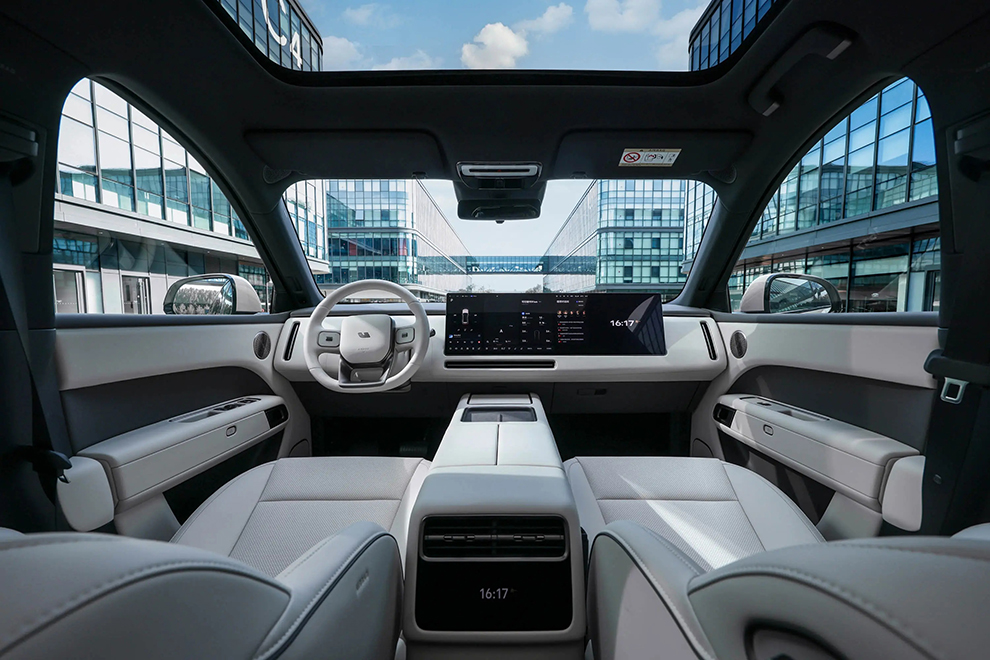
At a glance
- Range-extended electric midsize SUV with a petrol generator and electric all-wheel drive.
- Pro, Max, Smart Refresh and Smart Renewal variants require VIN-level verification.
- Suited to premium family, executive and fleet use where charging and fuel are accessible.
- Used units can suit market-entry buyers, but history and condition require vehicle-level checks.
- Landed cost depends on unit factors, logistics, Incoterms and destination charges.
- Local homologation, drive side and aftersales support matter as much as the vehicle itself.
Why the Li Auto L6 matters for export markets
The L6 addresses a type of global demand: buyers who want electric-drive convenience without treating recharge range as the journey’s only limit. Li Auto’s model is a range-extended electric SUV: electric motors handle propulsion, while a petrol-fuelled generator extends the operating envelope when charging stops. That architecture is commercially relevant in overseas markets because it can suit urban commuting, intercity travel and regions where public charging is less uniform than in China. It gives dealers a credible product story for premium family and executive-fleet buyers, subject to local approvals and service support.
For an importer, the point is not that the L6 simply removes charging constraints. The range extender still needs fuel, the vehicle must be certified locally, and software, service procedures and parts supply must be supported in the destination market. Buyers should therefore treat Chinese-market product appeal and cross-border readiness as separate questions. A vehicle can be highly attractive to consumers yet difficult for a distributor to launch without approvals and a credible aftersales network. That separation protects margins and prevents a retail launch from becoming a costly service problem.
The L6 also bridges two familiar SUV propositions for overseas dealers. It offers the low-speed smoothness and efficiency profile associated with an electric powertrain, plus the flexibility of a second energy source for longer routes. At the same time, buyers should not mistake the EREV label for a universally homologated export package. Destination-specific standards can determine which version may be imported, how it must be registered and whether advertised range, charging or driver-assistance functions remain available. That point belongs in the purchase order, not merely in the local sales brochure.
- Electric propulsion with a petrol generator supports mixed charging and long-route use.
- Trim and Smart-edition labels require verification against the selected vehicle.
- Import readiness depends on certification, parts and service as well as consumer appeal.
Model range, trims and powertrain variants: how the lineup is structured and how to choose
Li Auto L6 choices are primarily about trim, model-year package and equipment rather than a choice between combustion and battery-only versions. The export-facing catalogue includes Pro Model, Pro and Max designations, plus Smart Refresh or Smart Renewal wording for particular updated versions. Because those labels can move between model years, do not treat them as a permanent equipment dictionary. Start with the VIN, build date and trim on the unit’s live listing, then request a written configuration sheet before comparing similar cars. A badge-only comparison can otherwise create a dispute about what is fitted.
All L6 versions use the range-extended architecture: electric motors provide wheel drive, while the petrol range extender supplies electricity rather than mechanically propelling the car in the normal way. Dual-motor all-wheel drive is a defining characteristic to verify on each listing, not an assumption based only on the badge. The practical buyer question is whether electric-only daily driving fits the fleet’s routes and whether fuel is available reliably when the generator is needed. Also confirm local towing limits and the effect of full fuel and luggage loads on real-world efficiency.
Pro and Max should be compared around operational priorities rather than badge prestige. Max normally denotes the higher equipment or performance tier, but exact differences must come from the configuration documents for the selected car. On a live listing, check seating and luggage capacity, infotainment and driver-assistance equipment, charging capability, wheels and tyres, paint, options and condition. For a dealer, a higher trim only makes sense if it matches a target customer and can be supported locally. Treat CLTC range figures as model-year data, not a destination-cycle guarantee in local tests.
- Compare every trim against VIN-level documents.
- Pair Smart badges with their exact base trim.
- Treat CLTC figures as model-year data.
New vs used Li Auto L6: how export inventory is structured and how buyers choose
Export inventory can include cars with different ownership histories even when they carry the same model and trim designation. A unit may be presented as new or used, but that description alone does not establish registration status, whether it was a demonstration vehicle, how it was stored or whether local warranty remains valid. Buyers should ask for the VIN, production month, registration documents, ownership history and a clear distinction between dealer preparation, manufacturer warranty and any remaining coverage. The answer should match the physical documents before funds are committed to shipment.
A used L6 can make sense when the buyer values the same platform at a lower acquisition cost, especially for an initial market test. The trade-off is that depreciation, condition and repair history become central to valuation, while warranty continuity may be less straightforward. A new or newer unit may reduce uncertainty, yet its advantage depends on confirmed delivery history, document completeness and a warranty the supplier can honour across the export chain. Neither label removes the need for inspection, and a sales description cannot substitute for a vehicle-specific report.
Use a repeatable selection method. First define the acceptable model year, trim, range configuration and mileage band; then compare condition reports, photographs, service records and inspection results. Treat unexplained repainting, replaced wheels, missing manuals or inconsistent keys as items requiring explanation, not reasons to assume quality. For a multi-vehicle purchase, sample more than one unit if possible and document each separately, because a fleet label cannot make different histories interchangeable. Record every agreed repair or correction before payment and keep the same inspection checklist across every vehicle in the consignment.
- Match condition claims to documents.
- Confirm warranty continuity before payment.
- Inspect every vehicle individually.
How export pricing works: the factors behind a live listing price, and how to read one
Every live L6 price is the price of a specific vehicle under stated trade terms, not a universal wholesale rate for the model. The starting point normally reflects model year, Pro or Max grade, Smart package, battery or range specification, mileage, condition, ownership history and the seller’s assessment of export readiness. Trim-level gaps can be meaningful, but they do not replace comparing two actual units. Check the displayed amount and unit details on the live listing page before budgeting, and obtain written confirmation before treating any enquiry as formally binding.
The delivered cost can move independently of the vehicle price. Currency movements, inland transport, export documentation, marine insurance, freight, terminal handling and destination charges all matter. Incoterms decide where responsibility passes between seller and buyer: an EXW-style arrangement leaves more tasks with the importer, while a delivered term may include more transport obligations but does not replace customs and market-compliance duties. Ask for each charge to be identified carefully rather than accepting an unexplained landed figure, especially when comparing offers with different payment and delivery points across suppliers and currencies.
Build a comparison sheet with the unit price, vehicle condition, stated warranty, documentation fee, inland haulage, freight basis, insurance, destination taxes and payment schedule shown separately. This exposes whether a listing is expensive because of the car, its history or the transport structure. Exact price, availability and any seller-applied MOQ are current unit terms and must be confirmed in the live ChinaCarDirect inventory or written quotation. Treat a screenshot or old enquiry as indicative only until the seller confirms the unit and booking in writing for the intended destination market and Incoterm.
- Compare units, not badge-only averages.
- Confirm exactly what each Incoterm includes.
- Use current written quotes for binding terms.
MOQ, ordering and payment: single units vs consolidating a container
Ask whether the selected listing can be purchased as one vehicle and whether the seller imposes any lot, container or payment minimum. A single-unit export is useful for a dealer test, company car or customer order, but fixed logistics and compliance costs weigh more heavily than in a consolidated shipment. The quotation should state the quantity, unit specification, allocation method and the point at which price becomes binding, so an available unit cannot be confused with unrestricted production capacity. Confirm whether payment terms differ by quantity and delivery timing clearly.
Container consolidation improves unit economics when compatible vehicles are ordered together, but it also concentrates selection, inspection and payment risk. Agree which VINs are assigned, who chooses substitutions, the inspection standard, permitted condition allowances, and how rejected vehicles are removed or credited. Check whether used and new units may share a consignment under the chosen shipping method, and confirm that every vehicle has separate identity, export and customs documents. Mixed configurations work only if handling, valuation and delivery requirements do not conflict with the receiving team at destination in advance.
Payment mechanics should follow milestones rather than a single unsecured transfer. A typical sequence is a documented deposit, inspection or production confirmation, balance before release, and settlement against agreed shipping documents; exact terms belong in the pro forma invoice and sales contract. Use the seller’s verified corporate account, have all parties named correctly, and understand cancellation, refund, storage and demurrage liability. For a first transaction, inspection and documentary control are more valuable than a nominal discount that leaves too little margin for compliance problems or damaged-cargo disputes during transit later.
Shipping, homologation and market compliance caveats: LHD/RHD and import rules by country
Do not assume the vehicle’s drive-side configuration is accepted at destination. China-origin examples are commonly left-hand-drive, while some importing markets require right-hand drive or have no drive-side preference. A conversion is not merely a mechanical swap: wiring, controls, lighting, software and certification can all be affected. If right-hand drive is required, ask for evidence of a factory or approved conversion and ensure the importer and regulator accept that configuration before paying. A binding pre-shipment approval is far more valuable than a verbal assurance that the conversion can be completed later.
Import permission is only the first compliance gate. The buyer should obtain a written local requirement list covering vehicle type approval or exemption, emissions and exhaust standards, safety, VIN and registration, radio equipment, language labels, charging equipment, connected-vehicle rules and any used-vehicle age restrictions. Local incentives may also depend on approved configurations, so a Chinese-market brochure cannot establish eligibility. Engage a customs broker and qualified local compliance adviser before committing the vehicle to a port, and record which party is responsible for each approval and the evidence required before shipment.
Commercial treatment depends on tariff classification, customs valuation, VAT or GST, permit regime and whether the vehicle is classified as private or commercial. Shipping method also affects risk: RoRo, container or specialist flat-rack movements have different handling, securing and damage patterns, so insurance and inspection should reflect the route. Match the VIN on the bill of sale, export declaration and shipping document. Confirm the importer of record, port, delivery term and release process in writing before the carrier moves, including responsibility for demurrage, storage and destination terminal charges in advance.
- Verify drive side before contracting.
- Obtain local type-approval guidance.
- Assign every compliance duty contractually.
Who should buy the L6 — and who should pick a different vehicle
The L6 is a strong candidate for an overseas buyer who wants a premium, five-seat SUV with electric-drive behavior, all-wheel-drive traction and the flexibility of a range extender. It can fit a company-car programme, executive transport or premium family-SUV dealership where daily routes are short but occasional regional travel is expected. The business case is strongest where charging is dependable at home or work, fuel is readily available, and the importer can provide transparent servicing rather than treating each breakdown as a cross-border logistics event with parts held locally securely.
It is less suitable for a buyer whose decision depends on immediate local homologation, a mature multi-brand parts network or predictable residual values in a new segment. Chinese vehicles can create strong value propositions, but that proposition should be tested against insurance categories, repair capability, software support and used-car demand rather than vehicle price alone. Fleets with strict uptime requirements should examine warranty responsibility, diagnostic access and spare-part lead times before standardising on the model. Local evidence matters more than an overseas launch narrative or a generic import brochure alone.
Choose a different vehicle if you need a battery-only certification path, no petrol system, a smaller footprint, a three-row cabin or towing beyond the L6’s verified limits. A battery-electric crossover may suit charging-rich markets, while a larger range-extended SUV may better serve multi-row passengers. Before changing model, confirm seat and cargo needs, route profile, charging access, destination rules, total cost of ownership and aftersales network. The right export choice is the vehicle whose operating case survives contact with local use and ownership costs over the intended ownership period and route pattern.
- Best for mixed daily-charge and long-route use.
- Requires local charging, fuel and service access.
- Verify uptime, towing and residual-value needs.
Main rivals and how the L6 compares
AITO M7 is the closest range-extended comparison because it also combines electric propulsion with a petrol generator for long-distance flexibility. It is generally a larger SUV, so buyers needing the L6’s five-seat packaging should compare dimensions and optional seating or cargo arrangements rather than assume equivalence. The M7 may suit families prioritising space, while the L6 may be easier to position as a focused two-row premium SUV. Equipment, local certification and service support still determine which option is commercially practical in the actual importing market rather than relying on China-market assumptions.
BYD Sealion 7 is a useful market benchmark, but it is battery-only. It avoids a petrol range extender and may align better with buyers in charging-rich markets, yet charging access and destination charging standards become more important. The L6’s differentiator is the generator-backed operating model and electric drive. Conversely, the Sealion 7 may be easier for some buyers to understand and service once local homologation and charging coverage are in place. Neither architecture removes the need for parts planning and technician training before volume launch in any new destination market.
Tesla Model Y is a major global pure-electric benchmark for an overseas buyer comparing a premium electric SUV. It gives fleet managers a different cabin, software and charging proposition, and local brand familiarity may reduce customer-education effort. The L6 stands apart through its range extender and electric all-wheel-drive format, while the Model Y may better match buyers committed to charging around a dependable network. Compare the exact export versions, destination certification, service reach and parts economics rather than relying on badges or inherited assumptions from another market during local planning alone.
Live Li Auto L6 export inventory
View all listings →Real units currently on ChinaCarDirect with per-unit asking prices and MOQ. Availability updates live from the catalogue.

How to buy a Li Auto L6 from China
-
1
Set the operating brief
Define passenger capacity, typical routes, charging access, fuel availability, luggage needs, towing requirements and the destination market before choosing a trim.
-
2
Shortlist live inventory
Use the live Li Auto L6 inventory to compare Pro, Max and Smart-edition titles. Treat each badge as a prompt for VIN-level verification rather than a complete specification.
-
3
Request the vehicle dossier
Ask for the VIN, build date, ownership history, registration status, condition report, service records, warranty terms, battery and charging details, drive side and export-document list.
-
4
Request an itemized landed quote
Separate the unit price from inland haulage, export documentation, freight, insurance, destination charges, taxes and the selected Incoterm. Confirm which party bears each cost and risk.
-
5
Inspect and secure payment
Agree the inspection standard and defect remedies before paying. Use milestone payments tied to vehicle confirmation, inspection, release and shipping documents through a verified corporate account.
-
6
Complete compliance files
Work with a customs broker and local compliance adviser on type approval, registration, emissions, drive-side requirements, import permits and any used-vehicle restrictions.
-
7
Ship, clear and deliver
Confirm the carrier method, loading plan, marine insurance, document set and importer of record. Match the VIN across commercial, customs and shipping papers before release.
L6 vs rivals
| AITO M7 | The M7 shares the range-extended concept but is generally larger and may offer more multi-row or cargo flexibility. The L6 is the more focused five-seat option for buyers who want electric drive, all-wheel drive and generator-backed travel in a smaller package. |
|---|---|
| BYD Sealion 7 | The Sealion 7 is battery-only and may suit buyers with dependable charging access who prefer a simpler energy setup. The L6 differentiates through its petrol range extender, particularly for mixed commuting and longer routes where public charging is uneven. |
| Tesla Model Y | The Model Y is a major pure-electric benchmark with strong brand recognition and a different charging and software proposition. The L6 may be more practical for buyers prioritising generator-backed flexibility, while Model Y buyers generally place greater reliance on charging availability. |
Frequently asked questions
How is the export price of a Li Auto L6 determined?
A live Li Auto L6 price is set for a specific unit and reflects model year, trim, battery or range version, mileage, condition, history and export preparation. Exchange rates, freight, insurance, inland haulage, destination charges and the selected Incoterm can change the landed cost. Check the current price and terms in the live ChinaCarDirect L6 inventory, then request a written quotation for the vehicle and destination.
What powertrain and range does the Li Auto L6 have?
The L6 is a range-extended electric SUV: dual electric motors drive the wheels, while a petrol-fuelled generator supplies electricity. Exact traction-battery capacity, CLTC pure-electric and combined range, motor output and charging rate should be confirmed for the selected model-year and trim. CLTC is a Chinese test cycle, so it should not be treated as a direct WLTP, EPA or real-world guarantee for an imported car.
Should I buy a new or used Li Auto L6?
A used L6 can suit a dealer testing demand or a buyer seeking lower acquisition cost, but condition, service history and warranty continuity become central to the decision. A new or newer unit may reduce uncertainty, but only if delivery history and documents are confirmed and warranty responsibility is clear. Inspect every vehicle independently regardless of its new or used label.
How does MOQ work when ordering a Li Auto L6?
MOQ is transaction-specific and should be confirmed on each live listing or in the written quotation. A single vehicle may be available without a production-lot commitment, while a consolidated shipment may involve quantity, allocation and payment conditions. Ask whether the quoted minimum applies to units, mixed trims, the total order value or the shipping method.
What determines shipping time and cost?
Shipping time and cost depend on origin and destination ports, carrier schedules, vessel or vehicle-carrier capacity, cargo dimensions, inland haulage, documentation, insurance, customs clearance and terminal congestion. The delivery term also determines which party arranges and pays for each stage. A binding freight quotation should identify the route, method, charge inclusions and expected readiness rather than provide a generic estimate.
Are spare parts available for the Li Auto L6?
Parts support depends on the model year, production batch and the aftersales channel established in the destination country. Confirm that the seller or local distributor can supply wear items, body parts, electronics and service procedures before placing a volume order. Buyers should also agree how warranty claims, diagnostic access and parts lead times will be handled.
Is a right-hand-drive Li Auto L6 available for export?
Right-hand-drive availability should not be assumed. China-origin L6 examples are commonly left-hand-drive, and a conversion may affect wiring, controls, software, lighting and certification. If an RHD vehicle is claimed, request its drive-side documents, conversion approval and written acceptance from the destination importer and regulator.
How do I buy a Li Auto L6 from China?
Start with the live L6 inventory, select a candidate unit and submit an RFQ with the destination, desired trim, quantity and Incoterm. Request the VIN-specific dossier, condition inspection, itemized landed quotation and compliance checklist before paying. The seller should then confirm the assigned vehicle, document set, inspection standard, payment milestones, shipping plan and release terms in writing.
Ready to source the Li Auto L6?
Request a current Li Auto L6 quotation with the exact vehicle specification, Incoterm, inspection plan and destination compliance checklist.
Request a quote