
Li Auto L8 Export Buying Guide for Overseas Dealers
Compare Li Auto L8 trims, range-extended options, used-vehicle checks, export pricing, MOQ, shipping, and compliance before buying from China.
At a glance
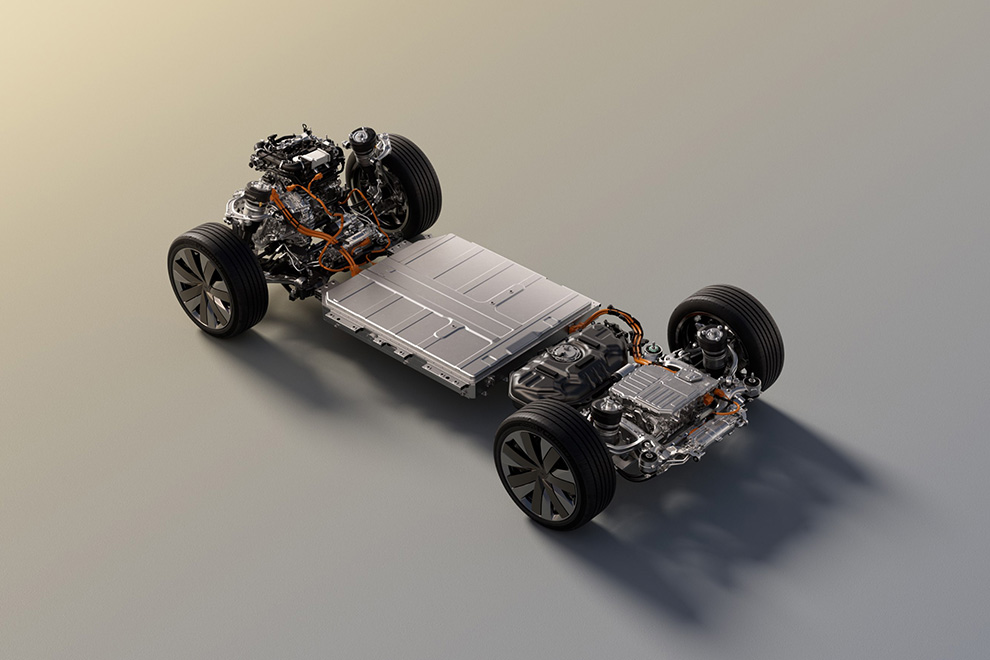
- The L8 combines a gasoline range-extender, electric all-wheel drive, and a premium five-seat SUV layout.
- Air, Pro, Max, and Ultra provide a clear hierarchy, but model-year equipment must be checked vehicle by vehicle.
- Used L8 imports can offer value when battery condition, service history, title status, and mileage are independently verified.
- Export quotes move with trim, year, condition, battery specification, currency, freight, taxes, and Incoterm.
- ChinaCarDirect's live L8 listings carry the current per-unit price and terms; use the RFQ route for written quotations and consolidated inquiries.
Why the Li Auto L8 matters for export markets
The Li Auto L8 occupies the large premium family SUV segment, combining a gasoline range-extender with electric all-wheel drive and a five-seat cabin. For overseas buyers, that combination is commercially interesting because it reduces dependence on dense public-charging infrastructure without abandoning electric propulsion in normal driving. It suits dealers and fleets serving customers who want modern performance and cabin technology while travelling beyond urban corridors. Its size and premium presentation also place it above compact crossovers, but below the largest six- or seven-seat family SUVs in the same segment.
Demand for an L8 in export markets will depend less on headline specification than on sensible local application. Where families, executive fleets, and premium operators cover long distances, the ability to refuel with gasoline can make an EREV easier to deploy than a battery-only SUV. The L8 also offers substantial equipment, a spacious interior, and a modern software-led driving experience that can differentiate a dealer's offer. These strengths are not universal homologation: a China-configured vehicle may require local certification, software support, and service preparation before commercial use in the destination country.
For a buyer evaluating a Li Auto L8 for export, the practical question is whether its operating concept matches the market before negotiating terms. Compare local fuel availability, charger coverage, route profiles, taxation, insurance rules, and customer service expectations. A dealer should assess whether parts can be obtained quickly for warranty work and whether connected features, maps, radio functions, and driver-assistance interfaces will operate as intended. ChinaCarDirect's Li Auto brand hub is a useful starting point, but suitability must be confirmed for the destination and model year before any contracting.
- Premium five-seat family and executive platform.
- Gasoline range-extender eases charging-route dependence.
- Destination approval remains essential.
Model range, trims and powertrain variants: how the lineup is structured and how to choose
The L8 hierarchy is organized around Air, Pro, Max and Ultra grades, with refreshed or smart-refresh labels for later production. Lower grades focus on the core range-extended proposition, while higher grades generally add performance, ride or cabin equipment, infotainment, and driver assistance. Names alone are not enough for a purchase order: equipment can change between model years, and a listing may omit the factory option list. Ask for the VIN, exact trim, production date, battery version, and dated photographs of the display and option pages before treating two units as equivalent.
Mechanically, the L8 is a range-extended electric vehicle, not a conventional plug-in hybrid or battery-only EV. A turbocharged gasoline engine generates electricity, while electric motors provide propulsion and all-wheel drive. The vehicle can operate as an EV when charged and continue on gasoline when depleted. Battery capacity, electric-only range, combined range, acceleration, and charging capability differ by trim and model year. Published CLTC figures help compare China-market configurations, but they are not automatically local approval or real-world range claims. Request the underlying figures and test standard for the exact vehicle.
Choice should follow duty cycle rather than grade prestige alone. A buyer with dependable home or depot charging and mostly daily commuting may prioritize usable electric range, efficiency, and refinement. A high-mileage operator travelling between cities should investigate range-extender fuel consumption, tank capacity, service access, and charging downtime as well as acquisition cost. Max and Ultra buyers should confirm that added performance and comfort have a measurable commercial benefit. For every trim, verify seating and luggage capacity, tow limits if relevant, connector details, software functions, and whether the equipment is standard or destination-optional.
- Air, Pro, Max and Ultra hierarchy.
- Refresh labels can change model-year equipment.
- Verify trim, battery and options by VIN.
New vs used Li Auto L8: how export inventory is structured and how buyers choose
Export inventory for the Li Auto L8 can include newer, low-use vehicles and registered examples from earlier production. The age mix matters less than whether a unit matches the buyer's target market. A newer vehicle may offer later styling, updated software, and a newer battery or range specification; an earlier unit can suit buyers seeking an established Air, Pro, Max or Ultra configuration. Because model-year changes can affect equipment and consumables, compare the VIN, production date, and factory specification sheet rather than the trim badge. Live listings establish present availability.
A used L8 can make economic sense when the importer can verify condition and price it into a realistic resale or fleet budget. Inspection should cover accident repairs, paint alignment, tire age, suspension condition, underbody damage, cabin wear, and service history. Ask for battery state-of-health information where available, charging history, evidence of abnormal fast charging, and range-extender maintenance records. Also check warranty terms, recall completion, software region, key count, title status, and verified mileage. A lower sticker price is not a saving if repair or parts risk remains unquantified in the destination market.
New inventory is easier to specify against a current factory configuration and reduces uncertainty about prior use, battery degradation, and cosmetic condition. It may carry the factory warranty for a defined period, although coverage depends on sale date, vehicle age, and destination rules. Buyers should still inspect the delivered unit, confirm production date rather than relying on model year, and obtain a warranty certificate their insurer accepts. Mixing new and used units can complicate fleet training and parts planning. Choose the configuration with the lowest compliant total cost over the holding period.
How export pricing works: the factors behind a live listing price, and how to read one
A Li Auto L8 export price should be read as a vehicle-specific commercial quote, not a fixed model-wide rate. The reference will move with production year, trim or refresh edition, battery specification, mileage, condition, colour, and seller terms. Currency movements also affect the quote because the vehicle is priced in China before importer costs are added. A live listing gives the reference for that unit but does not replace a pro forma quotation. Open the live L8 inventory, select the vehicle, and request a price valid for your destination, currency, quantity, and Incoterm.
The landed cost may differ materially from the listing figure. Ask whether inland transport, export documentation, inspection, marine insurance, freight, terminal charges, customs brokerage, duties, taxes, registration, and dealer margin are included. These items differ by route and destination law, so compare them consistently. For example, a higher trim with more standard equipment may be cheaper after local operating costs than a lower trim needing accessories; alternatively, a higher-cost shipping method may still reduce the per-unit cost for a consolidated group. Quote every alternative on the same Incoterm and tax assumptions.
Reading a live listing should be a structured comparison. Confirm the VIN or SKU, model year, grade, battery version, odometer reading, condition label, equipment list, currency, and whether the amount is a vehicle or inquiry price. Save the full details, then request written confirmation of availability, price validity, payment schedule, and handover obligations. For wholesale discussions, request separate per-unit and container scenarios rather than assuming a lower headline figure applies to mixed inventory. ChinaCarDirect's live L8 listings are the starting point for current unit-level numbers, while an RFQ should be the final commercial reference.
- Compare like-for-like year, trim and condition.
- Separate vehicle price from landed costs.
- Use one Incoterm and tax basis.
MOQ, ordering and payment: single units vs consolidating a container
The appropriate MOQ depends on the purchasing route, not a permanent model-wide rule. A marketplace purchase may allow a dealer to secure one vehicle, subject to that unit's terms, while a direct factory or consolidation arrangement may impose batch quantities. For a test sale, one unit limits capital exposure and reveals the cost of compliance, insurance, parts supply, and customer acceptance before a commitment. It also avoids mixing finishes or model years that may be harder to remarket. Confirm the MOQ, allocation, and condition restrictions in the live listing or written quotation.
Container consolidation can reduce freight and handling cost per vehicle, but it transfers more risk to the importer. Units must have compatible documents, destination readiness, and realistic residual demand; otherwise, one slow-moving trim can consume space and cash needed for better-matched vehicles. Ask the supplier to propose a loading plan by grade, production year, mileage band, and colour, with the mix shown before non-refundable payment. Establish who bears transit damage, how units are reconciled against the bill of lading, and how title, registration, and VIN documents will be delivered. Consolidation is logistical efficiency, not automatically the lowest commercial risk.
Payment sequencing should follow verified milestones. Ask for a pro forma invoice naming the vehicle or agreed specification, total price, currency, Incoterm, deposit, balance trigger, refund conditions, and documentation fee. Independently verify the contracting entity and beneficiary account against the seller's identity and platform communication; never rely on bank details received only through an unverified message. Where practical, use a protected platform payment method or independent inspection before releasing the balance. Inspection should cover identity, condition, mileage, charging function, warning lights, accessories, and export documents. Clear these terms before reserving stock because factory allocation and container space can be time-sensitive.
- Single-unit orders support controlled market testing.
- Consolidation cuts logistics cost, raises inventory risk.
- Verify beneficiary and payment milestones.
Shipping, homologation and market compliance caveats: LHD/RHD and import rules by country
Transport planning for the L8 begins with the configuration, especially battery type, gross weight, dimensions, and whether the unit is LHD or RHD. Dealers compare containerized shipping with specialist vehicle transport or roll-on/roll-off service, but the choice depends on port handling and cargo security. Lithium-battery vehicles can fall under dangerous-goods and maritime rules, while the gasoline range-extender system adds fuel-related declarations and restrictions. The forwarder should confirm the declared configuration, securing plan, insurance, and restrictions on charging equipment or accessories. Freight cannot be separated from the vehicle quote until details are known.
Homologation is the larger uncertainty. China-market approval does not automatically satisfy the destination's type-approval, emissions, electromagnetic-compatibility, radio, cybersecurity, data, or connected-vehicle requirements. Local authorities may also require evidence for the battery and range-extender system, vehicle software, driver assistance, towing, lighting, or platform compliance. Import duty, VAT or GST, exemptions, quotas, local-content rules where relevant, and restrictions on used vehicles may further affect both eligibility and cost. Buyers should obtain a written local customs or homologation assessment before paying the balance. Otherwise, a vehicle that has physically arrived may still be difficult to register or commercialize.
Steering and cabin configuration require early verification. Chinese-market L8 examples are generally left-hand drive, while right-hand-drive availability can be limited and should not be assumed from a general model listing. Do not treat a steering-wheel conversion as a solution: altered geometry, controls, lighting, homologation, and warranty can create safety and legal issues. For an RHD destination, ask for documented RHD production or conversion details, then have the local approval authority or a specialist assess compliance. Before loading, arrange manuals, navigation and language options, charging cable, tools, emergency equipment, and a spare-parts plan.
- Confirm steering side before freight booking.
- Battery and fuel rules are carrier-specific.
- Secure destination approval before final payment.
- Plan manuals, software, accessories and parts.
Who should buy the L8 — and who should pick a different vehicle
The L8 is a strong candidate for an importer or fleet operator needing a premium five-seat SUV with electric driving and long-distance flexibility. It can fit executive transport, hotel and chauffeur fleets, family use, or company-car programs where routes extend beyond charging coverage. Dealers may use it to enter the electrified-SUV segment with a model combining range-extender technology with high specification. The business case improves when the importer can support the vehicle with parts and diagnostics and market electric smoothness, comfort, and technology to customers who value them over minimum operating cost.
It is less suitable for buyers seeking a seven-seat people carrier, compact urban fleet vehicle, or battery-only model with dependable charging at every base. The L8's five-seat layout and dimensions may conflict with parking, constrained loading yards, or route economics. Importers without charging installation capacity should not assume owners will use the range extender like a gasoline SUV; buyer education and fuel-use assumptions matter. High-mileage fleet programs also need careful residual-value modelling, especially with mixed model years. If parts availability, software support, or homologation cannot be made dependable, a conventional hybrid SUV may reduce operational risk.
A disciplined decision should compare the L8's total cost of ownership, not just its acquisition quote or feature list. Model route pattern, charging access, fuel and electricity mix, utilization, maintenance, insurance, homologation, delivery, and resale over the holding period. For a trial, choose the trim and condition supported by the strongest parts knowledge, and define acceptance criteria before importing. For a fleet, standardize the configuration and obtain approval for charging and driver training. If the L8 clears those tests, it offers fewer charging constraints than a pure EV; otherwise, an alternative may be better.
Main rivals and how the L8 compares
The closest comparison depends on what the buyer wants to preserve: range-extended operation, family space, premium equipment, or low-risk global service. The Li Auto L7 is the most direct internal alternative because it uses a similar architecture in a smaller five-seat package. The AITO M7 is a credible China-market competitor with range-extended and electric variants, making trim, comfort, charging, and local support decisive. For buyers preferring established global after-sales service or a conventional seven-seat option, the Toyota Highlander Hybrid occupies the broader family-SUV class, although it lacks the L8's electric-drive character. Compare destination-approved specifications.
Against the L7, the L8 should win on space, refinement, and high-grade equipment rather than compact dimensions or acquisition efficiency. The L7 may be easier to place where parking, fuel consumption, and fleet residual values favor a smaller vehicle. Against the AITO M7, the L8 offers a larger proposition, but compare battery options, range methodology, driver assistance, infotainment compatibility, parts support, and after-sales coverage without assuming brand loyalty solves service. Highlander Hybrid buyers should accept another architecture and assess whether seven-seat flexibility and proven dealer support outweigh the L8's EV-centered experience and technology.
For an export buyer, practical rivalry extends to sourcing risk. A less familiar model may offer equipment but carry uncertainty over long-term parts, diagnostics, insurance, and residual demand. An established rival may be simpler to support, yet its acquisition cost, charging behavior, or equipment mix can weaken a fleet case. The L8 is most persuasive when the importer can support it and the destination customer values range-extender convenience and Chinese SUV design. Review the brand hub, compare live L8 listings, and request a written specification and landed quote before choosing the L8 or an alternative.
- L7: smaller, direct range-extended alternative.
- AITO M7: close range-extended family-SUV rival.
- Highlander Hybrid: conventional seven-seat option.
Live Li Auto L8 export inventory
View all listings →Real units currently on ChinaCarDirect with per-unit asking prices and MOQ. Availability updates live from the catalogue.
How to buy a Li Auto L8 from China
-
1
Define the market and operating requirement
Specify the destination country, steering configuration, five-seat or larger-space needs, typical routes, charging access, and expected resale or fleet holding period.
-
2
Shortlist and verify live vehicles
Review the live L8 listings and compare VIN, production date, trim, battery version, mileage, condition, options, currency, and stated commercial terms.
-
3
Request a written export quotation
Send an RFQ stating destination, quantity, preferred trims, condition, currency, and Incoterm. Ask for vehicle price, freight, insurance, documentation, duties, taxes, and payment milestones as separate items.
-
4
Complete the compliance review
Use a local customs broker or type-approval specialist to assess import eligibility, used-vehicle rules, software, emissions, radio, data, battery, and charging requirements.
-
5
Inspect and secure payment
Agree the vehicle inspection standard, verify the seller's identity and beneficiary account, and use milestone-based payment. Release the balance only after the specified vehicle and documents pass inspection.
-
6
Book freight and prepare for handover
Confirm the transport mode, battery and fuel declarations, cargo securing, insurance, port procedures, and shipping documents. Arrange manuals, accessories, charging equipment, and destination-side parts support.
L8 vs rivals
| AITO M7 | AITO M7 is the closest China-market conceptual rival, with range-extended and battery-electric choices. Choose between them on destination-approved range, trim equipment, charging, software support, and service coverage rather than badge or headline range. |
|---|---|
| Li Auto L7 | The L7 mirrors the L8's range-extended concept in a smaller five-seat package. It may suit buyers seeking a more compact footprint, while L8 buyers prioritize additional space, refinement, and higher-grade equipment. |
| Toyota Highlander Hybrid | The Highlander Hybrid is a conventional large-family-SUV alternative with established global after-sales support and a seven-seat layout in many markets. It suits buyers prioritizing seating flexibility and service familiarity over the L8's range-extended electric-drive experience. |
Frequently asked questions
How is the Li Auto L8 export price determined?
Treat the price shown on the live ChinaCarDirect listing as the current per-unit reference, then request a written quote for your destination, currency, quantity, and Incoterm. Year, trim, battery version, mileage, condition, exchange rates, freight, insurance, duties, taxes, and port charges can change the landed total. Only the confirmed quotation is binding.
What powertrain and range figures should I verify?
The L8 is a range-extended electric vehicle: a turbocharged gasoline engine generates electricity, and electric motors drive the wheels. Battery capacity, electric-only range, combined range, output, and charging rates vary by trim and model year. Check the VIN-level listing and ask for the test cycle and destination-approved figures.
Is buying a used Li Auto L8 from China sensible?
Used examples can be economical when their condition and residual value are supported by records. Inspect battery health, service history, accident repair, title, mileage, recalls, software region, and warranty before importing. New examples reduce wear uncertainty but still require specification, production-date, warranty, and delivery checks.
What is the MOQ for an L8 order?
MOQ is shown per live listing and in the written quotation; there is no permanent model-wide quantity to assume. One-unit purchasing can support market testing where offered, while factory or container routes may require batches. Confirm allocation, vehicle mix, payment schedule, and any condition restrictions before paying a deposit.
What determines shipping time and cost?
Shipping time and cost depend on the route, transport mode, vehicle dimensions and weight, battery and fuel declarations, port handling, customs, and the Incoterm. A freight forwarder should confirm dangerous-goods handling, securing, insurance, and the delivery schedule. Obtain a freight quote only after the exact configuration and steering side are fixed.
How are spare parts sourced?
Spare parts are typically sourced through Li Auto or specialist channels, and lead time can vary by model year and part. Confirm VIN-level compatibility, diagnostic capability, warranty access, and regional stock before importing. For a fleet, hold sensible consumables and establish a local service partner rather than depending on unplanned shipments from China.
Is right-hand-drive Li Auto L8 availability possible?
Most China-origin L8 inventory is left-hand drive, and right-hand-drive examples may not be available for every route or model year. Verify steering configuration before purchase and avoid assuming a conversion is homologated. For an RHD market, obtain production or conversion details and a written local compliance assessment.
How do I order a Li Auto L8 for export?
Start with the live L8 listings, then submit an RFQ with destination, quantity, trim, condition, and Incoterm. Compare the written vehicle and landed-cost terms, complete a compliance review, and reserve the matching unit. Use milestone-based payment and inspection, then release the balance only after the agreed documentation and vehicle checks are complete.
Ready to source the Li Auto L8?
Send your destination, preferred trim, condition, and quantity to ChinaCarDirect for a current unit-level export quote and RFQ.
Request a quote