
Lynk & Co 02 Hatchback Export Buying Guide
Compare Lynk & Co 02 Hatchback trims, diesel options, export pricing, MOQ, shipping and compliance, then check live units for overseas buyers.
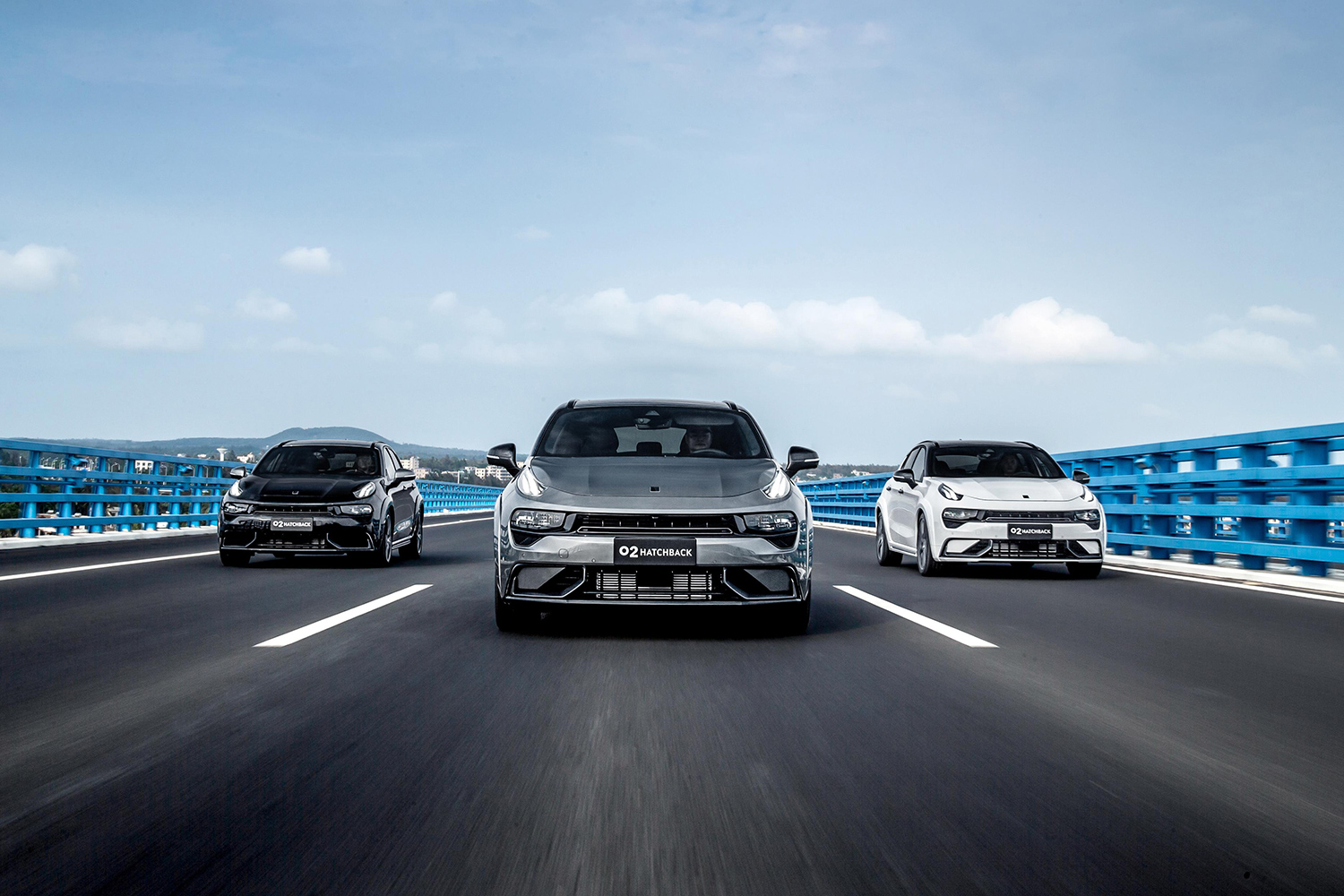
At a glance
- The 02 Hatchback is a design-led compact alternative for importers serving premium-conscious city and fleet buyers.
- The export range is structured around 2.0TD diesel derivatives, including Halo, Pro, Plus and the Driving Control Package Edition.
- Trim names alone are insufficient; buyers should verify output, gearbox, drivetrain and equipment on each exact unit.
- Current price, MOQ and availability should be confirmed through live inventory and a destination-specific written quotation.
- LHD or RHD availability, homologation, diesel rules and parts support need validation before shipment.
Why the Lynk & Co 02 Hatchback matters for export markets
The Lynk & Co 02 Hatchback occupies a middle ground for overseas buyers: a compact, design-led Chinese vehicle that carries a more premium badge than the mass-market hatchbacks it is often compared with. For export markets, its appeal comes from combining styling, a five-door format and 2.0TD diesel derivatives with equipment that can suit fleet buyers. It is worth assessing as a compact premium alternative rather than simply another low-cost Chinese car. Value depends less on headline specification than on matching the right derivative, equipment and compliance route to the destination market.
Global demand is likely strongest where buyers want a compact vehicle that feels more upscale than a mainstream hatchback but still offers practical ownership. The 02's design-led presentation can help it stand out in showroom photos and fleets that value appearance, while a diesel powertrain may appeal to high-mileage operators comparing fuel consumption with purchase cost. However, popularity is not the same as easy compliance: local rules and aftersales support can determine whether an attractive vehicle becomes practical. Dealers should test demand with a mixed order or pilot sale before committing to volume.
For an importer, the model is attractive when the sourcing brief starts with the destination market, not with an inventory unit. Tax treatment, fuel rules, insurance categories, spare-parts lead times and the availability of LHD or RHD cars can alter the commercial result more than a trim difference. The 02 can suit buyers seeking Chinese design and a compact premium vehicle, provided they validate support and prepare compliance before shipment. That discipline protects margin after the final purchase price and reduces the risk of having to discount an unsold unit.
- Premium-styled compact alternative.
- 2.0TD high-mileage use case.
- Compliance decides export value.
Model range, trims and powertrain variants: how the lineup is structured and how to choose
Export listings for the 02 Hatchback are centered on 2.0TD powertrain derivatives. The visible trim names include Halo, Halo Driving Control Package Edition, Pro and Plus. Those names establish a hierarchy of market-facing versions, but they are not a substitute for a full equipment sheet: verify engine output, gearbox, drivetrain, suspension, infotainment, driver-assistance functions and included accessories for the exact unit. For fleet tenders, list mandatory equipment separately from desirable features so equivalent vehicles can be compared. Treat every line as a buying requirement rather than optional decoration when preparing the final quotation.
2.0TD is the key technical label to decode: it points to a 2.0-liter turbocharged diesel derivative. Diesel can be relevant where annual mileage is high and fuel efficiency, torque delivery and range per tank are operational priorities. It also creates additional checks around emissions standards, diesel taxation, exhaust testing and local fuel availability. Buyers should never assume that every 2.0TD listing has the same output, calibration, gearbox or drive configuration. Confirm those items against the VIN, manufacturer records and the seller’s written specification before calculating operating costs or final price.
The Driving Control Package Edition name signals that driver assistance is part of the variant’s positioning, but it does not guarantee identical hardware across markets. Pro and Plus should likewise be compared by content rather than assumed from their names. The best selection method is to build a matrix covering powertrain, safety equipment, cabin features, logistics capacity and compatibility, then match each shortlisted live listing and supporting record against it. This avoids paying for unusable features or omitting expected equipment. It also gives sales teams a consistent description when quoting customers.
- Compare exact trim equipment.
- Verify 2.0TD configuration.
- Build a fleet requirement matrix.
New vs used Lynk & Co 02 Hatchback: how export inventory is structured and how buyers choose
Export inventory for a model can include newly built stock, unregistered demonstrator cars, ex-fleet vehicles and used units entering the channel from different sources. Availability changes continuously, so the responsible approach is to review each live listing’s condition, model year, registration history and mileage. For the Lynk & Co 02 Hatchback, buyers should compare those fields on the unit page and in the quotation rather than assume that similar names indicate identical histories. A never-registered vehicle may reduce wear concerns, but it does not by itself confirm specification, provenance or compliance.
New cars are easier to reconcile with a specification and suit buyers who want a consistent model year, known mileage and a cleaner ownership narrative. They can make fleet standardization easier because several units can share the same trim and equipment list. The trade-off is that specifications, paint, options and delivery timing must be secured in writing, and a deposit may need to be paid before production or dispatch commitments become final. Confirm whether the quoted lead time is an estimate or a committed dispatch window before placing the order.
Used units can offer a lower entry point or access to a configuration that is difficult to source new, but the saving should be assessed only after a mechanical inspection, document review and valuation. Check bodywork, tyres, brakes, fluid condition, warning lights, software state and evidence of maintenance. Also compare the residual-value risk of an unfamiliar model against the purchase saving, because acquisition cost does not remove dealer and workshop uncertainty. For a first-time importer, an inspection and a return or rework policy are more useful than a headline discount.
- Check condition and mileage.
- Standardize new fleet specifications.
- Inspect used units before purchase.
How export pricing works: the factors behind a live listing price, and how to read one
A live export price is the seller’s ask for a specific vehicle under stated trade terms, not a universal model price. The reference changes with model year, trim, driver-control package, engine and gearbox options, mileage, condition and exterior specification. Currency movements can alter the displayed amount, while availability of comparable units affects negotiation. Buyers should avoid ranking listings by headline value until configurations are aligned. A like-for-like comparison is more useful than a broad search sorted by price. Ask the seller to identify which trim and equipment differences explain the quoted figure.
Freight and Incoterms can move the final liability and cost boundary as much as the vehicle itself. A factory or port quotation may exclude inland transport, export handling, ocean freight, insurance, destination charges, duties and local registration; a delivered quote may include more of that chain. Compare quotes on the same Incoterm, destination, currency and payment schedule, and ask for exclusions in writing. The cheapest visible number can therefore become one of the most expensive landed outcomes. Freight quotes should also state whether insurance and vehicle inspection services are included.
Use a repeatable comparison process: save the unit identifier and SKU, record model year, trim, condition, mileage and visible options, then request a written quotation tied to the destination port or city. Recalculate the comparison when exchange rates or sailing schedules move, and ask the seller to confirm whether the price includes PDI, documentation, export taxes or freight. Current binding figures for price, MOQ and availability should always be taken from the live listing and confirmed quote, not from an old article or cached search result. That protects the comparison from changes in the market.
- Compare like-for-like configurations.
- Normalize Incoterm and currency.
- Use live unit-specific quotes.
MOQ, ordering and payment: single units vs consolidating a container
Minimum order quantity is a term that should be established for the vehicle and transaction, not assumed from the model name. A single-unit purchase may be negotiable, while a container order means multiple units and exposes the buyer to mixed specifications if selection is loose. Ask for the quantity basis, unit-mix rule and the MOQ attached to the quotation. Treat a lower threshold as useful only if the buyer can absorb compliance, handling and resale risk. Confirm in writing whether the minimum applies to each model, trim or final order.
When consolidating a container, unit count is only one variable. Payload, cubic capacity, homologation category, fuel restrictions, port routing and specification variants affect what can be shipped economically. A dealer may prefer a smaller mixed batch that can be sold quickly, while a fleet buyer may standardize on one trim to simplify pricing, maintenance and parts planning. Model margin per unit after freight, tax, clearance and marketing costs, not just catalogue value. Confirm how trim mix affects loading efficiency, parts planning and the overall sell-through timeline at the destination port.
Order mechanics should be documented before funds are committed. The sequence is to approve the vehicle specification, request a pro forma invoice or quotation, confirm the MOQ and payment milestones, complete the agreed inspection, then authorize release against the agreed balance. Name the inspection standard, inspection party, document set, shipping term and dispute process. Payment timing and refund conditions should be understood before deposit, because bank charges and factory or logistics delays can affect the cash requirement. Keep the approved quotation, vehicle identifier and payment records together throughout the transaction.
- Confirm listing-specific MOQ.
- Model landed margin by unit.
- Document payment and release terms.
Shipping, homologation and market compliance caveats: LHD/RHD and import rules by country
China-exported vehicles are commonly prepared for different steering configurations, but availability is not continuous and should never be inferred from the model badge. Ask the seller to state the steering position, production specification and whether the unit is already committed. Right-hand-drive markets need more than a converted steering wheel: local approval, safety equipment, lighting, mirrors and model-year rules may be affected. Obtain the destination authority’s requirements before paying or dispatching a car. The same care applies to LHD imports, because local registration categories and equipment rules can still differ by country.
Homologation is country-specific and cannot be transferred automatically from China. Depending on the market, an importer may need a valid type approval, VIN and customs records, emissions compliance, roadworthiness inspection, insurance, local registration and proof that the exact variant was approved. Diesel engines can attract a different tax or emissions treatment from gasoline versions, and modifications may affect approval. Treat seller-supplied documents as inputs to verification, then confirm acceptance with the relevant local authority or an experienced import compliance partner. Record every approval, modification and serial-number reference before authorizing shipment.
Shipping choice affects cost, timing and vehicle condition. A vehicle carrier can offer a simpler loading process for a single car, while container shipping may suit a multi-unit order. Neither method should be selected until dimensions, weight, gross vehicle mass and securing requirements are confirmed. Build the timeline around booking, customs export, port handling, sailing, discharge, destination clearance and inland delivery, and include an inspection point before loading or acceptance. Costs move with carrier space, sailing schedules, congestion, handling charges, insurance and inland distance, so budget every leg separately and carefully.
- Verify steering configuration early.
- Confirm destination homologation.
- Plan securement and clearance.
Who should buy the 02 Hatchback — and who should pick a different vehicle
The 02 Hatchback is most suitable for an importer or dealer seeking a design-led compact model that differentiates a showroom from mainstream budget hatchbacks. Its 2.0TD derivatives deserve particular consideration for high-mileage customers who can operate diesel vehicles comfortably and handle local diesel rules. It can also work for company-car or fleet programmes that value appearance and a higher-grade cabin, provided several units can be standardized and aftersales support is understood. A pilot sale or mixed opening order can test demand before the importer scales up across selected key markets.
It is less suitable for buyers who require a battery-electric product, a verified homologated range figure, or a powertrain already familiar to their local workshop network. It may be a poor fit where fuel quality, diesel tax treatment, emissions restrictions or roadside assistance are unresolved. Dealers with limited import experience should avoid a first order if they cannot inspect vehicles, manage customs documents or forecast residual demand. Brand awareness and established residual-value data may be easier to support than for a newer nameplate. That matters more as ownership cost accumulates.
Use a go/no-go checklist before placing the order: confirmed market demand, exact specification, written landed cost, clear compliance path, realistic parts support, sufficient aftersales capability and acceptable residual risk. If several of these remain unresolved, improve the sourcing terms or select a more familiar rival instead. The best export purchase is not necessarily the distinctive vehicle; it is the one whose ownership case remains sound after tax, freight, preparation, repairs and unsold stock are absorbed. This protects the importer’s return even when a respected product image attracts buyer interest in practice.
- Strong fit for design-led dealers.
- Conditional fit for diesel fleets.
- Pilot demand before scaling.
Main rivals and how the 02 Hatchback compares
The 02 Hatchback should be compared with compact premium models that combine efficient packaging, design focus and a higher perceived cabin standard. The Volvo XC40 is the direct conceptual benchmark because it shares Lynk & Co’s Volvo roots and compact proportions. Audi Q3 and BMW X1 represent the premium side of the same segment. For these rivals, compare the powertrain, equipment, ownership costs and dealer proposition rather than badge value alone. Where support is uncertain, a recognized brand may reduce operational friction even when the 02 offers a stronger sourcing proposition.
Against the Volvo XC40, the 02 can appeal to buyers who want related design and packaging with a Chinese export proposition and potentially different equipment logic. The XC40 generally benefits from a developed brand footprint, which can simplify familiarity for workshops, insurers and resale markets in some countries. The 02’s counterargument is value-oriented sourcing and model differentiation, but only if parts, software and support are secured. Neither vehicle should be assumed compliant or supported in the same market. Run a market-by-market comparison of homologation, parts lead times and dealer capability.
Against the Audi Q3 and BMW X1, the 02 competes on design value and the possibility of obtaining a well-equipped compact vehicle without moving through a European franchise. In return, the buyer may accept more uncertainty over brand recognition, residual values, workshop familiarity and long-term parts planning. Audi and BMW offer different model variants and powertrains, so an apples-to-apples comparison needs equivalent dimensions, performance expectations and equipment. The 02 is persuasive when its landed commercial case is stronger without relying on unverified assumptions. A spreadsheet should make that difference visible.
- Volvo XC40: closest platform-family benchmark.
- Audi Q3: familiar premium alternative.
- BMW X1: established badge benchmark.
Live Lynk & Co 02 Hatchback export inventory
View all listings →Real units currently on ChinaCarDirect with per-unit asking prices and MOQ. Availability updates live from the catalogue.
Lynk & Co Lynk & Co 02 Hatchback 2021 2.0TD Halo Driving Control Package Edition
Lynk & Co Lynk & Co 02 Hatchback 2021 2.0TD Halo Driving Control Package Edition
How to buy a Lynk & Co 02 Hatchback from China
-
1
Define the destination and use case
Specify the destination country, port or city, expected annual mileage, fleet or retail model, steering preference and landed-cost budget. This filters compliance and trim choices before comparing vehicles.
-
2
Review the live 02 inventory
Use the current 02 Hatchback listings to compare model year, trim designation, visible condition, mileage and equipment. Save the relevant unit identifier and SKU for every shortlisted vehicle.
-
3
Verify the exact specification
Request the VIN-linked or manufacturer specification for engine output, gearbox, drivetrain, emissions, safety equipment and included options. Do not rely on the trim name alone.
-
4
Request a destination-specific quotation
Ask for the live unit price, freight scope, insurance, documentation, export handling, destination charges and applicable Incoterm in writing. Ensure all compared quotations use the same currency and trade terms.
-
5
Confirm MOQ and payment terms
Establish the MOQ for the selected listing, acceptable specification mix, deposit, balance schedule, inspection conditions and refund or dispute process before paying.
-
6
Complete inspection and compliance checks
Arrange the agreed pre-shipment inspection and confirm VIN, customs, homologation, emissions, insurance and registration requirements with the destination market.
-
7
Release and ship against agreed terms
Authorize release only after the inspection and documents are satisfactory. Track export handling, freight booking, destination clearance and inland delivery against the written agreement.
02 Hatchback vs rivals
| Volvo XC40 | The XC40 is the closest technical and design benchmark because of its shared Volvo roots and compact premium positioning. The 02 may appeal to buyers seeking different China-sourced value, while the XC40 may offer more familiar brand support and residual-value recognition in some markets. |
|---|---|
| Audi Q3 | The Q3 competes for design-conscious compact premium buyers and benefits from established Audi identity and dealer familiarity. Compare equivalent powertrain, equipment, parts support and destination-market ownership costs rather than assuming the badge alone determines value. |
| BMW X1 | The X1 offers an established premium alternative with stronger global brand recognition than a newer export nameplate. The 02 may provide a different sourcing proposition, but buyers should account carefully for service familiarity, parts planning and residual-value uncertainty. |
Frequently asked questions
How is the export price determined for a Lynk & Co 02 Hatchback?
The live amount reflects a specific unit’s year, trim, condition, mileage, options and other agreed commercial factors. Freight, insurance, export handling, exchange rates, destination charges and the selected Incoterm determine the final landed cost. Check the current unit-specific amount in the live inventory and request a written quotation tied to the destination.
What engine and range figures should I expect?
The export range is centered on 2.0TD derivatives, denoting a 2.0-liter turbocharged diesel rather than an electric powertrain. There is therefore no battery capacity or CLTC range to rely on; practical driving range depends on the confirmed engine, gearbox, load and operating conditions. Check the live listing and VIN-linked specification for output, drivetrain and emissions details.
Should I buy a new or used Lynk & Co 02 Hatchback?
New vehicles are generally easier to standardize by trim, equipment, mileage and ownership history, which can simplify fleet procurement. Used vehicles may provide a different acquisition cost or configuration, but the saving should be validated through inspection, documentation review and a market-specific valuation. Review the condition and history shown on each live unit before choosing.
What is the MOQ for the Lynk & Co 02 Hatchback?
MOQ is a transaction term that may depend on the selected vehicle, seller, trim and intended shipment, so it should not be inferred from the model name. A single-unit request may be negotiable, while a container commitment normally involves several units and a defined specification mix. Confirm the current quantity basis in the live listing and written quotation.
What determines shipping time and cost?
Transit time and cost depend on the shipping method, carrier space, sailing schedule, port congestion, handling charges, insurance and inland distance. Vehicle-carrier and container options suit different order profiles, while dimensions, weight and securing requirements affect booking. Build the timeline and landed cost around each leg rather than using a generic shipping estimate.
How are spare parts and technical support handled?
Parts support should be checked for the exact model year, trim, engine, gearbox and VIN before shipment. Ask whether common service items, electronic modules, software support and body parts are available through the seller or a regional distributor, and obtain realistic lead times. A locally repairable vehicle can be more valuable than one with attractive equipment but difficult parts support.
Is right-hand-drive availability guaranteed?
RHD availability can change with production schedules and the specific export program, so it should be confirmed for every order rather than assumed from the model badge. Steering configuration must also satisfy local type-approval, safety, registration and inspection rules. Provide the destination country during the inquiry and request documentary confirmation before paying.
How do I order a Lynk & Co 02 Hatchback from China?
Start with the live inventory, shortlist suitable units and submit an RFQ stating the destination, required specification, quantity and preferred Incoterm. Then confirm the vehicle, MOQ, payment milestones, inspection standard, shipping plan and compliance documents in writing. Complete the agreed inspection and payment steps before authorizing vehicle release.
Ready to source the Lynk & Co 02 Hatchback?
Send ChinaCarDirect your destination, required trim, quantity and Incoterm to request a current unit-level quotation for the Lynk & Co 02 Hatchback.
Request a quote