
Lynk & Co 10 Em-p Export Buying Guide
Plan a China import of the Lynk & Co 10 Em-p with trim guidance, export-price methodology, compliance checks, shipping advice and buyer comparisons.
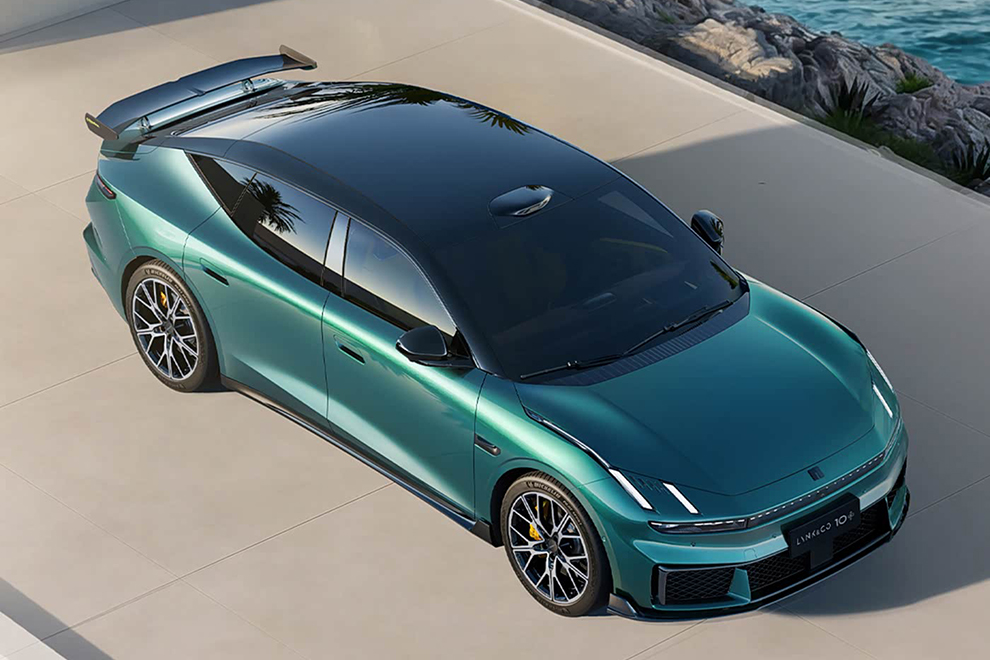
At a glance
- The 10 Em-p is a plug-in hybrid crossover for buyers who want regular electric operation without relying on charging for every journey.
- The export lineup naming includes a 240km Base, 240 AWD Ultra grades, a Sport Edition and selected facelift versions.
- Treat the 240 km marker as a model-name claim until its test cycle, range basis and local homologated value are confirmed.
- Price, availability and MOQ are unit-specific; use the current live listing for every binding number.
- A one-unit purchase may be possible, but seller terms, documentation and consolidation must be confirmed before payment.
- Destination approval, steering side, shipping terms and aftersales support matter as much as the headline specification.
Why the Lynk & Co 10 Em-p matters for export markets
The Lynk & Co 10 Em-p enters export markets as a plug-in hybrid crossover from a design-focused marque. Its relevance is not simply electrification: the vehicle combines a gasoline engine, electric drive and an externally rechargeable battery, giving distributors a model for buyers who want electric running in daily use without depending on charging for every journey. That makes it a bridge product for markets where infrastructure, fuel availability and driving patterns vary widely. For overseas dealers, it is a distinctive Chinese alternative to mainstream family SUVs, provided homologation and aftersales support are handled professionally.
The model is particularly relevant where daily routes are short enough for regular electric operation but regional travel crosses areas with sparse charging. Fleet operators can compare energy use over repeated duty cycles, while private buyers gain flexibility over weather, range anxiety and changing fuel access. The 240 km designation used in several export trim names reinforces the electrified positioning, but it should not be treated as a universal real-world or local-certification claim. Dealers should market verified figures only and distinguish electric-only range from any combined driving figure in official documentation.
Export appeal also depends on whether Lynk & Co can support the vehicle after delivery. Buyers should examine parts supply, technician familiarity, software updates, warranty administration and residual-value expectations in their own market, not just the source-country catalogue. Local taxation may treat a plug-in hybrid differently from a conventional SUV, while city restrictions or fleet policies can reward—or exclude—its operating profile. The 10 Em-p therefore matters most to distributors that understand Chinese vehicle specifications and are prepared to complete homologation, marketing and service setup rather than merely import a unit.
- Verify destination type approval.
- Match charging access to routes.
- Plan parts and service support.
Model range, trims and powertrain variants: how the lineup is structured and how to choose
The export-facing lineup is organized around a 240km Base, 240 AWD Ultra and 240 AWD Ultra Sport Edition, with facelift versions appearing in the naming of the two higher grades. This gives buyers a clear top-down choice: entry specification, AWD Ultra equipment, or a Sport Edition with a different equipment and appearance proposition. However, trim labels alone are not a complete build sheet. Ask the seller for the exact vehicle specification, production version and option list, because similarly named units can differ in market equipment, charging equipment and homologation details.
Power choices should be evaluated around the plug-in hybrid system rather than the 240 km wording alone. The Em-p combines a gasoline engine, electric drive and a rechargeable traction battery; AWD is explicit for the named Ultra grades, while the Base should not be assigned a drive layout without confirmation. For fleet calculations, request battery capacity, usable capacity, motor output, system output, test-cycle electric range and charging rates. Separate the China-market range label from the figure quotable after local type approval, because electric-only range, combined range and real-world consumption answer different questions.
Choosing among Base, Ultra and Sport Edition is largely an equipment and total-cost decision, not just a performance decision. Start with the buyer’s need for AWD, cabin technology, safety assistance, luggage capacity and warranty support, then compare the verified options on the selected unit. The Sport Edition should be evaluated on its actual specification rather than assumed to be mechanically superior. For facelift and non-facelift names, check model-year consistency, production date and cosmetic differences, because these can affect parts ordering and resale presentation even when the core powertrain is similar.
- Verify the range test cycle.
- Confirm battery and charging data.
- Compare actual equipment.
New vs used Lynk & Co 10 Em-p: how export inventory is structured and how buyers choose
A live export catalogue should be read as a source of vehicles with different ownership and condition profiles, not as a uniform new-car feed. New vehicles can be factory stock, exhibition stock or unregistered dealer inventory, although the label alone does not prove the history. Used examples may come from demonstration fleets or private ownership. In every case, check the VIN, production date, mileage, title status and declared condition. This discipline is especially important for a plug-in hybrid, where battery history and actual use matter alongside cosmetic condition and damage history.
For a used 10 Em-p, ask for a battery state-of-health report, evidence of charging and maintenance history, and confirmation that the hybrid system, infotainment functions and driver-assistance systems work as expected. Inspect the underbody, bodywork, tyres and cabin for signs of misuse or incomplete repairs, and obtain service records. A low odometer reading does not prove gentle use, while a high reading does not automatically disqualify a vehicle if its battery and mechanical condition are documented. The aim is a transparent condition premium or discount rather than a rule based on age alone.
New inventory is easier to align with a new-car warranty and a known delivery sequence, but it can still carry showroom preparation, unwanted options or a production date that affects registration. Used inventory can offer better value when a buyer wants the same trim, depreciation and a known operating history, yet carries more uncertainty over battery ageing, software revisions and repair quality. Decide which uncertainties matter more: use a factory-fresh vehicle for fleet consistency, or a documented used example for a lower acquisition commitment. Request an RFQ for both categories and compare the written terms.
- Check VIN and production date.
- Request used-battery health evidence.
- Compare warranty transferability.
How export pricing works: the factors behind a live listing price, and how to read one
A live 10 Em-p export price is the seller’s asking price for a defined vehicle at a defined time, not a permanent model price. It can move with model year, facelift status, trim, the 240 km range or battery version, AWD format, optional equipment, mileage, condition, ownership history and commercial terms. Currency exchange also affects the displayed figure. Because the same trim name can contain different specifications, compare prices only after matching VIN-level details, production date and included equipment. The current amount should be read on the live listing.
Price basis matters as much as the amount. Ask whether a listing is on an Ex Works, FOB, CIF or another basis and what that price excludes. Ocean freight, insurance, export documentation, inland haulage, port charges, inspection, customs duty, VAT or GST and local registration can all change landed cost. For a distributor, use the vehicle price as one line in a total landed-cost model rather than treating it as the final acquisition figure. If a quote mixes currencies, require the currency, validity period and exchange-rate basis clearly in writing.
When reviewing a live listing, confirm the vehicle name, trim, range label, drive designation, VIN, production year, mileage, condition, options, seller location and available documentation. Read the commercial fields: MOQ, payment schedule, Incoterm, freight assumptions, and whether the displayed price includes export preparation. The exact price, MOQ and availability for each vehicle are shown in the live ChinaCarDirect inventory and should be treated as the binding current figures. Ask the seller to state price-changing inputs—battery version, accessories, colour, condition adjustment or freight—rather than relying on a headline figure. A written quotation tied to the specific listing is the correct basis for comparing offers.
- Match trim, year and condition.
- Confirm currency and Incoterm.
- Calculate total landed cost.
MOQ, ordering and payment: single units vs consolidating a container
MOQ is a seller and transaction rule, not a permanent property of the 10 Em-p. Some live offers may accept one vehicle, while other offers may apply a higher lot quantity or require consolidation. Wholesale buyers should read the MOQ shown on each listing and confirm it before reserving stock; they should not infer the rule from another unit of the same trim. For a test-car programme, a single-unit order can simplify homologation and cash planning. For a dealer launch, consolidating compatible units may improve freight efficiency and give the importer more control over specification mix.
A safe ordering process separates commercial commitment from final release. Agree the exact vehicle, documentation, Incoterm, inspection standard, payment milestones, cancellation terms and delivery estimate in writing. Common structures can include a deposit followed by balance against inspection or shipping documents, while larger transactions may use a letter of credit. The right method depends on the parties, jurisdiction and risk allocation, so do not assume one payment route is mandatory or secure by itself. Verify title ownership and the exporter’s ability to issue the agreed invoice and transport documents on time.
Container consolidation needs a different level of control because a mixed shipment can complicate specification, paperwork and later parts planning. Group vehicles only after checking trim, production version, charging specification, steering side, homologation route and expected arrival timing. Reserve loading space with the freight forwarder, not merely the vessel, and specify securement and inspection requirements. Keep serial numbers, keys, documents and accessories under a single handover record. If the importer cannot support several variants immediately, a smaller mixed order may be commercially safer than filling a container with unmarketable stock.
- Check each listing’s MOQ.
- Link payment to clear milestones.
- Consolidate only compatible specifications.
Shipping, homologation and market compliance caveats: LHD/RHD and import rules by country
Vehicle shipping normally involves specialized roll-on/roll-off or flat-rack handling, with a full container sometimes used for multiple units. The method affects securement, space, cost and exposure to handling damage, so the forwarder should confirm the carrier’s requirements and the route, rather than assuming a standard car deck. Any lithium traction battery requires the correct transport declaration and packing compliance, which the shipper and carrier should handle. Marine insurance, port handling, destination charges, customs clearance and inland delivery should be quoted as separate components. Pre-shipment inspection is most useful before loading, not after arrival.
Steering side is a critical market question. Do not assume a Chinese vehicle is right-hand drive merely because it is being exported to a RHD country; the live listing must state the configuration. Where local rules require RHD, confirm whether the vehicle was factory-built for that market or whether a documented conversion is permitted, safe and accepted at registration. A conversion can affect components, warranty and parts availability. The VIN, steering-side specification and local type approval should agree before shipment. If these points cannot be verified, the unit should not be presented as market-ready.
Import rules are country-specific rather than universal. A buyer must check type approval, emissions and safety requirements, PHEV or charging-system rules, local labelling, customs valuation, duty, VAT or GST, and any incentives conditioned on a locally homologated configuration. Import classification, axle or towing limits and battery handling may also affect the process. Use a customs broker familiar with Chinese vehicle imports and the destination market, and provide the complete specification early. Local registration is a separate compliance event; neither an export listing nor a shipping document proves that the vehicle is approved for road use.
- Confirm steering side.
- Obtain local type approval.
- Separate freight, duty and port costs.
Who should buy the 10 Em-p — and who should pick a different vehicle
The 10 Em-p suits overseas buyers who want the operating flexibility of a plug-in hybrid: regular electric travel where charging is convenient, plus a gasoline-powered fallback for longer or less predictable routes. It can suit passenger-car dealers, mixed urban and regional fleets, and companies assessing a Chinese alternative to conventional compact or midsize SUVs. The strongest case is a well-informed importer that can verify the homologated range, maintain parts and technician support and explain the vehicle’s real-world operating pattern without overstating the 240 km label. The model is most logical where those capabilities already exist.
It is a weaker choice for buyers whose priority is a zero-tailpipe-emission battery-electric vehicle, especially where policy, lease rules or charging access make a PHEV ineligible or unattractive. It may be unsuitable for operations with low route mileage if the acquisition premium cannot be justified by fuel savings, or for buyers requiring towing and load capability that has not been confirmed for the exact variant. Do not infer those capabilities from AWD, Sport or Ultra badges. Any commercial fleet should model depot charging, duty cycles, tax treatment and residual value before committing to a large order.
The buyer who should pick a different vehicle is often defined by service rather than specification. If the destination has no Lynk & Co technician network, limited access to model-specific parts or uncertain warranty administration, an established rival with stronger local aftersales may reduce operating risk. Conversely, a distributor prepared to import parts, maintain training and support the model over several years can turn that same gap into a commercial advantage. Before ordering, obtain written answers on warranty claims, diagnostic software, recurring parts and service intervals, and compare them with the support offered for the shortlisted alternatives.
- Suited to mixed-energy driving.
- Weak for zero-emission-only mandates.
- Require local service support.
Main rivals and how the 10 Em-p compares
The closest comparison set depends on whether the buyer prioritizes a direct plug-in hybrid, an extended-range product or an established global alternative. In the Chinese export segment, the BYD Song Plus DM-i and Geely Galaxy Starship 7 are direct PHEV-family competitors, while Changan Deepal S07 overlaps in size and price through range-extender and battery-electric versions. Compare the Lynk & Co 10 Em-p on verified drive systems, usable electric range, charging, safety equipment, load space and local support. Brand image alone is not enough, and headline range figures from different test cycles should not be compared without context.
Against the BYD Song Plus DM-i, the 10 Em-p offers a distinct Lynk & Co design and specification route, but the practical decision may be driven by BYD’s local dealer and battery support. Against the Geely Galaxy Starship 7, compare packaging, boot usability, option content, charging capability and fuel use on the same local route; both are sophisticated Chinese PHEV crossovers, so aftersales evidence often separates them. Against the Deepal S07, architecture matters: its range-extender and battery-electric options serve a different use case from a plug-in hybrid, and eligibility for local incentives may differ.
Choose the 10 Em-p when its verified AWD or equipment proposition, design identity and sourcing terms create a commercial advantage, and the importer can support the vehicle properly. Choose the Song Plus DM-i or Starship 7 when local network, financing or proven demand makes them easier to move. Consider the Deepal S07 when electric-only daily driving and range-extender convenience dominate. None is automatically the strongest choice: make the final decision from destination-compliant specifications, landed cost, parts support and realistic duty-cycle economics, not from the model badge or a single range headline.
- Use one range test basis.
- Compare architecture and incentives.
- Include service access.
Live Lynk & Co 10 Em-p export inventory
View all listings →Real units currently on ChinaCarDirect with per-unit asking prices and MOQ. Availability updates live from the catalogue.
Lynk & Co Lynk & Co 10 EM-P 2025 Facelift 240 AWD Ultra Sport Edition
Lynk & Co Lynk & Co 10 EM-P 2025 Facelift 240 AWD Ultra Sport Edition
Lynk & Co Lynk & Co 10 EM-P 2025 Facelift 240 AWD Ultra Sport Edition
Lynk & Co Lynk & Co 10 EM-P 2025 Facelift 240 AWD Ultra Sport Edition
How to buy a Lynk & Co 10 Em-p from China
-
1
Define the destination and duty cycle
State the destination country, urban and rural route split, annual distance and depot-charging access. Use these inputs to decide whether the plug-in hybrid operating pattern is suitable and which homologated range figures matter.
-
2
Shortlist the correct export grade
Review the current live 10 Em-p listings and compare Base, AWD Ultra and Sport Edition units using confirmed drive layout, equipment and production version. Do not rely on trim names alone.
-
3
Build the vehicle dossier
Request the VIN-level specification, battery and motor data, range test cycle, charging details, dimensions, steering side, production date, warranty terms and available export documents.
-
4
Request a landed-cost quotation
Ask for a written quote identifying the exact vehicle, currency, Incoterm, freight basis, insurance, documentation, inspection and any exclusions. Have the seller state how duty and taxes will be treated.
-
5
Inspect and verify the unit
Use a pre-shipment inspection to verify condition, VIN, mileage, battery information, keys, options and visible damage. For used vehicles, also review battery-health evidence, service records and ownership documents.
-
6
Agree MOQ and payment milestones
Confirm the listing-specific MOQ, deposit, balance trigger, inspection requirement, cancellation terms and Incoterm in writing. For consolidation, check that every unit has compatible specifications and a supported homologation route.
-
7
Ship and complete local compliance
Book compliant vehicle transport with the forwarder, provide the battery and vehicle documents, and appoint a customs broker for the destination market. Complete type approval, customs clearance and registration before commercial release.
10 Em-p vs rivals
| BYD Song Plus DM-i | A direct PHEV-family SUV competitor in Chinese export portfolios, with a similarly electrified family-car proposition. It is a strong alternative where BYD’s local dealer network, battery warranty and homologated residual-value evidence are more compelling; compare verified capacity, electric range and aftersales terms rather than headline range. |
|---|---|
| Geely Galaxy Starship 7 | Another Chinese PHEV crossover competing on design and electrification. Buyers should compare cabin packaging, boot space, real-world fuel use and local parts support; the 10 Em-p may suit those prioritizing its specific AWD and Ultra proposition and Lynk & Co brand identity. |
| Changan Deepal S07 | A close size-and-price alternative offered with range-extender and battery-electric architectures. It may appeal where extended-range electric driving is the priority, while the 10 Em-p’s plug-in hybrid format is more appropriate for buyers wanting direct charging and engine participation across markets. |
Frequently asked questions
How is the Lynk & Co 10 Em-p export price determined?
The live price reflects the unit’s model year, trim, range or battery version, drive configuration, options, condition and seller terms, with exchange rates also affecting the displayed amount. Freight, insurance, port charges, duty, VAT and other costs may sit outside that price depending on the Incoterm. Check the exact current price, MOQ and availability on the live unit listing.
What powertrain and range should I expect?
The 10 Em-p is a plug-in hybrid crossover combining a gasoline engine, electric drive and an externally rechargeable traction battery. The 240 km marker appears in several export trim names, but it should not be presented as a local homologated range until its test cycle and range basis are confirmed. Battery capacity, motor output, charging rates and homologated range are available through the unit’s verified specification.
Is a new or used Lynk & Co 10 Em-p better for export?
New vehicles generally offer clearer condition history and easier warranty alignment, while used vehicles may reduce acquisition cost but introduce uncertainty over battery health, mileage, repairs and software revisions. A used plug-in hybrid should be selected only after a battery state-of-health report and supporting service, ownership and inspection records are reviewed. Compare the complete terms rather than assuming either condition is automatically cheaper.
What is the MOQ for the 10 Em-p?
MOQ is set by the seller and listing rather than by the model, so check the current live unit and obtain written confirmation before reserving stock. One vehicle may be available for a test or pilot order, while some sellers require several units or consolidation. For a larger order, confirm that every unit has compatible equipment, documentation and expected arrival timing.
What affects shipping time and cost?
Shipping cost and timing depend on the vehicle’s origin and destination, transport method, vessel or roll-on/roll-off availability, port handling, inland delivery, insurance, customs work and destination charges. The route, production readiness, documentation and chosen Incoterm also affect the schedule. Obtain a freight quotation tied to the specific vehicle rather than relying on a generic car-shipping estimate.
Are spare parts available for the Lynk & Co 10 Em-p?
Parts must be matched to the VIN, production version and trim, especially when facelift and non-facelift vehicles are mixed in one operation. Before ordering, ask the seller or distributor to confirm parts availability, regional support, warranty coverage and realistic lead times for commonly serviced items. Also verify that replacement components can be imported and used under the destination’s technical requirements.
Is a right-hand-drive Lynk & Co 10 Em-p available?
RHD availability cannot be inferred from a Chinese export listing. Check the live unit’s steering-side specification and ask whether it was factory-configured for the destination or would require conversion. Where RHD is mandatory, local type approval must recognize the exact configuration, and the VIN, installed components and registration dossier must agree.
How do I order a Lynk & Co 10 Em-p from China?
Shortlist a unit in the live inventory, then send an RFQ with the destination, required trim, steering side, budget basis and expected quantity. Request a unit-specific written quotation, verify the specification and documents, agree inspection, MOQ, payment and Incoterm, and release the balance only against the agreed milestones. Finally, arrange compliant transport, customs clearance, local type approval and registration.
Ready to source the Lynk & Co 10 Em-p?
Request a destination-specific RFQ for a live Lynk & Co 10 Em-p quotation, trim recommendation and landed-cost estimate.
Request a quote