
Lynk & Co Z10 Export Buying Guide for Overseas Dealers
Compare Lynk & Co Z10 trims, 95 kWh range variants, export pricing, MOQ and shipping requirements before buying a new or used EV from China with confidence.
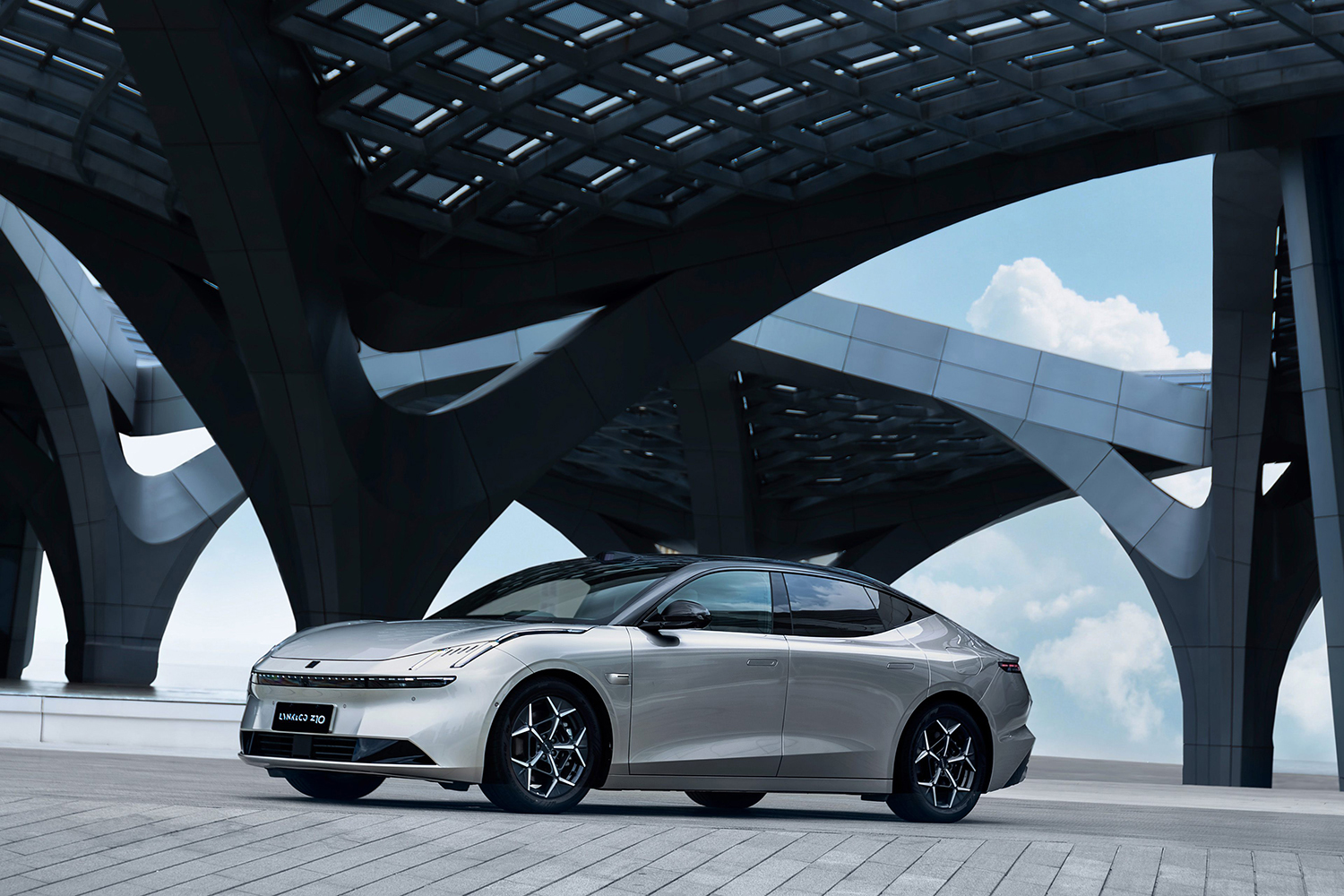
At a glance
- The Z10 is a 95 kWh battery-electric fastback sedan with distinct RWD, AWD and 4WD configurations.
- The 766 km RWD Max leads the listed CLTC range, while the AWD and 4WD versions are rated at 702 km.
- New and used Z10 purchases require separate condition, warranty and total-cost checks.
- Live per-unit pricing, MOQ and availability must be confirmed for the exact vehicle.
- Homologation, charging, service access and parts planning determine real export suitability.
Why the Lynk & Co Z10 matters for export markets
The Lynk & Co Z10 is a battery-electric fastback sedan with a premium-market positioning rather than a conventional entry-level saloon. For overseas buyers, its relevance is not simply that it is a Chinese EV; it is that the Z10 combines a premium visual identity, a substantial 95 kWh battery and multiple range-and-drive configurations in one executive-style package. That makes it interesting to dealers seeking a distinctive alternative to established global sedans, particularly when the destination market already supports strong charging coverage and favourable electric-vehicle policy and has credible local servicing arrangements.
The model’s export proposition rests on three buyer priorities: range, technology-led presentation and a different image from the familiar Western saloon. The Z10 uses a 95 kWh battery across the named export configurations, with a longer-range rear-wheel-drive version and shorter-range all-wheel-drive or four-wheel-drive versions. This gives importers room to match customers with different priorities instead of buying one generic specification. For fleet operators, the key question is whether the homologated range still meets route needs after accounting for local climate, speed and charging stops rather than headline test-cycle figures alone.
Demand should not be treated as universal, because the Z10 remains a China-origin marque with uneven recognition outside China. Export buyers should therefore assess whether customers value Chinese design and smart-cabin technology enough to offset a less established resale record than that of long-selling global nameplates. A distributor with local marketing capability, trained technicians and access to parts can make a meaningful difference. For a first-time importer, the Z10 is strongest as a carefully selected, homologated product with a credible service plan, not as an untested volume gamble at scale.
- Premium BEV fastback positioning.
- RWD, AWD and 4WD choices.
- Service readiness determines export viability.
Model range, trims and powertrain variants: how the lineup is structured and how to choose
The Z10 range shown for export is built around one 95 kWh battery family, but the drive system and rated range differ by trim. The 95 kWh 766 km RWD Max is the range-oriented rear-wheel-drive option. The 95 kWh 702 km AWD Smart Drive Ultra and 95 kWh 702 km 4WD Halo pair an all-wheel-drive or four-wheel-drive drivetrain with a shorter rated range. These figures use China’s CLTC cycle, so they are useful for comparison within the model but should not be read directly as guaranteed real-world driving distance abroad.
Choose the RWD Max when route coverage, efficiency-oriented operation and the highest listed range are the main priorities. It suits buyers who expect mostly two-wheel-drive roads and want to avoid the hardware and tyre implications of an additional driven front axle. The AWD Smart Drive Ultra can be more appropriate for buyers who prioritise all-wheel-drive capability and the technology positioning carried by its trim name. None of these labels alone proves performance; compare motor output, tyre costs, acceleration data, equipment and charging specification on the exact unit before ordering.
The 4WD Halo needs a different buying rationale because its name signals a distinct customer proposition within the same 702 km range group. Do not assume that Halo and Smart Drive Ultra differ only in badge or that one has every feature of the other; verify the equipment list, motor ratings, suspension and driver-assistance hardware for the exact vehicle. A fleet buyer may value standard all-wheel-drive deployment, while a technology-focused dealer may prioritise cabin and assistance features. Those choices should follow the destination market’s rules and local demand, not trim prestige alone.
- 95 kWh battery family.
- 766 km RWD Max leads range.
- Compare Halo equipment carefully.
New vs used Lynk & Co Z10: how export inventory is structured and how buyers choose
Treat every Z10 opportunity as either a factory-new vehicle or an assessed used vehicle; do not infer either status from the model name alone. A recent electric model can appear in both channels over its life, with new examples tied to production and delivery dates and used examples carrying an odometer, prior ownership history and potentially limited factory warranty. The appropriate comparison starts with the VIN-level condition report. The live Z10 listings are the controlling source for each vehicle’s status, location and commercial terms before any importer places a deposit.
For a new Z10, the priorities are delivery condition, production consistency, warranty transfer and whether the vehicle has remained undamaged during storage or transit. Confirm whether the odometer is consistent with a new vehicle, ask for a factory seal or inspection evidence where appropriate, and reconcile the VIN with the invoice and export documents. Dealers may value a ready-to-register unit for immediate handover, while a fleet buyer may prefer a newer production batch with remaining factory coverage. The value of those benefits must be weighed against the unit’s live quote.
A used Z10 can make sense when a buyer wants the model at a lower outlay and can verify that the saving exceeds battery, warranty and refurbishment risk. Request battery state-of-health data, service history, recall completion, accident, flood and tyre inspection, plus confirmation of software or hardware changes. Compare energy consumption and charger compatibility with a new vehicle, but do not treat the test-cycle range as evidence of present battery condition. For fleets, a mixed new-and-used strategy may balance capital budget with replacement cycles, provided used units receive technical approval.
How export pricing works: the factors behind a live listing price, and how to read one
An export listing price is not a universal Z10 price. It should be read carefully as the seller’s current asking price for one defined vehicle, tied to trim, drive system, condition, mileage, production period and any listed equipment. The quote may also move with the seller’s inventory cost, the exchange rate used by the platform, and the commercial terms requested. Freight, marine insurance, destination charges, customs duties, taxes and registration are sometimes separate. Therefore, two vehicles with similar names can have materially different delivered economics even before a buyer negotiates.
Read a live record and record each variable before comparing offers. Check model year, exact trim, drivetrain, rated range, condition, mileage, VIN availability, seller location, minimum order, payment terms, stated Incoterm and quote validity. Ask whether the displayed amount is an ex-works, FOB or other basis, and whether export documentation, inspection, loading and destination charges are included. A cheaper vehicle price can produce a higher landed cost if it requires additional transport, compliance work or a different shipping method. Always request a written pro forma invoice that maps every charge.
Treat marketplace data as a current-quote starting point, not a permanent catalogue price for business planning. Ask the supplier to reconfirm the unit price and availability before ordering, because trim mix, currency movements and costs can alter the asking amount. Build a landed-cost worksheet that adds only confirmed items: vehicle price, inland haulage, freight, insurance, handling, duties, taxes and destination transport. Keep assumptions visible. The live Z10 inventory is where to check current per-unit price, MOQ and availability; a supplier quote should confirm the figures on which you will order.
- Compare equivalent trim levels.
- Confirm every landed-cost component.
- Reconfirm live commercial terms.
MOQ, ordering and payment: single units vs consolidating a container
MOQ is a seller-specific commercial condition, not a fixed characteristic of the Z10. A live vehicle may be sold to one buyer, while a seller may impose a larger MOQ for a production lot, containerised shipment or special colour allocation. Read the MOQ field on each current listing and confirm it in the pro forma invoice. A wholesale buyer needing several units can consolidate with an importer or purchasing agent if a lot requirement is too large. This lowers the per-vehicle freight burden but adds contractual and allocation complexity overall.
A single-unit order moves through several checkpoints: select the exact vehicle, agree specifications and commercial terms, pay a deposit, verify production or condition, complete final payment, and release the unit only after the agreed inspection and documentary checks. The purchase contract should identify the VIN or SKU, trim, condition, price basis, MOQ, deposit, balance trigger, Incoterm, delivery point, insurance responsibility and cancellation terms. Use a protected payment method or a verifiable business account, and independently confirm bank details. Avoid transferring funds based on an unverified message or changing account instructions.
Container consolidation requires tighter control. Several buyers may share freight, handling and documentation under a lead buyer, but each vehicle still needs an identifiable VIN, sale record, insured interest, allocation and inspection record. Define who pays for damaged or delayed units, how the balance is released after inspection, and whether customs documents list the consignee, organiser or end user. The Incoterm must match the handover point; an FOB price does not automatically cover the inland journey to port. Consolidation is useful only when its administration remains less costly than the freight saving it creates.
Shipping, homologation and market compliance caveats: LHD/RHD and import rules by country
Transport planning begins with the vehicle’s dimensions, packing configuration and destination, not only with the model name. An electric vehicle’s traction battery must be handled under the carrier’s dangerous-goods procedures, supported by the manufacturer’s battery test documentation and secure packaging instructions. The forwarder should confirm whether the unit travels in a vehicle carrier, a container or another approved method, and who bears damage risk at each milestone. Sea freight, Ro-Ro or container charges, inland transport, insurance and port handling can vary with route, season, equipment availability and the consignee’s requirements.
Steering configuration is an early gate. Vehicles sourced from China are commonly configured for left-hand drive, so a right-hand-drive buyer must not assume RHD availability. Ask the supplier to confirm the factory steering configuration for the exact vehicle and whether any market version has valid type approval in the destination country. An aftermarket conversion is not automatically acceptable because safety, restraint, lighting, software and registration requirements may differ. For LHD markets, verify that the planned VIN, charger, software and equipment can be registered and used there without any local modification.
Import compliance is jurisdiction-specific and must be closed before shipment. Check customs classification, duty and VAT or GST treatment, eligibility for any electric-vehicle incentive, and whether local emissions or vehicle-age rules apply. Type approval may cover lighting, braking, radio, software, cybersecurity, battery safety and driver-assistance functions. A buyer needs the homologation dossier, VIN and export documents, plus a clear plan for warranty service, software support and replacement parts. Because rules and incentives can change, obtain advice from a customs broker and the destination authority rather than assuming Chinese approval guarantees registration.
- Battery transport documentation required.
- Confirm factory steering side.
- Close homologation before shipment.
Who should buy the Z10 — and who should pick a different vehicle
The Z10 is a strong candidate for an importer or fleet buyer that wants a distinctive premium BEV and can use it properly. It makes sense for company cars, executive fleets and dealer demonstrators where occupants value a modern cabin, ride and exterior design, while the battery can reduce range anxiety. It can help a dealer broaden a premium EV range without defaulting to the same global model as every competitor. These benefits depend on route planning, compatible charging and a service partner capable of handling software and high-voltage components.
It is a weaker fit for buyers who put proven resale value, a mature international service network or immediate right-hand-drive availability ahead of styling and specification. Very high-mileage urban fleets may also need a lower-cost, smaller-battery vehicle with simple charging demands. Dealers entering a new EV segment should consider whether the brand can earn enough attention to justify marketing and training costs. If the destination has weak charging access, punitive import treatment or no credible maintenance pathway, a more established electric model may offer a lower operational risk for the buyer.
A prudent fleet decision starts with duty-cycle modelling rather than trim appeal. Map daily mileage, route elevation, temperature extremes, charging dwell time and depot electricity availability, then compare the result with the homologated range and charging specification of the shortlisted vehicle. Add insurance, tyres, maintenance, software support and residual-value assumptions to the ownership model. For a mixed fleet, one carefully chosen Z10 can serve as a pilot while another vehicle covers intensive duty cycles. Scale only after the pilot reveals service turnaround, charger reliability and real-energy consumption under local conditions.
- Strong design-led fleet fit.
- Mature support may matter more.
- Pilot before fleet scaling.
Main rivals and how the Z10 compares
Tesla Model 3 is a clear global benchmark for a premium electric sedan, with the advantage of brand recognition and, in many markets, a more familiar charging and ownership proposition. The Z10 counters with an expressive China-origin design, a different cabin proposition and the choice of a range-focused RWD Max or AWD and 4WD variants. A Model 3 buyer prioritising resale confidence, charging convenience and an established support footprint may find the Tesla safer. A Z10 buyer may accept a less-established support footprint in exchange for design, equipment or sourcing differentiation.
The BYD Seal is a closer China-built rival because it targets customers comparing sleek electric saloons with substantial range and available all-wheel-drive versions. BYD can be easier for international buyers to justify because its export presence and brand footprint are broader, although local execution varies. The Z10’s differentiator is its 95 kWh range-and-drive structure, including the range-led RWD Max and distinct AWD Smart Drive Ultra and 4WD Halo trims. Compare homologated equipment, warranty, charging support and parts access rather than treating either model’s global reputation as a complete answer.
The XPeng P7 competes in the same smart-EV sedan territory for buyers who prioritise digital cockpit design, connectivity and driver-assistance positioning. It may be the better-established choice for an importer whose customers recognise that brand, while the Z10 may appeal through its exterior design, 95 kWh options and distinct trim hierarchy. The choice should be made on test drives, software and assistance functionality in the destination language, service responsiveness, parts planning and verified charging compatibility. If operational factors are equal, model availability, homologation and the landed commercial terms should decide.
- Model 3 offers global familiarity.
- BYD Seal brings export scale.
- XPeng P7 is a smart-sedan peer.
Live Lynk & Co Z10 export inventory
View all listings →Real units currently on ChinaCarDirect with per-unit asking prices and MOQ. Availability updates live from the catalogue.
How to buy a Lynk & Co Z10 from China
-
1
Define the destination requirement
List route length, load, charging access, service coverage and the destination’s rules before selecting a vehicle. Separate fleet needs from retail demand so the chosen specification has a clear market role.
-
2
Choose the drivetrain and range
Compare the RWD Max for listed range with the AWD Smart Drive Ultra and 4WD Halo for drive configuration. Ask the seller for motor output, equipment, charging details and local-homologation status on the exact unit.
-
3
Check compliance before commitment
Confirm the factory steering side and whether the vehicle has destination-market type approval. Check the charging connector, battery transport paperwork and local software or language support before committing funds.
-
4
Review the live inventory
Use the live listings to compare VIN-level condition, trim, mileage where applicable and commercial terms. Current price, MOQ and availability must come from the unit’s live listing and a reconfirmed supplier quote.
-
5
Verify the vehicle and request a quotation
Request the VIN, production or condition report, service and recall records, warranty transfer terms, export documents and a written landed quotation. Ensure the quote states the Incoterm, freight assumptions, validity and exclusions.
-
6
Agree MOQ and payment terms
Decide whether this is a direct single-unit purchase or a consolidated container order. Record deposit and balance triggers, payment method, inspection release, insurance responsibility and cancellation terms before sending funds.
-
7
Arrange compliant shipping
Book transport with a named forwarder and customs broker. Track export clearance, loading, transit, customs release and pre-delivery inspection, then complete registration and aftersales handover.
Z10 vs rivals
| Tesla Model 3 | The Model 3 benefits from global brand familiarity and a more established ownership proposition in many markets. The Z10 offers differentiated China-origin styling and a broader selection of range-focused RWD and driven configurations for buyers prioritising design and sourcing choice. |
|---|---|
| BYD Seal | The BYD Seal is a close China-built electric sedan competitor and may benefit from a broader export footprint. The Z10 stands out through its 95 kWh range-and-drive structure, distinct AWD and 4WD trims and a more design-led market position. |
| XPeng P7 | The XPeng P7 competes directly in the smart-EV sedan segment, particularly for technology-focused buyers. The Z10 may appeal where buyers prioritise exterior design, 95 kWh options and its distinct trim hierarchy, subject to local software and service support. |
Frequently asked questions
How is the Lynk & Co Z10 export price determined?
The price is unit-specific and reflects trim, drivetrain, condition, mileage, production details, seller costs, currency movements and the requested trade terms. Freight, insurance, duties, taxes and destination charges may sit outside the displayed figure. Check the live Z10 listings for the current per-unit ask, MOQ and availability, then have the supplier confirm the quote in writing.
What powertrain and range options does the Lynk & Co Z10 have?
The Z10 is a battery-electric fastback sedan with a 95 kWh battery. The export range includes the 766 km CLTC RWD Max, 702 km CLTC AWD Smart Drive Ultra and 702 km CLTC 4WD Halo. These are China test-cycle figures, so local weather, speed, load and charging habits will affect real-world distance.
Should I buy a new or used Lynk & Co Z10?
New vehicles offer the cleanest handover condition and the most straightforward warranty path, but production timing and remaining coverage must be confirmed. Used vehicles can reduce acquisition cost, yet battery health, accident history, service records, recalls and software state require independent checks. Compare each unit’s total ownership case using the live listing and inspection evidence.
What is the MOQ for Lynk & Co Z10 wholesale purchases?
MOQ is set by the seller and listing rather than by the model name. A single-unit purchase may be possible, while a lot, colour run or container shipment may require consolidation. Read the MOQ on each live listing and confirm it in the written order before paying a deposit.
How long does shipping take and what determines the cost?
Shipping time and cost depend on origin and destination ports, transport mode, route, vehicle dimensions, battery-compliance documentation, handling, insurance, customs and port capacity. The forwarder should provide a route-specific schedule and landed-cost breakdown. Do not rely on a generic transit estimate without confirming the exact loading and release milestones.
Can spare parts be supplied for the Lynk & Co Z10?
Parts support should be agreed before shipment, including who will service the vehicle, how software and high-voltage issues are handled, and how commonly needed items will be stocked. Ask the supplier or local distributor to confirm part availability and lead time for the exact model and production period. A formal aftersales agreement is generally more useful than a general promise of spare-part support.
Is a right-hand-drive Lynk & Co Z10 available?
Chinese-market Z10 vehicles are commonly left-hand drive, so right-hand-drive availability must be confirmed for the exact source vehicle. Ask whether a factory RHD market version exists and whether it already has the destination’s required type approval. Do not assume an aftermarket steering conversion will be accepted for registration or warranty.
How do I buy a Lynk & Co Z10 from China?
Start with the live Z10 inventory, choose a VIN-level unit or a stated configuration, and review the trim, condition, MOQ, Incoterm and current quote. Verify identity, export documents, warranty transfer and the compliance dossier before paying. Use a protected payment process and release the balance against the agreed inspection and shipping milestones.
Ready to source the Lynk & Co Z10?
Request a unit-specific Z10 quotation with trim, Incoterm, freight assumptions, MOQ and compliance-document requirements through ChinaCarDirect.
Request a quote