
Maserati Ghibli Export Buying Guide for Dealers
Export buying guide for the Maserati Ghibli, covering trims, engine choices, live pricing, MOQ, shipping, compliance and comparison with luxury sedan rivals.
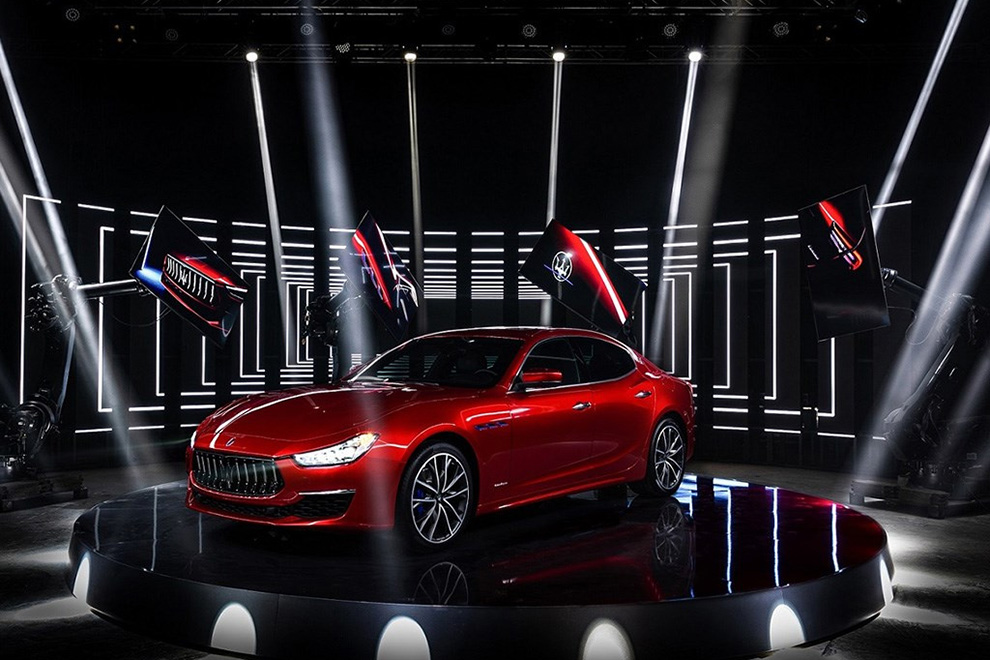
At a glance
- The Ghibli is an Italian four-door luxury sedan for buyers who value expressive design and grand-touring character.
- The export-relevant choice is between the 2.0T turbocharged four-cylinder and 3.0T V6 families, subject to live-unit confirmation.
- Vehicle price, freight, duties, taxes and delivery must be separated to calculate a true landed cost.
- A new car offers known history, while a used Ghibli requires stronger inspection and document checks.
- Local homologation, steering configuration, parts support and import age rules can determine whether an otherwise suitable car is usable.
Why the Maserati Ghibli matters for export markets
The Maserati Ghibli matters in export markets because it combines an Italian luxury identity with the usability of a four-door executive sedan. It offers buyers a more expressive alternative to the German mainstream: distinctive styling, a front-engine layout and a choice between a turbocharged four-cylinder and a V6. That combination gives dealers a recognizable premium product for customers who want prestige without moving to a full-size limousine or SUV. Its appeal is particularly relevant where imported prestige cars are sold through specialist dealers rather than mass-market showrooms, because the badge can support a distinctive sales story.
Demand is not driven by utility alone. The Ghibli gives company directors, professionals and chauffeur-driven buyers a car that looks special in an executive fleet without being as large and expensive to manage as many high-end alternatives. For overseas importers, the model also offers a practical way to enter the Maserati badge with an established sedan name. Its value proposition is emotional and visual as much as it is about the number of standard features. That makes model-year, trim and presentation important when building an export quotation for clients comparing it with more conservative executive sedans.
For fleet and dealer buyers, however, popularity should not be confused with an easy resale. Premium sedans compete for a smaller audience than mainstream models, and local service access, fuel policy and residual-value expectations can determine success more than badge appeal. A sound export decision therefore tests whether the Ghibli fits the destination market’s luxury segment, supports servicing, and offers a total ownership case that the importer can explain credibly. It is also sensible to compare financing, insurance and company-car rules before committing to a large container or substantial opening stock.
- 2.0T and 3.0T powertrain families
- Italian styling in the executive-sedan segment
- Service access and residuals affect resale
Model range, trims and powertrain variants: how the lineup is structured and how to choose
The Ghibli range is organized around two core powertrain families. The 2.0T versions use a turbocharged four-cylinder and are represented by labels such as Edge Edition and GT Edge Edition. The 3.0T family includes Standard, Modena, Luxury and GranSport nomenclature, plus market-specific editions. These labels help identify the engine and market package, but they do not by themselves confirm equipment, paint, upholstery or the exact left- or right-hand-drive layout. For an overseas buyer, the trim name should therefore be treated as a starting point for verification rather than a complete specification.
Choosing between the 2.0T and 3.0T is a balance of character, operating expectations and budget rather than a simple output comparison. The four-cylinder model may be the more rational choice for mixed urban use, especially for buyers focused on operating simplicity. The V6 option is the emotional selection for buyers who value exhaust character and relaxed high-speed travel. Because engine choice also affects drivetrain availability, tax treatment, insurance and maintenance planning, it should be matched to the destination rather than chosen in isolation. Ask for the VIN-specific configuration and a written handover checklist.
Within each engine family, the practical method is to separate visible presentation from mechanical specification. Edge, GT, Standard, Luxury, Modena and GranSport labels may signal different bumpers, wheels, cabin treatments, suspension or drivetrain configurations, depending on market and model year. Rather than paying for a trim name alone, compare the live listing photographs, option list, VIN, odometer reading and service record. This is particularly important for special editions, whose visual status does not guarantee that every buyer values the equipment. A dealership can then bundle similar units only after checking the differences that matter to its client.
- 2.0T turbo four-cylinder family
- 3.0T twin-turbo V6 family
- Verify trim details against the VIN
New vs used Maserati Ghibli: how export inventory is structured and how buyers choose
Export inventory should be read as a set of individual vehicles, not as a homogeneous model-year pool. Search filters can organize the Ghibli range by condition, model year, trim, location and seller, while each live record should reveal the unit’s own identifiers. A model-year label is not proof that a car is unused, just as a new-car label does not prove that every document is in place. Start with condition, mileage, VIN and title status on the specific record. Photos should show bodywork, wheels, cabin and any disclosed damage at close range.
A new Ghibli is attractive to buyers seeking a known history, defined model-year presentation and a lower need to assess wear. It can simplify handover documentation when the seller provides a complete file, although acquisition cost is usually higher and early depreciation must be considered. A used Ghibli may reduce the entry outlay and provide access to desirable equipment or an engine configuration that is no longer common. The trade is uncertainty: prior owners, service records, condition and remaining economic life all require evidence. For export, a documented history can be as important as cosmetic condition.
Neither condition label should replace a physical or documentary inspection. For a used unit, request independent inspection, title and import-eligibility checks, evidence of servicing, and confirmation that the odometer reading is consistent with the records. For a new unit, verify factory configuration, delivery mileage, warranty start, option coding and the documents needed for registration. Buyers targeting fleet use should also compare expected residual values rather than assuming the lowest acquisition cost produces the lowest total cost. A dealer should document every discrepancy and its effect on price, safety or compliance before placing the order.
- Treat every listing as a separate vehicle
- New means known history and higher outlay
- Used requires history and condition evidence
How export pricing works: the factors behind a live listing price, and how to read one
An export price is the result of several layers, not one immutable model price. The vehicle itself is shaped by model year, trim, engine, mileage or condition, options, paint, interior and the seller’s commercial terms. On top of that sit exchange-rate movements, export handling, freight, marine insurance, port charges, destination taxes or duties, insurance, registration and inland delivery. The Incoterm selected helps define which party bears cost and carries risk up to each stage, so two quotes can differ even for similar vehicles. Compare offers on the same landed-cost basis before approval in writing.
When reading a live listing, distinguish the vehicle’s asking price from the buyer’s complete landed cost. Check whether the displayed amount includes export preparation, transport, insurance, customs clearance and local delivery; if not, obtain those items separately. Also verify what taxes are quoted as included, since import duty, VAT or sales tax may be assessed by the destination authority rather than fixed by the seller. The VIN, trim, model year and condition shown on the listing should be repeated in the formal quotation. Any discount should be tied to a disclosed vehicle attribute.
Pricing should be refreshed close to the transaction because exchange rates, sailing space, port congestion and even a seller’s inventory status can move. Buyers should avoid relying on a saved search result or a previously received quotation. Use the live Ghibli listings as the starting point, select the exact unit, and request a written quote with a validity period, payment milestones, delivery scope and exclusions. That process turns an apparently low headline price into a comparable commercial offer and reduces the risk of hidden charges. It also makes negotiation evidence-based and easier to approve.
- Separate vehicle price from landed cost
- Match every quotation to a specific VIN
- Refresh costs before the transaction
MOQ, ordering and payment: single units vs consolidating a container
Wholesale terms and MOQ should be established per seller and per vehicle, not assumed from a marketplace category or copied from another model. Some export offers can be purchased as single units, while a dealer program may require a larger batch or a container plan. If a single unit is permitted, the importer still needs to budget export handling, transport and destination charges that would otherwise be spread across a full load. Ask what quantity is committed, whether mixed trims are allowed, and which units remain available after allocation in the contracted shipment in writing.
A container strategy can improve purchasing control when several compatible Ghibli units are required. Buyers can consolidate similar model-year, trim and specification choices, but a mixed load must still be checked for drivetrain, steering, equipment and destination compliance. The apparent saving from filling more space can be offset by carrying a less desirable trim or by higher inspection and handling. Build the mix from actual retail demand, not from whichever allocation appears cheapest on a listing page. Confirm how the seller allocates units, handles deposits and resolves a failed inspection before shipment.
Ordering should be structured around evidence and payment milestones. Before remitting funds, match the legal entity, invoice, VIN and agreed specification; then use a written sequence covering deposit, balance, inspection, release and refund triggers. Payment method, currency and bank charges can change the effective cost, so clarify them rather than comparing only the headline amount. A professional importer should also define who arranges customs, insurance, terminal handling and delivery, leaving no handoff gap between seller release and final registration. Retain every document and written approval with the vehicle handover file through customs.
- Confirm MOQ for each seller
- Build container mixes from demand
- Tie payments to clear milestones
Shipping, homologation and market compliance caveats: LHD/RHD and import rules by country
Shipping a Ghibli normally involves specialized vehicle transport rather than ordinary break-bulk handling. Roll-on/roll-off carriage is commonly used for finished vehicles, while an enclosed vehicle container may be considered when capacity and cargo security favor it; air freight is generally impractical for a vehicle of this size. The landed logistics plan should identify the loading port, destination port, carrier, vessel or trailer, insurance, terminal charges and storage rules. Delivery timing also depends on origin and destination capacity, booking availability, weather and customs clearance. Confirm who pays each charge and when risk transfers.
Steering configuration is a critical sourcing issue. A China-origin Ghibli may be left-hand drive, while right-hand-drive availability depends on the particular car, production specification and seller. Do not assume a conversion is acceptable: electrical, safety, registration and insurance requirements can make a converted vehicle less attractive. Overseas buyers should request confirmation of the steering side from the VIN-specific listing and compare it with homologation rules before paying. For markets with limited Maserati support, parts and technician availability deserve equal attention. A familiar rival may be easier to support and maintain locally after import.
Chinese-market labels such as China V or China VI refer to the vehicle’s emissions generation and should not be treated as approval for another country. Import rules vary by destination and can include VIN verification, emissions limits, roadworthiness, customs value, duty, VAT or sales tax, age limits, left- or right-hand-drive rules and local type approval. The importer should confirm requirements with a customs broker and the destination authority before shipment and check that the seller can provide the original invoice, registration or import documents needed for clearance in the destination market.
- Match carrier and route to the vehicle
- Verify steering configuration before payment
- China emissions labels are not export approval
Who should buy the Ghibli — and who should pick a different vehicle
The Ghibli fits buyers who prioritize design, prestige and a sporting executive-sedan format over absolute practicality. It is especially relevant to company directors, hospitality clients and enthusiasts who want a long-distance car with a clear Italian character and may be interested in the 3.0T V6. For a dealer, it can serve a narrow but valuable niche alongside more mainstream luxury sedans. The strongest case is a client who values the marque and will maintain it properly. It is less compelling when the brief is lowest operating cost, abundant space or minimal servicing complexity.
Fleet buyers should evaluate the Ghibli as an executive image car, not a default company-pool model. Its fuel use, insurance class, maintenance planning, residual value and availability of trained technicians can materially change the business case. Pilot purchases can be sensible when senior users need a distinctive vehicle and the importer can guarantee support. Larger fleets should compare total cost per kilometre with established premium sedans and include provisions for downtime, servicing and eventual resale. A low purchase price does not offset weak utilization or an unsupported vehicle over time at scale.
Different vehicle needs should lead to a different purchase. An EV mandate, high-volume urban duty, seven-seat transport, heavy cargo or off-road use would be poorly served by the Ghibli’s low-slung sedan format. Buyers focused on the lowest total ownership cost may prefer a more efficient mainstream premium model with a wider service network. A performance enthusiast may also find a dedicated sports sedan or SUV more suitable if cargo capacity, ride height and a focused chassis are priorities. The Ghibli is strongest when style is a genuine requirement rather than a secondary consideration.
- Best for design-led executive buyers
- V6 suits enthusiast priorities
- Fleet case depends on support and residuals
Main rivals and how the Ghibli compares
The BMW 5 Series is the most straightforward alternative for buyers who want the same broad executive-sedan role with more mainstream visibility. It generally offers a wider range of efficient powertrain choices, familiar service coverage and a more practical cost profile. The Ghibli’s advantage is more expressive styling and a stronger sense of occasion; the BMW is usually easier to justify where long-term ownership economy, resale familiarity and technology breadth dominate the decision. It is the safer choice for a fleet manager focused on standardized procurement and predictable support across many markets.
The Mercedes-Benz E-Class competes on comfort, technology and a carefully controlled premium cabin. Buyers who prioritize rear-seat space, driver assistance, configurable equipment or a subdued executive image may find it more directly aligned with their requirements. The Ghibli distinguishes itself through Italian design, a more expressive road character and the option of a characterful V6. In practical terms, Mercedes can be the easier choice for company fleets, while Maserati suits buyers who regard the car itself as part of the reward. The deciding issue is usually emotional preference versus operating rationalism.
The Audi A6 is the more understated rival, with a reputation for clean design, integrated technology and efficient road-going manners. It may be easier to place in a conservative corporate fleet and typically offers a straightforward ownership proposition. The Ghibli counters with a bolder visual identity, a more emotive V6 option and a focus on grand touring rather than anonymity. Neither is universally superior: select the Ghibli for presence and driver appeal, but compare the rivals if fuel economy, cabin technology and broad service convenience are the decisive criteria before purchase.
- BMW 5 Series: broader ownership appeal
- Mercedes-Benz E-Class: comfort and technology
- Audi A6: understated executive efficiency
Live Maserati Ghibli export inventory
View all listings →Real units currently on ChinaCarDirect with per-unit asking prices and MOQ. Availability updates live from the catalogue.
How to buy a Maserati Ghibli from China
-
1
Set the destination and driving-side brief
Name the destination country, entry port, left- or right-hand-drive requirement, intended use and preferred 2.0T or 3.0T configuration before comparing vehicles.
-
2
Filter the live Ghibli inventory
Use model year, trim, condition, location and seller filters, then open exact records rather than relying on a search summary.
-
3
Request a unit-specific export quotation
Ask the seller to state whether the quote includes the vehicle, export preparation, freight, insurance, port handling, customs clearance, duties, taxes and inland delivery, including a validity period.
-
4
Verify identity, condition and documents
Match the invoice and listing to the VIN; review photographs, odometer, title or registration, import documents, service history and disclosed damage, using an independent inspection where appropriate.
-
5
Agree MOQ and payment terms
Confirm the accepted quantity, unit allocation, deposit and balance schedule, currency, payment method, inspection-failure procedure and refund conditions in writing.
-
6
Clear homologation before dispatch
Check local import age, emissions and safety rules, steering requirements, duty, VAT or sales tax and insurance with a broker or authority, and confirm a local parts and service plan.
-
7
Book transport and complete handover
Confirm the Incoterm, loading and delivery ports, carrier, insurance, terminal charges, shipping documents, customs release, arrival inspection, registration and local delivery.
Ghibli vs rivals
| BMW 5 Series | The 5 Series is the more conventional choice for buyers prioritizing efficient powertrains, broad service familiarity and easier long-term ownership economics. The Ghibli offers stronger Italian styling and a more expressive occasion for design-led executive and enthusiast buyers. |
|---|---|
| Mercedes-Benz E-Class | The E-Class is a strong alternative for buyers who prioritize cabin comfort, technology and a restrained executive image. The Ghibli is more emotionally distinctive and offers a characterful V6 option for those who want the drive and presence to be part of the purchase. |
| Audi A6 | The A6 is the understated, technology-focused rival that may fit conservative corporate procurement and buyers seeking efficient road-going manners. The Ghibli is the more emotional selection, emphasizing visual impact, grand-touring character and a distinctive V6 alternative. |
Frequently asked questions
How is the Maserati Ghibli export price determined?
ChinaCarDirect’s live Ghibli listings show the current asking price for each specific car. The final export cost also reflects model year, trim, engine, condition, mileage, options, exchange rates, freight, insurance, port charges, duties, taxes and the selected Incoterm. Read the live listing, then request a written quotation showing inclusions and exclusions.
What Maserati Ghibli specs and powertrain options are available for export?
The core choices are a 2.0-litre turbocharged four-cylinder and a 3.0-litre twin-turbo V6, normally paired with an eight-speed automatic. As an internal-combustion model, the Ghibli has no electric battery range specification. Confirm the engine, transmission, drivetrain, steering configuration and emissions version in the exact live listing.
Is a new or used Maserati Ghibli better for an overseas buyer?
A new Ghibli is easier to assess because its history and delivery condition should be clearly documented, although the acquisition outlay and early depreciation require consideration. A used Ghibli may offer a lower entry cost or desirable equipment, but buyers must verify ownership, service history, mileage, condition, title status and remaining economic life.
What is the MOQ when ordering a Maserati Ghibli from China?
MOQ is established in the individual seller’s offer and should not be inferred from a marketplace search result. A single-unit purchase may be possible when the seller confirms it, while container programs may require a larger batch or restrict mixed trims. Put the quantity, allocation method and any batch conditions into the written quotation.
How long does shipping take and what drives the cost?
There is no universal shipping time or cost because the origin and destination ports, carrier, vessel booking, cargo handling, insurance and customs clearance all matter. The Incoterm determines how delivery, cost and risk are divided between buyer and seller. Ask for a freight quote tied to the selected vehicle, route and delivery scope.
Can spare parts be ordered for an exported Maserati Ghibli?
Parts should be ordered using the VIN and the exact engine, trim, market and emissions version because these can affect compatibility. Confirm availability, lead time and expected shipping cost with Maserati or a specialist before purchase, particularly for trim-specific body or interior components. A local servicing plan is important for long-term ownership.
Is a right-hand-drive Maserati Ghibli available from China?
Availability depends on the specific vehicle, production market and seller, so it must be confirmed for each listing. A China-origin Ghibli may be left-hand drive, while a right-hand-drive example requires a suitable factory configuration or a documented conversion. Check local steering, safety, registration and insurance rules before paying.
How do I order a Maserati Ghibli from China for export?
Browse the live Ghibli records, compare the exact vehicle’s specification and request a unit-specific quotation through an RFQ. Verify the VIN, documents and condition, agree the MOQ, payment milestones, Incoterm and inspection process in writing, and complete customs clearance and registration after transport.
Ready to source the Maserati Ghibli?
Send ChinaCarDirect your destination, preferred Ghibli trim and required quantity for a unit-specific export quotation.
Request a quote