
Maserati Levante Export Price and Buying Guide
Review Maserati Levante trims, engines, export pricing, MOQ, shipping and compliance, then compare live China listings for overseas dealers and importers.
At a glance
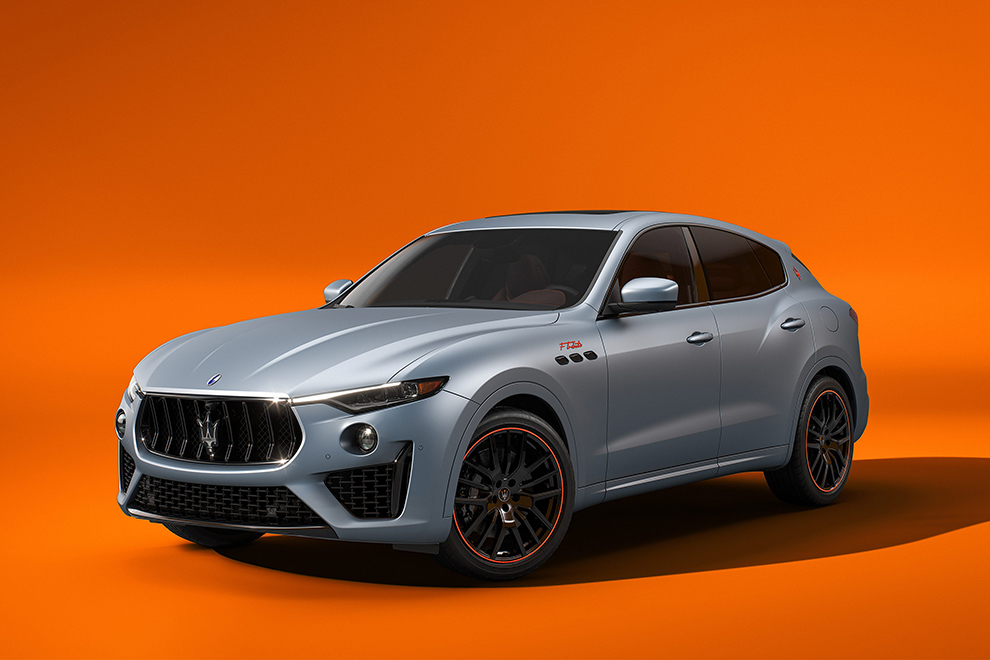
- The Levante combines midsize-SUV practicality with grand-touring design and a strong halo effect for premium importers.
- The export-relevant lineup spans a 2.0T GT, 3.0T V6 and 3.8T V8, with all-wheel drive and an eight-speed automatic.
- Model year does not by itself identify whether a Levante is new, demonstrator or previously registered.
- China V and China VI labels describe domestic emissions versions; destination-country road legality must be confirmed separately.
- Maserati Levante wholesale terms vary by supplier, so use live listings and a written quote for unit-specific price, availability and MOQ.
Why the Maserati Levante matters for export markets
The Maserati Levante occupies an unusual position in the premium SUV market: it combines the packaging and elevated practicality of a midsize SUV with the proportions, materials and performance emphasis of a grand tourer. For overseas dealers, that makes it a halo product rather than a volume model. It can attract customers who want a recognisable Italian marque and driver-focused character without moving to a full-size flagship SUV. Its appeal is relevant to affluent buyers, company-car programmes seeking a distinctive executive SUV, and import businesses able to support a low-volume premium name.
Global demand for the Levante is therefore likely to be selective rather than driven by mass-market SUV volume. Markets with an established Maserati dealer network, a meaningful high-end SUV customer base and suitable import rules are the natural fit. An importer should test local demand with specific trims—particularly the GT, V6 and V8 editions—rather than assume that the badge alone will move stock quickly. Colour, specification, service confidence and the availability of a credible warranty can matter as much as the model name, especially when competing against more familiar German premium brands.
For export planning, the Levante also offers useful diversification within a low-volume portfolio. A dealer can serve performance-oriented executives with the 3.8-litre V8 while retaining a more rational 2.0-litre GT or 3.0-litre V6 for customers prioritising cost or refinement. This choice does not remove the responsibilities of a luxury importer: local preparation, transparent condition reporting, parts planning and a realistic view of residual values. Used examples broaden the entry point, but they shift risk towards condition, service history and ageing components, making inspection more important than the attractive model badge.
- Halo product, not volume seller.
- Service support drives demand.
- Powertrain tier guides buyer fit.
Model range, trims and powertrain variants: how the lineup is structured and how to choose
The lineup is easier to understand as three powertrain tiers, each presented through several cosmetic or equipment trims. The 2.0T GT family uses a turbocharged 2.0-litre four-cylinder and includes GT, Edge, Ultima and Pioneer editions in the Chinese nomenclature. The 3.0T family centres on a 3.0-litre twin-turbo V6 and spans Standard, Classic, Sport, Luxury, Modena and special-edition labels. The 3.8T GTS and Trofeo versions use the naturally aspirated 3.8-litre V8 and form the performance end of the range. The broad 3.0T group carries several market identities rather than one uniform specification.
Those names are not always a reliable global trim hierarchy. A Chinese-market Standard Edition can be more relevant to fleet or family use than a similarly named overseas derivative, while Edge, Modena, Zegna and limited editions mainly signal equipment, styling or exclusivity. China V and China VI suffixes identify domestic emissions generations, not destination-market certification. Buyers should compare the actual equipment list, VIN build specification and service history rather than infer quality from an edition name, because packaging and equipment can differ quite sharply by production year and destination market.
From an export buyer’s perspective, the 2.0T is the efficiency and operating-cost option, the 3.0T is the balanced performance choice, and the 3.8T is the halo car for buyers who prioritise engine character and brand prestige. The Levante’s all-wheel-drive system and eight-speed automatic help make these versions usable in varied climates, but tyre, fuel, insurance and servicing costs must still be modelled for the destination. Confirm each unit’s engine, gearbox, emissions version and factory options in the live documentation rather than relying on the listing title alone for verification records.
- 2.0T prioritises efficiency.
- 3.0T broadens V6 choice.
- 3.8T defines performance halo.
New vs used Maserati Levante: how export inventory is structured and how buyers choose
“New” and “used” describe registration and condition, not simply the model year printed on the listing. A vehicle can be unregistered factory stock yet an older production year, while a low-mileage dealer demonstrator may be registered even if it looks nearly new. For the Levante, the export market can include new, demonstrator and previously registered cars. The first step is to request the vehicle registration certificate, production date, odometer reading, customs status and an itemised condition report for every candidate before discussing price or reserving the unit for purchase.
Factory-new units give the cleanest ownership proposition: consistent specification, no prior wear, and an easier narrative for resale. Their disadvantages can include depreciation before the vehicle reaches the destination, limited flexibility if the wrong trim is selected, and the fact that a manufacturer warranty may not transfer once the car is exported. A used Levante may offer better value for a buyer comfortable with depreciation, but mileage alone is insufficient; inspect service records, suspension and air-spring condition, trim condition, tyres, accident repair and electronic faults before the first sale period.
The strongest used-purchase discipline is to treat each car as a separate asset rather than accept a model-year discount automatically. A well-maintained older example with complete records can be commercially sound, while a neglected unit may need immediate work and uncertain parts support. For dealers, a mixed new-and-used sourcing strategy can widen the customer funnel, but the buying policy should specify the maximum acceptable age, mileage, paint condition and warranty exposure before comparing live offers and committing budget to the relevant market and customer type rather than catalogue averages.
- Model year differs from condition.
- New reduces prior-wear risk.
- Used value requires inspection.
How export pricing works: the factors behind a live listing price, and how to read one
An export price is not a simple mark-up over the Chinese domestic price. The base vehicle value moves with production year, engine and trim, factory options, paint, interior, registration status, mileage, condition and whether the supplier treats the car as new stock, dealer stock or a used unit. Currency movements can also change the quoted amount between review and confirmation. For a Levante, a rare V8 or a well-equipped edition may command more than a mainstream 3.0T, but the listing must still be judged on condition, paperwork and completeness.
Read a live listing as a starting point, not necessarily a landed cost. Establish whether the displayed quote ends at the vehicle, port, terminal or named destination, and whether export clearance, inland transport, marine insurance, local taxes, duties, registration and dealer margin are included. Ask for the Incoterm and every chargeable item in writing. A comparison is only meaningful if both offers use the same destination, transport scope, documentation level and vehicle specification. This discipline matters especially with luxury vehicles, where transport method, secure storage and condition protection can materially affect trade value.
Use a structured comparison sheet rather than reacting to the lowest headline number. Record model year, trim, engine, mileage, condition, options, validity period, payment terms and what happens if an inspection finds a discrepancy. Then compare the total cost of owning and reselling the vehicle, including expected service, fuel, insurance and preparation. Exact current price, MOQ and availability are unit-specific and shown in ChinaCarDirect’s live inventory. Use the live Maserati Levante listings as the binding source and request a written quotation for the chosen vehicle before transmitting funds or signing a final purchase order.
- Compare like-for-like vehicles.
- Separate price from landed cost.
- Live listing governs current terms.
MOQ, ordering and payment: single units vs consolidating a container
Minimum order quantity is a commercial term, not a fixed property of the Levante model. A retailer buying one unit may be allowed to purchase a single listing, while a distributor or container programme may be offered different supplier terms, unit prices and allocation rules. The applicable MOQ, payment schedule and reservation period must therefore be confirmed for the selected listing and destination. Never infer a catalogue-wide one-unit or container policy from a single vehicle page. Ask whether a single unit can be purchased and what happens if the preferred configuration is unavailable.
Ordering one vehicle is operationally straightforward but leaves the buyer exposed to container consolidation, chassis and securing charges, and a potentially small shipment. Consolidating several units can improve freight efficiency and give an importer more choice for local customers, provided the vehicles are bought on compatible payment and documentation terms. Mixed model years or trims may be acceptable for stock planning, but they should not be combined if one buyer has a narrow specification requirement. Confirm the loading plan and gross-weight calculation with the freight forwarder before release to the carrier.
A sound transaction should move through defined checkpoints: specification approval, live price confirmation, pro forma invoice, payment, inspection, release for export, shipping and final documentary reconciliation. Verify the seller’s legal identity and beneficiary account against the invoice and bank instructions, and use the agreed payment method rather than responding to an unsolicited change. Any guarantee, refund condition or inspection remedy should be stated in the contract. For larger purchases, a staged inspection before loading is more valuable than relying only on photographs taken before dispatch from a remote seller location.
- MOQ is transaction-specific.
- Consolidate compatible buyer demand.
- Verify beneficiary details carefully.
Shipping, homologation and market compliance caveats: LHD/RHD and import rules by country
Steering-side compatibility is an early gating issue. China-market examples are commonly left-hand drive, while the United Kingdom, Japan, Australia, New Zealand and other markets may require right-hand drive. Factory right-hand-drive Levantes can be sourced, but availability must be checked live; a conversion may affect suitability and value. The buyer should also determine whether the destination permits the vehicle’s age, engine and emissions category, and whether local rules demand a specific VIN, safety standard or inspection regime. Those questions should be answered before any payment or transport commitment is made.
Homologation is broader than converting the steering wheel. Local authorities may assess lighting, seat belts, tyres, noise, emissions, anti-theft equipment, software permissions, crash standards or vehicle type approval, depending on the country and the car’s age. A China VI label on the listing does not automatically make the vehicle road-legal elsewhere. Use a local customs broker or vehicle-homologation specialist to confirm documentary requirements, duties, taxes and registration treatment; do not assume a Chinese certificate will transfer directly for the intended configuration and market without written confirmation from the relevant authority.
Operationally, export involves a pre-shipment inspection, secure loading, export customs clearance, carriage by a specialist vehicle carrier or suitable roll-on/roll-off service, marine insurance, discharge and local registration. The buyer should agree the Incoterm, port of loading and discharge, responsible parties, insurance coverage, inspection standard and document handover before dispatch. Photograph the vehicle at loading, retain the bill of lading and inspection report, and check for shipping-specific protections such as secure lashing and damage inspection. Freight time and cost vary with route, season, carrier space and disruption across the transport chain.
- Confirm steering side early.
- Homologation requires local checks.
- Agree Incoterm and insurance.
Who should buy the Levante — and who should pick a different vehicle
The Levante fits buyers and dealers who value design, performance and exclusivity more than maximum practicality or minimum operating cost. It is a strong candidate for an executive fleet, chauffeur operation, hospitality customer or affluent private buyer who wants a premium SUV with sports-car cues. For an importer, the model works best when local service capability and brand marketing are already in place. A first-time entrant without Maserati parts access should treat workshop support as part of the acquisition decision, not an afterthought for profitable resale in that market.
It is less convincing for buyers whose priorities are a large cargo bay, low running costs, high towing capacity, extensive ground clearance or the lowest total cost of ownership. The 2.0T GT can narrow the running-cost gap, but premium insurance, tyres, servicing and depreciation remain important. Used buyers with local repair knowledge may find more value, yet should allow for ageing components and limited parts availability for discontinued specification. Fleet managers needing many units should compare the Levante with higher-volume premium SUVs that offer simpler servicing and more predictable parts ordering in the destination market.
The decision should be framed around the customer and the business model, not badge appeal alone. A niche dealer can justify carefully selected examples as image vehicles, whereas a volume importer should avoid carrying slow-moving variants with hard-to-source trim parts. Before committing, obtain insurance indications, service schedules, parts lead times, residual-value assumptions and realistic transport arrangements. If those checks are weak, a more mainstream premium SUV may protect cash flow better; if they are strong, the Levante can differentiate the range without requiring mass-market volume. This test applies equally to new and used stock.
- Best for executive and niche buyers.
- Poor fit for low-cost fleets.
- Service access supports ownership.
Main rivals and how the Levante compares
The Porsche Cayenne is perhaps the most direct alternative for a buyer who wants premium-SUV brand recognition, strong resale credibility and a broad body-style and powertrain choice. The Levante cannot match the Cayenne’s dealer-network scale or model variety, but it offers more distinctive Italian design and a grand-touring emphasis. A dealer with strong Porsche demand may move Cayenne units more easily; a buyer prioritising visual individuality may prefer the Maserati. Service economics and resale liquidity should still be assessed against local conditions rather than assumed from the badge name alone.
The BMW X5 competes through a more established global SUV franchise, a broad selection of four-cylinder and six-cylinder powertrains, and a strong reputation for driver involvement and practicality. It may be easier for an importer to support with familiar service processes and parts forecasting. The Levante instead prioritises its V8 option and a more theatrical design language. Buyers focused on everyday usability, model choice or lower parts uncertainty may find the X5 more rational, even though neither brand is a high-volume choice in the same way as a mass-market manufacturer.
The Mercedes-Benz GLE is another serious benchmark because it combines luxury-car comfort, SUV practicality and a broad powertrain and trim portfolio. It generally offers a more conventional ownership proposition, while the Levante stands apart through its performance-led image and limited-edition appeal. For a buyer needing diesel, hybrid or high-volume after-sales support, the GLE may be the safer commercial choice; for one seeking a distinctive executive SUV with an emotive V8, the Levante has the clearer identity. Exact local suitability still depends on tax, insurance and homologation rules in the destination.
- Cayenne offers broader familiarity.
- X5 prioritises practical ownership.
- GLE provides conventional luxury.
- Levante adds distinct identity.
Live Maserati Levante export inventory
View all listings →Real units currently on ChinaCarDirect with per-unit asking prices and MOQ. Availability updates live from the catalogue.

How to buy a Maserati Levante from China
-
1
Define the destination and buyer
Record the destination country, required steering side, customer type, fuel rules and expected service capability before selecting a vehicle. This prevents an unsuitable configuration from progressing to payment.
-
2
Choose the engine and trim
Compare the 2.0T GT, 3.0T V6 and 3.8T V8 against operating costs, customer expectations and local service support. Check the factory build sheet rather than relying on the edition name alone.
-
3
Review each live listing
Check the current model year, registration status, mileage, photos, VIN, options, price, availability and stated MOQ for each candidate. Request missing documents or additional images before proceeding.
-
4
Request a written quotation
Ask for the vehicle price, export handling, freight scope, insurance, documentation, payment schedule, delivery terms and Incoterm. Ensure every offer uses the same destination and specification for comparison.
-
5
Validate homologation and compliance
Use a local broker or homologation specialist to confirm steering side, vehicle age, emissions, VIN, lighting, safety and registration requirements. Do not assume a China V or China VI label is accepted locally.
-
6
Complete secure order controls
Review the pro forma invoice and payment terms, verify the beneficiary account independently and state inspection, discrepancy and refund remedies. Pay only through the agreed channel after the vehicle and documents are approved.
-
7
Ship, inspect and register
Complete a pre-shipment inspection, document the vehicle at loading, obtain the bill of lading and insurance evidence, and track customs clearance. Retain the final documents needed for local registration and handover.
Levante vs rivals
| Porsche Cayenne | The Cayenne is a broader, more familiar premium-SUV alternative whose scale and body-style choice can aid resale and dealer support. The Levante is the more distinctive choice for buyers prioritising Italian design, V8 character and grand-tourer identity. |
|---|---|
| BMW X5 | The X5 combines driver-focused positioning, practical ownership and a broad four-cylinder and six-cylinder range with established service familiarity. The Levante offers more expressive design and a V8-led performance image for buyers seeking greater individuality. |
| Mercedes-Benz GLE | The GLE provides a conventional luxury-SUV proposition with broad trim and powertrain choices, making it a safer commercial option where after-sales support matters most. The Levante is more performance-led and exclusive, but less straightforward for high-volume fleet operations. |
Frequently asked questions
How is the Maserati Levante export price determined?
A unit’s price is shaped by production year, engine and trim, factory options, condition or registration status, mileage, and currency adjustments. Freight, insurance, export handling, duties, taxes and dealer margin may be outside or inside the displayed figure, depending on the Incoterm and written quote scope. ChinaCarDirect’s live Maserati Levante listings show the current per-unit price and availability; request a written quotation for the chosen vehicle and destination before paying.
Which Maserati Levante engines are available for export?
The relevant lineup includes the turbocharged 2.0T GT four-cylinder, the 3.0T twin-turbo V6 and the naturally aspirated 3.8T V8 used by GTS and Trofeo versions. These powertrains are paired with an eight-speed automatic and all-wheel drive; there is no battery-electric Levante, so there is no electric range figure to compare. Confirm the exact engine and factory build in the unit’s documentation rather than relying only on the trim label.
Is buying a new Maserati Levante always better than a used example?
No. New status reduces prior wear and provides a cleaner specification story, while an older registered car can offer lower acquisition cost or access to a scarce trim. The better choice depends on mileage, service history, accident repair, condition, warranty transfer and parts support. Treat model year, registration status and physical condition as three separate checks.
What is the MOQ for a Maserati Levante?
MOQ is agreed per supplier, listing and transaction, so it is not a fixed feature of the Levante. A retailer may be able to order one unit, while a wholesale or container arrangement may carry different unit, payment and allocation terms. Read the live listing’s current MOQ and have ChinaCarDirect confirm it in the written quotation before reserving stock or arranging freight.
How long does shipping take and what affects the cost?
Shipping time and cost depend on origin and destination ports, carrier space, sailing schedule, season, route disruption, vehicle protection, insurance and the selected Incoterm. Vehicle-carrier or roll-on/roll-off capacity can affect both timing and price, while customs clearance and inland delivery can add separate stages. Ask who is responsible for each charge and for insurance from loading to final destination.
Can spare parts be supplied for a China-sourced Levante?
Parts may come through Maserati’s global network, an aftermarket supplier or a used donor component, depending on the part and destination. Verify VIN-specific part numbers, production date, interchangeability, expected lead time and import treatment before placing an order. A local Maserati specialist should confirm the practical parts route before the vehicle is sold or put into fleet service.
Is a right-hand-drive Maserati Levante available?
Factory right-hand-drive examples exist for some markets, but unit availability changes and must be checked in the live inventory rather than assumed. Many China-market examples are left-hand drive, and a converted steering arrangement does not by itself resolve local registration or homologation. Give the destination country early so factory configuration, age restrictions and compliance can be confirmed.
How do I buy a Maserati Levante from China?
Start with the live listings, select a candidate and send an RFQ stating the destination, preferred model year, engine, trim, steering side, condition and Incoterm. Ask for a pro forma invoice, vehicle documents, inspection standard, payment schedule, shipping scope and remedies if the vehicle differs from the description. Verify the beneficiary details against the invoice before payment, then complete pre-shipment inspection, loading records, shipping documents and local registration.
Ready to source the Maserati Levante?
Send ChinaCarDirect your destination, preferred model year, trim, steering side and required Incoterm for a unit-specific export quotation.
Request a quote