
Mazda 8 Export Buying Guide for Dealers and Fleet Buyers
Mazda 8 export buying guide covering trims, engine choices, pricing factors, MOQ, shipping, compliance and rivals for overseas dealers and fleet buyers.
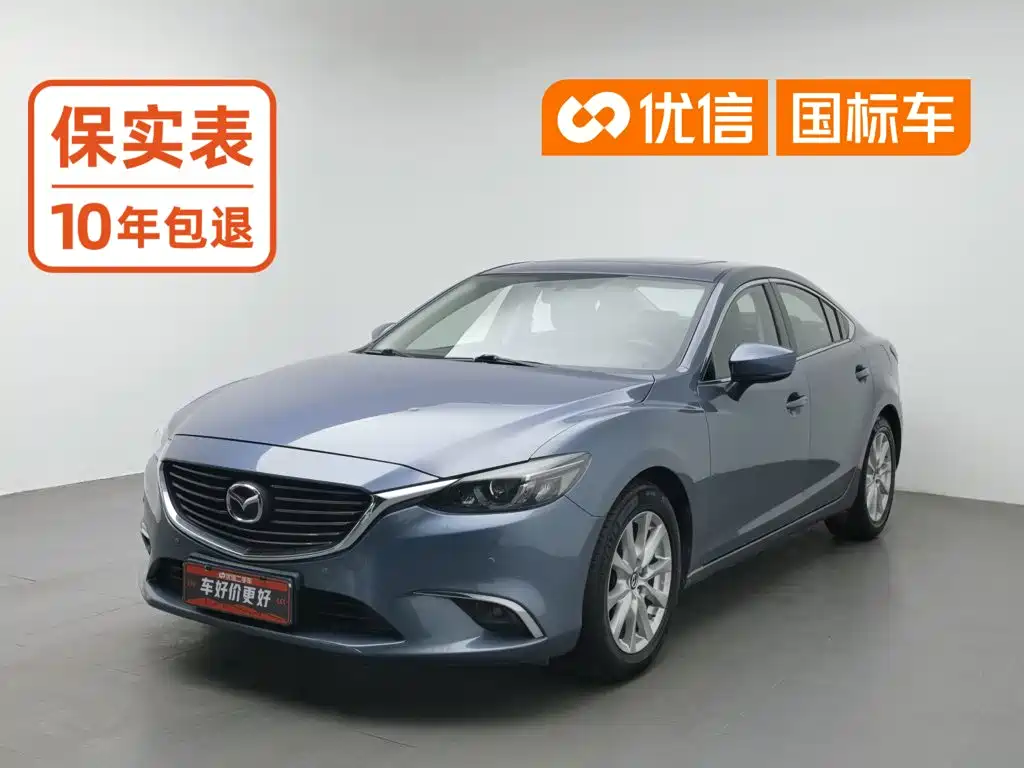
At a glance
- The Mazda 8 is a multi-row gasoline MPV suited to passenger-heavy transport operations.
- The 2.5L Navigator Edition is an identifiable configuration, but every unit still needs VIN-level verification.
- New labels may include older dealer stock; used units require detailed history and condition checks.
- Export quotations must separate vehicle, freight, tax, insurance, and compliance costs.
- LHD or RHD availability and destination-country homologation determine whether an import is practical.
Why the Mazda 8 matters for export markets
The Mazda 8 is a large, multi-row gasoline MPV with a driver-oriented emphasis that differentiates it from more utilitarian people carriers. For overseas dealers and fleet buyers, its relevance is practical: it can support family transport, hotel and airport transfers, executive chauffeur work, and group travel while carrying more passengers than a sedan or crossover. Demand is selective rather than universal, and is strongest where large MPVs are familiar and roads can accommodate a sizeable passenger vehicle without specialist infrastructure requirements or unusually restrictive garage access for daily fleet use.
For buyers considering the Mazda 8 for export, the model matters most in markets that value a car-like MPV: operators want the seating and packaging of a people carrier without the commercial-image impression of a van. Mazda’s engineering positioning is relevant to buyers who prioritise driving manners, cabin refinement, and a less commercial look. It can also be a practical alternative to premium imported MPVs, provided local aftersales coverage, spare-parts access, and homologation are adequate. Those services are as decisive as the vehicle itself in determining whether the 8 makes sense for long-term ownership and resale planning.
Export buyers should also separate market potential from easy conversion. A large MPV may enjoy strong recognition in one country yet be poorly understood in another, where buyers default to SUVs, vans, or compact crossovers. Distributor planning should therefore test local taxi rules, parking constraints, fuel policy, chauffeur demand, and the availability of family-size vehicles. The Mazda 8 is best positioned as a specialist choice for operators with a clear passenger-use case, not as an untested volume export gamble without local demand evidence and supporting service networks already in place.
- Car-like large-MPV positioning
- Established large-MPV markets suit best
- Check parking, fuel policy, operating rules
Model range, trims and powertrain variants: how the lineup is structured and how to choose
China-market Mazda 8 vehicles are gasoline MPVs, and trim naming has changed across production periods and source markets. Chinese records use 2.0L and 2.5L displacement labels, while the 2.5L Navigator Edition is an identifiable Mazda 8 configuration. Because a query for the number 8 can also surface differently named Mazda models, buyers should verify the exact model designation on the vehicle and VIN before comparing any record. The practical lineup is best understood by body, engine, transmission, drivetrain, equipment, and production period rather than by trim badge alone. That discipline prevents costly mismatches.
For engine choice, the 2.5L Navigator Edition provides a clear reference point, but a buyer should not assume displacement alone determines suitability. Real-world fuel use, payload, towing needs, road gradients, and the availability of efficient service parts should shape the decision. The 8 is not an electric model, so there is no battery capacity or rated electric range to compare; the relevant range question is how far a full tank or planned refuelling interval supports the duty cycle. Exact tank, consumption, and drive figures must be checked on the unit being bought.
Equipment selection should begin with the operating scenario rather than the highest trim name. A hotel or airport operator may prioritise easy entry, climate control, luggage capacity, and durable upholstery; a family importer may care more about seating flexibility, infotainment compatibility, and safety equipment; a chauffeur buyer may favour quietness and presentation. Transmission and drivetrain layouts can vary by configuration and market, so request the VIN-level specification sheet before comparing equipment or operating costs. Equipment fitted at the factory is generally easier to homologate than later additions in the destination market.
- 2.5L Navigator Edition is identifiable
- Verify VIN and complete powertrain
- Match equipment to operating duties
New vs used Mazda 8: how export inventory is structured and buyers choose
Export inventory can contain vehicles presented as new or used, but those labels need context. A new designation may refer to a zero-mileage vehicle, dealer stock, a demonstrator, or older production held in a channel; it does not automatically mean recent manufacture. For the Mazda 8, model age makes production month particularly important. Ask for the manufacture date, VIN, declared condition, warranty start, and whether the vehicle has been registered or displayed. Sellers should be able to reconcile those facts with the photographs and paperwork before any deposit is committed.
A used Mazda 8 can make sense where the buyer values known history, established service familiarity, and a lower acquisition commitment than a new equivalent. The inspection should go beyond paint: verify odometer consistency, service invoices, accident repair, suspension and steering wear, engine condition, transmission behavior, air-conditioning performance, interior wear, tire age, and evidence of flood or structural damage. Check that the VIN matches the vehicle and that the seller can provide a clean, transferable ownership document. A warranty-backed inspection is more valuable than a generic low-mileage label alone.
The choice should be made on total operating exposure, not simply the condition label. A new vehicle may reduce initial repair uncertainty and simplify handover to a customer, while a carefully selected used unit can leave more capital for insurance, registration, shipping, or fleet deployment. For commercial users, downtime and parts lead time may matter more than ownership paperwork. Model buyers should reserve funds for compliance, maintenance, tyres, and destination inspection, then match the unit to the resale cycle. Current condition, price, and availability must be confirmed on the live listing.
- Condition labels need supporting evidence
- Match age, history, warranty, buyer
- Review each live unit before commitment
How export pricing works: the factors behind a live listing price, and how to read one
A Mazda 8 export price guide should distinguish the vehicle’s asking value from the landed cost of buying and importing it. The starting figure normally reflects age, exact trim, engine, transmission, drivetrain, mileage, condition, equipment, ownership history, and market demand for that configuration. A near-identical description can still produce different figures if one unit has recent service, better condition, lower mileage, or more factory equipment. For that reason, compare individual listings and ask the seller to explain the material differences rather than applying one assumed model-year adjustment across all units.
Export-related costs can move the final commitment just as much as the vehicle itself. Currency movements affect the Chinese supplier’s converted amount; ocean freight, insurance, port handling, inland transport, storage, and inspection charges depend on origin, destination, routing, and Incoterm. Import duty, VAT or sales tax, emissions charges, registration fees, and any conversion or homologation work remain the buyer’s responsibility unless expressly included. A low vehicle figure may therefore be a poor deal if freight and destination charges are omitted. Every quote should identify the trade term and list what is excluded.
To read a live listing correctly, separate three layers: the vehicle figure, seller or transaction costs, and destination costs. Start with the exact listing for the Mazda 8 you intend to buy, then check whether the seller quotes ex-warehouse, FOB, or another basis. Confirm the currency, validity period, whether freight is estimated or fixed, and what documents are included. Request an all-in estimate through the stated port or final destination, then compare it with another listing on the same basis. Binding price and availability belong to the current unit record and accepted quotation.
- Compare identical Incoterms and currencies
- Separate vehicle, freight, tax, compliance
- Live listings show current unit quotes
MOQ, ordering and payment: single units vs consolidating a container
For Mazda 8 wholesale planning, minimum order quantity should be treated as a seller and listing term, not a fixed characteristic of the model. A dealer may accept a single-unit purchase for test stock or resale, while a factory-fresh allocation may be sold by batch, model mix, or container quantity. Ask for the MOQ attached to the chosen unit, including whether it applies per model, trim, colour, or production batch. Do not infer one policy from the marketplace as a whole. If several vehicles are required, test whether the allocation matches local demand and creates manageable stock risk.
A single vehicle can be sensible for a distributor testing demand or an importer building a mixed fleet. Consolidation becomes attractive when several similar units are needed and freight and handling costs can be allocated across them. It can also create hidden costs: colour or trim choices may not match demand, and one damaged or delayed vehicle can affect group cash flow. Model the container plan by realistic sell-through, not only by freight rate. A smaller mixed shipment may reduce exposure when sales are unproven against a larger speculative allocation.
A sound ordering workflow begins with a written quotation identifying the exact vehicle or production batch, Incoterm, payment milestones, inspection rights, document list, and dispatch stage. After verifying identity and condition, use a deposit to reserve the unit, complete an independent pre-shipment inspection, and release the balance against agreed evidence and shipping documents. Payment methods, documentary requirements, and cancellation terms should be negotiated rather than assumed. A pro forma invoice should reconcile the unit price, freight, and destination scope clearly enough for finance, customs, and the dealer to use one record.
- Confirm seller and batch MOQs
- Compare single-unit and container buying
- Link deposits to inspection and documents
Shipping, homologation and market compliance caveats: LHD/RHD and import rules by country
Steering configuration is an early sourcing filter. Chinese-market examples are commonly left-hand-drive, so a buyer requiring right-hand drive must establish whether an original RHD example exists before committing. A conversion can involve more than steering-wheel relocation: pedal layout, lighting, switchgear, instruments, wipers, and local type approval may also need attention. Ask for photographs of the VIN plate, dashboard, pedals, and exterior lamps, plus the build specification. For a fleet, mixed LHD and RHD vehicles can complicate driver training, spares, and accident repair, making a consistent configuration operationally preferable for safety.
Import and road use are governed by the destination country, and a Chinese-market plate does not prove overseas approval. Depending on the market, the vehicle may need a valid VIN and title, customs classification, duty and tax payment, emissions conformity, safety equipment, registration, insurance, or whole-vehicle type approval. Used vehicles can face additional age, inspection, or emission restrictions. EU/UK, North American, and Gulf markets apply different frameworks, so obtain a written local assessment for each configuration rather than assuming another nearby Mazda is equivalent. State homologation responsibility in the purchase agreement.
Freight method and cost depend on dimensions, loading plan, origin and destination ports, sailing frequency, and congestion. Finished vehicles commonly travel by roll-on/roll-off vessel or by container, with the method assigned after booking and space confirmation. Secure loading, lashing, and damage inspection matter because panel and glass repair can be expensive. Define the Incoterm, insurance coverage, inspection point, documentation, and who bears charges if a unit is damaged or rejected. Quote transit time separately from port clearance, customs processing, inland delivery, and adaptation work; none can be inferred from the ocean route alone.
- Verify LHD or RHD specifications
- Obtain destination-specific homologation advice
- Separate transit, clearance, delivery, adaptation
Who should buy the 8 — and who should pick a different vehicle
The Mazda 8 fits buyers who regularly move a substantial group of people and value a conventional, road-oriented MPV. Airport and hotel operators can assess luggage capacity, climate control, uptime, and easy cleaning; executive operators can prioritise a formal cabin appearance, quietness, and rear-seat comfort; family-oriented importers can focus on seating flexibility and everyday usability. For a distributor, the strongest case is a country where large MPVs have market acceptance and local support can handle body, glass, and drivetrain repairs. A clear use case makes the larger footprint easier to justify.
It is a weaker choice for buyers whose priority is cargo volume, severe-road durability, compact parking, minimal operating complexity, or guaranteed parts coverage in every market. Commercial users sometimes overload passenger vehicles or use them on severe duty cycles; if that is likely, a cargo van or purpose-built commercial model is more appropriate. EV-focused fleets should assess charging access and running-cost policy separately, because the Mazda 8’s range question concerns fuel consumption rather than battery range. Premium buyers may prefer an established luxury MPV with stronger badge recognition and easier servicing.
Before buying, score candidates against the same operating checklist: seat count and luggage after bags are loaded, ventilation and air-conditioning, ease of entry, visibility, ride comfort over local roads, fuel use, service intervals, parts availability, safety equipment, insurance, and residual demand. A used unit should also be judged on remaining service life and repair evidence, not only purchase outlay. Test the intended route with a representative load and include local driving, tolling, parking, and chauffeur policies in the total-cost model. This prevents a distinctive MPV from being selected on styling alone.
- Best for passenger-heavy operations
- Poor fit for cargo, rough roads, EV fleets
- Evaluate capacity, uptime, parts, costs
Main rivals and how the 8 compares
The Honda Odyssey is a close mainstream alternative for buyers seeking a large family MPV with broad international recognition and an established parts-and-service proposition. It may be the safer operational choice where the Odyssey is already common locally, while the Mazda 8 offers a more car-like driving character for buyers who value that distinction. Neither should win on reputation alone: compare the exact imported specification, fuel economy, warranty support, parts pricing, and homologation. The deciding factor is often after-sales reach rather than brochure appeal or imported availability for that market.
The Toyota Alphard is the more obvious comparison for premium chauffeur and executive use, with a strong position in several Asian and other international markets. Its luxury presentation and established premium-MPV recognition can justify a higher ownership expectation, whereas the Mazda 8 is generally positioned below that top-tier brief. A buyer should assess cabin amenities, privacy, ride refinement, chauffeur rules, insurance, and local resale support rather than assume the badge makes ownership cheaper or easier. For fleet uniformity, the Toyota’s local presence may be the deciding advantage for the buyer.
The Buick GL8 is another relevant rival, particularly in markets where China-built MPVs and their dealer familiarity are more readily understood. It can be easier for operators familiar with the model, but overseas support and exact-version availability may vary. Against the GL8, the Mazda 8 should earn its place through driving-focused character, a suitable passenger-and-luggage layout, and a verified ownership package. Compare like-for-like vehicles on condition, warranty, safety, parts, and total landed cost. The benchmark is the vehicle your operation can support, not the longest feature list.
- Odyssey: mainstream, service-familiar alternative
- Alphard: premium chauffeur-market benchmark
- GL8: familiar China-market MPV option
Live Mazda 8 export inventory
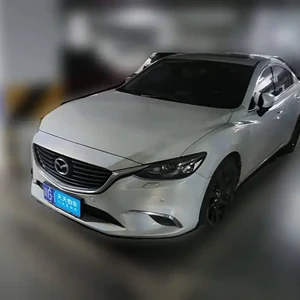
View all listings →Real units currently on ChinaCarDirect with per-unit asking prices and MOQ. Availability updates live from the catalogue.
How to buy a Mazda 8 from China
-
1
Define the operating requirement
Before you buy a Mazda 8 from China, list required passenger capacity, luggage space, route conditions, fuel expectations, RHD needs, and local operating restrictions.
-
2
Shortlist exact live units
Review the live Mazda 8 inventory and confirm that each candidate is identified as the Mazda 8, not another Mazda model returned by a broad search.
-
3
Verify the vehicle specification
Request the VIN, production date, engine, transmission, drivetrain, trim, equipment list, mileage, ownership history, and condition declaration for the selected unit.
-
4
Request comparable quotations
Ask for the vehicle price, MOQ, currency, Incoterm, freight basis, validity period, included documents, and excluded destination charges on the same commercial basis.
-
5
Inspect before final payment
Use an independent pre-shipment inspection covering identity, mileage, mechanical condition, accident evidence, tyres, fluids, and the accuracy of listed equipment.
-
6
Secure payment and documents
Define deposit and balance milestones, inspection conditions, title documents, export documents, cancellation terms, and the party responsible for each charge before signing.
-
7
Plan shipping and import clearance
Confirm LHD or RHD status, freight method, insurance, loading arrangements, destination charges, customs classification, homologation, registration, and any conversion work.
8 vs rivals
| Honda Odyssey | A close mainstream family-MPV benchmark, often easier for fleet buyers where local service is established. Choose the Odyssey for parts familiarity or the Mazda 8 for a more car-like character, subject to the exact imported specification. |
|---|---|
| Toyota Alphard | A premium benchmark for chauffeur and executive use with strong recognition in several markets. The Mazda 8 is more appropriate for buyers seeking MPV utility without the premium-tier brief, provided local support is adequate. |
| Buick GL8 | A China-built MPV that may be easier for operators in markets where the model and its dealer network are already familiar. The Mazda 8 may better suit drivers who prioritise a more engaging, car-like character, but local ownership support must be checked. |
Frequently asked questions
How is Mazda 8 export pricing determined?
The vehicle figure is shaped by age, trim, engine, transmission, drivetrain, mileage, condition, equipment, and history. Freight, insurance, exchange rates, Incoterms, taxes, and compliance work affect the landed cost. Check the exact unit in the live inventory for its current price and request a written quotation for binding figures.
What engine and range should I expect from a Mazda 8?
The Mazda 8 is a gasoline MPV, and the 2.5L Navigator Edition is an identifiable configuration. It does not have a battery-electric range rating, so assess fuel consumption, tank capacity, and real-world driving range from the VIN-level specification and a test drive.
Is a new or used Mazda 8 better for export?
A new-labelled vehicle may reduce initial repair uncertainty, but an older production date can limit warranty benefits. A used Mazda 8 can reduce acquisition exposure while requiring stronger checks of mileage, service history, accidents, ownership documents, and condition. Choose based on operating risk and the buyer’s inspection budget.
Can I order a single Mazda 8, or is the MOQ higher?
MOQ is set by the seller, model, trim, and production batch rather than by the Mazda 8 name itself. Some sellers may accept a single unit, while others may require a batch or container allocation. Confirm the MOQ displayed for the chosen listing and in the written quotation.
What affects Mazda 8 shipping time and cost?
Shipping depends on the origin and destination ports, vessel schedule, freight method, vehicle dimensions, congestion, insurance, and the selected Incoterm. Customs clearance, inland transport, adaptation, and registration occur separately from ocean transit and can extend the total delivery schedule.
How are Mazda 8 spare parts obtained?
Ask the seller for parts support and use the VIN or approved part number when ordering. Mechanical consumables may be easier to source than body panels, trim, lighting, or electronic components, while local dealers may not hold Mazda 8-specific parts. Confirm lead times and return terms before placing an order.
Can the Mazda 8 be supplied in right-hand drive?
Chinese-market examples are commonly left-hand-drive, and an original RHD unit may not be available for every configuration. A converted vehicle can require additional work for pedals, lighting, instruments, wipers, and type approval. Confirm the original build specification and destination-country requirements before ordering.
How do I order a Mazda 8 from China?
Start with the live listing for the exact vehicle, verify the VIN and specification, and request a quote stating the MOQ, Incoterm, payment milestones, documents, and delivery scope. After inspection and agreement of the sale documents, complete payment and shipping arrangements. A written RFQ helps the seller quote the intended configuration accurately.
Ready to source the Mazda 8?
Send an RFQ for your required Mazda 8 configuration, including destination, RHD requirement, MOQ, and preferred Incoterm.
Request a quote