
Mazda Cx-30 Ev Export Buying Guide for Dealers
Buy Mazda Cx-30 Ev from China with a practical guide to trims, battery checks, export pricing, MOQ, shipping, homologation and rival options.
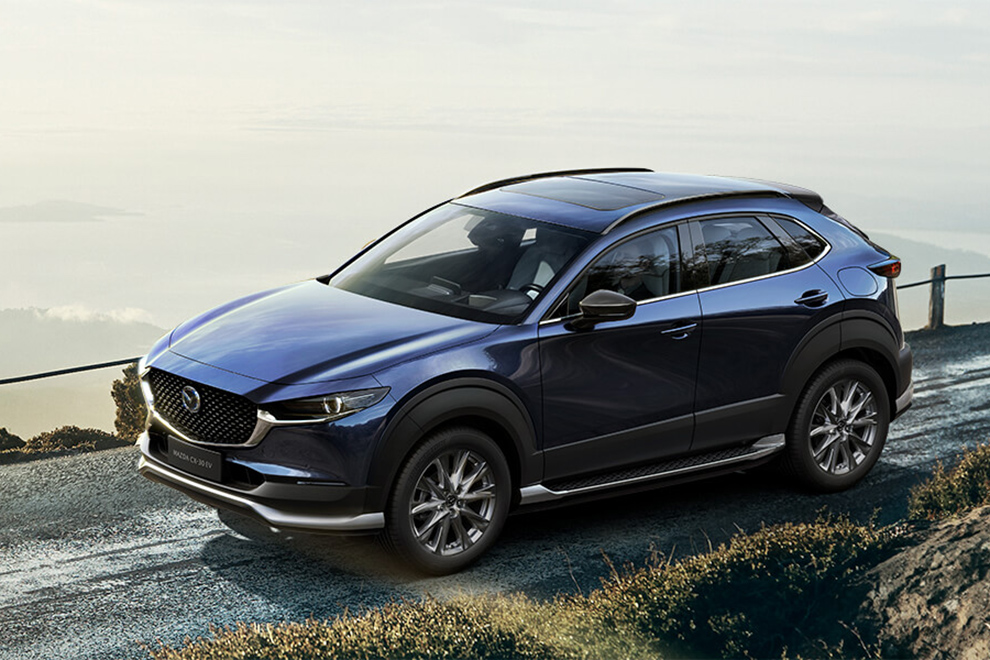
At a glance
- Battery-electric compact crossover with distinctive Mazda styling and a manageable footprint.
- Pure Electric Enjoyment Edition and Touring labels require market-specific equipment verification.
- Battery capacity, certified range, motor output and charging details can vary by source market.
- New and used vehicles require different condition, warranty and import checks.
- Live per-unit prices, MOQ and availability must be confirmed before purchase.
- Best suited to urban buyers with planned charging and verified local service support.
Why the Mazda Cx-30 Ev matters for export markets
The Mazda Cx-30 Ev occupies a useful export niche: a compact crossover with a battery-electric drivetrain rather than a conventional SUV powertrain. It combines the raised seating and cargo accessibility buyers expect from an SUV with dimensions closer to a hatchback or compact estate. That makes it relevant to city dealers, importers and fleet operators seeking an EV without moving into a larger, heavier premium SUV. Its appeal also rests on Mazda’s restrained design and established driver-focused positioning in markets that value familiar brands and manageable logistics for urban use.
Global demand should not be inferred from size alone. Export value comes from whether the model fits local ownership habits, charging access, tax policy and dealer service coverage. The CX-30 EV’s relatively compact footprint can simplify parking and distribution, while electric powertrain appeal depends on clean electricity, home or depot charging and credible range. Mazda’s badge may reassure buyers who recognize the brand, yet an importer still needs local proof of parts availability, warranty handling and residual-value support before committing to programme volume or promoting it as a fleet alternative.
A disciplined export case therefore begins with demand mapping, not a purchase order. Match the compact SUV format to urban use cases, compare local alternatives and identify the customer who values design, compact dimensions and electrified running more than maximum range or cargo volume. For a fleet, analyse route length, charging dwell time, payload, driver turnover and repair support. For a dealer, test one vehicle’s local reception before scaling. The model can fill a differentiated niche, but a slow-moving specification should never be mistaken for strong market demand in the destination market.
- Compact electric crossover positioning.
- Local charging and duty checks.
- Validate demand with a pilot.
Model range, trims and powertrain variants: how the lineup is structured and how to choose
The export inventory identifies the Mazda Cx-30 Ev in two principal trim labels: Pure Electric Enjoyment Edition and Pure Electric Enjoyment Edition - Touring. These names help organise the range, but they should not be treated as a universal global trim hierarchy. Equipment, software, charging equipment and option content can differ between production markets even when the model designation is the same. Buyers should therefore request the VIN, original build specification and a dated equipment sheet for every unit, rather than assuming that the Touring label guarantees one fixed international package.
Powertrain selection is more important than the trim name for an overseas buyer. The CX-30 EV is a battery-electric vehicle, but battery capacity, usable capacity, motor rating, drive configuration, charging power and connector treatment must be checked for the source market. A quoted range may use a different test cycle from the destination standard, so headline figures are not directly comparable. Ask for the battery warranty, state-of-health report on a used vehicle, charging curve information and evidence of correct charging behaviour in your destination market.
Choose the variant by operating duty rather than by the highest equipment label. A short route with dependable depot charging may suit a smaller pack and lower carrying cost, while regional service or longer commutes may justify the battery and charging configuration with the strongest verified range. Drivers should also consider climate, payload, road gradients, towing limits and the availability of public charging. Software language, driver-assistance functions, heat-pump or thermal-management equipment and warranty coverage can materially affect usability, so verify them before selecting a unit or approving payment for it.
- Confirm source-market battery data.
- Compare charging, payload and warranty.
- Verify VIN and equipment sheet.
- Match range to actual routes.
New vs used Mazda Cx-30 Ev: how export inventory is structured and how buyers choose
Export inventory for this model is structured by two commercial conditions: new and used, with trim and vehicle description used to distinguish individual units. This is useful because a new listing and a used Touring example should not be evaluated on the same depreciation, warranty or documentation assumptions. A condition label is only a starting point. Ask whether a new vehicle is current stock, dealer demonstrator or otherwise registered, because age and use history can change the commercial and regulatory treatment even when the listing uses the word new.
New units can suit importers seeking simpler cosmetic selection and a clearer start to the factory warranty, but new does not automatically mean recent production or plug-and-play legality in the destination. Review the manufacture date, warranty commencement, odometer disclosure, battery warranty scope and delivery history. For a used unit, mileage is only the first layer: battery state of health, repeated high-rate charging, accident repair, tyre age, fluid condition and software history can be more important. A pre-purchase inspection should cover all of them rather than relying on listing photographs alone.
Used Mazda Cx-30 Ev vehicles may be more practical for a buyer with a tighter capital budget, a secondary fleet role or a customer who accepts visible wear, provided risk is reflected in valuation and contract terms. They can also face used-vehicle age limits, emissions rules or proof-of-ownership requirements on import. New vehicles may carry different registration, consumption or charging obligations. Because national rules change, obtain a destination-specific compliance opinion and all title, service and inspection records before agreeing terms for the exact vehicle and the importing entity in that market.
- New: verify age and warranty.
- Used: inspect battery and repairs.
- Confirm destination import eligibility.
How export pricing works: the factors behind a live listing price, and how to read one
An export price is not a universal Mazda list price. It is the result of the specific vehicle’s model year, trim, battery specification, mileage and condition, plus market conditions at the time of quotation. Currency exchange can alter the converted amount, while freight, insurance, terminal handling, documentation, inland delivery and import charges sit outside or alongside the vehicle price depending on the agreed Incoterm. For an electric vehicle, battery-related transport requirements and secure loading also need to be included. Always ask what the quoted amount does and does not cover.
Read a live CX-30 EV listing as the starting point for a comparison, not as the final landed cost. Check whether the displayed amount is FOB, CIF or another basis, whether the seller is the exporting party, and whether licences, inspection papers, warranty documents and original keys are included. Compare like with like: the same trim, condition, battery version, production year and service history. A seemingly lower vehicle quote can be less attractive once transport, taxes, compliance work or repairs are added, while a complete quote is easier to budget.
The most reliable method is to obtain a written, destination-specific quotation for the exact VIN or agreed specification, then recalculate the landed total when major inputs change. Ask for validity, payment milestones, charge inclusions, delivery terms, insurance and the party responsible for customs clearance. Review the currency and any bank charges rather than assuming the displayed converted value is fixed. Current binding prices are shown on individual live inventory entries, so use those listings as the source of truth and request an updated quote before budgeting or contracting in writing.
- Compare identical vehicles and terms.
- Request a destination landed quote.
- Verify current unit pricing.
MOQ, ordering and payment: single units vs consolidating a container
The MOQ shown for each listing is the relevant starting point for that seller’s commercial offer; it is not safe to assume every Mazda Cx-30 Ev transaction follows the same rule. Confirm whether the selected unit can be purchased singly, whether the MOQ applies only to that listing, and whether a mixed-model container is allowed for larger volume. A dealer testing demand can request one eligible vehicle, while a fleet programme may require a batch with common specifications. Put the quantity, delivery schedule and any consolidation conditions in the proforma invoice.
Container consolidation can improve freight and administration efficiency when several units share an origin, destination and readiness window. Dealers may combine Mazda CX-30 EV units with other compatible vehicles only if the forwarder, insurer and consignee accept the mix. For batteries, the carrier must classify the cargo and define packaging, loading and documentation requirements from the vehicle’s technical data. Consolidation does not remove the risk of delay: one unfinished inspection, missing document or damaged vehicle can hold the whole group. Model the schedule and payment exposure for the entire load, not only the lead vehicle.
A sound order sequence is specification lock, written quotation, proforma invoice, deposit, production or stock confirmation, inspection, balance payment, release for shipment and document handover. Payment terms should state the currency, method, beneficiary, refund conditions and what evidence triggers each milestone. Do not release the balance solely because loading photos were sent; reconcile the VIN, option list, condition report, export documents and inspection findings first. For a first-time importer, use a staged order or a smaller pilot where practical, and use a transport method and insurer that provide traceable custody.
- Confirm listing-specific MOQ.
- Consolidate only compatible loads.
- Tie payment to document checks.
Shipping, homologation and market compliance caveats: LHD/RHD and import rules by country
Steering configuration is the first export check. A vehicle sourced from China may be left-hand drive or built for another market, so do not infer RHD availability from the model name or assume every unit can be registered in the destination. Request photographs of the steering wheel, dashboard, lighting and exterior mirrors, plus the VIN and build plate. Confirm charging connector, on-board charger, software language, climate-control equipment and regional safety equipment. Local registration may still reject a correctly configured vehicle if the variant lacks required type approval for local sale.
Import compliance is country-specific and can affect both new and used vehicles. A broker should confirm customs classification, tariff and VAT treatment, age restrictions, emissions or environmental rules, insurance, registration taxes, local incentives and any requirement for an approved individual vehicle type approval. Electric drive does not automatically exempt a vehicle from safety, battery, electromagnetic or charging requirements, and local incentives may depend on residency, price bands or local production rules. Obtain written advice for the exact configuration and keep evidence of approval with the vehicle file before shipment commences.
Shipping cost and time depend on origin and destination terminals, chosen mode, container or specialist-carrier availability, vessel schedule, port congestion, cargo preparation, insurance, customs clearance and inland delivery. Battery-powered vehicles may require additional carrier checks and secure handling; the freight provider should confirm them rather than treating the shipment as an ordinary used-car movement. Allow time for export inspection, documentation, booking, loading, customs and final-mile handover. Ask for a door-to-door schedule, or clearly separate port-to-port freight from charges that remain the importer’s responsibility before the vehicle becomes available for sale.
- Verify LHD or RHD early.
- Obtain market-specific approval advice.
- Price transport and delivery separately.
Who should buy the Cx-30 Ev — and who should pick a different vehicle
The Cx-30 EV is a strong candidate for urban dealers, company-car specialists and fleet buyers that value a compact footprint, distinctive Mazda styling and a battery-electric powertrain. It may work particularly well where charging is planned at home or at the depot, routes are predictable and the importer can support a specialist EV line. Dealer principals should also confirm that the model’s brand appeal converts into test drives and orders locally. A recognizable badge is useful, but it does not replace a channel plan, trained technicians and a realistic residual-value assumption.
It is less suitable for operators with long, unserved routes, frequent heavy payloads, demanding towing, severe cold-climate duty or an immediate need for a broad local parts network. Those requirements call for a different battery size, thermal-management strategy, platform or powertrain, and they should be assessed before price becomes the deciding factor. Also avoid the Cx-30 EV if the importing country has restrictive used-vehicle age rules, limited RHD supply or charging standards that the available unit cannot meet. An ICE, hybrid or plug-in hybrid may offer more operational resilience in those cases.
For fleet procurement, calculate total cost rather than vehicle price alone. Include electricity or fuel, charging equipment, insurance, maintenance, tyres, software subscriptions if applicable, downtime, technician training, battery warranty and eventual resale. Test actual duty cycles with a representative vehicle, monitor energy consumption and charging availability, and negotiate service response times. A used CX-30 EV can suit a non-critical pilot or secondary role if inspection and battery evidence are strong; a new unit may be easier to standardise but still requires the same import and infrastructure planning before fleet rollout.
- Best for planned urban charging.
- Test demand through a pilot.
- Verify local service support.
Main rivals and how the Cx-30 Ev compares
The closest alternatives depend on how a buyer frames the brief. A Hyundai Kona Electric is a direct compact battery-electric crossover, while the BYD Atto 3—also marketed as the Yuan Plus in some countries—competes for compact-EV fleet and family demand. A Volkswagen ID.4 offers a roomier, more mainstream family-SUV proposition. The Mazda differentiates through its driver-focused styling and crossover dimensions, but size alone does not establish superiority. Compare verified range, charging, safety equipment, warranty, service coverage and resale support in the destination country using like-for-like specifications and documents.
Range comparisons are easy to misread because manufacturers use different test cycles and the destination certificate may differ from the source-market claim. Normalise the comparison by using the same official cycle, then review usable battery capacity, charging curve and connector. Also test cargo volume, rear-seat comfort, visibility, ride, software and driver aids. The Kona Electric may appeal where Hyundai’s EV experience is already familiar locally; Atto 3 buyers may prioritise charging capability and available supply channels; the ID.4 may better serve fleets needing more space and daily practicality.
Mazda’s relative niche position is the key trade-off. A specialist EV from a smaller global sales footprint may offer less routine service familiarity than the largest rivals, while strong residual demand can improve fleet economics. Ask the importer for evidence: authorised service locations, technician EV training, diagnostic access, software support, battery warranty handling, parts lead times and a realistic resale valuation. The best choice is not automatically the most expensive or newest rival; it is the model whose verified configuration, local support and landed cost remain aligned with the buyer’s routes and customers.
- Compare one official test cycle.
- Check local equipment and support.
- Weigh character against rival scale.
Live Mazda Cx-30 Ev export inventory
View all listings →Real units currently on ChinaCarDirect with per-unit asking prices and MOQ. Availability updates live from the catalogue.
Used Mazda CX-30 EV 2021 Pure Electric Enjoyment Edition - Touring
Used Mazda CX-30 EV 2021 Pure Electric Enjoyment Edition - Touring
Used Mazda CX-30 EV 2021 Pure Electric Enjoyment Edition - Touring
How to buy a Mazda Cx-30 Ev from China
-
1
Define the destination and operating case
Record the destination country, required steering configuration, route profile, payload, charging plan and expected resale market. These details determine which variants can be imported and used commercially.
-
2
Shortlist the live inventory
Review current Mazda Cx-30 Ev listings by condition and trim, then identify units that match the required body, powertrain and battery configuration.
-
3
Verify each VIN and specification
Request the build plate, VIN, equipment sheet, battery data, charging details, range test cycle and warranty coverage. Do not rely on trim names alone.
-
4
Obtain condition and compliance evidence
For a used vehicle, request the inspection report, battery state-of-health evidence, service history and title records. For either condition, obtain destination-specific import advice.
-
5
Compare written landed-cost quotes
Ask for a quote based on the exact unit, currency and Incoterm, with freight, insurance, documentation, customs responsibility, warranty and inland delivery clearly identified.
-
6
Confirm MOQ and payment terms
Confirm the quantity required, whether consolidation is permitted and every payment milestone. Place the agreed specification, documents, delivery schedule and refund conditions in the proforma invoice.
-
7
Inspect, ship and reconcile documents
Complete the agreed inspection before final payment, verify that the VIN and condition report match, and use insured, traceable transport. Release the vehicle only after export and custody documents have been reconciled.
Cx-30 Ev vs rivals
| Hyundai Kona Electric | A direct compact battery-electric crossover, particularly relevant where local Hyundai EV servicing and charging support are stronger. Compare homologated range, connector, warranty and equipment with the CX-30 EV rather than assuming either model wins without destination-market evidence. |
|---|---|
| BYD Atto 3 / Yuan Plus | A China-origin compact electric SUV alternative that can appeal where Atto 3 supply channels and customer familiarity are stronger. The key questions are verified range, battery warranty, software support and local parts coverage, not simply shared regional supply. |
| Volkswagen ID.4 | A larger family-SUV option that may better serve buyers prioritising rear-seat and cargo space or mainstream fleet support. The CX-30 EV offers a more compact footprint and Mazda character, but both should be assessed on the same local charging, range and service criteria. |
Frequently asked questions
How is Mazda Cx-30 Ev export pricing determined?
Export pricing is calculated from unit-specific factors such as model year, trim, battery version, condition, mileage, exchange rates, freight, insurance and the selected Incoterm. The live CX-30 EV inventory displays the current per-unit figure, but buyers should compare it with a written destination-specific quote because taxes, customs, inland delivery and documentation may sit outside that amount.
What battery, motor and range should I expect?
The CX-30 EV is a battery-electric vehicle, but battery capacity, motor output, usable range, charging capability and connector treatment can differ by production market and model year. Check the VIN-linked data in the live listing, identify the test cycle behind any range figure and obtain the applicable battery warranty before approving the vehicle.
Is a used Mazda Cx-30 Ev better than a new one?
A new vehicle may simplify cosmetic selection and warranty administration, but its production date, registration status and local eligibility must still be checked. A used vehicle can suit a tighter budget or secondary fleet role, provided the buyer reviews battery health, mileage, accident history, tyres and maintenance records rather than relying on mileage alone.
How does MOQ work for an export order?
MOQ is set by the selected listing and seller, so confirm whether the displayed unit can be purchased separately and whether the condition applies only to that listing. Larger buyers should request written terms for a batch or mixed-model consolidation, including the quantity, readiness window, payment milestones and consequences if one vehicle is delayed.
What determines shipping time and cost?
Shipping time and cost depend on the route, freight mode, carrier availability, terminal handling, port conditions, customs clearance, insurance and inland delivery. Battery-powered vehicles may require additional cargo checks and secure handling, so the forwarder should provide a complete schedule and identify which charges are included in the agreed Incoterm.
Are Mazda CX-30 EV spare parts readily available?
Availability must be verified for the destination country and the specific VIN, particularly for battery, high-voltage, electronic and model-specific body parts. Ask the importer for a parts reference, local Mazda service coverage, expected lead times and a plan for warranty parts before committing to fleet volume.
Is an RHD Mazda Cx-30 EV available for export?
RHD availability depends on the individual vehicle and its build specification; it should not be inferred from the model name or the country of origin. Check the steering-wheel side, build plate, charging equipment, safety specification and local type-approval status for the exact unit before ordering.
How do I order a Mazda Cx-30 Ev from China?
Start with the live inventory, select a suitable vehicle and submit an RFQ for the destination and required specification. Review the written quote, MOQ and proforma invoice, complete inspection and payment steps, and only then release the vehicle for insured shipping and document handover.
Ready to source the Mazda Cx-30 Ev?
Submit an RFQ with your destination, trim, condition and quantity requirements for a current Mazda Cx-30 Ev export quote.
Request a quote