
Mazda Ez-6 Export Buying Guide for Dealers and Fleets
Buy a Mazda Ez-6 from China with guidance on EV and range-extended trims, used vehicles, export pricing, MOQ, shipping, homologation and rivals.
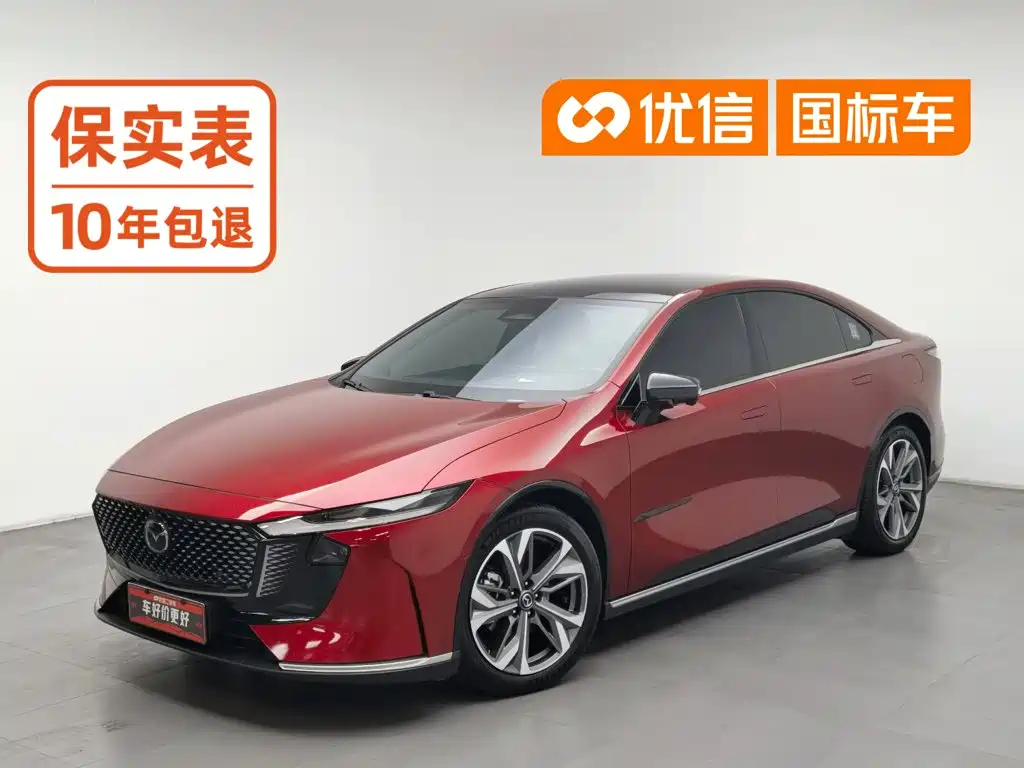
At a glance
- The Mazda Ez-6 is a mid-size sedan offered in pure-electric and range-extended forms, giving overseas buyers two distinct powertrain strategies.
- Pure Electric 600 versions suit buyers with dependable charging access, while Range-Extended 200 versions suit mixed-energy operating patterns.
- Trim names cover several equipment levels, so buyers should compare original specification sheets rather than relying on translated listing titles.
- Used examples can reduce acquisition exposure, but require VIN, mileage, condition, battery or range-extender inspection and document checks.
- Current per-unit price, MOQ and availability should be confirmed in live Mazda Ez-6 listings before budgeting or committing.
Why the Mazda Ez-6 matters for export markets
The Mazda Ez-6 is a mid-size, four-door sedan positioned for buyers wanting more presence than a compact model without moving into the cost and handling profile of a full-size luxury saloon. Its export proposition is unusually broad for a nameplate of this size: buyers can choose a pure-electric version or a range-extended model combining electric driving with a combustion-powered generator. That choice matters because it addresses different infrastructure, duty and operating-cost environments rather than forcing one powertrain strategy on every market. The result is a single model family with distinct commercial use cases.
For overseas buyers, the Ez-6 sits between compact Chinese EVs and established premium sedans. Its clean sedan format can appeal to company-car and executive-fleet users, while the two electrified drivetrains let a distributor serve both charging-ready customers and buyers needing a combustion energy source. The range-extended option should not be confused with a conventional plug-in hybrid: its primary appeal is electric operation, with the engine acting as an onboard electricity source when charging or range becomes the constraint. That distinction should guide route planning, fuel planning and how a buyer values charging access.
Demand should be assessed by market readiness rather than global sales rhetoric. In markets with credible charging networks, supportive emissions policy and an established Mazda service footprint, the Ez-6 can serve as a modern fleet alternative. Where certification, parts support or charging standards are uncertain, the same vehicle may carry more import and aftersales risk than its styling suggests. Buyers should therefore review live Ez-6 inventory, then confirm destination-market approval and operating support before treating any listing as commercially ready. A written conformity checklist is more valuable than a general promise of exportability.
- Mid-size sedan positioning.
- BEV and range-extended choices.
- Market readiness drives export value.
Model range, trims and powertrain variants: how the lineup is structured and how to choose
The Ez-6 export lineup is organized around two clearly named families: Pure Electric 600 and Range-Extended 200. The suffixes distinguish the powertrain and model series, but they should not be treated as a universal range certificate for every destination. Chinese-market range tests, local label rules and model-year changes can produce different published figures. The binding specification is the one shown in the seller’s documents and in the homologation file for the vehicle being delivered. That distinction protects buyers from comparing figures measured under different assumptions, regulatory standards and test cycles.
Within the pure-electric family, names such as Base, Pro, Elegance, Premium, Intelligent Premium, Luxury, Max and sport-oriented versions indicate different equipment positions, not simply different battery sizes. An importer should compare exterior equipment, cabin materials, infotainment, driver-assistance hardware, audio, comfort equipment and warranty terms trim by trim. Because translated listing names are not always consistent, request the Chinese specification sheet and identify which features are standard, optional or market dependent. Treat the live listing as the starting document, not the final compliance record for the exact vehicle and model year.
The decision starts with charging access. A Pure Electric 600 is the cleaner fit for a depot with dependable charging, predictable electricity use and a willingness to standardize on local charging standards. A Range-Extended 200 can suit mixed routes, long-distance travel or customers without daily charging, provided the buyer accepts a more complex energy system and local rules allow the gasoline generator arrangement. Neither route removes the need to check battery warranty, software support, service procedures and real-world duty-cycle suitability. For fleet tenders, test both against the same routes and utilization profile before selecting.
- Pure Electric 600 use case.
- Range-Extended 200 use case.
- Verify original trim sheets.
New vs used Mazda Ez-6: how export inventory is structured and how buyers choose
Export supply can include newly built, dealer-stock and previously registered vehicles, but each listing must be classified individually rather than inferred from the model name. New examples usually offer the cleanest warranty path and the most straightforward origin documentation; used examples can offer a different acquisition profile and may suit buyers comfortable with inspection and residual-value uncertainty. The practical question is not which label is inherently better, but whether the vehicle’s condition, papers and remaining coverage support the intended use. Do not assume every catalogue category is equally available in the buyer’s destination.
For a used Ez-6, request the VIN and registration documents before discussing suitability. Check odometer consistency, service history, accident repairs, paint and body condition, tire age, software status and the presence of warning messages. For a pure EV, obtain a battery state-of-health report and confirm how the seller measured it; for a range-extended car, inspect the generator, fuel system, exhaust and hybrid-system diagnostics as well. Independent pre-shipment inspection is particularly valuable when warranty is limited or resale in an unfamiliar market is planned before the buyer releases any non-refundable payment.
New inventory reduces condition-related unknowns, yet it does not eliminate import risk. Buyers still need to confirm production consistency, homologation, accessories, warranty transfer and the delivery configuration. A used vehicle may be more attractive when its condition is documented, its remaining battery coverage is clear and the buyer can absorb refurbishment without disturbing a planned launch. The strongest selection combines a genuine need, transparent records and a delivery plan that does not rely on assumptions about parts or local technical support. That approach produces a better fleet decision than choosing on discount alone.
- New lowers condition uncertainty.
- Used requires health checks.
- Verify VIN and documents.
How export pricing works: the factors behind a live listing price, and how to read one
An export quote is not a single number attached to the Mazda Ez-6. It normally starts with the vehicle’s year, trim, powertrain family and equipment, then adjusts for new or used condition, mileage, cosmetic status and any battery-version differences. Currency movements, freight route, port charges, insurance, inspection, documentation and the selected Incoterm can all change the final figure. For fleet buyers, a useful comparison must also reflect deposits, payment timing and the cost of holding vehicles before dispatch. A lower vehicle line does not necessarily produce a lower landed cost.
When reading a live listing, separate the vehicle price from the landed cost and identify exactly what is included. Check whether the amount covers export documentation, inspection, battery or charging accessories, inland transport in China, insurance and terminal fees. Confirm the quote currency, exchange-rate reference, price-validity period, location of the vehicle and whether the seller is quoting FOB, CIF or another Incoterm. Current price, MOQ and availability must be taken from the live unit listing, not an older enquiry or comparison article. Ask for screenshots or a written quote to preserve the terms compared.
A reliable wholesale workflow is to request two figures: a vehicle-only amount and an all-in amount under an Incoterm. The first supports comparison with other suppliers; the second supports a landed-cost decision. Ask whether taxes and destination charges are included, how long the quote remains valid, what triggers a repricing and which costs can change after booking. For a mixed fleet, request separate pricing for each trim and configuration so freight consolidation can be modelled without hiding differences in specification. That method also makes it easier to compare an Ez-6 against alternatives on the same basis.
- Separate vehicle and landed cost.
- Compare identical Incoterms.
- Check live binding terms.
MOQ, ordering and payment: single units vs consolidating a container
MOQ is a commercial term set within each seller arrangement, not an attribute of the Mazda Ez-6. A listing may permit a single-unit purchase, while another seller, production batch or shipment program may impose an order. The live unit record should be checked for its MOQ, and the buyer should confirm whether that condition applies to that trim, seller or shipment date. For a fleet, also ask about reserved allocations, mixed-model consignments and the possibility of splitting a larger order across production or sailing schedules. Never infer a fleet MOQ from one retail-style listing.
An ordering process begins with a specification and destination brief, followed by a quotation that names the vehicle, Incoterm, payment milestones, inspection rights and expected documentation. After the buyer approves those terms, the seller should issue a pro forma invoice and contract identifying the unit or production batch. Payment instructions and the beneficiary should be independently verified, while deposits should be linked to clear contractual events. The balance should normally follow inspection or another agreed milestone, rather than being demanded against vague descriptions. For mixed fleets, use a staged release tied to shipping evidence.
Container consolidation is a volume and logistics decision. Compare the usable capacity of a vehicle carrier or container with the dimensions, weight, tie-down requirements and loading sequence of the Ez-6 units; do not assume that the body category guarantees capacity. Ask the freight provider for a loading plan, securing method and access plan, and confirm how mixed trims will be segregated, photographed and handed over. If consolidation is not economical, a partial shipment may reduce capital tied up but can increase per-unit freight and handling cost. The right answer protects delivery timing and unit integrity at acceptable landed cost.
- Confirm listing-specific MOQ.
- Contract exact units and milestones.
- Verify beneficiary independently.
Shipping, homologation and market compliance caveats: LHD/RHD and import rules by country
Exportability does not guarantee road legality at the destination. Importers must check local type approval, emissions rules, safety requirements, battery or vehicle standards, software features and VIN records. A Chinese-market car may use different electrical systems, connector standards, language settings, assisted-driving functions or equipment from a locally sold version. Left-hand-drive and right-hand-drive availability must be confirmed for the specific unit; an export label by itself is not evidence of the correct configuration. These points belong in the pre-purchase compliance review, not after booking. Local homologation may also require modifications that should be costed and documented.
Shipping can move through container, roll-on/roll-off or specialist vehicle services, with the practical choice depending on quantity, route, urgency and handling requirements. Freight cost responds to vessel space, sailing frequency, port congestion, fuel and insurance charges, as well as inland movement to the loading point and destination charges after arrival. Vehicle condition makes loading and securing especially important. Obtain a door-to-door or port-to-port quote that states what is included, and avoid comparing a basic freight line with a fully managed logistics offer as if they were equivalent. Estimate transit time from the confirmed sailing and port rotation, not a generic market average.
Before dispatch, request the export invoice, vehicle identification documents, ownership or customs-release evidence, insurance, inspection report and any certificates required for the destination. The importer should appoint a customs broker, confirm the tariff classification and calculate duty, tax, registration and compliance costs locally. After arrival, transport, PDI, software setup, local inspections and service preparation may still be required. A dealer that cannot provide this downstream plan should not be treated as a complete export solution, even if the individual vehicle looks competitive. Confirm the parts and technical-support pathway before announcing the model for sale.
- Approve before booking.
- Confirm LHD or RHD.
- Compare full freight scope.
Who should buy the Ez-6 — and who should pick a different vehicle
The Ez-6 is a strong candidate for an importer or fleet operator that wants a mid-size sedan with a contemporary image and a genuine choice between battery-electric and range-extended operation. It is especially relevant where charging is reliable at depots but long routes or variable driver access make an all-electric-only policy inconvenient. Dealers can broaden the proposition with different trim levels, while fleet buyers can standardize around charging, fuel and equipment policies. The case is strongest when local homologation and aftersales support are already credible. It is less attractive when support is assumed rather than demonstrated.
Dealers should avoid the Ez-6 when their customers need an established, widely familiar hybrid range or when service staff have no training for electric or range-extended systems. A business that cannot provide overnight charging, suitable electrical infrastructure or emergency planning may gain little from the pure-electric version. Very short-distance operations may also find an EREV’s added mechanical complexity unnecessary. Conversely, a buyer prioritizing a pure-EV model and unwilling to consider a combustion energy source should exclude the range-extended option rather than treating it as a compromise. The right powertrain should follow the duty cycle, not the badge.
Evaluate the purchase through total cost, uptime and residual-market risk. Model charging or fuel access, realistic routes, service intervals, insurance, local taxes, software support and expected resale positioning. For a used vehicle, add battery-health uncertainty and potential corrective work to the commercial case. For a new fleet, test one vehicle through a pilot period if operationally possible, then compare downtime, energy use and user acceptance. This evidence is more valuable than a styling comparison or a headline range claim. A homologated vehicle with local backup is usually safer than a theoretically better but unsupported import.
- Flexible electrified fleet fit.
- Local support remains essential.
- Pilot before wide rollout.
Main rivals and how the Ez-6 compares
The closest alternatives depend on how the buyer frames the purchase. The BYD Seal is the most direct pure-electric sedan comparison, competing for customers attracted to Chinese vehicle design, digital features and battery-electric positioning. The Toyota Camry Hybrid and Hyundai Sonata Hybrid represent more conventional choices for overseas fleets and dealer groups that place greater emphasis on an established local service network, familiar ownership experience and long-term brand confidence. The Ez-6 stands apart chiefly through offering both BEV and range-extended routes in one sedan family for fleet-oriented dealer programmes and importers.
Against the BYD Seal, the Ez-6’s key decision advantage is the option of a range-extended model, while the Seal gives a simpler all-electric ownership proposition for buyers ready to charge regularly. Against the Camry Hybrid or Sonata Hybrid, the Ez-6 may offer a more visibly electrified product and a broader powertrain choice, but buyers should discount any advantage until local homologation, parts support and residual-value evidence are in place. The mature rivals may reduce operational risk even when they offer fewer configuration options. None of these comparisons is complete without testing the same routes and calculating the same landed costs.
Use a structured comparison rather than a brand-led one. Check the destination-approved powertrain, real duty cycle, charging or fuel plan, cargo and passenger needs, safety and driver-assistance content, service reach, warranty transfer, expected resale and delivered cost. Then inspect the exact Ez-6 listing and request the same information from rival dealers. If charging coverage is strong and fleet standardization favors electricity, the Ez-6 is compelling; if support and residual-value certainty dominate, a locally established hybrid saloon may be the safer purchase. The best rival is the one that fits the market’s operating and compliance reality.
- BYD Seal: direct EV benchmark.
- Toyota Camry Hybrid: service benchmark.
- Hyundai Sonata Hybrid: ownership benchmark.
Live Mazda Ez-6 export inventory
View all listings →Real units currently on ChinaCarDirect with per-unit asking prices and MOQ. Availability updates live from the catalogue.
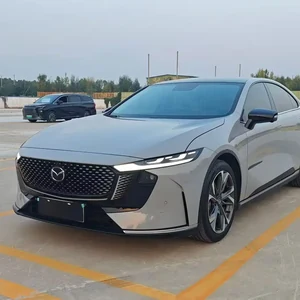
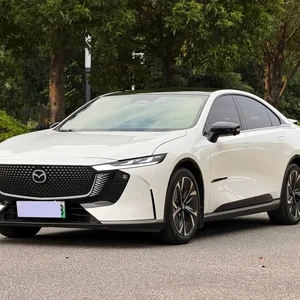
Mazda Mazda EZ-6 2025 Pure Electric 600 Intelligent Premium Sport Edition
How to buy a Mazda Ez-6 from China
-
1
Define the operating requirement
Specify the destination, routes, charging access, fuel policy, expected annual utilization and preferred powertrain before selecting a trim.
-
2
Build a live-unit shortlist
Review current Mazda Ez-6 inventory and compare the listed year, trim, condition, mileage, equipment and seller location. Verify the details again with the seller.
-
3
Verify specifications and documents
Request the original specification sheet, VIN, registration or ownership documents, options list and any available battery or range-extender health report.
-
4
Request comparable quotations
Ask for vehicle-only and landed-cost figures under the same Incoterm. Identify included documentation, inspection, freight, insurance, port charges, quote validity and payment milestones.
-
5
Lock the commercial terms
Use a contract naming the exact unit or production batch, MOQ, delivery conditions, inspection rights, warranty treatment and refund provisions. Independently verify payment instructions.
-
6
Inspect before final release
Arrange an independent pre-shipment inspection covering bodywork, mileage, software, charging functions, battery condition, generator or hybrid-system diagnostics and visible fuel or fluid issues.
-
7
Plan freight and destination clearance
Confirm loading method, securing, insurance, export documents, customs broker, homologation, PDI and inland transport. Record the handover condition of every vehicle before shipment.
Ez-6 vs rivals
| BYD Seal | The Seal is the closest pure-electric sedan alternative for buyers focused on a simpler BEV proposition. The Ez-6 offers an additional range-extended choice, making it more flexible for mixed charging and travel patterns, but local homologation and support must be validated for either model. |
|---|---|
| Toyota Camry Hybrid | The Camry Hybrid is a familiar alternative for fleets prioritizing established ownership support, conventional hybrid operation and resale confidence. The Ez-6 offers more direct battery-electric and range-extended positioning, but buyers should account for the additional service and market-development requirements. |
| Hyundai Sonata Hybrid | The Sonata Hybrid competes in the same broad mid-size sedan and fleet use cases with a simpler established powertrain. The Ez-6 provides a broader electrified choice for buyers able to support charging or range-extended operations, while local parts coverage and residual-value evidence remain key decision factors. |
Frequently asked questions
How is the Mazda Ez-6 export price determined?
The price depends on the exact year, trim, powertrain, equipment, new or used condition, mileage, battery version, exchange rate, freight route, insurance and Incoterm. Open the live Mazda Ez-6 listings on ChinaCarDirect to see the current per-unit price and terms, then request a written landed-cost quotation for the selected vehicle.
Which Mazda Ez-6 powertrain and range options are available?
The export naming includes Pure Electric 600 and Range-Extended 200 model families. These names identify series rather than replacing the official certification, so battery capacity, motor output, certified range and charging details must be checked for the selected version and destination.
Is a used Mazda Ez-6 suitable for export?
It can be, but the buyer should inspect the VIN, mileage, service history, accident record, body condition, battery health and range-extender or generator systems. Clear documentation and an independent pre-shipment inspection reduce uncertainty, particularly where export warranty coverage is limited.
Can I buy one Mazda Ez-6 or must I order a container?
MOQ is set by the seller, listing and shipment arrangement rather than by the model itself. Some listings may permit a single unit, while others may require a batch; check the live listing and ask whether mixed trims or reserved allocations can be consolidated.
What determines shipping time and cost for a Mazda Ez-6?
The principal factors are loading method, vessel space, sailing schedule, ports, route, season, congestion, insurance, inland handling, documentation and the agreed Incoterm. Freight should be quoted against a confirmed route and loading plan because generic market averages do not reflect a specific vehicle movement.
How are spare parts and aftersales handled?
Confirm whether the destination has a Mazda network capable of diagnosing the selected powertrain and supplying body, charging or hybrid-system components before committing. Ask the seller for warranty procedures, diagnostic requirements, parts lead times and the importer’s local support plan.
Is right-hand-drive Mazda Ez-6 availability confirmed?
RHD availability cannot be inferred from the model name or a generic export description. Ask the seller to verify the steering configuration of the exact unit or production batch and confirm that the destination will accept that configuration for registration.
How do I order a Mazda Ez-6 from China?
Select a live listing, confirm the unit specification, request a detailed written quote and agree the MOQ, Incoterm, payment milestones, inspection and export documents. After contract and deposit, complete any required inspection and compliance work before the balance, shipment and destination clearance.
Ready to source the Mazda Ez-6?
Send your destination, required powertrain, trim and quantity to request a current Mazda Ez-6 wholesale export quote.
Request a quote