
Mercedes-Benz GLC Export Buying Guide for Dealers
Plan a Mercedes-Benz GLC import from China with practical guidance on trims, export pricing, MOQ, shipping, RHD availability, homologation and rival models.
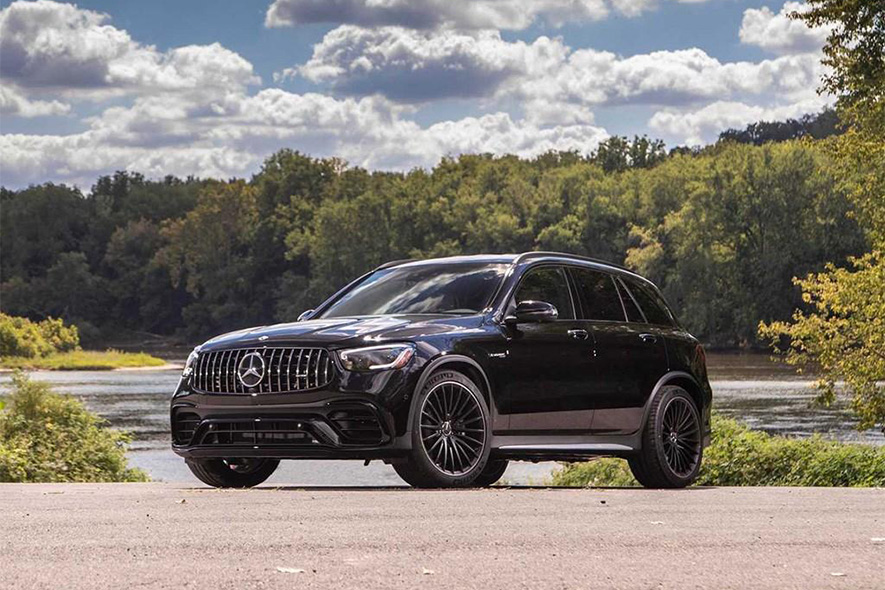
At a glance
- The GLC serves the premium compact SUV segment with regular, long-wheelbase and AMG choices.
- 4MATIC availability, seating requirements and performance tier should guide trim selection.
- New units simplify fleet onboarding, while used units require deeper condition and import checks.
- Live unit pricing must be separated from freight, duty, tax and other landed costs.
- RHD availability, homologation, parts access and local service capacity determine market feasibility.
Why the Mercedes-Benz Glc matters for export markets
The Mercedes-Benz GLC sits in the compact luxury SUV segment, combining a premium badge with more manageable dimensions and running costs than a full-size SUV. For export buyers, that middle position is commercially useful: it can serve executive fleets, premium dealer groups and family-oriented mobility programs without moving into the cost and logistics of larger luxury models. The model family also extends from all-wheel-drive derivatives to AMG versions, giving buyers a wider commercial brief than a single-specification vehicle. It bridges fleet rationalization and brand prestige without one dominant use case.
Global demand for the GLC is supported less by fashion alone than by its adaptability across road types and markets. A dealer can stock the regular GLC for urban and highway use, the GLC L where rear-seat or third-row demand is stronger, and AMG derivatives for performance-led retail. Four-wheel-drive versions are particularly relevant where traction, curb presence and all-weather confidence influence fleet specification. For importers, this creates a role for the GLC as a premium SUV that can be tailored within the Mercedes-Benz family, with brand familiarity supporting residual-value planning.
Export suitability still depends on the destination. Urban restrictions, fuel policy, road quality, import taxes, local service capacity and the availability of the required parts can turn a desirable specification into an unsuitable one. A buyer should therefore approach the GLC as a market-specific business decision rather than assuming that a premium badge guarantees easy resale. Review live inventory for steering configuration, specification and documentation, then model the vehicle’s operating costs and support requirements against likely demand in the destination market. This keeps procurement grounded in demand, regulation and logistics.
- Compact luxury-SUV positioning.
- 4MATIC, GLC L and AMG breadth.
- Destination rules decide suitability.
Model range, trims and powertrain variants: how the lineup is structured and how to choose
The GLC range is structured around GLC 200, GLC 260 and GLC 300 derivatives, with AMG GLC 43 and GLC 63 variants at the performance end. Standard-wheelbase and long-wheelbase GLC L bodies broaden the choice further, and selected L versions provide five- or seven-seat layouts. Listing names may also use “Coupe SUV,” “Sport,” “Dynamic,” “Luxury” and “Facelift.” These are commercial labels, but the buyer should confirm the mechanical specification rather than assuming that two similarly named vehicles are identical. A live quote must be matched to a specific unit and VIN.
Most GLC export choices use petrol powertrains and automatic transmissions, with 4MATIC appearing across many advertised trims. Depending on production market and model year, mild-hybrid electrical assistance may be present, so the fuel type and power figures should be read from the exact vehicle record. The AMG 43 and 63 represent a separate performance tier, with larger, more powerful engines and different drivetrain calibration. Because engine output, emissions equipment and equipment levels can vary by market, the model name alone is insufficient for destination homologation, reliable fleet costing or appraisal.
A selection method starts with use, then narrows the body and trim. Choose a regular GLC for the broadest dealer and fleet appeal; consider GLC L where passenger space or a third row changes the commercial case. Select AMG versions only when performance, braking capability and brand image justify the added purchase, operating and insurance costs. Within each family, compare seating, equipment, fuel type, warranty and service requirements. Then request the VIN-level specification and a written condition report before treating any trim as interchangeable with comparable operating plans for each.
- Verify engine and hybrid status.
- Use GLC L for added space.
- Price AMG ownership separately.
New vs used Mercedes-Benz Glc: how export inventory is structured and how buyers choose
A Mercedes-Benz GLC export listing should be understood as an individual vehicle, not a generic model entry. The catalogue may contain different model years, wheelbases, seat counts, equipment grades and market origins. New stock generally enters through parallel or dealer channels, while used stock may come from ownership or auction sources; each unit’s documents must be assessed. Filter broadly, then open each unit to review its title, configuration, condition, documentation and location. The descriptive name is an index, not a substitute for photographs, inspection findings and a vehicle-specific sales document. It separates engineering from cosmetic or market-specific equipment and provides a basis for comparing quotes and resale positioning.
New and used GLC units serve different export economics. A new vehicle generally offers a clearer factory warranty path, more predictable condition and simpler fleet onboarding, although the purchase commitment is higher and specification choices may be constrained. A used vehicle can reduce acquisition cost and provide immediate stock for price-sensitive channels, but buyers must examine mileage, service history, wear, accident repair, tyres, software and remaining warranty. Depreciation is not the only risk: import restrictions can make a seemingly cheaper unit expensive to land. Inspection and homologation remain decisive factors.
For fleet buyers, the decision should start with a total-cost and residual-value model, not with the lower acquisition figure alone. Compare warranty transfer, insurance class, fuel use, parts availability, downtime risk and expected holding period for each vehicle. For dealers, stock age matters because a trim, colour or drivetrain that is unavailable from the factory may become harder to place after model changeovers. New units suit planned replenishment; used units suit opportunistic purchases. In both cases, confirm the destination’s rules before committing, because age and emissions treatment can outweigh savings.
- Match every quote to one VIN.
- Clearer warranty with new units.
- Stricter checks for used units.
How export pricing works: the factors behind a live listing price, and how to read one
A live GLC export price is not a universal market value; it is the seller’s asking position for a specific unit under stated commercial conditions. Model year, trim, wheelbase, seating, engine, mileage and condition usually explain the largest differences between otherwise similar vehicles. Seller location, market origin and availability also matter. Currency exchange affects the quoted number, while the duration and conditions of the quote determine whether it remains commercially usable. Buyers should therefore treat the listing as the starting point of a unit-specific negotiation, not a fixed benchmark number.
The distinction is between the vehicle price and the landed cost. Depending on the Incoterm, one side may include export handling, inland transport, port charges, customs clearance, documentation, marine insurance or delivery, while the other assumes responsibility for them. Import duty and taxes are calculated under destination rules and should not be confused with freight. Ask for charges to be itemized, state the currency and Incoterm in the quotation, and confirm whether the amount is subject to exchange-rate movement. The same headline price can produce different margins in different countries.
To compare GLC opportunities, build like-for-like totals. Use the same model year and condition standard, add destination charges, apply tax assumptions and include preparation, registration and distribution costs. Check what is excluded from the listing, including inspection, insurance, certificates, port handling or delivery to the dealer. A lower asking price can be less attractive if it excludes essentials required for legal entry. For the binding figure, open the live unit listing, record the quote date and ask the supplier to reconfirm price, availability and terms in writing before paying a deposit.
- Separate vehicle and landed costs.
- Confirm currency, Incoterm and validity.
- Check live unit pricing.
MOQ, ordering and payment: single units vs consolidating a container
MOQ for a GLC purchase is set by the seller, vehicle source and transaction structure; every listing may have a different threshold. Some offers are sold as individual units, while multi-unit orders may be used to reach container economics. A single-unit purchase offers flexibility and lower exposure, but leaves part of the freight capacity unused. A consolidated order can improve freight utilization and make identical units easier to manage, yet it increases capital, quality-control and unsold-stock risk. Confirm the MOQ attached to the offer rather than relying on a platform-wide assumption.
An ordering process starts with a written specification for the unit or homogeneous batch. It should identify the exact GLC trim, model year, steering side, seat count, equipment, condition grade, VIN where known, destination, Incoterm and payment schedule. Ask whether the seller is the exporter of record, whether the vehicle is free to export, and which documents accompany it. Then agree the inspection standard, acceptance method, deposit, balance trigger and title-transfer process. Keep every promise in the contract or order confirmation, because verbal assurances can be difficult to enforce across borders.
Payment structure should follow risk and control. For a vehicle, staged payment tied to inspection and document verification can align cash flow with seller performance. For a consolidated shipment, funds may be split between a deposit, inspection clearance and balance before release, under the agreed sequence. Use traceable banking channels, verify the beneficiary and invoice details, and confirm the consequences of cancellation or a failed inspection in writing. Also include refund terms, shipping delays and title issues in the contract. The objective is to control handover from a verified vehicle to a compliant export.
- Confirm listing-specific MOQ.
- Stage payments to inspections.
- Verify ownership documents.
Shipping, homologation and market compliance caveats: LHD/RHD and import rules by country
The compliance check is the destination country, because there is no universal import pathway for a Chinese-market Mercedes-Benz GLC. Confirm whether the vehicle is left-hand drive or right-hand drive, and whether the destination accepts that configuration for commercial registration. A factory right-hand-drive GLC is generally preferable for right-hand-drive markets; converting a left-hand-drive vehicle changes safety, wiring, homologation and residual-value considerations and should not be treated as equivalent. Local rules can also depend on emissions standard, engine type, vehicle age, VIN traceability and whether the use is private, fleet or resale.
Homologation may require more than a certificate. The importer should obtain the destination authority’s requirements for safety and emissions, type approval or individual approval, customs classification, duty and taxes, registration documents, insurance, inspection and warranty treatment. Used-vehicle imports can face age, mileage, inspection or emissions restrictions, while commercial resale may require importer or dealer permissions. Mercedes-Benz service access helps, but parts availability for a specific market, production year or steering configuration needs confirmation. Do not assume a Chinese vehicle can be registered simply because its VIN and invoice are genuine.
Shipping method should follow the vehicle and delivery obligation. Enclosed transport or RoRo may suit SUV dimensions, while flat-rack handling may be needed for a damaged or non-running unit. The forwarder should confirm loading, blocking and lashing, risk, handling and delivery terms. Cost and transit time vary with origin and destination ports, sailing frequency, container availability, season, insurance, cargo complexity and inland distance—not merely the advertised price. Buyers should record who handles export customs and cargo, when risk passes under the Incoterm and what evidence is needed at pickup.
- Confirm steering side.
- Check destination approval.
- Define freight scope and risk.
Who should buy the Glc — and who should pick a different vehicle
The GLC is a strong candidate for premium dealers, company-car programs, chauffeur fleets and buyers who want a luxury SUV with a more manageable footprint than a larger Mercedes model. It is especially useful where all-wheel drive, a substantial cabin and standard and long-wheelbase bodies matter. Dealers can serve customer segments with the GLC family: regular models for broad premium demand, GLC L for passenger-rich applications, and AMG derivatives for performance customers. The case is strongest where the brand has service recognition and the vehicle’s resale proposition is supported locally.
It is a weaker choice when the buying brief prioritizes the lowest purchase cost, maximum cargo efficiency, minimal running costs or fleet standardization. Premium insurance, maintenance, tyres and fuel can outweigh a GLC’s benefits, while larger rivals may offer rear-seat or cargo room without a premium-brand ownership burden. An EV-first fleet should select a charging-compatible electric model when zero-emission operation is mandatory rather than treating a petrol GLC as a substitute. Off-road, heavy-duty and low-speed users should consider body-class and load requirements rather than choosing a passenger SUV by badge.
Before ordering, a buyer should answer questions: Is the GLC’s positioning supported by local demand? Does the chosen body and seat layout match the mission? Can the service network maintain it economically? Will imported or used units pass applicable rules? Does expected resale or utilization justify total cost? If the answers are unclear, a conventional premium SUV, smaller luxury model or different powertrain may reduce risk. The right vehicle is one whose specification, compliance path and operating economics remain sound after landed cost—not merely one with the strongest badge.
- Premium fleets fit well.
- Budget fleets may not.
- Trim follows mission.
Main rivals and how the Glc compares
The BMW X3 is the closest rival: it is a premium compact SUV with comparable dealer, fleet and executive-car use cases. Selection often turns on local aftersales coverage, financing, equipment preferences and each brand’s value in the destination market. The GLC distinguishes itself through a broad 4MATIC-oriented range, regular and long-wheelbase choices, and an AMG ladder extending into high performance. An X3 buyer who values familiar BMW ergonomics or a plug-in hybrid may prefer the rival; a GLC buyer prioritizing Mercedes presentation and available body variants may do the opposite.
The Audi Q5 competes through a premium-SUV format and a broad, often quattro-oriented drivetrain proposition. For many importers, the decision is less about nameplate than dealer coverage, spare-parts access, financing terms and the availability of a suitable engine and equipment package. The GLC may appeal through its rear-facing design, GLC L availability and higher-performance AMG options, while the Q5 may attract buyers focused on a different cabin environment and Audi model range. Both should be assessed on the exact export specification, landed cost and ability to support the vehicle locally.
The Volvo XC60 is an alternative for buyers wanting a restrained, comfort-oriented premium compact SUV. It competes on cabin space, safety equipment and efficient road use, but the GLC offers a performance hierarchy through AMG and a more extensive Mercedes dealer ecosystem in many markets. XC60 may be easier to justify where demand favors Scandinavian design or lower operating costs. The GLC remains stronger where premium image, 4MATIC availability or a seven-seat GLC L is central. Compare every shortlisted vehicle against the same duty cycle, tax regime and aftersales constraints.
- X3: direct premium rival.
- Q5: drivetrain-led alternative.
- XC60: comfort-led alternative.
Live Mercedes-Benz Glc export inventory
View all listings →Real units currently on ChinaCarDirect with per-unit asking prices and MOQ. Availability updates live from the catalogue.
Mercedes-Benz Mercedes-Benz GLC 2025 Model Year GLC 260 L 4MATIC Luxury
Mercedes-Benz Mercedes-Benz GLC 2025 Model Year GLC 260 L 4MATIC Luxury
How to buy a Mercedes-Benz Glc from China
-
1
Set the destination and use case
Identify the country, import category, fleet or retail channel, passenger count and cargo needs. This determines the required body style, powertrain, seating and compliance route before a quotation is requested.
-
2
Shortlist the body and tier
Compare the regular GLC with GLC L, then separate 200, 260 and 300 requirements from AMG performance needs. Check seating, 4MATIC, equipment and local operating costs against competing models.
-
3
Open and verify live units
Use the live GLC inventory to review the current per-unit price, model year, trim, location and MOQ. Request VIN-level photographs, documents and condition details; do not treat the listing title alone as the specification.
-
4
Request a written quotation
Ask the seller to state price, currency, Incoterm, payment stages, inspection standard, document set and quote validity. For batches, identify the included units and how mixed configurations will be handled.
-
5
Build the landed-cost comparison
Add origin handling, freight, insurance, destination duty, taxes, registration, port charges and inland delivery where applicable. Use the same assumptions across the GLC and shortlisted rivals.
-
6
Complete compliance and payment checks
Confirm steering side, export eligibility, VIN, title, homologation and import rules with the destination authority or an experienced broker. Pay through verified channels against agreed milestones and document refund conditions.
-
7
Inspect, release and ship
Apply the agreed inspection standard before final balance and release. Confirm loading, blocking, cargo documents, risk transfer, pickup evidence and delivery terms before the vehicle leaves the origin.
Glc vs rivals
| BMW X3 | The X3 is the closest rival by size, price tier and premium-SUV role. The GLC offers a broader 4MATIC-oriented range, GLC L options and a deeper AMG ladder, while local BMW service coverage and plug-in hybrid availability may favor the X3. |
|---|---|
| Audi Q5 | The Q5 competes through quattro-oriented versions, a broad model family and established dealer support. The GLC stands out for its rear design, long-wheelbase option and AMG extensions, but the better choice depends heavily on local Audi and Mercedes-Benz support. |
| Volvo XC60 | The XC60 is a comfort- and efficiency-oriented alternative with a more restrained Scandinavian presentation. The GLC provides a stronger performance hierarchy and a broader high-performance range, whereas the XC60 may deliver lower operating costs in markets with strong Volvo demand. |
Frequently asked questions
How is Mercedes-Benz GLC export pricing determined?
ChinaCarDirect shows the current per-unit asking price on each live GLC listing, and a seller can revise it when the vehicle or commercial terms change. Ask for a written quote showing currency, Incoterm, freight inclusions, payment terms and validity, then calculate destination duties, taxes and other charges separately for a landed-cost comparison.
Which Mercedes-Benz GLC engine and powertrain options are available?
The mainstream export range centers on petrol-powered GLC 200, 260 and 300 derivatives, with AMG GLC 43 and 63 at the performance end. Engine output, mild-hybrid equipment, transmission and emissions details vary by model year and market, so confirm the VIN-level specification in the live listing. These are petrol configurations, so battery capacity and electric range are not relevant figures.
Should I buy a new or used Mercedes-Benz GLC?
A new GLC generally offers more predictable condition, clearer warranty onboarding and simpler fleet standardization. A used GLC may suit opportunistic demand but requires checks of mileage, service history, accident repair, tyres, software, title and remaining warranty. Import age, inspection and emissions rules can outweigh an apparently lower purchase price.
What is the MOQ for a Mercedes-Benz GLC export order?
MOQ is seller- and offer-specific, so read it on the selected live listing and confirm it in the quotation. A single unit may be available where the seller offers one, while a container consolidation normally involves a larger batch and higher inventory exposure. Do not infer a platform-wide MOQ from other GLC listings.
How long does Mercedes-Benz GLC shipping take, and what affects the cost?
Transit time and freight cost depend on origin and destination ports, sailing schedule, container or vehicle-handling method, cargo condition, season, insurance, customs and final inland delivery. Obtain a freight quotation tied to the chosen Incoterm and unit, because the vehicle’s advertised price does not include every logistics or destination charge.
Can I order Mercedes-Benz GLC spare parts with the vehicle?
Parts should be ordered against the vehicle’s VIN and exact model-year specification, using Mercedes-Benz or an approved specialist channel where possible. Confirm whether the order can be consolidated with the vehicle shipment, how customs will classify it and whether left-hand-drive and right-hand-drive parts differ. Add parts freight, duty and tax to the landed-cost model rather than assuming they are included.
Is a right-hand-drive Mercedes-Benz GLC available for export?
Right-hand-drive availability depends on the individual source vehicle and destination market; it should not be assumed from the model name. Confirm steering side, factory configuration and supporting documents before ordering. Converting a left-hand-drive GLC is not equivalent to a factory right-hand-drive version and can complicate homologation, safety, parts access and resale.
How do I order a Mercedes-Benz GLC from China?
Search the live GLC inventory, select a unit that matches the required body, trim, seat count and condition, and request a written unit-level quotation. Verify ownership, export documents, MOQ, payment milestones, inspection, Incoterm and destination compliance before paying. Use the ChinaCarDirect RFQ channel to send the destination, specification and vehicle requirements for a current response.
Ready to source the Mercedes-Benz Glc?
Send ChinaCarDirect your preferred GLC trim, destination and shipping terms for a unit-specific export quotation.
Request a quote