
Mercedes-Benz A-Class Export Guide for Overseas Buyers
Buy Mercedes-Benz A-class vehicles from China with a practical guide to trims, powertrains, live export pricing, shipping, compliance and importer decisions.
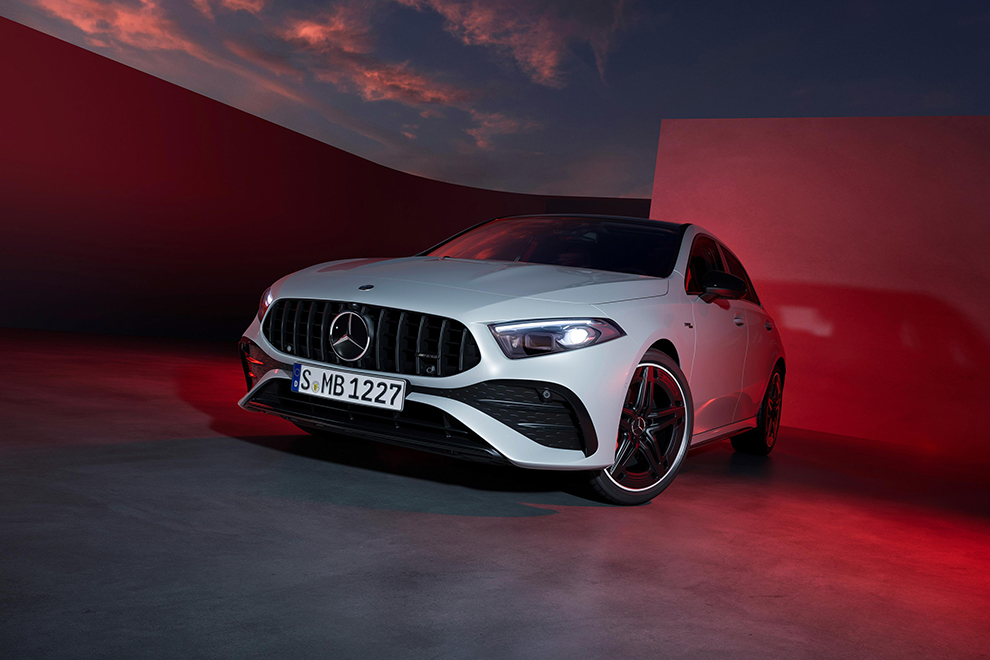
At a glance
- The A-class gives overseas buyers a compact premium footprint with hatchback and sedan options across markets.
- A 180 L and A 200 L cover regular models, while AMG A 35 and A 45 serve performance-focused buyers.
- The export lineup is petrol/combustion-led; engine, transmission, emissions and equipment must be verified per listing.
- Current vehicle price, condition and MOQ should be read from each live listing, not inferred from the model name.
- Single-unit buying and multi-vehicle consolidation require different freight, payment and risk checks.
- LHD/RHD availability, homologation, duties and registration remain destination-country decisions.
Why the Mercedes-Benz A-class matters for export markets
The Mercedes-Benz A-class sits in the compact premium segment, combining a small footprint with the brand identity and equipment positioning expected of an entry Mercedes. For Mercedes-Benz A-class export programs, the strongest case is urban rather than off-road or heavy-duty use. Dealers can serve city customers seeking a premium badge, while fleet operators can use the A-class for executive or mixed fleets where image, maneuverability and passenger comfort matter more than cargo volume. It is therefore a practical candidate for an accessible premium range, provided the destination accepts its specification and local service support is available.
Global demand for the A-class is not simply a function of the three-pointed star. Buyers compare it with premium hatchbacks and sedans, mainstream models with rational value, and used alternatives that reduce acquisition burden. The result is a vehicle that appeals to private buyers, company-car programs and specialist dealers, but each channel asks a question: style and status for private customers, lifecycle cost and uptime for fleets, and margin plus after-sales support for resellers. Identify the channel before choosing a trim, because the same model can be a good or poor commercial fit.
Export buyers should also separate the model's strengths from its compromises. Compact dimensions can make it easier to manage in dense cities and on constrained parking sites, but rear-seat room, luggage capacity, ride height and service access may not suit every buyer. The A-class name covers multiple body styles, facelift treatments, package names and performance derivatives, so a model-level description is not enough for tendering or customs work. Treat the exact unit, its documented configuration and destination-market approval as the purchase specification, then compare it with other brands rather than relying on badge recognition alone.
- Confirm body style and destination-market role.
- Treat every unit as a separate specification.
- Check market approval before committing funds.
Model range, trims and powertrain variants: how the lineup is structured and how to choose
For Mercedes-Benz A-class specs, the listed export lineup is structured around A 180 L and A 200 L models, with A 200 offered in packages such as Sport, Fashion, Dynamic and Style. Facelift labels indicate visually and technically refreshed versions are part of the decision. Some names identify a sedan, while the broader family is also sold as a hatchback in various markets. Compare body style and facelift generation first, because these details affect space, appearance, equipment and the parts or software package required. In many Mercedes-Benz contexts, L denotes the longer-wheelbase sedan, but confirm that convention on the individual listing.
Performance buyers have a distinct branch: the listed AMG A 35 4MATIC, AMG A 45 4MATIC and AMG A 45 S 4MATIC+ names, plus an Ignition Special Edition label. These represent a more performance-oriented positioning, while 4MATIC or 4MATIC+ identifies the all-wheel-drive branding used on those derivatives. Exact engine output, acceleration figures, suspension details and equipment cannot be inferred safely from the trim name, so verify them in the vehicle record and live listing. The distinction matters to fleets: a sport derivative may involve different tires, servicing assumptions and insurance treatment from regular A 180 and A 200 models.
For a practical A 180 L or A 200 L purchase, start with body and intended role. A sedan may suit chauffeur or executive use where a conventional three-box profile matters; a hatchback can be more flexible for urban parking and luggage access. Next compare engine, transmission, drivetrain, fuel type, emissions data and factory options rather than relying on the package badge. The export lineup is petrol/combustion-led, so buyers seeking battery range, charging capability or zero-emission compliance should confirm whether an electrified variant is actually offered instead of assuming one.
- A 180 L and A 200 L cover regular models.
- AMG A 35 and A 45 serve performance buyers.
- Verify engine, gearbox and drivetrain per listing.
New vs used Mercedes-Benz A-class: how export inventory is structured and how buyers choose
Export inventory for the Mercedes-Benz A-class should be read as a structured set of individual vehicles, not one generic product. Each live listing should identify or allow confirmation of condition, model year, trim, body style, mileage where relevant, drivetrain, options, color and identifying reference. This matters for a Mercedes-Benz A-class wholesale purchase because mixed packages can look similar in a search result while having materially different buyer utility. Use filters and the detailed unit page, save comparable specifications, and ask the seller to correct or confirm any missing field before treating the vehicle as a candidate.
A new vehicle gives the buyer the clearest link between the advertised configuration and the delivered car, generally reducing uncertainty about wear, prior repairs and mechanical refurbishment. It also makes model-year and equipment comparisons easier when several units are considered. The trade-off is exposure to storage, transport and market timing, while factory or seller warranty coverage may not transfer automatically to the destination. Ask for the delivery condition, pre-delivery inspection status, warranty route and any destination-market dealer-network requirements. Do not treat delivery photos as a substitute for written warranty terms or an inspection record.
Used Mercedes-Benz A-class vehicles can suit a dealer seeking a known configuration at a potentially lower acquisition cost, but only if condition supports the intended use. A prudent buyer reviews the chassis and VIN history, service records, cold start, cooling system, brakes, tires, suspension, transmission behavior, paint and interior condition, then obtains an independent inspection. Older units may carry more maintenance uncertainty, different software or regional parts requirements. Current used availability must be confirmed on the live ChinaCarDirect inventory rather than assumed from the model family or model name alone.
- New: clearer configuration and condition certainty.
- Used: inspect wear, records and regional parts.
- Confirm live availability and warranty transfer.
How export pricing works: the factors behind a live listing price, and how to read one
A Mercedes-Benz A-class export price is a unit-level figure, not a universal amount for the nameplate. Year, exact trim and facelift, body style, engine and output, drivetrain, gearbox, factory options, mileage, condition, finish and stock location influence the starting point. Currency movements, export handling, freight, insurance and the chosen Incoterm can then change the amount payable by the importer. Compare like-for-like vehicles. A modified or poorly described car may conceal the costs the buyer expects to compare, and a discount without an identifiable specification change is not automatically a better deal.
Read each live listing rather than treating its headline number as a landed cost. Confirm whether the offer is for one identifiable vehicle or a generic model, whether domestic transport or export preparation is included, and which Incoterm governs the transaction. Check currency, quote validity, payment milestones, documentation scope, and whether duty, VAT, customs clearance, port fees and registration are excluded. Each live ChinaCarDirect A-class listing is the source for the current per-unit price, condition, availability and any stated MOQ. Request a written quotation and invoice breakdown before depositing funds.
A practical Mercedes-Benz A-class export price guide starts with the vehicle quote, then adds domestic movement, export documentation, transport, marine insurance, destination handling, taxes or duties, compliance work and local registration. Add dealer margin and a contingency for inspection or damage, but do not hide uncertainty inside one all-in number. An A 200 sedan and an AMG A 45 are not comparable merely because both wear the Mercedes badge, while a used unit needs a condition adjustment and may change destination tax treatment. Ask the seller and an independent adviser to separate fixed costs from variable ones before funds are committed.
- Compare like-for-like configurations.
- Separate vehicle price from landed cost.
- Confirm currency, Incoterm and quote validity.
MOQ, ordering and payment: single units vs consolidating a container
MOQ means the minimum quantity a seller will accept. Dealers buying Mercedes-Benz A-class from China should check it for the exact listing and destination rather than infer it from the brand. Some export sellers accommodate a single-unit purchase for a selected vehicle; others reserve commercial quantities or require a mixed-model container allocation. The right question is not whether the A-class has a universal MOQ, but whether the chosen unit can be released individually, what security deposit applies, and whether the seller can combine it with other compatible orders without delaying delivery.
A single unit is often sensible for a dealer testing demand, a fleet buyer piloting a model, or an importer consolidating several vehicles. Consolidating vehicles into one roll-on/roll-off shipment or specialist container move can improve freight efficiency and give the seller more flexibility, but it introduces cargo planning, payment synchronization, damage exposure and demurrage risk if one unit or document is delayed. It also requires agreement on which trims, colors and destinations are acceptable. Model the decision with a landed-cost worksheet for each unit, then compare the saving per vehicle with the extra inventory, financing and administration burden.
The normal sequence is specification approval, written quotation, seller and buyer details, a deposit, final inspection, balance payment, export release and transport booking. Terms vary by seller and may change if the vehicle is a special-order or multi-unit movement, so no universal payment schedule should be assumed. Use a contract or pro forma invoice that identifies the vehicle, price basis, Incoterm, MOQ, payment deadlines, documents and cancellation terms. Verify the counterparty and payment account, and avoid releasing the balance solely on a photograph if a pre-shipment inspection has not occurred.
- Ask whether one unit can be released.
- Weigh consolidation against added inventory risk.
- Use written, contract-linked payment milestones.
Shipping, homologation and market compliance caveats: LHD/RHD and import rules by country
Shipping begins after the buyer confirms dimensions and weight, because those facts determine whether a specialist vehicle carrier or conventional freight solution is appropriate. A low vehicle must still be secured against movement, water and abrasion; the method also depends on origin and destination ports, route availability, lifting equipment, congestion, seasonality and insurance. Incoterms clarify where risk and cost pass from seller to buyer, but they do not replace insurance or a careful loading plan. Request the actual transport proposal and identify any destination charges not included in the quote.
Steering configuration is a frequent source of disappointment. China-origin examples are commonly left-hand-drive, but that is not a substitute for checking the individual car; right-hand-drive availability depends on the source market, production specification and importer. A buyer who requires RHD should not order an LHD vehicle on the assumption that conversion will be simple. Steering conversion can add cost, affect warranty and insurance, require region-specific parts and reduce resale appeal. State LHD or RHD as a mandatory line in the RFQ, then confirm it by photographs and vehicle documents before production or shipment.
Market compliance is country-specific and cannot be guaranteed by the export listing alone. The importing dealer may need a local importer authorization, customs clearance, VIN or chassis verification, emissions approval, safety or type approval, local registration, insurance and payment of duties or taxes. Used imports can face additional age, inspection or emissions-zone restrictions, while software, cybersecurity and recall requirements may apply where they are enforced. Do not assume a Chinese-market car is road-ready elsewhere. Before paying, obtain written confirmation from the destination authority or an experienced customs broker about the exact configuration and intended use.
- Specify LHD or RHD in writing.
- Confirm dimensions before booking freight.
- Check destination approval, tax and registration.
Who should buy the A-class — and who should pick a different vehicle
The A-class is a strong fit for an overseas buyer who wants a recognizable premium marque in a compact footprint. It suits city dealers seeking to fill the entry point below larger Mercedes sedans, and company-car or mixed fleets that prioritize passenger space, maneuverability and brand presentation. For private buyers, the attraction is the combination of premium identity, hatchback or sedan choice and manageable urban size. These benefits are most valuable when the vehicle will spend much of its life on city roads, in company use or with a planned service network that can maintain the selected model.
It is a weaker fit when cargo volume, high-riding ground clearance, seven-seat flexibility or heavy-duty work is the priority; a compact SUV, estate or MPV will usually serve those briefs better. Buyers committed to battery-electric operation should choose an EV that can charge at their depot and meet local fleet rules rather than compromise with a combustion A-class. A buyer focused only on the lowest acquisition cost may also find a mainstream hatchback more rational. The decision should compare total ownership needs, not merely whether the Mercedes badge adds perceived value.
Performance-oriented A 35 and A 45 variants serve a buyer who values AMG positioning and all-wheel-drive branding but may accept higher servicing, tire and insurance costs. Fleet managers should examine fuel policy, annual distance, downtime, parts availability and driver suitability, because premium image does not guarantee economical operation. Before choosing the A-class, build a short list that includes one mainstream alternative and one electrified option, then compare purchase quote, freight, taxes, insurance, fuel or energy, maintenance and expected resale. Choose the option that remains rational after compliance and running costs are included.
- Best for urban premium and company fleets.
- Weak for cargo, rough use or EV mandates.
- Compare total cost, not badge value.
Main rivals and how the A-class compares
The BMW 2 Series is a close premium-compact alternative for buyers who prioritize a different dynamic character and, depending on market, rear-wheel-drive availability or a coupe/Gran Coupe choice. The A-class instead leads with Mercedes brand identity and a lineup that ranges from regular A 180 and A 200 models to clearly identified AMG derivatives. A dealer should test both with the same body, powertrain, equipment and compliance brief: the stronger badge preference may favor the Mercedes, while the buyer focused on chassis feel and drivetrain layout may prefer the BMW. Neither should be selected on styling alone.
The Audi A3 is perhaps the most direct positional rival, combining a compact premium footprint with hatchback and sedan forms in many markets. Its appeal lies in a different brand identity, design language and dealer network, while the core buying question remains the same: which engine, transmission, equipment level and after-sales package gives the buyer the lowest sensible cost of ownership. Compare luggage capacity, rear-seat usability, software and service arrangements rather than assuming the badges create identical products. For a fleet, local Audi support may be as decisive as the initial vehicle specification.
The Volkswagen Golf is the value-led benchmark many A-class shoppers use to judge whether a premium badge is worth paying for. It generally occupies a more mainstream position, with a straightforward hatchback format and a reputation for practical ownership; the A-class offers stronger premium differentiation and a wider performance ladder. That does not make the Golf universally cheaper after tax, freight and support, nor the A-class universally better. Compare a live Golf quote and local running costs with the A-class on the same landed-cost basis, then choose by fleet policy and customer demand rather than badge assumption.
- BMW 2 Series: dynamic premium alternative.
- Audi A3: closest direct premium rival.
- Volkswagen Golf: value-led mainstream benchmark.
Live Mercedes-Benz A-class export inventory
View all listings →Real units currently on ChinaCarDirect with per-unit asking prices and MOQ. Availability updates live from the catalogue.
Mercedes-Benz Mercedes-Benz A-Class AMG (Import) 2022 AMG A 45 4MATIC+
Mercedes-Benz Mercedes-Benz A-Class AMG (Import) 2024 AMG A 35 4MATIC
Mercedes-Benz Mercedes-Benz A-Class AMG (Import) 2024 AMG A 35 4MATIC
Mercedes-Benz Mercedes-Benz A-Class AMG (Import) 2024 AMG A 35 4MATIC
How to buy a Mercedes-Benz A-class from China
-
1
Define the use case and destination market
Set the required body style, powertrain, seating, performance level and steering configuration before selecting a vehicle. Confirm which import, tax and registration environment applies in the destination country.
-
2
Shortlist exact vehicles
Browse the live Mercedes-Benz A-class listings and compare identifiable units rather than generic model advertisements. Record the trim, condition, body style, year and visible options for each candidate.
-
3
Verify the unit specification
Ask for chassis or VIN identity, clear photographs, engine and gearbox details, drivetrain, steering position, dimensions and condition evidence. Resolve any missing specification before requesting payment terms.
-
4
Request an itemized export quotation
Ask for the live unit price, MOQ, currency, quote validity, Incoterm and an estimate of transport, insurance and destination charges. Keep the vehicle price separate from the estimated landed cost.
-
5
Confirm ordering and payment terms
Agree whether the vehicle can be released singly or must be consolidated, and document deposits, balance deadlines, inspection requirements and cancellation terms. Verify the seller and payment account before transferring funds.
-
6
Inspect before final payment
Use an independent pre-shipment inspection to confirm chassis identity, condition, mileage where applicable, mechanical operation and disclosed damage. Tie the balance payment to satisfactory inspection and correct documentation.
-
7
Arrange freight, clearance and registration
Give the forwarder the confirmed dimensions, origin, destination and Incoterm, and instruct the customs broker to check homologation and import rules. Complete destination registration, tax and insurance arrangements before commercial release.
A-class vs rivals
| BMW 2 Series | The closest dynamic premium-compact alternative, with market-dependent coupe/Gran Coupe choices and a more rear-drive-oriented image. Choose it where handling and drivetrain preference outrank Mercedes badge appeal; choose the A-class for its regular-model-to-AMG hierarchy. |
|---|---|
| Audi A3 | A direct size-and-position rival with hatchback and sedan forms in many markets. Compare exact engines, equipment, rear space, software and local service support; brand and dealer-network preference can decide between Audi and Mercedes. |
| Volkswagen Golf | A value-led mainstream benchmark with a practical hatchback format. It is a rational alternative when badge premium is less important, while the A-class serves buyers who prioritize Mercedes differentiation and want access to AMG alternatives. |
Frequently asked questions
How is the Mercedes-Benz A-class export price determined?
The unit price reflects year, trim, facelift, body style, engine and options, drivetrain, condition, mileage, stock location and exchange-rate effects. Domestic handling, freight, insurance, the Incoterm, duties, taxes and local charges may sit outside that vehicle figure. Request an itemized written quotation so vehicle price and landed cost remain separate.
Where can I see the current price and availability?
Use the live Mercedes-Benz A-class listings for the current per-unit price, condition and availability. Confirm quote validity and any stated MOQ directly with the seller before paying, because the live listing and written transaction terms together determine the binding order.
What engine and powertrain options should I expect?
The A-class export lineup is petrol/combustion-led, spanning regular A 180 L and A 200 L models and AMG A 35 or A 45 derivatives. Exact displacement, output, transmission, drivetrain, fuel grade and emissions data vary by unit and market, so check the live listing rather than infer them from the badge. The referenced combustion versions do not provide a driving electric-range figure.
Should I buy a new or used Mercedes-Benz A-class?
A new vehicle generally gives stronger configuration and condition certainty, while a used example can reduce acquisition cost but adds wear, service-history and inspection risk. Compare the same trim, options and destination requirements, including warranty transfer and parts support. Current condition and availability must be checked on the live listings.
How does MOQ work for Mercedes-Benz A-class orders?
MOQ is set by the seller, vehicle and transaction rather than by the model name alone. Ask whether the selected unit can be released singly and whether the seller can consolidate it into a multi-vehicle shipment, then record the agreed MOQ in the quotation. Do not assume a catalogue-wide rule.
What affects shipping time and cost for a China export?
Vehicle dimensions and weight, origin and destination, carrier or route, container or roll-on/roll-off availability, port handling, congestion, insurance and the agreed Incoterm all matter. Customs clearance and destination modifications can add time. Obtain a forwarder quote for the actual vehicle and port pair rather than relying on a universal transit estimate.
Are spare parts and service support available?
Mercedes-Benz parts and service are generally available through the brand's dealer network, but compatibility depends on model year, market specification, engine and software. For a China-origin import, confirm parts lead time and technical support with the destination dealer before committing. Also check whether maintenance can be performed locally without compromising warranty coverage.
Can I order RHD, and how do I place an order?
RHD availability must be confirmed for the exact source vehicle; do not assume a China-origin listing is right-hand-drive. Shortlist the unit in live listings or submit an RFQ specifying LHD or RHD, then secure the configuration, written price, MOQ, documents, inspection, payment milestones and shipping plan. Only release funds against verified vehicle identity and agreed terms.
Ready to source the Mercedes-Benz A-class?
Request a ChinaCarDirect quote for a specific Mercedes-Benz A-class configuration and have the seller confirm the live price, MOQ, documents, Incoterm and destination-market compliance before payment.
Request a quote