
Mercedes-Benz CLA (Import) Export Buying Guide
Guide to Mercedes-Benz CLA (import) trims, export pricing logic, ordering, shipping and compliance for overseas dealers, importers and fleet buyers.
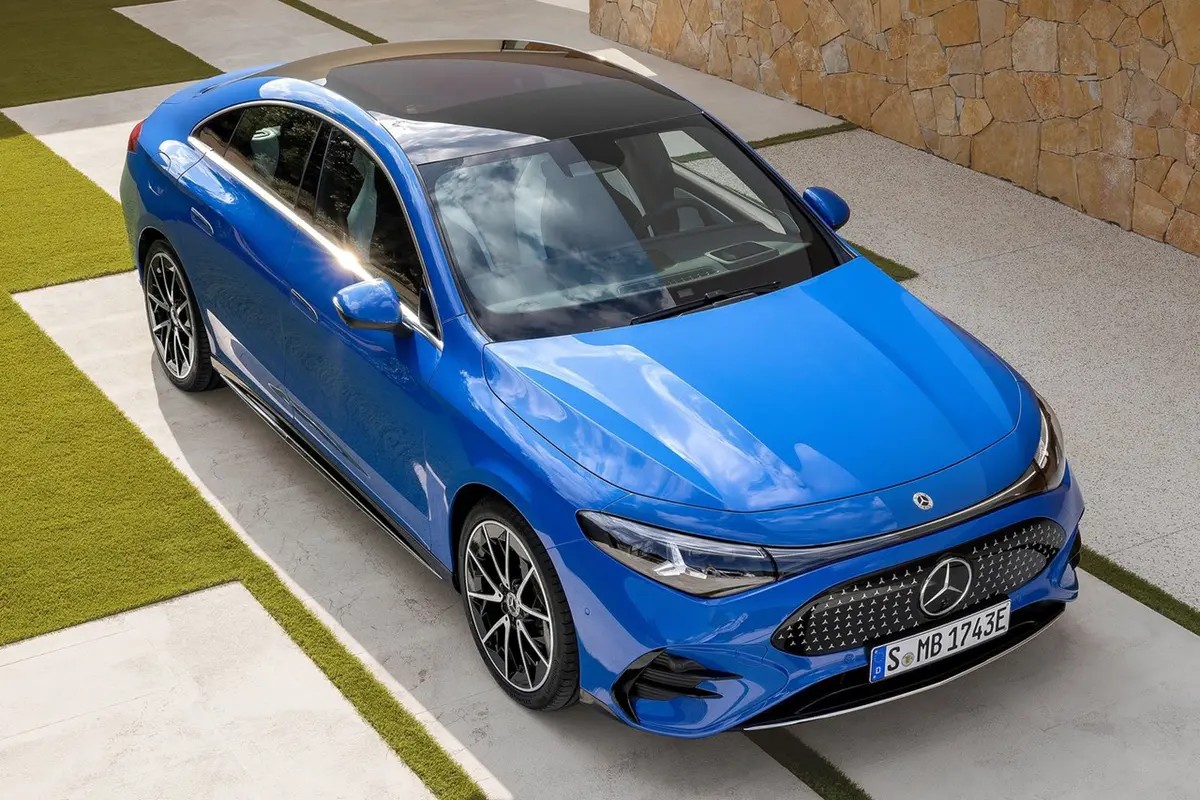
At a glance
- The CLA brings Mercedes-Benz premium branding and coupé-led four-door styling to the compact export segment.
- CLA 200, 220 and 260 trims plus 4MATIC should be compared by verified model year, source market and equipment rather than badge alone.
- Shooting Brake variants suit buyers who need greater luggage utility from a premium compact.
- New and used sourcing paths require different checks for provenance, condition, warranty and local-market specification.
- Landed cost depends on the vehicle, exchange rates, freight, Incoterms, taxes and destination compliance, so current pricing belongs in live listings.
Why the Mercedes-Benz Cla (import) matters for export markets
The CLA occupies a useful middle ground between an ordinary compact saloon and a larger executive car. Its four-door coupé profile gives overseas buyers a more visual alternative to the conservative A-Class or 3 Series family, while the brand badge, Mercedes cabin design and established service network support its positioning in the premium compact segment. For export markets, that combination matters: the model can attract private buyers who value status and design as well as dealers seeking a recognizable premium name in a manageable vehicle class without moving into full-size luxury costs.
Global demand should be understood as a fit question rather than a universal sales forecast. The CLA is especially relevant in markets where compact executive styling, rear-seat access, and a premium badge are valued, including urban business districts and fast-moving consumer markets. The Shooting Brake version adds a longer roof and more practical luggage area, making it more relevant to fleets, hotels, and distributors. Buyers in regions with harsh terrain may prefer 4MATIC, while urban users can avoid unnecessary equipment if they model total ownership cost carefully before importing vehicles and final market compliance.
Export appeal also depends on whether the vehicle can be supported after arrival. Mercedes-Benz has a broad international presence, but the quality of local technical support, access to body panels, electronic modules, and approved service procedures varies by country. Dealers should establish parts channels and a pre-arrival inspection plan rather than assuming that every overseas workshop shares the same diagnostic capability. For fleet buyers, uptime, repair intervals, insurance classification, and residual-value confidence are usually more decisive than the list price, trim badge, or headline specification in the market where vehicles will operate.
- Premium compact coupé styling
- Shooting Brake practicality
- 4MATIC all-wheel drive
Model range, trims and powertrain variants: how the lineup is structured and how to choose
The core export line-up is organized around CLA 200, CLA 220 and CLA 260 badges, with 4MATIC identifying the all-wheel-drive versions and Style or Fashion packages indicating equipment and visual presentation rather than a separate vehicle architecture. Exact engine output, transmission calibration, standard equipment, and availability can change with model year and source market, so a trim name alone is not enough for approval. The sensible starting point is to choose the body shape, fuel type, driven wheels and market-original equipment that meet the fleet’s duty cycle, then confirm the underlying technical specification.
The model family includes a four-door coupé-saloon and a Shooting Brake estate interpretation. The latter is relevant where luggage capacity, rear-seat utility, or a less overtly coupé profile matters, while the saloon is usually easier to place in conventional sedan categories. Facelift labels also create apparent variants: a facelift can change bumpers, infotainment, lighting, and equipment without changing the fundamental badge. Listings may also use market-specific naming inconsistently, making the VIN, body shape, and original equipment list more reliable than the title alone. Verify those points before approving a purchase or arranging shipment.
Buyers should test the hierarchy of needs. A CLA 200 may suit fleets prioritizing purchase efficiency and servicing; CLA 220 and 260 can suit buyers wanting a different output or equipment balance, but the numeric label does not create a universal performance specification across years. 4MATIC adds traction and packaging considerations, not just a badge, and should be judged for tire use, fuel consumption, maintenance, and local availability. Before ordering, request the VIN, engine code, gearbox type, driven-axle layout, emissions data, tire specification, and a dated option-list photograph or equipment sheet.
- 200, 220 and 260 trims
- 4MATIC drivetrain option
- VIN-based equipment verification
New vs used Mercedes-Benz Cla (import): how export inventory is structured and how buyers choose
When buyers ask to buy Mercedes-Benz Cla (import) from China, export inventory should be understood through its source and status rather than by model name alone. A vehicle may be new and unregistered, an ex-demonstration unit, parallel-imported stock built for another market, or a used vehicle joining the export chain later. Each route carries different assumptions about prior registration, warranty, delivery preparation, and service history. The important point is that “new” describes condition and registration status, not local-market fit, warranty coverage, or the equipment an importing dealer expects in that market.
New or unregistered units can reduce uncertainty about wear, lower mileage, service history, and the condition of cabin and exterior components. They may also be easier to present as consistent stock when several vehicles share a specification, which can help a distributor standardize fleet packages. The trade-off is that an overseas buyer may inherit a specification intended for another country, including different standard options, lighting, infotainment, or emissions equipment, and may receive limited warranty support. Delivery preparation, road testing, software compatibility, and local registration must therefore be included in the sourcing plan.
Used CLA vehicles can suit importers seeking a lower-entry point, a specific original specification, or an established model year, but any acquisition discount must be evaluated against rectification work and residual risk. A thorough file should trace service history, inspect paint and panels, verify odometer records, and check tires, fluids, brakes, suspension, air conditioning, electrical functions, and diagnostic health. Dealer buyers should compare reconditioning, import age rules, insurance classification, and useful life. The better choice is the unit with the best documented condition and lowest mismatch between its specification and the planned market.
- Condition and provenance checks
- New status needs context
- Documented used-vehicle inspection
How export pricing works: the factors behind a live listing price, and how to read one
A live export price is a comparison tool, not a fixed market tariff. The vehicle-side starting point normally reflects model year, CLA 200, 220 or 260 designation, 4MATIC, body style, factory options, mileage if used, condition, and whether the unit needs work or preparation. A Shooting Brake, facelift specification, or heavily optioned car may sit differently from a basic example even when badges look similar. Because equipment and condition vary, compare like with like and use the VIN and option list to explain every difference you expect to affect value. Verify before approval.
Export-related costs sit on top of vehicle value. Exchange-rate movement affects the Chinese supplier’s base cost; ocean freight, fuel surcharges, port handling, insurance, documentation, storage, and inland delivery depend on route and Incoterm. Import duty, VAT or GST, emissions charges, customs processing, and homologation can also be material and are determined in the destination country. A seller’s quote may stop at the vehicle price, while a buyer’s true cash requirement includes all these items. Always establish whether the quote is FCA, FOB, CIF, or another term and what each party must arrange.
Read each live listing as a structured quotation, not a final landed-cost promise. Check model year, exact trim, body style, drivetrain, mileage, condition, options and stated minimum order. Then ask for the price under the intended Incoterm, validity period, payment milestones, inspection rights, and all documents needed for registration. Compare several qualified examples with the same assumptions, not the lowest headline number in isolation. Current per-unit price, MOQ and availability are shown in the live listings; exact values change, so use the written quote as the binding commercial record for the vehicle you order.
- Equivalent-unit comparison
- Vehicle versus landed cost
- Binding written quotes
MOQ, ordering and payment: single units vs consolidating a container
MOQ is a transaction rule attached to a listing or supplier, so check it rather than assume from the model. Some export offers permit one vehicle; others reserve stock for dealers, require several units, or set a project quantity tied to homologation and shipping consolidation. One-unit buying is practical for a test vehicle or replacement, but it usually loses freight efficiency and may expose the buyer to unit-specific negotiation. Wholesale buyers should ask whether mixed trims, colors, and model years can share one shipment and how the supplier treats the freight threshold.
The ordering sequence should be controlled. Choose a shortlist, then request a written specification, landed quotation, payment schedule, inspection protocol, and document list. Confirm VIN and option list before paying a balance, and state the event that triggers final inspection: before loading, after arrival at the destination port, or before customs clearance. Deposits and balances should be tied to those milestones, with refund or cancellation terms for mismatch, non-inspection, failed shipping, or registration refusal. A clear pro forma invoice is more useful than a catalogue price because it identifies the exact vehicle and obligations.
Consolidation changes negotiation and risk. Ordering several units can improve freight terms, simplify fleet preparation, and give the importer leverage on preparation and spare-parts kits. It also concentrates capital, storage, and compliance exposure if one specification proves unsuitable. Allocate deposits by vehicle, maintain serial-number records, and define the allocation method before funds are committed; the supplier should not choose units after payment. Currency, transfer fees, payment method, title transfer, insurance start, and the point at which risk passes matter because an attractive vehicle price can still become expensive through administrative friction.
- Listing-specific MOQ
- Single versus consolidated orders
- Milestone-linked payments
Shipping, homologation and market compliance caveats: LHD/RHD and import rules by country
Standard CLA vehicles suit vehicle-carrier or RoRo shipping, while container or specialist arrangements may be possible where cargo rules and port capacity permit. The shipping method affects vehicles per sailing, loading security, weather exposure, handling stages, and cost allocation. Freight quotations must state origin and destination terminals or ports, carrier/service, sailing schedule, container or deck-space limits, insurance, and exclusions. Because dimensions and axle configuration are not interchangeable across body versions, obtain the vehicle’s exact measurements and confirm stowage with the forwarder before committing for the selected body and axle configuration.
Left-hand drive is the normal configuration for many China-built CLA vehicles, but steering configuration is not interchangeable across the world. Right-hand-drive demand exists in the UK and other markets, and availability depends on the production source and original destination specification. Import rules may also depend on emissions, engine type, VIN, vehicle age, steering side, safety equipment, roadworthiness, and local type approval. Before contracting, give the seller the destination country and require a written pre-compliance assessment covering customs classification, duty and taxes, registration, and any modifications such as lighting or glass at source.
Compliance is not complete when the car leaves China. The importer remains responsible for destination registration, insurance, roadworthiness, emissions rules, software and equipment suitability, and any requirement for a local conformity review. A European-style approval in the source market does not automatically satisfy every non-European destination, and local inspection can identify issues that were not visible during export preparation. Dealers should build a pre-arrival checklist for lighting systems, warning devices, tools, manuals, radio equipment, paint, glass, tires, and serviceability. Secure a local technician or inspection partner before shipment so remediation does not delay launch.
- Destination-first compliance
- Verified steering side
- Local registration costs
Who should buy the Cla (import) — and who should pick a different vehicle
The CLA (import) fits dealers and fleet buyers that want a premium badge, distinctive four-door styling, and a vehicle class easier to operate than a full-size sedan. It can work for executive travel, company-car pools, airport transfers, hotel fleets, and distributors building a consistent premium image. A Shooting Brake is particularly relevant when luggage volume matters, while 4MATIC can suit wet roads, snow, or variable surfaces. These advantages are strongest where the importer can support the model technically and where the fleet’s image benefits more from premium design than from minimum operating cost.
A different vehicle is usually better when the brief prioritizes electric range, very low operating cost, maximum rear-seat or cargo space, serious off-road use, or the lowest acquisition outlay. A compact combustion CLA cannot answer an EV charging mandate, and its coupé-shaped body may be less accommodating than a conventional family saloon or estate. Premium ownership also brings higher insurance, tire, brake, and service costs than mainstream compact models, although those costs vary by market. Buyers should avoid choosing the badge when a simpler vehicle better satisfies utilization, payload, uptime, and regulatory requirements.
A decision starts with a total-cost model and a fallback. Calculate acquisition, taxes, freight, insurance, registration, fuel, tires, service, downtime, and disposal value over the holding period. Then test the CLA against a compact sedan and one practical alternative in the same market, using equivalent age, condition, equipment, and warranty assumptions. If the CLA wins on appeal, brand fit, and residual confidence while its operating plan is realistic, it is a rational premium purchase. If those advantages weaken after local costs, move to the better-matched vehicle instead of negotiating around a poor fit.
- Premium-fleet fit
- Style-led business use
- Poor EV-mandate fit
Main rivals and how the Cla (import) compares
The closest alternatives depend on whether the buyer wants the four-door coupé shape, a premium compact saloon, or a practical estate. The Audi A3 is a direct premium-compact rival and may offer a different equipment mix depending on the destination market. The BMW 2 Series Gran Coupe is the sharper alternative for buyers focused on four-door styling and driver-oriented presentation. The Volvo S60 sits nearby in the compact executive-sedan segment but favors a conventional saloon format. No model is an exact substitute, so compare body style and local support as closely as badges.
In a direct CLA-versus-A3 comparison, the Mercedes typically differentiates through its coupé-derived silhouette and premium-brand presentation, while the A3 may be easier to source in markets with extensive official support. The BMW 2 Series Gran Coupe competes through a similar four-door profile and a road-oriented image, making option content, rear-seat comfort, boot utility, and service costs the decisive checks. The Volvo S60 provides a more restrained five-door saloon alternative that may feel more practical for executive fleets. Availability of each rival’s engine, gearbox, body style, and right-hand-drive version changes the comparison materially.
A disciplined shortlist should compare total cost, not brochure images. Use the same destination, holding period, financing assumptions, tax treatment, service plan, and warranty expectation for the CLA and each rival. Rear-seat space, luggage volume, fuel use, tire sizes, parts availability, diagnostic capability, and insurance category can outweigh the badge. For an estate-led purchase, also compare loading lip, seat flexibility, roof load, and tie-down utility with practical alternatives. For a private buyer, test the real vehicle on local roads and verify that the imported specification will be supported successfully after registration.
- Audi A3 compact rival
- BMW 2 Series Gran Coupe
- Volvo S60 saloon rival
Live Mercedes-Benz Cla (import) export inventory
View all listings →Real units currently on ChinaCarDirect with per-unit asking prices and MOQ. Availability updates live from the catalogue.
Mercedes-Benz Mercedes-Benz CLA (Import) 2023 CLA 200 Shooting Brake
Mercedes-Benz Mercedes-Benz CLA (Import) 2020 CLA 200 Shooting Brake
Mercedes-Benz Mercedes-Benz CLA (Import) 2020 CLA 200 Shooting Brake
Mercedes-Benz Mercedes-Benz CLA (Import) 2020 CLA 200 Shooting Brake
How to buy a Mercedes-Benz Cla (import) from China
-
1
Define the destination and duty cycle
State the destination country, steering-side requirement, annual mileage, passenger needs, cargo volume, and service radius. These inputs determine which body style, drivetrain, and homologation route are relevant.
-
2
Shortlist and verify the exact vehicle
Review live CLA listings and compare equivalent units using the VIN, body style, engine, gearbox, drivetrain, options, condition, and equipment list. Reject listings whose critical specifications remain unclear.
-
3
Request a unit-specific landed quotation
Ask for the vehicle price under the intended Incoterm, freight assumptions, taxes and duties, payment schedule, documentation, and inspection conditions. Compare quotations on the same commercial basis.
-
4
Lock the specification and payment milestones
Put the confirmed VIN, option list, condition standard, delivery terms, and cancellation conditions into the pro forma invoice. Link deposits and balances to objective inspection milestones.
-
5
Complete the pre-shipment inspection
Authorize an independent or agreed inspection covering paint, panels, tires, fluids, mechanical condition, mileage, electrical systems, warning equipment, and option matching. Resolve discrepancies before releasing the balance.
-
6
Arrange freight, registration and local support
Confirm shipping documents, insurance, stowage, customs clearance, local registration, and the inspection location. Before launch, secure a technician, diagnostic capability, and a plan for warranty, consumables, and body parts.
Cla (import) vs rivals
| Audi A3 | The A3 is a direct premium-compact alternative with a more conventional hatchback or sedan profile in many markets. Compare fleet familiarity and parts support against the CLA’s stronger coupé-derived design and Mercedes presentation. |
|---|---|
| BMW 2 Series Gran Coupe | The 2 Series Gran Coupe matches the CLA’s four-door coupé-style proposition and may appeal to driver-focused buyers. Rear-seat space, option content, boot capacity, local service coverage, and operating cost should decide the fit. |
| Volvo S60 | The S60 provides a more conventional five-door saloon format that can be easier to position for executive fleets. It is a strong alternative where straight-sided practicality matters more than the CLA’s coupé profile. |
Frequently asked questions
How is the Mercedes-Benz CLA (import) export price determined?
The price is unit-specific and reflects model year, trim, 4MATIC, body style, factory options, mileage, condition, and preparation requirements. Exchange rates, freight, insurance, Incoterms, destination taxes, and customs charges affect the landed cost. Check current per-unit values in the live listings and request a written quotation for the selected vehicle.
Is the CLA (import) electric, and what engine or range should I expect?
This CLA model family uses internal-combustion engines rather than battery power, so there is no BEV range to evaluate. Many CLA 200, 220, and 260 versions use turbocharged petrol, but displacement, output, gearbox, fuel consumption, and emissions vary by year and source market. Request the VIN and engine details instead of inferring specifications from the trim badge.
Should an overseas buyer choose a new or used Mercedes-Benz Cla (import)?
New or unregistered vehicles can provide clearer condition and service history, but may carry a specification or warranty intended for another market. Used vehicles can offer a different acquisition point or original specification, but require careful scrutiny of mileage, condition, service records, and rectification needs. Choose the unit with the strongest documentation and best fit for the destination market.
How does MOQ work for CLA imports?
MOQ is set per listing or supplier rather than by the CLA model itself. A live offer may permit one unit or require a dealer or project quantity, so confirm the current field and written terms for every selected vehicle. For consolidated orders, ask about mixed trims, unit allocation, freight thresholds, and vehicle-specific deposits.
What determines shipping time and cost for a Mercedes-Benz CLA (import)?
Shipping time depends on origin and destination ports, carrier schedules, transshipment, customs clearance, available RoRo or container space, and handling conditions. Cost is influenced by freight, fuel surcharges, port charges, insurance, inland delivery, and the selected Incoterm. Request a route-specific quotation with inclusions, exclusions, and a validity period.
Are spare parts available for imported CLA vehicles?
Parts can be ordered against the VIN, but availability depends on the exact model year, build date, engine, and equipment level. Confirm that the local Mercedes-Benz parts channel can identify electronic modules, body panels, lighting, and trim components correctly. Pre-order critical parts or consumables when local stock and diagnostic support are limited.
Is a right-hand-drive Mercedes-Benz Cla (import) available?
Many China-built CLA vehicles are left-hand drive, while right-hand-drive availability depends on the original production and destination market. State the destination before ordering and require the steering side, VIN, and build information in the quotation. Do not assume a steering conversion is legal, safe, or economical in the intended market.
How do I order a Mercedes-Benz Cla (import) from China?
Begin with the live listings, shortlist equivalent vehicles, and request a written specification and landed quotation. Confirm the VIN, option list, inspection rights, payment milestones, documents, and shipping terms before paying. After pre-shipment approval, complete freight, customs clearance, registration, insurance, and local service preparation.
Ready to source the Mercedes-Benz Cla (import)?
Send the ChinaCarDirect RFQ team your destination, preferred body style, trim and quantity for a current unit-specific export quotation.
Request a quote