
Mercedes-Benz CLE Export Buying Guide for Overseas Dealers
Plan a Mercedes-Benz CLE purchase from China with guidance on trims, powertrains, export pricing, MOQ, homologation, shipping and competing models.
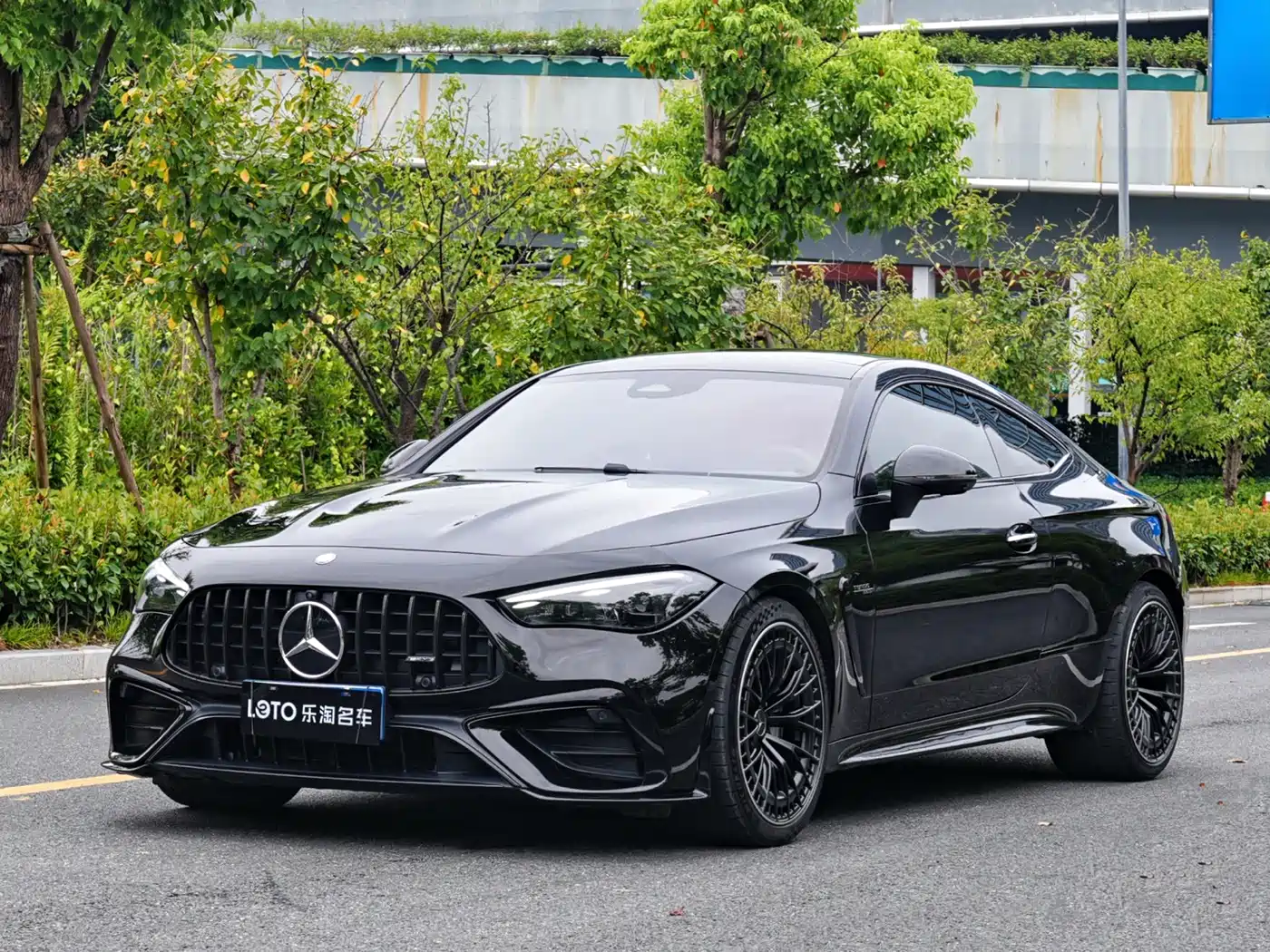
At a glance
- The CLE occupies a two-door premium coupe or cabriolet niche below the Mercedes-Benz SL.
- The range spans CLE 260 rear-drive, CLE 300 4MATIC and AMG CLE 53 4MATIC+ derivatives.
- All versions use petrol combustion power with mild-hybrid assistance rather than plug-in electric drivetrains.
- Buyers should verify exact equipment, body style, steering configuration and destination-market approval by VIN.
- Current per-unit prices and MOQ terms are shown in the live ChinaCarDirect CLE listings.
Why the Mercedes-Benz Cle matters for export markets
The Mercedes-Benz CLE is a two-door executive coupe and cabriolet that gives overseas dealers access to Mercedes-Benz design, prestige and AMG performance in a relatively compact premium package. It sits between the everyday C-Class and the more focused SL, combining a low-roof body, four-seat cabin and a range that extends from efficient 260 models to the AMG CLE 53. That positioning is useful in markets where buyers want a prestigious passenger car without moving to a large luxury sedan. It also gives sales teams a halo vehicle for showroom events and a recognizable alternative to family sedans.
For global export markets, the CLE's relevance is not based on a single specification but on choice. Coupes offer a more sealed, formal shape for year-round use, while cabriolets add visual appeal for warmer climates and leisure buyers. The regular 260 and 300 variants address comfort-oriented customers; the AMG CLE 53 4MATIC+ creates a higher-performance halo for affluent consumers and corporate showcase fleets. This mix allows an importer to cover several niches without changing brands. It also creates a credible bridge between premium transport, lifestyle inventory and performance-oriented merchandising segments for dealers.
Dealers should assess the model against their actual customer profile rather than assume that a premium badge guarantees quick turnover. The coupe's low profile, limited luggage practicality and two-door access can narrow the audience, especially where four-door sedans dominate. Conversely, those very traits make the CLE more distinctive for private buyers, hospitality groups and executive delivery fleets seeking a statement vehicle. Its strongest export role is therefore specialist retail and brand-image inventory. A disciplined importer can build a small, targeted allocation, validate demand carefully and avoid committing to broader container volumes.
- Coupe or open cabriolet.
- 260, 300 4MATIC and AMG 53 ladder.
- Premium retail and image fleets.
Model range, trims and powertrain variants: how the lineup is structured and how to choose
The lineup is structured in a useful ladder. The CLE 260 is the entry point, pairing a turbocharged 2.0-litre four-cylinder with rear-wheel drive for buyers who prioritize balance, operating simplicity and the classic coupe layout. CLE 300 4MATIC versions add all-wheel drive and separate Sport or Luxury equipment orientations. At the top, the AMG CLE 53 4MATIC+ uses a turbocharged 3.0-litre inline-six, more performance hardware and an AMG-branded cabin and chassis treatment. Cabriolet versions extend the same body and powertrain choices into open-air use, subject to the configurations offered in the destination market.
Buyers comparing 260 and 300 should not treat them simply as equipment levels. Drivetrain is the central distinction: the 260 sends drive to the rear, while the 4MATIC system distributes it across both axles. Sport specification emphasizes a firmer, more focused character; Luxury specification generally places greater emphasis on cabin comfort and presentation. Exact equipment can differ by model year and market, so the VIN-specific live record should be checked rather than relying on a trim badge alone. Request the equipment list and original market specification for that vehicle.
The AMG CLE 53 4MATIC+ serves a different buyer and should be evaluated on more than acceleration. Its all-wheel-drive system, larger brakes, tuned suspension and more powerful six-cylinder engine raise the demands placed on tyres, braking inspection and service preparation. It can elevate a dealership's image and suit performance-oriented companies, yet parts cost, insurance, fuel consumption and residual-value assumptions need review. For fleet use, verify duty cycles before choosing the AMG over a regular CLE. A regular variant may deliver better operating economics for frequent mileage under normal commercial use.
- 260: rear-drive entry point.
- 300 4MATIC: Sport or Luxury.
- AMG 53: six-cylinder halo.
- Check exact listing equipment.
New vs used Mercedes-Benz Cle: how export inventory is structured and how buyers choose
ChinaCarDirect's Mercedes-Benz Cle export inventory is structured around new vehicles, so buyers should plan for a current-model purchasing exercise rather than a broad used-car auction. New inventory is useful when homologation, warranty handling, condition grading and spare-parts planning are easier to establish from the start. It also allows a dealer to specify body style, trim and equipment before dispatch. The live listing remains the controlling record for each vehicle's model year, condition and commercial terms. Before ordering, do not infer availability or minimum order quantity from this general catalogue structure.
Used Mercedes-Benz Cle units can still be relevant, but they are usually sourced through separate used-vehicle channels rather than the core new export range. Their appeal lies in a lower acquisition outlay, a higher specification per unit or an immediate availability advantage in a familiar market. The trade-offs are condition uncertainty, depreciation exposure, replacement-parts risk and possible difficulty aligning warranty, software, emissions and inspection records with the importing country. Every used purchase should be conditioned on an independent inspection. Inspect paint, tyres, glass, underbody, service history and roadworthiness separately before final payment.
The decision should follow a hierarchy. First, identify whether local demand requires a new vehicle with a documented delivery history and manufacturer-supported parts flow. Second, consider used stock only when the buyer can absorb repair risk and verify its VIN, title, service records and import eligibility. Third, compare total cost rather than acquisition cost alone: financing, insurance, shipping, taxes, registration, early maintenance and expected resale all matter. A new unit is usually easier to standardize, while a carefully selected used unit can suit a narrower budget without sacrificing due diligence.
- New: cleaner warranty planning.
- Used: inspect VIN and history.
- Compare total landed cost.
How export pricing works: the factors behind a live listing price, and how to read one
A Mercedes-Benz Cle export price is not a fixed wholesale tariff or a universal model-list price. It is a transaction-specific figure built around the vehicle's model year, exact trim, coupe or cabriolet body, drivetrain, equipment, mileage and condition, plus the seller's margin. Currency movements also alter the converted amount. Freight, insurance, port charges, inspection and export documentation may sit outside the displayed vehicle price, so buyers must establish whether the quote is ex-warehouse, FOB, CIF or another Incoterm before comparing offers. The same trim can therefore produce different landed outcomes.
Read a live listing line by line rather than treating its headline number as the complete purchase cost. Confirm the model year, exact derivative, body style, paint, options, VIN availability and whether the amount is a listed price or a negotiated sale price. Look for exclusions involving domestic transport, export charges, customs duty, taxes, registration and warranty. Ask for a written quotation tied to a specific SKU. This prevents a cheaper vehicle from appearing attractive when its specification, documentation or delivery scope is different; compare every offer on a like-for-like basis before approval.
The most reliable export-price comparison uses identical assumptions: the same derivative and specification, the same destination, the same Incoterm, the same payment timing and the same included services. Request both vehicle and logistics components separately so an importer can see where cost is concentrated and negotiate the largest controllable item. Taxes and charges imposed by the destination government are not always negotiable, but vehicle selection, option bundle, consolidation method and freight terms are. Current binding prices should be taken from the live inventory, not an old article or cached catalogue.
- Year, trim and options matter.
- Incoterm sets included costs.
- Destination taxes stay separate.
- Compare like-for-like quotations.
MOQ, ordering and payment: single units vs consolidating a container
Minimum order quantity is a commercial term that must be checked on the specific listing and in the final quotation. Do not assume a marketplace catalogue rule or infer a container-sized commitment from the fact that several similar trims appear together. A dealer buying one demonstrator, a test vehicle or a small retail allocation may be able to order a single unit if the listing and seller permit it. A wholesale fleet or distributor program can use a written volume schedule with phased deliveries, but that structure should be negotiated explicitly before shipment.
Consolidation can improve freight planning, but it changes the buying risk. Combining several units spreads fixed logistics costs and may simplify container planning, yet one damaged vehicle, delayed document or disputed inspection can hold the group. Match the trim mix to confirmed demand and avoid filling space solely to reach a perceived volume threshold. Decide in advance whether units will be sold as stock, used for demonstrations or delivered against signed fleet contracts. Then set inspection, damage-notice and release deadlines that apply to every vehicle in the group before shipping and final payment.
The ordering workflow should separate vehicle commitment from payment risk. Select a VIN or SKU, receive a pro forma invoice and confirm the specification, delivery scope, MOQ, deposit, balance trigger and cancellation terms. Use the seller's formal payment channels, retain the invoice and verify the beneficiary matches the contracting entity. Independent inspection should occur before final balance or release. For larger programs, use a phased schedule and written remedies rather than informal promises, and keep customs and homologation work as explicit buyer responsibilities unless the contract says otherwise before dispatch.
- Check listing MOQ.
- Single units suit test stock.
- Consolidation concentrates logistics risk.
Shipping, homologation and market compliance caveats: LHD/RHD and import rules by country
Before a CLE leaves China, confirm the destination market's import and vehicle-approval rules for a petrol-powered passenger car. Requirements can include VIN and document checks, customs valuation, emissions standards, safety equipment, roadworthiness testing, local registration and evidence of the importer's status. A Chinese-market vehicle is not automatically homologated elsewhere, and a listing photo cannot prove compliance. Give the VIN and vehicle documents to a customs broker or local homologation specialist early, because approvals may affect the shipment date and final cost and may prevent non-compliant units from being registered locally.
Steering configuration is a separate sourcing issue. Most Chinese-market CLE vehicles are configured for left-hand drive, while right-hand-drive demand exists in several countries. Do not assume a marketplace trim name guarantees an LHD or RHD body; verify it from the VIN-specific listing and photos. If an RHD example is not available, evaluate factory-market availability or a compliant conversion route with the relevant authority. A conversion can affect labour, parts, warranty and inspection, so it should never be treated as a simple steering-wheel swap without technical and legal review first.
Transport planning must fit the car's low, wide body and the carrier's securing method. Container loading, roll-on/roll-off and specialist vehicle carriage have different cost and handling implications; confirm height, weight, floor loading, lashing and underbody clearance rather than assuming a standard route. Insure the vehicle through the full agreed risk period, review compression, moisture, scratch and handling exclusions, and photograph every panel at collection and delivery. Keep the original port and release documents because they connect customs clearance with the final vehicle handover, inspection and acceptance at the receiving warehouse.
- Chinese examples are usually LHD.
- Verify RHD by VIN.
- Seek early homologation advice.
- Match carrier and insurance to risk.
Who should buy the Cle — and who should pick a different vehicle
The CLE is a strong choice for a premium dealer seeking a distinctive coupe or cabriolet, a manufacturer showroom that needs an AMG halo vehicle, and corporate buyers who value image over maximum luggage space. It also suits chauffeur or hospitality fleets where a low-profile executive car helps differentiate the service. The two-door layout, rear or all-wheel-drive availability and broad regular-to-AMG ladder let the buyer serve both comfort and performance customers, provided the local service network can support the selected variant without sacrificing import compliance or parts planning during launch and aftersales.
A buyer should choose a different vehicle when the mission prioritizes high-volume commercial uptime, extensive cargo, very low operating cost, quiet electric running or the easiest possible homologation. A four-door sedan or wagon generally offers more practical access and luggage space than the CLE, while a mainstream electrified model may reduce local operating and compliance burdens. High-mileage ride-hailing operators also need to calculate fuel, tyres, brakes and downtime carefully; an AMG premium coupe is rarely justified by acquisition price alone. Resale appeal should be considered only after utilization, downtime and total cost are modeled carefully.
Before committing, test the business case with the exact derivative. A CLE 260 may suit a first-step luxury offering or a regional distributor; a CLE 300 4MATIC can appeal where all-weather confidence and a higher equipment specification matter; the AMG CLE 53 is most persuasive where performance and brand visibility justify the operating burden. Cabriolet demand is more seasonal and climate-sensitive than coupe demand. Use a mix that matches demonstrated local demand, not just the attractive photographs in an export catalogue, and protect margin carefully with realistic local selling prices.
- Premium dealers and image fleets.
- Cargo-led fleets fit less well.
- Match variant to local demand.
Main rivals and how the Cle compares
The BMW 4 Series Coupe is the closest conceptual rival because it combines a two-door body, rear-drive dynamics, coupe and convertible options in the same broad premium niche. The 4 Series benefits from a long-established global dealer and parts footprint, while the CLE counters with a more modern cabriolet-style range, 4MATIC availability and an AMG 53 option. Choice should come down to local brand equity, equipment, service support and the precise derivative, not styling alone. Dealers should compare landed ownership rather than assume one badge carries a universal resale advantage locally in each market.
The Audi A5 Coupe is a credible alternative for buyers who want a refined two-door premium car with quattro all-wheel drive and a similarly broad coupe or cabriolet proposition. Audi's A5 is often the more conventional choice for a dealership already deep in Audi servicing and parts, while the CLE gives Mercedes buyers a newer design language and a direct path into the AMG range. Neither is automatically cheaper after shipping, taxes, specification and dealer preparation, so each should be evaluated using a matched destination-market quote with equivalent warranty assumptions included and assumptions.
The Genesis G70 competes for the same premium executive customer but takes a different body route: it is a four-door saloon rather than a two-door coupe. That gives G70 buyers more practical rear-seat and luggage access and a distinctive alternative to German marques, while the CLE offers lower, more dramatic styling and a stronger link to the AMG performance halo. A distributor comparing them should assess brand recognition, service coverage and resale support locally, because those factors can outweigh theoretical equipment advantages and can determine the cost of each sale for each buyer.
- BMW 4 Series: direct coupe rival.
- Audi A5: conventional premium rival.
- Genesis G70: four-door alternative.
Live Mercedes-Benz Cle export inventory
View all listings →Real units currently on ChinaCarDirect with per-unit asking prices and MOQ. Availability updates live from the catalogue.

How to buy a Mercedes-Benz Cle from China
-
1
Set the destination and use case
Decide whether the requirement is a coupe or cabriolet, comfort or AMG positioning, and the destination market's steering configuration. This establishes the derivative and equipment criteria before comparing vehicles.
-
2
Shortlist exact live listings
Review model year, body style, derivative, options, photographs, VIN status and seller terms in the live inventory. Treat the displayed amount as the vehicle-level reference, not automatically the landed cost.
-
3
Verify configuration and compliance
Confirm the exact vehicle specification and provide the VIN to a customs broker or homologation specialist in the destination country. Resolve LHD, RHD, emissions, safety and registration requirements before committing freight.
-
4
Request a unit-specific quotation
Send the SKU, destination, port, quantity, preferred Incoterm and required services with your enquiry. Ask for vehicle cost, logistics, export charges, payment conditions, MOQ and delivery scope to be stated separately.
-
5
Inspect before final payment
Use an independent pre-shipment inspection to check paint, panel condition, tyres, glass, underbody, VIN and mechanical items against the agreed specification. Document any discrepancy before releasing the balance.
-
6
Secure payment and release
Confirm the pro forma invoice, contracting entity, beneficiary details, deposit, balance trigger and cancellation terms. Retain the invoice and inspection record, and use only the seller's formal payment channels.
-
7
Ship, clear and register
Book suitable transport, confirm insurance and securing arrangements, and complete export documentation. Work with the broker through customs clearance, destination inspection, registration and final vehicle handover.
Cle vs rivals
| BMW 4 Series Coupe | The closest two-door premium alternative, with coupe and convertible choices and a mature global service network. The CLE differentiates through 4MATIC-equipped derivatives and the AMG CLE 53 option, but local brand equity and parts availability should decide the fit. |
|---|---|
| Audi A5 Coupe | A direct premium coupe rival with quattro and coupe or cabriolet configurations. Choose it where Audi dealer support is stronger; choose CLE where Mercedes positioning, modern design and the AMG pathway are more valuable. |
| Genesis G70 | Competes for executive-brand buyers but offers a four-door saloon rather than the CLE's two-door focus. It favors practicality and a different badge; the CLE favors dramatic styling and access to an AMG halo. |
Frequently asked questions
How is the Mercedes-Benz Cle export price determined?
Export price is calculated per vehicle from model year, derivative, body style, options, condition, currency movement and seller terms. Freight, insurance, customs, taxes and registration may be separate, depending on the Incoterm. Use the live Mercedes-Benz CLE listings for the current unit-specific figure and request a written landed quotation for the destination.
What engine and powertrain does the Mercedes-Benz Cle use?
The range spans a turbocharged 2.0-litre inline-four in the CLE 260 and CLE 300 4MATIC, plus a turbocharged 3.0-litre inline-six in the AMG CLE 53 4MATIC+. A nine-speed automatic is used, and the mild-hybrid system supports the combustion engine rather than providing plug-in electric range. Because this is not a battery EV, usable driving range depends on fuel use and tank capacity.
Are new or used Mercedes-Benz Cle vehicles better for export?
New CLE units provide the clearest specification history and are easier to plan around for warranty, homologation and parts. Used units may suit a narrower budget or higher-spec opportunity, but buyers should inspect condition and verify title, VIN, service history, software, emissions and import eligibility. Compare total ownership cost, not just the purchase outlay.
What is the MOQ for a Mercedes-Benz Cle export order?
MOQ is set by the individual listing and negotiated quotation; do not infer a blanket container minimum from the model range. A single-unit order may suit a demonstrator or retail sale when the seller accepts it, while larger programs should specify trim mix, phased deliveries and remedies in writing. Confirm the binding MOQ on the selected live listing before placing a deposit.
What determines Mercedes-Benz Cle shipping time and cost?
Shipping time and cost depend on origin and destination ports, carrier mode, vessel or container space, vehicle dimensions, securing, insurance, documentation and customs clearance. Low-profile sports cars require suitable handling and lashing, and approvals can affect the schedule. Ask the freight provider for a door-to-door or port-to-port estimate under the agreed Incoterm.
How are spare parts handled for an exported CLE?
Spare-parts planning should begin with the exact derivative and market specification, because coupe and cabriolet, model-year and equipment differences can affect parts identification and software compatibility. Use the VIN to order genuine or clearly documented compatible components, and confirm local dealer support before shipping. For a new vehicle, establish warranty handling and expected lead times before committing the fleet.
Is right-hand-drive Mercedes-Benz Cle availability limited?
Most Chinese-market examples are left-hand drive, so right-hand-drive availability should be confirmed from the VIN-specific live listing rather than assumed from the trim name. If no compliant RHD unit is available, compare factory-market sourcing with a professionally assessed conversion. A conversion may involve homologation, labour, warranty, parts and inspection consequences.
How do I buy a Mercedes-Benz Cle from China?
Start with live Mercedes-Benz Cle listings, shortlist the body style and derivative, then send an RFQ with destination, port, preferred Incoterm and required quantity. Ask for a pro forma invoice, full specification, MOQ, payment schedule, document list, inspection process and shipping quote. Do not release the balance until the vehicle, documents and agreed inspection process have been verified.
Ready to source the Mercedes-Benz Cle?
Send an RFQ with your preferred CLE derivative, destination and Incoterm for a unit-specific export quotation.
Request a quote