
Buy Mercedes-Benz E-Class (import) from China
Buy a Mercedes-Benz E-Class (import) from China with guidance on trims, 4MATIC, pricing, MOQ, shipping, compliance and rival models for overseas dealers.
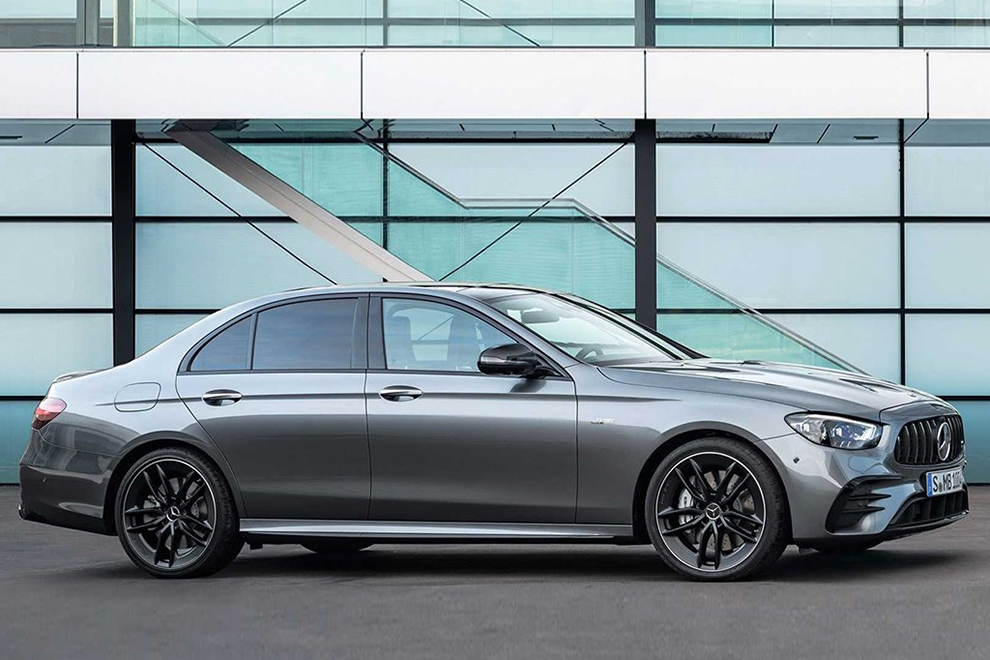
At a glance
- The export range includes E 200, E 260 and E 300 labels in coupe and convertible-coupe forms.
- 4MATIC, facelift and named editions allow trim-specific positioning for overseas dealers.
- Condition classification should be checked separately from model year, mileage and service history.
- Per-unit quotes, MOQ and availability must be confirmed in the live inventory.
- Destination-side homologation, LHD/RHD suitability and landed costs determine feasibility.
Why the Mercedes-Benz E-class (import) matters for export markets
The Mercedes-Benz E-Class occupies the premium executive segment, where buyers normally balance prestige, long-distance comfort and visual presence against ownership cost. The E-class (import) grouping is especially relevant to overseas dealers because it brings coupe and convertible configurations into a recognizable nameplate. Its appeal is not simply the three-letter badge: buyers are purchasing a particular combination of body design, trim identity, drivetrain and model year. That makes the model a strong fit for premium niche programmes rather than a high-volume fleet purchase. This positioning supports selective stocking, where each unit is matched to a defined customer segment.
Demand in export markets is supported by the E-Class nameplate's recognition, coupe and convertible appeal, and the availability of rear-drive and 4MATIC variants. Dealers can position facelift cars, special editions and individual manufacturer trims as differentiated stock rather than undifferentiated sedans. That matters in markets where premium buyers often choose a specific silhouette, drivetrain and equipment level. It also explains why a smaller, carefully selected order can be more commercially realistic than a large programme of identical cars where product turnover and aftersales support are equally important for the importer involved.
An overseas buyer should, however, separate broad demand from a specific export proposition. A model may be popular in one country yet poorly suited to another because of steering configuration, emissions rules, insurance categories, fuel requirements or the availability of body panels and electronic components. The import listing therefore needs to be matched against the destination's regulations and the importer's existing Mercedes support network. Use the brand hub to understand the broader range, then move to unit-level records for the definitive specification and condition. Do not rely on the model badge alone.
- Premium coupe and convertible positioning.
- Rear-drive and 4MATIC buyer-fit options.
- Local compliance and aftersales determine export viability.
Model range, trims and powertrain variants: how the lineup is structured and how to choose
The export grouping is structured around the E 200, E 260 and E 300 labels, with coupe and convertible-coupe body styles. It also includes facelifted E 260 and E 300 cars, 4MATIC versions, and named editions such as Fashion Sport, Sport, Luxury Sport and Agile. These names are useful for initial screening, but they are not a universal specification system. The same label may describe different engines, equipment and cosmetic treatments in different model years, so a buyer should never compare trims from the name alone. The VIN and model year must anchor any decision.
Body style is the first practical choice. A coupe generally offers a lower, more streamlined profile and a stronger two-door identity, while a convertible serves buyers who place roof-open usability above luggage practicality and weather security. E 260 Convertible Coupe and E 200/E 300 convertible variants in the grouping show that both body themes are represented. The appropriate decision depends on climate, expected use, passenger mix and the buyer's willingness to manage a more specialised used-car supply chain. For fleet duty, closed bodies are usually easier to standardise, inspect and recondition.
Drivetrain and edition labels form the next layer. A rear-drive E-Class may suit buyers prioritising layout simplicity and operating cost, whereas a 4MATIC car can be more attractive where grip, towing or all-weather confidence matters. Labels such as CGI, Fashion Sport, Agile and Luxury Sport can identify engine, equipment or styling packages rather than a single mechanical hierarchy. Because the available data does not supply every power output or chassis code, the safest method is to request the VIN, build plate and a complete equipment sheet before paying for the specific unit.
- Visible grades: E 200, E 260 and E 300.
- Coupe and convertible-coupe use cases differ.
- Verify every trim by model year and VIN.
New vs used Mercedes-Benz E-class (import): how export inventory is structured and how buyers choose
Export inventory can be organised in two broad ways: cars presented as new dealer stock and cars presented as used vehicles. The condition label is only the starting point. An older model year may still be classified as new when it entered a market through a parallel-import or dealer-stock channel, while a low-mileage car may be classified as used. Overseas buyers should therefore compare age, registration history, mileage, condition and documentation separately rather than treating “new” as proof of recent production. A vehicle's history must be reconciled with the VIN, service records and inspection evidence.
New classification is usually more attractive to a dealer because it can simplify retail presentation, warranty handling and customer expectations. It may also be operationally easier when the importer already has a strong pre-delivery inspection and reconditioning process. Used E-Class vehicles can still make commercial sense where the buyer values a known specification, an established depreciation position or access to a body style that is no longer arriving in new local supply. The right decision depends on margin requirements and the importer's ability to manage remarketing, not on the label alone.
The strongest used-car case is usually a vehicle whose condition has been independently verified and whose service history matches the seller's description. For an E 200, E 260 or E 300 coupe, inspect panel condition, roof or convertible-top operation, wheel and tyre consistency, cabin wear, fluid leaks, warning lights and electronic functions. The same checks apply with additional attention to structural accident evidence and chassis condition on convertibles. A new-labelled vehicle still warrants a pre-shipment inspection because “new” describes channel status, not a substitute for physical verification before final payment and release.
- Condition label and model age are separate.
- Reconcile registrations and service records with the VIN.
- Inspect every unit before final payment.
How export pricing works: the factors behind a live listing price, and how to read one
An E-class (import) export price is not a fixed market value. It is the result of several variables that the seller combines for the specific vehicle: model year, E 200/E 260/E 300 grade, coupe or convertible body, facelift status, drivetrain, edition, mileage, physical condition, options, and whether the vehicle is presented as new or used. Currency movements can also alter an overseas buyer's effective total. This means two cars carrying similar model names may not be economically equivalent, particularly if one is an older chassis or has a different condition history.
Freight and trade terms form a second layer. The same vehicle can show a different total depending on whether the seller quotes only the vehicle, includes inland transport and export handling, or delivers under a named Incoterm to a specified port or destination. Ocean freight, fuel, insurance, congestion, port charges and destination clearance are not all embedded in a listing headline. A buyer comparing vehicles should build a landed-cost worksheet that adds the same logistics and compliance items to every quote, then compare the result on one consistent basis.
To read a live listing correctly, separate the vehicle amount from the total acquisition commitment. Check the year, exact trim, body style, drivetrain, mileage, condition, VIN, photographs, options and stated export terms. Confirm what is included, whether the price is negotiable, and which party arranges inland transport, export declaration, loading and destination charges. ChinaCarDirect's live E-class (import) inventory is the source for the current per-unit quote and available MOQ; use a request for quotation when several vehicles or a consolidated shipment require one binding comparison before any deposit is paid.
- Price varies by unit specification and condition.
- Incoterms define included logistics costs.
- Check live quotes and unit-specific MOQ.
MOQ, ordering and payment: single units vs consolidating a container
Minimum order quantity is a commercial term, not a fixed property of the E-Class model. It may depend on the seller's inventory policy, model year, trim, body style, condition and whether the vehicle is already in stock or must be sourced. A live listing should state the seller's order basis, but the importer should confirm it in the quotation rather than assume that one vehicle can always be bought alone. The same confirmation should explicitly identify whether the MOQ applies to a particular unit, a trim or a mixed shipment in writing.
Ordering one unit usually gives an importer more flexibility but offers little freight consolidation. A wholesale order of several similar cars can improve shipment economics, reduce per-vehicle handling exposure and create a clearer retail programme. A mixed container may be possible, but it increases the need for agreed allocation, labelling and separate pricing for every vehicle. Buyers should model the container break-even point using actual freight, insurance, port, handling and financing costs, rather than assuming more units always means a lower total cost per vehicle. This calculation should match the importer's destination-market operating plan and budget.
A sound payment process protects both sides. The pro forma invoice should identify the vehicle or vehicles, agreed price, currency, deposit, balance trigger, payment method, Incoterm, delivery scope and refund or cancellation conditions. After the deposit, allow time for document review, an agreed inspection and correction of any discrepancy before the balance is released. Payment should never be tied only to a photograph or an unverified description. For a first transaction, using a written quotation and staged payment linked to inspection is a more disciplined approach than relying on informal promises.
- Confirm the scope of any MOQ.
- Consolidation improves freight economics but adds work.
- Link final payment to inspection.
Shipping, homologation and market compliance caveats: LHD/RHD and import rules by country
Shipping an E-Class (import) starts long before the vessel departs. The exporter needs the correct VIN, registration and customs documents, commercial invoice, packing list, export declaration and any certificate required for the destination. Transport method should reflect the body style and value: covered transport or specialist enclosed carriage may suit a high-value coupe or convertible better than exposed handling. Ro-Ro and container shipping can suit standard cars, but the final method must be confirmed with the carrier or freight forwarder rather than assumed from the listing before the shipment is booked.
Steering configuration is a critical compatibility check. Do not infer the steering side from the fact that a car is being sold through China. Some vehicles will be left-hand drive, while a unit converted for another market may be right-hand drive; however, a conversion does not automatically make a car compliant for local registration. The seller should state the steering side, and the importer should verify it from the VIN and photographs before committing. Steering-wheel conversion, electronic compatibility, pedal arrangements and safety certification can all affect whether a converted car is acceptable. For the destination country, obtain the importer's professional advice before paying.
Homologation and market compliance are country-specific and may depend on whether the car is new or used. Relevant checks can include emissions, noise, lighting, safety equipment, VIN identification, cybersecurity or software rules, and age restrictions on used imports. Customs classification, duty, VAT or GST, registration taxes and emissions-zone requirements may also affect the total. The importer should confirm current rules with a customs broker and the destination authority; a vehicle being sold successfully in China does not prove it can be registered elsewhere. Compliance should be closed before the final payment milestone.
- Verify VIN, steering side and documents.
- Confirm destination homologation for every unit.
- Include destination charges in freight modelling.
Who should buy the E-class (import) — and who should pick a different vehicle
The E-class (import) is a good fit for an importer or dealer that wants a premium marque, expressive body styles and several customer-led trim choices without relying on a single new-car configuration. It is particularly attractive for specialists in Mercedes-Benz, coupe and convertible sales, and buyers who understand the value of 4MATIC, facelift updates or named editions. It can suit corporate or executive buyers seeking a distinctive saloon-derived coupe, provided local registration, insurance and servicing requirements are met. The commercial case should rest on a defined resale segment, not broad premium demand.
Conversely, a high-volume fleet operator should be cautious. The E-Class import grouping is oriented toward coupe and convertible-coupe configurations rather than a uniform multipurpose range, and premium running costs, tyre and panel requirements may not suit a lowest-cost duty cycle. Buyers needing a spacious seven-seat family vehicle, high ground clearance, a commercial payload or low-cost urban operation should choose a purpose-built model instead. The same applies when an importer requires a uniform parts pool across a large fleet: a broad mix of E-Class body styles can complicate stockholding for dealers and service planning.
The best decision rule is to test the vehicle against the importer's capabilities. If the business can inspect German-built cars, source trim-specific parts, manage used-car depreciation and support a mixed right- and left-hand-drive portfolio, the E-Class offers a differentiated proposition. If it cannot, a more mechanically uniform model may be easier to sustain. Before committing, obtain the VIN-specific specification, a realistic landed-cost calculation and a servicing plan. Those three checks usually reveal more than the model name, attractive photographs, or the age suggested by the listing page alone.
- Best for premium and specialist importers.
- Poor fit for budget fleets or seven-seat duty.
- Match importer inspection and parts capability.
Main rivals and how the E-class (import) compares
The closest direct rival is the BMW 4 Series, particularly the coupe and convertible forms that overlap the E-Class import generation. It offers a comparable two-door premium format and a strong enthusiast image, but Mercedes generally emphasises executive comfort and a more formal presentation. The choice therefore turns on cabin priority, badge demand and the availability of suitable all-wheel-drive alternatives against the E-Class's 4MATIC choice. A buyer should compare service history and parts support locally, not assume the lower acquisition quote alone creates a better vehicle for the market.
Audi's A5 is another natural benchmark, with coupe and convertible versions that compete on two-door design, technology and premium status. Its engine, quattro and specification labels should be checked directly against the E-Class because naming does not provide a like-for-like mechanical comparison. Audi may appeal where its badge, cabin architecture and dealer support are stronger in the destination market; Mercedes may fit buyers who prioritise its established prestige and coupe identity. The decisive evidence will be VIN-specific condition, equipment and landed cost for each candidate, compared on the same destination basis.
The Infiniti Q60 is a more regional alternative: it competes as a rear-drive or all-wheel-drive two-door luxury coupe, with a driving-focused image and a model history that can appeal to selected importers. It is not as straightforward a brand-equality choice for every market, so local awareness and parts support can be decisive. Against the E-Class, the Infiniti may offer a different ownership proposition, but the Mercedes badge and broader trim and body selection in this export grouping can make resale and customer acquisition easier for dealers with an existing Mercedes following.
- BMW 4 Series: direct coupe and convertible alternative.
- Audi A5: close technology and luxury-segment competitor.
- Infiniti Q60: regional two-door rival with a driving focus.
Live Mercedes-Benz E-class (import) export inventory
View all listings →Real units currently on ChinaCarDirect with per-unit asking prices and MOQ. Availability updates live from the catalogue.
Mercedes-Benz Mercedes-Benz E-Class (Import) 2023 Facelift E 260 Fashion Sport
How to buy a Mercedes-Benz E-class (import) from China
-
1
Set the buying brief
Choose coupe or convertible-coupe, E 200, E 260 or E 300, rear-drive or 4MATIC, and whether facelift or edition details matter. Match these choices to destination compliance and aftersales capacity before selecting a unit.
-
2
Shortlist live inventory
Review current listings by model year, mileage, condition, photographs, VIN, equipment and seller terms. Treat each live unit price and stated MOQ as the current figures, and request clarification whenever a detail is missing.
-
3
Verify documents and specification
Ask for the VIN, model year, registration and ownership documents, service records, build plate, emissions information and confirmed steering side. Reconcile the seller's description with the physical vehicle before placing a deposit.
-
4
Build a landed-cost quotation
Request a written quotation under a named Incoterm, with inland transport, export handling, freight, insurance, destination charges and taxes identified separately. Compare every candidate using the same cost structure.
-
5
Inspect and complete payment
Use an agreed or independent inspection covering paint, panels, tyres, cabin, mechanical condition, electronics and convertible-top operation where applicable. Tie the balance payment to document verification and resolution of inspection findings.
-
6
Arrange export and destination clearance
Confirm the carrier method, export documentation, loading plan, customs broker and destination registration process. Keep homologation and steering-side compliance closed before the vehicle departs.
E-class (import) vs rivals
| BMW 4 Series | The 4 Series coupe and convertible are direct two-door alternatives with a more driver-focused image. The E-Class generally prioritises executive comfort and formal presentation, so the better fit depends on cabin priorities, local badge demand and trim availability. |
|---|---|
| Audi A5 | The A5 competes directly through coupe and convertible body styles, premium technology and quattro alternatives. Mercedes offers a more formal executive identity, while local Audi dealer support and the availability of comparable equipment may influence the decision. |
| Infiniti Q60 | The Q60 is a two-door luxury coupe for buyers seeking a more regional or driving-focused alternative. It may offer a distinct ownership proposition, but Mercedes can be easier to resell where the importer has an established premium following and broader E-Class demand. |
Frequently asked questions
How is the export price of a Mercedes-Benz E-class (import) determined?
The price is built around the individual vehicle's year, grade, body style, drivetrain, options, mileage, condition and presentation. Freight, currency conditions and the selected Incoterm then affect the landed total. Check ChinaCarDirect's live E-class (import) listings for the current per-unit price and MOQ.
What engine and powertrain options are available?
The E 200, E 260 and E 300 entries represented in this range are gasoline internal-combustion variants, so engine output and emissions matter rather than battery range. Exact displacement, power, gearbox specification, fuel grade and emissions standard vary by generation and should be checked on the unit's live listing or build sheet.
Should an overseas buyer choose a new or used Mercedes-Benz E-class (import)?
The condition label should not be used as a substitute for the vehicle's age, registration history, mileage and service records. New classification may simplify retail presentation, while used units can suit buyers seeking a known specification or established depreciation position. Inspect and document the individual car regardless of its condition label.
What is the MOQ for an E-class (import) order?
MOQ is a seller- and shipment-specific commercial term rather than a fixed rule for the model. Some quotations may permit an individual vehicle, while others may require a trim-level or multi-vehicle order. Confirm the applicable MOQ on the live listing and in the written quotation before paying a deposit.
How long does shipping take and what determines the cost?
There is no fixed transit time or freight charge for every E-Class (import). Routing, vessel or carrier availability, vehicle dimensions, handling method, insurance, port charges, congestion, fuel, documentation and destination services all affect the result. Compare landed quotations under the same Incoterm and destination.
Are Mercedes-Benz spare parts readily available for imported E-Class cars?
Parts support varies by market, model year, body style and electronic component, so buyers should use the VIN rather than the E-Class badge alone. Mechanical parts may have broader availability, while coupe panels, convertible-roof parts, trim items and electronics can be more specialised. Confirm parts references and lead times before committing to a vehicle.
Is a right-hand-drive Mercedes-Benz E-class (import) available?
RHD availability cannot be assumed and must be confirmed for the individual listing. Do not treat a steering-wheel conversion as proof of local homologation, because electronics, pedals, safety systems and registration rules may also be affected. Verify the steering side, VIN and destination approval before paying.
How do I order a Mercedes-Benz E-class (import) from China?
Start with the live inventory, select the closest matching body and trim, then request a written quotation covering the unit, documents, payment terms, MOQ, Incoterm and freight scope. After document review and an agreed inspection, complete payment and arrange export through the seller or freight forwarder. Use an RFQ for multiple vehicles or consolidated shipping where individual listing terms are unclear.
Ready to source the Mercedes-Benz E-class (import)?
Send ChinaCarDirect your target body style, trim, model-year range, destination and Incoterm to request a current export quotation.
Request a quote