
Mercedes-Benz EQS SUV Export Buying Guide
Export buying guide for the Mercedes-Benz EQS SUV, covering trims, electric range, pricing factors, MOQ, shipping, homologation, rivals and dealer checks.
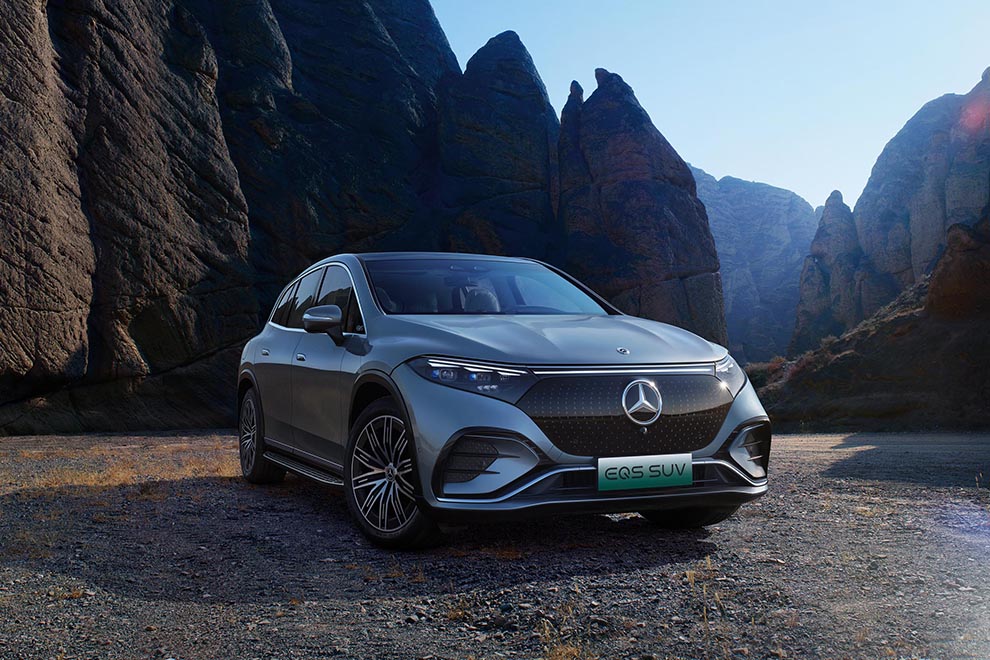
At a glance
- The EQS SUV is a large luxury battery-electric SUV positioned for executive, chauffeur and premium retail buyers.
- The lineup includes 450+, 450 4MATIC Pioneer Edition, Model 500 4MATIC and separate Maybach-badged EQS 680 luxury derivatives.
- Range, battery, motor and charging figures vary by trim and market, so the exact unit listing and homologation file must control.
- Export cost depends on specification, condition, exchange rate, freight, insurance, taxes and Incoterm, not a fixed model price.
- New vehicles simplify condition and warranty checks; used vehicles require deeper battery, service and damage verification.
- Destination approval, LHD/RHD availability, charging compatibility and local service support are as important as the vehicle itself.
Why the Mercedes-Benz Eqs Suv matters for export markets
The Mercedes-Benz EQS SUV occupies the upper end of the large luxury electric SUV segment. It is intended for buyers who want the presence of a full-size SUV, a premium passenger cabin and electric propulsion without moving to a combustion-only luxury model. For export dealers, that combination matters in markets where affluent customers are comparing vehicles by comfort, technology and brand status as well as by carrying capacity. It can also serve as a flagship demonstrator for hotel, chauffeur, corporate and premium retail operations, provided charging and service arrangements are realistic for the destination market.
Export demand is shaped by regional charging access, import policy, fuel costs, corporate sustainability targets and the availability of Mercedes-Benz service support. In markets with dependable charging and strong luxury demand, the EQS SUV can broaden a dealer’s electric portfolio into a high-end segment. Where charging is uneven or long-distance travel dominates, buyers may place greater value on hybrid or combustion alternatives. The model therefore matters as a premium product, but not as a universal electric solution. Its strongest export case is tied to infrastructure and after-sales confidence, not simply replacing every petrol SUV on the road.
Dealers should also distinguish the regular Mercedes-Benz EQS SUV from the closely positioned EQS 680 derivatives appearing under the Maybach name. The latter target a more ceremonial, chauffeur-oriented and ultra-luxury customer, while standard EQS versions serve conventional luxury SUV buyers. This distinction affects brand presentation, expected equipment, valuation and the route to market. A buyer should identify the exact marque, grade and derivative on the vehicle documents rather than relying on a broad “EQS 680” label alone. It also helps buyers avoid assuming that every luxury derivative has the same equipment, performance, or service proposition.
- Best for executive and chauffeur fleets.
- Requires reliable charging and service support.
- Not a universal EV-market solution.
Model range, trims and powertrain variants: how the lineup is structured and how to choose
The export-facing range includes the 450+, 450 4MATIC Pioneer Edition, Model 500 4MATIC, and EQS 680 Luxury, Ceremony and Etiquette derivatives. The 4MATIC name identifies Mercedes-Benz’s all-wheel-drive system, while 450+ vehicles require confirmation of their drive configuration in the specific listing. Buyers should treat trim names as a starting hierarchy, not as a complete equipment sheet: wheel sizes, interior options, battery-related specifications and market packages can differ between otherwise similarly named vehicles. The Maybach-badged 680 examples should also be separated from the standard Mercedes-Benz EQS SUV, and the marque should be verified in destination paperwork.
Powertrain selection should start with the destination market’s charging pattern, route profile and homologated range, not with the trim badge alone. The EQS SUV is a battery-electric vehicle, but an export buyer must verify the exact motor output, usable battery capacity, charging rate and approved range for the unit being purchased. Chinese-market range figures may use a different test cycle from figures familiar in Europe or other regions. A quoted catalogue number is therefore a comparison aid, not a guarantee of real-world results in the destination country under local operating rules.
Among the regular Mercedes-Benz grades, the 450+ is the entry point for buyers who prioritize the lower complexity of a luxury electric SUV, while 4MATIC versions add the traction and drivetrain positioning implied by their designation. The Model 500 4MATIC sits higher in the hierarchy, and Pioneer Edition equipment can appeal to technology-focused dealers. However, buyers should select by verified specification and running costs: a more powerful grade may suit frequent highway use or demanding clients, while unnecessary options can make the vehicle harder to place locally without adding enough value.
- 450+ is the entry-point regular trim.
- 4MATIC denotes all-wheel drive.
- Maybach 680 derivatives are distinct.
New vs used Mercedes-Benz Eqs Suv: how export inventory is structured and how buyers choose
A new EQS SUV gives the importer a known delivery history, no prior fleet use and the latest factory configuration available in its production market. That makes it easier to standardize a demonstration fleet and gives customers a clearer warranty story. It does not, however, remove the need to inspect the vehicle, verify its production date and confirm that no dealer has used it as a test or display car. A new designation should also be matched to the seller’s invoice and the physical condition report before shipment is authorized.
Used imports can be attractive where the acquisition budget is constrained or where a specific low-mileage configuration is needed quickly. The trade-off is uncertainty: battery health, high-voltage component condition, accident repair history, software updates and warranty transfer may be harder to establish. Mileage alone is not an adequate health measure for an electric vehicle. Ask for the inspection, battery-state report, service history, recall completion and a clear statement of whether the vehicle has been driven commercially or privately. These records should be reviewed before the balance is released to the buyer.
The live inventory may mix factories, model years, trims and condition categories, and that composition can change without notice. Buyers should therefore treat “new” and “used” as fields to verify on each unit, not as assumptions based on a search result. For a dealer, a new vehicle is often easier to merchandise and present under a clearer warranty, whereas a used vehicle can offer immediate inventory and a different acquisition threshold. The correct choice depends on the buyer’s cash cycle, the destination market’s resale expectations and the evidence available for the individual vehicle concerning it.
- New: clearer condition and warranty.
- Used: deeper verification required.
- Verify every individual listing.
How export pricing works: the factors behind a live listing price, and how to read one
An EQS SUV export quote is built from several variables rather than one fixed model price. The model year and trim establish the starting point, but options, battery specification, interior and exterior equipment, production market and condition can move the result. For a used unit, mileage, service history, condition and disclosed damage matter. At the transaction level, exchange rates, freight, insurance, port handling, destination taxes, documentation and the selected Incoterm determine what the importer ultimately pays. A responsible quote should state which of these elements are included and which remain the buyer’s account.
When reviewing a live listing, begin with the vehicle identifier, year, trim, condition and asking price, then compare that unit with similar specification rather than with the broadest search result. Check whether the price is a vehicle-only export price or includes preparation, documentation, inland transport and freight. Note the seller, location, minimum order, payment terms and availability wording. These details determine whether the listing is comparable with another quotation and whether it is commercially usable for your market. Current binding figures should come from the unit-level live inventory for the intended transaction.
For budgeting, separate the vehicle acquisition price from the landed cost. The calculation adds international freight and insurance, origin charges, destination taxes or duties, port and terminal expenses, customs brokerage, inland delivery, pre-delivery inspection and any required conversion or homologation work. Currency movements mean an inquiry sheet may differ from a later invoice. Request a written quotation with the Incoterm named, the payment currency identified and the charge schedule shown. ChinaCarDirect’s live listings provide the current per-unit asking price, but the final payable sum should be confirmed in the quotation and sales documents.
- Compare like-for-like specifications.
- Confirm included and excluded charges.
- Check live unit-level prices.
MOQ, ordering and payment: single units vs consolidating a container
Minimum order quantity is a seller and transaction term, not a permanent attribute of the EQS SUV model. Some suppliers will release one vehicle; others may set a lot requirement for production, export preparation or container loading. Buyers should read the MOQ shown on each live listing and have it repeated in the pro forma invoice. Do not assume that a marketplace interface, a displayed vehicle count or another buyer’s experience guarantees a one-unit order. The binding commitment begins only when the seller accepts the order and both sides confirm the same terms.
For wholesale buyers, consolidating several EQS SUVs into one container can reduce freight and handling cost per vehicle, but it changes the buying logic. The importer takes on more capital, longer exposure to market price movements and a shared delivery schedule. It also becomes harder to correct a specification, finish or document problem because one vehicle can affect the whole group. A single-unit purchase offers flexibility and a smaller inventory commitment, while a consolidated shipment may suit an established dealer able to presell several trims and use one freight move efficiently.
A safe ordering sequence starts with a unit-level specification review, followed by a written pro forma invoice that identifies the VIN or stock identifier, model year, trim, options, condition, MOQ, Incoterm, payment currency, deposit, balance milestone and release condition. Payment methods and staged payments vary by seller and should be agreed before transfer. For a group order, approve the vehicle list individually and specify what happens if one unit is unavailable. Inspection, document verification and the balance release should be tied to clear milestones rather than informal promises in correspondence.
- MOQ is seller-specific.
- Single-unit and group orders differ.
- Tie final payment to milestones.
Shipping, homologation and market compliance caveats: LHD/RHD and import rules by country
Shipping mode should reflect quantity, destination, urgency and the vehicle’s charging and battery requirements. A full container, roll-on/roll-off vessel, rail service or specialist vehicle carrier can offer different cost and schedule trade-offs, while air freight is generally a premium option reserved for urgent, lower-volume movements. Electric vehicles also require compliance with carrier rules for high-voltage batteries and dangerous-goods declarations. Transit time depends on origin handling, port congestion, sailing or routing schedules, customs clearance and inland delivery; it cannot be inferred from the listing alone without a confirmed booking or freight quotation.
Left- and right-hand-drive availability must be confirmed for the individual vehicle before ordering. A model may be offered in different steering configurations, and a unit built for one market may require conversion or may not be suitable for local registration as delivered. Buyers should also check charging connector design, voltage compatibility, radio or communications equipment, battery documentation, vehicle identification, condition, spare equipment and any local cybersecurity or software requirements. These checks belong in pre-shipment approval and should be reflected in the purchase documents for the destination market.
Homologation is destination-specific and cannot be replaced by a general export certificate. Depending on the country, the importer may need type approval, emissions or electric-vehicle compliance, safety and equipment checks, customs registration, local taxes, insurance and importer appointment. Some jurisdictions also impose rules on battery transport, data, radio functions or vehicle modifications. The importer of record should confirm the documentary route early, before the vehicle is loaded. A broker can advise on local procedure, but responsibility for the final legal import remains with the buyer or appointed importer in that market.
- Confirm LHD/RHD before ordering.
- Verify documents before loading.
- Appoint the importer early.
Who should buy the Eqs Suv — and who should pick a different vehicle
The EQS SUV fits dealers serving executives, premium corporate fleets, hotel and chauffeur operators, and affluent private customers who value a calm cabin, strong road presence and electric powertrain. It is particularly credible where charging is available at the customer’s home, workplace or destination network. A business buyer should model utilization, charging windows, residual-value assumptions and service access. The vehicle’s size and technology can create operating advantages, but only if the surrounding infrastructure supports them. It is less convincing as a low-utilization product bought mainly for badge value or image.
A different vehicle is usually better when daily routes are long and charging stops are unpredictable, when the operator values a proven combustion or hybrid drivetrain for simplicity, or when the required payload, towing figure, ground clearance or body format exceeds the EQS SUV’s verified capability. Urban buyers seeking easier parking and lower consumption may prefer a smaller premium electric SUV. Commercial users needing a van or rugged off-road platform should choose those body types. The relevant comparison is the duty cycle, not the badge or the catalogue specification alone in isolation.
Buyers should also consider whether the standard Mercedes-Benz model or a Maybach 680 derivative matches the customer. The standard EQS SUV is better suited to premium SUV buyers who still want a recognizably Mercedes-Benz product, while Maybach branding signals a more exclusive chauffeur and status proposition with different economics. Before ordering, verify the exact marque, seating and equipment package, local servicing, warranty support and expected resale. A vehicle that looks prestigious but cannot be supported by parts, diagnostics or trained technicians may be a poor commercial choice in that region.
- Strong for executive and premium fleets.
- Needs charging and service support.
- Mismatch of use case? Choose another model.
Main rivals and how the Eqs Suv compares
The BMW iX7 is the closest conceptual rival for buyers seeking a large luxury electric SUV from a premium German marque. Like the EQS SUV, it competes on executive comfort, substantial cabin space, advanced interfaces and electrified powertrain. BMW’s brand and dealer familiarity may influence the choice, while the EQS SUV’s particular appeal lies in its own comfort, technology and design character. The better purchase is the one with the stronger local service proposition, verified range in the buyer’s climate, more suitable equipment and lower realistic operating cost after purchase.
The Audi Q8 e-tron is another direct alternative in the premium electric SUV class, with a design and driving proposition that tends to appeal to buyers wanting a more road-focused, less overtly chauffeur-like experience. It provides a useful benchmark for packaging, cabin technology and all-wheel-drive availability against the EQS range. The EQS SUV may better serve buyers focused on executive calm, rear-seat space and its particular technology ecosystem. Conversely, an importer should not assume either model’s range label will match local homologation or real-world performance in hot, cold or mountainous routes.
The Cadillac LYRIQ competes for affluent EV buyers who value a distinctive design and a different luxury identity, although its market positioning and service footprint vary by country. It can broaden an electric portfolio without looking too closely like the German alternatives. The EQS SUV’s stronger case is its established luxury-SUV positioning, executive-car pedigree and broad trim presentation. The LYRIQ may be attractive where its specification and local support are more competitive. For either model, compare the exact derivative, destination homologation, warranty and service rather than relying on brand reputation alone.
- BMW iX7: closest large luxury EV rival.
- Audi Q8 e-tron: road-focused alternative.
- Cadillac LYRIQ: distinctive design, varied support.
Live Mercedes-Benz Eqs Suv export inventory
View all listings →Real units currently on ChinaCarDirect with per-unit asking prices and MOQ. Availability updates live from the catalogue.
Mercedes-Benz Mercedes-Benz EQS SUV 2023 450 4MATIC Pioneer Edition
Mercedes-Benz Mercedes-Benz EQS SUV 2023 450 4MATIC Pioneer Edition
Mercedes-Benz Mercedes-Benz EQS SUV 2023 450 4MATIC Pioneer Edition
How to buy a Mercedes-Benz Eqs Suv from China
-
1
Define the destination and use case
Confirm the destination country, importer role, charging access, route profile, expected occupancy and aftersales coverage before selecting a vehicle.
-
2
Compare the appropriate trim
Review the 450+, 450 4MATIC, Model 500 4MATIC and separate 680 luxury propositions against the buyer’s budget and operating priorities.
-
3
Verify the individual live listing
Check the vehicle identifier, model year, trim, condition, options, price, MOQ, seller terms, photographs and any available inspection information.
-
4
Request a written landed quotation
Ask for the Incoterm, payment currency, freight method, documentation scope, insurance, taxes, destination charges and the validity period of the offer.
-
5
Approve and place the order
Review the pro forma invoice, payment milestones, inspection rights, document list, title transfer and remedies if the selected unit changes or becomes unavailable.
-
6
Inspect, ship and complete homologation
Approve the vehicle before loading, verify export and battery documents, appoint the importer of record and complete destination registration and customs clearance.
Eqs Suv vs rivals
| BMW iX7 | The iX7 is a direct large luxury electric SUV alternative with comparable emphasis on executive comfort, space and technology. The EQS SUV may appeal through its particular cabin and comfort character, while the better choice depends on verified range, equipment, local service and operating cost. |
|---|---|
| Audi Q8 e-tron | The Q8 e-tron offers a more road-focused premium electric SUV proposition and provides a useful benchmark for packaging and technology. The EQS SUV may be more appropriate for buyers prioritizing executive calm and rear-seat space, subject to destination homologation and charging availability. |
| Cadillac LYRIQ | The LYRIQ brings a more distinctive design identity and can appeal to buyers seeking an alternative to the German premium SUVs. The EQS SUV offers a broader luxury-SUV and derivative presentation, but the decision should reflect local service support, warranty and the exact specification. |
Frequently asked questions
How is Mercedes-Benz EQS SUV export pricing determined?
A live price is driven by model year, trim, battery and options, production market, condition and mileage, then adjusted for exchange rates, freight, insurance, taxes and the Incoterm. Check the current unit-level price in the ChinaCarDirect live EQS SUV listings, then request a written quote covering the landed budget and all included charges.
What powertrain and range does the EQS SUV have?
The EQS SUV is battery-electric, but its exact motor output, battery capacity, charging capability and homologated range depend on the 450+, 450 4MATIC, Model 500 4MATIC or 680 derivative and production market. Verify the unit specification and destination-market homologation; a Chinese test-cycle range figure is not a guarantee of real-world results.
Should overseas buyers choose a new or used EQS SUV?
A new vehicle offers a clearer history, known condition and more straightforward warranty presentation, while a used vehicle can provide immediate inventory at a different acquisition threshold. For a used EV, demand for battery-state information, service records, accident disclosures, recall completion and warranty-transfer terms before paying the balance.
What is the MOQ for Mercedes-Benz EQS SUV exports?
MOQ is determined by the seller, configuration and shipment plan rather than by the vehicle model itself. Check the MOQ on each live listing and require it to appear in the pro forma invoice. A single-vehicle order may be accepted where the seller supports it, while a group order can reduce per-vehicle freight but increases capital and inventory risk.
How long does shipping take and what affects the cost?
Transit time and cost depend on the origin, destination, container or vehicle-carrier option, sea or rail routing, port handling, insurance, customs clearance and inland delivery. High-voltage battery rules, dangerous-goods procedures, congestion and urgent inventory requirements can materially change both the schedule and landed cost.
Are spare parts and service support available for an imported EQS SUV?
Parts are generally ordered through Mercedes-Benz channels, but a China-produced configuration may use region-specific parts, software, charging equipment or diagnostic requirements. Confirm the VIN, local Mercedes-Benz service capability and parts lead time before importing; otherwise, specialist repair support and aftermarket solutions may be more limited.
Is a right-hand-drive Mercedes-Benz EQS SUV available for export?
Right-hand-drive availability depends on the production market and derivative, so it should not be assumed for every trim. Check the live listings and ask the seller for the steering position, VIN and relevant homologation documents. If no suitable unit exists, assess whether conversion is lawful and practical in the destination country.
How do I order a Mercedes-Benz EQS SUV from China?
Open the live EQS SUV inventory, review the individual unit and submit an RFQ with the destination, trim, condition and quantity requirements. The seller should then provide a specification-linked pro forma invoice covering MOQ, price, payment stages, Incoterm, documents and shipping before the order is confirmed.
Ready to source the Mercedes-Benz Eqs Suv?
Send ChinaCarDirect your destination, required trim and quantity for a current unit-level quotation with MOQ, Incoterm and shipping options.
Request a quote