
Mercedes-Benz G-Class Export Buying Guide
Buy a Mercedes-Benz G-class from China with practical guidance on trims, export pricing, MOQ, shipping, homologation and selection for overseas dealers.
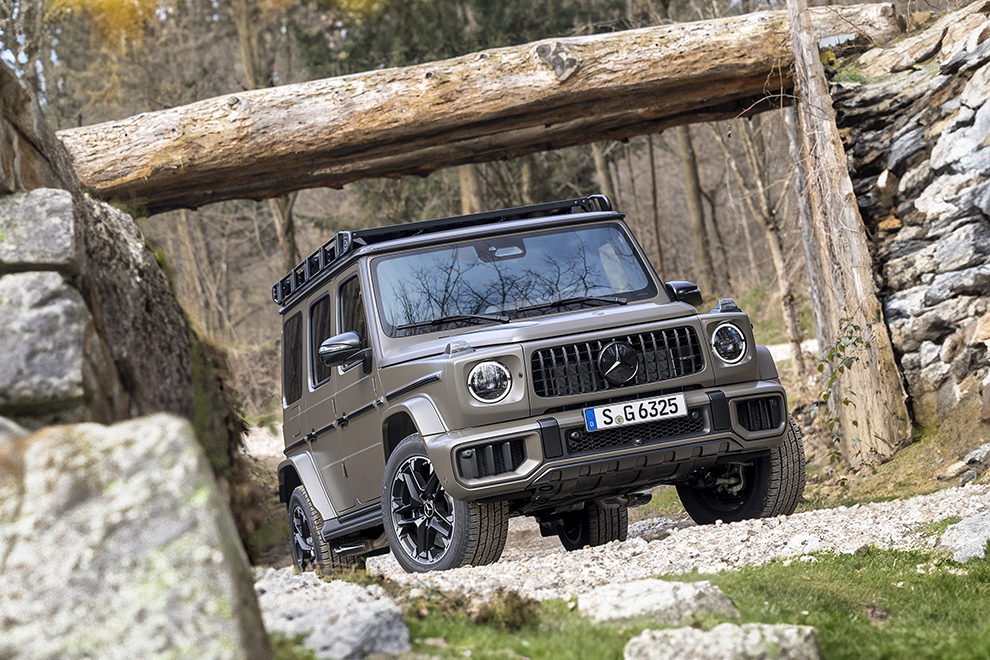
At a glance
- The G-class combines body-on-frame off-road capability with a premium cabin and a commanding road presence.
- Choose among G 500, G 580, G 350 d, G 350 and AMG derivatives according to powertrain, use and operating priorities.
- New cars reduce specification and condition risk, while used cars require stricter history, inspection and compatibility checks.
- Compare export offers on the same Incoterm and landed-cost basis, not on the vehicle line alone.
- Confirm steering configuration, destination homologation and local tax treatment before releasing payment.
Why the Mercedes-Benz G-class matters for export markets
The Mercedes-Benz G-class occupies a distinctive position in the global luxury SUV market: it combines genuine off-road engineering, a body-on-frame chassis, a premium cabin and a high-profile image in fewer segments. For overseas dealers, that combination creates broader appeal than a conventional urban luxury SUV. It can serve affluent private buyers, VIP transport operators and specialist fleets, although its size, fuel use and ownership costs limit it compared with more efficient rivals. Its upright profile also makes it easy to recognize, while the model's long-serving design creates familiarity among buyers in markets where prestige SUVs are established.
Demand is not uniform across regions, and the G-class tends to perform best where buyers value status, security, long-distance capability and a commanding road presence. In markets with difficult roads or seasonal weather, its ladder-frame construction and low-range four-wheel drive are meaningful selling points. Elsewhere, its boxy silhouette and premium cabin may matter more than trail ability. Importers should therefore market the model around actual local use cases rather than assume that the badge alone guarantees strong volume. The same model can be a niche luxury product in one country and a practical support vehicle in another.
For buyers, the G-class is not simply an expensive SUV. Its squared body, high seating position and substantial glass area improve visibility, while the robust platform supports demanding use. The trade-off is mass, wind noise at speed, limited cargo flexibility and higher fuel, insurance, tire and servicing expenses than mainstream premium SUVs. An overseas buyer should calculate total ownership cost over the intended resale cycle, not judge the purchase on appearance alone. A strong resale narrative may help, but it is not a substitute for realistic local operating-cost and demand analysis.
Model range, trims and powertrain variants: how the lineup is structured and how to choose
The export-facing range is broad because the G-class name covers several mechanical and market variants. Common listings include G 350, G 350 d, G 500, G 580, AMG G 63, AMG G 65 and the older AMG G 55, plus special editions based on G 500 or AMG G 63. Standard G-class models emphasize luxury, comfort and off-road ability; AMG versions place performance and distinctive styling first. Edition names should be treated as trim identifiers, not as proof of a unique mechanical specification for the particular market and model year.
Powertrain choice is the first technical split. The AMG G 63 uses a 4.0-litre twin-turbo V8 petrol engine, whereas G 350 d variants use a turbocharged 3.0-litre inline-six diesel. G 350 specifications have varied by market, and current G 500 and G 580 models use a 4.0-litre V8 with mild-hybrid assistance. The G 580 is not a battery-electric vehicle: its electrification supports the combustion engine but does not provide plug-in electric range. Confirm the exact engine in the unit's listing because export specifications can differ from the version sold elsewhere.
Most current examples use a nine-speed automatic transmission, permanent four-wheel drive, low-range gearing and selectable drive modes, but used cars may span older transmissions and revisions. A dealer should match the powertrain to the destination: diesel can suit high-mileage users where fuel quality and tax rules support it, while petrol avoids diesel-specific concerns. Buyers prioritizing speed should consider AMG G 63; those prioritizing cabin calm and broader utility usually gain more from G 500 or G 580. For any used car, confirm gearbox type and drivetrain details rather than infer them from the exterior badge.
- Verify engine and gearbox.
- Compare editions by specification.
- G 580 is not BEV.
New vs used Mercedes-Benz G-class: how export inventory is structured and how buyers choose
Export inventory for the G-class is structured around two distinct sourcing decisions: factory-new vehicles and used vehicles from earlier model years. New examples are typically current or near-current cars intended for first registration, while used stock may come from trade-ins, fleet disposal, private ownership or older cross-border channels. Availability and vehicle age change continually, so an importer should use the live listings rather than rely on an assumed annual model-year range or a fixed inventory profile. A sound procurement brief identifies the acceptable age, mileage, trim and documentation level before comparing offers.
A new G-class offers the cleanest specification comparison, current safety technology and a clearer warranty trail, subject to confirmation that the warranty is valid in the destination market. It is usually the better choice for a dealer establishing a standardized sales offering or a buyer who values low initial risk over maximum capital efficiency. The disadvantages are the higher acquisition requirement, rapid depreciation exposure and the need to verify whether local consumers will accept current list pricing. Dealers should model financing, insurance and remarketing assumptions carefully before taking a position.
A used G-class can make more sense for a budget-focused buyer, especially an older example offered at a lower entry point. The key is to buy the condition, not merely the badge or the attractive photograph. Inspect the frame, underside, suspension, engine bay, cabin and electronics; verify service history, accident repairs, title status and modifications; and request an independent inspection. For vintage cars, parts support and electronic compatibility may matter more than the original purchase cost. A pre-purchase report should also confirm that warning lights are absent and the engine, transmission and climate systems operate correctly.
- New lowers condition risk.
- Used demands rigorous inspection.
- Verify history and modifications.
How export pricing works: the factors behind a live listing price, and how to read one
An export price is the sum of several commercial variables rather than one universal G-class rate. The vehicle's year, trim, edition, engine, mileage, condition and equipment all influence its commercial value. Seller margin, the currency exchange rate and market demand can also move the quoted amount. Freight is a separate layer because weight, securement needs and destination distance affect transport cost; the same vehicle delivered under different Incoterms can produce a very different total outlay. This is why a clean vehicle-only price cannot serve as a reliable budget for an overseas buyer.
Start by identifying what the listing price includes. A vehicle-only quotation may exclude ocean freight, marine insurance, export documentation, origin handling, terminal charges, inland delivery, import duty, VAT or other taxes. The Incoterm allocates responsibility and risk between seller and buyer, so a buyer should not compare one quote under one term with another quote under a different term. Ask for a written breakdown and clarify which charges remain payable locally after arrival before contracting. This prevents a cheaper vehicle line from hiding a materially more expensive overall delivered transaction.
The correct procedure is to open the live G-class listing, confirm the unit's VIN or stock reference, and compare the stated specification, condition and seller terms. Then check whether the displayed amount is an asking price, a negotiable price or a final landed quotation, and whether shipping or taxes are excluded. Exact price, availability and MOQ are binding only when shown against the current unit or confirmed in a written quotation and sales contract. Do not rely on a saved page or screenshot from an earlier inquiry or old message.
- Compare like-for-like units.
- Confirm Incoterm and exclusions.
- Contract the written quote.
MOQ, ordering and payment: single units vs consolidating a container
One-unit purchasing is the practical route for a dealer testing demand, an importer securing a specific specification or a private buyer. The order should identify one physical vehicle rather than an unspecified model, because color, interior, edition, mileage and market of origin can materially affect price. Ask the supplier to confirm the minimum order quantity for that listing and whether the unit is held exclusively once a deposit is accepted. A written reservation and inspection condition should precede final payment, and the buyer should receive the same terms in writing.
Wholesale consolidation of several G-class units with other vehicles can improve freight utilization and may make overseas warehousing more economical. The organizer must confirm that each unit has a valid sale contract and export documents, then arrange a single consolidated shipment with clear marking and delivery responsibilities. Mixed loading also brings risk: damage during securing, delayed release of one unit, or mismatched paperwork can hold up the whole group. Inspection and title checks must therefore be completed before consolidation, not after arrival. Insurance should reflect the full declared value of each vehicle.
Payment structure should follow risk control rather than a generic template. Typical elements include a deposit, verification of ownership and identity, inspection against the agreed specification, payment of the balance, and release against original shipping documents; exact stages vary by transaction. Use protected payment channels, match the beneficiary to the contracting entity, and obtain clear refund, cancellation and title-transfer terms. Avoid sending an unsecured balance merely because a stock photograph or prior message looks persuasive or if deadlines are unclear. The contract should also define who bears costs if inspection fails.
- Identify the exact unit.
- Document-check before consolidation.
- Tie balance to inspection.
Shipping, homologation and market compliance caveats: LHD/RHD and import rules by country
Shipping begins with the origin handover and ends with local registration, so the cost cannot be judged by ocean freight alone. Container type, route, transshipment points, port congestion, customs inspection, insurance, documentation and inland haulage all affect the schedule and bill. A G-class requires securement appropriate to a heavy, high-centre-of-gravity vehicle. The buyer should obtain a logistics proposal that names the loading and discharge ports, transport mode, charge inclusions, estimated transit and the party responsible for each handling stage. This gives the buyer a baseline against which actual carrier charges can be checked.
Steering configuration is a critical ordering check. Vehicles configured for left-hand-drive markets are more commonly encountered in Chinese export channels, while right-hand-drive examples may have different production, specification or availability. Do not assume a chassis can simply be converted: conversion can affect safety systems, warranty, regulatory approval and resale value. State the required handedness in the RFQ, confirm it on the VIN and photographed cockpit before payment, and allow additional sourcing time if the destination requires a less common configuration with a specialist if conversion is contemplated before any work begins.
Local homologation is separate from export clearance. Customs will assess import duty, VAT or sales tax, emissions rules and the value of the vehicle, while local authorities may impose separate type-approval, insurance or registration requirements. A Chinese-market G-class may not automatically satisfy every European, Middle Eastern, African or Asian destination's rules, and software, lighting, safety or emissions configurations can matter. Obtain written advice from a licensed customs broker and the destination authority before committing; use a homologation specialist where local certification is required and retain the written advice with the order file.
- Confirm LHD or RHD.
- Separate freight and tax.
- Check destination approval.
Who should buy the G-class — and who should pick a different vehicle
The G-class is a strong fit for buyers who want a prestige off-road SUV with genuine four-wheel-drive capability, a high seating position and a cabin that can serve as a mobile office or VIP space. It also suits customers with demanding roads who will use the full-time four-wheel-drive system and low range rather than treat those features as decoration. For specialist rental, diplomatic or executive fleets, its presence can support the brand, but utilisation and residual-value assumptions must be conservative because fuel and maintenance can erode returns over the service cycle.
It is a weaker fit for buyers whose priorities are low operating cost, compact parking, extensive cargo flexibility or rapid urban delivery. The vehicle is large, uses premium fuel or diesel, wears expensive tires and can carry higher insurance and repair bills. In crowded cities, its dimensions may be a daily disadvantage. Buyers needing a seven-seat family hauler, a commercial workhorse or a plug-in-only company policy should also note that the standard G-class range does not offer a battery-electric configuration. Specific market variants should always be checked for local powertrain rules.
Before choosing, match the exact trim to the mission. G 500 and G 580 lean toward quiet luxury and technology; G 350 d can suit long-distance diesel users; AMG G 63 prioritises acceleration, road presence and performance; and used G 55 or G 65 examples appeal to buyers seeking an older AMG identity. Test the real operating environment, confirm local fuel and service support, review parking access and assess operating requirements. A model that looks impressive in a showroom may still be unsuitable for the buyer's daily route or duty cycle.
- Strong for prestige and off-road.
- Weak for low-cost urban use.
- Match trim to duty.
Main rivals and how the G-class compares
The closest alternatives depend on what the buyer values. A Land Rover Range Rover competes more directly on premium refinement and executive transport, while the Land Rover Defender 110 shares the boxy, body-on-frame and off-road proposition. The Jeep Grand Wagoneer L is another large luxury SUV aimed at American-style comfort and space. Each offers a different balance of price, efficiency, equipment and brand appeal, so the G-class should be selected by use case rather than by badge recognition alone. Local service networks can also change the result for the buyer.
Against the Range Rover, the G-class offers a more overtly utilitarian image, stronger off-road hardware emphasis and the option of extreme AMG performance, while the Range Rover generally emphasizes interior calm and road-oriented luxury. The Defender 110 is more directly comparable in concept but sits lower in the luxury hierarchy, and its packaging should be checked for the same executive, cargo and equipment requirements. The Grand Wagoneer L prioritizes cabin space and road comfort, making it attractive to families or VIP buyers who rarely need extreme off-road use. Neither comparison should be made from photographs alone.
A useful final comparison is total delivered cost, operating burden, homologation and likely resale support in the destination. Test the shortlisted vehicles back to back, verify the exact imported specification and obtain a written landed quote for each. The G-class wins when rugged identity, utility and exclusivity justify the running costs; a Range Rover may be more sensible for executive comfort, a Defender for entry into rugged luxury, and a larger road-focused SUV for passenger space. The best choice is the one that remains suitable after taxes and operating costs are included.
Live Mercedes-Benz G-class export inventory
View all listings →Real units currently on ChinaCarDirect with per-unit asking prices and MOQ. Availability updates live from the catalogue.
Mercedes-Benz Mercedes-Benz G-Class 2018 G 500 designo Masterpiece Collector's Edition
How to buy a Mercedes-Benz G-class from China
-
1
Define the destination and operating requirement
Specify the destination country, LHD or RHD requirement, fuel preference, annual mileage, road conditions and intended customer. This narrows the trims and configurations that can realistically be imported and supported.
-
2
Choose the appropriate trim
Compare G 500, G 580, G 350 d, G 350 and AMG derivatives against budget, performance, fuel and luxury priorities. Treat special editions as separate configurations requiring a full specification check.
-
3
Review the live inventory
Open the current G-class listings and check each unit's year, trim, engine, transmission, condition, steering configuration and stock reference. Use the listing for the current per-unit price, availability and MOQ.
-
4
Request a detailed export quotation
Ask for the vehicle price, MOQ, payment stages, documentation scope, Incoterm, freight method and any destination charges that are excluded. Compare quotations only when they use the same commercial terms.
-
5
Verify documents and condition
Confirm VIN, ownership, title, import eligibility, service history and accident or modification records. Use an independent inspection for used vehicles and document any acceptance thresholds in the contract.
-
6
Agree payment and release conditions
Match the beneficiary to the contracting entity, use protected payment channels and link the balance to inspection and document delivery. State refund, cancellation and title-transfer provisions before sending funds.
-
7
Arrange compliant logistics and clearance
Confirm loading and discharge ports, securement, insurance, documentation and inland delivery responsibilities. Work with a destination customs broker to confirm taxes, type approval, registration and local insurance before shipment.
G-class vs rivals
| Land Rover Range Rover | The most direct premium alternative, emphasizing road refinement, executive comfort and a more understated luxury image. The G-class is the stronger choice for buyers who prioritize its utilitarian identity, off-road hardware and available AMG performance. |
|---|---|
| Land Rover Defender 110 | Defender 110 is closely aligned with the G-class concept through its boxy design, body-on-frame construction and off-road focus. It generally occupies a lower luxury tier, so buyers should compare cabin equipment, execution, cargo volume and operating costs carefully. |
| Jeep Grand Wagoneer L | Grand Wagoneer L prioritizes passenger space, road comfort and family or executive transport over extreme off-road use. It may suit buyers wanting a large luxury SUV, while G-class buyers usually value its tougher image, commercial heritage and greater off-road specification. |
Frequently asked questions
How is Mercedes-Benz G-class export pricing determined?
Pricing reflects the unit's year, trim, edition, engine, mileage, condition, options and the seller's commercial terms. Freight, insurance, documentation, port handling, taxes and the selected Incoterm affect the landed cost. Check the live G-class inventory for the current unit price and request a written quotation showing all inclusions and exclusions.
Which Mercedes-Benz G-class engine and range options are available?
Depending on the market, listings may include a 3.0-litre petrol G 350, a 3.0-litre turbo-diesel G 350 d, a 4.0-litre V8 G 500 or G 580, and the 4.0-litre twin-turbo V8 AMG G 63. The G 580 is a mild-hybrid combustion vehicle, not a BEV, and has no plug-in electric range. Confirm the exact powertrain in the individual listing.
Is a used Mercedes-Benz G-class better value than a new one?
A used G-class can reduce the initial acquisition requirement, but it introduces more uncertainty about condition, history, warranty and compatibility. A new car is generally easier to standardize across a dealer inventory. For either choice, compare the actual unit, not just the model name, and include inspection, repair and operating costs in the decision.
What is the MOQ for a Mercedes-Benz G-class from China?
MOQ depends on the individual listing and transaction terms, so it should be confirmed against the live unit rather than assumed from the model name. A dealer may be able to purchase one vehicle or coordinate a wholesale consolidation with other orders. The applicable quantity, reservation conditions and unit allocation should be stated in the quotation and contract.
What affects G-class shipping time and cost?
Transport mode, origin and destination ports, route, transshipment, container availability, customs inspection, documentation, insurance and inland delivery all affect the schedule and charge. Because the G-class is heavy and requires secure loading, freight should be quoted specifically for the unit rather than estimated from a generic vehicle rate.
Are Mercedes-Benz G-class spare parts available for export buyers?
Parts are generally available through Mercedes-Benz service channels, but body panels, electronics and model-specific components can be expensive and may take time to source. Confirm local dealer support before importing an older or discontinued variant. For a used vehicle, request the service history and inspect for signs of previous accident repairs that could require difficult-to-source parts.
Can I buy a right-hand-drive Mercedes-Benz G-class from China?
Availability depends on the source vehicle, production specification and destination, so right-hand-drive supply should never be assumed. State the requirement in the RFQ and confirm it through the VIN, model specification and cockpit photographs. A physical conversion is not an automatic solution because it can affect safety systems, warranty, approval and resale value.
How do I order a Mercedes-Benz G-class from China?
Start with the live inventory, shortlist the exact trim and configuration, then submit an RFQ with the destination, quantity, handedness and preferred Incoterm. Compare the written quotation, reserve the physical unit and complete document and condition checks before final payment. After payment, use the agreed shipping process and a local customs broker for import clearance and registration.
Ready to source the Mercedes-Benz G-class?
Send ChinaCarDirect your destination, preferred trim, LHD/RHD requirement, quantity and Incoterm for a unit-specific G-class export quotation.
Request a quote