
Mercedes-Benz G-Class AMG Export Buying Guide
Plan a Mercedes-Benz G-Class AMG export from China with guidance on trims, pricing logic, ordering, shipping, compliance, rivals and live inventory checks.
At a glance
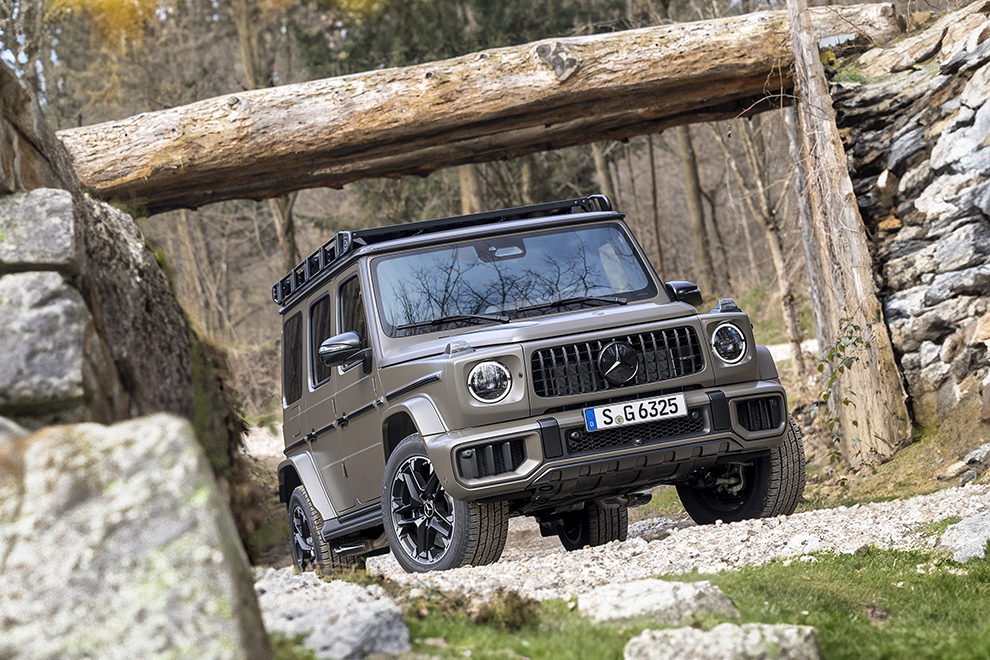
- The G-class Amg combines luxury-SUV comfort, high-output AMG engines and genuine off-road capability in an iconic four-door package.
- The lineup spans the G 55, G 63 and G 65, with special editions adding visual and equipment differentiation rather than creating a new vehicle family.
- Buyers should compare VIN-linked build sheets, market equipment and steering configuration rather than rely on trim badges alone.
- Live export pricing changes with year, edition, options, condition, freight, Incoterms, exchange rates and import charges.
- Single-unit orders and multi-vehicle consolidation are both practical, subject to each listing's stated terms and local compliance requirements.
Why the Mercedes-Benz G-class Amg matters for export markets
The Mercedes-Benz G-class Amg occupies a rare position in the global luxury-SUV market: it combines the upright, exposed-body shape of a hardcore off-roader with the road manners, cabin finish and high-output engines expected of a premium performance vehicle. That combination gives it wider appeal than a conventional high-performance SUV. Dealers can present it to affluent private buyers seeking status and utility, while specialist importers can build campaigns around exclusivity, special editions and Mercedes-Benz’s established overseas recognition. Its boxy silhouette is immediately recognizable in markets where vehicle research is often visual.
For overseas buyers, demand is driven less by practicality than by the G-Class formula itself: four-door access, a high driving position, off-road hardware and a model identity that remains conspicuous. The AMG versions add performance and exhaust character, but they are not simply trimmed G-Class SUVs. Buyers comparing them with premium rivals are deciding how much of the vehicle should favour road-going performance versus utility, refinement and running cost. Because servicing, fuel and insurance can be significant in some markets, a total-cost discussion is more useful than a generic performance claim.
Export demand varies by destination. In markets with Mercedes-Benz service networks and demand for luxury SUVs, a G-class Amg can support a higher-margin niche, especially when specification is clear and it arrives in the expected steering configuration. Elsewhere, importers must explain the model’s positioning, source replacement parts and justify ownership costs against a Range Rover or Defender. The model is best treated as a specialist export product, not a volume fleet proposition. Its visual appeal can help, but verified condition and documentation determine whether an importer can sell it profitably.
- Iconic shape with genuine off-road ability
- Premium performance for affluent buyers
- Running costs require local planning
Model range, trims and powertrain variants: how the lineup is structured and how to choose
Across export listings, the core Mercedes-Benz G-class Amg hierarchy is organized around AMG G 55, AMG G 63 and AMG G 65, including Edition 463 and other named packages. The G 55 is the more performance-focused entry point; the G 63 is the central high-output V8 model; and the G 65 occupies the top of the range with a larger-displacement V8 and more luxury-oriented specification. Named editions may change paint, trim, wheels or equipment, so their labels should not be treated as separate powertrain families without checking the build sheet.
For a buyer prioritizing everyday usability, the G 55 can be easier to rationalize than the larger, expensive G 63 or G 65, while retaining the AMG traits of strong performance and all-wheel drive. The G 63 is the performance choice for an importer seeking recognizable AMG character without moving to the range-topping G 65. The G 65 is best suited to buyers who explicitly value its extra V8 presence, exclusivity and higher level of on-road luxury; the trade-off is greater cost, fuel consumption and often less emphasis on value.
Model-year changes and special editions can alter equipment even when the model name looks similar. Buyers should compare the VIN-linked build record, engine designation, transmission, factory options, axle ratios and market equipment rather than relying on a badge alone. For export use, also check whether the steering position, infotainment language, regional electrical equipment and warranty arrangements suit the destination. A complete specification sheet is more valuable than a listing photograph, especially for cross-border resale. Any discrepancy should be reconciled with the physical vehicle before payment and the signed sale contract.
- G 55: performance-focused entry model
- G 63: core export-demand model
- G 65: top-tier V8 exclusivity
New vs used Mercedes-Benz G-class Amg: how export inventory is structured and how buyers choose
A G-class Amg export inventory should be read as individual vehicles, not as a generic model page. Each live unit should be checked for model year, exact trim or edition, condition, mileage where relevant, VIN, option content and seller location. New vehicles are typically described by their build specification and delivery status; used vehicles require a closer examination of ownership history, service records, accident repair, off-road use and wear. The relevant question is not simply “new or used,” but whether the evidence supports the vehicle’s description and intended resale value.
New inventory gives buyers a comparison basis and reduces uncertainty from age, prior wear and incomplete history. It can make specification, colour and delivery timing easier to plan, although availability may be tied to production or allocation rather than stock. A used Mercedes-Benz G-class Amg may offer an accessible route into the model and can be attractive where buyers knowingly accept refurbishment, maintenance reserve and condition risk. Because the badge alone does not reveal condition, buyers should budget for independent inspection and verify that cosmetic condition matches the listing terms.
For an export transaction, do not infer condition from the vehicle’s place of origin. Ask whether the unit is locally sourced or previously imported, whether customs duties were settled, whether registration documents match the VIN and whether service history is transferable. A dealer buying for resale should check title liens, auction or salvage records where applicable and whether repairs are documented. Current condition and availability must be confirmed in the live listing rather than inferred from a model-year range or market trends. The same rule applies to every claimed specification.
How export pricing works: the factors behind a live listing price, and how to read one
A live Mercedes-Benz G-class Amg export price is a commercial figure, not a fixed price for the model name. The vehicle contributes most: production year, G 55, G 63 or G 65 positioning, special-edition status, factory options, mileage and condition, and the seller’s commercial terms all matter. Two units carrying the same badge can differ because one may be a later build, a rarer edition or in a different condition. The trim label is only the first sorting tool; the VIN and build sheet are needed for a fair comparison.
Transaction costs then layer onto the vehicle value. Currency movements at payment, domestic transport to the export gateway, ocean freight, insurance, documentation, port charges, taxes, duties and local registration can change a buyer’s landed cost. Incoterms determine where responsibility passes and which charges are included, so the same unit can look different under FOB, CFR or another term. A quoted amount should never be read as an all-in landed price until the buyer has identified the port, destination, shipping method and import regime and who is responsible for each charge.
When reviewing a live listing, check the displayed vehicle price, currency, condition, year, trim, mileage, seller location, stated availability and Incoterm separately. Ask for a written quotation that itemizes the vehicle, options, domestic handling, freight, insurance, export documents and destination charges not yet known. Also ask whether the price is negotiable and whether it changes after inspection. ChinaCarDirect displays current per-unit figures and terms on its live G-class Amg listings, so those pages—not an old article or cached enquiry—are the binding reference for price and availability today.
- Compare VIN-linked build sheets
- Incoterms define trade-cost coverage
- Confirm total landed cost
MOQ, ordering and payment: single units vs consolidating a container
Minimum-order mechanics should be checked on the vehicle rather than assumed for the whole model. A Mercedes-Benz G-class Amg can be bought as a single-unit transaction when the seller or listing permits it, which suits a dealer testing demand or a direct customer. A fleet, showroom or promotional order may require allocation and staged production. Some sellers also impose a container-consolidation minimum so several units can share freight; that is a commercial condition for the batch, not an inherent limitation of the vehicle. Confirm the stated minimum before placing funds.
If several units are needed, compare two operating models. One is to buy matching vehicles from separate sellers and appoint a freight consolidator, accepting more document and coordination work. The other is to request a multi-unit quotation from one supplier, which may simplify payment, inspection and loading but can constrain colour, trim and production timing. Treat a container plan as a logistics project, not merely a discount: calculate cube and weight, select Ro-Ro or container feasibility, coordinate inspection, and agree what happens if one vehicle fails inspection or becomes unavailable.
For each order, request a pro forma invoice showing the VIN or model-year and trim, equipment, unit price, minimum quantity, deposit, balance trigger, Incoterm, production or dispatch window and refund conditions. The beneficiary name should match the contracting seller, and payment terms should be tied to documentary and inspection milestones rather than vague verbal assurances. Before the balance is due, reconcile the vehicle identity, condition report, export documents and shipping plan with the agreement. High-value transactions justify independent inspection, a traceable bank trail and clear title and cancellation provisions.
- Check MOQ on every listing
- Single-unit orders support market testing
- Consolidation requires one freight plan
Shipping, homologation and market compliance caveats: LHD/RHD and import rules by country
Finished G-class vehicles normally move by ocean Ro-Ro rather than in a standard enclosed container, although the method must be confirmed against dimensions, securing requirements and the carrier. Door-to-door quotations can combine origin handling, terminal charges, ocean freight, destination port fees, customs clearance and inland delivery. Transit time varies with sailing frequency, transshipment, port congestion, customs inspection and weather. Cost likewise responds to route distance, fuel and handling surcharges, insurance, currency and the number of vehicles shipped, so a freight estimate should be treated as budgetary until the booking is confirmed.
Steering configuration is a critical destination check. Vehicles built for left-hand-drive and right-hand-drive markets differ in more than the steering wheel: local safety equipment, lighting, controls and homologation can also affect suitability. Do not assume a China-sourced example can be registered simply by changing the steering side. Tell the seller the destination and traffic side, then require written confirmation of the actual configuration. If a conversion is contemplated, assess local approval, cost, warranty implications and whether altered electronics or airbags can be certified lawfully under the destination’s applicable rules.
Import requirements vary by country and can include a VIN or chassis check, customs valuation, duties and taxes, emissions and noise standards, roadworthiness or safety certification, proof of origin, insurance and registration documents. Some destinations restrict vehicle age, engine output, modification or right-hand-drive imports, while urban driving zones may impose access rules. The exporter should confirm the document set—commercial invoice, packing list, bill of lading, export declaration and required certificates—and the buyer’s broker should review it before loading. Compliance should be settled before the vehicle leaves the gateway.
- Ro-Ro suits finished vehicles
- Confirm LHD or RHD early
- Country rules govern homologation
Who should buy the G-class Amg — and who should pick a different vehicle
The G-class Amg fits buyers who value identity, presence and versatility as much as outright speed. It is compelling for an affluent customer who wants a premium performance vehicle with genuine off-road capability, or for a dealer building a distinctive luxury-SUV category rather than competing on fleet utility. Its four-door layout makes it more usable than many image-led off-roaders, while AMG power and chassis response broaden its appeal. Special editions can attract collectors, provided the buyer understands what the designation changes and does not overpay for a cosmetic label alone.
It is a weaker fit for budget-led buyers, high-mileage users whose priorities are low operating cost, easy parking, large cargo volume or minimal maintenance exposure. The vehicle’s size, fuel consumption, tyres, insurance and service can make ownership disproportionate to its benefits. A buyer who needs a seven-seat people carrier or an economical workhorse should look elsewhere. If most journeys are urban and the off-road hardware adds little value, a conventional premium SUV may deliver a quieter, lower-cost ownership experience. The comparison should use total operating cost, not purchase price alone.
The decision becomes clearer when the use case is explicit. Choose a G 55 when performance and all-wheel-drive capability matter but top-tier extravagance does not; choose a G 63 when the balance of performance, recognizability and utility is the objective; and consider a G 65 only when its larger V8, exclusivity and additional luxury are priorities. For an importing business, a smaller initial order can validate demand before committing to several units. Before scaling, buyers should compare financing, parts stocking, technician capability and expected holding time against competing premium SUVs.
Main rivals and how the G-class Amg compares
The closest rival is the Land Rover Range Rover, which competes for affluent buyers seeking a full-size luxury SUV with road presence, four-door usability and an international service network. The G-class Amg differentiates itself through its more upright, utilitarian appearance and AMG performance character; the Range Rover places greater emphasis on road-going refinement, comfort and cabin technology. For an importer, the decisive questions are local servicing, specification, fuel costs and whether customers respond more strongly to G-Class iconography or Range Rover familiarity. Neither should be reduced to a badge comparison.
The Land Rover Defender 110 is a utility-led alternative for buyers who need credible off-road ability and a practical four-door body. It can be less costly to operate and may offer a usable family-oriented proposition, while the G-class Amg delivers a higher-performance, more exotic image. That trade-off suits different customers: Defender for active use and family utility, G-Class for status, high-output driving and collector interest. Actual ownership comparisons should include local parts pricing and service times rather than published brochure figures. A test drive can reveal ride and visibility differences.
The Jeep Wrangler Rubicon occupies the iconic off-road end of the market but is not an equal luxury substitute. It offers a heritage appeal, removable-roof configurations and trail capability, whereas the G-class Amg provides a polished, powerful and expensive road vehicle. A Wrangler can suit buyers who prioritize open-air utility and lower entry cost; a G-Class buyer is usually paying for greater refinement, performance and prestige. Comparing brochure specifications is less useful than testing real cargo, towing and daily-use requirements in the destination market. That avoids overpaying for capability unused.
- Range Rover: road-luxury alternative
- Defender 110: utility-led alternative
- Wrangler Rubicon: rugged value option
Live Mercedes-Benz G-class Amg export inventory
View all listings →Real units currently on ChinaCarDirect with per-unit asking prices and MOQ. Availability updates live from the catalogue.
Mercedes-Benz Mercedes-Benz G-Class AMG 2016 Model AMG G 63 Edition 463
Mercedes-Benz Mercedes-Benz G-Class AMG 2016 Model AMG G 63 Edition 463
How to buy a Mercedes-Benz G-class Amg from China
-
1
Define trim and destination requirements
Start with the G 55, G 63 or G 65 and decide whether performance, exclusivity, equipment, steering side or delivery timing matters most. Give the exporter the destination and intended use so unsuitable builds can be excluded early.
-
2
Shortlist exact live vehicles
Review the current G-class Amg listings and compare individual units by year, trim, edition, options, condition, location and availability. Treat each displayed price, MOQ and availability statement as the starting point for a written quotation.
-
3
Verify identity and build sheet
Request the VIN, factory build sheet, detailed photographs, equipment list and ownership or registration documents. Reconcile the engine, transmission, options, market specification and steering position with the listing.
-
4
Agree the commercial quotation
Specify the destination, intended Incoterm, payment schedule, inspection requirements and delivery window. Ask for vehicle price, domestic handling, freight, insurance and known destination charges to be itemized separately.
-
5
Inspect before final payment
Use an independent inspector to check bodywork, paint, interior, tyres, chassis, engine bay and VIN details against the agreed condition report. Record any discrepancy in the sale contract before releasing the balance.
-
6
Complete secure payment and documents
Review the pro forma invoice and contract, verify that the bank beneficiary matches the contracting seller and retain a traceable payment record. Tie the balance to satisfactory inspection and receipt of the agreed vehicle and export documents.
-
7
Book freight and clear imports
Confirm the Ro-Ro booking, cargo handover, insurance, freight terms and export document set. Have the destination broker check customs, duties, registration and homologation requirements before the vehicle is dispatched.
G-class Amg vs rivals
| Land Rover Range Rover | This is the closest road-luxury alternative, with a stronger emphasis on refinement and cabin technology; the G-Class offers more upright utility and AMG character. Choose according to local service access, operating costs and customer preference. |
|---|---|
| Land Rover Defender 110 | The Defender 110 is the more utility-led and family-oriented alternative, with credible off-road ability and potentially lower operating costs. The G-class Amg is the stronger choice for performance, exclusivity and collector appeal. |
| Jeep Wrangler Rubicon | The Wrangler Rubicon delivers iconic off-road character and open-air utility at a different ownership proposition. The G-class Amg provides greater refinement, road performance and prestige, making it less relevant when trail capability is the priority. |
Frequently asked questions
How is the Mercedes-Benz G-class Amg export price determined?
Price is tied to the exact vehicle: model year, G 55, G 63 or G 65 trim, edition, options, mileage, condition and the seller’s terms. Freight, insurance, port charges, taxes, duties, exchange rates and the selected Incoterm affect the landed total. ChinaCarDirect’s live G-class Amg listings show current per-unit prices and terms; request a written quote for final transport and destination charges.
Are these G-class Amg versions electric, and what powertrain should I expect?
The G-class Amg range is petrol/gasoline powered rather than battery-electric. G 55 and G 63 models generally use a 4.0-litre twin-turbo V8, while the G 65 uses a 6.0-litre twin-turbo V8, paired with a nine-speed automatic. There is therefore no battery or charging range to compare; verify the exact engine and equipment on the VIN-linked live listing.
Should I buy a new or used Mercedes-Benz G-class Amg?
New vehicles offer clearer specification and delivery planning, whereas a used Mercedes-Benz G-class Amg may cost less to acquire but can carry prior-wear, repair-history and service uncertainty. Compare the evidence for each vehicle rather than assuming condition from its badge or origin. Review the current condition fields, request records and budget for independent inspection and possible refurbishment.
What is the MOQ for ordering from China?
MOQ is set by the seller for the specific vehicle or batch, so confirm it on the live listing and in the quotation. A single-vehicle order may be suitable for testing demand, while a wholesale or consolidated order can require production allocation and common loading. Consolidation can simplify freight administration, but it does not eliminate the need to inspect and accept each unit.
How long does shipping take and what affects the cost?
There is no universal shipping time or cost for a G-class Amg export. Sailing frequency, transshipment, port congestion, customs inspection, route, fuel surcharges, insurance, cargo handling and inland delivery all affect the result. Confirm whether the movement is Ro-Ro, who bears each charge under the Incoterm, and when a firm freight booking can be issued.
How are spare parts supplied?
Spare-parts planning should use the VIN, build date and destination, because parts can differ by model year, trim and steering configuration. Confirm local Mercedes-Benz dealer access, expected parts lead times and a realistic aftersales inventory for a specialist model. The importer should also verify cross-border parts availability before promising repair turnaround to customers.
Can I buy a right-hand-drive G-class Amg for export?
Right-hand-drive availability depends on the source build and current live inventory; it should never be inferred from a listing photograph. Give the seller the destination and required traffic side, then obtain written confirmation of steering configuration and related market equipment. Any conversion needs separate approval and should be completed only if local certification, safety and warranty requirements can be met.
How do I order a Mercedes-Benz G-class Amg from China?
Begin on the live Mercedes-Benz G-class Amg listings, select a specific unit, and send an enquiry for the VIN, build sheet, price, MOQ, Incoterm, inspection and delivery schedule. After verifying documents and inspection, accept a written sales contract and complete payment to the verified contracting seller. Coordinate export documents, freight booking and destination customs clearance before vehicle dispatch.
Ready to source the Mercedes-Benz G-class Amg?
Request a tailored Mercedes-Benz G-class Amg export quotation with the exact vehicle, Incoterm, freight route and compliance documents confirmed.
Request a quote