
Mercedes-Benz GLC AMG: Export Buying Guide
Buy Mercedes-Benz GLC AMG from China with a clear view of trims, export pricing, MOQ, shipping, compliance and rival options before ordering.
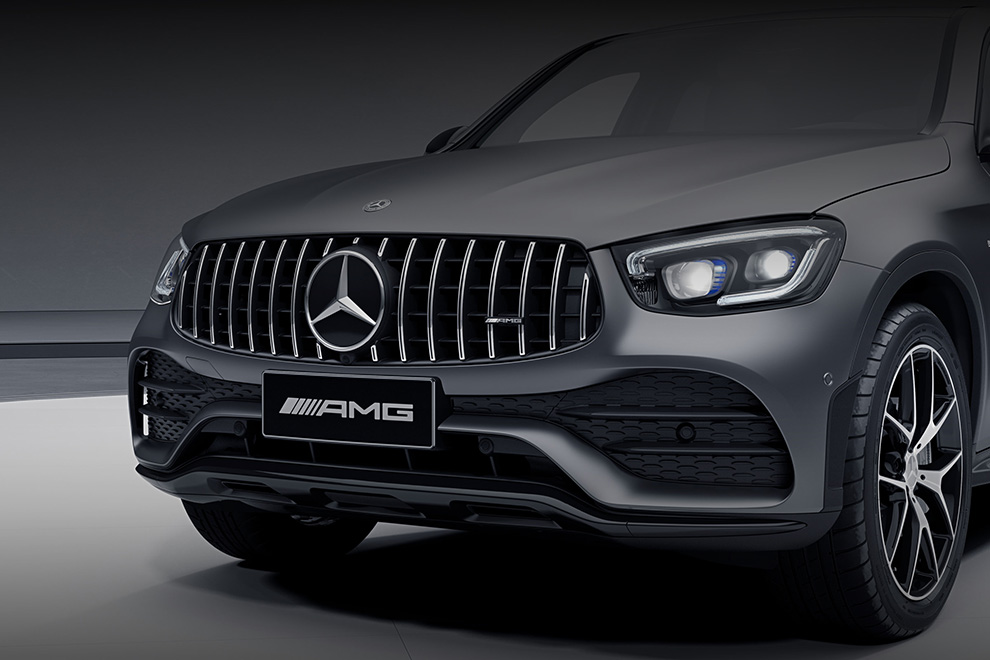
At a glance
- The GLC AMG combines premium-SUV practicality with the acceleration and chassis character expected from Mercedes-AMG.
- The core export trims are AMG GLC 43 4MATIC and AMG GLC 63 4MATIC+, with a Special Edition derivative also represented.
- GLC 43 specifications differ by generation, making engine-code and VIN verification essential for every purchase.
- Export pricing changes with trim, year, equipment, condition, currency, freight, insurance, destination charges and Incoterm.
- Exact MOQ, per-unit price and availability should be confirmed against the individual vehicle in the live inventory.
Why the Mercedes-Benz Glc Amg matters for export markets
The Mercedes-Benz GLC AMG occupies a middle ground between a conventional premium SUV and a high-performance coupe. Its five-door body preserves cargo, passenger and road-access advantages, while AMG powertrain and chassis hardware deliver the response expected by performance buyers. For overseas dealers, the combination is commercially attractive: it serves a broader audience than a sports car, yet remains distinctive for customers who do not want a mainstream family SUV. It also suits company-car programmes and family buyers seeking a prestigious badge, all-wheel-drive confidence and performance without carrying the dimensions of a full-size flagship SUV.
Global demand is driven by the model’s ability to meet several use cases at once. The GLC AMG suits buyers who value acceleration, an upscale cabin and usability in a compact footprint. It transfers well to international markets because it does not depend on one body style or charging standard. Fleet and dealer buyers can position it as a premium performance SUV, a high-specification executive vehicle or a lifestyle model, depending on local demand. It is relevant to importers seeking a performance name in a segment where premium buyers compare several prestige marques.
Export interest also requires a disciplined reading of condition and specification. The AMG label covers multiple trim levels and production eras, so two vehicles carrying similar model names can differ in engine, equipment, steering side, paint and documentation. Buyers should treat the VIN and build specification as more important than a model badge. A vehicle that is documented and suitable for the destination can command confidence from local customers; one with unresolved history cannot be judged by styling alone. That distinction is central to profitable resale, not merely an administrative detail.
- Compact body with genuine AMG performance.
- Strong premium dealer and fleet fit.
- VIN-level checks protect resale confidence.
Model range, trims and powertrain variants: how the lineup is structured and how to choose
The range is led by the AMG GLC 43 4MATIC and AMG GLC 63 4MATIC+, with a Special Edition derivative represented. These are performance derivatives, not cosmetic versions of the standard GLC. The 43 designation identifies the balanced performance route, while the 63 4MATIC+ represents the more powerful V8 route and an aggressive drivetrain and chassis specification. Buyers should compare the trim name shown on each unit rather than relying on the GLC AMG label. Special Editions may concentrate on appearance or equipment, but verify contents against the VIN and build sheet.
Powertrain choice depends heavily on generation. Earlier GLC 43 models commonly pair a turbocharged 3.0-litre inline-six petrol engine with a nine-speed AMG automatic and 4MATIC all-wheel drive. Newer GLC 43 generations may use a turbocharged 2.0-litre petrol engine with mild-hybrid assistance, so importers must confirm the engine code rather than infer it from the 43 badge. The GLC 63 4MATIC+ is associated with a 4.0-litre twin-turbocharged V8, again subject to market and production-year confirmation. Output, emissions equipment and gearbox calibration can also vary, making vehicle documents more useful than a generic trim description.
For fleet and dealer decisions, the 43 is usually the easier proposition to justify. Its powertrain character can balance strong performance with more manageable running expectations than a V8, although the exact result depends on the generation and market. The 63 is the performance flagship, offering stronger acceleration and character for customers who accept higher fuel, tyre and maintenance costs. The Special Edition may appeal for visual differentiation, but its desirability should be assessed against the underlying AMG specification. Ask for the full option list; appearance packages can obscure commercial differences.
- 43 balances everyday and performance needs.
- 63 delivers V8-led performance.
- Verify engine code and VIN.
New vs used Mercedes-Benz Glc Amg: how export inventory is structured and how buyers choose
A GLC AMG export listing can represent a new, unregistered vehicle, a demonstrator, a near-new vehicle or a used example; the condition label and documents determine its category. New or lightly used cars generally offer the easiest warranty and homologation story, but they also carry depreciation and financing costs from purchase. Used cars can reduce entry cost and broaden access to older AMG hardware, yet each unit needs closer scrutiny of ownership, service history and condition. Never infer status from model year alone, because age, specification and condition are distinct variables.
New inventory is attractive to importers wanting consistent specification, straightforward ownership history and a product ready for retail customers. It may also make model-year planning easier when a dealer is building a coherent range around one generation or trim. The trade-off is that the buyer absorbs the full cost before local preparation and selling costs are recovered. For fleet buyers, consistency may matter less than acquisition cost and residual value. A discounted used vehicle can be rational if its condition report, service evidence and market reception support planned margin in that market.
Used GLC AMG vehicles require a different buying method. Review the VIN, registration history where accessible, service invoices, tyres, brakes, accident evidence and the condition of the exhaust, suspension and electronic systems. Check whether warranty or recall work is documented and whether the seller can provide export documents. For older units, local import age rules may outweigh mechanical appeal. A lower acquisition price is valuable only if the buyer has budgeted repair, compliance and resale uncertainty. The condition should be checked in daylight and during a road test where local rules permit.
How export pricing works: the factors behind a live listing price, and how to read one
A live GLC AMG price is normally the seller’s asking position for the vehicle, not automatically the buyer’s final landed cost. The amount can move with model year, exact AMG trim, engine generation, factory options, paint, condition, ownership evidence and the number of units a supplier will commit. Currency conversion also matters because the listing may be denominated differently from the buyer’s. The correct exercise is to compare like vehicles and then add every foreseeable destination cost. Quotation currency, payment terms and validity should be recorded in writing with every comparison.
Freight is one of the largest variables because it changes with transport mode, origin and destination ports, vehicle dimensions, routing, congestion, fuel surcharges and insurance. Insurance, terminal handling, export clearance, inland haulage, customs duty, VAT or taxes, registration and compliance work may all sit outside the listing amount. Incoterms determine which party carries risk and cost at each stage, so a lower vehicle price can still produce a more expensive delivered outcome. Ask for separate vehicle, freight and destination-charge figures, together with the Incoterm named on the commercial quotation itself.
To read a listing, open the specific unit and verify year, trim, engine, transmission, steering side, mileage or condition status, options and seller location. Save the quotation rather than a search-page headline. Then ask whether the amount includes export documentation, inspection, origin transport, marine insurance and loading. Finally, build a landed-cost worksheet using the current exchange rate and destination charges. Exact prices, minimum quantities and availability should be confirmed on live listings because they can change without notice. A written quote should state what is included and what remains payable by the buyer.
- Compare matching trims and equipment.
- Track landed costs separately.
- Confirm quote currency and Incoterm.
MOQ, ordering and payment: single units vs consolidating a container
MOQ is the smallest quantity a seller will accept in one transaction, and it should be read from each unit or confirmed in a written quotation. Some GLC AMG exporters will release a single vehicle for test purchases or dealer stocking, while others may prefer a batch for container economics. Buyers should not infer a platform-wide rule from one listing. Ask for the MOQ attached to the chosen SKU, any mixed-model allowance, and the deposit required to reserve it in writing. This avoids designing a stock plan around an assumed, unconfirmed quantity.
Ordering one unit lets an importer test condition, paperwork, handover and landed cost before a larger commitment. Consolidation can improve freight efficiency, but it introduces allocation and standardisation risks. Mixing the 43 and 63, several model years or left- and right-hand-drive units may complicate insurance, homologation and customer delivery. A consolidated container also ties more capital to slow-moving variants. Decide whether the objective is one demonstrator, several matched retail cars or a wholesale programme before requesting volume terms. A mixed order can work, but every vehicle needs its own VIN, specification sheet and agreed sale condition.
A sound payment and ordering sequence starts with a written pro forma invoice that identifies the unit, price, MOQ, deposit, balance trigger, Incoterm, production or stock status, inspection rights and refund terms. Pay by a traceable method through the seller’s authorised account, and reconcile the beneficiary against the contracting entity. For a used vehicle, release the balance only after VIN, ownership documents, condition and export paperwork pass checks. For a new vehicle, use the seller’s production milestones and final-inspection evidence rather than relying on a photographed car alone. Any bank fees should be allocated in writing.
Shipping, homologation and market compliance caveats: LHD/RHD and import rules by country
Steering configuration is a fundamental sourcing check. A left-hand-drive car cannot be assumed suitable for every right-hand-drive market, and a right-hand-drive unit may need different parts, software settings, instruments or local certification. Ask the seller to state steering side from the VIN and build sheet, then confirm whether that configuration is normally supplied to your destination. Parts availability is another important factor: catalogue support, software compatibility and lead times for electrical, ADAS, exhaust and interior components can determine whether a vehicle is practical to support. This matters especially for mixed fleets where downtime affects commercial availability.
Import compliance is country-specific and cannot be settled by the model name alone. Regulators may apply vehicle-age limits to used imports, emissions and type-approval rules, VIN and document checks, customs valuation, duty, VAT or taxes, and security or cybersecurity requirements. Local registration may require proof of conformity, a certificate of origin, bill of sale, export declaration and evidence that the vehicle was not stolen or encumbered. Buyers should obtain a written import assessment from a customs broker before paying the balance. Local conversion or inspection should be costed separately from the vehicle price.
Transport choice affects cost and risk. Suitable RoRo, container or specialist vehicle-carrier options exist, but the correct method depends on dimensions, sailing frequency and destination infrastructure. Arrange vehicle inspection before loading, photograph the body and underbody, record fuel level and mileage, and agree how damage is documented. Marine insurance should match the Incoterm and replacement value. At destination, allow time for discharge, customs clearance, port charges, inland transport and registration before promising delivery dates to customers. Delays can arise from customs queries, damage disputes, missing documents or congestion at either end.
- Verify VIN-confirmed steering side.
- Use destination-specific broker advice.
- Inspect vehicles before loading.
Who should buy the Glc Amg — and who should pick a different vehicle
The Glc Amg is a strong choice for buyers who want a premium badge, performance and SUV usability in one vehicle. It appeals to founders, executives, enthusiasts and premium customers who want AMG driving character without giving up a practical five-door body. Four-wheel drive can add confidence in poor conditions, while the compact format is easier to manage than many larger performance SUVs. It is persuasive when the buyer values brand recognition and resale presentation in premium markets. It can work as a company car when the organisation values driver appeal and passenger space.
The compromises are important. Performance versions generally demand more fuel, premium tyres, brake wear and specialist servicing than premium SUVs. Insurance and repair costs can be high after market coverage ends. Rear-seat access, cargo practicality and road visibility remain better than a low sports coupe but may not match larger SUVs, while ride, noise and economy depend on wheels, tyres and generation. A buyer focused on the badge or acceleration may overlook these operating realities. For a fleet, the right calculation is total cost per kilometre and downtime, not purchase price alone.
Choose a different vehicle when the brief prioritises low operating cost, electrified drivetrains, maximum cargo volume or a simpler ownership model. A GLC variant may deliver the same badge and practicality with lower performance-related running costs. A premium diesel or plug-in hybrid may suit high-mileage users where those configurations are locally supported. Urban fleets focused on total cost should test non-AMG alternatives, while buyers committed to electric-only policies should select a battery-electric model. A used-car buyer on a strict budget may also find that service, insurance and modification costs erase expected savings.
- Premium performance with SUV usability.
- Higher fuel, tyre and insurance demands.
- Standard GLC suits lower running costs.
Main rivals and how the Glc Amg compares
The closest alternatives are compact performance SUVs and more focused sports SUVs. The BMW X3 M40i competes directly with the GLC 43, offering a six-cylinder performance proposition in a similar luxury-SUV format. Audi’s SQ5 is another practical rival, with a strong premium cabin and a broad dealer network in many markets. Porsche’s Macan GTS serves buyers who prioritise handling and compact dimensions. These comparisons are about use case and character, not a promise that performance is identical. Exact specifications, local equipment and prices should be checked for the destination market and model year.
Against the BMW X3 M40i, the GLC 43 stands out for Mercedes-Benz cabin presentation, understated SUV character and the option of a V8-led GLC 63 in the range. BMW may appeal to drivers prioritising a particular handling balance, the marque’s road-car heritage or familiar service relationships. The X3 M40i is often the more direct alternative for a performance-focused compact SUV buyer, while GLC choice depends on whether passenger space, technology and local brand familiarity carry more weight. Neither model should be assumed suitable for a destination until steering and local compliance are confirmed.
The Audi SQ5 competes on refinement, practicality and brand familiarity, often suiting buyers who want performance without a more overtly driver-focused SUV. Against the Porsche Macan GTS, the GLC offers more rear-seat and luggage space in many configurations, while the Macan may appeal to those prioritising a lower, athletic shape and agile handling. The GLC 63 brings greater high-performance character, but running costs and equipment should be compared. The correct rival depends on powertrain, body priorities and aftersales access. Dealer support and parts availability can matter as much as acceleration in a commercial decision.
- X3 M40i: closest direct performance rival.
- SQ5: premium practicality-focused alternative.
- Macan GTS: handling-led compact alternative.
Live Mercedes-Benz Glc Amg export inventory
View all listings →Real units currently on ChinaCarDirect with per-unit asking prices and MOQ. Availability updates live from the catalogue.

How to buy a Mercedes-Benz Glc Amg from China
-
1
Set the destination requirements
Record the destination country, intended port, required steering side and any local age, emissions or type-approval restrictions before selecting a vehicle.
-
2
Choose the AMG configuration
Compare the GLC 43 with the V8-powered GLC 63, then verify the generation, engine code, transmission, drivetrain and factory equipment against the VIN.
-
3
Review the specific live unit
Use the live listings to confirm year, trim, condition, mileage where applicable, options, seller location and steering configuration for the exact vehicle.
-
4
Request a landed-cost quotation
Ask the seller to separate the vehicle amount, origin charges, freight, insurance, export documentation and destination costs under a named Incoterm.
-
5
Verify ownership and condition
Request the VIN, invoice or bill of sale, ownership evidence, service records, recall information and photographs. Commission an independent pre-shipment inspection.
-
6
Agree MOQ and payment milestones
Confirm the unit-specific MOQ, deposit, balance trigger, refund terms and allocation method in a written pro forma invoice before transferring funds.
-
7
Arrange shipping and clearance
Book export preparation, marine insurance, freight, customs clearance, inland transport and destination registration, with delivery milestones defined in writing.
Glc Amg vs rivals
| BMW X3 M40i | The X3 M40i is the closest like-for-like rival to the GLC 43, combining a six-cylinder performance proposition with a premium-SUV format. Choose it where BMW preference, handling priorities or local service access lead the decision; the GLC range offers a distinct SUV alternative and a V8-led 63 option. |
|---|---|
| Audi SQ5 | The SQ5 emphasizes refinement, practicality and a performance image that is less extreme than the AMG GLC 63. It can suit buyers wanting strong performance with a more restrained character, while the GLC 43 remains the closer performance-tier comparison. |
| Porsche Macan GTS | The Macan GTS is a handling-led compact performance alternative with a more coupe-like shape and typically less rear-seat or cargo space than the GLC. It appeals to drivers prioritising dynamics, while the GLC 63 is the stronger choice for V8 performance and family usability. |
Frequently asked questions
How is Mercedes-Benz GLC AMG export pricing determined?
Export pricing is built from the individual vehicle’s asking price plus, where applicable, currency movement, origin transport, freight, insurance, export handling, destination charges, duty and taxes. Trim, model year, options, condition and the chosen Incoterm can all change the commercial result. Current per-unit prices appear in the live GLC AMG listings; request a written landed-cost quotation for the destination.
Which engines and powertrains are available?
The AMG GLC 43 uses a turbocharged petrol engine, but the exact layout depends on generation: earlier cars commonly have a 3.0-litre inline-six, while newer versions may use a 2.0-litre mild-hybrid. The AMG GLC 63 4MATIC+ is associated with a 4.0-litre twin-turbocharged V8 and AMG nine-speed automatic. Confirm the engine code, output and emissions in the VIN-linked listing because specifications vary by year and market.
Are used Mercedes-Benz GLC AMG vehicles available, and how should they be assessed?
New and used GLC AMG vehicles serve different commercial needs, and the condition shown on each live unit determines what is available. New or lightly used cars simplify ownership history and warranty handling, while used cars can widen access to older AMG versions but require closer inspection and documentation checks. Review the VIN, service history, accident evidence and import eligibility before treating a lower asking price as a saving.
What is the MOQ for buying from China?
MOQ is agreed per vehicle or supplier rather than assumed from the model name. Some sellers may quote one-unit orders, while container buyers may request mixed-model or volume terms. Confirm the applicable MOQ, deposit, allocation method and any requirement to keep the load within one shipment on the live listing and in the written quotation.
How long does shipping take and what does it cost?
Shipping time and cost cannot be stated as a fixed figure because origin and destination ports, sailing frequency, congestion, vehicle dimensions, insurance and Incoterms all matter. RoRo, container and specialist carrier options each change the balance between cost, transit time and handling risk. Ask for origin charges, freight, destination port fees, inland haulage and customs estimates separately.
Can I source spare parts for the GLC AMG?
Spares should be ordered against the vehicle’s VIN, engine code and build specification because GLC AMG production has changed across generations. Electrical, ADAS, exhaust and electronic components may need programming or coding, so confirm catalogue support, software compatibility and expected lead time before committing. A documented service history can also reveal recurring parts and repair needs.
Can I buy a right-hand-drive GLC AMG?
Right-hand-drive availability depends on the individual source vehicle and destination-market supply. The steering configuration must be confirmed from the VIN and seller documentation, not inferred from the model badge. Check local type approval, parts support and whether the seller normally supplies that configuration to your country.
How do I order a Mercedes-Benz GLC AMG from China?
Start with the live listings, select a specific GLC AMG, and request an RFQ covering trim, model year, steering side, condition, MOQ, price, Incoterm, documentation and shipping scope. Review the pro forma invoice, inspection rights and refund terms, then pay only through the authorised seller channel with the balance linked to agreed checks. Book pre-shipment inspection, insurance, export clearance, freight and destination registration before departure.
Ready to source the Mercedes-Benz Glc Amg?
To buy a Mercedes-Benz GLC AMG from China, send ChinaCarDirect an RFQ with your preferred trim, steering side, destination and required quantity.
Request a quote