
Mercedes-Benz GLC Coupe Export Buying Guide
Compare Mercedes-Benz GLC Coupe trims, export pricing drivers, new and used options, MOQ, shipping, compliance, and rivals before ordering from China.
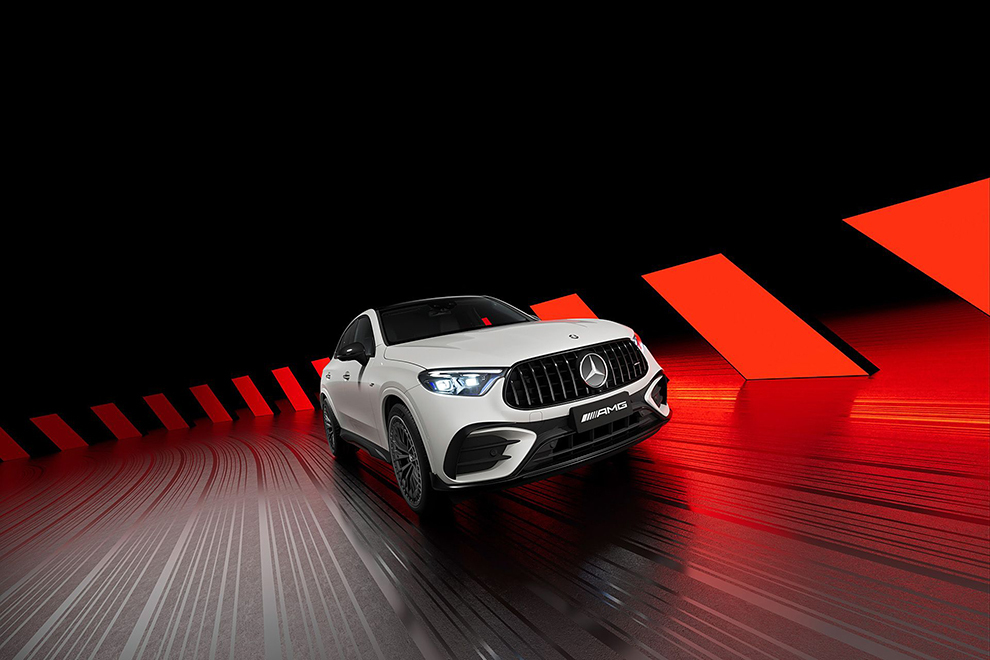
At a glance
- The GLC Coupe combines a coupe-style roofline with four doors, a liftgate and SUV ride height for buyers who want design without two-door impracticality.
- The lineup spans GLC 200, 260 and 300 four-cylinder variants plus AMG GLC 43, 63 and 63 S performance models.
- Choose new or used by VIN history, mileage, condition, warranty and registration status rather than by model age alone.
- Treat the live listing as the vehicle-level price, then add freight, insurance, Incoterms, duties, taxes and local charges for the landed view.
- Confirm MOQ, RHD or LHD availability, homologation and documentation before committing funds.
Why the Mercedes-Benz Glc Coupe matters for export markets
The Mercedes-Benz GLC Coupe occupies a distinctive middle ground in the premium compact SUV segment. It combines the raised ride height, four doors and practical liftgate with a sloping roofline inspired by a two-door coupe. That shape gives dealers a product for shoppers who want stronger visual appeal than a conventional compact SUV without the everyday inconvenience of a genuine two-door sports car. It is a style-led purchase, but not a niche vehicle lacking family access. It should therefore be positioned as a premium lifestyle SUV rather than a performance coupe.
For overseas buyers, the GLC Coupe can add differentiation to a dealership range that otherwise contains many conventional SUVs. The Mercedes-Benz badge supports premium positioning, while coupe proportions broaden its appeal to design-conscious private customers and company-car buyers who still need rear seats. It can be relevant in markets where sporty crossovers are established, but demand should be tested locally through importer channels and retail data. Export availability does not guarantee that the model will be easy to sell or support after delivery. A buyer should validate residual demand before committing to volume.
The decision to import this model is not only about styling. Buyers must also consider the destination market’s emissions and safety rules, Mercedes-Benz service availability, parts sourcing, and whether the coupe body meets local fleet or loading requirements. The sloping roof may reduce rear headroom and cargo practicality compared with a boxier compact SUV. Treat the GLC Coupe as a deliberate design choice with a usable five-seat layout, not a substitute for the most spacious or work-oriented vehicle in the class. Compare local rivals to prevent an expensive mismatch.
- Four doors, usable liftgate.
- Coupe roof reduces rear space.
- Local support drives resale.
Model range, trims and powertrain variants: how the lineup is structured and how to choose
The GLC Coupe range is structured around GLC 200, GLC 260 and GLC 300 four-cylinder models, with AMG GLC 43, AMG GLC 63 and AMG GLC 63 S performance variants. The designation also appears with facelift or model-year labels, and some listings distinguish special editions. Most regular GLC variants use 4MATIC, while the AMG GLC 63 and 63 S are identified with 4MATIC+. These names provide a useful first screen, but they do not replace a full option and specification check. Do not assume every market has the same badge-to-equipment map.
Across common specifications, GLC 200, 260 and 300 use turbocharged 2.0-litre four-cylinder petrol engines; AMG GLC 43 uses a 3.0-litre twin-turbo V6, and AMG GLC 63/63 S use a 4.0-litre twin-turbo V8. Exact output, emissions equipment, mild-hybrid arrangement, transmission calibration and model-year changes must be confirmed in the VIN-specific listing. The numeric badge is not a substitute for those documents. Buyers should compare torque, fuel label, servicing needs and the emissions class relevant to their destination. Automatic transmissions are used across the range, but market-specific software and tuning still matter.
Selection should begin with the buyer’s operating priorities. GLC 200/260/300 buyers usually emphasize everyday running, cabin equipment and purchase efficiency, whereas AMG GLC 43 adds a performance-oriented V6 character. The AMG GLC 63 and 63 S sit higher in the hierarchy and bring greater tire, braking, fuel and maintenance implications. Compare the fitted engine, drive system, wheels, brakes, interior, paint and manufacturer warranty rather than relying on trim names alone, especially when quoting to a fleet customer. That comparison exposes where a cheaper-looking unit needs more operating cost over time.
- 4MATIC across regular GLC trims.
- V6 and V8 AMG alternatives.
- Verify VIN-specific engine details.
New vs used Mercedes-Benz Glc Coupe: how export inventory is structured and how buyers choose
Export inventory should be read condition by condition rather than as one undifferentiated pool. A new unit may be factory-delivered, dealer-demo or otherwise unregistered, while a used unit has an ownership history, recorded mileage and a prior market. The definition can vary by seller, so ask whether the car has been registered, whether its odometer reading is verified and whether any warranty remains. ChinaCarDirect’s live GLC Coupe listings are the source for the condition, model year, mileage and commercial terms of the specific unit. Screenshots or old quotes are not a substitute for refreshed confirmation.
A new or effectively unused car can offer the cleanest condition, the most standardized specification and potentially the least disruption from prior damage. It may also simplify initial presentation to customers who value warranty coverage and modern driver-assistance equipment. The trade-offs are model-year age, depreciation once registered, possible destination-market incompatibility and whether the export price is competitive after every landed charge. A low purchase figure alone does not make a new vehicle cheaper than a well-maintained used example. The right comparison is total ownership cost, not just the initial asking price.
For a used GLC Coupe, the VIN is the starting point, not the photograph. Obtain registration and title records, verify the odometer, review service history and look for evidence of repainting, structural work, flood exposure or accident repair. A pre-purchase inspection should cover cold starting, fluid leaks, tyres, brakes, suspension, underbody condition, diagnostic faults, engine and transmission operation, and safety and infotainment systems. Check recall completion and export eligibility, since a locally used car may not meet the destination’s age or emissions rules. Request the inspection before paying the balance.
How export pricing works: the factors behind a live listing price, and how to read one
A live GLC Coupe listing price is the seller’s asking price for that vehicle, not automatically the buyer’s total cost in the destination country. Vehicle-level drivers are model year, trim, engine, equipment, paint, wheels, interior, mileage, condition and whether the car is new, demo or previously registered. Currency movements, local charges, seller margin and competition can also change the displayed amount. Because these inputs vary by unit, current binding prices and availability must be checked in the live listings rather than inferred from a general market range.
Shipping can move the final acquisition cost substantially. EXW, FOB, CIF and other Incoterms place responsibility for export handling, freight, insurance and risk transfer at different points, so two listings can appear similar while carrying different obligations. Destination charges may include ocean or air freight, terminal and customs fees, insurance, duties, taxes, registration and inspection. Route, season, port congestion, vehicle dimensions, weight and available carrying capacity also affect the quote. Ask for a written landed-cost breakdown rather than treating freight as a vague afterthought. The contract should name the destination and documentation included.
Read each quote line by line and normalize the comparison. Match the same model year, trim, engine, options, condition and steering side before judging offers; a performance AMG or different specification is not like-for-like. Check the quoted currency, price-validity period, Incoterm, named port or place, insurance, payment schedule, warranty treatment and included documents. The live listing provides the per-unit price and current terms, while a written RFQ should capture destination assumptions used to calculate the landed total. Keep every comparison in the same currency and destination scope. Refresh the quote before paying a deposit.
- Separate vehicle and landed costs.
- Compare like-for-like configurations.
- Written quotes define Incoterms.
MOQ, ordering and payment: single units vs consolidating a container
Minimum order quantity is a commercial term attached to the seller and listing, not a permanent feature of the GLC Coupe. A dealer may quote one vehicle, a small mixed batch or a larger container program, but the applicable minimum must be confirmed for the exact offer. Check the live listing’s MOQ field and ask the supplier in writing before arranging payment or freight. Do not assume one-unit fulfilment for every seller, trim or destination. The same rule applies when splitting a group purchase among several buyers before payment.
Consolidating several vehicles can improve freight efficiency, especially when units share compatible dimensions and handling requirements, but it creates different commercial and administrative issues. One container can contain vehicles ordered for different clients, yet each unit still needs a clear VIN, price, condition description and delivery allocation. Mixed trims may complicate customs classification, insurance declarations, spare-parts planning and warranty administration. Request a container-level quotation alongside individual unit prices, and confirm who owns each vehicle before the balance payment. That prevents a low freight figure from hiding costly per-unit exceptions.
A controlled ordering sequence protects both dealer and supplier. First select the vehicle and request a written quote; then verify the seller, invoice identity, VIN and condition; next agree the MOQ, deposit, balance trigger, inspection right, cancellation terms and shipping Incoterm. Payment should use a secure, traceable method matching the seller’s legal identity, with receipts and contractual references retained. Before release, confirm the commercial invoice, vehicle documents, export paperwork, warranty start and evidence required for customs clearance in the destination country. The contract should clearly state every milestone and contingency.
- Confirm MOQ per listing.
- Price each vehicle and container.
- Tie payment to verified milestones.
Shipping, homologation and market compliance caveats: LHD/RHD and import rules by country
Shipping starts with the right carrying method, not simply the nearest port. Container, flat-rack and roll-on/roll-off arrangements suit different dimensions and loading conditions, while a coupe-roof profile may affect securing and clearance. Obtain exact dimensions and weight from the listing, ask how the vehicle will be secured and confirm the loading and discharge port. Photograph condition at handover, review the bill of lading or transport document, and ensure marine or transit insurance matches the Incoterm and replacement value. Port-handling damage is separate from road or voyage transit risk or loss.
Steering configuration must be verified before commitment. A vehicle’s origin does not by itself prove whether it is left-hand drive or right-hand drive, and RHD availability may differ by trim and source market. Confirm the wheel position in photographs, the VIN and the live specification, and obtain an RHD example only where the seller can document that configuration. A later conversion may affect safety, homologation, software, warranty or parts supply, so it should not be treated as equivalent to a factory-built RHD vehicle. Written confirmation should form part of the purchase order.
Import rules are determined by the destination authority, not by the export listing. The importer may need to address emissions, vehicle type approval, VIN and title integrity, lighting, mirrors, radio equipment, safety features, software and cybersecurity requirements, as well as customs classification, duties, taxes and age restrictions. Dealer groups, fleet buyers and private importers can face different rules, and local registration may require modifications or supporting documents. Obtain advice from a licensed customs broker and the relevant transport authority, and make homologation and warranty assumptions explicit in the purchase agreement.
- Verify steering side before order.
- Check destination approval requirements.
- Insurance follows shipment risk.
Who should buy the Glc Coupe — and who should pick a different vehicle
The GLC Coupe fits premium dealers seeking a visually distinctive SUV and private buyers who prioritize design, brand presence and a usable four-door layout over maximum interior volume. GLC 200/260/300 trims suit buyers who want the coupe shape with an efficiency-focused powertrain, while AMG variants serve customers focused on performance and visual distinction. It can suit image-conscious company-car programs where the profile helps differentiate the fleet. Those buyers should still model depreciation, insurance and servicing before treating it as a standard fleet purchase. A local test drive is more informative than badge appeal alone.
It is a weaker choice when cargo height, rear headroom, modular loading or maximum occupant space is the priority. Buyers carrying bulky goods, running high-usage fleets or transporting equipment groups should compare a conventional, boxier compact SUV. The GLC Coupe may also be a poor fit where Mercedes-Benz service coverage, parts lead times or diagnostic support are weak, or where an emission standard restricts the desired variant. An import that cannot be supported locally can create downtime and a poor ownership experience despite an attractive initial presentation. Performance trims add further consumables and maintenance considerations.
Use a weighted market checklist before deciding. Compare the shortlist on local homologation, aftersales reach, realistic spare-parts lead time, fuel and maintenance cost, insurance class, expected residual value and customer acceptance, then add the landed price. Inspect the exact vehicle and verify that its equipment is useful in the destination market. The GLC Coupe wins when its design and Mercedes positioning justify a modest practicality trade-off; a conventional SUV or rival with stronger local support may be the better commercial decision. This test protects margin from an eye-catching but slow-moving specification.
Main rivals and how the Glc Coupe compares
The closest positional rivals are the BMW X4, Audi Q5 Sportback and Jaguar E-PACE. All combine a premium badge with a sloping-roof SUV format, yet their engine mixes, equipment, tax treatment and local support vary by country. A fair comparison starts with equivalent size, propulsion, model year and condition. Appearance alone should not decide the order. For a dealer, residual demand and serviceability can matter as much as the coupe silhouette, while a private buyer may give more weight to ride, software and driving character. Review the live specification rather than a generic brochure image.
The BMW X4 is the most direct alternative for a buyer cross-shopping coupe-styled premium SUVs, offering a comparable four-door layout for close inspection of packaging, boot usability and cabin technology. The Audi Q5 Sportback is another rational option, with its own design and equipment hierarchy for buyers focused on refinement or a different badge. Against both, the GLC’s strongest arguments are its distinctive presentation and the choice between four-cylinder GLC models and AMG V6 or V8 derivatives. The rival that is easier to service locally may still be the wiser commercial choice.
The Jaguar E-PACE competes for compact luxury coupe-SUV buyers with a similarly design-led proposition, but its market availability and service network should be checked locally before an importer commits. It gives the GLC Coupe no automatic win: the better choice depends on the exact engine, equipment, condition, landed cost and warranty support. If the GLC has the stronger Mercedes-Benz service pathway and a specification the destination will absorb, it is a compelling wholesale product. If not, a rival with simpler approval and better parts access may protect both margin and customer satisfaction.
- BMW X4: closest positional rival.
- Audi Q5 Sportback: premium alternative.
- Jaguar E-PACE: design-led option.
Live Mercedes-Benz Glc Coupe export inventory
View all listings →Real units currently on ChinaCarDirect with per-unit asking prices and MOQ. Availability updates live from the catalogue.
Mercedes-Benz Mercedes-Benz GLC Coupe AMG 2024 AMG GLC 43 4MATIC Coupe SUV
Mercedes-Benz Mercedes-Benz GLC Coupe AMG 2024 AMG GLC 43 4MATIC Coupe SUV
Mercedes-Benz Mercedes-Benz GLC Coupe AMG 2024 AMG GLC 43 4MATIC Coupe SUV
Mercedes-Benz Mercedes-Benz GLC Coupe AMG 2024 AMG GLC 43 4MATIC Coupe SUV
How to buy a Mercedes-Benz Glc Coupe from China
-
1
Define the destination and target specification
Set the country, intended customer, steering-side requirement, body preference and acceptable GLC or AMG trim. Identify the local emissions, safety and service constraints before shortlisting vehicles.
-
2
Review the live GLC Coupe inventory
Compare the model year, trim, engine, options, condition, mileage, steering side, MOQ and per-unit price shown on each current ChinaCarDirect listing. Do not rely on an old saved quote or generic price summary.
-
3
Request a written export quotation
Provide the destination, port or place, Incoterm, required quantity and expected shipment route. Ask for vehicle price, freight, insurance, documentation, payment milestones and quote-validity terms as separate lines.
-
4
Verify the vehicle and commercial documents
Match the VIN to the listing, seller invoice, condition report and promised equipment. Check registration status, mileage, title integrity, manufacturer warranty and the seller’s legal identity before paying.
-
5
Resolve compliance before release
Confirm with a customs broker or local authority that the exact configuration can be imported and registered. Address RHD or LHD availability, emissions, type approval, duties, taxes, radio equipment and age restrictions in writing.
-
6
Inspect, balance and ship
Use an agreed pre-purchase inspection, document handover condition and release the balance only after the vehicle and paperwork meet the contract. Track the transport document, insurance, customs clearance and delivery records through completion.
Glc Coupe vs rivals
| BMW X4 | The X4 is the closest format rival, pairing a coupe-style roof with a four-door premium-SUV layout. Choose it where local BMW service, equipment or ownership economics suit the market better, since neither model wins every driving, space and support comparison. |
|---|---|
| Audi Q5 Sportback | The Q5 Sportback is a direct premium alternative for buyers attracted to sloping-roof design and a different manufacturer identity. Compare its exact engine, cargo practicality, local homologation and aftersales access against the GLC’s broader four-cylinder and AMG choices. |
| Jaguar E-PACE | The E-PACE is a design-led compact luxury rival that may appeal to importers seeking a different marque and ownership proposition. The GLC is generally stronger where Mercedes-Benz service is more accessible, but Jaguar availability, parts support and the selected powertrain must be checked locally. |
Frequently asked questions
How is the Mercedes-Benz GLC Coupe export price determined?
The live price is influenced by model year, trim, engine, equipment, condition, mileage, seller terms and current market conditions. Freight, insurance, Incoterm, duties, taxes and local charges can change the landed total. Current per-unit prices, MOQ and availability should be taken from the live ChinaCarDirect inventory, followed by a written RFQ using the intended destination and quantity.
What engine and range does the Mercedes-Benz GLC Coupe have?
The GLC Coupe range is petrol-powered, so battery capacity and electric range do not apply to the ICE variants listed. GLC 200/260/300 models generally use turbocharged 2.0-litre four-cylinder engines, AMG GLC 43 uses a 3.0-litre V6, and AMG GLC 63/63 S use a 4.0-litre V8. Confirm the exact displacement, output, transmission and emissions specification for the VIN in the live listing.
Should an overseas buyer choose a new or used GLC Coupe?
A new or effectively unused vehicle can offer standardized condition, limited prior use and clearer warranty presentation, but it still carries model-year and depreciation considerations. A used example can offer better value if its VIN history, mileage, service record and physical condition are fully verified. Compare total ownership cost rather than assuming either condition is automatically cheaper.
What is the MOQ for a Mercedes-Benz GLC Coupe order?
MOQ is set by the seller and the specific listing rather than by the vehicle model. Check the current MOQ field, obtain written confirmation and state whether the request covers one unit, a mixed batch or a consolidated shipment. Any departure from the displayed term should be agreed in the quotation and purchase order before payment.
What determines shipping time and cost from China?
Shipping time and cost depend on the carrying method, route, ports, vehicle dimensions and weight, season, carrier capacity, insurance and the selected Incoterm. Destination handling, customs clearance, duties, taxes and registration also affect the total. Request a route-specific quote rather than relying on a general freight estimate.
How should buyers plan for GLC Coupe spare parts?
Order parts using the VIN, exact model year, trim, engine and steering configuration because parts compatibility can differ between variants. Confirm local Mercedes-Benz dealer access, alternative sourcing and expected lead times before operating the vehicle overseas. Include foreseeable parts, maintenance and diagnostic costs in the landed ownership model.
Is a right-hand-drive Mercedes-Benz GLC Coupe available for export?
RHD availability can vary by trim, source vehicle and seller, so it should never be inferred from the country of origin. Check the live specification, VIN and photographs, and require the steering configuration to be stated in the purchase contract. A converted steering system is not automatically equivalent to a factory RHD vehicle for homologation, warranty or parts purposes.
How do I buy a Mercedes-Benz GLC Coupe from China?
Start with the live listings, compare equivalent configurations and request a written quote for the required vehicle and destination. Verify the seller, VIN, condition, documents, MOQ, payment milestones, Incoterm and compliance requirements before paying. Complete an agreed inspection, release the balance only when conditions are met, and retain the transport, customs and delivery records.
Ready to source the Mercedes-Benz Glc Coupe?
Send an RFQ for a Mercedes-Benz GLC Coupe with your destination, Incoterm, configuration and required quantity.
Request a quote