
Mercedes-Benz GLE Coupe AMG Export Buying Guide
Compare Mercedes-Benz GLE Coupe AMG trims, export pricing, ordering, shipping and compliance, then source a verified unit through live China listings.
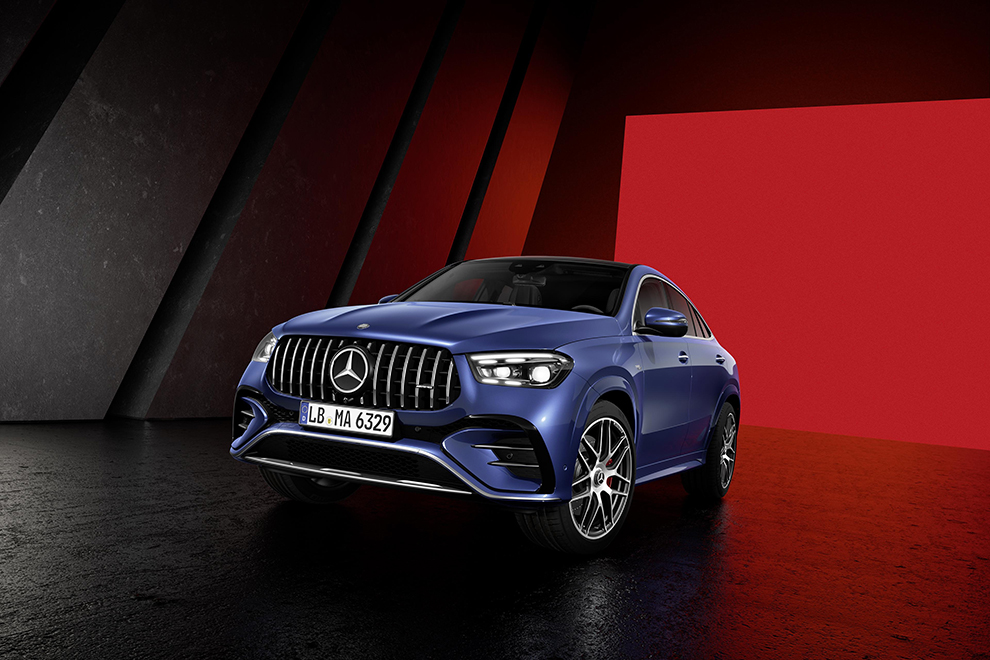
At a glance
- The GLE Coupe AMG combines SUV ride height with a coupe roofline and AMG V8 performance.
- Choose among GLE 43, GLE 53 and GLE 63 according to drivetrain, performance priorities and buyer use case.
- New and used units demand different checks; model year alone does not prove condition.
- Live listings show the current per-unit price, MOQ and availability.
- Confirm LHD/RHD, destination compliance, shipping terms and landed cost before paying.
Why the Mercedes-Benz Gle Coupe Amg matters for export markets
The Mercedes-Benz GLE Coupe AMG occupies a distinctive middle ground between a performance SUV and a luxury coupe. Its sloping roofline, wide rear stance and AMG V8 powertrain give it a visual and mechanical identity that is harder to ignore than that of a conventional GLE SUV. For overseas dealers, that combination can broaden a showroom’s appeal to customers who want SUV ride height and all-weather confidence but do not want the boxier profile of a family utility vehicle. It is therefore most relevant to specialist importers, premium dealers and fleet buyers seeking an executive or demonstration vehicle.
Export relevance is not limited to the coupe silhouette. The GLE 43, GLE 53 and GLE 63 badges give buyers meaningful differences in performance, drivetrain calibration and equipment, while the AMG treatment provides a recognizable product ladder for market planning. A dealer can place the range between ordinary luxury SUVs and much more expensive exotic performance models, serving customers who want exclusivity without stepping into supercar ownership costs or packaging restrictions. The format also supports showroom test-drive positioning, since it delivers the emotional appeal of a high-performance coupe with practical SUV access.
The principal trade-off is the roofline itself. A fastback-style rear can reduce rear headroom and load flexibility compared with a conventional five-door SUV, while the low, wide AMG body demands attention in narrow urban streets and parking areas. Buyers should assess those daily-use constraints rather than treating the model as a performance-only purchase. For fleet applications, a chauffeur, VIP transport or company demonstration role may be more logical than intensive multi-shift duty. Long journeys can still suit buyers who value a quiet cabin, strong road presence and secure all-wheel-drive deployment in poor weather.
- Performance SUV styling with a coupe roofline
- Three main AMG trim identities to compare
- Distinctive stock for premium showroom positioning
Model range, trims and powertrain variants: how the lineup is structured and how to choose
The model line is structured around AMG GLE 43 4MATIC, AMG GLE 53 4MATIC+ and AMG GLE 63 4MATIC. The 43 is the entry point into the range, the 53 adds the plus all-wheel-drive system and 48-volt mild-hybrid assistance, and the 63 sits at the performance apex with more aggressive output and hardware. Buyers should select by model year and VIN as well as badge, because front-axle technology, electronics and equipment can change across production cycles. The Phantom Orange and 55th Anniversary editions seen in this nameplate are package-based derivatives that still require exact trim verification.
Across the relevant applications, the AMG GLE Coupe uses a 4.0-litre twin-turbocharged V8 gasoline family, paired with a nine-speed automatic transmission. The GLE 53 and facelift-era GLE 63 applications use a 48-volt belt starter-generator to assist the engine, whereas the GLE 43 is associated with a conventional turbocharged V8 setup. This distinction matters when comparing fuel use, equipment and running costs, although every live listing and VIN report should be checked for the exact powertrain. The badge is a reliable starting point, not a substitute for the build sheet, especially across pre-facelift and facelift cars.
For an export buyer, the GLE 43 may suit a dealer wanting the coupe-SUV format with less emphasis on maximum output. The GLE 53 is often the most versatile choice because it combines the plus all-wheel-drive hardware with mild-hybrid assistance and a broad equipment package. The GLE 63 targets customers who value acceleration and track-capable engineering more than restraint. Special editions can be attractive for collectors, but their visual options do not guarantee exclusivity or future value. Confirm standard and optional equipment before presenting any of these versions to a customer.
- GLE 43: entry AMG V8 specification
- GLE 53: 4MATIC+ with 48V assistance
- GLE 63: highest-performance GLE application
New vs used Mercedes-Benz Gle Coupe Amg: how export inventory is structured and how buyers choose
Export inventory for the GLE Coupe AMG is typically divided by model year, trim, specification and condition, so a buyer should evaluate new and used vehicles as separate procurement channels. A new example may offer the latest infotainment, driver-assistance functions, warranty coverage and a documented delivery history, but it can also carry an array of options that increase acquisition cost. A used example may provide a more efficient entry into the nameplate, yet condition, mileage, accident repair, corrosion and service history become central to both value and residual-risk decisions. Neither route should be judged from the model year or seller category alone before a deposit is made.
New inventory is especially useful when a buyer needs a known specification, documented software and a cleaner handover process. It can also mean paying for features the local customer will not value, so the build sheet should be translated into market demand rather than simply ordered as standard. For used vehicles, request a VIN-specific service history, inspection photographs, tyre and brake condition, accident disclosures and evidence of ownership. Any unresolved discrepancy should be valued or excluded, not explained away informally. Documented answers create a defensible basis for overseas comparison and resale decisions.
A model year does not automatically establish condition. An older vehicle can be well maintained, while a newer unit may have been used as a demonstrator or sustained hard use. Buyers should also confirm whether the vehicle is locally registered, fully importable and covered by the seller’s warranty in the destination country. Where fleet procurement is the goal, utilization records and downtime risk may matter more than whether the unit is formally classified as new or used. A condition-focused inspection should be treated as essential for any private, rental or demonstration history.
- New: current specification and cleaner handover
- Used: condition history drives value
- Model year alone does not prove condition
How export pricing works: the factors behind a live listing price, and how to read one
A Mercedes-Benz GLE Coupe AMG export price guide should be read as a methodology, not a fixed quotation. The displayed amount for a live unit begins with vehicle-specific factors such as model year, GLE 43, 53 or 63 trim, special-edition status, factory options and condition. For a used vehicle, mileage, ownership history and inspection findings can move value further. Two units carrying similar names may therefore be materially different products, making direct comparison without the VIN risky. Always request a written quotation tied to the specific SKU and configuration being purchased.
Export pricing also has a logistics layer. Currency movements, origin charges, marine insurance, port handling, inspection, documentation, inland haulage and destination duties can all change the landed result. The Incoterm defines where responsibility and risk pass between seller and buyer, so an amount labelled under different terms may not be comparable. Buyers should ask whether freight, insurance, taxes, registration and commissioning are included, and should compare offers on the same delivery basis. A cheaper vehicle quote can become the costlier option after transport, compliance work or repairs are properly included.
The current live inventory is the correct source for a binding unit price and minimum order quantity. Check the listing for the VIN or SKU, photographs, condition wording and equipment, then request a pro forma invoice that repeats those details. If the same SKU appears more than once, do not assume it represents additional physical vehicles; ask the seller to confirm allocation. Negotiate against the total landed cost, not only the visible listing amount, and avoid payment based on a screenshot that has not been incorporated into the invoice documents.
- Price by VIN, trim, year and condition
- Compare quotes under the same Incoterm
- Verify live SKU, allocation and invoice
MOQ, ordering and payment: single units vs consolidating a container
The minimum order quantity is set at the listing or seller level and should be confirmed before payment. Do not assume that a marketplace’s overall sourcing model guarantees identical terms for every vehicle or that a one-unit request will be accepted. Some sellers may open a single-unit sale, while others may prefer a batch. The practical procedure is simple: ask for the stated MOQ, available allocation and lead time for the exact SKU, then have the answer written into the quotation and invoice. This avoids costly misunderstandings during deposit negotiations.
A one-unit purchase suits a specialist dealer testing demand for a distinctive model, or a fleet buyer adding a single executive vehicle. A larger order can improve shipment consolidation, but it should not mix mechanically or commercially incompatible cars merely to fill capacity. Keep allocations by trim, model year, specification and condition unless the buyer intends to retail them as a homogeneous group. This makes VIN delivery, inspection and after-sales claims easier to control and prevents a strong-looking bulk sheet from hiding weak individual units before funds are committed internationally.
Payment sequencing should mirror the transaction’s risk. Review the vehicle identity, commercial terms, inspection evidence and shipping plan before paying a deposit; then confirm the balance trigger against a clear handover or shipping milestone. The seller should state the accepted payment method, currency, bank charges, refund conditions and cancellation terms. For a multi-vehicle order, use a unit-level allocation schedule rather than a vague group description, and preserve every invoice, receipt, inspection report and correspondence needed to resolve a dispute after delivery. Clear records also help local registration and warranty claims.
- Confirm MOQ for the exact listing
- Match deposit to verified vehicle identity
- Use unit-level allocations for bulk orders
Shipping, homologation and market compliance caveats: LHD/RHD and import rules by country
Shipping a GLE Coupe AMG from China should be planned around the vehicle’s size, weight and securement requirements. A specialist vehicle carrier is generally more suitable than general break-bulk handling, because cars need protected decks, suitable lashing points and protection against movement, weather and handling damage. Freight quotations should state the route, sailing or service frequency, container or carrier type, loading port, discharge port, free-time limits and the party responsible for terminal charges. Insurance should be reviewed against the actual agreed value. Do not book until the release and inspection sequence is agreed.
Left-hand-drive and right-hand-drive availability must be confirmed at the VIN level. The market, model year and production batch can affect steering configuration, and a conversion is not automatically equivalent to a factory-built car: it may alter cost, warranty, software compatibility and regulatory compliance. Tell the freight provider and importer which configuration is required. The vehicle, engine and immobilisation arrangement should also be checked against destination-country rules before loading, rather than being corrected only after arrival. For an RHD order, request factory evidence where possible and avoid assuming a Chinese-market listing can satisfy the requirement.
Import compliance is destination-specific. Before contracting, ask the destination broker to confirm VIN and title-document requirements, emissions and roadworthiness rules, customs valuation, duty and tax treatment, luxury or performance-vehicle surcharges, age restrictions, port inspections and local registration. The buyer should also verify that the seller can issue the correct export, customs and ownership documents, and that names, numbers and dates agree across every paper. Pre-shipment inspection should cover fluids, tyres, brakes, glass, underbody, warning lights and evidence of prior flood or accident repair. Local delivery preparation is a separate final check.
- Use a vehicle specialist for securement and inspection
- Confirm factory LHD or RHD before booking
- Clear customs before loading, not after arrival
Who should buy the Gle Coupe Amg — and who should pick a different vehicle
The GLE Coupe AMG makes the most sense for an overseas buyer who wants a premium V8 performance SUV with a coupe profile, strong road presence and the security of all-wheel drive. It is well suited to specialist dealers serving affluent performance-SUV customers, and to fleet buyers needing a distinctive executive, VIP or demonstration vehicle. The driving proposition is clear: turbocharged acceleration, automatic transmission and a body that is more expressive than a conventional luxury SUV. It also rewards buyers who understand that premium running costs are part of ownership.
It is a weaker choice when maximum cargo volume, abundant rear headroom, low operating cost or high-duty fleet utilization matter more than styling. The coupe roofline reduces some practicality relative to the standard GLE body, while the AMG V8, large wheels, brakes and tyres can raise fuel, tyre and maintenance expenses. Buyers focused on total cost should request consumption and service information for the exact configuration, including any local consumption tax or insurance classification that applies after registration. A standard SUV or smaller performance model may reduce both purchase and operating pressure.
Decision-making should also reflect the buyer’s market and vehicle-use pattern. A dealer with limited workshop capability should investigate parts lead times, diagnostic access and technician training before stocking several units. A fleet operator should compare residual-value assumptions, uptime expectations and insurance rules with those for a less theatrical vehicle. Buyers needing seven seats, electric propulsion, minimal road use or the lowest possible running cost should consider alternatives. Those constraints usually matter more than whether the GLE has the more dramatic roofline. A test drive and a total-cost worksheet reveal more than badge appeal.
- Best for premium, design-led SUV buyers
- Suited to executive or demonstration fleets
- Poor match for lowest-cost utility priorities
Main rivals and how the Gle Coupe Amg compares
The BMW X6 M is the closest structural rival, combining a sloping roofline with high-performance all-wheel-drive engineering. It appeals to buyers seeking a similarly muscular SUV-coupe, but differences in powertrain calibration, steering, ride balance and standard equipment can change the ownership feel. A side-by-side test should prioritize acceleration character, visibility, rear-seat comfort and luggage use rather than badge or trim labels. Local parts support and importer experience may be as important as the vehicle itself. The GLE’s five-seat layout and broad AMG range can give it a useful edge for fleet diversification.
The Audi RS Q8 competes with the higher-performance GLE 53 and GLE 63 through a low, wide coupe-SUV format and quattro all-wheel drive. Its sharp styling and strongly performance-focused setup appeal to similar buyers, while differences in engine response, cabin architecture and model-year equipment affect suitability. The RS Q8 may have a more aggressive visual and dynamic character; the Mercedes can be preferable for buyers prioritizing its model hierarchy, rear-passenger packaging or familiarity with the GLE nameplate in some markets. Actual parts and workshop support should be checked locally before either model is selected.
The Porsche Cayenne GTS is a credible alternative for the buyer who places handling and sports-car character above SUV visual drama. It offers a different balance: a sleeker overall shape, a less coupe-like cargo role and a more focused performance identity. The GLE Coupe AMG counters with a more overtly AMG presentation, a broad three-tier model range and a coupe-SUV design intended to retain SUV presence. Neither is universally cheaper after destination taxes, insurance, fuel, tyres and service, so landed ownership cost should determine the shortlist. A direct drive and ownership review is essential.
- BMW X6 M: closest format rival
- Audi RS Q8: sharper performance alternative
- Porsche Cayenne GTS: handling-led alternative
Live Mercedes-Benz Gle Coupe Amg export inventory
View all listings →Real units currently on ChinaCarDirect with per-unit asking prices and MOQ. Availability updates live from the catalogue.
Mercedes-Benz Mercedes-Benz GLE Coupe AMG 2023 AMG GLE 53 4MATIC+ Coupe SUV
Mercedes-Benz Mercedes-Benz GLE Coupe AMG 2023 AMG GLE 53 4MATIC+ Coupe SUV
Mercedes-Benz Mercedes-Benz GLE Coupe AMG 2023 AMG GLE 53 4MATIC+ Coupe SUV
Mercedes-Benz Mercedes-Benz GLE Coupe AMG 2023 AMG GLE 53 4MATIC+ Coupe SUV
How to buy a Mercedes-Benz Gle Coupe Amg from China
-
1
Set the vehicle brief
Define the preferred GLE trim, model year, equipment, LHD/RHD requirement, destination and intended use. Separate styling preferences from towing, cargo, passenger and running-cost requirements.
-
2
Review live inventory
Use the live GLE Coupe AMG listings to compare matching units by SKU, specification, condition and seller terms. The current per-unit price, MOQ and availability are shown on each relevant listing.
-
3
Verify the individual vehicle
Request the VIN or build sheet, detailed photographs, equipment list, ownership documents and service history where applicable. Resolve any discrepancy between the listing, build sheet and seller description.
-
4
Request a landed quotation
Ask for a written pro forma quote under a stated Incoterm, separating vehicle cost, freight, insurance, port charges, duties, taxes and commissioning. Compare all offers on the same delivery basis.
-
5
Confirm MOQ and payment
Record the MOQ, allocation, accepted payment method, deposit, balance trigger, refund conditions and cancellation terms in the invoice. Use a unit-level schedule for a multi-vehicle order.
-
6
Inspect before shipment
Arrange an independent pre-shipment inspection covering VIN, fluids, tyres, brakes, bodywork, underbody, warning lights and signs of previous accident or flood damage. Include a road test where local access permits.
-
7
Ship and complete registration
Confirm export documents, customs treatment, destination compliance and shipping insurance before release. Retain the handover records for port clearance, local registration and any warranty claim.
Gle Coupe Amg vs rivals
| BMW X6 M | The X6 M is the closest format rival, offering a similarly high-performance SUV-coupe with its own engine, steering and chassis character. Compare acceleration, visibility, rear-seat comfort, cargo usability and local parts support; the GLE’s wider AMG hierarchy may be useful to a dealer building a complete performance-SUV range. |
|---|---|
| Audi RS Q8 | The RS Q8 is a closer rival to the GLE 53 and GLE 63, combining a low coupe-SUV body with quattro all-wheel drive and a sharply performance-focused setup. It may appeal more to buyers seeking aggressive styling and handling response, while the GLE offers a broader hierarchy and a different cabin and ownership proposition. |
| Porsche Cayenne GTS | The Cayenne GTS is a credible performance-SUV alternative for buyers prioritizing sports-car handling and a more conventional rear profile over AMG visual drama. It has a different cargo and driving character, so compare tyre, fuel, insurance and service costs as well as the destination’s tax and homologation treatment. |
Frequently asked questions
How is Mercedes-Benz GLE Coupe AMG export pricing determined?
Export pricing starts with the specific vehicle: model year, GLE 43, 53 or 63 grade, options, condition and, where relevant, mileage and history. It is then affected by exchange rates, freight, insurance, port charges, taxes and the selected Incoterm. The current binding per-unit figure and MOQ are shown in the live ChinaCarDirect listings, while a written quote should confirm the landed assumptions.
What engine and powertrain does the GLE Coupe AMG use?
This nameplate uses AMG twin-turbocharged V8 gasoline powertrains with an automatic transmission and all-wheel drive; it is not an electric model, so there is no battery range to compare. The GLE 53 and facelift-era GLE 63 use 48-volt mild-hybrid assistance, while the GLE 43 uses a conventional turbocharged V8 configuration. Because specifications vary by year, confirm the engine and drive system against the VIN and build sheet before ordering.
Should an overseas buyer choose a new or used GLE Coupe AMG?
New units can offer a defined specification, documented handover and warranty, while used units can reduce acquisition cost but expose buyers to wear, accident history and maintenance risk. A low model-year figure is not proof of poor condition, and a new label does not remove the need to inspect the individual vehicle. The better choice depends on the buyer’s budget, equipment needs, service capability and resale plan.
How does the minimum order quantity work?
MOQ is set for each listing and can differ between sellers, trim groups or shipment arrangements, so it must be checked on the live unit rather than assumed from the model name. Some sellers may accept a single vehicle, while others may require a batch. Ask for the MOQ, allocation, lead time and any consolidation conditions in the written invoice before paying.
What determines shipping time and cost from China?
Shipping time and cost depend on carrier service, route and sailing frequency, loading and discharge ports, vehicle securement, insurance, terminal handling, free time and customs clearance. Vehicle size, Incoterm choice and any inspection or repair required before loading also matter. The freight quote should identify each charge and the point at which risk transfers, rather than presenting an undifferentiated delivered figure.
Are Mercedes-AMG spare parts available for export cars?
Mercedes-AMG parts and service are generally available through the brand’s dealer and parts network, but the exact VIN matters for engine, electronics, braking, suspension and cosmetic components. Import-car buyers should compare local dealer availability, Chinese genuine-parts channels and the landed cost of each option. Software, coding and regional compatibility may require additional work, so warranty-critical parts should be identified before shipment.
Is right-hand-drive availability possible?
Right-hand-drive availability is not guaranteed for every model year, trim or production batch. Buyers should request the VIN, steering-side confirmation and factory evidence rather than infer it from a Chinese-market photograph. A conversion may affect cost, warranty and compliance, so an RHD requirement should be resolved before the vehicle is contracted or shipped.
How do I order a Mercedes-Benz GLE Coupe AMG from China?
Start with the live GLE Coupe AMG inventory, select the closest unit and request a written quote tied to its SKU or VIN. Confirm condition, specification, MOQ, payment milestones, inspection, export documents and the Incoterm in that quote. After inspection and compliance checks, book transport and use the handover documents for customs clearance and local registration.
Ready to source the Mercedes-Benz Gle Coupe Amg?
Request a unit-specific export quote for your chosen trim, destination and Incoterm through the RFQ form.
Request a quote