
Mercedes-Benz GLS AMG Export Buying Guide for Dealers
Buy a Mercedes-Benz GLS AMG from China with practical guidance on trims, export pricing, MOQ, shipping, compliance and model selection for overseas dealers.
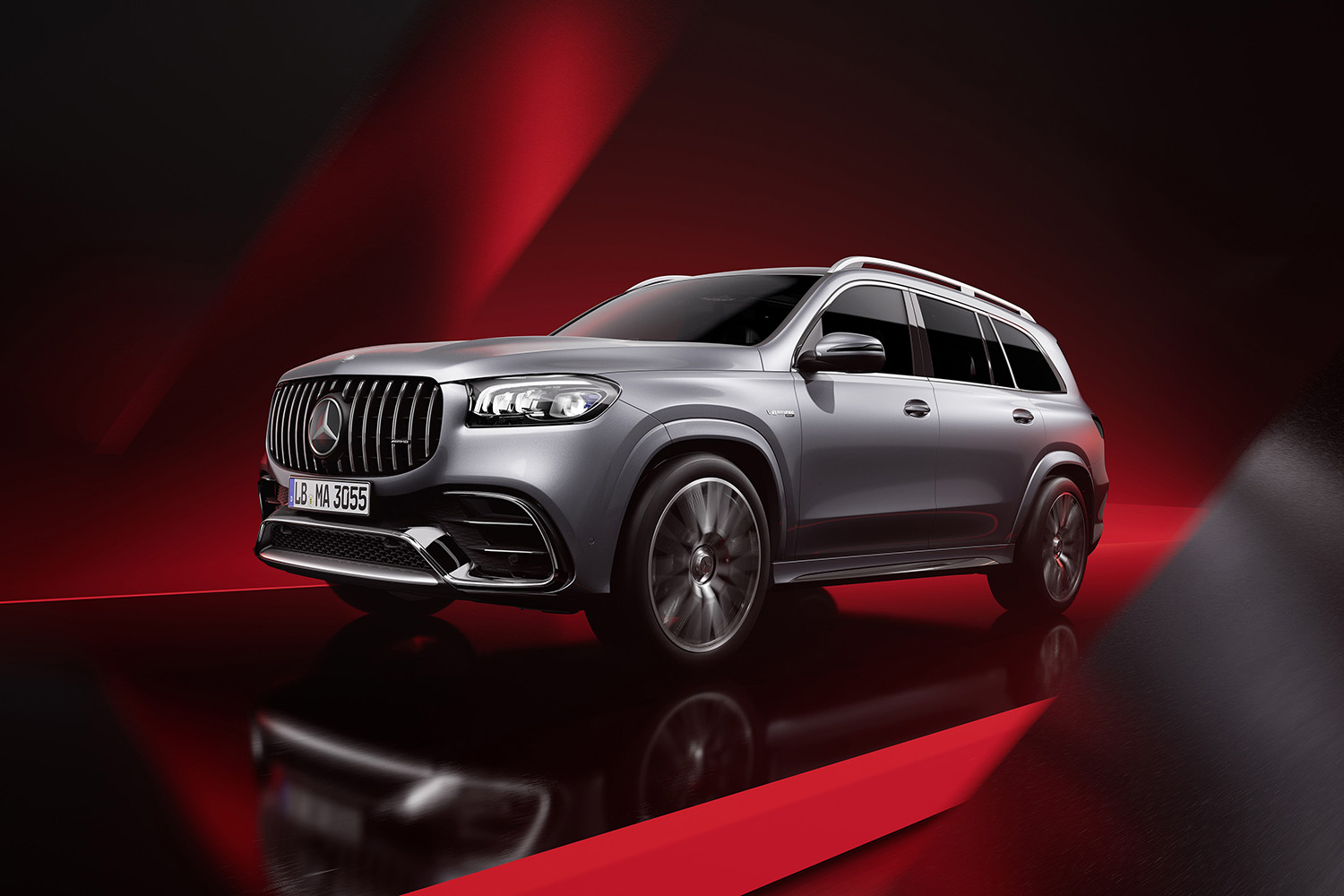
At a glance
- The GLS AMG combines flagship luxury, three-row utility and AMG road performance for premium import programmes.
- The export-relevant trims are AMG GLS 63 4MATIC and AMG GLS 63 4MATIC+, with equipment varying by generation.
- New vehicles suit straightforward preparation, while used units demand stricter inspection and documentation.
- Live unit pricing must be separated from freight, insurance, duties, taxes and local operating costs.
- Steering configuration, homologation and aftersales support should be verified before committing to stock.
Why the Mercedes-Benz Gls Amg matters for export markets
The Mercedes-Benz GLS AMG sits at the meeting point of flagship luxury, SUV utility and high-performance road-car appeal. For overseas dealers, that combination gives the model a clear role: it serves affluent private buyers who want status and space, while also attracting chauffeur, VIP-transport and premium rental customers who need a commanding vehicle rather than a sports-car compromise. Its three-row architecture and elevated seating make it more useful than many performance SUVs, while the AMG identity preserves the premium recognition that helps it stand out from other large SUVs on the road.
Export potential is strongest where imported-car buyers value large luxury SUVs and where the destination’s tax, fuel and infrastructure make a high-output petrol vehicle practical to operate. That does not make the GLS AMG universally suitable: heavy fuel taxes, congestion charges, narrow parking and emissions policy can narrow its audience. Dealers should therefore segment demand by country and use case rather than importing on the assumption that a famous AMG badge will sell quickly. Local finance, insurance and servicing costs often influence the final decision as much as the vehicle itself.
For an importer, the opportunity is strongest where aftersales can be planned before the first unit arrives. Parts sourcing, technician training and diagnostic capability should be assessed alongside body dimensions, fuel consumption and customer expectations. A vehicle may be desirable as a product but difficult to sustain if suspension, brake, electronic or trim repairs cannot be completed reasonably. Buyers should therefore compare the GLS AMG’s service requirements with their planned margin and consider the Mercedes-Benz range on ChinaCarDirect before committing to a specific unit. Independent inspection remains essential before final commitment.
- Flagship luxury, usable space
- Premium performance-SUV positioning
- Serviceability drives margin
Model range, trims and powertrain variants: how the lineup is structured and how to choose
When comparing Mercedes-Benz GLS AMG specs for export, the lineup is structured around two designations: AMG GLS 63 4MATIC and AMG GLS 63 4MATIC+. The first identifies the AMG V8 derivative with all-wheel drive, while the plus version denotes a more comprehensively equipped chassis specification on applicable vehicles. Buyers should not interpret “+” as a different energy source: both names point to a petrol-powered performance SUV. The exact equipment mix can change with model year and market, so the trim label should be verified against the VIN, build information and first-hand photographs of the unit being considered.
Choice between 4MATIC and 4MATIC+ is mainly about chassis execution and comfort rather than a simple power upgrade. Later-generation 4MATIC+ cars can incorporate active body control, rear steering and related stability hardware, whereas earlier or differently equipped 4MATIC cars may not. Those technologies can improve ride quality and handling but they add complexity for maintenance and resale. Vehicle history matters too: sensors, actuators or calibration access can be expensive to replace when unsupported locally, so the importer should compare fitted equipment, condition, service documentation and local workshop capability before choosing.
Under the bonnet, the AMG GLS 63 uses a twin-turbocharged V8, but specifications are generation-dependent. Earlier and later examples differ in engine displacement, transmission, output, calibration and equipment, and market treatment can add further variation. Buyers should request the VIN and manufacturer build sheet rather than infer them from the model badge. For fleet use, that matters because power output alone does not determine fuel cost, insurance class or resale appeal, nor does it guarantee low operating costs in the destination market under demanding fleet schedules, where predictable total-cost outcomes matter.
- Two 4MATIC chassis designations
- Petrol V8 powertrain
- VIN confirms specifications
New vs used Mercedes-Benz Gls Amg: how export inventory is structured and how buyers choose
New and used Mercedes-Benz GLS AMG exports should be treated as different buying propositions, and live inventory is most useful when separated by condition, model year, trim and specification. A new example normally offers the clearest relationship between advertised specification, condition and delivery history, which can simplify customer expectations and dealer preparation. It may, however, carry preparation or transport mileage, PDI marks, protective film, or optional-equipment differences that must be reconciled with the invoice and build sheet. A used vehicle can offer a more accessible acquisition route, but its value depends on condition, service history and remaining durability for the importing market and business model.
For a used unit, inspect more than paint and mileage. Ask for an independent condition report, underside images, tyre age and wear, cabin wear, accident indicators, fluid condition, service invoices and evidence of module or software interventions. The AMG GLS 63’s combination of large bodywork, expensive trim, advanced chassis systems and complex electronics means that cosmetic refurbishment can conceal costly issues. Buyers should also establish whether the vehicle has remained in one market, because climate, corrosion, repair standards and import history can all affect the parts and resale strategy abroad.
Selection should follow the business model. Dealers seeking a straightforward demonstrator or VIP fleet may prefer a newer vehicle with documented delivery and preparation. Experienced importers may prefer an earlier example when the acquisition strategy accounts for refurbishment, parts sourcing and warranty reserve. Age and condition rules also differ by destination, so a vehicle attractive in one country may not qualify in another. Current year, trim, mileage and condition should be taken from the live listing and verified unit by unit before a deposit is placed or freight booking is made.
- New: clearer vehicle history
- Used: inspection-led valuation
- Destination age rules apply
How export pricing works: the factors behind a live listing price, and how to read one
A live Mercedes-Benz GLS AMG export price is a transaction input, not the buyer’s final landed cost. The starting figure normally reflects the vehicle’s model year, exact trim, condition, mileage, ownership or document status, visible options and the seller’s commercial terms. It may also move with the relevant exchange rate and the supplier’s available allocation. Buyers should read every price against the unit identifier and specification, especially where several vehicles share the same model name, and should request a refreshed written quotation before relying on it for budgeting or customer offers.
Freight is another major variable. The total can change with vessel or roll-on/roll-off method, route, port charges, terminal handling, insurance, fuel surcharges, cargo preparation, destination clearance and the Incoterm selected. An ex-vehicle price, a port-to-port charge and a delivered-to-dealer quote are not interchangeable. Local import duty, value-added tax, registration taxes and emissions charges may also fall to the buyer after shipment. Model them separately so the margin remains visible and the customer is not shown a headline export figure as though it were the landed amount before committing to stock.
Use a consistent comparison sheet for every candidate: record the live unit price, currency, condition, trim, VIN, included fees, payment terms, shipping method, named Incoterm, destination charges and quote-validity period. Ask what is excluded, whether another unit is being substituted and how price changes are handled if the selected car sells. ChinaCarDirect’s live GLS AMG listings are the correct place for the current per-unit number; only a confirmed quotation should support a purchase order. This discipline prevents a tempting but incomplete listing from becoming an expensive import for the buyer.
- Unit price differs from landed cost
- Vehicle, freight and duties separated
- Written quotations confirm figures
MOQ, ordering and payment: single units vs consolidating a container
The minimum order quantity should be confirmed for the selected listing rather than inferred from a marketplace category. Some buyers can request one vehicle for evaluation or resale, while a dealer planning a wholesale programme may prefer several units to obtain better freight economics or broader customer choice. The practical question is not simply whether one unit can be ordered, but whether one-unit handling, compliance, insurance and spare-parts stocking create an acceptable total cost. ChinaCarDirect’s contact page can be used to request the applicable terms for a particular vehicle, destination and shipment mode.
Several units may be consolidated into one shipment when their specifications, document status and delivery priorities align. Consolidation can reduce the freight burden per vehicle and simplify customs work, but it also concentrates risk: one damaged or non-compliant unit can affect the group, and mixed condition grades may complicate allocation and customer pricing. Do not combine a retail-ready car with a refurbishment project merely to fill space. Agree the allocation plan, inspection standard, insurance value and treatment of discrepancies in writing before paying the balance. This matters across differing sales channels.
A sound order sequence begins with a written specification, continues through a pro forma invoice or commercial invoice, and ends with payment and release against agreed documents. Confirm the deposit structure, refundable and non-refundable portions, payment currency, bank charges, title or ownership documents, export declaration, certificate of origin if required, and the exact vehicle and VIN covered. The balance should be linked to the same unit or shipment, with a method for resolving identity, condition or document discrepancies. Never rely on a verbal assurance that a replacement vehicle will be equivalent.
- Confirm listing-specific MOQ
- Consolidate matching inventory
- Link payment to VIN
Shipping, homologation and market compliance caveats: LHD/RHD and import rules by country
Steering configuration is an early eligibility check. China’s domestic-market vehicles are commonly configured for left-hand drive, but the exact steering side, seat arrangement and equipment must be confirmed for the individual export car; right-hand-drive availability should never be assumed. A left-hand-drive vehicle can be used in some markets and converted, but conversion can be costly, affect warranty assumptions and create inspection, airbag, controls and insurance issues. Where a market strongly expects right-hand drive, start with that requirement and reject unsuitable inventory before paying or committing to freight space for the vehicle.
Homologation is market-specific rather than guaranteed by a Mercedes-Benz badge. Import rules may cover emissions, noise, vehicle age, VIN and title documents, safety equipment, lighting, customs classification, duty and tax. Used and newer vehicles can be governed differently, and a locally registered vehicle may not automatically be accepted elsewhere. Request the certificate of origin, commercial invoice, export declaration and other documents required by the buyer’s broker, then have the destination authority or customs specialist confirm acceptance before the vehicle moves. A clean listing is not proof of road legality in the destination.
Freight planning should match the vehicle and route. Complete SUV units may move by roll-on/roll-off or container, depending on carrier and port capability, and specialist carriers can manage loose vehicles. Transit duration, frequency, port congestion, weather, insurance, secure loading, discharge equipment and destination handling all affect the schedule and landed cost. Allow time for export clearance, loading, voyage, import clearance, PDI and registration rather than promising a delivery date based only on sailing time. Photograph the car at handover and record every existing defect before shipment and in the cargo file.
- Confirm steering side early
- Validate homologation first
- Include clearance, PDI and transit
Who should buy the Gls Amg — and who should pick a different vehicle
The GLS AMG is a strong candidate for dealers serving affluent family buyers, executive-transport operators, premium chauffeur fleets, hotels and VIP customers who value presence, long-distance comfort and performance in one vehicle. It is particularly useful where a buyer wants genuine three-row practicality but does not want a conventional luxury SUV with restrained road manners. For resale, the Mercedes-Benz badge and AMG specification can simplify premium positioning when the importer can support the vehicle’s running and maintenance costs. Buyers focused on efficiency or compact dimensions may prefer alternatives in their market.
It is a weaker choice for buyers whose priorities are low fuel consumption, minimal downtime, compact parking dimensions, high payload utilization or low fleet cost. The large AMG V8, premium tyres, complex chassis hardware and luxury equipment can make ownership more expensive than a conventional executive SUV. It is also not a substitute for a commercial work vehicle or a purpose-built off-road model; its strengths are road performance, cabin space and prestige. Fleet buyers should model whole-life cost rather than allocate purchase cost alone. Include insurance, servicing, tyres and downtime.
Before buying, ask whether the target customer needs the AMG driving character at all. A lower-output GLS derivative may satisfy most luxury-SUV demand more efficiently, while an electrified or plug-in-hybrid alternative may fit emissions-conscious markets better. Dealers should also consider whether a single high-value vehicle creates more parts and workshop risk than a broader, more conventional range. The best choice is not merely the fastest or most prestigious model; it is the one whose performance, space, compliance and after-sales demands match the buyer’s market and budget over the ownership period.
- Premium three-row buyers fit
- Executive and VIP use fit
- Low-cost fleets should reconsider
Main rivals and how the Gls Amg compares
The closest direct benchmark is the BMW X7 M, which competes for affluent buyers seeking a large, high-performance luxury SUV with three-row capability. The X7 M gives the buyer a different badge and BMW-specific service experience, while the GLS AMG emphasizes the Mercedes-Benz flagship presentation and the 4MATIC/4MATIC+ chassis hierarchy. Because specifications change across generations and markets, the fair comparison is between build sheets, equipment, condition and destination running costs rather than headline power figures. Dealers should test both against local customer expectations, available servicing and resale prospects.
Porsche’s Cayenne Turbo is a credible rival for buyers focused more heavily on sports-car dynamics and a lower, road-focused footprint. It can deliver a comparable premium performance experience, but its body packaging generally places less emphasis on a full three-row family layout. The Audi SQ8 is another performance-SUV alternative with quattro all-wheel drive and a high-quality cabin, yet buyers should compare seating utility, service access and exact equipment against the GLS. Neither alternative automatically offers more value; each serves a different mix of performance, space and brand preference for buyers in local markets.
The decision should be made with live customer demand, not badge appeal alone. Place the GLS AMG against the X7 M for direct family-and-executive competition, the Cayenne Turbo for driver-focused buyers, and the SQ8 for buyers who accept a more compact format. Ask whether local buyers need three rows, which performance features they can use, what fuel and insurance profile they accept, and whether the importer can support each model’s parts and diagnostics. Review the current Mercedes-Benz GLS AMG inventory, then request matched quotations for the alternatives before finalising the mix.
- BMW X7 M: closest direct rival
- Cayenne Turbo: driver-focused rival
- Audi SQ8: compact alternative
Live Mercedes-Benz Gls Amg export inventory
View all listings →Real units currently on ChinaCarDirect with per-unit asking prices and MOQ. Availability updates live from the catalogue.
How to buy a Mercedes-Benz Gls Amg from China
-
1
Set the destination and vehicle brief
Specify the country, steering side, number of vehicles, passenger capacity, condition and intended use. Choose between 4MATIC and 4MATIC+ only after reviewing the actual unit’s build sheet.
-
2
Search the live inventory
Use the live GLS AMG listing search and compare units by trim, condition, model year and visible options. Treat the displayed price as the unit-level starting point, not the landed cost.
-
3
Verify identity and condition
Request the VIN, manufacturer build sheet, current photographs, option list, service history and an independent inspection. Reconcile the listing name and every document with the exact vehicle.
-
4
Confirm destination compliance
Ask a local customs broker or the relevant authority to check steering, age, emissions, safety, title and import requirements. Obtain written confirmation before committing to freight.
-
5
Build the landed quotation
Ask for vehicle price, freight, insurance, handling, Incoterm, payment terms, quote validity and excluded destination charges. Keep customs duty and taxes visible as separate lines where applicable.
-
6
Agree MOQ and payment
Confirm the listing-specific MOQ and whether the request is for one vehicle or a consolidated wholesale shipment. Tie any deposit and balance to the exact VIN, invoice and agreed export documents.
-
7
Ship, inspect and register
Book insured transport after export clearance, record condition at loading and handover, and retain cargo documents. Complete PDI, local registration checks and warranty registration before releasing the vehicle to customers.
Gls Amg vs rivals
| BMW X7 M | The X7 M is the closest like-for-like rival for a large, high-performance three-row luxury SUV. The GLS AMG differentiates through Mercedes-Benz presentation and its 4MATIC/4MATIC+ hierarchy, while parts, servicing and resale arrangements should be compared locally. |
|---|---|
| Porsche Cayenne Turbo | The Cayenne Turbo is a more driver-focused performance SUV with less emphasis on a full three-row family package. It may suit buyers prioritising dynamics over maximum passenger space, whereas the GLS AMG better serves executive and family requirements. |
| Audi SQ8 | The SQ8 combines quattro all-wheel drive with a premium SUV format in a more compact package than the GLS. It is worth comparing for buyers who accept less third-row priority and value a different engineering and dealer ecosystem. |
Frequently asked questions
How is Mercedes-Benz GLS AMG export pricing determined?
A live price reflects the selected unit’s year, trim, condition, mileage, visible options and the seller’s commercial terms; exchange rates and allocation can also affect it. Freight, insurance, terminal handling, duties, taxes and registration are separate landed-cost items unless expressly included. Check the live GLS AMG listings for the current unit-level figure, then request a written quotation with the currency, Incoterm, included fees and validity period.
What engine and powertrain does the GLS AMG use?
The AMG GLS 63 4MATIC and 4MATIC+ are petrol-powered, twin-turbo V8 derivatives with AMG 4MATIC all-wheel drive and an automatic transmission. Earlier and later generations differ in engine displacement, output, transmission details and fitted chassis technology, so confirm the VIN and build sheet. These versions are not EVs, so battery capacity and electric range do not apply.
Should an overseas buyer choose a new or used GLS AMG?
New cars usually simplify condition and specification matching, though PDI, transport mileage and option differences still require checking. Used cars may suit buyers with a refurbishment and parts strategy, but they need independent inspection, service evidence and a full corrosion, accident and electronics review. Choose according to warranty expectations, resale plan and destination age rules rather than a blanket preference.
What is the MOQ for Mercedes-Benz GLS AMG exports?
MOQ is confirmed on the selected live listing or in the written quotation; do not infer it from a model category. A single-unit enquiry may suit evaluation, a dealer demonstrator or a low-volume importer, while a wholesale programme can consolidate multiple cars. Freight economics and compliance work per vehicle must support the chosen quantity.
How long does shipping take and what affects the cost?
Shipping time and cost depend on the vehicle’s readiness, chosen roll-on/roll-off or container service, sailing frequency, route, ports, congestion, insurance, handling and destination clearance. Export preparation, loading, transit, import clearance, PDI and registration each add time beyond the vessel schedule. Ask the freight forwarder for a door-to-door schedule that names every charge and milestone.
Can spare parts be ordered for the GLS AMG?
Spare parts should be ordered against the vehicle’s VIN, exact model year and trim because catalogue and electronic compatibility can differ. Mercedes-Benz dealers and specialist distributors may supply parts, while the importer should separately confirm availability, lead time, export documents and freight. For a new or mixed fleet purchase, ask the supplier what service consumables and electronic diagnostics are supported locally.
Is right-hand-drive availability possible?
Right-hand-drive availability cannot be assumed; confirm it on the individual live listing and build sheet before paying. Many vehicles sourced from the Chinese domestic market are left-hand drive, and converting one can affect cost, warranty, controls, inspection and insurance. If the destination requires right-hand drive and no confirmed RHD unit is suitable, select another vehicle rather than relying on a later conversion.
How do I order a Mercedes-Benz GLS AMG from China?
Start with the live Mercedes-Benz GLS AMG listings, shortlist the correct trim and condition, and send an RFQ stating destination, steering requirement, quantity and Incoterm. Ask for the VIN, build sheet, condition report, total quotation, payment schedule and required export documents before paying a deposit. Confirm the production unit, complete the agreed payment, arrange insured shipping, inspect the vehicle at handover and complete PDI and registration.
Ready to source the Mercedes-Benz Gls Amg?
Send ChinaCarDirect your target market, GLS AMG trim, condition, quantity and shipping terms for a current unit-level export quote.
Request a quote