
Mercedes-Benz Maybach S-class Export Buying Guide
Buy a Mercedes-Benz Maybach S-class from China with a practical view of trims, powertrains, export pricing, compliance, shipping and key alternatives.
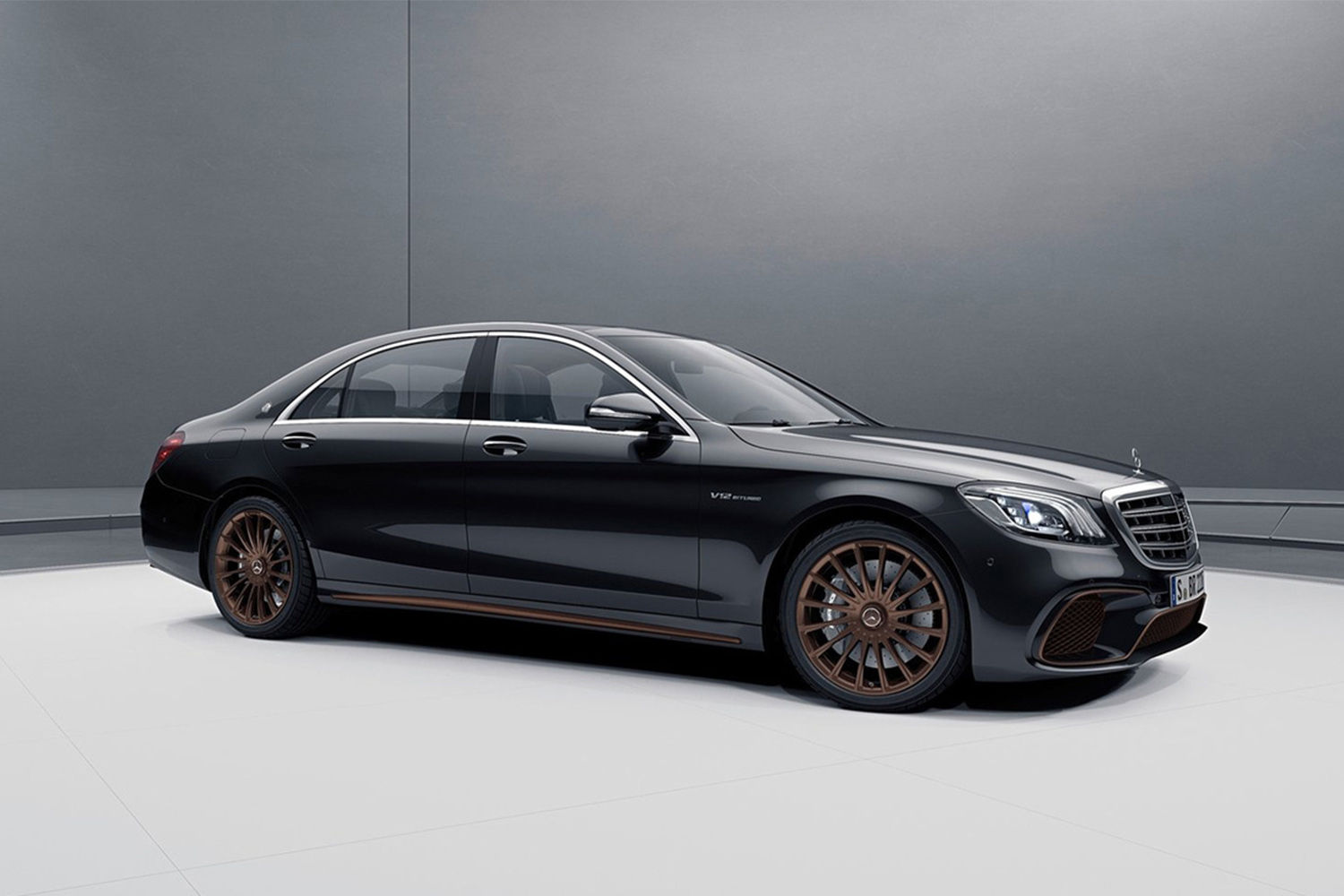
At a glance
- The Maybach S-class is the long-wheelbase, chauffeur-led interpretation of the Mercedes-Benz S-class, focused on rear-passenger comfort and prestige.
- The model family spans mild-hybrid inline-six, plug-in-hybrid and V12 applications, with exact equipment depending on trim and generation.
- The ChinaCarDirect export route for this model is structured around new-vehicle sourcing, making VIN-level specification checks essential.
- A live vehicle price must be assessed alongside the Incoterm, freight, insurance, import duty, VAT and other landed-cost factors.
- RHD availability and destination-country homologation can determine feasibility before the buyer commits to any payment.
Why the Mercedes-Benz Maybach S-class matters for export markets
The Mercedes-Benz Maybach S-class sits at the top of the full-size luxury sedan market, combining the S-class platform with a more chauffeur-focused cabin, additional rear-seat equipment and a more exclusive identity. For export buyers, it is not simply a large Mercedes sedan: the Maybach positioning, rear-passenger layout, wheelbase treatment and option packages are central to the product. That distinction matters when a vehicle is being bought for VIP transport, hotel guests or an executive household rather than ordinary fleet use. Its appeal depends less on acceleration figures than on privacy, comfort, presence and a calm rear environment.
Global demand for the model is concentrated in affluent and chauffeur-oriented markets, including business hospitality, premium mobility services, diplomatic or executive use, and high-end wedding or event fleets. For overseas buyers searching for a Mercedes-Benz Maybach S-class for export, the Maybach badge gives an immediately recognizable luxury signal, while the long wheelbase and rear cabin make the vehicle easier to position in chauffeured service than a conventional luxury saloon. Demand should not be confused with volume-market potential: regulatory, tax and parking realities can make the S-class more practical as a high-end occasional vehicle than as a mass commuter product. The final result is highly market-specific.
Before importing, a buyer should define whether the Maybach is the flagship vehicle in a small executive fleet or the main operating car of a chauffeur business. In the first case, rear-seat finish, privacy glass, rear entertainment, acoustic comfort and brand presentation may justify the premium. In the second, utilization, fuel consumption, insurance, maintenance, residual values and local workshop support become more important. A Maybach can be an excellent luxury platform, yet the operating model must be compatible with its size and luxury positioning. That assessment prevents an expensive prestige mistake and supports realistic utilization planning.
- Long-wheelbase, chauffeur-led Maybach positioning
- Rear cabin is the core luxury proposition
- Best fit: VIP, hotel and executive use
Model range, trims and powertrain variants: how the lineup is structured and how to choose
Maybach S-class nomenclature can look denser than it is. The core S 450 4MATIC, S 480 4MATIC, S 580 4MATIC, S 600 and S 680 4MATIC designations identify the main families, while labels such as Facelift, Collector’s Edition, Intelligent Premium Special Edition and Artisan High Custom Debut Edition identify generation, equipment or presentation. A facelift name does not automatically mean a different powertrain. Conversely, the same S 480 label can cover different model years, option sets and market equipment, so the VIN, build date and specification sheet are more reliable than the listing title alone.
The S 450 and S 480 use a 3.0-liter turbocharged inline-six with mild-hybrid assistance, paired with an automatic transmission and 4MATIC on the listed applications. For most buyers, the distinction between these grades is less about basic layout than equipment, output character and model-year updates. The S 580 moves into plug-in-hybrid territory, adding electric assistance and charging capability to the 3.0-liter family; battery capacity, electric range, charging rate and standard equipment vary, so those figures must be confirmed for the exact vehicle rather than inferred from the badge or a generic brochure.
The S 600 and S 680 represent the V12 side of the range, using a 6.0-liter twin-turbocharged V12, although transmission details can differ by generation. The S 680 is especially associated with formal editions and two-tone Artisan presentation, while the S 400 name seen in the catalogue can be treated as a separate entry point to verify. For fleet specification, compare rear-seat layout, office-style equipment, passenger comfort, luggage capacity and driver-assistance functions—not only engine output. A buyer who needs frequent city reversals may prefer a shorter, more manageable luxury saloon for daily chauffeur duty.
- S 450/S 480: mild-hybrid inline-six applications
- S 580: plug-in-hybrid configuration
- S 600/S 680: V12 powertrain applications
New vs used Mercedes-Benz Maybach S-class: how export inventory is structured and how buyers choose
ChinaCarDirect’s Maybach S-class catalogue is structured around new-vehicle sourcing, with each listing intended to represent a unit that can be inspected, contracted and exported rather than a generic model offer. Model names may recur across records, and visually similar vehicles can share photographs, so buyers should match every quote to a specific VIN or stock reference. Repeated titles are not proof that two records are two cars, nor should a duplicated-looking record be treated as additional availability. The live unit page and written seller confirmation should establish the identity of the vehicle being bought.
A new Maybach gives the importer the cleanest starting point for specification, warranty and condition discussions. It suits buyers fitting out a new executive fleet or building a launch vehicle, because the buyer can choose among a manageable family of listed trims and options instead of reconciling prior owners’ changes. The trade-off is that the vehicle has not yet demonstrated real-world residual demand, and depreciation begins as soon as it is registered. Treat the expected resale path, servicing arrangements and local support as part of the acquisition decision, not as afterthoughts. They should be checked before delivery.
A used Maybach can make sense where a buyer wants the same rear-cabin experience at a lower acquisition cost, particularly for hotel, rental or guest-transport use. Here, condition becomes more important than badge consistency: inspect paint and bodywork, underbody, cabin wear, seat and table mechanisms, electronics, service history, remaining manufacturer coverage and accident repair. A used vehicle imported across borders may also have a different warranty position. If a specific used S-class is required, use a specialist used-car source and obtain an independent inspection rather than assuming the new-vehicle export catalogue contains that unit.
How export pricing works: the factors behind a live listing price, and how to read one
A live export quote is built from more than the seller’s asking figure. The starting vehicle price is shaped by model year and generation, trim or edition, powertrain, drivetrain, production date, factory options, paint and interior specification, and—in the case of an S 580—battery and plug-in-hybrid configuration. For used units, mileage, condition, service history and accident history become central. Exchange-rate movements between the supplier’s currency and the buyer’s currency can also change the final commercial result. These are the variables a buyer should compare when judging whether two quotations are genuinely equivalent.
Next, establish what the quoted price includes. EXW, FOB, CIF and other Incoterms place responsibility for inland movement, export clearance, freight, insurance, import duty, VAT or sales tax and destination charges on different parties. A vehicle price can therefore look attractive while leaving substantial port, clearance, duty and last-mile costs unresolved. Ask for a written landed-cost breakdown under the intended Incoterm, and confirm which taxes are recoverable if the buyer is registered for import. The same car can produce materially different economics depending on how that calculation is structured. This distinction is especially important for fleet tenders.
When reviewing a live ChinaCarDirect listing, verify the model title, year, trim, VIN or stock reference, mileage, steering position, colour, options, seller location and whether the displayed amount is a vehicle price or a delivered quotation. Treat photos as supporting evidence rather than proof of specification. Current, binding price and availability for each unit should be taken from the live inventory, then reconfirmed in an RFQ before any deposit. Compare like with like: a newer S 480, an S 580 plug-in hybrid and a V12 S 680 cannot be judged merely by the shared Maybach and S-class name.
- Compare identical year, trim and equipment
- Confirm the governing Incoterm
- Read current per-unit live quotes
MOQ, ordering and payment: single units vs consolidating a container
MOQ should be read as a transaction condition, not a permanent property of the Maybach S-class model. Read the MOQ stated on each live listing and include it in the RFQ, because seller terms, production allocation, payment method and destination can affect whether one vehicle can be ordered separately. A single-unit purchase is operationally different from a consolidated shipment: it may use a specialist carrier or a smaller loading slot and often leaves more logistics cost per vehicle. Do not assume that a marketplace interface or repeated model title guarantees a particular purchasing route. Confirm that term in writing before relying on it.
For a wholesale programme, treat the container as a delivery system rather than a volume discount alone. Confirm that every unit has a separate VIN, agreed specification and inspection record; align colour and interior needs if the fleet must present a consistent image; and verify that the mix meets the carrier’s loading and weight requirements. Reserve each vehicle against a written contract, then coordinate inspection, export documentation, insurance and release as one schedule. Consolidation can improve freight efficiency, but it also concentrates payment, delay and damage risk across the group. Keep approvals staged against each unit’s inspection result.
A disciplined payment sequence protects both sides. Define the vehicle, Incoterm, inspection standard, documentation pack, delivery deadline and dispute process in the purchase agreement. Typical steps include a deposit after credit checks, inspection evidence before the balance, and release only against the agreed documents and payment. Verify the seller’s legal identity, title status, export eligibility and bank-account details through an independent channel. A refund or cancellation clause should address failed inspection, non-conforming configuration, delayed shipping and title issues. Never let urgency substitute for VIN-level verification, especially for a high-value vehicle before departure.
- Read MOQ on every unit page
- Use written vehicle-level contracts
- Stage payment against inspection
Shipping, homologation and market compliance caveats: LHD/RHD and import rules by country
Steering configuration is the first physical compatibility check. A vehicle described only as Maybach S-class may be left-hand drive or right-hand drive for its intended market, and the listing must be verified rather than assumed. China-origin availability does not by itself guarantee an RHD example. Importing an LHD car into an RHD market can be lawful in some jurisdictions but may affect insurance, ergonomics, parts identification and resale. Conversely, a conversion after build can affect homologation, warranty and component consistency. Secure the steering side in the purchase specification before shipment. It is not a minor detail.
Import rules are determined by the destination country, not by the vehicle’s origin or the fact that it is sold through an export marketplace. The importer of record must check VIN and title documentation, customs classification, age restrictions, emissions, safety, radio, software and cybersecurity requirements, and the treatment of driver-assistance features. Local type approval or individual registration may apply, depending on the market and whether the vehicle was built for export. Some Chinese-market cars may also differ in equipment, voltage or software from the version sold locally. Treat approval as a condition precedent, not paperwork to resolve after arrival.
Logistics planning should match the vehicle’s value and condition. Luxury cars are commonly moved in enclosed carriers or secure containers, with loading supervision, lashing, shock protection, moisture control and delivery inspection forming part of the shipment plan. Freight cost depends on origin and destination ports, route, carrier space, season, container or vessel type, insurance and handling. The cost also changes with the Incoterm and whether the carrier handles customs. Request cargo coverage suited to the vehicle’s value, document every handover and photograph condition at loading, port release and final delivery at each stage.
Who should buy the Maybach S-class — and who should pick a different vehicle
The Maybach S-class is most persuasive for a buyer who values the rear passenger’s experience as much as the driver’s car. It fits VIP chauffeur operations, luxury hotel transfers, executive guest programs, high-end rental fleets and households wanting a distinctive flagship with a spacious rear cabin. Its long body, formal roofline and Maybach-specific comfort equipment create a clear use case that a standard executive sedan may not fill. For these users, a coherent Maybach identity, quiet ride and effortless passenger access can justify the vehicle’s complexity and operating footprint. It fits a premium brief when rear space is central.
For a business buyer, the case should be tested against utilization rather than image alone. High daily mileage increases fuel, maintenance, depreciation and downtime exposure, while a lower-volume chauffeur operation can spread fixed costs across fewer vehicles but still needs predictable demand. Compare insurance classification, local technician access, parts lead times, tire and brake service, residual-value assumptions and the cost of providing an equivalent customer experience in a less exotic vehicle. The right Maybach is the one whose benefits are monetizable or strategically important to the operator. Fleet buyers should also model downtime and disposal costs.
Choose a different vehicle when the priority is lowest purchase and operating cost, high cargo volume, easy urban parking, sustained high utilization or an all-electric fleet with no provision for combustion power. A regular Mercedes-Benz S-Class may deliver much of the comfort and technology at a lower ownership burden; an Audi A8 or BMW 7 Series can serve a conventional luxury-sedan brief; a Bentley Flying Spur or Rolls-Royce Ghost may better suit buyers prioritizing another luxury marque’s identity. Do not choose a Maybach merely because it is the most luxurious name in the room. Match the badge to the business case, not the other way around.
- Best for VIP and chauffeur operations
- Weak fit for high-utilization fleets
- Compare regular S-Class economics
Main rivals and how the Maybach S-class compares
The closest external comparison for a full-size Maybach is usually the Bentley Flying Spur, which competes for the same wealthy chauffeur, executive and private-client buyer with a handcrafted British luxury identity. The Flying Spur offers a comparable four-door, rear-passenger focus, but buyers should compare actual seating, rear amenities, luggage space, service arrangements and local brand acceptance. The Maybach benefits from direct access to Mercedes-Benz engineering and a more technology-forward interface, while Bentley emphasizes traditional craftsmanship. Neither is automatically the better operating asset. Test both against the same use case and budget.
At the top of the luxury hierarchy, the Rolls-Royce Ghost competes on immense rear space, hand-finished presentation and brand prestige, with electric and combustion variants depending on market. Its visual impact and rear lounge are powerful alternatives for ceremonial buyers, but ownership implications can differ significantly from a Maybach. The regular Mercedes-Benz S-Class is the more pragmatic internal benchmark: closely related in engineering character, easier to place in mixed fleets and generally positioned below Maybach exclusivity. Buyers should compare total operating requirements rather than assuming the most exclusive badge gives the lowest cost. A test drive can expose differences.
For an export decision, build the comparison around the same destination, steering side, passenger capacity, luggage requirement, charging need if selecting an S 580, service support and delivery terms. Compare base vehicle documents separately from optional Maybach packages, because visually similar cars can carry different equipment. Then weigh acquisition logic, expected utilization, maintenance access and residual demand in the destination market. The Maybach S-class is strongest when the rear cabin and Mercedes-Maybach identity are central requirements; if they are not, a conventional S-Class or another rival will usually offer a clearer business case. Use that framework before requesting quotes.
- Bentley Flying Spur: handcrafted alternative
- Rolls-Royce Ghost: formal rear-space benchmark
- Mercedes-Benz S-Class: pragmatic internal benchmark
Live Mercedes-Benz Maybach S-class export inventory
View all listings →Real units currently on ChinaCarDirect with per-unit asking prices and MOQ. Availability updates live from the catalogue.
How to buy a Mercedes-Benz Maybach S-class from China
-
1
Define the operating brief
Before buying a Mercedes-Benz Maybach S-class from China, decide whether the priority is an S 480-style luxury sedan, an S 580 plug-in hybrid or a V12 S 600/S 680. Include passenger capacity, rear-office equipment, luggage, charging and expected daily utilization.
-
2
Select a VIN-level listing
Use the live Maybach S-class inventory and match the year, trim, steering side, colour and options to your brief. Treat repeated model names or photographs as insufficient identification and request the specific stock reference and VIN.
-
3
Request a landed-cost quotation
Send an RFQ with the destination, preferred port, Incoterm, currency and required delivery date. Ask for a written breakdown showing the vehicle price, freight, insurance, export charges, duty, VAT and other exclusions.
-
4
Verify identity and specification
Confirm the VIN, build date, engine, gearbox, drivetrain and installed options against the seller’s documents and photographs. For an S 580, obtain the exact battery, charging and certified electric-range information rather than relying on a generic description.
-
5
Clear destination compliance
Work with the importer of record to check registration, customs, emissions, safety, software, radio and driver-assistance requirements. Obtain confirmation that the specific steering configuration and vehicle specification are acceptable before final payment.
-
6
Inspect and structure payment
Use an independent pre-shipment inspection covering bodywork, paint, cabin, mechanical items, electronics and option equipment. Define the deposit, balance, inspection threshold, document pack and remedies for a non-conforming vehicle in the purchase agreement.
-
7
Plan freight and handover
Specify an enclosed carrier or secure container, suitable cargo insurance, loading supervision and condition records. Photograph the Maybach at loading, customs release and final delivery, then complete payment and document handover against the agreed checklist.
Maybach S-class vs rivals
| Bentley Flying Spur | A handcrafted British alternative for the same chauffeur and private-client buyer, with a comparable focus on rear-passenger comfort. The Maybach generally emphasizes Mercedes-Benz technology and interface familiarity, while Bentley places greater emphasis on traditional materials and craftsmanship. |
|---|---|
| Rolls-Royce Ghost | A highly formal alternative with a strong rear-lounge identity and substantial prestige appeal. It suits ceremonial buyers particularly well, but local service, ownership and resale considerations should be compared with the Maybach’s operating requirements. |
| Mercedes-Benz S-Class | The most relevant internal benchmark, offering closely related comfort and technology with lower ownership complexity. The Maybach adds exclusivity, additional rear-cabin equipment and a more chauffeur-focused identity, which matters most when passengers are the primary beneficiaries. |
Frequently asked questions
How is the export price of a Mercedes-Benz Maybach S-class determined?
The vehicle price reflects model year, trim, powertrain, options, condition and exchange-rate movements, while freight, insurance, duties, taxes and handling depend on the Incoterm and destination. Current per-unit prices are shown in the live ChinaCarDirect inventory. Buyers should request a binding vehicle-specific RFQ before placing a deposit.
Which engine and electric-range options are available?
The S 450 and S 480 use mild-hybrid 3.0-liter turbocharged inline-six applications, the S 580 is a plug-in hybrid, and the S 600 and S 680 use a 6.0-liter twin-turbocharged V12. An S 580’s battery capacity, charging rate and certified electric range vary, so the live listing must be checked. The other versions are not battery-electric models.
Should I buy a new or used Mercedes-Benz Maybach S-class?
New sourcing is generally easier to reconcile because specification, condition and warranty discussions begin from a documented baseline. A used example may reduce acquisition cost, but it requires detailed inspection of condition, service history, accident repair and warranty transfer. ChinaCarDirect’s Maybach route is structured around new-vehicle sourcing rather than a used-car condition report.
What is the MOQ for buying a Maybach S-class from China?
MOQ is a transaction-level term and should be confirmed on the individual live listing and in the RFQ. A single-unit order and a consolidated container order have different logistics and payment arrangements. Do not assume a universal MOQ from the model name or from another seller’s quotation.
How long does shipping take and what does it cost?
Transit time and cost depend on the origin and destination ports, route, carrier space, season, vehicle type, insurance, handling and the selected Incoterm. A vehicle-specific freight quote should state the planned loading, departure, arrival and customs milestones. These variables must be confirmed for each shipment rather than assumed from the vehicle listing.
Are spare parts available for an exported Maybach S-class?
Parts can be ordered against the vehicle VIN, but availability and lead time depend on the exact model, generation and regional Mercedes-Benz support structure. Buyers should use an authorized or traceable parts channel and confirm serial-number matching before shipment. Counterfeit, remanufactured and used components should be clearly distinguished in any quotation.
Is a right-hand-drive Mercedes-Benz Maybach S-class available?
RHD availability cannot be assumed for every China-origin Maybach and must be confirmed for the individual unit and destination. The steering configuration should appear in the VIN-level specification and purchase contract. Converting an LHD vehicle after build can create additional homologation, warranty, insurance and resale issues.
How do I order a Mercedes-Benz Maybach S-class from China?
Start with the live inventory, select a specific vehicle and request a vehicle-level RFQ stating the destination, trim, steering side and Incoterm. Verify the VIN, documents, destination approval and inspection requirements before final payment. After the agreed payment stage, coordinate export clearance, insured freight, handover and the complete document pack.
Ready to source the Mercedes-Benz Maybach S-class?
Send a Maybach S-class RFQ with your destination, trim, steering side and Incoterm to request a vehicle-specific export quote.
Request a quote