
Mercedes-Benz R-Class Export Buying Guide
Buy a Mercedes-Benz R-Class from China with confidence: compare trims, engine options, live export pricing factors, MOQ, shipping and market compliance.
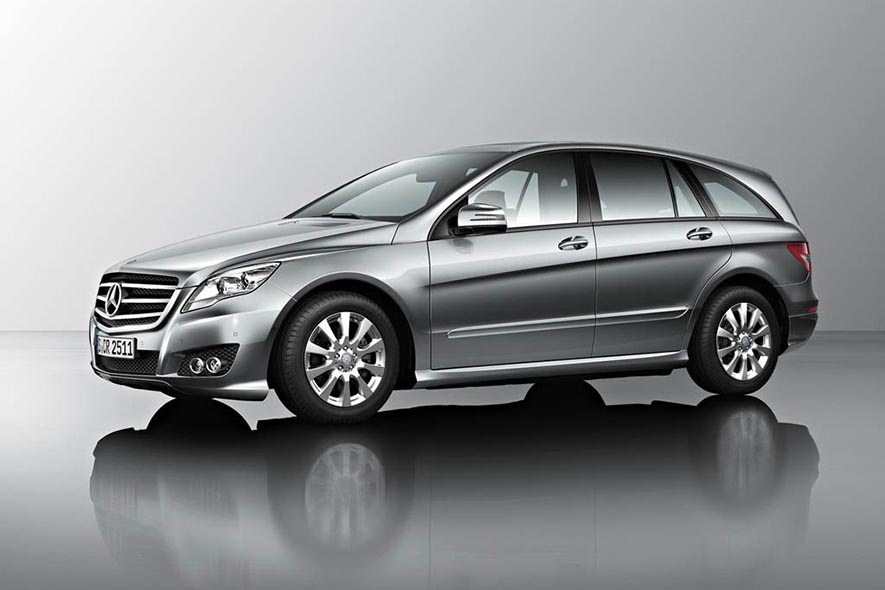
At a glance
- The R-Class blends MPV-like passenger flexibility with crossover styling, making it relevant to family, executive-transport and fleet buyers.
- Short- and long-wheelbase variants, business trims and selected 4MATIC versions serve different commercial needs.
- Exact engine, seating, condition and equipment must be verified for the VIN because trim naming varies by year and market.
- Newer vehicles usually simplify warranty and cosmetic reconciliation, while used cars can lower acquisition cost but need deeper inspection.
- Export buyers should compare landed cost and destination compliance, then use live listings for current per-unit pricing, MOQ and availability.
Why the Mercedes-Benz R-class matters for export markets
The Mercedes-Benz R-Class occupies an unusual position between a large family MPV and a luxury crossover. Its tall, practical body offers the loading access and flexible seating associated with an MPV, while SUV cues and available 4MATIC drivetrain give it a more robust road presence. That combination makes it relevant to overseas dealers serving families, executive transport operators and buyers who prioritize passenger utility over sports-car handling or off-road specialization. For export planning, however, its value should be judged by local rules, serviceability and configuration rather than by the broad R-Class label alone.
The R-Class is most relevant to export markets where buyers need a single vehicle to cover several roles: daily family transport, group travel, hotel or business movements, and occasional rough-road access. The R-Class can appeal in such markets because it offers more passenger and luggage flexibility than a conventional five-seat crossover, while retaining an image and all-weather traction proposition closer to an SUV. Dealers should still test demand against locally popular MPVs and premium SUVs, because familiarity with the unusual body format can narrow the buyer pool and affect resale speed in each target country.
For an export buyer, the R-Class matters most when its packaging solves a measurable operating need. A chauffeur company may prioritize a third row and easy access, while an airport-transfer fleet may value luggage capacity and durable 4MATIC availability. The business-oriented trims also indicate that this vehicle was sold for executive and fleet use, not only private family transport. The decisive questions are therefore seat layout, comfort equipment, service history and total ownership suitability in the destination country, rather than badge appeal alone or the lowest headline quotation for the importer.
- Best for family, executive and passenger fleets.
- MPV packaging with crossover cues and 4MATIC.
- Confirm local demand and service support.
Model range, trims and powertrain variants: how the lineup is structured and how to choose
The R-Class line-up is structured around body length, engine grade and equipment tier. Visible variants include the long-wheelbase R 300 L, R 350 L and R 500 L, while R 320 and R 400 names identify other engine positions in the hierarchy. Business, Luxury, Collector’s Edition and Grand Edition labels mainly describe equipment and presentation packages. Because trim naming changed between production years and markets, a buyer should never infer a precise engine, output or standard from the marketing badge alone. The VIN and build sheet should control the final comparison.
Among the identifiable configurations, R 320 4MATIC Business and Collector’s Edition trims form the practical core for fleet and dealer buyers: the badge points to all-wheel drive and business-focused equipment, but not necessarily to identical condition or content across individual cars. R 350 L and R 500 L long-wheelbase versions can be more attractive where third-row space or a higher-grade powertrain is required. R 400 models occupy a different performance and equipment tier. Buyers should compare verified engine output, transmission, seat count and condition rather than treating the trim name as a complete specification.
A sound selection process starts with the buyer’s operating scenario. A family importer may choose the shortest practical body that still provides required seats, while a hotel or executive fleet may prefer a long-wheelbase model for luggage and passenger separation. Next, match petrol or diesel availability, servicing capability and expected annual mileage to local fuel and maintenance economics. Finally, compare equipment against running cost: 4MATIC can improve traction confidence, but tyre, insurance and repair exposure should be considered before treating it as the default choice for every destination market and route.
- Body length determines space and parking.
- Edition labels need item-level verification.
- Match fuel to mileage and service access.
New vs used Mercedes-Benz R-class: how export inventory is structured and how buyers choose
Export supply can include new vehicles, nearly new stock, demonstration units and previously registered vehicles, so the commercial label must be read alongside production date, registration status and mileage. A “new” listing should not automatically be treated as current-year stock, while a used vehicle may have a very low reading but still require mechanical scrutiny. Buyers should ask for the first-registration date, VIN, odometer evidence and the seller’s definition of condition. That prevents a nominal new-versus-used decision from hiding the more important variables of age, wear and warranty status, residual value and expected service life.
New or newer examples are generally easier to reconcile with warranty, accessories, paint and trim expectations, especially for a fleet buyer standardizing several vehicles. Their disadvantages can include higher acquisition outlay, initial depreciation and possible PDI or delivery charges. Used R-Class units can offer lower entry cost and broader availability of older business trims, but buyers should budget for ageing suspension, tyres, brakes, electrical systems and maintenance. The economic choice depends on the vehicle’s remaining service life, not only the purchase line after freight, tax and operating costs are included.
For used vehicles, an independent inspection should cover engine cold start, fluid condition, service history, accident repair, underbody corrosion, tyre date codes, road-test behavior and diagnostic scan. Compare the inspection with the vehicle’s age and mileage rather than accepting a generic “excellent” description. For a newer or new unit, verify that no dealer preparation, cosmetic damage, or prior use has been concealed, and confirm whether the stated warranty is manufacturer, dealer or seller-provided. In either case, title and import documents should be checked before the balance payment or cargo release.
- Verify date, VIN, mileage and condition.
- Used cars need independent inspection.
- Verify who provides warranty coverage.
How export pricing works: the factors behind a live listing price, and how to read one
Export pricing is not a fixed market price for the R-Class badge. It moves with production year, exact trim, engine, drivetrain, mileage, condition, ownership history, optional equipment and the seller’s commercial terms. Exchange-rate movements and transport costs also affect the final figure. A live listing is therefore the correct starting point for the vehicle being considered, but the displayed amount should not be mistaken for a guaranteed landed cost until the buyer confirms what is included and which Incoterm applies. Freight, insurance, duty, tax and port charges may sit outside it.
When reading a live R-Class listing, compare the VIN and trim against the photographs, then verify mileage, condition grade, paint, interior wear, tyres and included equipment. Check whether the seller is a dealer or private party, what warranty is stated, whether the vehicle is exportable, and how many documents are ready. Ask for an itemized written quotation that identifies the vehicle price, inland transport, export handling, freight basis, insurance, payment charges and any destination taxes the seller will collect. This creates an auditable comparison rather than a misleading headline-price comparison.
The most useful export-price comparison is total acquisition cost under a common Incoterm. Buyers should model vehicle cost, inland movement, port or terminal charges, ocean or roll-on/roll-off freight, marine insurance, customs value, import duty, VAT or sales tax, registration and local delivery. Where possible, compare more than one Incoterm because responsibility for cost and risk changes at a specific port or point. Treat a lower vehicle figure as attractive only after the same freight, insurance, tax and compliance assumptions have been applied to every shortlisted vehicle and every quoted destination. Use the live R-Class listings on ChinaCarDirect for current, binding per-unit prices, MOQs and availability.
- Compare like-for-like vehicles and Incoterms.
- Request an itemized written quote.
- Model total landed cost.
MOQ, ordering and payment: single units vs consolidating a container
MOQ is the smallest order a seller will accept, not a permanent rule for the R-Class or the marketplace. Some unit-based sellers will release one vehicle because each listing is independently priced; others may apply a commercial minimum or require a larger allocation for certain discounts. Buyers should read the MOQ field on the live unit, ask whether it applies to mixed trims, and confirm whether one unit can be combined with spare parts or another listing. Never infer availability or a negotiated discount from the presence of a quantity field alone.
A sound order starts with a VIN-specific specification sheet, followed by a signed commercial order and a written inspection and acceptance standard. Confirm the vehicle identity again before production, dispatch or payment milestones. A common sequence is deposit, pre-shipment inspection, balance against documents, release for export, then final settlement, but the exact sequence is contractual and can differ for used vehicles. Ask what happens if the inspection reveals damage, the documentation is incomplete, the vessel booking changes or the buyer cancels. Those contingencies matter more than the headline payment percentage.
For Mercedes-Benz R-class wholesale purchasing, consolidating several R-Class units can improve freight planning and may create more negotiating leverage, but it should not be treated as automatically cheaper. Grouping vehicles adds loading coordination, damage exposure, allocation risk and a need to match similar colors, trims and delivery deadlines. Ask the forwarder to state whether the quotation assumes containerized or roll-on/roll-off handling, how units are secured, and what happens if one vehicle is rejected. For a first purchase, buying one clearly specified vehicle can be simpler to control; for a repeat fleet program, written allocation and inspection protocols become more valuable.
- Read MOQ on every live listing.
- Use a VIN-specific signed order.
- Compare freight methods on equal assumptions.
Shipping, homologation and market compliance caveats: LHD/RHD and import rules by country
Vehicle freight normally involves moving the R-Class by roll-on/roll-off vessel or, where suitable and permitted, containerized transport. The route, port pair, vessel space, terminal handling, cargo dimensions and insurance all affect cost and lead time. Heavy or long-wheelbase variants can influence slot and carrier choices, while weather, congestion, documentation holds and transshipment add uncertainty. Treat any transit estimate as a planning range rather than a promise, and require the booking, cut-off dates and latest shipping documents in the contract and clarify who bears demurrage, storage and customs delay costs.
Before choosing a specific car, establish the destination’s steering and homologation requirements. A left-hand-drive vehicle is not automatically suitable for a right-hand-drive market, and changing steering architecture is not a routine export fix. Imported examples may need approval for lighting, emissions, noise, safety equipment, software, radio or local type approval, depending on the age of the vehicle and the rules of the importing country. The importer—not the overseas buyer—should confirm the homologation route and any conversion or inspection requirement before funds are released, with the competent authority or an approved inspector.
Import rules may also depend on vehicle age, emissions category, engine fuel, ownership documents and whether the car is treated as used. Buyers should ask the broker to review the VIN, customs value, HS classification, duty and tax treatment, documentary requirements and any age or emissions restrictions. Check that the seller can provide the original invoice, registration or import history, keys, service records and export documents without inconsistencies. Local registration, insurance, emissions testing and roadworthiness rules remain the importer’s responsibility and should be budgeted before the vehicle is committed onward.
- Confirm steering configuration before selecting a VIN.
- Importer verifies homologation and customs.
- Document forwarder cut-offs and delay charges.
Who should buy the R-class — and who should pick a different vehicle
The R-class is a strong candidate for an importer or dealer whose customers need a premium, spacious vehicle that can operate on-road in several seasons or rough-surface conditions. It is especially relevant to family buyers, chauffeur services, hotels, airport transfers and executive transport where passengers are frequent but off-road ability is secondary. The long-wheelbase options can suit buyers who regularly carry six or seven occupants, while shorter versions may be easier to manage in urban streets. A 4MATIC unit adds appeal where wet roads, snow or variable surfaces are common.
It is less suitable for buyers who require a true body-on-frame off-roader, a compact vehicle with low operating costs, or a battery-electric fleet with zero tailpipe emissions. The R-Class can be large and costly to fuel, insure and park relative to a compact MPV or midsize SUV. Its unconventional design may also narrow resale demand where locally popular brands dominate. Dealers should model annual mileage, fuel consumption, tyre costs, parts lead times and residual value before adding it to a mainstream sales plan or relying on a strong residual-value assumption.
A short test-drive and ownership-cost comparison can reveal whether the R-Class fits better than a conventional SUV or MPV. Evaluate ingress, third-row access, luggage retention, visibility, ride comfort, braking confidence and parking over the routes the vehicle will actually cover. For fleet use, compare payload, maintenance intervals, downtime and driver comfort; for private use, compare family acceptance of the styling and likely resale support. The strongest purchase is the one whose packaging advantage survives local operating conditions and whose service economics remain sustainable after tax, insurance and planned maintenance are included.
- Best for passenger-heavy fleets and 4MATIC users.
- Weak fit for compact, off-road or EV needs.
- Test space, parking and running costs.
Main rivals and how the R-class compares
The Mercedes-Benz GLK-Class is the closest alternative for a buyer who likes the marque and wants a more conventional SUV shape. The R-Class generally emphasizes passenger space, flexible seating and a lower, more MPV-like profile, whereas the GLK presents a boxier SUV stance and is easier to position as a rugged-looking luxury crossover. Model year, condition and local aftersales support can outweigh this distinction. Compare a shortlisted R-Class directly with a GLK of similar age, mileage and equipment so the buyer compares packaging, availability and landed cost rather than badges.
The Volvo XC90 is a credible rival for buyers who want a true seven-seat luxury SUV and strong family-car recognition. It gives the R-Class a more upright, road-focused alternative with a conventional SUV footprint, while the Mercedes can offer a more distinctive profile and executive-car presence. XC90 buyers should compare diesel or petrol options, rear-seat usability, safety and after-sales support in their market with the exact R-Class configuration. Neither brand’s badge substitutes for a local test of space and visibility or a complete assessment of ownership cost after import.
The BMW X5 competes more from the premium-road-SUV side than from the people-carrier side. It may suit a buyer focused on prestige, driver engagement and a conventional SUV silhouette, while the R-Class should win when flexible passenger accommodation and accessible rear rows matter more. The R-Class can look unusual beside the X5, and specialist support or resale liquidity may differ by country. The correct comparison is a same-condition, same-cost example with identical seating, equipment and route requirements before committing to either model or a multi-unit import program in that market.
- GLK-Class: closest Mercedes alternative.
- Volvo XC90: conventional seven-seat SUV rival.
- BMW X5: driver-focused premium alternative.
Live Mercedes-Benz R-class export inventory
View all listings →Real units currently on ChinaCarDirect with per-unit asking prices and MOQ. Availability updates live from the catalogue.
Mercedes-Benz Mercedes-Benz R-Class 2017 R 320 4MATIC Business Collector's Edition
Mercedes-Benz Mercedes-Benz R-Class 2017 R 320 4MATIC Business Collector's Edition
Mercedes-Benz Mercedes-Benz R-Class 2017 R 320 4MATIC Business Collector's Edition
How to buy a Mercedes-Benz R-class from China
-
1
Set the destination and use case
Define the destination country, steering requirement, passenger count, luggage needs, routes and expected annual mileage before selecting a body or trim.
-
2
Build a VIN-level shortlist
Review the live R-Class listings and compare the VIN, year, trim, engine, drivetrain, seating, equipment, mileage and seller type for each shortlisted vehicle.
-
3
Request an itemized export quotation
Ask for a written, VIN-specific quote separating vehicle price, inland transport, export handling, freight, insurance, payment charges, duties, taxes and the applicable Incoterm.
-
4
Inspect and verify documents
Use an independent inspection for a used vehicle and reconcile the VIN, service records, ownership documents, keys, condition report and advertised equipment before payment.
-
5
Clear compliance before dispatch
Have the destination importer confirm LHD/RHD suitability, homologation, customs classification, age and emissions rules, registration requirements and likely charges.
-
6
Lock MOQ and payment terms
Confirm the seller’s MOQ, mixed-model eligibility, deposit, balance trigger, inspection standard, cancellation terms and refund conditions in a signed order.
-
7
Approve shipping and release
Review the carrier, route, loading method, cut-off dates, insurance, document schedule and delay responsibility before authorizing export and final settlement.
R-class vs rivals
| Mercedes-Benz GLK-Class | The GLK-Class is the closest Mercedes alternative for a similar buyer, offering a more upright and recognizable SUV shape. Choose the R-Class when passenger flexibility and MPV-like access matter more than conventional SUV styling. |
|---|---|
| Volvo XC90 | The XC90 is a strong choice for buyers seeking a conventional seven-seat luxury SUV with a well-established family-car profile. The R-Class provides a more distinctive executive-car character and flexible passenger-focused packaging. |
| BMW X5 | The X5 competes through prestige, road-focused SUV dynamics and a conventional silhouette. The R-Class is generally the better fit when frequent multi-passenger use and accessible rear seating outweigh driver-focused priorities. |
Frequently asked questions
How is Mercedes-Benz R-class export pricing determined?
Each live unit is priced against year, trim, engine, drivetrain, mileage, condition, options, seller terms, exchange rates and logistics. The visible figure may or may not include inland transport, export handling, freight, insurance, duties and local charges, so request an itemized quotation under a named Incoterm. Current binding per-unit prices and MOQs are shown in the live R-Class listings on ChinaCarDirect.
What engine and driving range should an overseas buyer expect?
The R-Class is an internal-combustion vehicle, not an EV; petrol and diesel versions exist, and trim names such as R 320, R 350, R 400 and R 500 generally indicate different engine grades. Exact displacement, output, fuel consumption and driving range depend on the selected unit, condition and market. Ask for the VIN, engine specification and fuel-tank information in the live listing rather than assuming one range figure.
Should I buy a new or used Mercedes-Benz R-class?
Newer vehicles generally make warranty, paint and trim reconciliation easier, but they can carry higher acquisition cost and immediate depreciation. Used Mercedes-Benz R-class vehicles may cost less to acquire and suit buyers comfortable with older specifications, yet they require closer inspection of wear, corrosion, mechanical condition and service records. Compare remaining service life and destination operating costs, not simply the condition label.
How does MOQ work for R-class purchases?
MOQ is set by the seller and shown for the individual listing; it is not a universal R-Class rule. A unit-based seller may accept one vehicle, while another may impose a minimum for a particular allocation or discount. Confirm the quantity, whether mixed trims qualify, and whether the MOQ covers vehicles only or also spare parts.
What determines R-class shipping time and cost?
Shipping time depends on origin and destination ports, vessel schedules, transshipment, customs clearance, weather and terminal congestion. Cost depends on the route, vehicle dimensions, roll-on/roll-off or container handling, fuel surcharges, insurance and delay charges. Ask the forwarder for a written routing plan, cut-off dates and a cost breakdown rather than relying on a generic transit estimate.
How should I source spare parts for an exported R-class?
Order spare parts using the VIN, build date and market specification because components can differ by engine, production year and steering configuration. Confirm the supplier, catalogue reference, lead time and cross-border shipping cost before ordering. For a China-sourced vehicle, also check that the seller can support the correct parts family and provide diagnostic or maintenance guidance.
Is right-hand-drive R-class availability guaranteed?
Right-hand-drive availability must be verified for each live listing; the R-Class model name does not guarantee a steering configuration suitable for every market. Changing from left- to right-hand drive is not a routine export fix and may affect homologation, cost and residual value. Give the destination country and required steering side in the RFQ before committing funds.
How do I order a Mercedes-Benz R-class from China?
Start with the live R-Class listings, select a VIN, and request a written quotation, inspection standard, MOQ and payment schedule. After document and compliance checks, approve a signed order and pay only against agreed milestones. The RFQ team can then coordinate the unit-specific quotation, export handling and shipping plan.
Ready to source the Mercedes-Benz R-class?
Send the chosen VIN, destination port, trim and seat requirements through the RFQ form for a unit-specific export quotation.
Request a quote