
Mercedes-Benz S-Class AMG Export Buying Guide
Buy a Mercedes-Benz S-Class AMG from China with confidence: compare trims, powertrains, pricing logic, MOQ, shipping, compliance and key rivals.
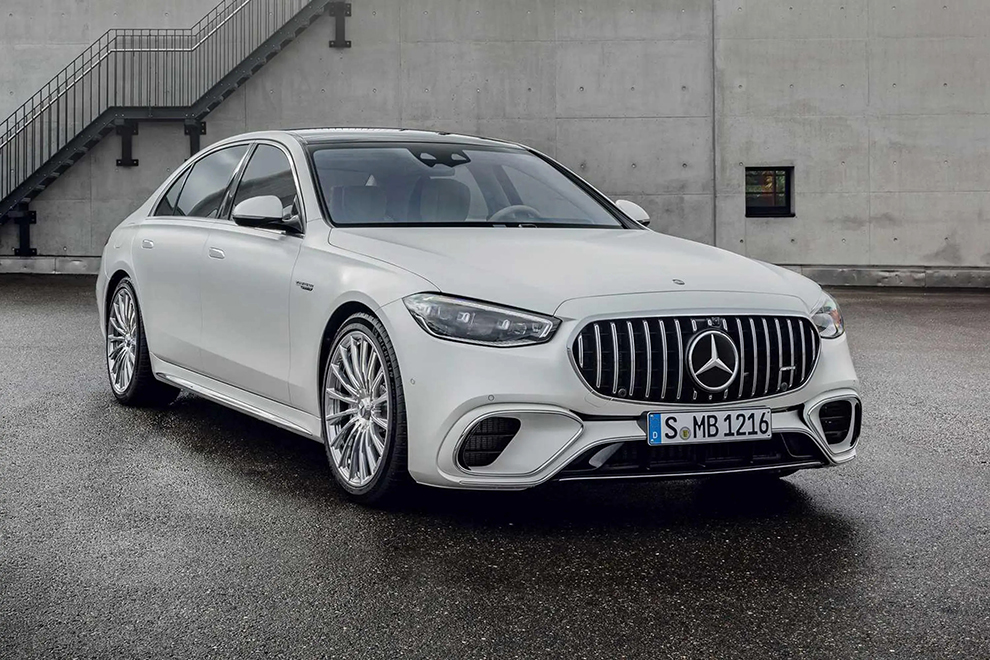
At a glance
- The S-Class AMG combines full-size S-Class luxury with AMG performance, making it a premium export niche rather than a mainstream fleet model.
- The structure spans S 63 V8, S 65 V12 and S 63 L E Performance variants, including saloon, long-wheelbase and coupé configurations.
- The S 63 is the broader high-performance choice, the S 65 is a specialist halo model, and E Performance adds plug-in-hybrid capability.
- Live export quotes depend on trim, age, condition, options, exchange rates, freight and Incoterm, so compare the complete landed scope.
- Confirm steering side, homologation, parts support and per-listing MOQ before paying, then use the live listing for current binding terms.
Why the Mercedes-Benz S-class Amg matters for export markets
The Mercedes-Benz S-Class AMG occupies a distinctive place in the full-size luxury market: it combines the S-Class’s executive-car presence with AMG performance hardware and styling. For overseas dealers, that combination supports a premium, image-led proposition rather than a volume-car programme. Buyers can address executives, VIP transport operators, hospitality clients and enthusiasts who want a fast four-door or coupé without moving down to a specialist supercar. The model’s scale also makes it relevant to buyers who prioritize cabin comfort, discreet branding and long-distance usability as much as outright acceleration, while its performance credentials help it compete against other high-output luxury flagships.
Global demand for the S-Class AMG is strongest where premium German sedans and coupés already have established service networks and a sizeable affluent buyer base. That matters because the vehicle is not simply a product to resell: parts, technicians, insurance and residual-value support influence whether an importer can operate it profitably. The S 63, with its V8 character, is generally the more versatile S-Class AMG expression; the S 65 occupies a rarer V12 niche, while the E Performance derivative adds a different powertrain proposition in practice. Service access is part of product value.
Export buyers should therefore treat the S-Class AMG as a carefully matched product rather than a generic S-Class shipment. A useful first brief should record the body style, wheelbase, drivetrain, powertrain, steering side, destination market and service capability in writing before comparing individual units. Buyers who need broader customer appeal may find the S 63 easier to position; collectors or halo-car dealers may intentionally seek the S 65. The strongest case comes when the importer can support the vehicle’s premium service requirements and target customers who value performance as well as comfort, with dependable local support.
- V8-led S 63.
- V12 S 65 halo model.
- Plug-in-hybrid E Performance.
Model range, trims and powertrain variants: how the lineup is structured and how to choose
The line-up is organised around three clear decisions: S 63 versus S 65, standard versus long-wheelbase treatment, and coupé versus saloon body form where offered. The S 63 appears in 4MATIC and 4MATIC+ forms, with or without the extended L body, while S 65 variants are also offered in standard and L configurations. The S 63 L E Performance is a distinct electrified derivative. These names help identify the broad architecture, but they do not remove the need to verify the exact model year, specification and equipment of each unit before contracting.
Engine choice changes the buyer proposition. The S 63 uses an AMG biturbo V8 and the S 65 a biturbo V12, with power, torque and calibration varying by generation and market. The E Performance model combines a combustion engine with electric assistance and charging capability rather than behaving like a battery-only vehicle. Exact displacement, output, battery capacity, electric range, charging rate and fuel consumption should therefore be taken from the individual listing’s technical file, not inferred from the model badge. Because those figures can change across model years and destination specifications, written confirmation is essential before contracting.
Drivetrain and body style then narrow the practical choice. 4MATIC and 4MATIC+ identify the all-wheel-drive versions in the S 63 naming structure, but they do not tell a buyer whether a vehicle is a coupé, saloon or long-wheelbase saloon. Coupés may suit image-led buyers seeking fewer doors and a lower, more dramatic profile; saloons serve chauffeur and executive use better; L versions prioritise rear-seat space. Before choosing, check the live specification for seating, luggage capacity, dimensions, listed equipment and any region-specific suspension or equipment changes against the intended operating environment and duty cycle.
- Choose S 63, S 65 or E Performance.
- Confirm coupé, saloon and L variants.
- Read each unit’s technical file.
New vs used Mercedes-Benz S-class Amg: how export inventory is structured and how buyers choose
Export inventory should be separated into vehicles presented as new and vehicles sold with prior use. A vehicle presented as new should have a consistent condition description, model-year identification and clear warranty status; a used vehicle may carry mileage, service history, prior registration or damage that affects both value and import treatment. The key distinction is documentary and physical condition, not simply the badge on a listing. Ask the seller to state which category applies and to support it with vehicle identification and ownership records before any payment or contract is committed.
New S-Class AMG vehicles suit dealers that value specification consistency, simpler presentation to end customers and a clearly stated warranty position. They also concentrate capital in a segment where depreciation, insurance and maintenance can materially affect the business case. A used example may reduce initial acquisition pressure and can be attractive for a known model, lower mileage or a particular market configuration, but it demands more scrutiny. Request the VIN, production or model year, odometer evidence, service records, title documents and high-resolution inspection findings, including any indication of repainting, accident repair or aftermarket modification. Confirm delivery terms before the order is accepted.
The single most important used-vehicle check is whether the unit is suitable for the destination, not merely whether it looks attractive in photographs. An S 65 or a mature S 63 can carry high service complexity, while an E Performance example adds hybrid-system and battery information to the inspection. Conversely, a new vehicle still needs a pre-shipment inspection and a clear handover process. Buyers should compare total landed cost, current warranty position, expected support parts and likely resale demand before choosing new versus used for a specific fleet purchase programme.
- New: consistent specification.
- Used: verify VIN and history.
- Inspect every vehicle before shipping.
How export pricing works: the factors behind a live listing price, and how to read one
Export pricing is a calculation of several variables rather than a fixed rate attached to the model name. The vehicle’s exact trim, body style, model year, engine, drivetrain, options, mileage and condition establish its base position. Market movements then affect the conversion of the seller’s local asking price into the buyer’s currency. Freight method, route, insurance, handling, taxes, documentation and the selected Incoterm can add or redistribute cost. A responsible price guide therefore explains these inputs and never treats a past catalogue figure as a current promise for a live transaction before contracting.
To read a live listing correctly, start with the unit identifier and trim, then verify whether the displayed amount represents the vehicle alone, an export package or another commercial scope. Check the photographs, VIN or chassis reference, model year, odometer disclosure, equipment list, MOQ, currency and price validity. Confirm what is included in the name and what is excluded. Freight, marine insurance, destination charges, customs duties and taxes should be shown separately or clearly reconciled, because a lower vehicle figure can produce a higher landed cost for the same Incoterm and timing.
A useful comparison therefore places every supplier on the same commercial basis. Confirm currency, payment milestones, production status, inspection rights, documentation, loading window, transport method, insurance, destination charges and the point at which risk transfers. Request the quote against a named listing or specification so the dealer can be held to it in writing. ChinaCarDirect’s live S-Class AMG inventory is the place to check the current binding price, MOQ and availability for each unit; a short-lived PDF estimate is useful only as an interim negotiating document before any payment or production begins.
- Compare identical trim and equipment.
- Confirm vehicle-only or landed scope.
- Use live unit terms.
MOQ, ordering and payment: single units vs consolidating a container
MOQ is a commercial term shown for the particular vehicle or seller, not a permanent property of the S-Class AMG model or every export channel. Some export offers are structured for one unit, allowing a dealer, broker or private buyer to test the product without committing a full vehicle-load. Larger programmes may use tiered minimums, mixed allocations or consolidation with other compatible orders. Buyers should read the MOQ on each live listing and request written confirmation of whether a single unit is accepted, rather than assuming a catalogue-wide rule or relying on general marketplace assumptions.
Single-unit ordering still follows a controlled sequence. Submit an RFQ with the exact listing or desired configuration, destination, preferred Incoterm, steering side and inspection requirements, and timing in advance; the supplier then confirms identity, stock status, price, payment schedule and estimated readiness. The resulting pro forma invoice or contract should define the vehicle, serial or VIN reference, deposit, balance trigger, documents, delivery scope and remedies for mismatch or delay. Never treat a catalogue image, social-media post or preliminary quotation as proof that a unit has been reserved only for your account or shipment.
Container consolidation requires a different level of coordination. The buyer must define how many units of each trim are acceptable, whether packaging and protection meet the carrier’s rules, who arranges inspection and loading, and how local haulage, port charges and customs files are divided. Mixed orders can reduce dead freight, but they also complicate allocation, title documents and responsibility for damage. Payment should follow verifiable milestones, with the balance linked to satisfactory inspection and release, and any wire destination independently checked against the contracting seller’s bank details and authorised signatory before funds are first transferred.
- Read the listing MOQ.
- Match one unit to one VIN.
- Tie balance to inspection.
Shipping, homologation and market compliance caveats: LHD/RHD and import rules by country
Steering configuration is the first market-specific check. Chinese export inventory may be described as left-hand-drive in the quoted vehicle description, but the correct hand for the destination must be confirmed rather than assumed. Right-hand-drive markets may require a right-hand-drive production variant or a documented conversion that satisfies local vehicle and roadworthiness rules. Changing a steering system can affect controls, safety components, wiring and resale acceptance, so an importer should not treat handedness as a minor trim preference. State the required side in the RFQ and obtain written confirmation for the exact unit.
Homologation and registration are separate from transport. A vehicle can be moved between countries yet still need local approval for emissions, safety, lighting, noise, software or type approval, depending on the jurisdiction and the vehicle’s characteristics. The importer may need customs documents, proof of ownership, inspection records and any destination-required conformity, emissions or safety evidence. Requirements and exemptions differ, so obtain a position from the destination authority or an accredited local compliance adviser before committing funds or scheduling loading. ChinaCarDirect can connect the enquiry, but it cannot replace destination-country approval or local registration requirements.
Shipping method should follow dimensions, weight, destination infrastructure and urgency. Enclosed carriers, flat-rack or container arrangements can suit different vehicles, while specialist loading or securing may be necessary for low-slung, high-performance luxury machinery; exact dimensions must be checked because AMG configuration and body style can affect loading requirements. Freight cost also responds to origin and destination charges, fuel and handling, route, congestion, insurance and customs timing. Compare delivered scope under a named Incoterm, including loading, sea or road legs, documentation, protection, inspection and the moment risk transfers clearly to buyer in writing.
- Confirm LHD or RHD.
- Check approval before payment.
- Compare one Incoterm.
Who should buy the S-class Amg — and who should pick a different vehicle
The S-Class AMG fits buyers who want a full-size luxury car with a clear performance identity. For a dealer, the S 63 can serve executive transport, chauffeur services, premium rental and high-end private sales; the coupé adds visual appeal for hospitality and image-led customers. The S 65 is a halo product for specialists and collectors, while E Performance can attract clients interested in electrified performance and the operational benefits of electric assistance. The right fit depends on the customer profile and whether local workshops can support each powertrain properly and locally.
It is a poor match for buyers whose priority is lowest operating cost, minimal downtime or uncomplicated fleet administration. Premium fuel, insurance, tyres, brakes, electronics and scheduled service can make a high-output S-Class AMG expensive to operate, and a V12 carries additional servicing implications. Urban users should also consider size, visibility and parking. An E Performance model may ease some usage concerns but does not remove vehicle-value, maintenance or homologation questions. Fleet buyers should calculate total cost per kilometre and uptime, not base the decision only on performance or acquisition cost, and should include financing and residual-value assumptions.
Some buyers should choose a less extreme or differently shaped alternative. A standard S-Class may deliver the same luxury brief with lower performance running costs; the BMW M7 or Audi RS 7 may suit buyers seeking a rival full-size performance saloon or liftback; and the Porsche Panamera Turbo may appeal where driving dynamics matter more than S-Class presentation. An electric luxury sedan may also suit fleets with reliable charging and emissions priorities. Decide from real utilisation, local rules, service access and resale channels before making an AMG selection; do not assume the performance badge is the right default.
- Best for premium passenger use.
- Weigh insurance and service costs.
- Consider a standard S-Class.
Main rivals and how the S-class Amg compares
The BMW M7 is the most direct full-size performance-saloon comparison because it combines executive-car space with a high-output BMW M powertrain and all-wheel-drive availability. The M7 may appeal to buyers who want a different badge and a strong six-cylinder performance proposition. The S-Class AMG differentiates through its broader S-Class identity, coupé options and the choice of an AMG V8, a V12-led S 65 or the E Performance hybrid. Local service-network familiarity and local resale evidence should usually decide the outcome more objectively than headline performance alone in the destination market under local conditions.
The Audi RS 7 is a closer performance alternative for buyers who accept a sweeping liftback form. Its quattro all-wheel-drive system, aggressive styling and high-output engine create a comparable enthusiast proposition, but the RS 7 does not reproduce the S-Class’s combination of coupé, saloon and long-wheelbase options. The AMG S 63 Coupé is the more natural body-style rival, while the S-Class saloons place greater emphasis on executive comfort and rear-seat usability. Buyers should compare boot practicality, visibility, ride, rear access, local service capability and cost under actual everyday operating conditions in practice.
The Porsche Panamera Turbo is the closest conceptual rival to the four-door S 63 for buyers who put driving response and visual sportiness ahead of traditional limousine cues. It also provides a different route into high-performance luxury, but its liftback architecture, brand pricing context and dealer proposition differ from the S-Class. The S 63 is likely to appeal more where rear-seat space, chauffeur suitability and a broad AMG S-Class range matter. Whichever is shortlisted, verify the exact engine, drivetrain, steering side, equipment and homologation status for the destination market in writing before contracting.
- BMW M7: performance-sedan rival.
- Audi RS 7: liftback rival.
- Panamera Turbo: four-door rival.
Live Mercedes-Benz S-class Amg export inventory
View all listings →Real units currently on ChinaCarDirect with per-unit asking prices and MOQ. Availability updates live from the catalogue.
Mercedes-Benz Mercedes-Benz S-Class AMG 2018 AMG S 63 4MATIC+ Coupe
Mercedes-Benz Mercedes-Benz S-Class AMG 2018 AMG S 63 4MATIC+ Coupe
Mercedes-Benz Mercedes-Benz S-Class AMG 2018 AMG S 63 4MATIC+ Coupe
Mercedes-Benz Mercedes-Benz S-Class AMG 2018 AMG S 63 4MATIC+ Coupe
How to buy a Mercedes-Benz S-class Amg from China
-
1
Create a destination-first specification brief
Define the body style, powertrain, wheelbase, drivetrain, steering side, passenger capacity and destination market before choosing a trim.
-
2
Shortlist exact live inventory units
Review each matching listing’s photographs, unit identifier, model year, technical sheet, equipment list, MOQ and availability. Do not rely on a generic model page as proof of the configuration.
-
3
Request comparable export quotes
Ask for vehicle price, freight, insurance, documentation, destination charges and taxes under the same Incoterm and currency. This makes landed-cost comparisons meaningful.
-
4
Verify title and destination compliance
Obtain the VIN, ownership documents and export paperwork, then have the importer confirm local registration, emissions, safety and steering-side requirements.
-
5
Contract the MOQ and payment schedule
State whether the order is for one unit or a consolidated allocation, and link deposits, balances, inspection, documents and release conditions to named units.
-
6
Inspect, release and ship
Complete a pre-shipment inspection, agree export preparation, secure suitable transport and insurance, and track the vehicle against the agreed Incoterm and handover process.
S-class Amg vs rivals
| BMW M7 | The closest like-for-like rival for a full-size performance saloon, with a different badge and powertrain character. Choose it where local BMW service and resale support are stronger; choose the S-Class AMG for its coupé options, V12 S 65 alternative and broader body-style choice. |
|---|---|
| Audi RS 7 | The RS 7 is a credible high-performance liftback alternative, particularly for buyers who prioritise style and all-wheel-drive traction. The S-Class AMG offers more body-style choice and a clearer executive-saloon alternative, but buyers should compare boot access, visibility and rear-seat practicality. |
| Porsche Panamera Turbo | The Panamera Turbo competes most directly with the four-door S 63 for dynamic-oriented luxury buyers. The Panamera has a liftback shape and distinct sports-car positioning, while the S 63 gives dealers a broader saloon, long-wheelbase and coupé context plus S 65 and E Performance alternatives. |
Frequently asked questions
How is export pricing determined for a Mercedes-Benz S-Class AMG?
Export price is calculated from the specific unit’s trim, model year, mileage or condition, options, currency movement, freight, insurance, handling and Incoterm. Compare every quote on the same landed-cost basis. ChinaCarDirect’s live S-Class AMG listings show the current per-unit price, MOQ and availability.
Which S-Class AMG engine or powertrain should I choose?
The S 63 uses an AMG biturbo V8, the S 65 a biturbo V12, and S 63 L E Performance combines a combustion engine with plug-in electric assistance. Output, battery, electric range, charging and equipment can differ by year and market. Use the exact live listing and written specification for these figures.
Is buying a used S-Class AMG from China better than buying new?
New vehicles generally offer more consistent specification and a clearer warranty position, while used vehicles may reduce initial acquisition pressure. A used unit requires stronger verification of VIN, mileage, service history, title, condition and hybrid-system information where applicable. Compare total landed cost and local resale support rather than acquisition price alone.
What is the MOQ for S-Class AMG exports?
MOQ is set by the seller and shown on each individual listing; it is not a universal model rule. A listing may permit a single unit, while larger orders may use tiers or consolidation with compatible vehicles. Request written confirmation of the MOQ and allocation terms for the quotation.
How long does export shipping take, and what drives the cost?
There is no single delivery period because the route, transport mode, carrier schedules, customs process, documentation and destination handling determine the timetable. Cost also changes with freight, fuel, insurance, port charges, congestion and the Incoterm. Ask the supplier for a route-specific schedule and an itemised delivered-cost scope.
Can spare parts be supplied for an exported S-Class AMG?
Parts may be ordered through Mercedes-Benz service channels or specialist suppliers, but availability and lead time vary by market and component. Confirm the VIN, exact model specification and required part numbers before ordering. For an E Performance vehicle, ask whether high-voltage and hybrid-system components require specialist handling.
Is right-hand-drive S-Class AMG availability possible from China?
Right-hand-drive availability depends on the exact model, production configuration and seller inventory. Some listings may be left-hand-drive, and a conversion can affect compliance, safety components and resale acceptance. State the required steering side in the RFQ and require written confirmation for the named vehicle.
How do I order a Mercedes-Benz S-Class AMG from China?
Submit an RFQ with the desired listing or specification, destination, steering side, Incoterm and inspection requirements. Review the written quote, MOQ, payment milestones, documents and per-unit identity before paying the deposit. The order should proceed through inspection, release, transport and delivery against the agreed commercial terms.
Ready to source the Mercedes-Benz S-class Amg?
Send an RFQ with your destination, preferred S-Class AMG configuration and Incoterm to request current unit pricing and export support.
Request a quote