
Mercedes-Benz Vito Export Guide for Overseas Buyers
Compare Mercedes-Benz Vito trims, engines, seating and export pricing, then learn how overseas dealers verify, order and ship a suitable van from China.
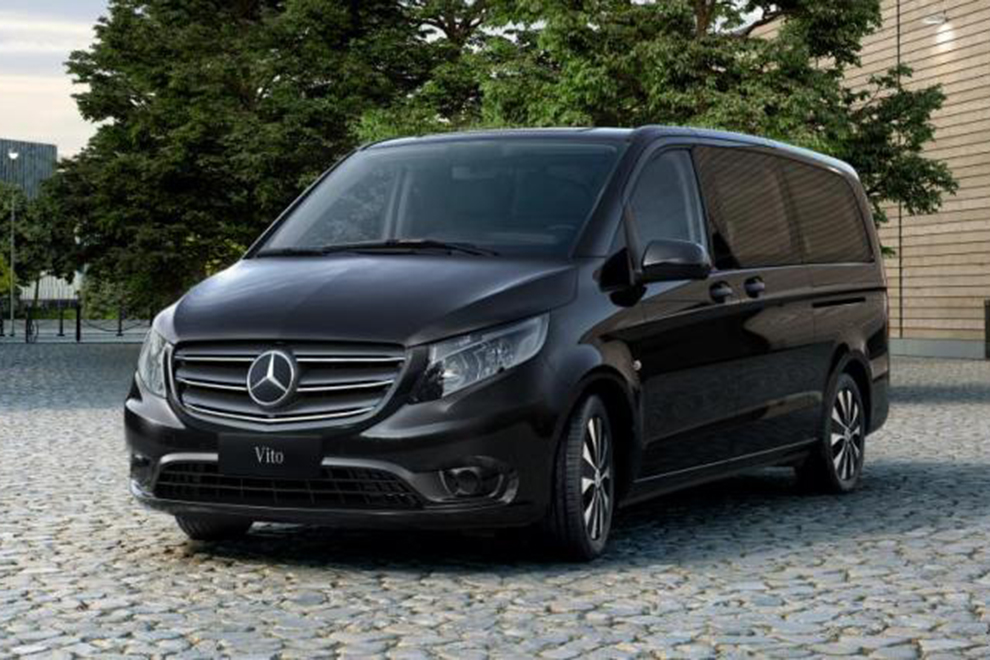
At a glance
- The Vito pairs a mid-size van footprint with Mercedes-Benz passenger-carrier positioning.
- Business, Business Edition, Elite and Elite Edition names cover distinct fleet briefs.
- The export range spans multiple engine families, seating layouts and equipment tiers.
- New and used sourcing options serve different capital and condition priorities.
- China-market emissions labels do not replace destination-country approval.
- Live listings show the current per-unit price, condition, MOQ and availability.
Why the Mercedes-Benz Vito matters for export markets
The Mercedes-Benz Vito occupies a useful middle ground between a working panel van and a branded passenger carrier. For overseas dealers, it combines the recognition and residual appeal of a Mercedes badge with a body that is generally more manageable than a full-size van. That positioning makes it relevant to hotel, airport, executive-transport, and light commercial users seeking one platform for several jobs rather than a bare cargo box. It can also suit mixed operations where weekday deliveries and weekend passenger transport must be handled efficiently by the same vehicle throughout daily operations.
Demand for the Vito in export markets is supported less by one universal use case than by flexibility. A dealer may source seven-seat business vehicles for hotel transfers, nine-seat Elite versions for executive groups, or higher-capacity derivatives for shuttle and institutional transport. The Chinese catalogue naming shown for this model includes 2.0T Business, Business Edition and Elite families, plus 2.5L and 3.0L entries. This gives buyers several positioning levels, although names do not by themselves prove equipment, condition, or suitability for a particular country without a detailed vehicle inspection or local road approval.
The badge can support resale and fleet acceptance, but the export decision must still be driven by total operating economics. Vito examples may arrive configured for China rather than for the destination's road rules, equipment rules, or service network. Buyers should therefore compare purchase and freight cost with expected downtime, insurance, maintenance access, and resale. The strongest opportunity is not simply a lower purchase price; it is a vehicle specification that can be homologated economically and serviced reliably after delivery, without hidden conversion, certification, parts, or downstream compliance burdens for the operator over time.
- Premium badge in a manageable van format.
- Passenger and light-commercial versatility.
- Landed cost determines value.
Model range, trims and powertrain variants: how the lineup is structured and how to choose
The Vito line-up is organized around body use, seating capacity, equipment tier, and powertrain rather than a single global specification. Business and Business Edition names generally address commercial or fleet buyers, while Elite and Elite Edition versions emphasize passenger presentation and amenities. Export-facing listings here include seven-, eight-, and nine-seat configurations, as well as one explicitly named 2.1T diesel, manual-transmission, medium-wheelbase version with 14 seats. Because naming can differ between source markets, compare the actual seat count, floor, windows, and equipment on paper and in the vehicle rather than relying on the badge alone.
Within the export naming, 2.0T is the most prominent engine family, appearing across Business and Elite trims. The catalogue also includes 2.5L and 3.0L entries, while a 2.1T diesel is identified in one listing. These labels indicate distinct engine families, but they do not establish identical output, torque, gearbox, or emissions across markets. A buyer should ask for the engine code, transmission type, drivetrain, and rated figures on the specific vehicle's papers, then verify towing and payload needs against local limits in writing before committing funds to that particular unit for the intended market.
Seating choice should follow the vehicle's actual operating role. Seven-seat versions are generally easier to repurpose and can retain a useful third row, while eight- and nine-seat versions may suit shuttle or executive demand but can reduce cargo flexibility. The named 14-seat diesel configuration suggests a different institutional or group-transport use. Confirm whether seats are removable, how rails and anchors work, whether the floor is passenger-ready, and whether the listed capacity is approved for your destination. Wheelbase also affects loading length, so it should not be assumed across trims; check the specific listing and destination requirements.
- Business and Elite cover different fleet needs.
- Engine labels span 2.0T to 3.0L, plus 2.1T diesel.
- Seven-, eight-, nine- and 14-seat layouts.
- Verify transmission, dimensions and approvals.
New vs used Mercedes-Benz Vito: how export inventory is structured and how buyers choose
ChinaCarDirect's export catalogue should be read as two distinct sourcing pools: newer vehicles presented as new and lower-entry used examples. Their structures differ in more than age. A new listing should identify model year, trim, engine, seating and factory condition; a used listing must also disclose mileage, wear, service history, and defects. The proportions between these pools can change, so no buyer should plan around a temporary mix. Availability must be checked for the exact configuration on the live Vito listings before reserving funds, planning freight, or fixing a launch date.
New vehicles suit buyers who value predictable condition, current model-year presentation, and the possibility of manufacturer support, subject to the seller's warranty terms. They also carry the larger initial capital requirement and the risk that a high purchase outlay will be depreciated during transit and initial ramp-up. Used Vitos can reduce acquisition cost and provide a cheaper way to enter the segment, but commercial duty may have shortened service intervals, increased wear, or hidden damage. Inspect service records and mechanical condition before treating mileage as the only value indicator of value.
For a used example, ask for the chassis or VIN, matching nameplate and model-year evidence, engine and gearbox details, seat condition, and photographs of the body, interior, underbody, and cargo or passenger areas. Check for corrosion, accident repair, suspension wear, steering wear, fluid leaks, and irregular idling; have an independent inspection if the value justifies it. Also verify that duplicate-looking postings represent a real, available vehicle rather than repeated sales material. A written condition statement should become part of the pro forma invoice, refund terms, and the purchase agreement.
- New: predictable condition, higher outlay.
- Used: lower entry cost, more risk.
- Check VIN, chassis, history and records.
How export pricing works: the factors behind a live listing price, and how to read one
A Mercedes-Benz Vito export price is the result of several variables, not a fixed model-level amount. Model year, Business or Elite positioning, engine family, seating capacity, factory options, mileage, condition, and whether the vehicle is new or used all affect the seller's reference. Market movements also matter: exchange rates, origin charges, freight rates, insurance, and the buyer's destination can alter the final figure. Because configuration and logistics differ, compare vehicles on the same specification basis rather than assuming two Vito listings are equivalent; add freight and destination charges before comparing commercial terms.
When reading a live listing, separate the vehicle quote from the landed cost. Confirm whether the displayed amount covers the van only or includes any stated export service, and whether insurance, inland transport, port charges, ocean freight, customs work, and destination taxes are excluded. Review the stated year, trim, engine label, seat count, transmission, condition, mileage where provided, and unique vehicle identifiers. Ask whether the quote is reserved for a particular VIN or chassis number. Only the current per-unit listing and seller confirmation should be treated as binding commercial terms, subject to reconfirmation before payment.
A practical landed-cost worksheet makes comparison much easier. Start with the unit price, then add origin handling, export documentation, insurance, freight, duties, taxes, registration, modification, and a contingency for port or inspection delays. Divide that total by the number of vehicles and usable capacity when evaluating a consolidated shipment. A lower vehicle quote can be outweighed by a long-distance destination, a high-cube passenger configuration, or costly compliance work. Use the ChinaCarDirect live inventory to open each candidate and request the missing logistics items directly in writing before any deposit is paid.
- Compare equivalent specifications.
- Separate vehicle price from landed cost.
- Use live listings and written confirmation.
MOQ, ordering and payment: single units vs consolidating a container
Minimum order quantity for an export vehicle is a seller and transaction rule, not an inherent Mercedes-Benz requirement. Some listings may be available to individual professional buyers, while other offers may be structured for wholesale volume, a full container, or a distributor allocation. Treat any advertised MOQ as part of that specific quote and confirm it before payment. The key distinction is whether the seller can issue a one-unit pro forma invoice and release one identified vehicle. ChinaCarDirect's live unit pages should show the current arrangement; the buyer should not infer it from model age or trim.
Buying a single Vito preserves flexibility and reduces exposure to unsold stock, but it leaves the buyer carrying more of the fixed logistics burden per vehicle. Consolidating several compatible units can improve freight efficiency and create a stronger negotiating position, provided the vehicles share the same destination, homologation route, documentation standard, and common target delivery date. Mixed seating layouts may consume more cube than anticipated, while different trim levels can complicate resale planning. Model the container or roll-on shipment for each unit by actual dimensions and cargo requirements, not passenger capacity alone.
The ordering sequence should be controlled in writing. First agree the exact vehicle, price basis, MOQ, payment schedule, and delivery term; then place funds only against a signed pro forma invoice naming the vehicle or approved allocation. Confirm refund triggers for failed inspection, unavailable stock, or non-compliance. Before balance payment, request current photographs, documents, production or model-year evidence, and any required export or maritime documents. Keep every revision and payment record, and ensure the final invoice description matches the unit intended for import into the destination market without ambiguity at final handover.
- MOQ is seller-specific.
- Single units preserve flexibility.
- Consolidation needs compatible demand.
- Use signed invoices and refund triggers.
Shipping, homologation and market compliance caveats: LHD/RHD and import rules by country
Export compliance begins before the vehicle is purchased, because a China-market trim is not automatically legal or road-ready elsewhere. Some export listings carry China V or China VI labels, but those terms describe the source-market emissions classification and do not replace destination approval. The receiving country may impose age limits, emissions rules, type approval, customs valuation, safety equipment, or passenger-transport licensing. Tell the seller the destination and intended use early, and obtain a professional compliance view before committing to a unit whose specification cannot be registered in the intended configuration or for the intended use.
Steering configuration is another frequent source of late-stage cost and delay. A listing may be left-hand drive even when the destination normally expects right-hand drive, and some markets have specific rules for vehicles originally built for another configuration. Do not assume that a steering conversion is permitted, economical, or covered by insurance; electronics, airbags, cooling, and inspection can add complexity. State the required driving side before deposit, request evidence of the actual configuration, and obtain a written quote for any necessary conversion and local inspection before shipment is booked.
Shipping method should be selected from the vehicle's actual dimensions and the carrier's options. Enclosed vans are commonly moved by roll-on/roll-off or containerized service, but suitability must be confirmed for each unit and route. Secure the vehicle with approved wheel restraints and lashing suitable for its configuration, then inspect for fluid leaks, damaged seals, loose trim, and body damage immediately after loading. Delivery time and cost respond to sailing frequency, port congestion, seasonality, insurance, fuel surcharges, destination handling, and inland mileage. These variables must be quoted, not promised as a generic lead time.
- China labels do not guarantee approval.
- Confirm LHD or RHD before payment.
- Check passenger-use and safety rules.
- Validate carrier method and load condition.
Who should buy the Vito — and who should pick a different vehicle
The Vito is a strong fit for dealers and operators that need a recognizable premium van with flexible passenger configurations. It suits airport and hotel transfers, executive shuttles, corporate reception, and mixed passenger-and-light-duty work where the badge carries commercial value. Business trims may prioritize a cost-conscious fleet brief, while Elite versions can suit buyers wanting a more refined passenger environment. The best match is a vehicle that will spend much of its life carrying people and can be supported by technicians familiar with Mercedes van platforms in the destination market or region.
It is less suitable for heavy freight, severe off-road work, or operators whose priority is the lowest possible purchase cost rather than brand positioning. Buyers needing substantially more passenger capacity or a larger load bay should assess a larger van rather than removing seats from a Vito. A fleet with a binding zero-emission mandate also needs a different powertrain solution: the Vito variants represented here are combustion-engine vehicles. Before buying, compare usable capacity, route conditions, licensing, fuel availability, service coverage, and expected resale in the destination rather than relying on appearance alone.
A disciplined decision starts with an operating brief: number of occupants per trip, luggage volume, average route, duty cycle, required safety and comfort features, and the vehicle's expected life. Next, calculate total cost per seat or per service day, including purchase, freight, taxes, financing, fuel, maintenance, downtime, and resale assumptions. Then test the shortlist against local approval and workshop support. The Vito earns its place when those calculations show that its badge, flexibility, and passenger presentation create enough value to offset any price and logistics premium for the operator over time.
- Best for premium passenger and mixed fleets.
- Poor fit for heavy freight or zero-emission fleets.
- Compare cost per seat and service day.
- Check workshops and resale prospects.
Main rivals and how the Vito compares
The closest alternatives to the Vito in the mid-size van and people-carrier segment depend on whether the priority is brand image, load capability, or acquisition value. The Ford Transit Custom, Volkswagen Transporter, and Hyundai H-1/Starex are natural comparison points because each can serve shuttle, fleet, or passenger-van duties in different markets. None is a perfect substitute: the Vito's defining proposition is the combination of Mercedes premium positioning, compact van packaging, and multiple seating concepts. Local-built rivals may also have simpler import approval and denser aftersales support in their home markets.
Against the Transit Custom, the Vito usually wins on premium brand perception and a more upscale passenger-carrier identity, while the Transit may offer a broader commercial range and established local service in some markets. The Transporter competes on versatility, drivetrain breadth, and strong recognition in Europe, with model generation and equipment varying by country. The H-1/Starex is a practical passenger and group-transport option, particularly in markets with established support. For the buyer, the correct comparison is the same passenger count, equipment level, warranty, and destination approval, not the badge alone.
A China-sourced Vito can make sense when the desired specification, seating configuration, or commercial terms are not readily available through the local dealer network. It may be less attractive when a homologated local rival offers simpler registration, predictable parts supply, and straightforward warranty service. Compare the Chinese vehicle after every transport, tax, and compliance charge, then compare finance, fuel economy, downtime, and resale over the ownership period. A lower acquisition quote can still produce a higher cost per passenger-day. The winning choice is the vehicle that meets the brief and remains supportable in its actual operating market.
- Transit Custom: commercial-range alternative.
- Transporter: versatile European rival.
- H-1/Starex: practical passenger-van option.
Live Mercedes-Benz Vito export inventory
View all listings →Real units currently on ChinaCarDirect with per-unit asking prices and MOQ. Availability updates live from the catalogue.
How to buy a Mercedes-Benz Vito from China
-
1
Define the operating brief
Record the destination, passenger count, luggage volume, route, duty cycle, engine and trim preference, and required driving side. A clear brief prevents a visually attractive but unusable Vito from entering the shortlist.
-
2
Shortlist Mercedes-Benz Vito listings for export
Compare model year, Business or Elite positioning, engine label, seating, transmission, condition and unique identifiers on each current unit. Use the live inventory for the current price, availability and seller MOQ, then request written confirmation.
-
3
Verify the exact vehicle
Request the VIN or chassis number, nameplate, production or model-year evidence, current exterior, interior and underbody photographs, and relevant service records. For a used Vito, commission an independent inspection when the value justifies it.
-
4
Check import compliance
Ask a local importer or compliance specialist to assess emissions, age limits, type approval, customs treatment, passenger licensing and safety-equipment rules. Confirm whether the required LHD or RHD configuration is available or legally convertible.
-
5
Build a landed-cost quotation
Request a written quotation covering the vehicle, freight, insurance, origin and port charges, duties, taxes, registration, documentation and any conversion under the agreed Incoterm. Clarify quotation validity, title transfer and refund conditions.
-
6
Pay against agreed terms
After the vehicle and commercial terms are confirmed, pay only against a signed pro forma invoice. Release the balance only after receiving the agreed vehicle evidence and keep all correspondence, receipts and inspection records.
-
7
Prepare and inspect the shipment
Confirm export and maritime documents, the VIN on all records, the loading condition and the carrier's restraint method. Inspect the vehicle immediately after loading and again at arrival, documenting any damage before release.
Vito vs rivals
| Ford Transit Custom | A closer fit for operators prioritizing commercial range, configuration choice and established local support over Mercedes badge appeal. The Vito generally emphasizes premium presentation and a compact passenger-carrier identity, while a locally built Transit may simplify homologation. |
|---|---|
| Volkswagen Transporter | A strong European competitor for versatile shuttle and commercial work, with familiar service coverage and configuration options that vary by market. The Vito's main distinction is its Mercedes premium identity and passenger-carrier positioning. |
| Hyundai H-1/Starex | A practical alternative for group transport and passenger operations where H-1 support is established. The Vito may better suit premium reception work, but buyers should compare seating, engine choice, approval and total ownership cost. |
Frequently asked questions
How is Mercedes-Benz Vito export pricing determined?
The price reflects model year, trim, engine, seating, equipment, condition, mileage and whether the vehicle is new or used. Freight, exchange rates, insurance, duties, taxes, documentation and the selected Incoterm can change the landed total. Check each live Vito listing for the current per-unit price and have the seller confirm the quote in writing before payment.
Which Mercedes-Benz Vito engine and transmission options should I consider?
Export naming includes 2.0T, 2.5L, 3.0L and 2.1T diesel configurations, with one 2.1T diesel explicitly paired with a manual transmission. Output, torque, automatic or manual availability and drivetrain can vary by unit and market. Request the engine code, gearbox, rated figures and engine documents for the exact vehicle.
Should I buy a new or used Mercedes-Benz Vito?
New vehicles generally offer more predictable condition and current model-year presentation but require greater initial capital. Used examples can reduce acquisition cost, although commercial duty may mean additional wear, service requirements or undisclosed defects. The better choice depends on the inspection findings, warranty, operating cost and availability of the required configuration.
What is the MOQ for one Mercedes-Benz Vito?
MOQ is determined by the seller and the specific offer; it is not a fixed model-wide rule. Check the live unit page and written quotation for the current requirement. Some sellers may accommodate professional single-unit purchases, while others may require a wholesale allocation or consolidated shipment.
How long does shipping take and what drives the cost?
Lead time and freight cost depend on sailing frequency, port congestion, seasonality, fuel surcharges, insurance, vehicle dimensions, destination handling and inland transport. Enclosed vans may travel by roll-on/roll-off or containerized service, subject to carrier approval. Request a destination-specific freight quotation rather than relying on a generic estimate.
How are Mercedes-Benz Vito spare parts and service handled?
Before purchase, identify the VIN, exact trim, engine and transmission, then check local Mercedes-Benz van workshop coverage and parts access for that configuration. Parts may need to be ordered through the seller or a regional distributor, so confirm lead times for common service items. Local parts support and technical training should be included in the ownership decision.
Is a right-hand-drive Mercedes-Benz Vito available for export?
Do not infer right-hand-drive availability from a China-origin listing name. State the destination and required driving side before payment so the seller can verify the actual vehicle. If conversion is necessary, obtain written confirmation that it is legal, insurable and supported by an approved workshop.
How do I order a Mercedes-Benz Vito from China?
Start with the live Vito inventory, shortlist compatible units and request a VIN-specific condition report and pro forma invoice. Confirm the current price, MOQ, payment schedule, Incoterm, documents and refund terms before sending funds. After payment, follow the agreed inspection, export, shipping, customs and delivery process.
Ready to source the Mercedes-Benz Vito?
Send ChinaCarDirect your destination, seating requirement, preferred trim and delivery timeline for a current Mercedes-Benz Vito quotation.
Request a quote