
Mitsubishi Pajero Export Guide for Dealers and Fleet Buyers
Buy Mitsubishi Pajero from China with practical guidance on trims, 2WD and 4WD options, pricing factors, MOQ, shipping, compliance and rivals.
At a glance
- The Pajero combines a body-on-frame SUV format with petrol engines, manual or automatic transmissions, and 2WD or 4WD choices.
- The buying decision starts with generation, engine, trim, drivetrain, source specification, and condition—not the listing headline alone.
- Used units can suit value-led buyers, while newer examples may reduce age-related wear; each requires a different inspection and compliance plan.
- Export price is destination-specific because exchange rates, freight, Incoterms, duties, and vehicle specification all affect landed cost.
- Confirm steering position, homologation, parts support, and the exact unit-specific MOQ before committing to a shipment.
Why the Mitsubishi Pajero matters for export markets
The Mitsubishi Pajero occupies a useful middle ground in the export SUV market: it is a body-on-frame, seven-seat-capable off-road model, yet it is also sold in road-oriented 2WD forms. That combination gives importers a broader audience than a specialist 4x4. Dealers can position the Pajero for family transport, NGO and site work, regional distribution, or fleet use, while the established model name can reduce customer education compared with an unfamiliar niche badge. Its long production history and broad trim vocabulary also make model-year and market-specification differences especially important to verify before importing.
For overseas buyers, demand is strongest where buyers want durable SUV capability without moving into the cost and size of a full-size luxury off-roader. The Pajero can appeal in markets with long paved routes, variable road quality, seasonal access constraints, or a need for occasional seven-seat flexibility. It is less compelling for buyers whose priorities are urban efficiency, compact parking, or the latest digital cockpit features, so market research should identify whether the value proposition is utility, status, or simply availability at the point of sale in each target country and whether local competitors offer a more familiar ownership experience.
China-origin sourcing adds both opportunity and complexity. The Pajero offered for export may be a China-market import, a parallel import from another country, or a used vehicle already carrying overseas history. Those categories can include different steering positions, factory equipment, emissions documentation, and service assumptions. Buyers should therefore treat origin as a due-diligence category rather than a shortcut: request the chassis identification number, build and specification plates, service history where available, and evidence supporting the stated new or used condition in writing before committing funds.
- Body-on-frame SUV, 2WD or 4x4.
- Family, NGO, contractor, and fleet use.
- Verify origin, steering, and history.
Model range, trims and powertrain variants: how the lineup is structured and how to choose
The Pajero export range spans the older V73 and newer V97 generations, with the exact vehicle generation depending on source market and import route. Within those generations, names such as Standard, Comfort, Luxury, Premium, Executive, Elite, GLS, and Flagship describe equipment bundles rather than one standardized global hierarchy. A parallel-import Flagship may not match a domestic Executive in suspension, infotainment, safety equipment, or trim detail. Use the year, generation, engine, and equipment list together when comparing units because superficially similar names can hide substantial differences in specification, provenance, and service requirements.
Petrol engine choices include 2.4-, 3.0-, and 3.8-litre units, with 3.0-litre versions appearing across many export trims. The smaller engine is commonly paired with lighter-duty, road-focused configurations, while larger displacement is associated with some 3.8-litre seven-seat and higher-specification parallel imports. Do not select an engine from displacement alone: consider local fuel quality, towing expectations, load, climate, and parts commonality. Verify the engine badge and other identifying details in photographs and documents before agreeing on a price, because imports can mix descriptions with modified or market-specific mechanical configurations that affect work, condition, or ownership expectations.
Transmissions may be manual or automatic, and the export range includes both 2WD and 4WD versions. Manual models can suit buyers focused on mechanical simplicity and low acquisition cost; automatics are generally easier for mixed-ability drivers and long-distance use. Four-wheel drive adds capability but also brings maintenance, fuel, and resale considerations that depend on the actual mechanical system. Because trim labels differ across source countries, confirm transmission type, drivetrain, axle equipment, and any modifications directly on the unit being considered before comparing purchase options, arranging freight, or finalizing payment terms in writing.
- V73 and V97 generations.
- 2.4L, 3.0L, and 3.8L petrol.
- Manual/automatic; 2WD or 4WD.
New vs used Mitsubishi Pajero: how export inventory is structured and how buyers choose
Export inventory may be organized as new, used, import, or parallel-import stock, and those labels describe the vehicle's source and condition rather than a single global specification. A vehicle marked as an import can arrive with Chinese-market equipment; a parallel import may come from the Middle East or another region and can include seven-seat, sunroof, or premium configurations not offered domestically. Buyers should ask what the seller means by new or used and whether the unit has prior registration, import work, or body repairs already in its destination market.
Used Pajeros are attractive when the buyer prioritizes purchase outlay, a lower purchase price, or immediate availability of a proven configuration. The trade-off is that depreciation, wear, deferred maintenance, accident history, and regional compatibility become central to the inspection. Newer used examples may offer a more current drivetrain and equipment set, while older vehicles can suit straightforward fleet use after a rigorous condition review. A mileage figure alone does not reveal condition, so request evidence of service, tyres, underbody condition, and repair history before confirming the final purchase terms in writing.
New or newer stock generally reduces uncertainty about age-related wear, but it does not automatically simplify compliance or guarantee better economics. Import duties, emissions rules, financing costs, shipping, and local taxes can outweigh an attractive vehicle-level quote. For a dealer, consistent specification can be as valuable as low purchase cost because it simplifies parts planning, marketing, and fleet resale. For a private or small-fleet buyer, one carefully selected unit may be more rational than a mixed container. In every case, current condition and availability must be checked in the live Pajero inventory.
- Origin labels lack standardization.
- Used vehicles need stronger inspection.
- Newer stock retains landed-cost risk.
How export pricing works: the factors behind a live listing price, and how to read one
A Mitsubishi Pajero export price is a moving commercial calculation, not a permanent model-level figure. The vehicle's age, generation, engine, transmission, drivetrain, trim, mileage, condition, repair history, and source specification all shape the seller's asking price. Market exchange rates also affect how a China-based price is translated for an overseas buyer. Freight, marine insurance, port charges, handling, and the chosen Incoterm can add substantial cost, while destination duties and taxes sit outside many displayed vehicle prices. Buyers should separate the vehicle price from the complete landed-cost estimate before comparing offers across suppliers.
Read each live listing as a unit-specific quotation rather than evidence of a fixed market price. Check whether the displayed amount covers the vehicle only or includes a stated shipping service, and identify the named Incoterm and destination port. Confirm whether registration, customs clearance, duties, VAT or sales tax, insurance, and local delivery are excluded. Then compare only like-for-like vehicles: the same generation, engine, drivetrain, condition, and equipment level. A cheaper listing can become more expensive after correcting for freight, tax, repairs, or parts needs for your actual destination market.
Negotiation should start with a written specification sheet, not simply a request for the lowest headline figure. State the required engine, gearbox, drivetrain, seating, steering position, condition, preferred Incoterm, destination, and inspection requirements. Ask the seller to itemize the vehicle, freight, insurance, documentation, and any optional service. Those terms make competing quotations comparable and reveal where savings are genuine. Exact current prices and unit availability should always be taken from the live ChinaCarDirect listings, not from an old guide, previous conversation, or assumed price band before shipment.
MOQ, ordering and payment: single units vs consolidating a container
Minimum order quantity is a commercial term that can vary by seller, vehicle, payment method, and shipment plan. A live listing may indicate that a single vehicle can be ordered, but the seller or platform still sets the binding terms for that particular unit. Some importers purchase one vehicle directly; others consolidate several Pajeros, or mix models, into a container. Buyers should not infer a universal MOQ from a general catalogue or from another vehicle's terms. Read the current unit page or obtain a written proforma quotation before treating a quantity as confirmed.
The ordering sequence normally begins with specification approval, followed by a written offer or proforma invoice showing the vehicle, quantity, unit price, payment schedule, Incoterm, validity period, and expected handling steps. After the buyer confirms those details and pays any agreed deposit, the seller should provide the chassis identification number, production or model details, condition report, and export documents. Payment methods, account requirements, and document procedures can differ by seller and destination, so the buyer should verify them directly rather than assuming that a deposit and balance structure is identical for every transaction.
Container consolidation can reduce freight per vehicle, but only when the chosen units match the importer's market and documentation needs. Same-specification Pajeros simplify resale and fleet preparation; mixed loads can improve capacity utilization and let a dealer test several trim levels. The trade-off is greater coordination, more inspection work, and possible differences in age or condition that complicate uniform marketing. Request a packing list that identifies every chassis, confirm how vehicles are segregated and protected, and clarify who bears damage risk during loading, carriage, discharge, and customs handling in writing.
- Confirm unit-specific MOQ in writing.
- Review the proforma invoice first.
- Match mixed loads to demand.
Shipping, homologation and market compliance caveats: LHD/RHD and import rules by country
Steering configuration is one of the most important export checks. China-market Pajeros are commonly left-hand drive, while parallel imports may carry right-hand-drive or other regional specifications, but the individual listing must be verified. The steering position, driver controls, instrument cluster, lighting, and safety equipment may not suit the destination registration system. Ask for clear photographs of the dashboard and steering position, check the chassis plate and VIN-linked documents, and confirm the exact source market before shipping. Assuming a RHD or LHD version from the model name alone can lead to rejection or rework.
Local homologation is equally important. Import rules may cover emissions, noise, safety, VIN identification, customs classification, age restrictions, taxes, and modification standards, and used vehicles can face different treatment from newer ones. A dealer should involve the destination importer, customs broker, and relevant authority before committing to a unit, especially for parallel imports. Confirm whether the vehicle needs conformity approval, inspection, emissions registration, or proof of prior use. Rules vary by country and even by region, so no generic export description can replace written local advice or a test against the specific vehicle.
Shipping method should match vehicle size, quantity, urgency, and budget. Complete vehicles may move by roll-on/roll-off, container, or shared consolidation, while a single vehicle can be priced differently from a full container. Freight cost varies with origin and destination ports, carrier space, route, fuel surcharges, insurance, handling, and the Incoterm. For an unfamiliar seller, request a pre-shipment inspection, high-resolution exterior and interior images, a loading plan, and clear responsibility for damage during transit. A customs broker should confirm documents, securement, discharge arrangements, and any restrictions before the vehicle departs China.
- Verify LHD or RHD per unit.
- Check destination homologation rules.
- Define inspection and damage liability.
Who should buy the Pajero — and who should pick a different vehicle
The Pajero is a strong candidate for importers serving buyers who need a conventional SUV with genuine off-road pedigree, useful passenger capacity, and a choice of road or four-wheel-drive formats. It can suit construction, agriculture, utilities, regional mobility, family transport, or institutional fleets, particularly where operators already understand Mitsubishi vehicles. A 2WD version may be sufficient for predominantly paved operations, while a 4WD unit is more relevant where poor surfaces, steep access, or seasonal routes justify the additional mechanical and fuel considerations. Buyers should match the variant to actual operating conditions.
It is a weaker fit for buyers focused mainly on urban fuel economy, easy parking, the newest driver-assistance systems, or a highly modern infotainment experience. Older Pajero generations can feel dated beside newer rivals, and parallel-import equipment may not be standardized. Buyers without a reliable workshop, access to common parts, or suitable insurance terms may also incur unexpected ownership costs. Dealers should be candid about these limitations and position the vehicle around durability, utility, and established platform knowledge rather than implying that every imported unit is equivalent to a current-market model.
The best buying strategy depends on scale and confidence. A dealer serving a proven Pajero market can start with a mixed but controlled selection, test demand through individual orders, and expand once movement and aftersales feedback are clear. Fleet managers should calculate total cost per kilometre, fuel availability, service intervals, downtime, and residual value rather than purchase price alone. Before a larger commitment, verify local parts catalogs, diagnostic access, technician familiarity, insurance, and registration. Those checks often matter more to a sustainable import program than a small difference in the vehicle quotation.
- Strong for utility and 4x4 demand.
- Less suitable for urban efficiency.
- Validate parts, diagnostics, and support.
Main rivals and how the Pajero compares
The closest alternatives depend on body size, seating, drivetrain, and price strategy. The Toyota Land Cruiser Prado occupies a similar upper off-road market and often appeals to buyers seeking a newer or more highly specified family SUV. The Toyota Fortuner is generally smaller and more price-led, making it relevant for fleets that do not need the Pajero's larger footprint. The Isuzu MU-X is another credible body-on-frame seven-seat rival, with market-specific diesel options that may attract work-focused buyers. Exact equipment and engines vary by country. Compare local taxes, parts, and resale conditions before choosing.
A fair comparison should use the actual vehicles being considered, not generic model images. Compare interior space, luggage capacity with the third row in use, engine and transmission choices, two- or four-wheel-drive availability, fuel provision, safety equipment, and warranty support. For imported Pajeros, add a careful check of specification, condition, and parts compatibility; parallel-import vehicles may not offer the same standardized equipment as locally sold rivals. Also compare the cost of registration, servicing, insurance, and eventual resale in the destination country rather than treating purchase price as the deciding factor.
For importers, each rival creates a different route to the customer. The Pajero can be attractive where 2WD availability, familiar Mitsubishi service knowledge, a broad choice of used vehicles, and a three-row option create practical value. Prado buyers may prioritize refinement and newer platforms; Fortuner buyers often focus on size and acquisition cost; MU-X buyers may prioritize commercial utility and diesel availability. The strongest decision is the one that fits local fuel, road, customer, and aftersales conditions. Confirm current specifications directly with local dealers and use the same landed-cost method for every candidate.
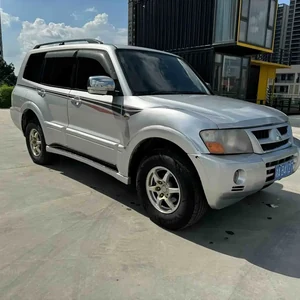
Live Mitsubishi Pajero export inventory
View all listings →Real units currently on ChinaCarDirect with per-unit asking prices and MOQ. Availability updates live from the catalogue.
How to buy a Mitsubishi Pajero from China
-
1
Define the destination and vehicle brief
Specify the destination country, steering position, passenger requirement, drivetrain, engine, transmission, trim, and condition. Include the intended Incoterm and operating environment so unsuitable vehicles can be rejected early.
-
2
Compare the live inventory
Review the current Mitsubishi Pajero listings and compare only units with similar generation, engine, transmission, drivetrain, condition, and equipment. Treat the displayed vehicle price as a starting point rather than a complete landed cost.
-
3
Verify the individual vehicle
Request the VIN or chassis number, build and specification plates, engine and gearbox confirmation, odometer reading, condition report, service evidence, and clear photographs. Check steering position and modifications against the RFQ.
-
4
Request an itemized quotation
Ask for the vehicle price, freight, insurance, documentation, handling, Incoterm, destination port, payment schedule, and quotation validity as separate items. Clarify which duties, taxes, registration, and local delivery costs are excluded.
-
5
Confirm documents and payment
Review the proforma invoice and agreed document list before paying any deposit. Confirm that the VIN, model details, condition, quantity, unit price, and balance-payment trigger match the selected vehicle.
-
6
Arrange compliance, inspection, and shipping
Use a destination customs broker to confirm homologation and import requirements. Complete any agreed pre-shipment inspection, secure the vehicle, arrange insurance and freight, and track customs and discharge responsibilities.
Pajero vs rivals
| Toyota Land Cruiser Prado | A closer rival in the upper off-road and large family-SUV segment, often chosen for a newer platform and higher specification. Choose the Prado when refinement and current product appeal outweigh the Pajero's value and available used-unit range. |
|---|---|
| Toyota Fortuner | A smaller, more price-led body-on-frame SUV that can suit fleets and families prioritizing easier logistics and lower acquisition demands. The Pajero is a larger-footprint alternative with both 2WD and 4WD configurations represented in export listings. |
| Isuzu MU-X | A direct seven-seat utility competitor, with diesel options in some markets that may better suit commercial operators. The Pajero is petrol-focused and may be more attractive where 3.0L and 3.8L availability and Mitsubishi service familiarity matter. |
Frequently asked questions
How is Mitsubishi Pajero export pricing determined?
Pricing is set per vehicle by age, generation, engine, trim, drivetrain, transmission, condition, mileage, source specification, and seller terms. Exchange rates, freight, insurance, Incoterms, duties, and taxes can change the landed cost. Check each unit's current price and availability in the ChinaCarDirect live Pajero listings.
Which engines and powertrains are available?
The export range is petrol-powered, with 2.4L, 3.0L, and 3.8L engines paired with manual or automatic transmissions. 2WD and 4WD configurations are available depending on trim and source market, so confirm the actual unit. As an internal-combustion vehicle, it has no battery range to quote; assess fuel availability and consumption instead.
Should an overseas buyer choose a new or used Pajero?
Used Pajeros can offer lower acquisition cost and immediate configuration choice, but require inspection of wear, service evidence, accident history, and mechanical condition. Newer examples or vehicles presented in newer condition may reduce age-related uncertainty, although import compliance and landed cost still apply. Compare the individual vehicle's stated condition in the live inventory.
What is the MOQ for Mitsubishi Pajero orders?
MOQ is set by the seller for the particular vehicle and transaction, not by a universal Pajero rule. A single-unit purchase may be possible, while container buyers often consolidate several units under a negotiated quantity. Confirm the binding MOQ on the live listing and in the proforma invoice before paying or arranging freight.
What affects shipping time and cost from China?
Shipping time and cost vary with origin and destination ports, carrier space, route, vessel or vehicle-carrier schedules, handling, insurance, fuel surcharges, and Incoterm. Vehicle size, quantity, customs readiness, and pre-shipment inspection can also affect the schedule. Ask the seller or forwarder for a current route-specific estimate and define who pays each charge.
How are spare parts arranged for imported Pajeros?
Parts can usually be sourced for common Pajero mechanical platforms, but trim-specific equipment may require specialist items or electronic modules. Import-era, regional-specification, and left- or right-hand-drive differences can affect compatibility. Before ordering, ask a local dealer or specialist for the engine, chassis, and trim parts list, and confirm lead times and return terms.
Can I buy a right-hand-drive Pajero for export?
Right-hand-drive availability depends on the individual source market, and parallel-import Pajeros may be either RHD or LHD. China-market examples are commonly LHD, but the steering position must be checked on the actual vehicle and its documents. State the required steering position in the RFQ because trim names alone do not establish it.
How do I order a Mitsubishi Pajero from China?
Start with the live Pajero inventory, select candidate units, and send an RFQ identifying the required engine, transmission, drivetrain, seating, steering position, condition, destination port, and Incoterm. Review the proforma invoice, vehicle documents, inspection evidence, payment schedule, and shipping plan before confirming the order. Exact price, MOQ, and availability should be confirmed for the selected unit during that process.
Ready to source the Mitsubishi Pajero?
Request a current Mitsubishi Pajero quotation with the exact vehicle specification, Incoterm, destination, MOQ, and shipping options.
Request a quote