
Nezha Auto V Export Buying Guide for Overseas Buyers
Buy a Nezha Auto V from China with clear guidance on trims, range versions, live export pricing, MOQ, shipping, compliance, spare parts and key rivals.
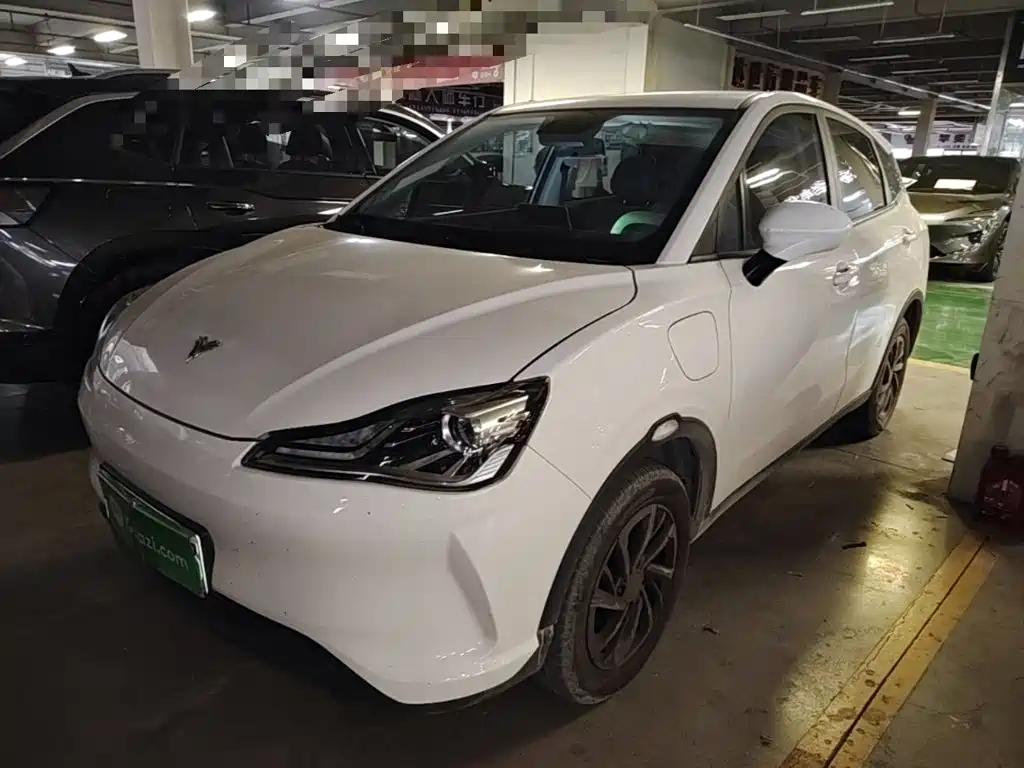
At a glance
- The V is a compact battery-electric SUV aimed at cost-conscious urban and fleet buyers.
- Standard- and long-range trims allow importers to match battery choice to route demands.
- New and used options can suit different launch budgets, but every unit needs individual condition verification.
- Export quotes depend on specification, Incoterm, freight, tax, and destination compliance.
- Current pricing and per-unit availability must be confirmed on live inventory before ordering.
Why the Nezha Auto V matters for export markets
The Nezha Auto V is a compact battery-electric SUV positioned as an accessible Chinese alternative to small gasoline crossovers. For overseas buyers evaluating the Nezha Auto V for export, its relevance is about operating utility rather than prestige: a practical vehicle body, electric running costs, and range-oriented versions suited to urban distributors, ride-hailing operators, and short-route company fleets. It is relevant in markets building charging networks or reducing urban emissions, where a compact EV can be easier to deploy than a larger premium model. International readiness—not domestic fit—remains the decisive question for the intended destination market.
Global demand for the V should be understood through practical use cases rather than broad market-size claims. Chinese EV manufacturers have made compact electrified vehicles more accessible to commercial buyers, yet importing one involves more than arranging payment. A dealer must validate charging compatibility, spare-parts access, software support, and local type approval. The V can make sense when these foundations exist; without them, lower acquisition cost can be offset by adaptation, servicing, and residual-value risk. It is most credible in markets with an existing EV ecosystem, not as an untested mass-market import.
The practical advantage of this model is flexibility across fleet roles. A ride-hailing operator may prioritize usable range, cabin durability, and charging uptime; a small dealer may prioritize a recognizable SUV format, equipment, and attractive acquisition economics. The V’s trim labels provide a sensible starting point for those choices. However, assess the complete operating equation—purchase cost, energy, insurance, maintenance, tires, battery coverage, and eventual resale—before treating any listing as a good export buy. A documented test and route-based range check should precede a multi-unit fleet order.
- Compact BEV format for urban commercial use
- Range and equipment labels aid initial comparison
- Local homologation remains a decisive gate
Model range, trims and powertrain variants: how the lineup is structured and how to choose
For a Nezha Auto V specs comparison, the export-facing lineup is organized around two range labels and two equipment themes. The trim names are Standard Range Entertainment Upgrade, Long Range Entertainment Upgrade, and Long Range Smart Edition Upgrade. “Standard Range” versus “Long Range” identifies the battery-and-range package, while “Entertainment Upgrade” and “Smart Edition” indicate different feature positioning. Those names are useful for initial filtering, but they do not reveal every included option or technical change. Confirm equipment, battery data, motor output, dimensions, and charging specification against the unit’s papers and live listing before making a final purchase decision.
Choosing the standard-range version usually makes sense when routes are predictable, charging is nearby, and acquisition cost is the dominant fleet constraint. The long-range versions provide flexibility where airport transfers, regional travel, or uncertain turnaround routes make range anxiety more costly. Between the two long-range trims, compare exact infotainment, convenience, safety, and driver-assistance content rather than assuming “Smart Edition” is automatically superior for commercial use. For fleet resale, familiar interfaces and repairability may matter more than the longest advertised figure. Confirm which safety functions are standard, optional, or unavailable in the destination version.
Range selection should be based on usable energy and real operating conditions, not only the label. Chinese test-cycle figures can differ from WLTP or local estimates, while payload, speed, temperature, terrain, and air-conditioning use can affect achieved distance. Ask for battery capacity, usable capacity, battery state-of-health method, motor rating, AC charging, DC charging, and test-cycle standard. Because the V is a BEV, there is no engine or fuel tank; charging time and curb weight become central fleet-planning numbers. Confirm those figures per trim rather than borrowing them from another V configuration.
- Three named trim configurations organize the lineup
- Standard versus long range anchors route planning
- Battery, motor, charging, and dimensions require verification
New vs used Nezha Auto V: how export inventory is structured and how buyers choose
Export inventory for a used Nezha Auto V, alongside new examples, should be read as a live mix rather than a fixed promise. New vehicles normally offer the clearest condition history and the strongest link to factory warranty support, but a unit may still be a registration, display, or ex-fleet car. Used vehicles can widen sourcing options, yet their value depends heavily on mileage, service history, accident repair, and battery health. Always verify the declared condition and registration status on the exact listing rather than inferring it from the model name. This distinction also affects insurance and residual-value calculations.
For a used BEV, the battery cannot be ignored. Request a state-of-health report, cell or module diagnostic information, charging records where available, and evidence that the high-voltage battery has not been repaired or exposed to water. Inspect bodywork, underbody, wheels, cabin condition, and software faults, and verify accident and flood history. For a new vehicle, check tyre wear, panel condition, battery production date, and whether warranty starts at export or first registration. Tie these checks to a written condition statement and have discrepancies corrected before the balance payment is released.
The best choice depends on how the vehicle will be used and how quickly it must enter service. An importer launching a small fleet may prefer new units for predictable handover and warranty administration; a dealer seeking a lower-cost launch model may consider a carefully documented used example. Include vehicle age restrictions, emissions or road-use rules, and expected resale in the decision. Exact year mix, unit condition, and availability change, so use the live Nezha Auto V listings before budgeting rather than relying on an old market summary or assumed allocation.
- Condition must be judged on the individual listing
- Used EV value depends heavily on battery health
- New units also need registration and warranty checks
How export pricing works: the factors behind a live listing price, and how to read one
A Nezha Auto V export price guide should not treat a listing price as a universal market price for the model. It reflects the unit’s trim, range package, model year, condition, mileage, equipment, and the seller’s commercial terms. It may also reflect currency movements and the exporter’s target margin. Compare prices only when listings share the same specification and trade terms. A cheaper long-range, smart-edition, low-mileage unit is not automatically better value than a higher-priced standard-range vehicle if your routes and budget point the other way. Open each record and verify what the asking price includes before comparison.
Read a live record line by line: trim name, declared new or used status, year, mileage if applicable, SKU or reference, photographs, equipment, battery and charging data, and the displayed MOQ. Confirm whether the figure is FOB, CIF, or another Incoterm, and whether freight, insurance, export documentation, destination charges, tax, and registration are excluded. Ask the supplier to restate key conditions in a formal quotation because a catalogue field may not capture every commercial assumption. A quotation tied to destination and Incoterm is more useful than a headline figure alone.
Build a landed-cost worksheet rather than comparing seller prices alone. Include ocean or Ro-Ro freight, insurance, inland haulage, port and terminal fees, customs duty, VAT or sales tax, registration, local inspection, charging adaptation, and a contingency for exchange-rate movement. Compare total cost of ownership over the planned holding period, including energy, tires, servicing, software support, and likely resale. Current, binding per-unit figures are shown on [ChinaCarDirect’s live listings](https://chinacardirect.com/products?q=V&brands%5B%5D=1320); request a quote for the exact configuration and destination. This prevents a low ex-works figure from masking higher freight, tax, compliance, or ownership costs.
- Compare only equivalent specifications and Incoterms
- Landed cost extends well beyond the asking price
- Live listings provide the current binding figures
MOQ, ordering and payment: single units vs consolidating a container
A Nezha Auto V wholesale quote is subject to listing-level terms, not a permanent property of the model or marketplace. A supplier may accept one vehicle, while another seller may require a lot for a particular price, production slot, or release arrangement. Some vehicle lines are sold project by project, but the required quantity must always be confirmed in writing. For a first-time importer, buying one test unit can reduce exposure and provide real operating data before committing to a larger fleet order. Do not infer a universal minimum from a catalogue or another seller’s record.
A typical ordering flow begins with a live listing or [RFQ](https://chinacardirect.com/contact), followed by specification confirmation, availability confirmation, and a pro forma invoice. Check the seller’s legal identity, vehicle documents, payment beneficiary, refund terms, and warranty conditions before funding. Payment stages often separate deposit from balance, and the balance is commonly tied to inspection or shipment readiness, but the exact sequence is negotiable. Use the agreed payment method and contract, and never rely on informal promises about handover. Keep every approval and document in the same transaction record for audit purposes.
Consolidating several vehicles into one container can reduce freight and handling cost per unit, but it concentrates risk and requires disciplined administration. Group units with matching documentation, destination, and intended use; avoid mixing condition categories without clear labeling; and record VIN or chassis identity for every unit. Agree on loading, protection, charger packing, and inspection access before shipment. For one vehicle, a specialist EV carrier or shared consolidated service may be more practical than assuming dedicated-container economics. Calculate break-even cost, not freight per vehicle in isolation, before placing the order.
- MOQ belongs to the individual seller and listing
- Payment milestones should follow written agreement
- Container consolidation lowers unit freight but raises exposure
Shipping, homologation and market compliance caveats: LHD/RHD and import rules by country
Compact EVs are commonly moved by Ro-Ro vessel or container, with air freight generally reserved for urgent, low-volume movements because of applicable battery-shipping rules and cost. Sea transit duration varies with origin, destination, transshipment, port congestion, and sailing availability. The vehicle should be prepared for extended transport: confirm battery state-of-charge and isolation requirements, secure the charging cable, protect connectors, and document existing paint or underbody condition. Freight insurance and battery-related exclusions deserve explicit review. Ask the forwarder for a route-specific delivery estimate and the named risk-transfer point in writing before shipment.
Steering configuration is a major sourcing check. A left-hand-drive Chinese vehicle cannot simply be treated as a right-hand-drive import, and a conversion may affect homologation, warranty, and component supply. For each destination, verify lighting, indicators, braking, mirrors, noise limits, crash and occupant-protection requirements, electromagnetic compatibility, battery safety, vehicle identification, and any local emissions or connectivity rules. EV powertrain standards do not remove type-approval duties for the complete vehicle. Obtain confirmation from a local conformity-assessment specialist before paying for a shipment. Documentation should identify the exact derivative and configuration covered precisely.
Import procedures vary by country and can include a technical inspection, customs valuation, duty and tax, registration, insurance, and local concessions or restrictions. The importer of record remains responsible for the declared value, classification, paperwork, and compliance, even if an exporter provides documents. Before ordering, confirm that the charger, manuals, diagnostic software, language settings, and warranty can be supported locally. A margin for parts, technician training, and battery service is essential; a low purchase price is not a substitute for a workable after-sales plan. Confirm all local obligations with qualified advisers.
- Ro-Ro and container routes require battery-aware planning
- LHD and RHD configurations are not interchangeable
- Local type approval covers the complete vehicle
Who should buy the V — and who should pick a different vehicle
The V is best suited to buyers who can exploit its compact electric-SUV format and manage charging deliberately. Typical fits include urban ride-hailing, hotel and campus shuttles, local delivery fleets, regional distributors, and importers building an affordable EV range for a market with credible charging coverage. It can also serve as a controlled pilot vehicle when a dealer wants to assess Chinese EV product quality. The strongest case is where routes are repeatable, daily mileage can be modeled, and local servicing or remote support is arranged. High utilization can improve unit economics if energy and maintenance assumptions hold.
Pick a different vehicle when routes are long and charging reliability is uncertain, when a buyer needs greater towing or payload capability, or when residual values depend heavily on an established global brand network. The V may also be a poor fit where cold-weather range management, replacement parts, or advanced driver assistance must be assumed without evidence. A dealer should not substitute generic product claims for verified equipment: ask whether the exact trim includes the safety functions, interfaces, and software support the customer expects. Those checks matter more than choosing a longer-sounding trim name.
The decision can be reduced to four tests: route fit, compliance fit, service fit, and total-cost fit. Compare short-range and long-range V versions, then benchmark them against purpose-built EVs, hybrids, and combustion models where charging is sparse. Request a live quote and an approved specification sheet, then include import charges and operating costs in the calculation. If the V wins on acquisition and lifecycle cost while passing the other three tests, it can be a sound export choice. If not, moving up a range trim or changing vehicle class may reduce risk.
- Strong fit for repeatable urban fleet routes
- Weak fit where charging or service support is uncertain
- Long-range trims help, but do not replace route analysis
Main rivals and how the V compares
The BYD Atto 3, also known in some markets as the Yuan Plus, is a relevant compact-electric-SUV benchmark. It benefits from stronger recognition with many overseas buyers and may offer a more familiar route to parts, software, and resale in established markets, depending on local operations. The Nezha Auto V competes through a more compact, value-oriented proposition and distinct range and equipment trims. The Atto 3 may be the safer brand choice; the V may suit operators focused on configuration and acquisition efficiency. Neither should be chosen without checking the exact homologated derivative.
MG ZS EV and Dongfeng BOX illustrate two different alternatives. The MG ZS EV benefits from an established export name and a familiar small-SUV format, while still requiring local charging, software, and service verification. The Dongfeng BOX is a closer budget-oriented compact EV comparison, although its brand support and parts network can vary more by destination. Against both, the V’s entertainment- and smart-oriented trims create choice, but only a documented equipment list should justify a premium or budget assumption. The winner should follow the buyer’s market, not a generic class ranking.
Use a consistent comparison sheet for any rival: homologated battery and range, real-world charging, usable cargo, safety equipment, warranty coverage, parts lead time, software support, and landed cost. Then include finance rates, residual assumptions, and charging-infrastructure cost for the operation. The V is most compelling when its compactness, trim flexibility, and Chinese supply proposition offset a newer overseas brand footprint. It is less compelling when dealer confidence, rapid service, or long proven range dominates the business case. A local importer’s evidence should carry more weight than showroom impressions on both models.
- Atto 3 offers stronger global brand recognition
- MG ZS EV adds an established export alternative
- Dongfeng BOX is a closer budget-segment comparison
Live Nezha Auto V export inventory
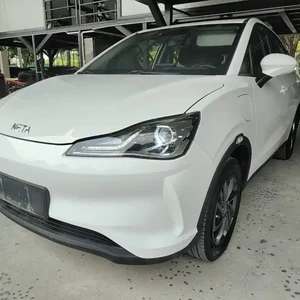
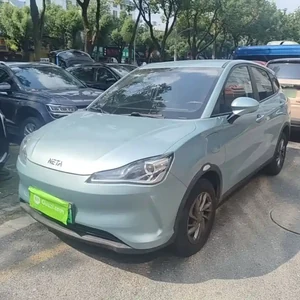
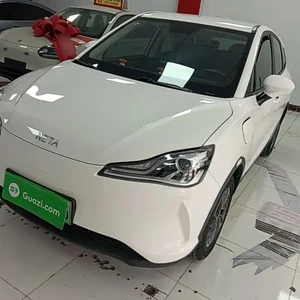
View all listings →Real units currently on ChinaCarDirect with per-unit asking prices and MOQ. Availability updates live from the catalogue.
How to buy a Nezha Auto V from China
-
1
Define the operating requirement
Map daily routes, charging locations, payload, climate, and expected annual mileage. Use those requirements to select the standard- or long-range trim before comparing commercial terms.
-
2
Buy Nezha Auto V from China
Review the [live Nezha Auto V listings](https://chinacardirect.com/products?q=V&brands%5B%5D=1320) and compare equivalent configurations, condition, documentation, and displayed MOQ.
-
3
Verify the exact vehicle specification
Request the approved specification sheet, battery data, motor rating, charging details, dimensions, equipment list, VIN or chassis identity, and warranty terms for the selected unit.
-
4
Request a destination-specific quote
Specify the destination, Incoterm, required documentation, and intended vehicle quantity. Ask the supplier to separate vehicle cost, freight, insurance, documentation, and destination charges.
-
5
Confirm MOQ and payment terms
Agree the quantity, availability, pro forma invoice, deposit, inspection milestone, balance-payment trigger, refund terms, and warranty commencement in writing before transferring funds.
-
6
Inspect before shipment
Use an independent inspection for a new or used vehicle, paying particular attention to panel condition, mileage, battery health, warning lights, accessories, and identity documents. Correct discrepancies before final payment.
-
7
Arrange freight and compliance
Book the appropriate Ro-Ro or container route after confirming battery preparation, insurance, risk-transfer point, charging equipment, homologation, customs classification, and destination registration responsibilities.
V vs rivals
| BYD Atto 3 | The Atto 3 is a mainstream compact-electric SUV with stronger global recognition and potentially broader dealer familiarity, depending on the destination. The V is a more compact, value-oriented option with distinct standard- and long-range equipment trims, so the better choice depends on verified local support and landed cost. |
|---|---|
| MG ZS EV | The MG ZS EV offers a more established export identity and familiar small-SUV packaging. The V may provide different range and equipment choices, but buyers should compare homologated charging, software, parts support, and resale rather than assume either brand is automatically easier to operate. |
| Dongfeng BOX | The Dongfeng BOX is a close budget-oriented compact-EV rival, making it a useful apples-to-apples check on packaging and configuration. The V’s entertainment and smart trim structure adds choice, while the deciding factor will be battery specification, warranty, parts access, and total landed cost in the intended market. |
Frequently asked questions
How is Nezha Auto V export pricing determined?
Pricing is driven by trim, range package, model year, condition, mileage, equipment, currency movements, freight, insurance, and the selected Incoterm. The live listing shows the current per-unit asking figure and MOQ, but buyers should request a destination-specific quotation for the binding landed cost.
What powertrain and range details should I verify?
The V is a battery-electric vehicle offered with Standard Range and Long Range versions, including Entertainment Upgrade and Smart Edition configurations. Exact battery capacity, usable capacity, motor output, charging times, test-cycle range, and curb weight vary by configuration and should be confirmed on the live listing and approved specification sheet.
Is a new or used Nezha Auto V better for export?
New units generally provide clearer condition history and simpler warranty administration, while used units can suit buyers with a carefully structured launch budget. A used example requires specific evidence on battery health, mileage, service history, accident repair, and flood exposure before it can be valued correctly.
How does MOQ work for the Nezha Auto V?
MOQ is set by the individual seller and listing rather than by the model or marketplace as a whole. A supplier may accept a single vehicle or require a project lot, so buyers should confirm the quantity, price treatment, availability, and release conditions in the written quotation.
What determines shipping time and cost?
Shipping time depends on the route, sailing or vessel availability, transshipment, port congestion, customs clearance, and inland delivery. Cost is influenced by the transport mode, vehicle dimensions, destination, insurance, terminal charges, Incoterm, and shipment quantity; freight quotations should be requested for the exact route.
Are spare parts available for the Nezha Auto V?
Parts availability depends on the destination, exact vehicle specification, and the supplier’s technical support arrangements. Before ordering, obtain a parts list, identify diagnostic and repair requirements, confirm warranty procedures, and establish realistic lead times and shipping channels for commonly needed components.
Is a right-hand-drive Nezha Auto V available for export?
Right-hand-drive availability cannot be assumed and must be checked for each listing. A Chinese left-hand-drive vehicle should not be treated as an equivalent right-hand-drive import, and any conversion must be assessed for local homologation, warranty, parts, and safety implications.
How do I order a Nezha Auto V from China?
Start with the live inventory, select the relevant trim, and request a written quotation for your destination and Incoterm. After confirming the specification, MOQ, payment milestones, documents, inspection, freight, and compliance steps, use a formal pro forma invoice and keep every transaction record together.
Ready to source the Nezha Auto V?
Request a tailored quote for your selected Nezha Auto V configuration, quantity, and destination.
Request a quote