
NIO Es6 Export Buying Guide for Overseas Buyers
NIO Es6 export buying guide covering battery options, pricing factors, MOQ, shipping, compliance and key rivals for dealers and importers worldwide.
At a glance
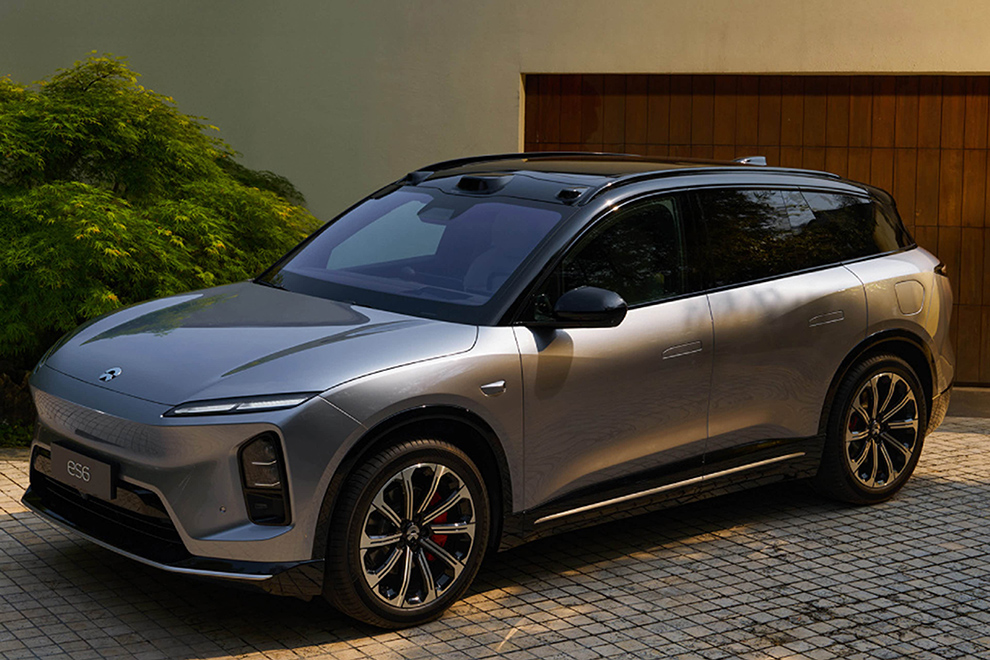
- The Es6 is a five-seat premium battery-electric SUV with dual-motor all-wheel drive.
- Export naming includes 75 kWh and 100 kWh battery versions, while a 600KM Sport designation may also appear.
- Choose on homologated range, charging fit, battery-swap access and aftersales—not brochure styling alone.
- New units simplify warranty and preparation; a used NIO Es6 needs battery-health and title evidence.
- ChinaCarDirect's live inventory shows current per-unit price, listing-specific MOQ and availability; compare them with landed cost.
Why the NIO Es6 matters for export markets
For overseas dealers, the NIO Es6 is best understood as a premium, five-door battery-electric SUV from China that competes with globally familiar premium crossovers. Its appeal is not simply that it is an export name: the model combines a dual-motor layout, two battery naming options and China-market technology in a conventional SUV package. This makes a NIO Es6 for export interesting to buyers seeking product differentiation without entering the full-size luxury SUV class. It also suits dealers that want an EV with a clear performance identity, while remaining more manageable operationally than a large luxury SUV.
Demand should be assessed market by market rather than inferred from the model’s popularity in China. Overseas buyers are likely to respond to the Es6’s clean design, strong electric performance, available battery choices and technology-rich cabin, but those benefits become commercial only where charging, software support and aftersales are credible. The model therefore fits dealers with an EV service team, or importers willing to build a self-sufficient support plan before taking stock. That distinction is more important than assuming international recognition will automatically translate into showroom demand or fleet adoption without local support.
Positioning differs between private, dealer and fleet use. A private buyer may value the Es6’s premium cabin, electric performance and distinctive badge more than broad resale recognition. A dealer can use it to offer something visibly different from the Tesla Model Y or Hyundai Ioniq 5, provided it can explain charging access, software features and maintenance arrangements. For fleets, controlled charging and predictable residual values matter more than visual novelty. A rollout should begin with a limited model mix and a service readiness plan rather than a broad assumption that every market will absorb it.
- Premium electric SUV positioning.
- Battery choice varies.
- Charging and service drive demand.
Model range, trims and powertrain variants: how the lineup is structured and how to choose
The NIO Es6 specs buyers encounter in export listings are shaped by two ideas: a consistent electric-SUV platform and several battery or trim designations. Listing names can include 75 kWh, 100 kWh, 600KM Sport or Model 100kWh Sport. These labels help identify likely configurations, but they do not guarantee that similarly named units share the same motor output, equipment, charging hardware or homologated range. Always read the VIN-linked specification sheet. The suffix may indicate a presentation package rather than a separate drivetrain, so package content should be verified rather than inferred.
Choosing between the 75 kWh and 100 kWh versions starts with the duty cycle. The smaller-pack option can suit routes with dependable charging and a focus on lower mass and charging convenience; the larger pack is generally more relevant when long intercity travel, heavier payloads or fewer charging stops are priorities. Neither label alone states usable range. The stated “600KM” in some names may refer to a particular cycle, while local homologation, weather, speed and elevation can change the result. Ask for the official range test and real-world consumption assumptions for that exact vehicle.
The Es6 uses electric propulsion and a dual-motor all-wheel-drive layout, making acceleration, traction and efficiency more important than engine-transmission choices. Buyers should also establish whether the unit relies on conventional charging, can use a battery swap, or requires both. Battery swapping is only a practical advantage where compatible packs, station access and operator approval exist; it must never be assumed to work outside a supported market. Before ordering, request the charging connector standard, maximum AC and DC acceptance, battery warranty terms and evidence of the latest software and safety updates for the destination market.
- 75 kWh and 100 kWh packs.
- 600KM labels are version-specific.
- Verify charging and swap support.
New vs used NIO Es6: how export inventory is structured and how buyers choose
Export inventory should be read as a changing mix of new vehicles and used NIO Es6 units, each with different documentation and risk profiles. New listings normally present the simplest ownership pathway because the buyer can compare standardized trim, battery and equipment descriptions and may carry manufacturer warranty coverage. Used examples can offer a different acquisition basis, but age, mileage, prior use and repair history become central to both price and suitability. The category label alone does not reveal battery health, software status or whether a unit has been prepared for export.
A new Es6 is generally the stronger candidate for a dealer launch, a company fleet or a customer seeking straightforward warranty support. It avoids the uncertainty of wear at the battery, motors, high-voltage cabling and suspension, while giving the importer a clearer basis for preparing the vehicle for local registration. The trade-off is that the acquisition commitment is higher, and some buyers may prefer the lower entry point of an older vehicle. That comparison should be based on total operating and preparation costs, not on the advertised purchase figure alone.
For a used NIO Es6, insist on the VIN, service records, battery-state-of-health report, current software status and photographs of the underbody, wheels and charging port. Ask whether the vehicle was used as a rental, demo or fleet car and whether any battery pack was repaired or replaced. Independent inspection is especially valuable because the same model name can cover different battery generations and equipment packages across model years. A clean exterior alone cannot establish mechanical condition, so reject unexplained gaps in records or seller reluctance to permit a proper high-voltage inspection.
- New units simplify preparation.
- Used units need health evidence.
- VIN checks reduce ambiguity.
How export pricing works: the factors behind a live listing price, and how to read one
An NIO Es6 export price guide should explain the factors behind a live quote rather than publish a fixed figure that will age quickly. The vehicle’s model year, trim, battery version, mileage, condition and options affect its commercial value. The seller’s location, exchange rate, inland transport, export documentation, freight, insurance and chosen Incoterm then determine what the buyer must pay. Exchange rates and logistics can move even when the underlying vehicle does not. Treat the live listing as the starting point, not necessarily the total landed cost of importing the vehicle.
Read each live Es6 listing line by line. Confirm the exact model year, battery label, trim, drivetrain, odometer, condition, options, VIN and location. Check whether the displayed amount is a vehicle-only export price, whether it includes export clearance, and which Incoterm is stated. Compare equivalent configurations rather than a 75 kWh listing with a 100 kWh listing or a different model year; otherwise the apparent difference will reflect the car, not the export process. Ask for a written quotation tied to the SKU and VIN so the comparison remains auditable.
Buyers who want to buy NIO Es6 from China should build a landed-cost sheet for every serious candidate. It should separate the live vehicle quote, inland trucking, origin handling, freight, marine or air insurance, destination terminal charges, customs duty, VAT or sales tax, compliance work and final delivery. Local taxes are especially easy to overlook because they may not appear in the marketplace listing. Request an all-in quotation and identify which party bears each cost. This prevents a cheaper vehicle quote from becoming a more expensive delivered vehicle after hidden charges emerge.
- Use live unit-specific quotes.
- Separate price from landed cost.
- Compare equivalent configurations.
MOQ, ordering and payment: single units vs consolidating a container
MOQ is a commercial condition, not a universal property of the NIO Es6. Each live listing should state its own requirement, and a seller may accommodate a direct retail shipment while applying different terms to wholesale or container orders. Do not assume either a mandatory multi-vehicle commitment or blanket permission to mix configurations without confirmation. The buyer should ask what quantity the quoted price covers and whether a single-unit order incurs the same preparation and freight assumptions. Any discount tied to volume should be written into the pro forma invoice.
Consolidating several Es6 units into one container or consolidated shipment can improve freight efficiency, but it changes the buying problem. Mixed model years, battery versions and trims may complicate spare-parts planning, homologation and resale. A container also concentrates risk: one damaged or incorrectly documented vehicle can affect the whole group. Compare the saved unit freight cost with additional handling, inspection, insurance and the working capital tied up before shipment. For NIO Es6 wholesale planning, standardize the battery and trim mix where possible and define responsibility for damage before cargo is consolidated.
A safe ordering process starts with a unit-specific pro forma invoice, then moves through deposit, balance payment, production or stock confirmation, inspection and release. Verify that the seller’s legal identity, the vehicle VIN, the beneficiary name and the refund terms are consistent across the contract and payment instructions. For a used vehicle, confirm export title and lien status; for a new vehicle, confirm that it is not financed or pledged. Keep every inspection and shipping document with the final file. Never send an unmatched transfer to a newly introduced third-party account.
- Confirm listing-specific MOQ.
- Standardize consolidated configurations.
- Link payments to verified documents.
Shipping, homologation and market compliance caveats: LHD/RHD and import rules by country
Steering-hand configuration is only the first export check. A China-built Es6 may be offered in left-hand-drive or right-hand-drive form, but availability must be confirmed for the exact source vehicle rather than inferred from the model name. Import rules, registration documents and charging access vary by country. Before contracting, ask the supplier for the VIN, steering side, exterior lighting specification, odometer format and evidence of any prior conformity assessment. A vehicle adapted for one market can still need local approval for lighting, emissions, noise, safety or software features before registration is completed.
Electric-battery logistics require early coordination. Ask the freight provider to confirm acceptance of the vehicle’s battery configuration, the applicable dangerous-goods classification, UN 38.3 test information and the required shipper declarations. The route, packing approval, port handling and insurer all affect whether the cargo moves without disruption. At destination, confirm connector type, voltage, charging access and whether the proposed battery-swap solution is actually supported in that country. If conventional charging is the dependable plan, validate adaptor availability and local service capability before the vehicle ships rather than assuming compatibility from the Chinese specification.
Compliance is not finished when the vehicle clears customs. Local authorities may regulate emissions reporting, charging equipment, software updates, cybersecurity, radio equipment, data handling and recall service. Confirm whether the export unit includes functions intended for the destination market and whether NIO or an authorized distributor can support diagnostics and repairs there. Obtain insurance that recognizes the vehicle during transit and after delivery, and budget for registration, inspection, adapters, accessories and any homologation work. The importer should document each approval rather than relying on a general statement that the car is export-ready.
- Confirm LHD or RHD.
- Validate battery transport paperwork.
- Plan local homologation and support.
Who should buy the Es6 — and who should pick a different vehicle
The Es6 is a strong candidate for an importer or dealer that wants a premium China-origin electric SUV, differentiates a showroom and can support a disciplined rollout. It is particularly suitable for buyers with controlled charging who value dual-motor performance, a technology-focused cabin and the option to compare different battery packs. The case is strongest when the operator has already answered the difficult questions about parts, software, battery service and destination-market approval. It is less convincing as an untested volume import supported only by attractive launch economics and availability alone.
For fleet procurement, the Es6 can suit executive pools, sales demonstrations, airport services and other operations with dependable charging. Central procurement can reduce charging uncertainty and consolidate technical training, but drivers still need clear policies for charging, cleaning, keys and energy reimbursement. Assess total cost rather than vehicle acquisition alone, including insurance, tires, servicing, residual-value support and the business cost of downtime when a fault cannot be resolved locally. A smaller controlled pilot is more prudent than broad deployment before charging load and maintenance turnaround have been tested in practice.
Choose another vehicle when dependable right-hand-drive supply, ubiquitous service, a simple charging standard or instant parts access is the overriding requirement. Buyers prioritizing a conservative resale market may also prefer a model with a deeper local dealer network. High-mileage fleets should assess duty cycle and total cost carefully rather than assuming premium EV credentials translate into low operating costs. The Es6 makes more sense as a deliberate, supported import than as a generic substitute for every premium SUV. Local charging access can be as decisive as the vehicle specification itself.
- Best for controlled EV rollouts.
- Useful for charging-managed fleets.
- Poor fit without service or RHD access.
Main rivals and how the Es6 compares
The Tesla Model Y is the most obvious global benchmark because it occupies the same premium electric-SUV demand pool. Its globally visible brand, extensive owner familiarity and established charging approach can reduce a buyer’s perceived risk. The Es6 competes through a more conventional dealer-led purchase, dual-motor sophistication, different cabin and software character, and larger-battery or swap-oriented options where supported. The deciding issue for an importer is local service and charging fit, not headline acceleration alone. Test both vehicles with the same route, charging assumptions and customer profile before selecting one.
The Hyundai Ioniq 5 occupies a similar family-and-business crossover position but brings a distinctive cabin and charging-oriented vehicle architecture. Its name is more familiar in many international markets, which may help with showroom conversations and used-value expectations. NIO counters with a more performance-led dual-motor specification, a premium badge and a China technology proposition. For fleet buyers, the Ioniq 5’s regional support and charging compatibility may be the safer operational choice. The Es6 is more compelling where its design, technology and battery options can be demonstrated without relying on a weak service footprint.
The Audi Q4 e-tron is a more direct premium-brand comparison for buyers who value established luxury positioning and access to a familiar dealer channel. Audi may offer greater confidence in conventional service and resale in markets with a strong Audi network. The Es6 can appeal through more China-specific technology, available battery-pack choices and a potentially distinctive customer proposition. Neither is automatically the better import: certification, parts, charging hardware and support in the destination country determine practical ownership. Compare landed compliance and service access rather than badge familiarity or assumptions alone.
- Model Y: strongest global familiarity.
- Ioniq 5: distinctive charging-led design.
- Q4 e-tron: premium dealer benchmark.
Live NIO Es6 export inventory
View all listings →Real units currently on ChinaCarDirect with per-unit asking prices and MOQ. Availability updates live from the catalogue.
How to buy a NIO Es6 from China
-
1
Define the destination and duty cycle
Identify the country, steering side, charging plan, route profile and aftersales coverage before choosing a battery version. This prevents a technically attractive unit from becoming difficult to register or operate.
-
2
Shortlist equivalent live listings
Review the current Es6 inventory and compare the same model year, trim, battery version, condition and options. Use each live listing for its current per-unit price, stated MOQ, location and seller terms.
-
3
Verify the VIN-linked configuration
Request the VIN, battery capacity, motor and drivetrain description, homologated range, charging connector, equipment list, service history and export-title documents. Treat the 600KM label as version-specific until confirmed.
-
4
Pre-clear market compliance
Ask the supplier and destination specialist to check local type approval, LHD/RHD suitability, lighting, software, emissions, radio and data requirements. Confirm battery-transport paperwork with the freight provider.
-
5
Request a landed-cost quotation
Ask for the vehicle price, origin charges, freight, insurance, Incoterm, destination fees, duties and taxes separated clearly. This makes similarly configured Es6 units comparable and exposes costs omitted from the headline listing.
-
6
Place the order with safeguards
Match the contract, pro forma invoice and beneficiary details, and agree deposit and balance milestones against stock confirmation and inspection. Retain title, payment, refund and dispute terms in the agreement.
-
7
Inspect, release and ship
Complete the agreed pre-shipment inspection, verify VIN and damage records, secure transport and export documents, and track customs clearance. On arrival, complete local registration checks before customer handover.
Es6 vs rivals
| Tesla Model Y | The Model Y has stronger global brand recognition and a familiar charging proposition, often reducing perceived ownership risk. The Es6 is the stronger fit for dealers seeking a more distinctive China premium SUV with dual-motor performance and battery choices, provided local service and charging support are established. |
|---|---|
| Hyundai Ioniq 5 | The Ioniq 5 offers a distinctive charging-oriented crossover design and greater international brand familiarity in many markets. The Es6 provides a more performance-led premium alternative with dual motors and a broader battery-choice proposition, but support quality should decide fleet suitability. |
| Audi Q4 e-tron | The Q4 e-tron gives buyers an established premium marque and familiar luxury-dealer channel, which can reduce perceived import risk. The Es6 competes through China-specific technology, battery options and a more distinctive customer proposition, making local certification and servicing the decisive factors. |
Frequently asked questions
How is the NIO Es6 export price determined?
A live export price reflects the vehicle's year, trim, battery version, mileage and condition, then incorporates location, exchange rate, inland handling, freight, insurance, documentation and the selected Incoterm. Duties and destination charges may sit outside it. Compare the vehicle-only quote and landed cost separately, and use the current per-unit price shown in the live Es6 inventory.
What powertrain and range should I expect?
The Es6 is a battery-electric SUV with dual-motor all-wheel drive. Export naming can include 75 kWh, 100 kWh and 600KM Sport variants, but capacity, motor output, equipment and homologated range can differ by version and test cycle. Confirm the VIN-linked specification and usable range rather than assuming every 600KM label is comparable.
Is a used NIO Es6 suitable for export?
A used NIO Es6 can suit buyers prioritizing acquisition cost, but age and mileage do not reveal battery condition by themselves. Request a VIN, service history, battery state-of-health report, software status, repair disclosures, title and export documents, and include an independent high-voltage inspection in the purchase conditions.
Is there a standard MOQ for the NIO Es6?
No single MOQ should be assumed across the catalogue or a particular market. Check the quantity stated on each live listing and ask the seller whether a direct shipment is accepted, whether mixed configurations are allowed and what terms apply to a consolidated order. Any volume commitment or discount should appear in the pro forma invoice.
What determines shipping time and cost for an Es6?
Shipping time and cost depend on origin and destination, vessel or air capacity, consolidation, battery acceptance, port handling, documentation, insurance and customs clearance. Longer routes may lower freight cost but increase transit and working-capital exposure, while faster service can cost more. Obtain a route-specific freight quote and confirm the battery's dangerous-goods documentation before booking.
Can spare parts and battery service be supported abroad?
Support depends on whether NIO or an authorized partner covers the destination market and whether the China-spec configuration has an equivalent parts catalogue. Ask for diagnostic capability, common wear-item availability, battery-module support, software procedures and lead-time expectations. If battery swapping is intended, compatible packs and station access must be confirmed independently of ordinary spare-parts supply.
Is a right-hand-drive NIO Es6 available for export?
Right-hand-drive availability cannot be assumed from the model name; it must be confirmed for the source unit and destination market. The steering side does not remove local type-approval, lighting, emissions, software or charging requirements. Secure the VIN and configuration in writing before shipment, particularly for a multi-vehicle order.
How do I order a NIO Es6 from China?
Start with the live Es6 inventory, compare equivalent units and request a written, VIN-linked quotation with the Incoterm and listing-specific MOQ. After confirming documents, payment milestones, inspection, freight and insurance, complete the order and retain the signed contract, invoice, inspection record and shipping file. Use the RFQ channel when a bespoke specification or consolidated shipment is required.
Ready to source the NIO Es6?
Request a unit-specific NIO Es6 quotation and compliance checklist through ChinaCarDirect's RFQ team.
Request a quote