
NIO Es8 Export Buying Guide for Overseas Dealers
Plan a NIO Es8 export purchase with guidance on trims, battery options, live pricing, MOQ, shipping, homologation and rival vehicles for overseas dealers.
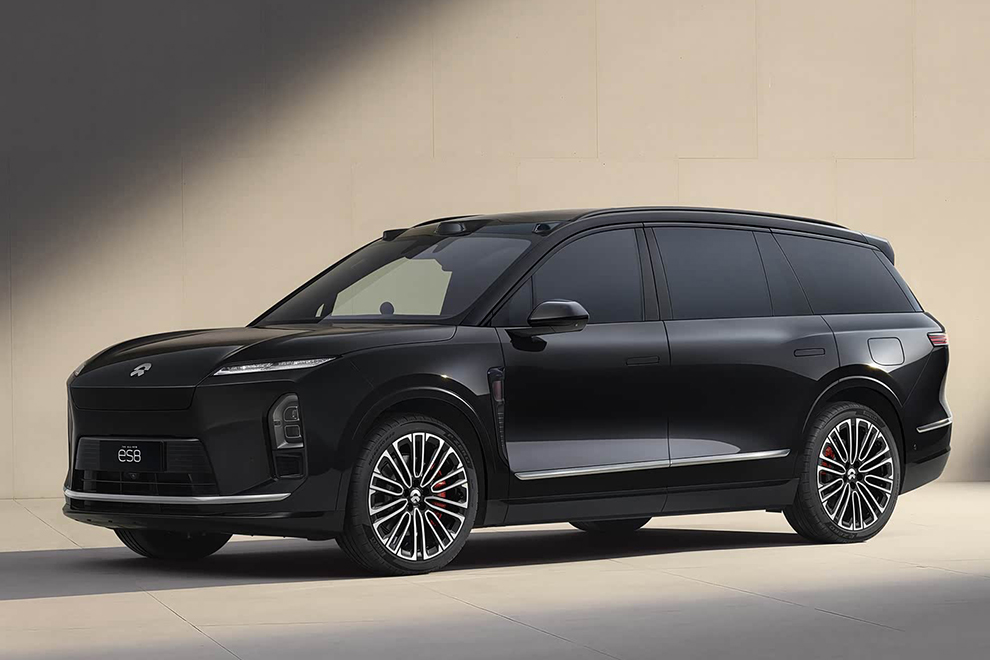
At a glance
- The Es8 is a full-size battery-electric SUV with six- and seven-seat configurations for premium passenger use.
- Battery identifiers include 75 kWh and 100 kWh packs, while range labels vary by generation and test cycle.
- Buyers should compare battery, seating, trim and motor configuration for each VIN rather than relying on the model name.
- Export pricing must be assessed from the live listing and converted into a landed cost under a confirmed Incoterm.
- Charging access, parts, software support, homologation and RHD availability can outweigh a favorable vehicle quote.
Why the NIO Es8 matters for export markets
The NIO Es8 is a full-size, premium battery-electric SUV offered in six- and seven-seat layouts. Its appeal for an overseas buyer comes from combining a large passenger cabin, electric range and a high specification with a China-built vehicle that may be more practical to source than a similarly positioned luxury model from a Western factory. For dealers and fleet operators, the Es8 is therefore best understood as a premium people mover rather than an entry-point mass-market SUV. That positioning suits passenger transport, hospitality and executive use, but it also raises expectations for software support, spare-parts access and local servicing.
Export demand is most credible where the vehicle can be supported properly: affluent urban buyers value quiet operation, cabin space and technology, while family buyers respond to the choice between six seats and a more flexible seven-seat cabin. The model also gives fleet buyers a visible premium product without requiring a combustion engine. However, NIO-specific features should not be assumed to work automatically outside China, especially battery swapping, digital services and over-the-air support. Dealers should therefore evaluate the complete ownership experience in the destination market, not just the vehicle's specification sheet or appeal in China.
For a business case, the Es8 belongs with vehicles that can justify premium operating costs through passenger comfort, image or utilization. Long routes require realistic charging plans, while urban shuttle work may favour lower running costs but still demands high uptime. The strongest case is usually a controlled fleet with predictable routes, charging access and an established service partner; the weakest is an unsupported, speculative resale purchase made without confirming demand in the destination country. Before committing, model the charging duty cycle, downtime cost, insurance classification and likely resale channel against the vehicle's delivered specification.
- Six- or seven-seat layouts
- 75 and 100 kWh batteries
- Local support decides viability
Model range, trims and powertrain variants: how the lineup is structured and how to choose
The Es8 lineup should be read by seating, battery, equipment level and model generation, not by one headline configuration. Relevant listing names include Base Model six- and seven-seat versions, 75 kWh Executive, 100 kWh Executive, Signature and 6-Seat Executive Luxury editions. These labels describe different buyer propositions: a base fleet vehicle, an executive-oriented cabin, a signature specification or a six-seat luxury-focused car. Exact equipment can change between production years. A buyer should therefore match the exact trim name to a VIN, production year and specification sheet before treating two Es8 listings as equivalent.
Battery choice is a central decision. The export-facing names clearly identify 75 kWh and 100 kWh versions, while older Es8 listings also carry 415 km, 450 km and 580 km range identifiers. Those numbers must be interpreted with the applicable test cycle and the corresponding vehicle specification; they are not automatically comparable across generations, seat layouts or markets. A nominally larger pack can also change price, charging requirements and expected residual value. For fleet planning, compare the rated range with the longest duty cycle, climate, load and charging window, then request the official range label for the exact unit.
Choose the six-seat version when executive comfort, rear-seat space and a lower-capacity three-row package matter more than occasional seventh-row flexibility. Choose seven seats for families, VIP transport or shuttle work where the third row must be usable. Then verify motor count, rated output, drive layout, battery capacity, range label and charging method for that vehicle, because Es8 specifications have changed across generations. The live listing should provide the starting point; the seller's specification sheet and VIN should provide the confirmation. That sequence avoids paying for features or capacity that the delivered vehicle does not actually have.
- Match trim to VIN
- Compare range by test cycle
- Choose seats by duty cycle
New vs used NIO Es8: how export inventory is structured and how buyers choose
New-inventory sourcing is organized around model year, trim, seating and battery version, so two Es8 units can differ materially even when both are described as new. A newer vehicle may offer a later generation, revised electronics and a factory warranty, while an earlier unit can be more appropriate when a buyer wants a known configuration at a lower acquisition level. The key is to establish whether a vehicle is genuinely unused, has never been registered, and carries the expected factory protections before discussing shipment. A model-year label alone does not answer every question.
A used Es8 can make sense for a budget-conscious buyer who accepts more uncertainty and wants the familiarity of a settled production model. Purchase risk shifts from model-year availability to condition: battery state of health, accident repair, flood exposure, suspension and brake wear, cabin wear, software status and the validity of remaining warranty all require evidence. Because battery health is hard to judge from a listing photograph, a documented diagnostic report and an independent pre-shipment inspection should be treated as essential controls. Ask for the battery report, service records and repair history by VIN.
The decision should follow the buyer's risk tolerance and mission. A premium fleet, hotel group or rental operator that values warranty, consistent software and predictable handover may prefer a new unit, while an experimental importer may accept a used vehicle to limit capital at risk. Used does not automatically mean cheaper after freight, duty, inspection and remediation; nor does new guarantee local suitability. Compare total delivered cost and support requirements before deciding, and check current availability in the ChinaCarDirect live inventory rather than assuming a particular model year can be sourced.
- New: warranty clarity
- Used: battery evidence
- Compare delivered cost
How export pricing works: the factors behind a live listing price, and how to read one
An Es8 export price is built from the specific vehicle's economics, not from one fixed catalogue figure. Model year, trim, seating, battery version, range specification, options and condition normally move the base price. For a used vehicle, mileage, service history, battery condition and cosmetic work become major variables. The exporter also converts the supplier's cost at the prevailing exchange rate, so a displayed amount can move even when the physical vehicle has not changed. For fleet buyers, this makes equivalent-unit comparison essential: the cheapest headline may represent an older battery, smaller capacity or a different seating package.
The listing price also has a delivery boundary. Depending on the seller's Incoterm, it may cover the vehicle in China only, port handling, sea freight, or delivery to a named place. A buyer must add or subtract the costs that sit outside that boundary: domestic transport, export documentation, marine or air cargo insurance, terminal charges, customs brokerage, duties, taxes, registration, compliance modifications and local delivery. Exchange-rate movements between quotation and payment can further change the final invoice, particularly for a multi-vehicle order. Ask for a written landed-cost estimate with exclusions stated explicitly.
To read a live Es8 listing correctly, open the unit record rather than relying on a search-page headline. Confirm the VIN or SKU, model year, exact trim, seat count, battery, range label, condition, included options, stated MOQ and Incoterm, then inspect the images and ask for missing documents. ChinaCarDirect live listings provide the current per-unit price, stated MOQ and availability, but the seller or broker should confirm quote validity, lead time and whether any shown price includes export charges. Compare like with like before sending an RFQ or deposit. Request a written pro forma quotation.
- Match year, trim and battery
- Confirm Incoterm and validity
- Budget landed cost separately
MOQ, ordering and payment: single units vs consolidating a container
MOQ is a commercial term that must be confirmed for the selected listing; it is not a permanent property of every Es8. For pilot sales, vehicle testing or a small executive fleet, ask whether the seller accepts a single unit and how the order is allocated to a shipment. For a full container, the buyer may be asked for a larger quantity or a deposit. The live listing shows any stated purchasing condition, but an RFQ should still record the quantity, production allocation and consequences of a quantity change in writing.
Consolidating several Es8 units can spread fixed freight and handling costs, but it also concentrates risk. A mixed container may include different years, seat counts, batteries and equipment levels, making it harder to sell the surplus or maintain one specification. Capital is tied up longer, while customs, storage and demurrage can arise if declarations, documents or deliveries are delayed. Before consolidating, model the total payment schedule, working-capital requirement and exit plan for each non-standard configuration. Use a unit-level sheet to show which VIN belongs to which deposit, shipping document and customer order.
A disciplined payment process reduces the chance that vehicle identity and funds become disconnected. After the specification is frozen, request a pro forma invoice showing the seller, vehicle, price, quantity, Incoterm, deposit, balance trigger, production or inspection milestone, and bank beneficiary. Verify those details against the signed contract and the legal entity; do not rely on a payment instruction sent only through chat. An inspection and document-verification milestone before the balance payment can protect both sides, particularly when the shipment will take place before the vehicle reaches the destination market.
- Confirm listing MOQ
- Track each VIN
- Tie payment to inspection
Shipping, homologation and market compliance caveats: LHD/RHD and import rules by country
Shipping begins with the vehicle configuration, especially left- or right-hand drive. China-origin Es8 examples are commonly supplied in left-hand-drive form, while right-hand-drive demand is market-specific and supply can be limited. Do not assume a steering conversion will make a unit compliant or desirable. Confirm the VIN, steering side, instrument and lighting specifications, seat-belt arrangement, mirrors, charging connection and local display language. A genuine RHD example with traceable documents is generally safer than an improvised conversion. Destination-country type approval may still be required even when the vehicle was originally built for that market.
Electric vehicles can be imported, but each country applies its own vehicle-type approval, customs, tax and infrastructure rules. The importer may need the manufacturer certificate, VIN and conformity documents, battery safety paperwork, charging-equipment compatibility evidence and emissions or cybersecurity information appropriate to the BEV category. Customs and the local authority—not only the exporter—should confirm requirements. Duties, VAT, registration taxes, insurance classes and incentive eligibility can alter the business case substantially, so build them into the approval stage rather than after the vehicle has sailed. Use an experienced local vehicle importer.
Freight planning must account for the method, route, port, carrier and insurance rather than treating transport as a fixed fee. A professional buyer asks the freight forwarder whether the vehicle can be loaded as a conventional used vehicle, what battery-related declarations or handling instructions apply, and who is liable for damage from loading to delivery. Ro-ro, container and specialist cargo options have different cost and timing trade-offs. Also establish local towing, diagnostics and parts support before dispatch; battery-swap access is not guaranteed simply because the Es8 supports the NIO ecosystem.
- Confirm RHD supply
- Validate type approval
- Insure before movement
Who should buy the Es8 — and who should pick a different vehicle
The Es8 fits buyers who need a premium passenger vehicle with genuine seven-seat flexibility or a six-seat executive layout. It is particularly relevant to hotels, corporate transport programs, VIP services, airport operations and family-market importers with access to dependable charging. Its size and equipment create a strong product for buyers who prioritize cabin comfort, quiet electric propulsion and a high-end brand image over the lowest possible acquisition cost. A six-seat vehicle can also serve chauffeur or executive fleet duty when the third row is rarely required in regular daily operation.
Even a good vehicle becomes a poor purchase without an operating ecosystem. Before ordering, map charging sites along expected routes, confirm connector and voltage requirements, and assess winter or heat effects on usable range. Ask how warranty claims, software faults, replacement parts and battery work will be handled locally. A country with limited NIO recognition may still support the car through multi-brand EV specialists, but resale will depend more heavily on local service confidence, data and charging standards than the badge alone. Those factors can outweigh a favorable purchase quote.
Some buyers should choose a different vehicle. A budget importer seeking the lowest acquisition cost may find a smaller EV or a more widely serviced model easier to support. A commercial operator carrying cargo, tools or equipment at the limit may prefer a van or pickup rather than a premium SUV. Drivers without reliable charging should investigate range-extended or combustion alternatives. In right-hand-drive markets with no secure RHD supply, waiting for a suitable vehicle may be safer than modifying one. The decision is not only what the Es8 offers, but whether its complete ownership case remains sound after registration.
- Premium passenger work
- Charging access matters
- Choose alternatives when support fails
Main rivals and how the Es8 compares
The closest direct rival is the Tesla Model X because it is also a large electric SUV with six- or seven-seat capability and no tailpipe emissions. Buyers comparing the two should test usable cargo space, loading height, ride comfort, software familiarity, charging access and service coverage rather than relying on headline range. Model X may command a different acquisition and ownership profile, but its longer-established international recognition can reduce perceived resale risk. The Es8 counteroffers a more China-focused technology and cabin proposition with greater emphasis on executive space and seating choice.
Li Auto L9 and AITO M9 compete for a different but important part of the premium large-SUV market: buyers who want a commanding six-seat cabin and strong family transport without depending entirely on charging. Relevant versions of the Li Auto L9 and AITO M9 use range-extended drivetrains, giving them a different operating logic from a pure BEV, while their software and support ecosystems remain market-specific. They can be more intuitive for operators concerned about long routes, but buyers should compare fuel rules, luggage packaging, service access and the ability to charge regularly before using them directly as Es8 substitutes.
No rival wins every market without the importer's conditions. The Es8 is strongest where charging is dependable, six- or seven-seat demand is demonstrable and the buyer can secure parts, software and technical support. Model X is a safer global-brand comparison where that matters more than the Es8's China-specific feature set. L9 or M9 may suit route patterns that favor range extension. Before a final decision, compare delivered cost, expected utilization, charging or fuel requirements, homologation, warranty handling and resale prospects on the same basis. The right rival is the one that best fits the operating country.
- Model X: direct BEV rival
- L9 and M9: range-extender options
- Compare operations, not range alone
Live NIO Es8 export inventory
View all listings →Real units currently on ChinaCarDirect with per-unit asking prices and MOQ. Availability updates live from the catalogue.
How to buy a NIO Es8 from China
-
1
Set the duty cycle and destination
Define passenger capacity, route length, charging access, preferred trim and destination-country requirements before selecting a vehicle.
-
2
Shortlist exact Es8 configurations
Review the ChinaCarDirect live listings and compare model year, seat count, battery, range label, trim and stated MOQ on a like-for-like basis.
-
3
Verify identity and documents
Request the VIN, specification sheet, battery details, photos, service or warranty status and all available conformity documents.
-
4
Request a written landed quote
Ask the seller to confirm the current per-unit price, Incoterm, inclusions, exclusions, quote validity and payment schedule in a pro forma invoice.
-
5
Confirm MOQ and payment milestones
State the required quantity in the RFQ, identify each VIN and tie the balance payment to document verification and the agreed inspection milestone.
-
6
Complete compliance and freight booking
Use a local importer and qualified freight forwarder to confirm type approval, customs treatment, battery paperwork, insurance and the charging or service plan.
-
7
Inspect, ship and register
Complete the pre-shipment inspection, reconcile the VIN with shipping documents, track the vehicle and complete destination registration.
Es8 vs rivals
| Tesla Model X | The Model X is the closest global BEV comparison, offering a similarly large electric SUV format with flexible seating. It may appeal to buyers prioritizing international brand recognition and charging familiarity, while the Es8 emphasizes executive space and a China-focused technology proposition. |
|---|---|
| Li Auto L9 | The L9 competes for premium family and executive transport buyers through a large six-seat cabin and range-extended operating logic. It may be more suitable where dependable charging is uncertain, but it is not a direct battery-electric substitute for the Es8. |
| AITO M9 | The AITO M9 is a close premium large-SUV alternative for buyers seeking six-seat luxury and long-route flexibility. Its range-extended versions serve a different use case, and both brands' software and aftersales ecosystems require destination-market support. |
Frequently asked questions
How is NIO Es8 export pricing determined?
The price reflects the exact model year, trim, seating, battery version, options, mileage, condition, exchange rate and delivery terms. Current per-unit figures appear on the ChinaCarDirect live listings, but freight, insurance, duties, taxes and registration may sit outside the displayed price. Request a written quotation stating the Incoterm, inclusions, exclusions and validity period.
What powertrain and range options should I expect?
The Es8 is a battery-electric SUV, and the available listing names identify 75 kWh and 100 kWh battery versions. Older range identifiers include 415 km, 450 km and 580 km, but these must be compared using the applicable test cycle and exact vehicle specification. Motor count, output and drive layout should also be confirmed for the selected generation.
Is a new or used NIO Es8 better for export?
A new vehicle generally provides clearer configuration, warranty and service-history information, while a used unit can reduce capital exposure but carries battery and condition risks. Used purchases should include battery-health evidence, repair records and an independent inspection. The better choice depends on the fleet mission, risk tolerance and total delivered cost.
What is the MOQ for an Es8 order?
MOQ is determined by the selected listing and seller, so buyers should not assume a permanent Es8 requirement. Single-unit pilot orders may suit market testing, while container orders require larger quantities and greater working capital. Confirm the quantity, production allocation, consolidation rules and deposit in writing before paying.
What affects Es8 shipping time and cost?
Shipping cost and transit time depend on the transport method, origin and destination ports, carrier schedule, route, vehicle condition, documentation, battery-related handling and insurance coverage. Domestic movement, terminal charges, customs clearance and local delivery may be separate from the vehicle price. Obtain a freight quotation that names the loading and delivery locations and identifies the responsible parties.
How are spare parts and battery service handled?
Service may be provided by NIO where local support exists or by qualified multi-brand EV workshops in other markets. Before ordering, confirm diagnostic access, parts sourcing, warranty claims, high-voltage safety support and battery repair procedures. Do not assume battery swapping will be available at the destination.
Is a right-hand-drive NIO Es8 available for export?
RHD Es8 supply is market-specific and can be limited, while China-origin examples are commonly left-hand drive. Check the current ChinaCarDirect listings and ask the seller to confirm the steering side, VIN and supporting documents. A genuine RHD vehicle is generally preferable to an unverified conversion.
How do I order a NIO Es8 from China?
First shortlist the required year, trim, seating and battery on the live listings, then request an RFQ with the destination, quantity and Incoterm. Freeze the VIN and specification in a pro forma invoice, agree payment milestones and complete local compliance review. Finish with a pre-shipment inspection, verified shipping documents and destination registration.
Ready to source the NIO Es8?
Send an Es8 RFQ with your destination, seat count, battery preference, quantity and Incoterm to request a current vehicle-specific export quotation.
Request a quote