
NIO Es9 Export Buying Guide for Overseas Buyers
Buy a NIO Es9 from China with guidance on battery options, export pricing, MOQ, shipping, compliance and live inventory for overseas buyers and importers.
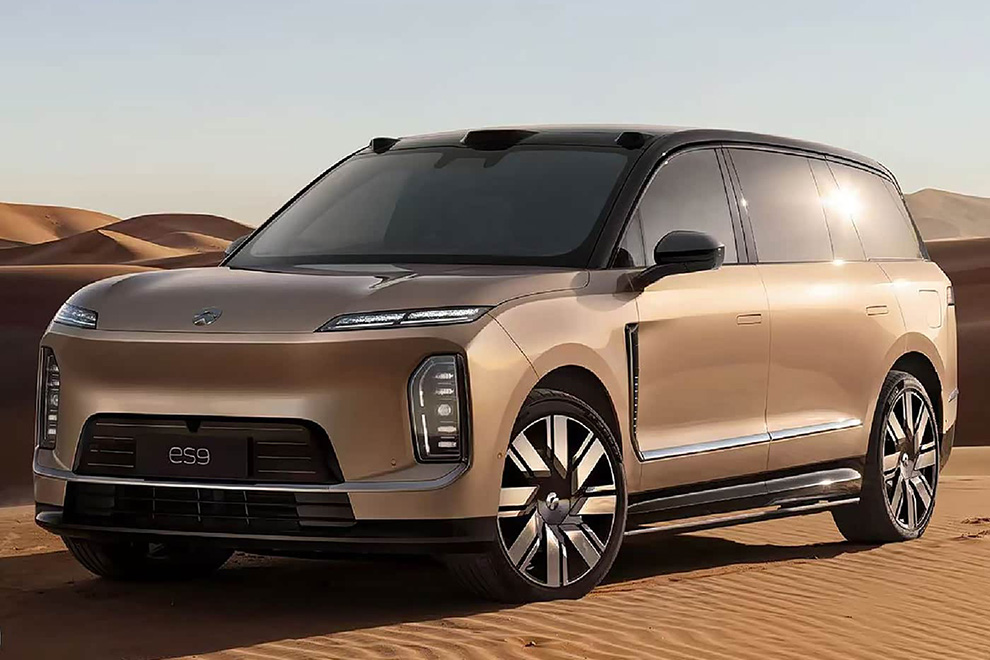
At a glance
- A large premium battery-electric MPV suited to executive transport, large families and specialist fleets.
- Battery, range, motor output and equipment vary by production specification, so compare the exact listing rather than the model name alone.
- Export quotes change with vehicle specification, condition, exchange rates, freight, duties and the selected Incoterm.
- A single-unit purchase can be evaluated, while container consolidation improves freight efficiency but increases inspection and handling complexity.
- RHD availability, charging compatibility, homologation and after-sales support are as important as the vehicle specification.
Why the NIO Es9 matters for export markets
The NIO Es9 matters in export markets because it combines the space and upright access of a large people carrier with NIO's premium electric-vehicle technology. For overseas dealers, that creates a clear position above conventional MPVs: a six-seat executive-style cabin, an electric drivetrain and a modern connected-vehicle proposition in one long-roof package. It is not simply a large battery version of a conventional van, and it is more purpose-built for passenger hospitality than for cheap cargo movement. That makes the model relevant to premium family transport, chauffeur operations, executive transfers and specialist hospitality fleets where image and passenger comfort matter.
Global demand should be treated as segment demand rather than assumed mass-market volume. Large luxury MPVs are attractive in markets where buyers value generous second-row space, but their long bodies can be awkward in dense cities, parking structures and narrow commercial routes. The Es9 therefore fits buyers with dedicated parking, planned motorway travel and access to dependable charging. In less developed EV markets, the priority may instead be a shorter-range vehicle that can recharge locally and be serviced without a distant specialist. Its suitability must be tested against local road geometry and duty cycles, not against range figures alone.
The commercial case also depends on NIO's support structure. Premium buyers will expect reliable servicing, rapid access to parts, clear warranty handling and software support for connected functions; an attractive vehicle becomes a liability if those services are absent near the point of sale. For an importer, the correct approach is to map the nearest official or capable service point, charging operators and battery-service arrangements before committing. The NIO brand hub is also useful for checking the model context, while current Es9 availability must be assessed from the live listings rather than from general market commentary.
- Large premium electric-MPV format.
- Executive and family transport focus.
- Service coverage is a critical constraint.
Model range, trims and powertrain variants: how the lineup is structured and how to choose
The Es9's lineup should be read as a family of production and market specifications rather than a single global trim. NIO has used different battery and range options for the model, and export listings may carry generic or market-specific designations. A name such as Base Model identifies the advertised tier but does not by itself confirm motor output, seat equipment, infotainment, suspension details or charging functions. Buyers should request the complete option sheet and vehicle identification details for each unit, then compare vehicles only when those attributes match before signing any purchase terms.
Because the Es9 is battery electric, there is no engine, fuel tank or conventional transmission to evaluate. The relevant powertrain questions are motor count, drive configuration, output, battery capacity, range rating and charging architecture. CLTC figures are useful for identifying the Chinese-market configuration, but they should not be treated as a guaranteed real-world result in another country: climate, speed, load, terrain and charging losses all affect usable range. The safest comparison is to note the exact battery version, published range and consumption data, then obtain a destination-homologated range or test result where available.
Range selection should follow the actual duty cycle rather than the largest headline number. A vehicle used for urban executive transport with predictable charging may prioritize efficiency, cabin refinement and operating cost, while a cross-region buyer with long, sparsely served routes needs honest range margin and a clear charging plan. Payload also matters because a full executive cabin and passengers reduce range. Evaluate six-seat practicality, third-row or rear-compartment needs, luggage capacity and the availability of charging at the customer's destination before choosing a battery option and before committing to a specific unit.
- Match battery range to real routes.
- Verify each unit's equipment sheet.
- Compare homologated range, not CLTC alone.
New vs used NIO Es9: how export inventory is structured and how buyers choose
Export buyers normally evaluate two distinct supply channels: factory-new vehicles sold through the export chain, and used Es9 units coming from Chinese ownership or trade channels. Their economics are not directly comparable. A new vehicle can offer a defined production specification, clearer ownership history and a clearer warranty position, while its depreciation begins with delivery. A used vehicle may reduce initial acquisition cost or provide access to a battery or range version no longer offered, but condition, battery health and repair history require much closer scrutiny before any deposit is paid.
For a used Es9, ask for a battery state-of-health report, recent charging or energy-use records, service invoices, accident and flood inspection evidence, and confirmation of software or battery-swap history. Inspect bodywork, tyres, cabin wear, suspension condition and all electrical functions rather than relying on photographs. A battery-swap history can be useful provenance, but replacement economics and the availability of a compatible service network still need verification. A warranty that has expired, transferred unevenly or excludes batteries and high-voltage components can materially change the value of a low purchase price.
A new vehicle is generally the cleaner choice for a dealer that needs consistent specification, predictable presentation and straightforward warranty administration, especially for fleet or hospitality customers. A used unit can make sense for a buyer who knows the exact variant, accepts that service life is shorter and can price high-voltage maintenance and battery uncertainty into the deal. Do not infer new or used status merely from the age in a listing title; confirm the registration date, invoice, production date, odometer reading and title status. Those documents should match the chassis identification and the unit being inspected.
- New units simplify specification and warranty.
- Used units require battery and history checks.
- Match condition to fleet and resale needs.
How export pricing works: the factors behind a live listing price, and how to read one
An export price is the result of several interacting variables, not a fixed manufacturer price for the Es9. The starting point normally reflects production year, exact trim and equipment, battery or range version, drivetrain, mileage if used, condition and whether the vehicle is still under relevant warranty. The seller's margin and the buyer's order profile also matter. Currency movements can alter an otherwise unchanged quote, while the destination, delivery term, freight method, insurance and payment schedule determine what the importer must pay beyond the vehicle line.
Reading a live listing starts with the unit's identity, not the model badge. Confirm whether prices are comparable by checking the same year, battery version, mileage or condition, equipment, and whether the quoted amount is FOB, CIF or another Incoterm. Review which documents are included, how long the quote remains valid, and whether freight, export clearance, insurance, port charges, taxes and registration are separated or omitted. Treat a headline figure as the seller's current asking position for that unit, not as a guaranteed landed cost.
Build a landed-cost worksheet rather than comparing headline export prices alone. Separate vehicle price, inland transport, origin handling, freight, marine or vehicle-carrier insurance, destination charges, customs duties, VAT or other taxes, and the cost of compliance modifications. Compare quotation terms with the same destination, Incoterm and currency, and ask whether payment milestones or late-season freight affect the total. Current per-unit prices and availability are shown in the live Es9 inventory, so a written quote tied to a specific chassis is the appropriate basis for a binding purchasing decision.
- Compare identical specifications and terms.
- Separate vehicle cost from landed charges.
- Confirm the selected unit in writing.
MOQ, ordering and payment: single units vs consolidating a container
There is no universal Es9 order quantity that should be assumed from the model name or from a catalogue page. MOQ is a term set between the buyer and seller for a particular offer, and it can depend on whether the vehicle is a one-off sourced unit, a standard in-stock vehicle or a consolidated order. A dealer can ask about one vehicle without presuming that the seller will accept it. The key is to state the required quantity clearly, request confirmation in the quotation and understand whether the seller is matching an existing unit or arranging a new production or sourcing run.
Buying a single unit offers lower capital exposure and allows the importer to test demand, service processes and customer fit before committing to larger inventory. It may, however, place more cost per vehicle on freight, documentation and destination charges because the savings of a full shipment are unavailable. Consolidating several Es9 units with other compatible vehicles can improve freight efficiency, but it introduces loading plans, securing requirements, damage-inspection responsibility and longer inventory commitment. Model mix should therefore be decided commercially, not solely by fitting as many units as possible into one carrier.
A sound wholesale order process begins with a specification sheet and written quote, followed by a vehicle identification number or chassis-level allocation. The buyer should then agree inspection rights, the payment schedule, refund or remedy conditions, title and export documents, delivery term and dispatch deadline. A deposit may be required to reserve a unit, while the balance is normally linked to agreed inspection or shipment milestones; the exact structure must be confirmed rather than assumed. Keep every invoice, identification record, inspection report and shipping document under the same unit reference before release.
- Confirm MOQ on every quotation.
- Test one unit before scaling inventory.
- Define consolidation and damage responsibilities.
Shipping, homologation and market compliance caveats: LHD/RHD and import rules by country
Shipping method, route and Incoterm should be selected before a vehicle is paid for and collected. Finished Es9 vehicles are normally moved by specialist vehicle carriers or roll-on/roll-off services; containerization may be possible for some units, but dimensions, securing and local handling rules must be checked. Freight cost depends on origin and destination ports or terminals, vehicle dimensions, route, season, carrier capacity, fuel surcharges, insurance and the number of units loaded together. Transit time is likewise variable, so delivery estimates should be treated as planning ranges rather than fixed promises.
Steering configuration is one of the earliest checks. Vehicles sourced from China are commonly left-hand drive, while some destination markets require or strongly favor right-hand drive. Availability is limited and should be confirmed before the quotation is accepted; a conversion is not merely a matter of replacing the steering wheel. Local requirements can affect the steering assembly, instrument cluster, controls, lighting, safety equipment and documentation. If a right-hand-drive conversion is contemplated, confirm whether the approved manufacturer specification exists or whether local conversion rules, inspection and warranty implications apply.
Import and market compliance can be more decisive than the vehicle itself. The importer must confirm local type approval, customs valuation and duties, taxes, registration rules, emissions and safety requirements, battery documentation, charging-system compatibility and any cybersecurity or connected-vehicle data rules. They should also establish whether software and over-the-air updates are supported in the destination, whether warranty work is available, and who can service high-voltage components. Country rules differ materially, so an inspection by a local vehicle-import specialist or homologation consultant is prudent before committing to a non-standard configuration.
- Verify LHD or RHD before purchase.
- Check local type approval and duties.
- Confirm warranty and high-voltage support.
Who should buy the Es9 — and who should pick a different vehicle
The Es9 is most logical for large families, executive-transport operators, premium hotels, chauffeur services and other buyers who place passenger space and presentation above minimum operating cost. Its long body and six-seat executive-oriented cabin can suit routes involving several adult passengers, luggage and frequent motorway travel. It may also appeal to distributors building a differentiated Chinese-EV range for customers who value connected technology and a high-end MPV format. Those buyers should be able to charge reliably, park the vehicle conveniently and support it through a qualified service network.
It is less suitable for small fleet operators with tight city loops, buyers who need a low-cost commercial van, or customers without dependable charging and local maintenance. The vehicle's size can raise parking, maneuvering and tyre-cost concerns, while the premium segment carries higher expectations for parts availability and residual-value support. International demand for left-hand-drive MPVs may also be narrower than for standard SUVs. A buyer focused on lowest purchase price, minimal downtime or uncomplicated homologation will usually find more conventional alternatives easier to operate.
The best decision is often a staged one. Confirm that the destination can legally and practically support the vehicle, secure a written specification and landed-cost quote, then run a small pilot if the relationship is new. Before scaling, measure actual charging time, route efficiency, parts lead times, technician access and customer acceptance. A dealer should also compare residual-value assumptions with the NIO service footprint rather than assuming that a sophisticated Chinese EV will be as easy to trade in as an established global premium brand at resale.
- Strong fit for executive and family travel.
- Weak fit for budget or dense-city fleets.
- Pilot operations before scaling orders.
Main rivals and how the Es9 compares
The closest alternatives depend on whether the buyer truly requires an MPV. The Li MEGA is a direct large premium electric-MPV comparison, with a similarly modern passenger focus. The Mercedes-Benz EQV offers a more conventional premium people-carrier format rooted in a van architecture. The Tesla Model X is a large electric SUV rather than an MPV, yet competes for premium electric buyers who need space, technology and a commanding road presence. Compare these models on body layout, usable passenger and luggage space, destination support and charging access rather than treating them as identical products.
Against the Li MEGA, the Es9's decision points are practical rather than cosmetic: local homologation, software and charging support, service reach and the availability of spare parts in the destination. The Mercedes-Benz EQV may be more immediately familiar to European fleet buyers and offers a clear van-derived loading solution, while the Es9 emphasizes a more lounge-oriented passenger environment and NIO's connected and battery-service proposition. Neither should be selected on headline range alone; a route-based range assessment and a full local cost-of-ownership calculation are essential.
The Tesla Model X can be the stronger choice for a customer who wants an SUV body, high seating position and broad recognition in markets with established Tesla support. The Es9 can be more appropriate when low-floor access, a spacious six-seat cabin and people-carrier packaging are the priority. The final comparison should include the exact imported specification, real charging requirement, aftersales coverage, insurance, homologation and likely resale demand in the destination market. For an overseas dealer, local lifecycle support often separates the alternatives more effectively than brochure-level equipment.
- Li MEGA: closest electric-MPV alternative.
- EQV: conventional premium people carrier.
- Model X: large electric-SUV alternative.
Live NIO Es9 export inventory
View all listings →Real units currently on ChinaCarDirect with per-unit asking prices and MOQ. Availability updates live from the catalogue.
How to buy a NIO Es9 from China
-
1
Set the operating requirement
Define the destination, passenger count, typical route, charging access, required equipment and acceptable steering configuration before selecting a vehicle.
-
2
Shortlist the live inventory
Review the live NIO Es9 listings and compare the exact battery version, drivetrain, equipment, condition and vehicle identity rather than relying on the model name.
-
3
Request a written vehicle quote
Ask for a unit-specific price with the Incoterm, freight assumptions, payment schedule, included documents, warranty terms and quote validity stated in writing.
-
4
Validate compliance and support
Confirm LHD or RHD availability, local type approval, customs treatment, charging compatibility, software support, warranty coverage and access to qualified servicing.
-
5
Reserve and inspect the unit
Tie the reservation to a specific chassis and inspection process. For a used vehicle, obtain battery health, service history, accident evidence and a full functional inspection.
-
6
Complete payment and documents
Agree deposit and balance milestones, title documents, export paperwork, inspection remedies and freight release conditions before making the balance payment.
-
7
Book freight and prepare delivery
Select the carrier or roll-on/roll-off service, confirm loading and securing arrangements, insure the shipment and prepare destination clearance and registration.
Es9 vs rivals
| Li MEGA | The Li MEGA is the closest body-style alternative: both are large premium electric MPVs intended to combine executive space with electrified efficiency. For an overseas buyer, compare destination-market availability, charging access and service support, because the MEGA's market footprint may be more China-focused than the Es9's. |
|---|---|
| Mercedes-Benz EQV | The EQV is a more conventional premium electric people carrier with a van-derived layout, often attractive to buyers who prioritize brand familiarity, cargo utility and established European service channels. The Es9 instead places stronger emphasis on a lounge-style passenger cabin and NIO's connected-vehicle and battery-service ecosystem. |
| Tesla Model X | The Model X is a large electric SUV rather than an MPV, offering a taller body and established service presence in some markets. It may fit buyers needing SUV visibility and cargo flexibility; the Es9 may suit those prioritizing low-floor MPV access and a six-seat executive arrangement. |
Frequently asked questions
How is NIO Es9 export pricing determined?
A live export price normally reflects the production year, trim, battery version, equipment, mileage or condition, warranty position and currency movements. Freight, insurance, destination charges, customs duties, taxes and the selected Incoterm determine the landed cost. Current per-unit prices are shown in the live Es9 inventory, and the selected vehicle should be confirmed by written quotation.
What powertrain and range should I expect?
The NIO Es9 is a battery-electric vehicle with no engine or conventional transmission. Exact motor configuration, battery capacity and published range depend on the production and market specification, so they must be checked in the live listing. CLTC range should not be treated as a guaranteed destination-market result.
Is a new or used NIO Es9 better for export?
A new Es9 generally offers clearer specifications, ownership history and warranty positioning, while a used unit can reduce initial acquisition cost but carries battery, condition and service-history uncertainty. For a used vehicle, obtain a battery state-of-health report, repair records and an independent inspection before paying a deposit.
What is the MOQ for buying a NIO Es9?
MOQ is set by the seller for each offer and can depend on the vehicle source and order profile; there is no universal Es9 quantity to assume. State the intended quantity in the enquiry and request written confirmation. A single-unit purchase may be possible, while larger wholesale orders require their own availability and freight arrangement.
How long does shipping take and what does it cost?
Transit time and freight cost depend on the origin and destination, carrier method, route, season, vehicle size, insurance and whether units are consolidated. Finished vehicles commonly move by specialist carrier or roll-on/roll-off service. Ask for an all-in freight quotation and a delivery estimate based on the selected route and Incoterm.
Are spare parts readily available for the NIO Es9?
Parts availability depends heavily on the destination and the proximity of an official or capable NIO service center. Before purchase, request a parts-support contact, confirm access to common service items and ask how body, electrical and high-voltage components will be supplied. Model-specific parts should be included in the distributor's aftersales plan.
Is a right-hand-drive NIO Es9 available?
Right-hand-drive availability is limited and should be confirmed for the selected unit before a deposit is paid. China-origin vehicles are commonly supplied in left-hand-drive form, and converting one is not merely a steering-wheel swap. Check local approval, safety requirements, documentation, warranty coverage and residual-value effects before ordering a non-standard configuration.
How do I order a NIO Es9 from China?
Start with the live Es9 inventory, shortlist vehicles by specification and condition, and request a unit-specific quotation. After confirming compliance, service support and inspection rights, reserve the chassis under written payment and document terms. Arrange freight only after the vehicle identity, release conditions and destination clearance responsibilities are documented.
Ready to source the NIO Es9?
Request a current, destination-specific NIO Es9 quotation with your required configuration, delivery port and intended order quantity.
Request a quote