
NIO Et7 Export Buying Guide for Overseas Dealers
Buy a NIO Et7 from China with clear guidance on battery options, trims, export pricing, MOQ, shipping, homologation and after-sales support for importers.
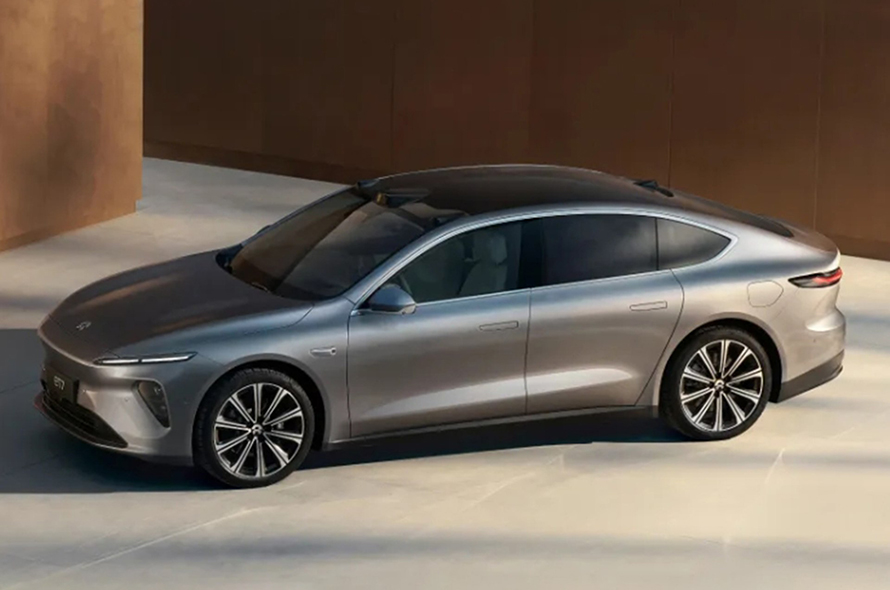
At a glance
- The Et7 is a premium, China-built battery-electric executive sedan.
- Buyers can compare 75 kWh and 100 kWh battery configurations across model-year-dependent editions.
- Dual-motor all-wheel drive places the Et7 among performance-oriented premium electric sedans.
- Export pricing should be evaluated as a configuration-specific landed cost rather than a headline vehicle amount.
- Homologation, charging compatibility, battery ownership and local service determine practical export value.
Why the NIO Et7 matters for export markets
The NIO Et7 is a premium, China-built battery-electric executive sedan. It combines a dual-motor all-wheel-drive layout, a high-capacity passenger cabin and NIO’s technology-led approach to comfort, connectivity and assisted driving. For overseas buyers, its appeal is not simply “Chinese EV value.” It is a distinct premium-sedan alternative combining performance-oriented electric hardware with a high-comfort cabin and model-year-dependent equipment. Compare it with locally homologated premium battery-electric sedans, and include service access in the decision. Buyers should judge the Et7 on the proposition they can support after arrival, not on the badge or a showroom demonstration alone.
For export markets, the Et7 is most relevant where EV incentives, charging access and premium sedan demand already exist. Its software-first cabin and electric driving character can appeal to technology-oriented fleets and importers seeking a distinctive Chinese marque. The trade-off is operational: a vehicle imported from China may still depend on Chinese-language interfaces, local map services, connected-car functions, or a battery-swap ecosystem that is not established in the destination. That makes market validation more important than headline range. Confirm the car can charge independently before treating it as a drop-in alternative.
Demand should be assessed at the right level. The Et7 is best positioned for distributors with a premium customer base, qualified workshop support and a charging plan. A fleet buyer may like its passenger refinement and electric drivetrain, but must consider residual-value assumptions, insurance classification and local repair arrangements, not just battery range. Before committing, compare the Et7 with established rivals on homologation lead time, parts support, software language and charging compatibility. Global interest is credible, but sell-through depends on making ownership in the destination country as straightforward as the vehicle’s on-road specification.
- Premium China-built electric sedan
- 75 and 100 kWh choices
- Dual-motor all-wheel drive
Model range, trims and powertrain variants: how the lineup is structured and how to choose
The visible Et7 lineup is structured around battery capacity and named equipment tiers. Across the model years represented in export channels, designations include 75 kWh, 75 kWh Executive Edition, 75 kWh Executive Signature Edition and 100 kWh variants including Launch Edition and Executive Signature Edition. These labels help identify configuration, but they are not a universal global trim chart. Equipment can change with model year, production batch and market. Treat the exact listing as the controlling document: compare its battery, edition, motor configuration, included options and whether its specification has already been prepared for export.
Choosing between the 75 kWh and 100 kWh packs should start with route reality, not the larger number. Capacity influences range and charging intervals, but actual consumption depends on speed, load, weather, wheels, tyres and climate control. Chinese homologation data is commonly expressed as CLTC, a test-cycle figure rather than a guaranteed real-world result. For fleet planning, request the range value, consumption basis and test-cycle label for the exact vehicle, then compare it with local duty cycles. The 75 kWh option may suit fixed routes and depot charging; the 100 kWh option may suit longer runs.
The powertrain choice is more straightforward than the badge: the Et7 uses electric propulsion with a dual-motor all-wheel-drive architecture and a single-speed reduction, so there is no conventional gearbox to service. Buyers should still verify motor outputs, battery version and equipment on the proposed unit because edition names are not a substitute for a build sheet. Compare standard and optional infotainment, driver-assistance functions, air-suspension specification and cabin equipment with fleet needs. The model is associated with NIO’s battery-swap design, yet overseas swapping depends on local coverage and account eligibility; confirm that before relying on it.
- Edition labels vary by model year
- CLTC is not a usage guarantee
- Verify local battery-swap eligibility
New vs used NIO Et7: how export inventory is structured and how buyers choose
Export stock may mix new vehicles with earlier production cars sold into export channels, although the mix changes over time. A new Et7 gives the cleanest comparison with the seller, the most predictable delivery condition and access to the seller’s warranty process; it may also carry newer model-year updates. A used Et7 can offer a different route to ownership, but the acquisition discount is only useful if battery health, mileage, accident history and remaining warranty are properly evidenced. Neither category is automatically cheaper once freight, duty, reconditioning and residual risk are counted.
For a used unit, request the VIN, registration history, service records and an independent inspection before treating the battery as normal wear. The inspection should test state of health, cell consistency, charge limits, high-voltage warnings, DC charging and cabin electronics, then compare reported battery capacity with the listing. Also inspect tyres, brake wear, suspension, body condition and evidence of flood or structural damage. Because some China-market EV transactions can involve battery purchase, lease or swap arrangements, verify what the exporter is selling and whether the buyer receives transferable entitlement to the pack or battery service.
The new-versus-used decision should follow the operating model rather than a generic rule. For a company replacing several executive vehicles, standardized condition, predictable charging behavior and a simpler warranty handover may outweigh the highest possible initial saving. For a dealer testing demand, one carefully selected used example can demonstrate the proposition before a larger program is financed. Compare total ownership cost, not just the vehicle line: include battery replacement or reconditioning risk, insurance, maintenance, charging, software support and expected depreciation. Check the live NIO Et7 inventory for the current mix and request a vehicle-specific condition report.
- New cars simplify warranty handover
- Used cars demand battery evidence
- Compare ownership, not acquisition cost
How export pricing works: the factors behind a live listing price, and how to read one
An Et7 export price is not a single factory number. It is generated from the vehicle’s model year, battery and edition, equipment, mileage and condition, plus exchange rates, freight, insurance, port charges and the selected Incoterm. Destination taxes, VAT, registration fees and incentives usually sit outside the vehicle quotation unless expressly included. Two units with the same “Et7” label can therefore have different landed economics. Compare quote by quote, using identical battery, edition, condition, destination and delivery terms, so product value remains separate from logistics, tax and regulatory requirements.
Trim and battery choices influence price because they change the product, but edition names alone do not explain a quote. A 100 kWh car, an Executive Signature car and a Launch Edition car may represent different equipment packages even when their headline attributes look similar. Model year also affects depreciation, warranty and technical updates. On a used vehicle, battery condition, mileage, service history and cosmetic work can outweigh small trim differences. Read the live listing for the unit-level description, not a category page, and ask for a written price basis if anything is ambiguous.
To read a live ChinaCarDirect listing properly, check vehicle identification, battery capacity, edition, model year, condition and mileage before focusing on the displayed amount. Confirm quote currency, whether it is firm or indicative, its validity period and excluded costs. Then build a landed-cost worksheet: vehicle price, international freight, marine insurance, export documentation, origin handling, destination charges, duty, VAT and registration. Ask the seller to repeat the calculation in the quotation so discrepancies can be traced. Current binding prices and availability appear on the live unit listings for the exact configuration and destination.
- Match exact configuration before comparing
- Confirm currency, validity and exclusions
- Separate vehicle and landed costs
MOQ, ordering and payment: single units vs consolidating a container
The minimum order quantity is a listing-specific commercial term, not a permanent property of the Et7 model. Some export offers are structured around one vehicle, while sellers may accept several units or a mixed configuration for a larger wholesale program. Read the MOQ field on the exact listing and obtain written confirmation of whether it applies to each model year, battery version or trim. If a supplier shows a single-unit route, do not assume that every Et7 seller will accept one vehicle. The same applies to deposits, documentation and production coordination.
For a first importer, a single-unit order can be the most controlled way to test logistics, homologation and dealer demand before committing to a full container program. It also keeps working capital lower and contains damage or delay losses, although per-vehicle freight and fixed inspection or handling charges may be higher. Consolidating units can improve freight efficiency and simplify coordination, but it ties up more capital, requires tighter cash flow and concentrates risk if one vehicle is damaged, delayed or fails inspection. Model loading plans around battery rules, securement requirements and actual vehicle dimensions.
A disciplined order should separate product selection from payment milestones. After selecting a unit, request a pro forma invoice showing VIN or VIN allocation, model year, battery, edition, condition and agreed price. Contract documents to be delivered, inspection rights, delivery terms, remedies for mismatch and cancellation rules. A common approach is a deposit followed by payment against passed inspection and required export documents, with the balance released before loading or shipment under agreed terms. For larger transactions, consider bank-backed payment mechanisms and independent inspection rather than relying only on photographs.
- Check MOQ on each listing
- Pilot before scaling volume
- Tie payment to inspection
Shipping, homologation and market compliance caveats: LHD/RHD and market compliance caveats
Shipping an Et7 from China involves export declaration, vehicle preparation, terminal handling, sea freight and destination clearance. Roll-on/roll-off shipping can be practical for complete vehicles when the carrier accepts the model and battery configuration; container transport may suit consolidated cargo but requires securement and compliance with lithium-battery rules. Transit time and cost vary with ports, sailing schedules, congestion, customs clearance, insurance and Incoterm. Ask the freight forwarder for a vehicle-specific plan rather than generic car rates. The quote should state the route and every separately charged handling stage in writing.
China’s domestic vehicle approval does not automatically make a particular Et7 road-legal elsewhere. Before contracting, check local type approval, safety and software requirements, VIN and labeling, electromagnetic compatibility, charging equipment and connected-vehicle or data rules. For right-hand-drive markets, confirm steering position, lighting, mirrors, indicators, parking sensors, display functions and driver-assistance calibration; do not assume a Chinese-market car can simply be converted. Left-hand-drive markets likewise need confirmation that the imported specification meets local requirements. A failed inspection can strand a paid-for vehicle and create storage or return costs and lost launch time.
Battery-related compliance deserves a separate checklist. Obtain the vehicle and battery documentation required for international movement, including test summaries or declarations where applicable, and confirm carrier and port acceptance, state-of-charge rules and insurance treatment. If the purchase depends on NIO battery swapping, establish whether a local network, compatible packs and eligible account are actually available to an overseas owner; otherwise plan around conventional charging. Import duty, VAT, local registration fees and EV incentives should be modelled separately, because eligibility rules may depend on residency, vehicle class or local production.
- Confirm carrier and battery acceptance
- Validate destination type approval
- Check LHD/RHD and incentives
Who should buy the Et7 — and who should pick a different vehicle
The Et7 is a sensible choice for a buyer who wants a premium, China-origin electric sedan and can support it properly. It particularly suits dealers in markets with credible charging infrastructure, import rules that accommodate the model and a customer base seeking distinctive EV design and technology. Company car programmes may also value its passenger space and electric drive, provided fleet managers build in charging time, insurance review and access to qualified servicing. The strongest early-market case is usually a controlled dealer or corporate pilot rather than an unsupported mass launch.
It is a weaker choice for a buyer who expects plug-and-play ownership without local EV infrastructure, worldwide spare-part availability or globally standardized software. Fleets with irregular routes and limited depot charging may prefer a plug-in hybrid or conventional hybrid executive sedan because refuelling familiarity can outweigh operating efficiency. Buyers with a tight total-cost ceiling may find a smaller mainstream EV easier to insure, equip and support. A used Et7 without credible battery evidence is particularly unsuitable for a high-utilisation fleet because pack degradation or an unrepaired incident can erase the apparent acquisition saving.
A disciplined purchase should test six questions: Can the vehicle be homologated and insured? Is charging available where and when needed? Are parts, diagnostics and high-voltage service reachable? Is the interface and assistance system suitable for local driving? Can battery ownership or swap access be documented? And is residual value credible after taxes and operating costs? If one answer is uncertain, the risk may outweigh the Et7’s attractive factory specification. A smaller EV, PHEV or locally supported premium model may deliver a better business case, especially when one failed conversion affects an entire launch.
- Best for EV-ready premium buyers
- Useful for controlled market pilots
- Unsuitable without local support
Main rivals and how the Et7 compares
The closest global segment comparisons are the BMW i5, Mercedes-Benz EQE and Lucid Air: each is a premium battery-electric sedan with a different balance of brand support, range focus and technology. The BMW i5 benefits from an established global dealer and service structure; the Mercedes EQE emphasizes executive comfort and a globally recognized marque; the Lucid Air is a direct range-oriented electric sedan benchmark with a smaller but still visible international presence. Compare them on homologated configuration, not headline specifications. A Chinese-market Et7 must win on ownership proposition, not merely equipment list.
Against those rivals, the Et7’s strongest arguments are its premium cabin, dual-motor all-wheel-drive character and choice between 75 and 100 kWh batteries. NIO’s battery-swap concept can add convenience where supported, but it is not a universal overseas advantage. The i5 and EQE often carry familiar dealer support, established spare-part logistics and greater certainty for local service operations. Lucid Air competes on efficiency and range ambition. Each brand still requires market-specific homologation and support assessment; none removes the buyer’s need to verify local execution before a vehicle is imported or sold locally.
For procurement teams, build the comparison around total cost, launch timing and residual risk rather than a single specification sheet. Put the Et7 side by side with the i5, EQE and Air using the same destination, battery-range strategy, charging assumption, duty treatment and service standard. For the Et7, give extra weight to battery health or ownership documentation, software language, charging compatibility and a credible local maintenance plan. If no independent service or charging answer can be confirmed, choose the competitor with the strongest support network. That due diligence often matters more than a small equipment advantage.
- BMW i5: dealer-network benchmark
- Mercedes-Benz EQE: comfort-led rival
- Lucid Air: range-focused alternative
Live NIO Et7 export inventory
View all listings →Real units currently on ChinaCarDirect with per-unit asking prices and MOQ. Availability updates live from the catalogue.
How to buy a NIO Et7 from China
-
1
Define the destination and configuration
Write down the destination country, required steering side, charging connector, import category and fleet duty cycle. Reject any candidate that cannot be homologated or supported locally.
-
2
Shortlist exact live units
Use the live Et7 inventory to compare model year, 75 or 100 kWh battery, named edition and condition. Request VIN-level information instead of relying on a category-level description.
-
3
Verify battery and software
Ask for rated and usable battery capacity, stated range and test cycle, charging test results, edition equipment and battery purchase, lease or swap terms. Confirm that the interface, maps and assistance functions fit the destination.
-
4
Request a landed-cost quotation
Ask for vehicle price, freight, insurance, documentation, origin and destination handling, duty, VAT, registration and Incoterm as separate lines. Confirm the currency, validity period and exclusions.
-
5
Agree MOQ, payment and documents
Check the MOQ on each listing and secure the terms in a written contract. Use staged payment linked to inspection, correct VIN and configuration, export documents and agreed release timing.
-
6
Inspect before release
Use an independent inspector for the exterior, chassis, high-voltage system, battery condition and charging where applicable. Record discrepancies and agree remedies before the balance or shipment release.
-
7
Book freight and complete import
Use a forwarder experienced with vehicles and lithium batteries, confirm battery documents and port acceptance, and track customs clearance. Complete destination registration and charging setup before handover.
Et7 vs rivals
| BMW i5 | A close executive BEV rival for buyers prioritizing an established dealer network and familiar service structure. The Et7 offers more distinctive China-specific technology and battery choices, but overseas support for NIO may be less predictable. |
|---|---|
| Mercedes-Benz EQE | The EQE competes through executive comfort, brand prestige and the familiarity of Mercedes-Benz support in established markets. The Et7 stands out with its technology-focused cabin, dual-motor character and swap-capable architecture, subject to local availability. |
| Lucid Air | A direct premium electric sedan benchmark with a strong efficiency and range focus. The Et7 provides 75 and 100 kWh choices and all-wheel-drive character, while both brands require careful charging and service assessments. |
Frequently asked questions
How is the NIO Et7 export price determined?
The live price starts with model year, battery, edition, equipment, mileage and condition, then may reflect exchange rates and commercial terms. Freight, insurance, duties, VAT and registration may sit outside it depending on the Incoterm. Check the current NIO Et7 listings on ChinaCarDirect for the binding per-unit price and request a written landed-cost quotation.
What powertrain and range choices are available?
The Et7 is a dual-motor, all-wheel-drive battery-electric sedan offered with 75 kWh and 100 kWh battery configurations. Range varies by model year, test cycle and equipment, so use the CLTC figure on the exact listing rather than assuming one number. Verify usable capacity, charging compatibility and suitability for the intended duty cycle.
Should an overseas buyer choose a new or used NIO Et7?
A new Et7 generally provides more predictable condition, easier warranty handover and model-year clarity. A used Et7 can reduce acquisition cost, but buyers should demand battery-health evidence, service history, accident records and confirmation of battery ownership, lease or swap arrangements.
What is the MOQ for a NIO Et7 wholesale order?
MOQ is set by the individual seller and listing rather than being a permanent feature of the model. Some offers may be available as single units, while larger mixed configurations may be negotiable. Check the MOQ field on the live listing and obtain written confirmation before placing a deposit.
How long does shipping an Et7 from China take, and what determines the cost?
Transit time and cost depend on the origin and destination ports, carrier schedule, congestion, customs clearance, insurance, battery acceptance and the selected Incoterm. Roll-on/roll-off and container transport have different handling requirements. Request a vehicle-specific freight plan for the destination.
How are spare parts and battery service handled overseas?
Parts support depends on the importer’s relationship with the seller, the destination service network and the availability of technical information. For battery-swap vehicles, verify local network coverage, compatible packs and account eligibility; otherwise plan around conventional charging and pack servicing. Obtain written parts and after-sales arrangements before importing.
Is a right-hand-drive NIO Et7 available for export?
Availability depends on the exact vehicle and destination market, so do not infer steering configuration from the model name alone. Ask the seller for VIN-level confirmation, photographs and a written statement of the steering side, lighting, displays and driver-assistance configuration. Any conversion must also meet local homologation requirements.
How do I buy a NIO Et7 from China?
Start with the live NIO Et7 listings, select an exact configuration and request a unit-specific quotation covering price, freight, MOQ and payment milestones. Confirm the VIN, battery, condition, export documents and inspection rights in writing. Release payment and shipment only against the agreed inspection and documentation process.
Ready to source the NIO Et7?
Request a unit-specific NIO Et7 export quote with configuration, landed cost, MOQ and shipping details.
Request a quote