
Nissan Murano Export Buying Guide for Dealers
Export Nissan Murano with confidence: compare trims, hybrid and petrol options, live pricing factors, MOQ, shipping, compliance and rival vehicles.
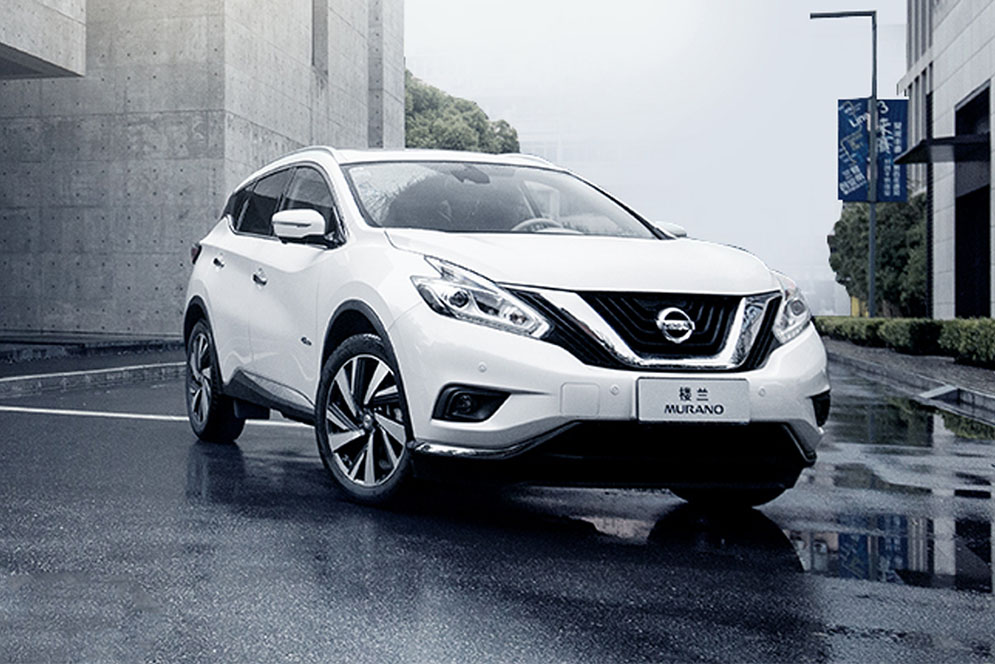
At a glance
- The Nissan Murano for export occupies the midsize crossover segment for buyers wanting more space than a compact SUV without moving to a three-row model.
- The export-relevant choice spans 2.5L and 3.5L petrol models plus 2.5L hybrid versions with AWD or 4WD designations.
- Chinese-market XE, XL and equipment labels require careful translation rather than direct comparison with badges sold elsewhere.
- Landed cost depends on condition, specification, freight, Incoterm, exchange rates, taxes and destination compliance.
- Single-unit and mixed-batch purchasing can suit different dealer strategies, subject to seller terms and consolidation economics.
Why the Nissan Murano matters for export markets
The Nissan Murano sits in the midsize crossover SUV segment, between compact crossovers and three-row family SUVs. Its export appeal combines a five-door, five-passenger body, a raised driving position and a choice of petrol-only or hybrid drivetrains. That makes it relevant to dealers serving customers who need more space and road presence than a small SUV but do not require seven seats. Its broad trim hierarchy also gives importers room to match equipment levels to different retail tiers instead of treating every Murano as one interchangeable specification in the same market.
Demand in export markets is not driven by the badge alone. Buyers compare cabin space, fuel economy, all-wheel-drive availability, equipment and the cost of obtaining a compliant vehicle. The Murano’s mix of 2.5-litre petrol, 3.5-litre petrol and 2.5-litre hybrid versions supports conventional fleet procurement, premium transport customers and buyers seeking electrified assistance. Exact demand varies with local fuel prices, tax policy and road conditions. An importer should therefore test each version against customer use cases rather than assume one powertrain will win every market or even every customer segment or region.
For Nissan Murano wholesale planning, treat the model as a product family rather than one SKU. Trim labels, infotainment names and China VI references require translation, while left-hand-drive production can narrow eligibility in right-hand-drive markets. The value proposition should be assessed against local rivals after freight, taxes, certification and dealer preparation are included. A vehicle that looks competitive on factory equipment can become expensive once it needs steering conversion, emissions approval or substantial pre-delivery work. Those costs belong in the landed-margin model before purchase approval. Compare those benefits with servicing access and realistic resale expectations.
- Midsize crossover positioning
- Petrol and hybrid choices
- Drive side affects export fit
Model range, trims and powertrain variants: how the lineup is structured and how to choose
The China-market Murano range is organised around 2.5L XE and XL grades, with feature packages such as Intelligent, Smart Connect, Luxury, Premium, Elite and Deluxe appearing in the names. The hierarchy moves from the XE entry point to the more generously equipped XL, but Chinese-market labels should not be translated directly into badges used in another country. The live listing’s equipment list is the controlling reference because connected services, materials and safety content can differ by model year and specification. Confirm every feature that affects safety or resale in writing.
Most listings centre on 2.5L petrol versions with two-wheel drive, while the hybrid line uses the 2.5-litre engine and electric assistance with AWD or 4WD designations. There is also a 3.5L CVT Glory version in the range. For fleet use, a 2.5L two-wheel-drive model may offer the simplest operating equation, while the hybrid can suit buyers seeking lower fuel use and stronger low-speed assistance. Those are use-case distinctions, not a universal ranking: destination fuel prices, road conditions and refuelling expectations should guide the choice and buyer profile for the importing country.
To compare versions correctly, build a matrix covering engine, transmission, drive wheels, emissions version, equipment and whether any hybrid battery warranty is stated. Exact horsepower, battery capacity, fuel-consumption figures and dimensions are not safely assumed from a trim badge; request the specification sheet or check the live listing. Also confirm whether “4WD” and “AWD” are listing conventions for the same hardware and whether infotainment features support the intended region. This avoids paying for equipment that cannot be activated or supported after export because local language or service support is unavailable.
- XE-to-XL grade hierarchy
- 2.5L, 3.5L and HEV options
- Confirm AWD/4WD and features
New vs used Nissan Murano: how export inventory is structured and how buyers choose
Export inventory should be read as a set of individual vehicles rather than a homogeneous new-car batch. Nissan Murano listings can include different model years, trims, emissions standards and petrol or hybrid powertrains, while condition may range from factory-new stock to older, low-use parallel-import examples. The responsible first step is to classify every unit by age, mileage, title status, prior use and inspection status. A low headline price cannot compensate for an unclear history, missing service records or a vehicle that cannot be registered in the destination country without delay.
A factory-new vehicle gives the importer the cleanest ownership narrative: no corrective repairs, no uncertain wear and usually clearer warranty and PDI expectations. It is useful for fleet buyers who need consistent specification and appearance. However, Chinese-market equipment may not match the target country, and even a new vehicle can require software, language, accessory or compliance work. A used Murano may offer a particular trim or lower entry cost, but buyers should budget for ageing, service-history checks and variable condition. Treat any saving as incomplete until registration and warranties are confirmed.
Hybrid selection makes condition assessment more nuanced. A used HEV requires evidence about the high-voltage battery, hybrid-system warnings, brake condition and service history, not just an odometer reading. For any used unit, inspect the VIN, bodywork, tyres, underbody, cold start and fuel-system behaviour where applicable, and verify recalls and outstanding service. Documentation matters after export: a clean title and inspection report reduce customs, registration and resale friction. Where local age or emissions rules exclude a particular unit, keep looking rather than assuming it can be grandfathered without exception under local regulations.
- Check year, condition and title
- New vehicles reduce history risk
- Used HEVs need battery evidence
How export pricing works: the factors behind a live listing price, and how to read one
A Nissan Murano export price guide should treat pricing as vehicle-specific rather than as a fixed wholesale figure attached to the model name. A live vehicle price is built from source condition, model year, trim, engine and hybrid specification, mileage, ownership history and the seller’s commercial terms. The same trim can vary because one unit is newer, better equipped, has a different emissions version or has a clearer service history. For a hybrid, battery-related information and warranty status may also affect the comparison. Treat the amount shown on an individual listing as the vehicle’s asking position, not a guaranteed delivered cost.
From that base, the landed total can change with the renminbi-to-buyer-currency exchange rate, inland transport, export documentation, marine or air freight, insurance, destination duties, taxes, port charges and dealer preparation. Incoterms decide where responsibility ends: under an FOB arrangement the seller normally hands the vehicle over at the named port, while CIF or delivered terms place more obligations—and potentially more cost—on the seller. Compare quotations on the same Incoterm, currency and vehicle specification. Otherwise, two apparently different quotes may simply reflect different scopes of work and liability exposure.
To read a live Nissan Murano listing properly, first confirm the year, exact trim, engine, transmission, drive system, mileage, condition and emissions version. Then check what the quoted price includes: export documents, inland haulage, port handling, freight, insurance, customs clearance and registration support are not interchangeable. Ask for an itemised pro forma invoice and a landed-cost worksheet. Current per-unit prices and the seller’s binding MOQ should always be verified in the live inventory, because both can change with source stock, exchange rates, freight bookings and changing seller terms.
- Compare like-for-like vehicles
- Confirm Incoterm and inclusions
- Check live binding figures
MOQ, ordering and payment: single units vs consolidating a container
MOQ is the minimum quantity a seller will accept, and it can differ by model, trim, source condition and payment arrangement. A dealer testing a new market may prefer a single unit or a small mixed batch, subject to the seller’s written terms. Container consolidation can improve freight efficiency by combining several Muranos with compatible documentation and destination requirements. The economics should be modelled per vehicle after inland haulage, port charges, freight, insurance, duties and expected dealer margin; a low factory price can still lose money under an unfavourable Incoterm.
A typical ordering process starts with a live-listing review, followed by a refundable deposit or booking confirmation and the balance due against an agreed milestone. The seller then verifies the vehicle, prepares export documents and arranges transport under the selected term. Some sellers release a unit before loading, while others require payment before final documentation, so milestones and cancellation conditions must be explicit. Ask whether the quoted MOQ applies per trim, per model year or across mixed inventory, and whether the same rate applies to every vehicle in a consolidated shipment.
Because a Murano order may mix petrol, hybrid and model-year units, the purchase contract should identify each VIN or listing, state condition and mileage, list the equipment delivered, and record battery or warranty documentation. Confirm who pays if the vehicle is unavailable or materially differs from the agreed description. For a first order, a pilot shipment reduces exposure to freight volatility and unfamiliar compliance work; for a full container, increase inspection scope and verify every unit before departure. MOQ flexibility is negotiable, not an assumption based on the catalogue alone.
- Single-unit approval varies
- Mixed batches aid consolidation
- Contract VIN and payment milestones
Shipping, homologation and market compliance caveats: LHD/RHD and import rules by country
Chinese-market Muranos are commonly supplied in left-hand-drive form, while many importing countries require right-hand drive. Establish the destination rule before committing: some markets permit limited LHD imports, others require RHD conversion at an approved facility, and still others accept only locally manufactured or homologated versions. Conversion affects cost, delivery time and resale positioning, and improvised changes may create insurance or inspection problems. It is safer to source an RHD example through the proper channel than to treat steering conversion as a routine accessory. Obtain written confirmation before making a deposit.
Import rules cover emissions, safety, VIN identification, customs value, duties, taxes, quotas and age restrictions. “China V” or “China VI” in a trim name identifies the vehicle’s Chinese emissions version; it does not automatically satisfy the destination country’s emissions or type-approval requirements. A local authority or homologation specialist should confirm whether the model can enter, whether modifications are needed and what documents must remain with the vehicle. The same warning applies to hybrid systems: local tax treatment, emissions requirements and technician support can influence whether a HEV is commercially attractive.
Shipping planning should cover inland movement to the export port, loading space and lashing, vessel or air routing, insurance, destination port charges, customs inspection and final delivery. Transit time is only one variable: a slower consolidated sea movement may suit planned fleet stock, while air freight can suit urgent replacement vehicles but carries higher cost and capacity constraints. Obtain a delivery schedule with booking and customs milestones, not just a port-to-port estimate. Confirm document originals, insurance validity, spare-key supply and the process for resolving damage or inspection findings before dispatch.
- Check destination drive-side rules
- China labels are not homologation
- Budget conversion and import costs
Who should buy the Murano — and who should pick a different vehicle
The Murano suits a dealer building a midsize crossover range for private buyers, company fleets and ride-hailing operators that value a conventional five-passenger vehicle. It is particularly logical where 2.5L petrol models offer servicing familiarity, or where the AWD hybrid version answers demand for efficiency and all-wheel traction. Dealers can use XE, XL and equipment grades to create entry, mid-range and upper retail propositions. The strongest case is a destination market valuing comfort, road presence and manageable size more than maximum seating capacity. That is a narrow but useful proposition.
It is a weaker fit for buyers whose priority is a low purchase outlay, an urban footprint or seven-seat flexibility. A Murano should not be chosen because it looks larger than a compact SUV if cargo flexibility, fuel economy or acquisition cost dominates the brief. Electric fleets may prefer a BEV with charging infrastructure and zero-emissions policy alignment, while performance buyers may choose a more dynamic powertrain. Heavy commercial towing should not be inferred from SUV body size; verify the tow rating, payload and local rules before marketing the vehicle.
The best buyer is the one who can turn the vehicle into a compliant, supportable product rather than import it cheaply. Compare the Murano against compact SUVs for urban fleet efficiency and larger crossovers for maximum capacity. Model residual value after local taxes, insurance, fuel, servicing and warranty support. For hybrids, confirm technician access and parts economics. For petrol versions, confirm that the engine and emissions category meet local policy. A landed-cost model and a serviceability plan should be approved before ordering, not after the first unit has already arrived.
- Strong for five-passenger crossover dealers
- Hybrid AWD suits efficiency and traction
- Weak for budget, seven-seat or BEV briefs
Main rivals and how the Murano compares
The Toyota Highlander is the closest broad alternative for buyers comparing petrol and hybrid family crossovers. It offers a similarly mainstream midsize proposition and, in some markets, three-row seating, giving it an advantage for families needing more than five seats. The Murano counters with distinct styling, a broad 2.5L and 3.5L petrol selection in this export range, and XE-to-XL equipment flexibility. Neither wins automatically: local fuel economics, brand support, warranty and actual vehicle specification should decide the comparison after the same freight, duty and dealer-preparation costs are applied to both options.
The Honda Passport is a credible two-row midsize rival for buyers wanting a similar footprint with a more upright, utility-oriented profile. It can be attractive when cargo usability, a high seating position or a particular dealer network matters. The Murano generally presents a comfort-led, car-like crossover character and offers hybrid all-wheel-drive alternatives within the China-export lineup. Because equipment and drivetrain availability vary by country, compare the imported vehicle with a locally sold Passport rather than broad brand reputations. Tax class and parts pricing may influence fleet economics more than segment placement.
The Ford Edge is another benchmark in the midsize crossover class, particularly for buyers comparing a two-row crossover with mainstream dimensions. Depending on model year, powertrain choices have included petrol and hybrid versions, so it can test whether the Murano’s engine and equipment mix is competitive. The Edge may appeal to buyers wanting a more driver-focused SUV profile, while the Murano offers more granular Chinese-market XE and XL variants. Availability, parts support and compliance in the destination market remain decisive. Neither should be selected without a like-for-like landed-cost comparison.
- Highlander: broad family benchmark
- Passport: utility-focused two-row rival
- Edge: traditional midsize benchmark
Live Nissan Murano export inventory
View all listings →Real units currently on ChinaCarDirect with per-unit asking prices and MOQ. Availability updates live from the catalogue.
Nissan Murano 2019 2.5L XL 2WD Smart Connect Luxury Edition (China VI)
Nissan Murano 2021 2.5 S/C HEV XE AWD Hybrid Intelligent Deluxe Edition
Nissan Murano 2021 2.5 S/C HEV XL AWD Hybrid Intelligent Premium Edition
How to buy a Nissan Murano from China
-
1
Set the target specification
Write down the destination country, required drive side, fuel preference, passenger and cargo needs and budget logic before viewing vehicles. This prevents a visually similar Murano with the wrong emissions version, drivetrain or equipment from entering the shortlist.
-
2
Shortlist matching live listings
To buy Nissan Murano from China with fewer specification mismatches, compare model year, exact trim, engine, transmission, drive system, condition, mileage and equipment in a spreadsheet. Every quotation should refer to a specific listing or VIN rather than a model-level promise.
-
3
Verify documents and compliance
Request the VIN, ownership documents, equipment list, inspection or service records and applicable China emissions information. Before paying a deposit, confirm destination import, LHD/RHD, emissions, safety, age, tax and registration requirements with the relevant broker or authority.
-
4
Build an itemised landed quotation
State the currency and preferred Incoterm, then list vehicle price, inland transport, export documents, freight, insurance, port charges, duties, taxes, customs work and dealer preparation separately. This makes it possible to identify missing costs and compare different sellers on the same basis.
-
5
Confirm MOQ and payment milestones
Verify the seller’s binding minimum quantity, deposit, balance-payment trigger, refund terms and substitution policy. If a single unit is unavailable, ask whether petrol, hybrid or model-year vehicles can be mixed without changing the commercial rate.
-
6
Complete pre-shipment inspection
For a factory-new vehicle, inspect panel condition, tyres, fluids, warning lights, VIN, options and the road or PDI test. For a used HEV, also request high-voltage battery diagnostics, hybrid-system checks, brake condition and service evidence.
-
7
Book freight and complete import clearance
Use a named forwarder and confirm loading, insurance, document originals, customs clearance, port charges and final delivery in the schedule. Retain the VIN file, inspection report, maintenance records and payment documents with the vehicle’s registration and warranty files.
Murano vs rivals
| Toyota Highlander | The Highlander is a close benchmark because it competes in the midsize crossover class with petrol and hybrid powertrains, and some configurations offer three rows. The Murano is generally a five-passenger choice with more granular Chinese-market XE/XL petrol and hybrid variants, so compare the exact imported vehicle against locally available Highlander trims. |
|---|---|
| Honda Passport | The Passport is a close two-row rival with upright utility styling and a comparable footprint. The Murano leans more toward comfort and offers a broader Chinese-export trim and powertrain mix, while the Passport may have stronger local parts or homologation availability. |
| Ford Edge | The Edge is a traditional midsize crossover benchmark, with petrol or hybrid availability depending on model year and market. The Murano offers Chinese-market 2.5L and 3.5L petrol plus hybrid choices; Edge buyers may prefer its more driver-focused character, so test equipment and landed cost carefully. |
Frequently asked questions
How is the Nissan Murano export price determined?
A live price reflects the specific unit’s model year, trim, powertrain, condition, mileage, history and seller terms. Add freight, insurance, inland transport, duties, taxes, port charges, currency effects and dealer preparation to estimate landed cost, and confirm whether an Incoterm is included. Check the live Nissan Murano listings for the current per-unit asking price and request an itemised quotation.
Which Nissan Murano powertrain and engine options should I consider?
The export range includes 2.5L petrol versions, a 3.5L CVT petrol version and 2.5L hybrid versions with AWD or 4WD designations. The 3.5L is a V6, while the 2.5L is a four-cylinder; hybrid versions add electric assistance rather than plug-in charging. Verify the exact engine, transmission, drive system, hybrid battery details and emissions version in the Nissan Murano specs before ordering.
Are used Nissan Murano vehicles a better value than factory-new examples?
A factory-new Murano reduces uncertainty about repairs, wear and service history and is easier to standardise for fleet resale. A used example may offer a different trim or lower acquisition cost, but buyers should verify mileage, title, inspections, recalls and hybrid battery condition where applicable. Treat the apparent saving as incomplete until registration, warranty eligibility and local import rules are confirmed.
What is the MOQ when buying a Nissan Murano from China?
MOQ is set by the seller and may depend on trim, source condition and payment terms, so do not assume a fixed catalogue rule. A dealer may be able to order one unit or a mixed batch, while a container order can improve freight efficiency if the units and documents are compatible. The live listing should be checked for the current binding MOQ, and the quantity, rate and substitution terms should be stated in the purchase confirmation.
What factors affect Nissan Murano shipping time and cost?
Shipping cost and timing depend on the origin port, destination, transport mode, vessel or air schedule, unit size, insurance, documentation, customs clearance and port charges. Sea freight is planned around sailing schedules, while air freight may reduce elapsed time but normally carries a higher cost. Ask for a door-to-door or port-to-port schedule with booking, loading, customs and delivery milestones, and confirm the Incoterm.
How can overseas buyers source spare parts for a Nissan Murano?
Use the VIN and exact trim to identify compatible service, brake, suspension, electrical and hybrid components before ordering. Confirm whether parts are sourced from Nissan, an authorised channel, an independent supplier or the exporting seller, and whether the quotation includes freight and import charges. For hybrid vehicles, ask for battery-component and high-voltage safety procedures rather than treating the battery as a routine service item.
Is right-hand-drive Nissan Murano availability a problem?
Chinese-market stock is commonly left-hand drive, while some destination markets require right-hand drive. Availability therefore depends on whether local LHD imports are allowed, RHD conversion is permitted and completed by an approved specialist, or a native-market vehicle is required. Confirm the rule and expected conversion effect on price, delivery and insurance before selecting a unit.
How do I order a Nissan Murano from China?
Start with the live Murano inventory, compare equivalent units, then request the VIN, specification sheet, condition report, export-document list and an itemised landed quotation. Confirm the Incoterm, MOQ, deposit, balance-payment milestone, cancellation terms, inspection rights and shipping plan in writing. After approval, allow time for pre-shipment inspection, payment release, export handling, freight booking, customs clearance and destination registration.
Ready to source the Nissan Murano?
Send your destination, required trim and intended quantity to request a current Nissan Murano export quotation.
Request a quote