
Nissan N7 Export Buying Guide for Dealers and Fleet Buyers
Export buying guide for the Nissan N7, covering trim selection, electric range variants, live price factors, MOQ, shipping, compliance and key rivals.
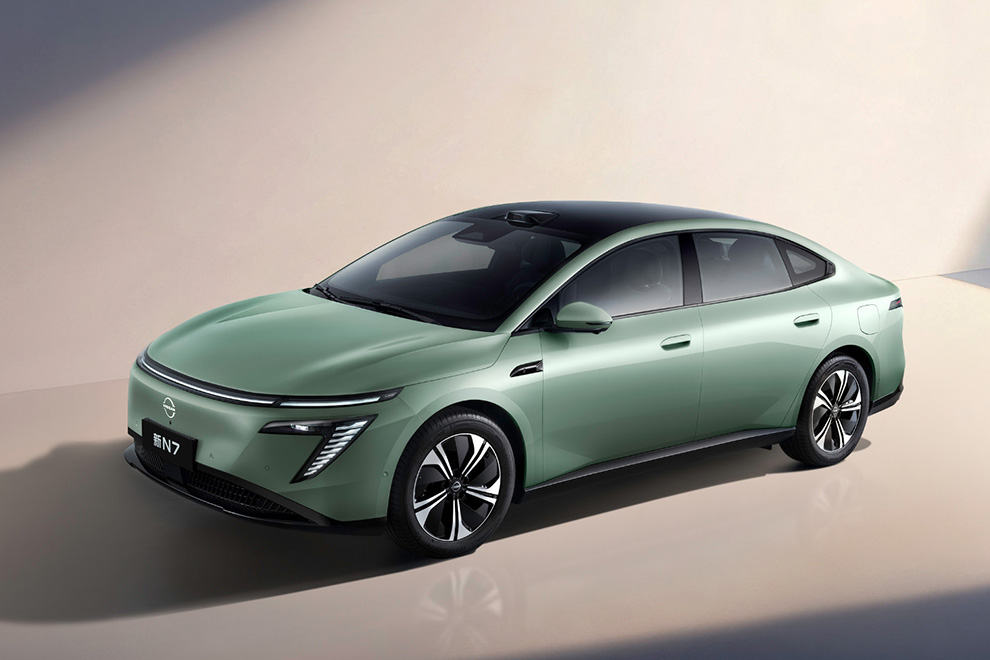
At a glance
- The N7 is a China-export battery-electric sedan suited to company fleets and dealer launches.
- The 510 and 625 range labels, plus Air, Pro and Max grades, provide a structured selection space.
- New units reduce wear uncertainty; used units require battery and ownership-history evidence.
- Compare like-for-like landed costs across trim, condition, freight and Incoterm.
- Confirm MOQ, steering configuration, homologation, documents and aftersales before payment.
Why the Nissan N7 matters for export markets
The Nissan N7 matters to overseas buyers because it gives the Chinese vehicle market a battery-electric sedan from a familiar manufacturer, rather than another niche crossover from a lesser-known export brand. Its appeal is strongest in the compact EV segment where importers need a practical four-door for company fleets, mobility operators and dealer test-fleet programmes. For these buyers, the combination of Nissan's branding, a Chinese supply base and a modern electric platform creates a useful alternative to sourcing every vehicle locally while keeping unit-level configuration and compliance checks under dealer control.
Global demand for this model should be understood segment by segment. Electric sedans serve buyers who want lower running costs, straightforward charging and a more efficient footprint than large family cars, especially in markets encouraging electrified fleets. The N7 can broaden that audience, but its real export potential depends on local charging availability, import rules, aftersales support and whether prospective buyers already trust the badge. Marketing language cannot replace evidence from an actual destination-market launch. A buyer should also test whether the model's size, charging habits and expected resale value suit local roads.
For dealers researching a Nissan N7 for export, the model is more than a showroom car: it can serve as a controlled entry into Chinese-made EV supply, with several range and equipment grades available through live listings. That variety supports different use cases, from a lower-spec fleet purchase to a higher-spec demonstrator. However, overseas buyers should avoid treating a Chinese-market catalogue as a finished export package. The relevant comparison is not merely model against model, but a fully documented vehicle, landed cost and after-sales plan in the destination country with a named local compliance owner throughout.
- China-built electric sedan.
- Fleet and dealer relevance.
- Compliance drives export fit.
Model range, trims and powertrain variants: how the lineup is structured and how to choose
The N7 lineup is organised around two range-denominated versions, 510 and 625, and equipment grades named Air, Pro and Max. Live listings may show names such as 510 Air, 510 Pro, 510 Max, 625 Pro and 625 Max, sometimes with the word Model inserted. Buyers should not treat naming variation as a technical difference; confirm the exact trim against the VIN, vehicle documents and the seller's configuration sheet. The numeric labels help narrow the search, but the destination-certified range specification remains the decisive reference for any import decision before ordering or freight booking.
Choosing between the 510 and 625 versions starts with duty cycles, not the badge. A fleet that returns to a depot each evening may value efficiency and charging convenience, while drivers covering longer routes may prefer the higher-range designation, provided the quoted figure reflects a usable test standard in their market. Battery capacity, motor output and charging capability are decisive but should be verified per unit because the live configuration sheet is more reliable than a trim name alone. Do not extrapolate one market's range rating to another country without qualification.
Air, Pro and Max should be evaluated as equipment tiers only after the range version is settled. The labels allow a dealer to compare fleets, but they do not replace a line-by-line equipment check. Review charging-cable provision, cabin equipment, infotainment and any market-specific software against the vehicle offered, rather than assuming a trim sold elsewhere has the same specification. This matters in export because small standard-fit differences can affect usability, resale presentation and the cost of preparing a vehicle for local registration or for fleet resale, especially to overseas operators at launch.
- 510 and 625 range identifiers.
- Air, Pro and Max grades.
- Verify VIN and equipment.
New vs used Nissan N7: how export inventory is structured and how buyers choose
ChinaCarDirect's live N7 inventory can include both new vehicles and units explicitly marked used, so the buying task begins with condition rather than model name. A new listing should be assessed for model year, trim, delivery history, production status and whether the quoted vehicle is genuinely available for export. A used listing adds mileage, wear, prior ownership and possible demonstration history to the equation. Always use the condition stated on the unit record and reconcile it with photographs, documents and the seller's declaration before discussing commercial terms or releasing any deposit.
For an electric vehicle, a used purchase needs more than a visual inspection of paint and interior. Request the battery state-of-health report, warranty history, recall or service records, and evidence of charging and driving use where available. Check whether the displayed range is an estimate, a test-cycle figure or a live condition reading, and ask for a cold-weather or thermal-management explanation relevant to the deployment climate. A clean body cannot compensate for an incomplete battery dossier, particularly for high-utilisation fleets where inaccurate information could become a costly long-term ownership issue for the operator.
New and used N7 units suit different commercial strategies. New inventory generally reduces uncertainty about wear and may make fleet presentation easier, while used units can be attractive when a buyer prioritises a specific configuration, immediate availability or a lower acquisition outlay. The latter benefits are meaningful only after residual-value risk, battery condition and expected downtime are priced into the decision. For dealers, keeping a small new allocation for demonstration and considering a used unit for a defined fleet need can separate vehicle procurement risk from vehicle-use risk in the operating plan.
- New: less wear uncertainty.
- Used: verify battery evidence.
- Match condition to risk.
How export pricing works: the factors behind a live listing price, and how to read one
An N7 export price is not one fixed factory number. The live listing price is shaped by model year, exact trim, range or battery version, mileage and condition for used units, and the physical configuration of the individual vehicle. Currency movements also matter because the supplier's domestic cost and the buyer's settlement currency can change before a transaction closes. A buyer should therefore read the unit-level offer, ask what is included, and avoid carrying a remembered price from an earlier marketplace visit into a new negotiation or final invoice in writing.
Freight and Incoterms can move the final economics as much as the vehicle discount. EXW, FOB, CIF and DDP place different responsibilities and costs on the seller and buyer; only the last named term tells you what may already be bundled. Compare quotations on the same destination, port, insurance level and Incoterm before declaring one vehicle cheaper. Destination taxes, customs charges, brokerage, inland haulage and dealer preparation are not automatically the same across quotes, so request an itemised landed-cost worksheet covering both vehicle and non-vehicle costs before any order is signed.
The most reliable way to read a live N7 listing is to separate six things: vehicle identity, condition, unit price, commercial terms, logistics and import obligations. Confirm the VIN, trim, range label, production status and any repair or repaint disclosures. Then check whether the displayed amount is the seller's asking price, the total payable if funded, or the landed amount after freight. ChinaCarDirect shows current per-unit prices and availability in live inventory; those binding figures should replace any indicative figure in a guide or earlier message from the buyer before contracting.
- Read the live listing.
- Compare equal Incoterms.
- Build a landed-cost sheet.
MOQ, ordering and payment: single units vs consolidating a container
Minimum order quantity is a property of the live offer, not a permanent rule for every N7 transaction. The listing's MOQ field should be checked before a buyer assumes that one, several, or a full shipment can be reserved. For a dealer testing demand, a small mixed order may reduce exposure; for a distributor planning Nissan N7 wholesale volumes, a single-SKU container can simplify configuration, spare-parts planning and market launch. The right comparison is not unit count alone, but the commercial commitment attached to each listing and the seller's written confirmation in the quotation.
Single-unit purchasing is mainly a market-entry tool. It can let an importer test trim appeal, charger compatibility, parts support and real customer feedback before committing to volume, but it usually offers less freight efficiency than consolidation. A wholesale container programme may combine several trims or range versions for different customers, yet that only makes sense if demand is firm and each vehicle has a clear destination. Buyers should model separate vehicle, preparation, transport and sales costs so a lower per-unit shipping assumption does not hide slower inventory turnover in the destination market.
Ordering should proceed through a written quotation and pro forma invoice that defines the unit, price basis, MOQ, deposit, balance trigger, payment method, delivery term and cancellation conditions. Verify that the beneficiary name matches the contracting seller and that every amendment is issued in writing. Payment milestones should be tied to objective events such as order confirmation, vehicle inspection, document release or shipment, but the actual sequence must be agreed rather than assumed. If a buyer cannot obtain a complete document schedule and inspection right, it should pause payment without exceptions.
- Check each listing's MOQ.
- Test demand with mixed stock.
- Link payments to milestones.
Shipping, homologation and market compliance caveats: LHD/RHD and import rules by country
Shipping begins with the Incoterm and ends only after customs clearance and local registration. Vehicle condition, available loading space, route, port congestion, insurance, inspection requirements and inland delivery all affect cost and timing, so a booking date is not a delivery promise. Ocean transport may be suitable for standard vehicles, while roll-on/roll-off, flat rack or enclosed carrier options depend on dimensions, condition and the exporter's loading capability. Ask for packing, lashing, export documentation, insurance and tracking responsibilities in writing, and keep the delivery plan separate from the vehicle's estimated transit and customs.
Steering configuration is a sourcing question, not a minor visual preference. A left-hand-drive N7 may be the natural Chinese-market configuration, while some destinations require right-hand drive; conversion availability must be checked before a unit is ordered. Ask for the VIN, steering position, dashboard configuration, pedal and control layout, and confirmation that the car will not be converted after sale. RHD conversion can affect parts, regulatory approval, warranty and residual value, and a converted vehicle should never be assumed to retain factory configuration or the original homologation basis as supplied to the buyer.
Destination-market compliance must be confirmed vehicle by vehicle. Depending on the country, importers may need a VIN check, type approval, emissions or safety compliance, customs classification, battery and charging documentation, local-language materials, software requirements or evidence of a valid warranty and recall process. A China-market N7 should not be assumed to carry approvals for another jurisdiction. Engage an importer of record or local compliance adviser early, ask the broker which rules apply to the exact power version, and treat unresolved certification as a condition that blocks both payment and shipment without delay.
- Confirm steering configuration.
- Verify local type approval.
- Separate freight and clearance.
Who should buy the N7 — and who should pick a different vehicle
The N7 is a strong candidate for company-car programmes, airport and hotel fleets, ride-hailing operations, local government or corporate electrification pilots, and dealers seeking a modern electric sedan with a mainstream badge. Its sedan format suits paved urban and regional routes where efficiency, cargo capacity and a predictable footprint matter more than SUV ground clearance. The business case improves when vehicles return to controlled charging, utilisation is high and recurring operating savings are measurable. For these users, fleet procurement should compare total operating cost rather than vehicle acquisition price alone over the full ownership term.
Dealers should consider the N7 when it supports a clear target segment and when aftersales can be made credible. Before taking inventory, identify the authorised or independent repair pathway, diagnostic access, warranty handling, and realistic parts lead times for the destination. A vehicle that is easy to sell but difficult to support can damage dealer reputation and residual value. Test a smaller allocation against actual enquiries, charging adoption and service feedback, then expand only if the economics remain sound. Brand familiarity also matters: some N7 buyers may be more comfortable with an alternative that has deeper local support.
Different vehicle categories should win when the operating requirement does not match the N7's strengths. Buyers needing seven seats, commercial carrying capacity, serious ground clearance, a tow rating or operation in remote areas should assess a van, pickup, SUV or rugged platform instead. Those without dependable charging should compare a hybrid, plug-in hybrid or efficient combustion model, subject to local rules and fleet policy. International operators may also prefer a rival with established homologation and service support in several destination countries. The best export choice is the vehicle whose compliance, uptime and resale case are proven, not automatically the newest badge or trim.
- Controlled-charging fleets fit best.
- Poor fit for cargo or off-road.
- Support must match demand.
Main rivals and how the N7 compares
The BYD Seal is the closest like-for-like rival for buyers seeking a battery-electric liftback or sedan from China. Both N7 and Seal compete on design, range positioning and the perceived value of an imported Chinese EV, so comparison should focus on certified range, charging, dimensions, equipment and landed cost. The Seal may attract buyers focused on a different styling and brand ecosystem, while N7 appeal may centre on Nissan's badge and selected range grades. Neither should be chosen from appearance alone; obtain configuration-specific quotations and compare the complete ownership package in detail.
The XPeng P7 is another direct Chinese-market electric sedan, making it a useful benchmark for buyers who value technology-focused positioning and a fastback-style alternative. N7 buyers should compare the exact range version, cabin and driver-assistance specification, charging requirements, service arrangements and total cost rather than infer parity from model age or segment labels. Depending on the destination, one rival may have more familiar servicing and homologation while the N7 may offer a more attractive dealer proposition. The correct winner is the one that meets the fleet's routes, charging plan and compliance case.
The Hyundai Ioniq 5 is a rival when a buyer wants a compact electric crossover and values a different ownership proposition. Its SUV-like packaging may suit families, higher loads or operators needing more flexible cargo use, while the N7's saloon format can be more efficient in urban fleets. Local brand awareness, warranty handling and regulatory support can be decisive, and the two vehicles should be compared on total delivered cost rather than one catalogue figure. Buyers should also consider other segment alternatives if either fails the destination-market charging or homologation test.
- BYD Seal: liftback rival.
- XPeng P7: sedan rival.
- Ioniq 5: crossover rival.
Live Nissan N7 export inventory
View all listings →Real units currently on ChinaCarDirect with per-unit asking prices and MOQ. Availability updates live from the catalogue.
How to buy a Nissan N7 from China
-
1
Define the use case and destination
Set out daily mileage, route profile, charging access, load requirements, steering configuration and destination-market obligations before selecting a range version or trim.
-
2
Select from live unit inventory
If your objective is to buy Nissan N7 from China, filter new and used N7 units and check each listing's current price, availability, trim label and MOQ field.
-
3
Verify specification and condition
Request the VIN, confirmed trim, range standard, battery capacity, motor, charging data, dimensions and equipment list. For a used vehicle, also request battery state-of-health and ownership records.
-
4
Build like-for-like landed quotes
Ask for the vehicle, preparation, freight, insurance, duties, taxes, brokerage and inland haulage to be itemised using the same destination and Incoterm for every offer.
-
5
Confirm MOQ and payment terms
Secure the MOQ, unit allocation, deposit, balance trigger, payment method, delivery term and cancellation conditions in a written pro forma invoice.
-
6
Complete inspection and documents
Approve a pre-shipment inspection covering condition, VIN, equipment, charging function and disclosed repairs. Tie the final payment to agreed documentary and inspection milestones.
-
7
Book freight and manage clearance
Confirm the transport method, packing, insurance, export documents and delivery responsibilities. Coordinate with a customs broker and local compliance adviser before the vehicle is released.
N7 vs rivals
| BYD Seal | A close China-origin battery-electric liftback benchmark for buyers comparing design, range positioning and landed cost. The N7 may appeal to Nissan-oriented dealers, while Seal buyers may prefer its distinct styling and brand ecosystem; configuration-specific quotes should decide. |
|---|---|
| XPeng P7 | A direct Chinese-market electric fastback alternative, useful for technology-focused fleet buyers. Compare certified range, charging, cabin and driver-assistance equipment, local service support and delivered cost rather than assuming equivalent trim names. |
| Hyundai Ioniq 5 | A compact electric crossover alternative for buyers prioritising SUV packaging and cargo flexibility over saloon efficiency. Local brand familiarity and homologation support may favour it in some markets, so compare the N7 on fleet suitability, compliance and total cost. |
Frequently asked questions
How is Nissan N7 export pricing determined?
An N7 export price combines model year, trim, range or battery version, condition, mileage, exchange rate, freight and Incoterm. Read the unit-level live listing and request an itemised landed quote; exact price and availability are shown per current unit in the N7 inventory.
What powertrain and range options does the Nissan N7 have?
The N7 is a battery-electric sedan. Its export naming uses 510 and 625 range identifiers with Air, Pro and Max equipment grades; battery capacity, motor output, charging rates and the applicable range standard must be confirmed in the live listing and for destination homologation.
Is a new or used Nissan N7 better for an overseas fleet?
New units generally reduce wear uncertainty and simplify fleet presentation. Used units can suit defined budgets or configurations, but buyers should verify battery state of health, mileage, service and ownership history and account for residual-value and downtime risk.
How does the MOQ work for Nissan N7 wholesale orders?
MOQ is set by the individual offer and displayed on the relevant live listing. Check it before ordering and ask the seller whether a single unit, mixed batch or consolidated container is acceptable; do not assume one rule applies to every N7 listing.
What determines shipping time and cost?
Shipping time and cost are not fixed by model name. They depend on the Incoterm, origin and destination, route, port and vessel availability, loading method, vehicle condition, insurance, customs and inland haulage; the freight forwarder should provide the current delivery plan.
Are Nissan N7 spare parts readily available overseas?
Spare-parts support depends on the destination's parts catalogue and the vehicle's exact market configuration. Ask the seller and local importer about diagnostic access, warranty parts, software support and realistic lead times; do not assume every Nissan part or right-hand-drive component is interchangeable.
Is right-hand-drive N7 availability guaranteed?
Right-hand-drive availability must be checked on each live unit and confirmed in writing. Do not assume a left-hand-drive vehicle can be converted and remain locally approved, because conversion can affect parts, warranty, VIN documentation and homologation.
How do I order a Nissan N7 from China?
Select a unit in the live N7 inventory and send an RFQ stating the destination, required trim, condition, MOQ and preferred Incoterm. Request a pro forma invoice, verify the seller and payment milestones, complete inspection and document checks, and then book freight and customs clearance.
Ready to source the Nissan N7?
Request a current Nissan N7 quotation with unit-level specifications, MOQ, payment milestones, Incoterm and destination-market compliance notes.
Request a quote