
Nissan Quest Export Buying Guide for Overseas Buyers
Compare Nissan Quest export options with guidance on the 3.5L SL, V6 powertrain, pricing factors, MOQ, shipping, compliance, and rival models.
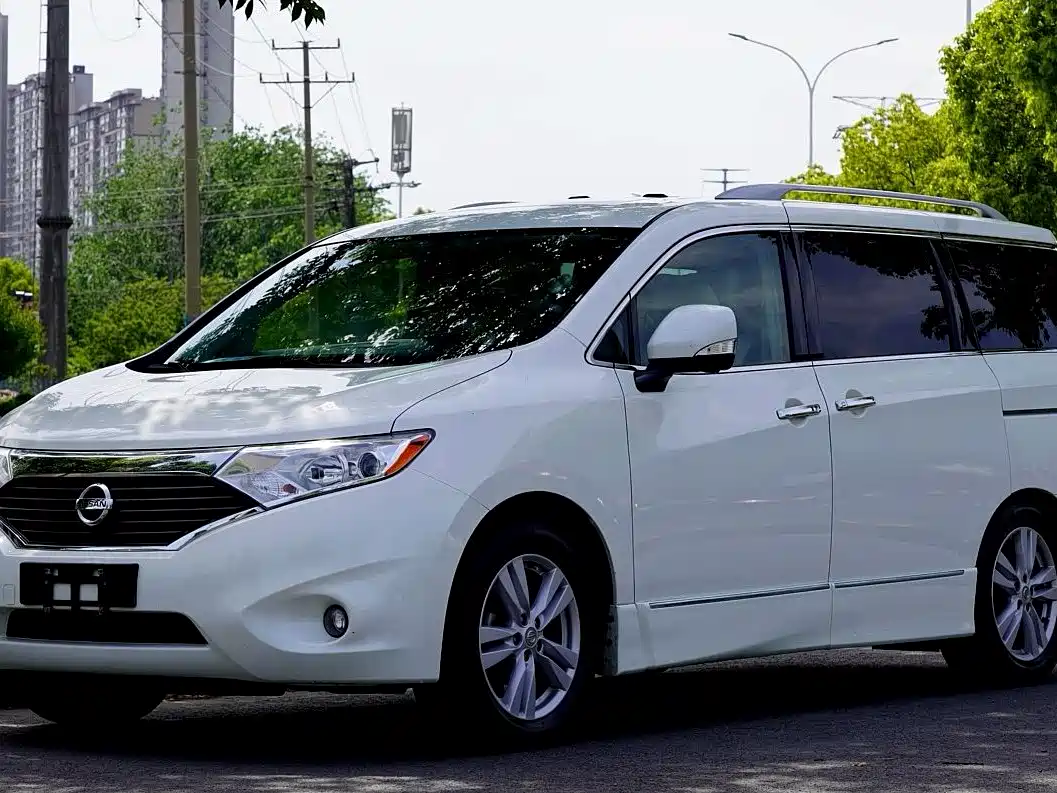
At a glance
- The Quest is a large, three-row gasoline minivan designed around passenger space, luggage capacity, and easy loading.
- The relevant export designation is 3.5L SL, using a 3.5-litre V6 gasoline engine and automatic transmission.
- Each live unit should be checked for model year, mileage, condition, steering side, title, and equipment.
- Export cost depends on specification, condition, currency, freight, insurance, duties, taxes, and the chosen Incoterm.
- Use live listings for current per-unit price, MOQ, and availability, then request a written landed-cost quotation.
Why the Nissan Quest matters for export markets
The Nissan Quest occupies a distinctive position in the large-family vehicle segment: it is a three-row minivan rather than a crossover SUV. That format gives importers and fleet buyers an upright cabin and easier rear-passenger access than many SUVs, making it relevant for airport transfers, hotel shuttles, group travel, and family use. It also gives distributors a recognizable alternative to larger vans. Export appeal depends on condition, parts support, import fit, and whether the unit suits the destination market. Buyers should assess it as a people carrier, not an off-road vehicle or commercial-van substitute.
Demand for the Quest in export-facing channels is strongest where buyers need passenger capacity and daily usability rather than off-road styling. Its long-running model name can help recognition, while the minivan layout creates a clear use case for families, expatriate groups, executive transport operators, and shuttle businesses. However, a global label does not guarantee global homologation. Importers must still verify local safety, emissions, tax, and registration rules. In practical terms, the Quest can be a strong candidate when one vehicle must serve passengers, luggage, and repeated highway journeys without the compromises of a compact MPV.
For distributors, the Quest's appeal should be framed around fit-for-purpose economics rather than a headline purchase figure. Vehicle acquisition is only one part of landed cost: fuel, maintenance, insurance, registration, port charges, and local homologation can change the business case. A Quest may suit a buyer who values cabin room and straightforward petrol operation, yet it may be unsuitable where compact dimensions, emissions restrictions, or right-hand-drive supply are decisive. Build a shortlist from live inventory, then validate the commercial case and obtain current written quotations before committing capital or signing fleet orders.
- Three-row minivan, not an SUV
- Best suited to passenger fleets
- Local import fit remains essential
Model range, trims and powertrain variants: how the lineup is structured and how to choose
The export naming identifies the 3.5L SL, and buyers should treat that as the starting point rather than the whole vehicle description. The Quest is a gasoline-powered, three-row minivan: the relevant 3.5-litre V6 and automatic transmission suit the model's emphasis on smooth, uncomplicated transport. Because a listing can mix model year, trim, options, and condition, confirm the VIN-linked nameplate and equipment before comparing units. Do not interpret the 3.5L designation as a battery, range, or charging specification; this is an internal-combustion vehicle, so fuel economy, serviceability, and payload work should guide the decision.
Historically, Quest trims have generally been organized from base-oriented S and SV grades through SL and higher equipment levels. The 3.5L SL therefore sits above the simplest versions, but that badge does not prove a unit has every premium feature: packages, regional equipment, condition, and refurbishment can all matter. For an overseas buyer, create an equipment checklist covering upholstery, power convenience functions, climate control, infotainment, camera and parking aids, safety systems, and rear-seat arrangements. Ask for dated photographs and the original options list rather than assuming two units with the same trim badge are equivalent.
Powertrain selection is simpler than for a hybrid or electric people carrier: evaluate the 3.5-litre V6, automatic gearbox, condition, and service history. Check whether the unit starts, shifts smoothly, steers normally, and has no warning lights; for a used vehicle, an independent inspection should cover fluids, tyres, brakes, suspension, exhaust, cooling, and accident repair. Match the remaining life of the vehicle to your resale or fleet-rotation plan. A well-maintained older Quest may suit a short-term fleet, but a late-life unit should be treated as an operating asset rather than a long-term holding.
- Confirm exact trim and options
- Inspect the 3.5-litre V6
- Match condition to holding period
New vs used Nissan Quest: how export inventory is structured and how buyers choose
Export inventory for the Nissan Quest can include seller-declared new vehicles, dealer stock, demonstration units, and used vehicles entering through parallel-import channels. Those categories describe commercial status, not necessarily manufacturing history, so ask the seller to substantiate each classification with production-date, title, registration, and service records. A vehicle marketed as new should still be inspected for transport damage, assembly discrepancies, missing accessories, and correct mileage. For used units, inspection is even more important because wear, repainting, accident repair, and mechanical refurbishment may not be obvious in photographs or the description.
New inventory can reduce uncertainty about accumulated wear and may make specification matching easier when units share a model year and trim. It can also carry a higher acquisition outlay, preparation charges, or delivery costs, so calculate the fully landed cost rather than treating condition labels as a complete value judgment. Used Quest vehicles may offer a more economical route for short operating cycles, but buyers should budget for maintenance, tyres, regulatory inspection, and early-life component risk. Choose according to utilization, holding period, local rules, and access to technicians familiar with the model.
Regardless of condition, compare units using a consistent matrix: model year, exact trim, engine and transmission, mileage, steering side, seat configuration, equipment, exterior state, interior state, title status, and inspection findings. Ask whether the odometer reading is supported by service records and whether the VIN matches the paperwork. Avoid buying on mileage alone; a low reading does not offset an unclear history, and a higher reading can still be acceptable for a maintained fleet vehicle if the discount reflects remaining life. Treat the live listing as the starting record, not the final acceptance document.
How export pricing works: the factors behind a live listing price, and how to read one
An export price is a unit-specific commercial calculation, not a fixed market value for every Quest badge. Model year, trim, engine specification, mileage, condition, paint and interior state, optional equipment, and matching-unit availability influence the seller's figure. Currency movements and the buyer's requested destination can also change what the supplier needs to quote. Some listings may be positioned for export or local dispatch, so the Incoterm matters: the same vehicle can show different numbers depending on which charges, risks, and delivery tasks are included. Always request a written quotation with named terms.
To read a live Nissan Quest listing, confirm the year, 3.5L SL designation, condition label, mileage, steering configuration, visible equipment, and SKU or VIN reference. Inspect photographs for panel consistency, wheel condition, glass, cabin wear, and damage. Check the stated MOQ, availability wording, and seller location. Then request an export quotation identifying the currency, Incoterm, payment schedule, validity period, and exclusions. Do not treat a headline number as landed cost until freight, insurance, duties, taxes, port charges, local registration, and documentation requirements are addressed. Use the live listing only as the starting point.
The most useful price comparison uses the same basis on every vehicle. Separate vehicle price, inland transport, export handling, ocean freight, insurance, destination charges, and buyer-side import costs; mark the last group as estimates because rates and rules vary by jurisdiction. Ask whether the supplier can consolidate units to reduce per-vehicle freight, but do not assume savings exceed the cost of holding mixed inventory. In a Nissan Quest wholesale purchase, request comparable photos, inspection evidence, and a fresh quote for the exact units. Current per-unit prices and terms must be checked in live listings.
MOQ, ordering and payment: single units vs consolidating a container
The MOQ for a Nissan Quest should be read from the live unit page or confirmed in an RFQ; never infer it from the model name or assume it is the same across sellers and vehicles. Some offers accommodate a single-unit test purchase, while others set a lot requirement for particular terms or shipment plans. If one unit is permitted, buying separately can validate specification, quality, and parts support before scaling. Preserve that option in the contract, and do not let a sample-unit discussion imply permission for the production order on identical terms.
For a larger order, consolidation around one model year, trim, condition, and steering configuration can simplify inspection, spare-parts planning, and resale. Economics still depend on loading space, vehicle dimensions, weight, securing requirements, port handling, and the shipping method offered. Minivans often require Ro-Ro or specialist vehicle logistics rather than assuming every van fits a standard container plan. Ask the freight forwarder for a vehicle-specific stowage proposal and compare per-unit freight with the expected margin. Do not mix arbitrary models solely to fill space. Separation costs can erase any freight saving.
A safe ordering workflow separates reservation, inspection, documentation, and balance payment. Specify the exact SKU or VIN, trim, steering side, condition standard, accessories, destination, Incoterm, quote-validity period, and remedy for a failed inspection. Clarify the deposit, balance timing, payment route, title-transfer documents, export declaration, and refund terms. Use a written sales contract rather than relying on chat messages, and reconcile every serial number before shipment. For repeated purchases, negotiate a trial unit, inspection protocol, and discrepancy process before a larger consolidated shipment. No verbal assurance should replace the agreed inspection and remedy.
- Check MOQ on each unit
- Pilot before scaling orders
- Contract inspection and remedies
Shipping, homologation and market compliance caveats: LHD/RHD and import rules by country
Shipping cost and timing begin with the vehicle and end at the buyer's chosen destination, but several variables sit between those points. Export preparation, inland movement, port handling, vessel or roll-on/roll-off space, routing, transshipment, insurance, destination terminals, and customs clearance can each affect the schedule. Weather, port congestion, documentation issues, and vehicle availability may change transit time. Ask for an indicative sailing or departure plan, the latest permitted booking date, milestone updates, and a clear responsibility matrix. Avoid relying on a door-to-door estimate that does not state which customs and terminal charges it includes.
Steering configuration is a frequent source of avoidable export errors. Do not infer left- or right-hand drive from the Quest badge or from a single photograph; request a clear cockpit view and the VIN-linked configuration for each unit. Local rules may permit both layouts but still impose different requirements for lighting, instruments, mirrors, controls, or driver visibility. Match the steering side to your target market and confirm that the vehicle can be registered and serviced there. If several units are consolidated, grouping vehicles with the same configuration also simplifies homologation work, driver training, and later parts ordering.
Import eligibility is country-specific and cannot be guaranteed by overseas-market origin. A compliant importer may need to verify VIN and title documents, emissions, roadworthiness, safety equipment, vehicle-age limits, customs classification, duty, VAT or sales tax, insurance, and local registration rules. Used imports often face tighter inspection or age restrictions than newer stock. Obtain a broker's written pre-clearance opinion before contracting, and make sure the seller provides every requested document. Where modification is required, specify who performs it, its cost, and the effect on warranty, insurance, and registration in that country.
- Verify steering side first
- Seek local pre-clearance advice
- Confirm freight scope and milestones
Who should buy the Quest — and who should pick a different vehicle
The best Quest buyers need a three-row cabin in regular use, substantial luggage capacity, and frequent loading without prioritizing sporty handling or off-road ability. It suits family groups, airport and hotel operators, corporate transport teams, and commercial shuttle buyers who value a roomy, upright cabin and familiar gasoline operation. The Quest can also make sense for a replacement vehicle entering an established fleet with established Nissan service support. Before ordering, test the actual loading route, parking space, seat rows, luggage volume, and local fuel availability. These checks prevent a theoretical capacity advantage from becoming an operating inconvenience.
It is less suitable for buyers requiring a compact car's turning circle, a small SUV's exterior dimensions, or a utility vehicle's towing and ground clearance. A used Quest may also be poor for an organization with a long replacement horizon unless inspection and service history justify remaining life. Markets with tight emissions rules, limited parts networks, or little appetite for large petrol vehicles may do better with a smaller or electrified alternative. Fleet managers should compare total cost over the planned holding period, including downtime, maintenance, fuel, and compliance, rather than purchase price alone.
A smaller MPV may be easier in congested cities, while a premium van can be preferable when image, quietness, advanced equipment, and sliding-door access dominate. An SUV may be better for uneven roads, cargo tie-downs, or buyers needing one vehicle for passengers and rough-surface work. The Quest's strongest case is not universal superiority: it concentrates passenger room, accessible sliding doors, and established minivan practicality in one package. Choose it when those strengths map to the mission and its size, age, and compliance profile are acceptable for the intended fleet operation.
- Strong for passenger shuttle work
- Unsuitable for compact urban parking
- Compare full operating cost
Main rivals and how the Quest compares
Toyota Sienna is a direct large-minivan competitor for buyers who put fuel efficiency, parts familiarity, and broad market availability high on the checklist. Depending on the destination and model year, hybrid options can be attractive for high-mileage shuttle work, although the exact powertrain must match the quoted vehicle. The Quest may appeal more to buyers seeking a particular used Nissan specification, a known 3.5L SL configuration, or a parallel-import opportunity. Neither badge guarantees lower running cost; compare the actual unit, local service network, warranty position, and import rules before selecting between them.
Honda Odyssey is another direct family-van rival, often considered by buyers who prioritize road presence, cabin packaging, and a more car-like feel. Its equipment, hybrid availability, and model-year differences vary by market, so a headline comparison is not enough for an export decision. The Quest can be more practical when the desired equipment is identifiable in the live unit and the buyer wants to compare a 3.5L SL vehicle directly. Odyssey may suit buyers seeking a different manufacturer or newer local availability. Verify parts, software, and servicing support in the destination market.
Chrysler Pacifica competes more directly in markets where both vehicles are sold, particularly for buyers comparing the Quest's traditional large-van format with newer minivan engineering and available electrified versions. The Pacifica can be persuasive where its local warranty, hybrid choice, and equipment package better match the buyer's use case; the Quest may offer a more specific used-vehicle proposition or a different import path. Since availability varies sharply by country, this comparison must be made against a specific Pacifica configuration rather than the name alone. A local dealer test-drive and landed-cost comparison are more informative than broad badge reputation.
- Sienna: efficiency and market breadth
- Odyssey: road presence and refinement
- Pacifica: newer electrified alternatives
Live Nissan Quest export inventory
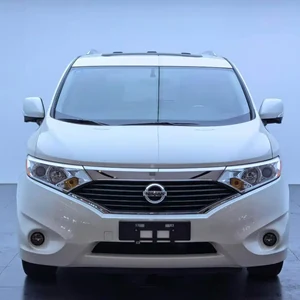
View all listings →Real units currently on ChinaCarDirect with per-unit asking prices and MOQ. Availability updates live from the catalogue.
How to buy a Nissan Quest from China
-
1
Set the use case
Confirm passenger count, luggage requirements, destination, preferred model year, and whether left- or right-hand drive is required. Choose a Quest only if its size and gasoline operation fit local demand.
-
2
Build a comparable shortlist
Review live Nissan Quest listings and compare 3.5L SL designation, model year, mileage, condition, steering side, and equipment. Reject records that omit key identifiers or provide insufficient images.
-
3
Request the unit file
Ask for the VIN, title or registration documents, production or first-registration details, service history, equipment list, inspection images, and any known damage. Reconcile the VIN with both the listing and the sales contract.
-
4
Build a landed quotation
Ask the supplier to state the currency, Incoterm, quote validity, payment schedule, freight method, insurance, and exclusions for duties, taxes, port, and local charges. Compare the same cost basis across shortlisted units.
-
5
Reserve after inspection
Agree condition standards, inspection rights, discrepancy remedies, title-transfer documents, export declaration, and refund terms in writing. Pay only through the agreed route after the unit and paperwork have been verified.
-
6
Ship and complete import
Book vehicle-specific logistics, confirm secure loading and milestone reporting, then use a local broker for VIN, age, emissions, safety, customs, and registration checks. Release final payment only after the agreed pre-shipment checks.
Quest vs rivals
| Toyota Sienna | A close large-minivan rival with strong fuel-efficiency and parts-familiarity appeal, especially where hybrid Sienna variants are available. Choose Odyssey over Quest when the priority is a more car-like driving character and a model line with newer local-market availability. |
|---|---|
| Honda Odyssey | A direct family-van alternative for buyers prioritizing road presence, cabin packaging, and a more car-like feel. It may be preferable where its newer local availability and service network better match the destination market. |
| Chrysler Pacifica | A close rival in markets where it is sold, with newer minivan architecture and hybrid options that may suit local fleets. Choose Quest when a specific 3.5L SL or parallel-import unit is the better operational fit, while checking exact local availability. |
Frequently asked questions
How is Nissan Quest export pricing determined?
The live price is unit-specific and reflects model year, trim, engine, mileage, condition, options, and market conditions. Freight, insurance, port charges, exchange rates, and the chosen Incoterm can change the payable total, while duties and taxes may sit with the buyer. Check the exact vehicle in ChinaCarDirect's live listings and request a written, destination-specific quotation before paying.
What are the key Nissan Quest specs for the 3.5L SL?
The 3.5L SL uses a 3.5-litre V6 gasoline engine with an automatic transmission and rear-wheel drive. It is an internal-combustion minivan, so there is no battery range or charging specification to evaluate. Confirm the VIN-linked engine, transmission, drivetrain, dimensions, and equipment for the exact unit because model-year and market details can differ.
Should an overseas buyer choose a new or used Nissan Quest?
New or dealer-classified stock can reduce uncertainty about wear, while a used Quest may suit a shorter operating cycle or planned fleet rotation. Neither condition label replaces inspection: verify mileage, service history, accident repair, title, warranty position, and remaining vehicle life. Compare the fully landed cost of each option rather than relying on the condition label alone.
What is the MOQ for a Nissan Quest order?
Read the MOQ on the exact live unit or obtain it in a written RFQ; do not assume a catalog-wide quantity or that one unit is always available. A single-unit purchase can be useful for validating quality and parts support, while consolidated orders may reduce per-vehicle freight. The current binding MOQ and any lot conditions must be confirmed before payment.
How long does shipping take and what changes the cost?
Transit time and cost depend on origin and destination ports, sailing frequency, available vehicle space, congestion, documentation, insurance, destination handling, and customs clearance. Ask whether the estimate is port-to-port or door-to-door, which charges are included, and where responsibility for each milestone lies. No fixed delivery period should be assumed without a current booking plan.
Can dealers source Nissan Quest spare parts?
Spare-parts support is generally more practical in markets with an established Nissan dealer network, but regional coverage and model-year support still vary. Provide the VIN when ordering, confirm the part number with a Nissan dealer or reputable supplier, and check lead time before committing a vehicle to service. Also verify that locally sourced components will not affect warranty or insurance coverage.
Can I buy a right-hand-drive Nissan Quest for export?
Availability depends on the exact live unit; do not assume a Quest badge identifies steering side. Request a clear cockpit view, VIN-linked configuration, and written seller confirmation before ordering, then have a local broker check whether that configuration can be registered in the destination country. Lighting, controls, documentation, or modifications may be subject to local rules.
How do I buy a Nissan Quest from China?
Use ChinaCarDirect's live Nissan Quest listings to shortlist comparable vehicles, then request a written RFQ covering the exact SKU or VIN, condition, steering side, Incoterm, payment schedule, and delivery scope. Verify title documents, service history, inspection evidence, and import eligibility before paying. The live listing provides the current unit-level numbers, while the final sales contract should record the accepted vehicle and remedies for any discrepancy.
Ready to source the Nissan Quest?
Send your preferred Nissan Quest SKU, destination, steering-side requirement, and target quantity for a current vehicle-level quotation.
Request a quote