
Nissan Tiida Export Buying Guide for Overseas Buyers
Buy Nissan Tiida from China with clear guidance on trims, powertrains, export pricing, MOQ, shipping, compliance, and the best rival alternatives.
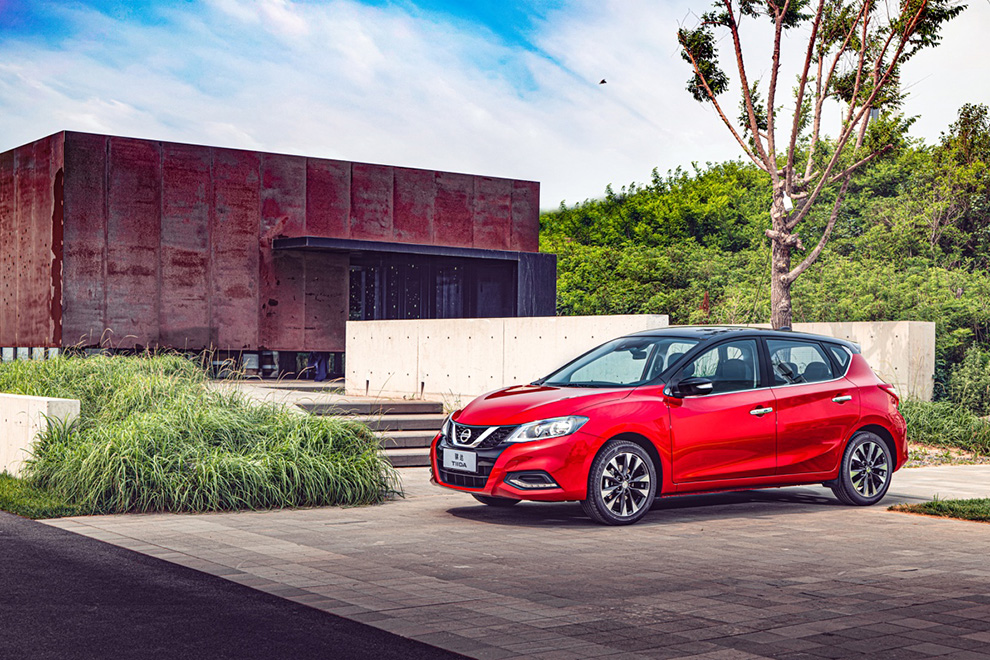
At a glance
- The core China-market Tiida is a compact gasoline hatchback with a 1.6L CVT.
- The wider lineup includes selected manual and 1.6T M-CVT variants, plus China V and China VI identifiers.
- The 1.6L CVT is the practical fleet choice because it supports stronger trim and parts commonality.
- Live vehicle prices, MOQ, and availability must be checked per unit, then separated from landed costs.
- Steering side, emissions, ownership documents, and import rules require destination-specific checks.
Why the Nissan Tiida matters for export markets
The Nissan Tiida is a compact, front-wheel-drive car built around practical hatchback ownership rather than premium performance. For overseas dealers, its value proposition is the combination of a recognizable Nissan badge, a relatively space-efficient body, and a China-market specification list that can include economical 1.6-liter gasoline engines with automatic transmissions. That makes it relevant to buyers serving fleet, ride-hailing, family-car, or entry-level retail demand where purchase efficiency and resale prospects matter more than advanced electric range or high-output performance. Its appeal is strongest when the importer can source standard parts and maintain several similar units without creating an unnecessarily complex mixed-specification fleet.
Global demand should not be assumed to be identical across regions. The Tiida has been sold in multiple markets over its life, but Chinese-domestic Tiida trims can differ from Japanese, European, or other regional versions in body design, equipment, steering position, emissions labeling, and available powertrains. An overseas buyer should therefore treat the Chinese model as a distinct sourcing proposition: attractive for its specification and relative value, but not automatically interchangeable with a similarly named car already sold in the destination country. That distinction matters for fleet planning, parts procurement, insurance, and later resale.
The Tiida is most compelling in markets where buyers want a practical compact car at a sensible acquisition cost. Dealers can use common 1.6L CVT configurations to simplify driver training and parts stocking, while selected manual, sport-labelled, or higher-output variants address customers with more specific preferences. The model does not need to be the most technologically advanced car in its class to succeed: predictable operating costs, recognizable service procedures, and useful interior space may create a stronger business case for a regional importer, with easier fleet standardization and more manageable residual-demand assumptions.
- Practical compact-car positioning
- China-specific Nissan specifications
- Value-focused fleet and retail fit
Model range, trims and powertrain variants: how the lineup is structured and how to choose
The China-market lineup is centered on the 1.6-liter gasoline engine paired most often with a CVT. Trims such as Smart Drive, Cool, Smart, Comfort, Premium, and Luxury indicate different equipment and comfort levels rather than a single global hierarchy. Buyers should not assume that an English trim label automatically maps to an overseas equivalent: Smart Drive may signal a particular Chinese equipment package, while Cool Sport, Joy, or Intelligent Premium should be treated as named configurations whose contents must be verified from the individual listing before comparing them with local rivals.
Most buyers should start with the 1.6L CVT because it represents the mainstream configuration and offers the simplest commonality across a dealer's stock. The range also includes selected 1.6L manual versions for buyers who value mechanical simplicity or a different price position, and a 1.6T M-CVT Dynamic Edition that serves buyers seeking a turbocharged engine and a different driving character. These are exceptions rather than interchangeable choices: transmission type, engine output, service requirements, and expected resale positioning can all differ. Confirming the exact mechanical specification before ordering prevents costly mismatches in the final import quotation and insurance record.
Emissions labels add another layer. Some trims are marked China V, while others carry China VI designations, and the 1.6T variant appears as a distinct M-CVT configuration. These labels are useful for identifying the source-market car, but they are not automatic approval for registration in the destination. Compare engine output, gearbox type, equipment, steering side, and emissions documentation before selecting units. For fleet buyers, standardizing on one close specification usually makes inspection, training, spare-parts planning, and eventual resale easier than an unnecessarily diverse order across multiple vehicles in the same shipment.
- Mainstream choice: 1.6L CVT
- Check manual and 1.6T variants
- Verify China V/VI status
New vs used Nissan Tiida: how export inventory is structured and how buyers choose
New and used Tiida vehicles should be evaluated as two different purchasing propositions. A new example normally offers a clearer ownership history, new-car presentation, and less uncertainty about wear, but the buyer pays for that condition and may need to accept dealer preparation, transport, or local registration charges. A used car can reduce acquisition cost and may make older trim levels more accessible, yet its real value depends on mileage, service records, accident history, tyre and brake condition, paintwork, and whether its documents are complete and transferable for lawful export.
China-origin export inventory can contain cars of different model years and specifications, including mainstream 1.6L CVT trims, China VI-labelled versions, manual cars, and 1.6T variants. Availability changes continuously, so the useful question is not how many cars exist in a particular period, but which units can meet a buyer's year, condition, emission, and equipment brief at the same time. A dealer ordering a mixed fleet should request comparable photographs, specification sheets, chassis or VIN records, and inspection evidence for every proposed unit rather than extrapolating from one attractive listing for the proposed shipment.
The best new-versus-used decision depends on total operating risk, not merely the headline vehicle price. New units suit importers who need predictable condition, clearer warranty terms where documented, consistent branding, and straightforward presentation to fleet customers. Used units suit buyers with a firm refurbishment budget who understand local age restrictions and can absorb repairs or replacement parts. Before either is accepted, obtain an independent inspection, verify that the seller's name matches the ownership and export documents, and model repair, registration, and unsold-stock carrying costs before calculating the expected margin in the destination market.
- New: lower condition uncertainty
- Used: lower entry cost, higher risk
- Inspect before balance payment
How export pricing works: the factors behind a live listing price, and how to read one
A live Tiida export price is the seller's asking price for that specific vehicle at that moment, not a universal model price. It normally reflects model year, trim, engine and transmission, China V or China VI status, mileage and condition for used cars, and the seller's commercial terms. Currency choice and exchange-rate movements can also change the effective amount for an overseas buyer. Consequently, two cars carrying similar model names may not be economically equivalent, especially when one is manual, another uses the 1.6T M-CVT, or their age and documentation differ.
To read a live listing correctly, separate the vehicle price from the landed cost. Confirm the model year, exact trim, engine, gearbox, steering side, condition, VIN, available documents, and stated MOQ before treating the displayed amount as actionable. Then determine what the Incoterm covers and allocates: vehicle preparation, export customs, inland transport, port charges, marine insurance, freight, destination handling, duties, taxes, and registration may sit on different sides of the transaction. A low asking price can be misleading if the buyer later has to arrange unsuitable shipping services or replace missing export documentation.
Pricing discipline begins with a written quote that fixes the vehicle, the currency, the exchange-rate basis, payment milestones, validity period, and delivery term. Ask whether the amount includes export clearance and which costs are expressly excluded; do not assume a China VI badge or a higher trim will offset higher freight, tax, or compliance work in a particular country. Compare the live asking price with the completed landed-cost calculation and your target resale margin. Current per-unit prices and availability should always be taken from the live Tiida inventory, because the binding figures will change with the vehicle and supplier.
- Verify unit and trim details
- Price is not landed cost
- Use live inventory figures
MOQ, ordering and payment: single units vs consolidating a container
MOQ means the minimum quantity a seller is willing to accept for a particular listing or commercial arrangement. It should not be assumed from the model name or from another Nissan transaction. A live unit may be offered to a test buyer, while a seller may require a larger batch for a preferred production run, special color, or particular destination. The buyer should read the stated MOQ on each listing, request written confirmation, and establish whether the minimum applies to one specification or can be met by combining acceptable trims. That clarification comes before payment and shipment commitments.
Ordering a single Tiida is useful for testing demand, validating trim fit, checking parts support, and learning the actual export workflow. A larger order can improve unit-level commercial terms and simplify freight planning when many cars share the same specification. However, consolidating units does not automatically make them cheaper after all charges, and a mixed shipment can complicate customs descriptions, insurance, registration, and resale. Dealers should model two scenarios: one directly comparable vehicle sold quickly, and one mixed container held until slower-moving trims clear, including warehousing and financing risk. Use conservative assumptions for both.
A sound order follows a documented sequence: select the live unit, request a pro forma invoice and specification sheet, verify ownership and export eligibility, arrange inspection, pay the agreed deposit, complete any balance, and release the vehicle only after the documentary and physical checks are satisfactory. Payment methods, bank charges, refund terms, and the point at which title transfers should be explicit. For a larger fleet order, staged payments tied to inspection and documents can reduce exposure, while an escrow arrangement or letter of credit may suit buyers able to manage those instruments and local banking relationships.
- Confirm listing-specific MOQ
- Use staged payments
- Model holding and financing risk
Shipping, homologation and market compliance caveats: LHD/RHD and import rules by country
Shipping begins with confirming whether the unit is left-hand drive or right-hand drive. China-domestic vehicles are commonly supplied in left-hand-drive configuration, but that does not mean a right-hand-drive Tiida is unavailable or that a steering conversion is acceptable. Some destinations permit limited modifications, while others require the car to be imported in a compliant configuration or sourced through an official channel. Buyers should check the physical steering position and the VIN-linked specification in the live listing, then confirm local rules before paying for any conversion or freight services.
Import compliance is country-specific and may involve customs classification, duties and taxes, emissions standards, safety requirements, VIN or type approval, age limits for used vehicles, insurance, and registration. A China VI designation does not automatically satisfy a destination's emissions regime, and used-car restrictions can make an otherwise inexpensive older Tiida unsuitable for import. Obtain an early written assessment from a customs broker or local compliance specialist, using the exact engine, year, steering side, and VIN. Also check whether spare-parts conformity, warranty coverage, or insurance assumptions change after registration in that country.
Freight choice depends on quantity, urgency, destination, cargo rules, and the value of the units. Consolidating vehicles with compatible specifications can simplify handling, while a mixed consignment may increase documentation complexity. The quote should distinguish inland haulage, export clearance, terminal charges, insurance, ocean or air freight, destination charges, and customs brokerage so that hidden costs are not confused with the vehicle price. Delivery timing also depends on inspection, payment release, port congestion, sailing schedules, and customs clearance. None of those elements can be guaranteed from a listing alone, so the buyer should obtain a destination-specific logistics plan.
- Verify steering side first
- Check destination compliance
- Itemize every logistics charge
Who should buy the Tiida — and who should pick a different vehicle
The Tiida fits importers, dealers, and fleet operators that value low-complexity, gasoline-powered compact cars. It is a sensible candidate for urban passenger fleets, airport and hotel shuttles where local rules allow commercial use, family-focused rental programs, and retail buyers seeking a practical automatic-transmission hatchback. A common 1.6L CVT specification can simplify driver familiarization, maintenance records, and parts inventory. The strongest case is in a market with affordable ownership costs, straightforward registration, adequate demand for compact automatics, and a reliable channel for inspections, repairs, and resale through an established local workshop network.
It is less suitable for buyers who require a battery-electric powertrain, long-distance touring comfort, premium cabin materials, advanced driver-assistance systems, or high performance. The Tiida's China-market equipment should not be assumed to include features that may be standard on newer rivals, and its age or specification can affect insurance and residual values. Very large cargo needs may also exceed what a compact hatchback can carry. Commercial operators should first verify local rules on vehicle age, emissions, licensing, and passenger or cargo use; otherwise an attractive acquisition decision can become unusable after registration.
A buyer should choose the Tiida when simplicity and operating economics outweigh novelty. The 1.6L CVT is the safest default for mixed-driver fleets because it combines a mainstream specification with an automatic gearbox. A manual variant may suit a buyer with a narrower technical preference, while the 1.6T M-CVT makes more sense for an importer whose market values its turbocharged character and who can support its parts and servicing needs. Choose another vehicle when the business case depends on electric operating costs, a stronger warranty, a more modern safety suite, broader variant consistency, or easier cross-border parts support.
- Best for value-focused fleets
- Check commercial-use eligibility
- Match rivals to buyer priorities
Main rivals and how the Tiida compares
The Toyota Corolla is the broadest global alternative, with hatchback and sedan forms in many markets and extensive brand familiarity. It may be easier for a buyer to source common service parts or attract customers who recognize the model, although exact equipment and powertrain availability vary by country. The Tiida can still be attractive where its China specification and live commercial terms offer better value, but the Corolla often provides a more familiar badge proposition. Compare local warranty, parts support, resale data, and registration suitability rather than relying on global reputation alone.
The Hyundai i30 is a closer hatchback-shaped competitor for buyers who value a more modern-looking alternative, driver-focused positioning, or a different equipment set. The Tiida generally makes more sense for uncomplicated fleet procurement where common 1.6L CVT units and straightforward cost control dominate. The i30 may be stronger where its local warranty and equipment match buyer expectations. As always, a like-for-like comparison must use the destination market's engine, gearbox, safety equipment, tax treatment, and service network, because equivalent-looking model names do not always represent equivalent products across each available variant.
The Honda Civic is relevant to drivers who put more emphasis on dynamic tuning, higher-grade cabin feel, or a performance-oriented image. It may command a different ownership proposition from the Tiida, which is generally chosen for affordability, practicality, and efficient fleet operation. Buyers should not equate the Tiida's 1.6T M-CVT option with the full Civic range: engine output, transmission behavior, equipment, and market positioning are distinct. For a fleet, select whichever model has the stronger local residual-value evidence, service coverage, insurance terms, and driver acceptance—not simply the badge that looks more aspirational.
- Corolla: global familiarity
- i30: direct hatchback rival
- Civic: performance-led alternative
Live Nissan Tiida export inventory
View all listings →Real units currently on ChinaCarDirect with per-unit asking prices and MOQ. Availability updates live from the catalogue.
How to buy a Nissan Tiida from China
-
1
Define the target specification
Set the required model-year range, trim, engine, transmission, body style, steering side, condition, and intended market. Decide whether fleet commonality or a specific enthusiast or commercial requirement takes priority.
-
2
Search the live Tiida inventory
Use the live listings to compare the exact unit, year, trim, condition, documents, current per-unit price, and stated MOQ. Treat the displayed figures as actionable only after the seller confirms them.
-
3
Request a unit-specific quotation
Ask for a pro forma invoice that identifies the vehicle, currency, payment stages, delivery term, export documentation, and any included or excluded charges. Confirm ownership and the exporter's authority to sell the vehicle.
-
4
Check export and import compliance
Provide the engine, year, VIN, emissions version, and steering configuration to a customs broker or destination-market specialist. Verify age restrictions, emissions rules, duties, taxes, type approval, and registration before finalizing the order.
-
5
Arrange a pre-shipment inspection
Use an independent inspection to verify the VIN, exterior and interior condition, fluids, warning systems, steering configuration, and signs of accident repair. Reconcile every observation with the seller's description and listing photographs.
-
6
Complete staged payment
Structure the deposit and balance around inspection, document delivery, and export release. Record bank charges, refund conditions, title-transfer timing, and the point at which the vehicle is dispatched.
-
7
Ship and clear the vehicles
Agree on inland haulage, export clearance, freight, insurance, destination handling, and customs brokerage before loading. Release the final payment only after the agreed documentary and physical checks are complete.
Tiida vs rivals
| Toyota Corolla | The Corolla generally offers greater global name recognition and broader service familiarity, which can reduce buyer and fleet-partner uncertainty. The Tiida may provide stronger value where its China specification and live commercial terms are competitive, so compare local warranty, parts access, and residual-value evidence. |
|---|---|
| Hyundai i30 | The i30 is a direct compact-hatchback alternative with a more modern and driver-focused market image. The Tiida is generally more attractive for uncomplicated fleet commonality around 1.6L CVT configurations, but the final choice depends on the destination's equipment, warranty, taxation, and service network. |
| Honda Civic | The Civic places greater emphasis on dynamic tuning, cabin quality, and performance-oriented branding. The Tiida is usually chosen for affordability and practical fleet use; buyers should not treat its 1.6T M-CVT option as equivalent to the full Civic range. |
Frequently asked questions
How is the Nissan Tiida export price determined?
The export price is set per vehicle and reflects model year, trim, engine and transmission, emissions designation, condition and mileage where relevant, plus the seller's payment and delivery terms. Exchange rates can affect the final amount for a buyer paying outside China. Check the live Tiida listings for the current vehicle price, then build landed cost separately for freight, insurance, duties, taxes, handling, and registration.
What engine and transmission options are available in the China-market Tiida?
The China-market range is primarily 1.6-liter gasoline with CVT, with selected 1.6L manual versions and a 1.6T M-CVT Dynamic Edition. China V and China VI labels identify source-market emissions versions. These are combustion vehicles, so there is no battery range or charging specification; confirm the exact engine and gearbox on the selected listing.
Is a used Nissan Tiida better value than a new one?
New cars generally reduce wear and ownership-history risk, while used cars can offer a different acquisition cost but may need tyres, brakes, servicing, or cosmetic work. The better choice depends on local age and emissions rules, documentation, condition, and your refurbishment budget. Inspect the individual vehicle rather than choosing from the model year or trim label alone.
What is the MOQ for Nissan Tiida wholesale orders?
MOQ is set by the seller and may differ by listing, trim, color, production run, or shipment plan. Some live listings may accept a single unit, while volume orders can have different commercial terms. Read the MOQ on each live listing and request written confirmation or an RFQ quote for the intended quantity.
What affects shipping time and cost for a Nissan Tiida?
Delivery time and cost depend on origin and destination ports, transport mode, shipment quantity, Incoterm, insurance, handling, customs clearance, port schedules, and congestion. The vehicle listing is not a complete freight quotation. Ask the supplier or forwarder for a destination-specific, itemized logistics and landed-cost proposal.
Are spare parts available for China-market Nissan Tiida trims?
Parts availability varies by engine, transmission, trim, model year, and whether the vehicle is locally registered or modified. Common mechanical components may be easier to support than trim-specific body or electronic parts, but exact interchangeability must be checked by VIN and part number. Confirm catalogue references, local availability, and warranty effects before importing a batch.
Can I buy a right-hand-drive Nissan Tiida from China?
China-origin Tiida inventory is commonly left-hand drive, while right-hand-drive availability can vary by source and destination. A steering conversion may be possible, but it is not automatically legal, insurable, or registrable. Search the live listings for the steering side and obtain destination-country approval before committing.
How do I order a Nissan Tiida from China?
Start with the live Tiida inventory, select a vehicle or define a batch specification, and request a written quote with documents and delivery terms. Verify ownership, export eligibility, and import compliance; complete inspection and staged payment before release. Use the RFQ channel to submit the selected units, destination, quantity, and required Incoterm.
Ready to source the Nissan Tiida?
Send your target year, trim, powertrain, quantity, destination, and Incoterm to request a current Nissan Tiida quotation from ChinaCarDirect.
Request a quote