
Nissan X-trail Export Buying Guide for Dealers and Fleets
Buy Nissan X-trail from China with practical guidance on trims, powertrains, pricing factors, MOQ, shipping, compliance and rival options for importers.
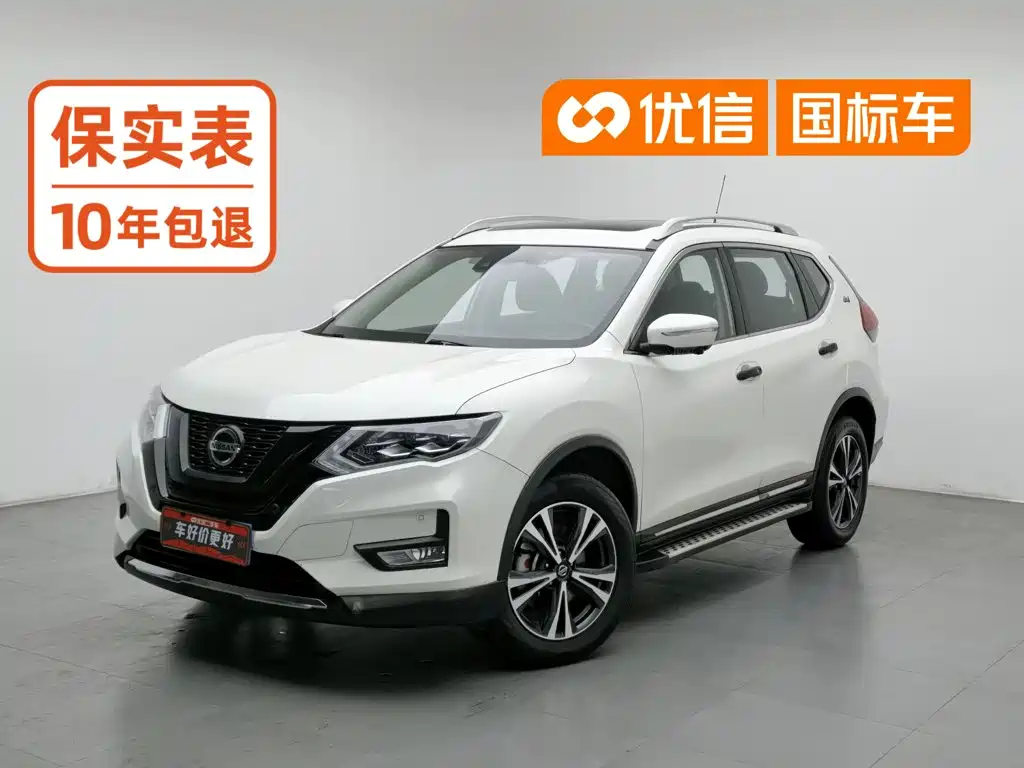
At a glance
- The X-trail combines a familiar Nissan compact-SUV badge with 2.0L, 2.5L and e-POWER powertrain choices.
- Two-wheel drive suits paved urban duties, while four-wheel drive is justified by more demanding routes and weather conditions.
- Selected three-row, seven-seat versions add flexibility for families, transfers and mixed-duty fleets.
- New vehicles suit standardised fleet programmes; a used Nissan X-trail requires VIN-level history, inspection and condition checks.
- Live listings provide current per-unit terms, MOQ and availability, while a written quotation should govern the final deal.
Why the Nissan X-trail matters for export markets
The Nissan X-trail is a recognisable compact-SUV nameplate that gives overseas dealers a practical alternative to the anonymous vehicles found in many export markets. Its appeal comes from a familiar Nissan badge, family-friendly packaging and a choice of conventional and hybrid drivetrains. For importers, that combination can shorten the learning curve: buyers often already understand the model’s positioning, while a product specialist can focus on trim, steering position and homologation rather than rebuilding the vehicle proposition from scratch. It also suits distributors serving both private retail buyers and company fleets.
Demand for this model in its segment is supported less by one universal specification than by its adaptability. The Chinese-market range includes 2.0-litre and 2.5-litre petrol versions with CVT transmission, two- and four-wheel-drive configurations, and an e-POWER super-hybrid example. That breadth lets a distributor serve budget-conscious fleets with two-wheel drive, premium importers with four-wheel drive, and hybrid-oriented customers evaluating fuel-efficient fleet operation at scale without relying on plug-in charging infrastructure. Match road quality, fuel availability, passenger load and equipment to the market before selecting a standard fleet specification.
The export case is strongest when the X-trail’s familiar silhouette translates into a clear retail proposition. It occupies the practical middle ground between smaller crossovers and larger, costlier SUVs, which can suit importers seeking usable passenger space, road presence and everyday carrying capacity. However, Chinese trim labels do not automatically correspond to equipment sold under the same name in Europe, Asia-Pacific, the Middle East or the Americas. A professional export review should therefore compare standard equipment, safety content, service requirements and local rules before stock is committed to the target market.
- Nissan compact-SUV nameplate.
- Powertrain choices suit varied fleets.
- Trim labels differ across markets.
Model range, trims and powertrain variants: how the lineup is structured and how to choose
Start with the drivetrain, because it determines both how the vehicle is sold and how it will be used. The petrol line is centred on 2.0-litre and 2.5-litre engines paired with a CVT. The 2.0-litre versions generally suit fleets prioritising acquisition cost, operating simplicity and adequate performance; the 2.5-litre versions add a more substantial powertrain for buyers who place greater weight on acceleration, load carrying or highway confidence. Exact output, grade and equipment must be confirmed against the specific listing rather than inferred from displacement alone before the purchase is agreed.
Next, decide whether two-wheel drive or four-wheel drive matches the operating environment. Two-wheel-drive X-trail configurations can be the rational choice for urban distributors, paved-road fleets and buyers seeking a lower-complexity package, particularly where four-wheel drive adds cost without a clear operating benefit. Four-wheel-drive versions are more relevant for regional travel, poorer surfaces, adverse weather or duty cycles involving remote roads. The deciding question should be annual route and terrain exposure, not simply whether a more premium-looking trim is genuinely better for the application across the fleet over the service life.
Seating is the next structural choice. The broader export range includes five-seat crossovers and also three-row, seven-seat versions within selected trims. A seven-seat example can suit family use, hotel transfers or mixed passenger-and-luggage duties. Buyers should calculate usable third-row space and luggage capacity with the seats occupied, rather than relying on the seven-seat label. The listed e-POWER super-hybrid dual-motor AWD option is a combustion-powered hybrid, not a plug-in with electric-only range; verify its fuel consumption and equipment in the live specification because market equipment and test cycles can vary by destination.
- 2.0L CVT: fleet-value option.
- 2.5L CVT: performance priority.
- 4WD: match route and terrain.
- Seven seats: verify usable capacity.
- e-POWER: non-plug-in hybrid route.
New vs used Nissan X-trail: how export inventory is structured and how buyers choose
An export inventory for the X-trail can contain two very different asset classes. A new vehicle is generally an unregistered factory example described by model year, trim, factory options and current availability. A used vehicle is an individual asset defined by registration history, mileage, condition, ownership and any repair or repainting work. That distinction matters because two units carrying the same trim name can differ materially in commercial risk. The year, VIN and condition record should therefore be reviewed at vehicle level, not inferred from a similar new listing page.
New X-trail units are the cleaner choice for fleet launch programmes, showroom standards, warranty administration and predictable delivery. Their advantage is not simply a newer appearance: documented factory specification, uniform presentation and clearer history reduce uncertainty. Used units can make commercial sense where the buyer values a known configuration more highly than factory-new presentation, or where demand is for a specific older variant that is difficult to source new. Such a purchase should be treated as a separate inspection and residual-value decision, not simply as a cheaper equivalent of the current model.
Assess a used X-trail through evidence rather than attractive listing language. Request the vehicle identification number, registration documents, service history, photographs of the underside, tyres, interior and engine bay, plus an independent inspection where the value justifies it. Check for accident repairs, flood exposure, corrosion, dashboard faults, warning lights, suspension wear, transmission service history and evidence that mileage has not been altered. Also verify whether the unit is right- or left-hand drive and whether its engine, emissions specification and equipment can legally and practically be registered in the destination market before contracting.
How export pricing works: the factors behind a live listing price, and how to read one
A Nissan X-trail export price is not one fixed wholesale figure. It is the result of the exact vehicle being matched to market terms, and it can move with model year, trim, engine, drivetrain, seating, mileage, condition and production timing. The e-POWER hybrid cannot be valued as though it were the same asset as a petrol two-wheel-drive version. Currency movements, shipping cost, insurance, port charges and the selected Incoterm also affect the landed result. Buyers should separate the vehicle quotation from freight, duty, taxes and destination charges so each item remains auditable.
To read a live quotation, begin with the vehicle identity and work through the commercial terms in order. Confirm model year, exact trim, engine, transmission, drive configuration, seat count, steering side and whether the unit is new or used. Then check what the seller includes in the displayed price, what is excluded, the payment schedule, inspection terms, validity period and Incoterm. If two listings appear similar, compare like with like: a hybrid, four-wheel-drive or seven-seat vehicle should not be benchmarked against a lower-specification petrol unit without accounting for its different market value.
The binding quotation should be documented in writing for the selected unit. Ask the supplier to repeat the vehicle identity, condition, equipment, quantity, delivery term and all charges in a pro forma invoice or quotation, and confirm how long it remains valid. Treat a catalogue page as an invitation to inquire rather than a guaranteed landed-cost calculation. Current per-unit pricing, minimum order quantity and availability must be checked in the live listings, while the final commercial commitment should follow a written quote that names the exact vehicle or agreed production specification.
- Compare matching trim and condition.
- Separate vehicle and landed charges.
- Confirm terms in writing.
MOQ, ordering and payment: single units vs consolidating a container
Minimum order quantity is a seller-specific commercial term, so every live X-trail listing’s MOQ must guide the purchase decision. Some supply arrangements accommodate a single vehicle; others are structured around several units or a consolidated shipment. One-unit buying can suit a dealer testing demand, replacing a damaged fleet car or assembling a mixed order, but freight, documentation and customs costs may not be as efficient per vehicle as a consolidated load. Conversely, ordering several units improves purchasing efficiency only when the specification, resale demand and delivery timing are genuinely aligned.
A container-level programme requires more control than simply placing an order for multiple identical cars. Agree the production or stock basis, model year, trim mix, colour tolerance, option list, quantity by configuration and acceptable delivery window. Decide in advance how non-standard units will be allocated and who bears the cost of replacing a damaged or non-conforming vehicle. For mixed orders, separate the commercial terms for each vehicle while consolidating freight where practical. This prevents a convenient MOQ from forcing the buyer to lock in unsuitable stock before demand is proven.
Payment structure should mirror risk. A common sequence is a deposit to reserve the vehicle or production slot, inspection at the agreed stage, payment of the balance before release, and then freight booking against confirmed documents. The exact percentages and timing are commercial terms, not universal rules, so rely on the written quotation and invoice. Buyers should verify the seller’s legal identity, payment account, refund terms and the documents required for title, registration and export. For used vehicles especially, paid inspection and clear ownership documents should precede the final balance.
- Check each listing’s MOQ.
- Agree trim mix and timing.
- Link payments to inspection.
Shipping, homologation and market compliance caveats: LHD/RHD and import rules by country
Chinese-market X-trail vehicles are commonly configured for left-hand drive, while some export destinations require right-hand drive. Steering configuration must be confirmed before contracting because converting a vehicle is costly, affects parts and may not meet local type-approval requirements. Do not assume that an overseas-market X-trail name guarantees the correct configuration. Ask the seller for the VIN, steering-side photo, production specification and homologation documents, then have the destination-country importer or homologation specialist confirm acceptance before the vehicle is released for shipment and before final payment funds are released by the buyer.
Import rules are national rather than universal. The receiving country may impose age limits on used vehicles, emissions and type-approval checks, VIN verification, customs valuation, duty, VAT or GST, port charges, road-user fees and documentary requirements. Local authorities may prescribe safety equipment, lighting, emissions standards, warranty or after-sales provisions. Regulations can differ by engine, fuel, steering side, seat configuration and destination port. Obtain a written regulatory and landed-cost assessment for the vehicle before accepting it; a general statement that the model is exportable is not a substitute for country-specific clearance.
Shipping method should match urgency, quantity and budget. Ro-ro is commonly suitable for vehicles; containerised handling can suit smaller consolidated shipments but requires securing, lashing and protection. Breakbulk may be necessary for specialist units. Freight quotations depend on origin and destination ports, vehicle dimensions, route, carrier space, seasonality, terminal handling, insurance and documentation. Transit time and cost are not interchangeable: a slower service may reduce cost, while a faster option may protect schedules. Build a delivery plan that includes port arrival, customs release, inland transport and the deadline for registration.
- Confirm steering side early.
- Seek country-specific clearance advice.
- Match freight method to schedule.
Who should buy the X-trail — and who should pick a different vehicle
The X-trail is a strong candidate for dealers and fleet operators that need a conventional compact SUV with a recognisable badge and broad configuration choice. It works particularly well when the brief combines passenger capacity, everyday usability and a manageable logistics profile. Two-wheel-drive petrol versions may suit urban fleets; four-wheel-drive and larger-engine variants address buyers with stronger load, terrain or motorway requirements; the e-POWER option can suit organisations prioritising hybrid efficiency. The best fit is a buyer willing to specify the exact vehicle rather than relying on the model badge alone.
It may be a poor choice when the requirement is a premium-luxury finish, maximum towing capability, commercial-duty durability or the lowest acquisition and operating burden. Buyers who need a plug-in range, battery-only commuting or a performance model should look elsewhere, because the X-trail range referenced here centres on petrol and non-plug-in e-POWER hybrid configurations. A small operating footprint may make the X-trail unnecessarily large, while a high-volume work programme may require a purpose-built van or pickup. Specification discipline prevents an SUV from being selected for capabilities it does not have.
Used X-trail buyers should also assess whether a unit’s condition suits the intended holding period. A well-documented vehicle may serve a short test or replacement need, while a new unit offers more predictable preparation and warranty administration for a larger fleet. The correct decision compares total cost of ownership, not purchase price alone: financing, freight, taxes, insurance, fuel, maintenance, downtime and expected residual value all belong in the calculation. If the buyer cannot inspect or support the vehicle in the destination market, a better-supported rival may carry lower operational risk.
Main rivals and how the X-trail compares
The Toyota RAV4 is a direct global rival because it occupies the same mainstream compact-SUV bracket and is available to buyers with expectations of hybrid efficiency, reliability and broad market familiarity. The X-trail competes through its own 2.0-litre and 2.5-litre petrol choices, four-wheel-drive versions and e-POWER super-hybrid alternative. RAV4 may be easier for some customers to value because its hybrid proposition is deeply established in several markets, while X-trail buyers should compare operating plans rather than assume equivalent fuel use. Local servicing and parts support can also influence the better choice.
The Honda CR-V is another close competitor, particularly for buyers who prioritise cabin packaging, road refinement and a straightforward family-SUV proposition. The X-trail can answer with a different design identity, more explicit powertrain choice and, in selected markets, a three-row seven-seat configuration. CR-V may have stronger recognition among some fleets, so the decisive comparison is likely to be local fuel costs, equipment, warranty support and availability rather than badge appeal alone. Test drives and a verified equipment list should carry more weight than generic segment rankings in the target market.
The Mazda CX-5 is a useful alternative for drivers who prioritise a road-focused compact SUV and do not need three-row flexibility. It competes below the cost of premium-branded SUVs, making cost sensitivity important in any comparison, although equipment and local taxation can change the result. The X-trail’s strongest counter-argument is configuration breadth: buyers can choose drive layout, engine size and, where relevant, a seven-seat body or e-POWER hybrid. For a fleet, the winner is normally the model that meets duty-cycle, payload, fuel and aftersales requirements at the lowest operating cost.
- RAV4: compare hybrids and support.
- CR-V: compare cabin and equipment.
- CX-5: consider for five-seat use.
Live Nissan X-trail export inventory
View all listings →Real units currently on ChinaCarDirect with per-unit asking prices and MOQ. Availability updates live from the catalogue.
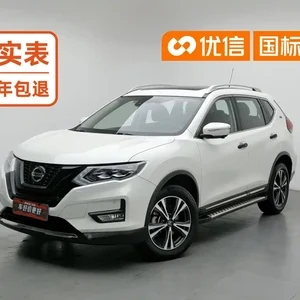
Nissan X-Trail 2021 2.5L CVT 4WD XL ITS 3rows 7-Seat Luxury Pilot

How to buy a Nissan X-trail from China
-
1
Define the target vehicle
Set the body, seating, petrol or e-POWER choice, drive layout, steering side and destination before shortlisting. A precise brief prevents an inexpensive listing from becoming an unsuitable import.
-
2
Check live unit details
Open the current X-trail inventory and confirm the exact trim, model year, VIN where available, condition, quantity and MOQ. Treat the live entry as the source for current per-unit terms and availability.
-
3
Request an itemised quotation
Ask for the vehicle price, freight, insurance, payment stages, documentation, inspection requirements and Incoterm. Have the seller repeat the exact vehicle identity and quotation-validity period in writing.
-
4
Review destination compliance
Check steering-side requirements, homologation, used-vehicle age rules, emissions standards, VIN verification, customs treatment and import taxes with a destination-country specialist.
-
5
Inspect and secure the unit
For a new vehicle, agree a pre-delivery inspection checklist; for a used vehicle, commission an independent inspection and verify title, service history and condition evidence before final payment.
-
6
Complete payment and shipping
Confirm ownership and export documents, release the balance against agreed terms, arrange suitable insurance and book Ro-ro, container or breakbulk freight. Track the vehicle through port arrival, customs clearance and inland delivery.
X-trail vs rivals
| Toyota RAV4 | The RAV4 is a direct compact-SUV rival with strong hybrid recognition in many markets. It may suit buyers prioritising established hybrid resale familiarity, while the X-trail offers 2.0L, 2.5L and e-POWER routes plus selected seven-seat versions. |
|---|---|
| Honda CR-V | The CR-V competes on family packaging, refinement and fleet familiarity. The X-trail differentiates through broader Chinese-market powertrain choices and a three-row layout, but local parts compatibility and servicing should be checked. |
| Mazda CX-5 | The CX-5 is a more road-focused, generally five-seat alternative for buyers who do not need the X-trail’s additional passenger flexibility. The X-trail is the stronger fit where configurable drive layout, larger engine options or three-row capacity matter. |
Frequently asked questions
How is Nissan X-trail export pricing determined?
The live price reflects the specific vehicle’s year, trim, engine, drive layout, seating, condition and supply position, while freight, insurance, exchange rates, taxes and Incoterm shape the landed cost. Check the current per-unit price in the live listings, then request a written quotation that itemises vehicle and shipping charges.
What engine and hybrid options are available?
The Chinese-market range includes 2.0L and 2.5L petrol engines with CVT, two- or four-wheel drive depending on trim, and an e-POWER super-hybrid dual-motor AWD example. The e-POWER version is a combustion-powered hybrid rather than a plug-in with electric-only range, so verify output, fuel economy and equipment in the live specification.
Should an overseas buyer choose a new or used Nissan X-trail?
New vehicles are generally easier to standardise and administer for fleet use, while used units can fit a specific configuration or short replacement need. For a used X-trail, verify the VIN, registration, mileage, service records, accident or flood history, condition, steering side and destination eligibility before final payment.
How does MOQ work when buying from China?
MOQ is set by the seller and shown on the selected live listing; an arrangement may accommodate a single unit or require a larger batch. Confirm it before ordering, because consolidating freight can improve unit economics but should not force an unsuitable trim mix or delivery schedule.
What determines shipping time and cost?
Origin and destination ports, shipping method, carrier space, season, vehicle dimensions, terminal handling, insurance, documentation and customs clearance all affect the result. Compare Ro-ro, container and breakbulk options against the launch deadline, and include port arrival, clearance and inland delivery in the schedule.
Can spare parts be ordered for an exported X-trail?
Parts should be ordered by VIN, exact trim and build period because Chinese-market labels can differ from other regions. Confirm local-dealer compatibility and cross-border lead times before assuming a component can be imported, especially for body, electronic and hybrid-system parts.
Is right-hand-drive Nissan X-trail availability a concern?
Chinese X-trail stock is commonly left-hand drive, and right-hand-drive availability varies by unit and production batch. Never assume the configuration or convert a vehicle without approval; require steering-side confirmation and destination-market type approval before contracting.
How should an overseas buyer order a Nissan X-trail from China?
Browse the live X-trail listings, select the exact configuration and request an itemised RFQ covering price, payment, documents, inspection and delivery terms. Complete the destination compliance review, approve the vehicle or production specification, release payment against agreed milestones and then book insured freight.
Ready to source the Nissan X-trail?
Send your target X-trail specification to ChinaCarDirect for a written, per-unit export quotation and logistics review.
Request a quote