
Ora Good Cat Export Buying Guide for Dealers and Fleets
Export buying guide for the Ora Good Cat, covering trims, battery options, pricing logic, MOQ, shipping, compliance and sourcing from China for overseas dealers.
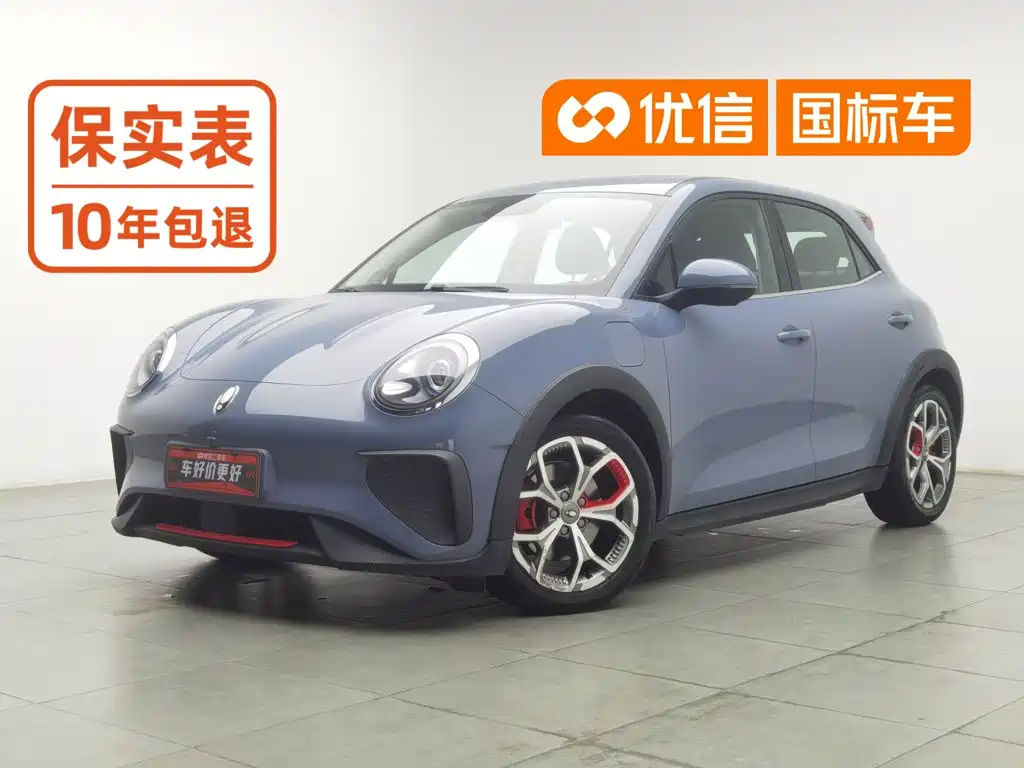
At a glance
- The Good Cat is a compact five-door BEV with distinctive retro styling and showroom potential.
- Listed range options span standard, extended and long-range configurations; verify the test cycle for each car.
- LFP and ternary lithium-ion versions appear, so battery chemistry must be matched to the exact trim.
- New vehicles offer specification consistency, while used vehicles require battery, mileage and damage checks.
- Export decisions should compare fully landed cost rather than the live vehicle quote alone.
- RHD availability, homologation, charging compatibility and parts support must be confirmed before ordering.
Why the Ora Good Cat matters for export markets
The Ora Good Cat occupies an unusual export position: a compact battery-electric hatchback with retro-inspired styling, a five-door layout and several long-range-oriented variants. It gives overseas dealers a design-led alternative to anonymous small EVs, while fleet buyers can compare standard-, extended- and long-range labels within one model family. For import markets seeking an affordable premium showroom car, that combination makes the Good Cat worth evaluating against mainstream hatchbacks. Its export value is not based on one specification alone, but on how buyers can align appearance, expected range, equipment and sourcing route with local charging patterns and customer demand.
Demand for the Good Cat is best understood through buyer fit rather than assumed sales momentum. Urban EV markets often need a vehicle that feels distinctive in a showroom but remains easy to license, insure and charge. A compact hatchback can serve company-car, hospitality and short-route fleet customers where a larger crossover would add unnecessary purchase and operating costs. It also gives multi-brand dealers a recognizable China-origin product to promote without relying on the lowest-cost segment alone. Its appeal depends on maintaining clear technical data, realistic range claims and dependable after-sales arrangements, which are export responsibilities rather than product-name promises.
Before treating the Good Cat as a global-volume model, buyers should identify the exact destination use case. Private customers may prioritize design, range labels and visible equipment, while fleet operators should test cargo practicality, charging access, tire replacement and repair pathways. Export viability also depends on local electricity pricing and the availability of compliant charging. In other words, the model matters because it offers a differentiated compact BEV, but each importer must still validate the business case around its own market. That discipline prevents attractive range labels from obscuring operating-cost or compliance weaknesses.
- Retro styling supports showroom differentiation.
- Compact proportions suit urban deployment.
- Range choice depends on charging reality.
Model range, trims and powertrain variants: how the lineup is structured and how to choose
The lineup is broad enough to require disciplined matching rather than a simple standard-versus-long-range choice. Live model names include 400 km and 401 km Standard Range editions, 430 km Prestige and Honor versions, a 480 km Mulan long-range edition and 500 km long-range versions. Names also cover Athena, Venus, Luxury, Premium and Prestige positions, plus specific Morandi, Poseidon and GT references. These labels describe different equipment and battery packages, but only the listing for the exact vehicle confirms what is fitted. Because label wording can change between model years, treat it as a search index, not a substitute for the build sheet.
Battery chemistry is another useful filter. The Good Cat range includes listings identified with Lithium Iron Phosphate, abbreviated LFP, and versions identified as lithium-ion, ternary or NCM. In general terms, LFP is often considered for durable daily cycling, while ternary chemistry is commonly associated with greater energy density; the right choice still depends on thermal management, usable capacity, charging and warranty rather than chemistry alone. Ask the seller to identify the chemistry, gross and usable capacity, and the range test cycle for the exact vehicle. Also confirm whether quoted range is Chinese, WLTP or another cycle.
A sensible shortlist starts with duty cycle, not the largest headline number. Choose the standard-range battery where predictable urban use and frequent charging are expected; evaluate higher-range variants where routes, climate or charging gaps justify the extra packaging. Equipment level should then be judged against what local buyers will actually value. The 126 kW figure appears on an identified 401 km Luxury Version, but it should not be generalized to every trim without confirmation. Request photographs of the nameplate and a current specification sheet before finalizing a vehicle order in writing.
- Range labels: 400, 401, 430, 480, 500 km.
- LFP and ternary packs require exact trim confirmation.
- Range cycle and usable capacity remain essential checks.
New vs used Ora Good Cat: how export inventory is structured and how buyers choose
New and used Good Cats serve different commercial purposes within export sourcing. A new vehicle is easier to standardize when a dealer wants consistent paint, equipment, warranty documentation and delivery condition, but the buyer must still confirm production date, factory configuration and how the warranty transfers into the destination country. A used vehicle can widen trim choice and reduce initial capital tied up in a slowly rotating showroom, yet it introduces uncertainty around battery health, mileage, cosmetic condition and repair history. Neither route should be selected on age alone without supporting documentary evidence available. A vehicle inspection should resolve those questions before funds are committed.
For used vehicles, the battery is the center of the technical file, but it cannot be assessed from a range label or odometer alone. Request a battery state-of-health report where available, recent charging behavior, service records, accident and flood checks, tyre age, software status and evidence of DC fast charging. Compare the stated battery chemistry and nominal range with the exact variant, then verify that the seller has not substituted an assumed specification. A lower purchase price can be rational, but only if battery condition and remediation costs are understood.
For new purchases, focus on the handover file rather than assuming every China-market car is export-ready. Confirm the VIN, production month, exact trim and battery version, original sales invoice, warranty terms, charging cables and any factory-installed navigation or connected-service features. Check whether software, data services, manuals and the charging interface suit the destination. For mixed fleets, a written build specification prevents visual differences from being mistaken for damage and gives the receiving branch a consistent inspection baseline. It also creates an auditable record for claims, inventory control and eventual remarketing.
- New vehicles favor specification and warranty consistency.
- Used vehicles require battery and damage evidence.
- Inspection should precede any binding commitment.
How export pricing works: the factors behind a live listing price, and how to read one
Every Ora Good Cat export quote should be read as a transaction bundle, not a permanent model price. The vehicle-level factors are model year, trim, range and battery version, mileage and condition, ownership history and cosmetic work. Commercial factors then include the currencies used, seller margin, inland transport, export documentation, insurance, freight, port charges and the selected Incoterm. Because these inputs change, the binding amount must come from the live unit listing or a written quotation rather than a guide-level amount. Current availability and the minimum order must be confirmed alongside it.
Use landed cost as the comparison framework. Start with the live vehicle quote, then add costs that may sit outside it: inland movement to the loading point, export handling, marine or air freight, insurance, destination charges, inspection, customs duty, taxes, registration, compliance modifications and dealer margin. The Incoterm decides where risk and responsibility transfer, but it does not remove destination import obligations. Ask for an all-in destination estimate with every fee separated so an unexpectedly low headline price cannot hide freight or compliance costs. Compare that result with the expected retail margin.
A listing is useful only when its commercial terms are equally clear. Check the stated currency, whether the seller is quoting FOB, CIF or another term, what documents are included, how payment is staged, when the quote expires and which party arranges loading or freight. For a used unit, reconcile the listing title with identification photos, VIN, mileage and trim evidence; for a new unit, reconcile the model name with the production and battery specification. Then save the exact quote and unit reference in the purchase record with your purchase file.
- Model year, trim and condition affect vehicle value.
- Freight, duties and Incoterms affect landed cost.
- Only written live quotations are binding.
MOQ, ordering and payment: single units vs consolidating a container
Minimum order quantity is a commercial term to confirm on each vehicle or quotation, not a fixed promise inherited from a catalogue page. Ask the supplier whether one unit may be purchased and whether mixed trims can share an order. Single-unit buying is often easier for a dealer testing demand, while consolidation can improve freight planning and reduce duplicated fixed charges per vehicle. The right balance depends on expected sell-through, working capital, destination stock rules and whether the importer can move the chosen configuration quickly. Never infer wholesale terms from a vehicle total.
Container consolidation needs more control than placing several identical orders. Confirm that each unit has a matching build specification, then allocate trim and range choices against likely local demand rather than filling space with whichever inventory is easiest to secure. Compare the savings from consolidated handling with the risk of slow-moving editions, transport damage, mismatched colors and a larger cash commitment. Mixed-trim consolidation can work, but it should be approved as a deliberate sales plan with clear acceptance and remarketing rules. These controls protect margin when the vehicles reach the destination market.
Payment and order mechanics should be documented in stages that correspond to verifiable events. A typical sequence may include an order confirmation, an agreed deposit, inspection evidence, balance against agreed documents, and release for shipment, but the actual sequence must be negotiated. Name the vehicle, agreed price, currency, Incoterm, production or VIN details, delivery documents, inspection standard and remedy for non-conformity. Keep a signed contract and use a traceable payment channel. If financing or a staged fleet delivery is required, state it before the first commitment in the written sales terms.
- Confirm minimum quantity on every quotation.
- Mixed orders need deliberate trim allocation.
- Payment stages should follow verifiable events.
Shipping, homologation and market compliance caveats: LHD/RHD and import rules by country
Ora Good Cat shipping begins with the battery, so the logistics plan should be agreed before loading. Marine shipment is commonly the practical option for multi-vehicle cargo, while air freight may suit a small urgent order but carries strict battery restrictions and higher freight exposure. The carrier and forwarder need the battery chemistry, declared energy, state of charge, vehicle dimensions, weight, charger contents and any powered accessories. Check dangerous-goods declarations, packing requirements, lashing, ventilation and documentation. Do not remove or alter battery components to simplify transport without qualified transport advice.
Handedness is a sourcing issue, not a late conversion detail. China-market Good Cats are normally supplied in left-hand-drive form, but an importer must not assume a right-hand-drive production variant exists. The manufacturer, conversion capability, parts availability and warranty implications should be confirmed before an LHD vehicle is committed to a right-hand-drive market. Local rules may also govern VIN identification, type approval, roadworthiness, software and cybersecurity, connected services, data protection, charging connectors, charger voltage and emergency equipment. Requirements vary by country, so use an appointed local compliance adviser before contracting or shipping.
Freight cost and delivery time should be treated as estimates until a forwarder confirms capacity and routing. Variables include origin and destination ports, container availability, vehicle dimensions and weight, battery declaration, loading method, carrier service, season, congestion, customs inspection, terminal handling and inland delivery. The same Incoterm can produce different landed costs if those inputs change. Build a delivery buffer, nominate a document and inspection contact, and define who pays if a vehicle is damaged, missing or fails destination inspection. Insurance should reflect the agreed risk-transfer point and the value of the consignment.
- Battery declarations must precede freight booking.
- Handedness and local approval affect market access.
- Delivery estimates require current forwarder confirmation.
Who should buy the Good Cat — and who should pick a different vehicle
The Good Cat is a strong candidate for dealers building a distinctive compact-EV category and for urban fleets that can charge between shifts or overnight. Its five-door hatchback layout makes it more practical than a two-seat city car, while multiple range and equipment choices allow a showroom to address different budgets. Retro styling can help a multi-brand importer stand out against mainstream electric hatchbacks. For company-car and hospitality use, low running needs and a comfortable, recognizable image may matter more than off-road ability or maximum towing capacity in daily operation.
It is a weaker fit where the operation requires long, unpredictable routes, poor-road clearance, heavy towing, large payloads or a fully established right-hand-drive and service network. Fleet buyers should also assess winter range assumptions, charging interoperability, software support, replacement tyre availability and the time required to repair a damaged vehicle. A used Good Cat can suit a lower-budget pilot, provided the battery and structural checks are strong. None of these concerns disqualify the model; they define the markets in which ownership will be simpler and more predictable for the buyer.
The most prudent purchase is often a staged one: test demand with a carefully selected mix, monitor sell-through and then expand toward the trim and range specification that customers actually prefer. Before scaling, calculate charging infrastructure, insurance, homologation, delivery and after-sales costs per vehicle, not just the import invoice. Secure a parts list, diagnostic access and a clear escalation path with the supplier. For a dealer, that operating support can be more valuable than a small difference between model names; for a fleet, utilization and downtime determine whether the Good Cat’s appeal survives at scale.
- Best for urban fleets and design-led dealers.
- Weaker for towing, remote routes or sparse support.
- Pilot first; scale after sell-through evidence.
Main rivals and how the Good Cat compares
The closest alternatives divide into direct small-EV hatchbacks and a more established European compact model. The BYD Dolphin is a direct size-and-use comparison: it offers a familiar five-door electric package for urban and fleet buyers, but may lack some of the Good Cat’s distinctive showroom character. The Dongfeng Box occupies similar small-hatchback territory and competes on efficient Chinese sourcing, making trim value and local service support central to the decision. In both cases, buyers should compare homologated range, charging, safety equipment, warranty and parts rather than assume the newest model name is automatically better.
The Volkswagen ID.3 is a useful benchmark for buyers who prioritize an established global brand and dealer process. It is positioned as a larger, more mainstream C-segment electric hatchback, so it may appeal to customers seeking a familiar badge and a conventional ownership experience rather than retro design. The Good Cat differentiates through compact visual appeal and a broad China-origin trim structure, but the overseas buyer should examine the local Volkswagen service and parts ecosystem before assuming that familiarity has a cost. The right comparison is total ownership support in the intended market, not badge recognition alone.
Ultimately, the Good Cat is most compelling where design differentiation, compact packaging and access to several electric range packages outweigh the buyer’s preference for a more established service network. BYD or Dongfeng may simplify fleet procurement or offer a more conventional product story, while the Volkswagen ID.3 may better suit a market where brand familiarity dominates. Before choosing, obtain like-for-like quotations, confirm local approval and charging compatibility, model total landed cost, and test parts and service arrangements. That sequence turns a broad model comparison into a defensible import decision for buyers.
- BYD Dolphin offers a more conventional direct rival.
- Dongfeng Box emphasizes compact Chinese sourcing.
- Volkswagen ID.3 prioritizes established ownership familiarity.
Live Ora Good Cat export inventory
View all listings →Real units currently on ChinaCarDirect with per-unit asking prices and MOQ. Availability updates live from the catalogue.
How to buy a Ora Good Cat from China
-
1
Define the operating requirement
Document typical routes, daily mileage, charging locations, load requirements and target retail positioning. Use those criteria to identify the appropriate range, battery and trim level.
-
2
Filter the live inventory
Review the current Good Cat listings and shortlist vehicles by body configuration, range label, battery chemistry, condition and model year. Check the individual unit page for current commercial details.
-
3
Verify the exact vehicle
Request identification photographs, VIN, production month, nameplate information, equipment list and battery documentation. For used cars, also request a battery health report, service history and damage or flood checks.
-
4
Build a landed-cost comparison
Request an itemized quotation covering the vehicle, inland transport, export handling, freight, insurance, destination charges, customs, taxes and the selected Incoterm. Compare the final delivered cost against expected retail margin.
-
5
Confirm market compliance
Check LHD or RHD requirements, VIN and type-approval rules, charging connector and voltage, software, data services and local safety equipment. Obtain advice from an importer or compliance specialist in the destination country.
-
6
Agree the order terms
Confirm the vehicle, price, currency, MOQ, payment stages, documents, inspection standard, Incoterm and remedies for non-conformity in a signed agreement. Keep the quotation and payment record together.
-
7
Inspect, ship and clear
Complete the agreed pre-shipment inspection, provide the correct battery declaration and export documents, track the consignment and coordinate customs clearance and inland delivery. Record any damage before the vehicle leaves the agreed risk-transfer point.
Good Cat vs rivals
| BYD Dolphin | The Dolphin is a direct size-and-use competitor with a conventional five-door BEV package for urban and fleet buyers. The Good Cat provides stronger design-led showroom differentiation, while the Dolphin may be easier for some fleet buyers to place within an already familiar brand family. |
|---|---|
| Dongfeng Box | The Box is another small Chinese electric hatchback competing in value-led urban segments. The Good Cat offers a more design-focused proposition, but the Box may appeal where straightforward procurement and established local parts support matter more than visual character. |
| Volkswagen ID.3 | The ID.3 is a more established C-segment BEV with a larger, mainstream footprint. The Good Cat differentiates through compact retro-inspired design and China-origin trim variety, whereas the ID.3 may better suit buyers who prioritize established after-sales networks. |
Frequently asked questions
How is the Ora Good Cat export price determined?
The vehicle-level quote reflects model year, trim, range and battery version, condition, mileage and market demand at the time of sale. Export costs can also include inland transport, documentation, insurance, freight, port handling, customs, taxes and the chosen Incoterm. Check the current per-unit amount on the live Good Cat listings, then request a written destination quotation showing which costs are included.
What powertrain and range options are available?
The Good Cat is a battery-electric hatchback with model names covering 400 km and 401 km Standard Range, 430 km, 480 km and 500 km versions. LFP and ternary lithium-ion battery versions are represented in the lineup. Confirm battery capacity, motor output, test cycle and charging details on the exact listing because specifications vary by trim.
Should I buy a new or used Ora Good Cat?
A new vehicle is easier to standardize by trim, finish and equipment, but confirm production date, factory configuration and warranty transferability. A used vehicle can suit a lower-capital showroom trial, but inspect battery health, mileage, accident history, software and repair records before purchase. The better choice depends on demand certainty, cash flow and the importer’s inspection capability.
How does MOQ work for wholesale orders?
MOQ is a listing- or quotation-specific commercial term, so ask whether one unit may be purchased and whether mixed trims can share an order. Consolidation may improve freight planning but increases capital and slow-moving inventory risk. Treat the live listing and a written supplier quotation as the binding sources rather than assuming a blanket MOQ.
What affects shipping time and cost?
The main variables are the route, port and container availability, vehicle dimensions and weight, battery declaration, carrier service, season, congestion, customs inspection, terminal handling and inland delivery. Marine freight is generally practical for larger consignments, while air options face tighter battery restrictions. Obtain a current forwarder quotation before relying on any delivery schedule.
How are spare parts supplied?
Confirm parts availability for the exact trim, battery, charging equipment, bodywork and electronic systems before ordering. Ask for part numbers, expected lead times, shipping arrangements, warranty terms and technical support. A visually similar component may not be electrically or mechanically compatible with the selected vehicle.
Can I source a right-hand-drive Ora Good Cat?
Do not assume right-hand-drive production availability, because the model is generally encountered in China-market left-hand-drive form. Ask the supplier to confirm a factory RHD variant before ordering, or obtain approval for any proposed conversion. Safety, wiring, software, parts and warranty implications must be assessed locally.
How do I buy an Ora Good Cat from China?
Begin with the live inventory, select the exact vehicle and request a written quotation. Confirm the specification, MOQ, payment stages, document package, inspection standard, Incoterm and destination-market compliance before payment. Complete pre-shipment inspection, coordinate battery-compliant freight and retain all inspection, payment and shipping records through customs clearance.
Ready to source the Ora Good Cat?
Request a current Ora Good Cat export quote with the exact trim, landed-cost breakdown, MOQ and compliance checklist from ChinaCarDirect.
Request a quote