
Porsche 718 Export Guide for Overseas Dealers and Buyers
Compare Porsche 718 trims, engines, export pricing factors, MOQ and shipping requirements, then review live listings for overseas dealers and buyers.
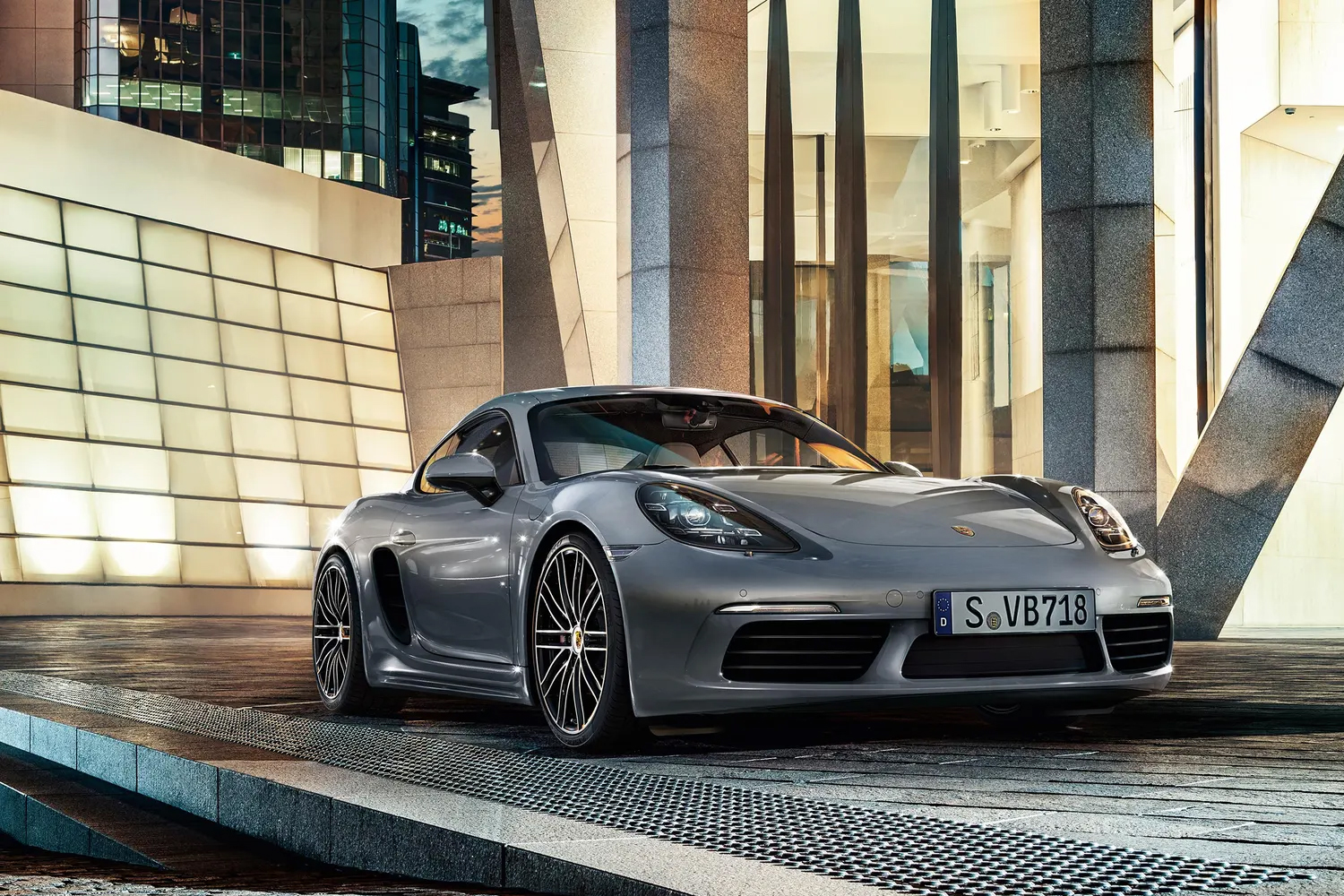
At a glance
- The 718 spans the Cayman coupe, Boxster roadster and Spyder, all using a two-seat, mid-engine, rear-drive layout.
- The hierarchy runs from 2.0-litre turbo models to 2.5-litre turbo S/GTS cars and 4.0-litre naturally aspirated RS variants.
- Manual and PDK availability, steering side and factory equipment vary by body, trim, model year and market.
- Export pricing should be assessed as a landed cost, not as the lowest visible vehicle price.
- MOQ is listing-specific, while multi-car consolidation can improve freight efficiency but adds inventory and handling risk.
- Homologation, import tax, insurance and local Porsche support can determine whether an attractive 718 is commercially viable.
Why the Porsche 718 matters for export markets
The Porsche 718 occupies a distinctive position in the global sports-car market: a compact, two-seat, mid-engine model that combines recognizable Porsche driving character with a lower ownership threshold than many flagship exotics. The range spans the closed-roof Cayman, the Boxster roadster and the more focused Spyder derivative. For overseas dealers, that mix creates a clear proposition—Porsche performance and collector appeal in a package that is easier to merchandise than a large supercar, without turning into a generic premium coupe or formal luxury saloon for clients seeking an engaging driver’s car.
Export demand for the 718 can come from three channels: enthusiast dealers seeking a recognizable badge, importers filling a gap between mainstream sports cars and full-size exotics, and high-end fleet or rental operators buying a memorable two-seat car. Its compact format can simplify container planning compared with larger vehicles, although freight cost depends on the carrier method, protection, destination and Incoterm. For a reseller, a coherent body-style and trim mix matters more than having many unrelated 718 variants, because it supports clearer customer propositions and easier parts and marketing planning.
The model’s strongest export argument is not simply horsepower. Its mid-engine layout, rear-drive balance and clear visual identity make it attractive to buyers who want a focused sports car, while the 718 name gives an importer a more accessible entry into Porsche ownership than costlier halo models. Global appeal still depends on local service capability, insurance rules and attitudes toward two-seat cars. Where Porsche workshops are limited or sports-car insurance is costly, demand may be narrower, so distributors should test target customers before committing to container volume in their markets.
- Cayman, Boxster and Spyder body choices.
- Mid-engine, rear-drive architecture.
- Service and insurance affect demand.
Model range, trims and powertrain variants: how the lineup is structured and how to choose
Porsche 718 specs are easiest to understand as an escalation in engine output, chassis character and equipment. The 2.0-litre turbocharged flat-four appears in the base Cayman and Boxster, in T versions, and in Style Edition or selected anniversary derivatives. The 2.5-litre turbo flat-four serves higher S and GTS applications, while the 4.0-litre naturally aspirated flat-four appears in the track-focused Cayman GT4 RS and Spyder RS. The hierarchy is more than an engine-code distinction: it combines performance, transmission choices, chassis calibration, equipment and collector positioning within one recognizable two-seat model family.
Body choice should come first because it changes the use case more than many option-code differences. The Cayman is the all-weather, fixed-roof choice, with a more practical cabin and luggage arrangement for road trips. The Boxster suits buyers who prioritize open-air access over weather security, while the Spyder adds a more specialized convertible character and a firmer, track-oriented brief. Two-seat packaging limits daily usability in all three, so dealers should test customer demand for ride comfort, luggage capacity and access rather than assume every sports-car buyer will accept the same layout.
Selection should then follow the driving brief. A buyer focused on accessible performance and lower mechanical complexity may favor a 2.0T car with the manual, while PDK is easier in stop-start traffic and supports a convenience-led purchase. S and GTS models suit buyers wanting additional turbocharged output and chassis capability; the GT4 RS and Spyder RS serve enthusiasts who prefer the naturally aspirated 4.0-litre engine and focused dynamics. Availability differs by body, model year and market, so the transmission, steering side and factory equipment shown on each live 718 listing are decision-critical, not optional detail.
- 2.0T base, T and special editions.
- 2.5T S/GTS hierarchy.
- 4.0-litre naturally aspirated RS engines.
- Manual and PDK vary by market.
New vs used Porsche 718: how export inventory is structured and how buyers choose
Porsche 718 export inventory falls into two channels: newer cars sold as new and previously registered cars sold as used. Newer examples are often easier for a dealer to position through a coherent factory specification, while used cars may offer a different balance between desirability, condition and acquisition cost. Neither label is enough on its own. The same trim can appear with different mileage, ownership histories or market equipment, so importers should classify each vehicle from its VIN, documents, condition report and photos rather than body style or model year alone.
A used 718 should be selected on evidence rather than visual appeal. Obtain the VIN, production and import records, service history, accident and repainting disclosures, and an independent inspection covering the engine bay, underbody, suspension, brakes, tires and electronics. On PDK cars, request service history and evidence of correct clutch and mechatronic operation; on manuals, inspect the clutch, gearbox and pedal consistency. For an export buyer, establish whether the car was previously registered or certified in its destination, because that can affect tax, title, emissions and eligibility for local used-vehicle channels.
New inventory is usually cleaner for dealers that need standardized products, factory warranty where transferable and straightforward customer ordering. It lets an importer define body style, engine, transmission, steering side and selected factory options without absorbing repair uncertainty from an earlier owner. The trade-off is paying for depreciation before delivery and potentially facing tighter allocation or longer sourcing times for rare RS configurations. Whether new or used is best therefore depends on resale speed, customer preferences and the importer’s risk tolerance, not on a universal rule for the destination market.
- New: defined factory specification.
- Used: VIN, history and inspection.
- Verify every condition claim.
How export pricing works: the factors behind a live listing price, and how to read one
A Porsche 718 export price is not a fixed model tariff; it is the seller’s live offer for a vehicle. That quote can reflect the car’s year, trim, mileage and condition, plus currency movements and requested terms. The first step is to identify whether the displayed amount is ex-warehouse, FOB, CIF or another basis. Freight, marine insurance, export handling, destination charges, taxes and dealer margin may sit outside that figure. A lower vehicle price can therefore produce a higher landed cost if it excludes heavy charges or requires corrective work.
Vehicle-level factors explain much of the spread between comparable-looking 718 listings. A higher-output S, GTS or RS trim carries a different market position from a base car, while model year, mileage, service history, accident repairs, paint condition and factory options affect resale value. Steering side and equipment fitted for another market can influence both desirability and compliance cost. For used units, condition must be reconciled with inspection findings rather than seller wording. For new inventory, a coherent option list and documented delivery status matter because replacement parts, respray or incomplete preparation can erase apparent value.
To compare live 718 offers, first normalize the commercial basis: condition, trim, transmission, steering side, mileage, origin port, destination, Incoterm and delivery window. Then add each mandatory cost, including inland transport, export documentation, ocean or air freight, insurance, customs, duty, taxes, port handling and local compliance. Ask whether seller or buyer bears each item, and obtain a quote with a validity period. Use ChinaCarDirect’s live 718 inventory for the exact unit-level asking price, MOQ and availability, then request an RFQ stating landed-cost assumptions rather than relying on the lowest visible figure.
- Confirm Incoterm and quote validity.
- Itemize freight, duty and tax.
- Compare like-for-like vehicles.
MOQ, ordering and payment: single units vs consolidating a container
For Porsche 718 wholesale purchasing, MOQ should be checked on each live listing and with the seller, not assumed from the model or platform. Some export offers are positioned for individual buyers, while dealer-oriented suppliers may set a minimum order or ask for a larger allocation. A one-unit purchase is useful for testing demand, private importing or a boutique reseller, but it does not create full-shipment freight economics. Confirm whether the minimum applies to one trim, whether mixed variants are allowed and whether the quoted price holds at your required quantity.
Consolidating cars can improve landed cost per unit by spreading fixed freight and handling charges, but it changes risk. A mixed shipment requires careful inventory control, stronger pre-loading inspection and accurate documents for every VIN; it may also face storage or demurrage if one unit is missing. Practical capacity must be confirmed with the carrier or loader because body style, options and protective packaging affect space. Compare all-in cost per vehicle at the intended quantity, including capital tied up in stock, rather than ordering more solely because ocean freight appears cheaper.
A disciplined process starts with a written pro forma invoice identifying the vehicle or allocation, trim, year, mileage or new status, options, price basis, Incoterm and delivery window. Agree how the deposit is handled, when the balance is due, which currency applies, who pays bank charges, and what happens if inspection reveals a discrepancy or the car cannot ship. Verify purchase and export documents before final payment, and tie release of funds or cargo to those conditions. This prevents a dealer from treating a preliminary chat or non-binding estimate as a completed export transaction.
- Check listing-specific MOQ.
- Use written payment milestones.
- Compare landed cost per vehicle.
Shipping, homologation and market compliance caveats: LHD/RHD and import rules by country
Transport planning starts with dimensions, which vary by body style and equipment, so verified listing and manufacturer data should control loader instructions. Containerized sea freight is the economical default for sports-car shipments, while Roll-on/Roll-off, flat-rack or specialist enclosed services may be available in particular lanes; air freight can be considered for urgency but normally costs more per vehicle. The quote must define pickup location, destination terminal, cargo protection, loading equipment and responsibility for export customs. Transit time is only one part of the schedule: inspection, booking, port congestion and terminal release can extend it.
Steering configuration should be settled before payment. The 718 has been offered in left-hand-drive and right-hand-drive configurations, but availability differs by body, trim and model year; never assume a listing’s steering side. Factory-built RHD is generally preferable to a converted example because conversion can affect parts sourcing, electronics, warranty assumptions and resale. Confirm that engine, infotainment and regional modules suit the destination, and record market-specific equipment in the purchase documents. If a configuration is required, search current listings by specification and use a written RFQ rather than a model-level description.
Compliance is where an attractive export deal can become expensive. The destination may impose type approval, emissions and noise standards, safety-equipment rules, VIN requirements, age limits, tariffs, VAT or GST, luxury-car taxes, insurance conditions and dealer licensing. Homologation cannot be guaranteed by chassis model alone. Before committing, consult a customs broker or vehicle-compliance specialist, confirm importability and tax treatment, and list required documents, including the commercial invoice, packing list, export declaration, VIN, title or registration evidence and shipping records. A preliminary broker view may not replace written approval where required.
- Verify dimensions before booking.
- Prefer factory LHD or RHD.
- Check destination import rules.
Who should buy the 718 — and who should pick a different vehicle
The Porsche 718 suits an overseas buyer who values driving involvement, Porsche identity and a two-seat format. It fits an enthusiast dealer building a specialist marque, a customer seeking a daily car without rear seats, and a collector wanting an alternative to a front-engine GT. Manual appeal is relevant for purists, while PDK can widen the audience to buyers focused on comfort and ease of use. The right buyer accepts limited luggage room, firm ride characteristics in some versions and the servicing demands of a high-performance European sports car.
The 718 may be wrong for buyers whose priorities are family utility, luggage, low-speed drivability, minimal running costs or an electrified commute. Two-seat packaging and storage make it a poor substitute for a family car, crossover or estate, while performance tires, brakes and suspension can raise ownership costs. Buyers in hot climates should test cooling and climate control, and those needing the roof open frequently should compare the Boxster’s everyday usability with a dedicated convertible. If fleet policy drives the decision, an electrified vehicle may align better despite a different driving experience.
Before committing, run a structured fit check rather than relying on badge appeal. Test the exact body style and transmission, inspect seat comfort and visibility, and estimate an ownership budget covering insurance, fuel, scheduled service, tires, brake wear and bodywork. Confirm local Porsche support, parts lead times and technician access, then compare those recurring costs with the intended resale market. A 718 is correct when the buyer prizes balance, steering response and engine character; a different model is wiser when daily convenience or predictable running costs outweigh those driving qualities.
- Best for focused two-seat enthusiasts.
- Unsuitable for family utility.
- Budget service, insurance and parts.
Main rivals and how the 718 compares
The Toyota GR Supra is a close performance-coupe alternative for buyers who prioritize straight-line pace and front-engine stability. Its turbocharged four-cylinder or six-cylinder engine, larger cabin and liftback luggage area can suit customers wanting more everyday utility. The Porsche counters with a compact mid-engine layout, lower center of gravity and a more specialized 718 identity, but the Supra may be easier for a dealer to position against broader sports-car demand. Neither has a factory open-top body, so a Boxster buyer should not treat them as direct body-style substitutes in either direction.
The BMW Z4 is the closest conceptual rival for open-top buyers because it also places two occupants in a rear-drive roadster. It uses a front-engine layout, with turbocharged four- or six-cylinder choices depending on version, and emphasizes a broader grand-touring character than the 718. The Z4 can appeal to buyers who prioritize everyday usability and the folding hardtop; the Porsche offers a more focused mid-engine proposition, additional RS-led hierarchy and a stronger collector-oriented badge. Local service access and actual model-year availability should guide the final comparison rather than brochure assumptions.
The Audi TT RS is the performance-oriented alternative for buyers who want turbocharged punch and quattro all-wheel drive. Depending on market and body style, the TT combines a turbocharged five-cylinder with coupe or roadster forms, while its hatchback provides more luggage utility than either Porsche. The trade-off is that all-wheel drive changes the handling balance, while the extra cargo makes the TT less focused. The 718 is the stronger fit for a buyer prioritizing rear-drive balance, mid-engine response and model-specific character; the TT may be more practical for broader brand recognition.
- Supra: performance coupe, more cargo.
- Z4: front-engine roadster alternative.
- TT RS: quattro traction, more utility.
Live Porsche 718 export inventory
View all listings →Real units currently on ChinaCarDirect with per-unit asking prices and MOQ. Availability updates live from the catalogue.
How to buy a Porsche 718 from China
-
1
Define the exact vehicle
Specify the body style, engine, manual or PDK transmission, steering side, model year and budget. Treat this as a sourcing brief because trim and market combinations are not interchangeable.
-
2
Review the live inventory
When you buy a Porsche 718 from China, use the live inventory to compare unit-specific photographs, factory options, condition and asking price. Confirm that the vehicle remains available and matches your brief.
-
3
Request a destination-specific quote
Provide the destination, Incoterm, quantity and delivery schedule in your RFQ. Ask for vehicle, freight, insurance, duty, tax and other charges to be separated so competing offers can be compared consistently.
-
4
Verify documents and condition
Check the VIN, ownership status, registration or factory documents, service history and disclosed repairs. For used cars, commission an independent inspection and reconcile its findings with the listing.
-
5
Check compliance before payment
Have a broker or destination compliance specialist confirm importability, homologation and tax treatment. Confirm LHD or RHD, regional equipment and the complete document set before authorizing final payment.
-
6
Agree payment and inspection terms
Use a written pro forma invoice covering vehicle identity, price basis, deposit, balance, currency, bank fees and Incoterm. Define inspection acceptance, discrepancy remedies and the conditions for releasing funds or cargo.
-
7
Arrange shipping and customs
Book the appropriate protected transport method, complete pre-shipment inspection and loading supervision, and provide accurate customs and shipping records. Track the vehicle through export, transit, customs clearance and final delivery.
718 vs rivals
| Toyota GR Supra | The GR Supra is the closest performance-coupe alternative for buyers who prioritize straight-line performance and front-engine stability. It may suit customers wanting more luggage and a broader coupe footprint, while the 718 offers a more compact, mid-engine and more specialized driving proposition. |
|---|---|
| BMW Z4 | The Z4 is the closest open-top alternative, pairing rear-drive roadster packaging with turbocharged four- or six-cylinder engines. It may be easier for everyday use, while the 718 offers a more focused mid-engine character and a broader RS-led 718 hierarchy. |
| Audi TT RS | The TT RS competes with upper-performance 718 trims through its turbocharged five-cylinder, quattro all-wheel drive and hatchback utility. The 718 is more focused for rear-drive balance and mid-engine response, whereas the TT may be easier to justify for broader practicality and brand recognition. |
Frequently asked questions
How is Porsche 718 export pricing determined?
The live price is set for the specific vehicle and can reflect year, trim, condition, options, exchange-rate movements and commercial terms. Freight, insurance, export handling, duty, tax and local charges may be separate, so buyers should request a written landed-cost quote. ChinaCarDirect’s live Porsche 718 listings show the current unit-level asking price, while an RFQ confirms the binding quote and Incoterm.
What powertrain and range does the Porsche 718 have?
The 718 is a petrol internal-combustion sports car, so battery capacity and electric range do not apply. Its engine range includes 2.0-litre and 2.5-litre turbocharged flat-fours, plus a 4.0-litre naturally aspirated engine in RS models. Manual and PDK availability depends on the body, trim, model year and market.
Should an overseas buyer choose a new or used Porsche 718?
New inventory is preferable when standardized specifications, documented delivery status and a transferable factory warranty matter. A used 718 may offer a different acquisition balance, but buyers should prioritize VIN verification, ownership and service history, accident disclosures and an independent inspection.
What MOQ applies to Porsche 718 wholesale orders?
MOQ is a commercial term set by each seller and listing; it can differ for a single vehicle, an allocation or a container program. The current minimum and whether trims can be mixed appear on the relevant live listing and should be reconfirmed in the pro forma invoice. A request for one vehicle should be treated as a specific sourcing request, not an assumption that every seller accepts it.
How long does shipping take, and what affects the cost?
Sea freight generally offers a lower cost per vehicle but takes longer than air, while specialist road or RoRo services depend on the lane and carrier availability. Total cost also depends on body dimensions, pickup location, cargo protection, insurance, freight season, Incoterm, customs and destination charges. A current schedule and landed-cost breakdown should be obtained before the order is confirmed.
Are spare parts available for an exported Porsche 718?
Parts are generally ordered by VIN and may be sourced through Porsche dealers or specialist suppliers, but lead times and regional compatibility vary. The steering side, market-specific electronics, model year and mechanical condition can affect availability. Buyers should confirm parts support before purchase and avoid assuming that Chinese-market and destination-market components are interchangeable.
Can I buy a right-hand-drive Porsche 718 from China?
Right-hand-drive 718s have been offered in some body, trim and model-year combinations, but availability is not universal and should not be inferred from the model name. Check the steering side on each live listing and confirm it in the purchase documents. A factory RHD vehicle is generally preferable to a converted example.
How do I order a Porsche 718 from China?
Define the body, engine, transmission, steering side and quantity, then compare the matching live listings. Submit those requirements through an RFQ, review the pro forma invoice, payment milestones, Incoterm and landed-cost assumptions, and complete document verification before final payment. Arrange pre-shipment inspection, freight, export customs and destination clearance only after the vehicle and commercial terms are confirmed.
Ready to source the Porsche 718?
Send your destination, body style, trim, transmission, steering side and required quantity to ChinaCarDirect for a unit-specific RFQ and landed-cost review.
Request a quote