
Porsche 911 Export Buying Guide for Overseas Buyers
Buy a Porsche 911 from China with expert guidance on trims, export pricing, MOQ, shipping, compliance, rivals, and importer due-diligence checks.
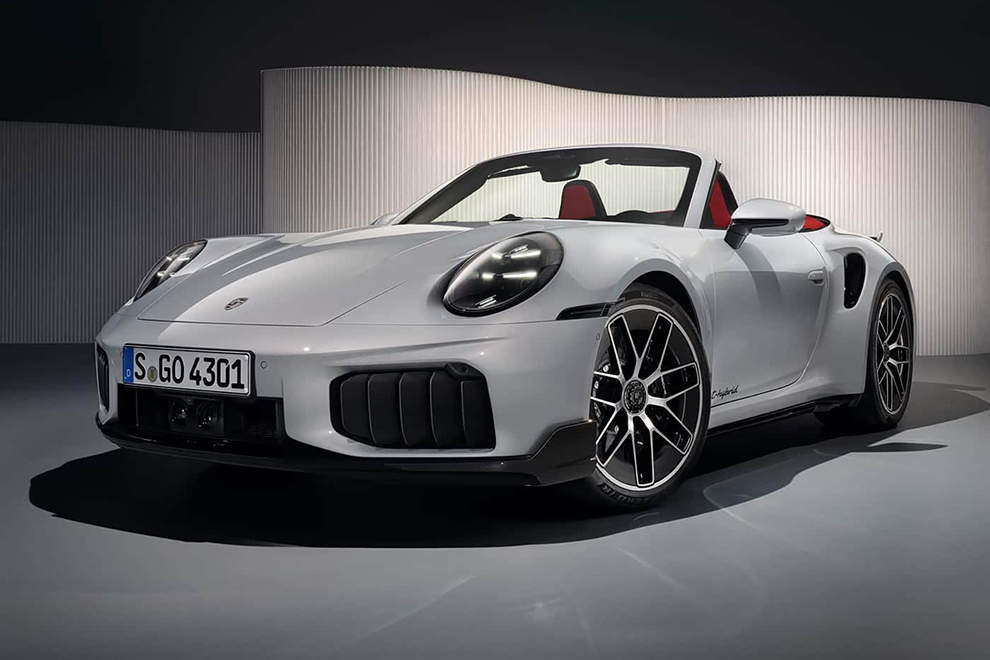
At a glance
- The 911 spans rear-engine sports coupes, with 2+2 seating in many road-going variants.
- Carrera, Carrera 4, Targa, Turbo, GT3 and special editions serve distinct road, all-weather, luxury and track roles.
- New cars offer a clearer condition and warranty route; used cars demand history-led due diligence.
- A live vehicle price is only the starting point; landed cost also reflects condition, exchange rates, freight, duties and Incoterm.
- Confirm MOQ, LHD/RHD suitability, homologation and destination charges before paying.
Why the Porsche 911 matters for export markets
The Porsche 911 occupies a distinctive place in the global sports-car market: a long-running rear-engine coupe with strong brand recognition, a broad performance ladder, and residual demand that can support specialist importers. It is not simply another fast car. The 911 combines driver-focused dynamics with enough luggage space and occasional rear-seat accommodation to broaden its appeal to affluent enthusiasts, premium dealers, and chauffeur-led corporate buyers. Its silhouette is instantly recognizable across markets, which helps showroom conversations even when competing nameplates are newer or offer different layouts for export buyers and resellers alike.
For export buyers, the 911's value proposition is not based on low purchase cost alone. Its established engineering, parts network, tuning culture, and recognizable badge can reduce market-entry risk compared with an obscure niche model. A local dealer can stock service tooling and common wear parts before selling vehicles. That support matters because performance cars demand more than attractive delivery photographs: inspection access, diagnostic capability, and reliable parts supply determine whether ownership remains viable after import. That is especially important in markets where independent workshops are familiar with mainstream marques but not rear-engine sports cars.
Demand also varies sharply by trim and market. A rear-drive Carrera may suit enthusiasts focused on balance and steering feel, while Carrera 4 derivatives are more practical where road grip, rain, or winter use matters. Turbo and performance-oriented models attract buyers willing to accept higher running costs for acceleration and broader capability. For any segment, the best export candidate is not merely the most desirable badge; it is the variant with manageable operating costs, local service support, and enough specialist demand to sustain remarketing without creating lengthy inventory carrying costs. Base that judgement on sell-through evidence.
Model range, trims and powertrain variants: how the lineup is structured and how to choose
The 911 range is easiest to understand as a hierarchy. Carrera models provide the entry point to the family, Carrera S adds a more performance-focused specification, and Carrera 4 or Targa 4 variants add all-wheel drive for broader traction. GTS versions occupy a sharper middle ground, while Turbo and Turbo S models emphasize acceleration and luxury. GT3 occupies a different purpose: track capability. Limited editions may add visual and collectible appeal rather than a wholly different platform. Buyers should compare exact model years because engineering, option content, and market equipment change across generations and trim boundaries.
Powertrain labels in listings need careful reading. The export catalogue spans 3.0-litre turbocharged Carrera engines, 3.4- and 3.6-litre naturally aspirated variants, 3.7- and 3.8-litre turbocharged derivatives, and 3.8-litre GT3 applications; exact combinations depend on year and market. All use Porsche's characteristic rear-mounted flat-six architecture, but output, torque, transmission, exhaust, chassis, and equipment can differ substantially. A trim name alone is therefore insufficient evidence for a purchase decision. Ask for the VIN, build plate, original specification sheet, and any service records, then reconcile them with the seller's photographs and listing description before paying.
Choose by use case rather than by the largest badge. A Carrera is a rational starting point for long-distance road trips and dealers seeking broad buyer appeal. A Carrera S is for drivers who value a firmer, faster chassis and stronger brakes. Targa 4 suits buyers wanting an open-roof experience with added traction, while Turbo models suit high-performance use. GT3 demands a more specialized buyer: track setup, consumable costs, ride comfort, and resale expectations should all be considered before importing one. Verify the live listing because trim naming is not uniform across model years.
- Carrera: balanced, road-focused starting point.
- Carrera 4 and Targa 4: all-wheel-drive options.
- GT3: track-led specialist purchase.
- Turbo: acceleration and luxury focus.
New vs used Porsche 911: how export inventory is structured and how buyers choose
New and used Porsche 911 vehicles serve different commercial purposes. A new car offers a clearer delivery condition, factory warranty coverage where applicable, contemporary infotainment and safety systems, and a more predictable specification. It also avoids presenting an older performance car whose service history may be difficult to audit. The trade-off is immediate depreciation, narrower customization, and potentially higher freight and insurance costs. Buyers should assess the landed economics rather than comparing only the invoice. For dealers, manufacturer-supported residual assumptions and warranty administration can be as important as the acquisition figure and logistics.
Used Porsche 911 inventory can be more attractive where the buyer values a known model, lower acquisition outlay, or immediate availability across older specifications. However, condition must be treated as a technical due-diligence issue, not merely a cosmetic one. Ask for paint-thickness readings, underbody photographs, panel gaps, a cold start, exhaust inspection, and evidence of accident repair. Verify mileage, service intervals, previous ownership, matching components, and whether modifications have been returned to factory configuration. A specialist pre-purchase inspection is particularly valuable before an international freight commitment is made. Local independent specialists can identify issues that a polished listing image conceals.
Live export inventory should be read unit by unit because condition and specification are not interchangeable. A dealer seeking a demonstrable, warranty-backed car may prefer a new listing; an enthusiast opening a specific model-year niche may accept an older example if its history is clean. For either route, secure the identity of the actual vehicle before payment and avoid assuming that a model name proves originality. The strongest purchase combines a realistic market-demand plan with independent inspection and complete ownership documents before the vehicle leaves its origin market or is loaded.
- New: clearer condition and warranty route.
- Used: history must outweigh headline mileage.
- Both: verify identity, originality and documents.
How export pricing works: the factors behind a live listing price, and how to read one
A Porsche 911 export price is a composite result, not a universal model rate. The year and generation establish the baseline, while trim, engine, transmission, driven axle, body style, factory options, paint, upholstery, and market edition can move the position significantly. On a used vehicle, mileage, service evidence, accident history, condition, ownership, and originality carry additional weight. Sellers should also account for local market demand without turning an asking figure into an unsupported valuation. A buyer comparing equivalent cars should normalize all of those variables before drawing a conclusion about value.
Logistics can change the final commercial equation. Exchange-rate movement, inland transport, export handling, ocean or roll-on/roll-off freight, marine insurance, destination charges, customs duty, taxes, and the selected Incoterm all affect what the importer actually pays. Some live listings present a vehicle price at origin, while others may describe a different payment boundary. Treat the displayed amount as the starting point for comparison, not automatically as the landed cost. Request a written quotation that names every charge and states where responsibility transfers. This prevents a cheaper vehicle from becoming a more expensive import.
Read each live listing for the exact year, trim, engine notation, transmission, mileage, condition, location, seller type, VIN or stock reference, photographs, and stated equipment. Then ask what is excluded: repair items, floor mats, tools, documentation, transport damage, customs work, or local registration. Comparable vehicles are useful only when their specification and commercial terms are similar. ChinaCarDirect's linked live Porsche 911 inventory is the controlling reference for current per-unit asking prices, listing-specific MOQ and availability, while a binding landed quote should govern the purchasing decision. Confirm the currency, tax status, and Incoterm before transferring funds.
- Normalize year, trim, options, mileage and condition.
- Distinguish vehicle price from landed cost.
- Check every live listing's currency and Incoterm.
MOQ, ordering and payment: single units vs consolidating a container
Minimum order quantity is a commercial term that should be confirmed for the specific vehicle and seller, not inferred from the model. For wholesale programmes, specialist importers may buy one 911 to serve a client or test a market, while vehicle suppliers may set a unit minimum or require payment in batches. Because a single sports car occupies only part of a carrier's available space, consolidation with other vehicles can improve freight efficiency. That model can suit distributors, but it means shared loading schedules and less control over individual dispatch dates and costs in writing.
A single-unit purchase should use a written sales contract that identifies the exact vehicle, agreed price, currency, payment schedule, Incoterm, inspection rights, export documents, delivery estimate, and cancellation terms. Deposits and balances should correspond to verifiable milestones rather than informal promises. Confirm the seller's legal entity, bank-account name, title or ownership status, and authority to export before sending funds. For a new vehicle, factory warranty activation and delivery obligations should also be stated clearly. Use the RFQ channel to request a formal quotation and a document list before agreeing to any bank transfer.
Container consolidation changes the buying process. Instead of one invoice and one dispatch, the buyer may need to coordinate multiple vehicle purchases, inspections, payment dates, export declarations, and loading plans with one logistics provider. Agree how title and risk pass on each vehicle, who pays damage during inland handling and at sea, and how delay affects the group. Confirm that mixed cargo complies with destination rules and does not prevent individual vehicle inspection. A clear consignment manifest also helps customs, insurers, and the receiving dealer reconcile every unit after arrival in detail.
- Confirm MOQ on the exact listing.
- Match deposits to contract and inspection milestones.
- Define consolidation responsibility before paying.
Shipping, homologation and market compliance caveats: LHD/RHD and import rules by country
Left- and right-hand-drive availability is a primary sourcing question. Most vehicles assembled for the Chinese market are left-hand drive, so a buyer requiring a right-hand-drive car should verify that arrangement before committing. Some destinations permit both layouts, while others prescribe the steering position for registration or road use. Confirm the actual configuration from photographs, the VIN, and the vehicle's original specification; do not rely on a generic country-of-origin assumption. Conversion is possible in principle but can be costly and should never be assumed to preserve homologation or regulatory compliance status. Confirm before shipment.
Import requirements are determined by the destination, not by China alone. Check VIN and title-document rules, customs valuation, tariff classification, emissions standards, noise limits, safety equipment, age restrictions, and local registration requirements. The European Union, United Kingdom, United States, Canada, Australia, Japan, Gulf states, and emerging markets do not follow one template, and rules may change. Obtain a written broker assessment for the exact configuration before contract signature. Any required modification or certification should be planned before loading, not discovered at the port. Compliance evidence can also affect insurance coverage after arrival.
Transport method affects risk, cost, and timing. Finished 911s are commonly moved by roll-on/roll-off vessel or enclosed-container shipment, depending on availability and value; air freight is generally impractical for a complete car. Professional loading, lashing, moisture protection, and route planning matter because body and trim damage can occur before customs clearance. Compare an Incoterm-based quote with door-to-door alternatives, include marine insurance and destination charges, and clarify who arranges port handling. Upon arrival, complete a pre-delivery inspection before release and keep transport, customs, repair and claim records for the ownership file.
- Confirm LHD/RHD before contract and payment.
- Obtain destination-specific customs and homologation advice.
- Inspect loading, transit condition and arrival condition.
Who should buy the 911 — and who should pick a different vehicle
The 911 is a strong fit for an importer serving affluent driving enthusiasts, premium retail clients, or a limited number of corporate chauffeur users. It offers a distinctive engineering story, broad trim appeal, a usable rear compartment, and a level of brand recognition that supports showroom marketing. Dealers can also build service capability around a defined model family. The opportunity is strongest where specialist demand exists, local technicians understand rear-engine sports cars, and the business can maintain realistic parts and workshop inventory rather than selling one car and absorbing returns unrealistically.
It is a poor fit for high-utilization fleet work, large-luggage operations, buyers focused on the lowest running cost, or operators needing a quiet, highly fuel-efficient vehicle. A 911 can carry four people in some configurations, but its low roof, limited luggage capacity, rear visibility, and performance-oriented tires make it less practical than larger executive cars or estates. Track-focused variants can add noise, consumption, and rapid consumable wear. Fleet buyers should calculate utilization, downtime, insurance, fuel, maintenance, and residual value before assuming that prestige justifies the choice in practice.
A different vehicle makes more sense when the buyer's priorities are explicit. Choose a front-wheel-drive or all-wheel-drive sports sedan for easier all-weather access, a larger touring car for luggage and rear-seat comfort, a performance hybrid for lower fuel use, or an electric vehicle for silent urban operation. An older manual 911 may suit an enthusiast, but a modern sports coupe with a simpler service structure may be more rational for a dealer starting from a low technical base. Test the proposed use against the exact trim, not against the 911 name in general.
- Best for: enthusiast retail and premium chauffeur demand.
- Best trim logic: use case, road and service support.
- Reconsider for: heavy fleet, cargo or minimum-cost use.
Main rivals and how the 911 compares
There is no single substitute for the 911 across its entire range. The Mercedes-AMG GT competes with the Turbo-oriented side of the 911 through a front-mid-engined grand tourer, while the Audi R8's mid-engine layout and historically available all-wheel drive appeal to buyers focused on supercar appearance and broad traction. The Chevrolet Corvette C8 offers a more radical front-mid-engine proposition and a different cost-and-performance equation. Each rival changes engine position, packaging, service expectations, and resale dynamics. The closest comparison therefore depends on whether the buyer values the 911's rear-engine identity, all-weather usability, or outright performance.
Against the Mercedes-AMG GT, the 911 offers a familiar engine layout and a compact two-plus-two format, while the AMG emphasizes front-mid-engine balance, a broad power range, and GT touring character. Against the Audi R8, the 911 generally provides a more familiar service layout for Porsche-focused buyers and a different roofline and seating proposition; the R8 is the more exotic middle-engined choice. Buyers should compare landed cost, fuel, tires, insurance, local parts support, and homologation rather than relying on output figures or badge alone. Make that comparison in the destination market before purchase.
Against the Corvette C8, the 911 generally carries a more established prestige-car identity and a different balance of refinement, usability, and performance specialization. The Corvette offers a distinctive driver-focused alternative with its own global service ecosystem and a separate ownership proposition. None automatically delivers lower ownership cost after shipping, taxes, fuel, and servicing. For an export buyer, the decisive question is which combination of engine architecture, body use, local support, and buyer audience can be supported profitably in the destination market over time. Local evidence matters more than global brochure comparisons alone.
Live Porsche 911 export inventory
View all listings →Real units currently on ChinaCarDirect with per-unit asking prices and MOQ. Availability updates live from the catalogue.
How to buy a Porsche 911 from China
-
1
Define the commercial brief
Specify body style, drivetrain, engine family, transmission, target market, RHD/LHD need and acceptable total-cost framework. This prevents a visually attractive but unsuitable unit from entering the shortlist.
-
2
Compare live inventory
Use the Porsche 911 listings to review each unit's year, trim, engine notation, mileage, condition, seller, current asking price and stated MOQ. Compare only equivalent vehicles and note any option or history differences.
-
3
Verify the exact vehicle
Request VIN and build-plate details, the original equipment list, ownership record, service evidence, photographs and accident or market history. Reconcile the documents with the listing and identify whether the configuration is original to that market.
-
4
Commission an independent inspection
Use a qualified 911 specialist or destination-country inspector to check paint, panels, underbody, engine bay, cold start, exhaust, tires, brakes, electronics and road test where safe. Resolve findings in the contract before payment.
-
5
Request a landed quote and compliance review
Ask for an itemized quote covering vehicle price, exchange-rate basis, inland transport, freight, insurance, export handling, customs, taxes, destination charges and Incoterm. Have a broker confirm VIN, title, emissions, safety, noise, age and registration requirements for the selected LHD/RHD configuration.
-
6
Confirm contract, MOQ and payment
Confirm the listing-specific MOQ, vehicle allocation, deposit, balance milestones, cancellation terms, warranty and ownership documents. Make payments only to the verified contracting entity against written terms, with payment timing linked to inspection and export readiness.
-
7
Export, ship and receive
Approve pre-loading photographs, preserve transport records and confirm insurance coverage before shipment. After customs clearance, inspect the 911 against the loading report, resolve discrepancies and complete local registration before release to the customer.
911 vs rivals
| Mercedes-AMG GT | The Mercedes-AMG GT is closest to the 911 Turbo as a high-output, front-mid-engined grand tourer, offering a different balance and service profile. The 911 retains rear-engine identity, compact 2+2 packaging and a broader road-to-track trim ladder, so landed cost and local support should decide. |
|---|---|
| Audi R8 | The Audi R8 is a genuine mid-engine supercar rival, historically offered with all-wheel drive for buyers prioritizing traction and an exotic layout. The 911 provides a more familiar rear-engine format and wider dealer and parts proposition, while the R8 may appeal more to dedicated supercar buyers. |
| Chevrolet Corvette C8 | The Chevrolet Corvette C8 is a front-mid-engined, two-seat alternative with a strong driver-focused identity and a different performance-per-cost equation. The 911 places more emphasis on prestige, occasional rear-seat use and specialist-buyer breadth, while the Corvette may attract drivers focused primarily on the driving experience. |
Frequently asked questions
How is Porsche 911 export pricing determined?
A Porsche 911 export price starts with the live vehicle's year, trim, engine, transmission, options, condition and mileage, then can be adjusted by exchange rates, freight, insurance, customs, taxes and the Incoterm. ChinaCarDirect displays the current per-unit asking price on each live Porsche 911 listing; ask for a written landed quote because the displayed vehicle price may not include every destination cost.
What engine and range does the Porsche 911 have?
The 911 is a gasoline-powered, rear-engined car with a flat-six engine, not an EV, so battery capacity and electric range do not apply. The export range includes naturally aspirated and turbocharged 3.0-, 3.4-, 3.6-, 3.7- and 3.8-litre applications across different years and trims, with output and transmission varying by unit. Fuel economy and driving range depend on the engine, transmission, tires and conditions; check the live listing for the exact configuration.
Is a new or used Porsche 911 better for export?
New cars offer clearer delivery condition, warranty handling and contemporary equipment, but they depreciate sooner and may cost more to transport. Used Porsche 911 vehicles can lower the acquisition outlay and open access to specific older trims, but condition, mileage, accident repair, service history and originality must be verified independently. The better choice depends on the buyer's risk tolerance, local workshop capability and resale plan.
What is the MOQ for buying a Porsche 911 from China?
MOQ is set by the seller and exact listing rather than by the Porsche 911 model itself. An importer may order one vehicle when the listing permits, while a supplier may apply a unit minimum or batch requirement; confirm this before placing a deposit. For freight economics, several vehicles can be consolidated, but the buyer must agree how inspection, payment, title, risk and dispatch are handled across the consignment.
How long does shipping a Porsche 911 take and what does it cost?
Shipping time and cost depend on origin and destination ports, carrier schedule, vessel space, vehicle value, loading method, insurance, customs work and the selected Incoterm. A complete 911 is normally moved by roll-on/roll-off vessel or enclosed container rather than air freight. Ask for door-to-door and port-to-port options, identify every charge, and inspect the car again at arrival.
Are spare parts available for imported Porsche 911 vehicles?
Parts availability is usually strongest for major service items and established model years, while trim-specific body panels, paint codes, electronic modules and discontinued variants can take longer. Before importing, verify the VIN and ask the supplier or local Porsche specialist for parts interchangeability, LHD/RHD components, lead times and shipping options. Maintain a serviceable parts list rather than assuming every overseas workshop will hold specialist inventory.
Can I buy a right-hand-drive Porsche 911 from China?
Most China-built 911s are left-hand drive, and right-hand-drive availability is limited and must be confirmed unit by unit. A buyer needing RHD should request VIN confirmation, clear photographs of the steering position and a written check of destination registration rules before paying. Do not assume a later steering-wheel conversion is homologated, insured or cost-effective.
How do I order a Porsche 911 through ChinaCarDirect?
Start with the live Porsche 911 listings, identify a suitable unit, verify its specification and history, and request a unit-specific export quotation. Next, complete an independent inspection and destination compliance review, sign a contract with clear price, Incoterm, payment and cancellation terms, and settle only agreed milestones. ChinaCarDirect's RFQ process can provide the current per-unit price, MOQ confirmation and export-document checklist before you proceed.
Ready to source the Porsche 911?
Send your preferred 911 trim, destination and Incoterm to ChinaCarDirect for a unit-specific export quote, MOQ confirmation and document checklist.
Request a quote