
Porsche Cayman Export Buying Guide for Overseas Buyers
Compare Porsche Cayman trims, engines, used-versus-new options, export pricing, MOQ, shipping and compliance, then request a quote for buying from China.

At a glance
- The Cayman is a compact, rear-engined, two-seat gasoline coupe with a usable hatchback.
- The family spans 2.0T, 2.7L, 2.5T and specialist high-performance variants across generations.
- New and used cars suit different residual, warranty and condition priorities.
- Export quotes must separate vehicle price from freight, duty, tax and delivery.
- LHD or RHD availability and destination-country homologation must be confirmed before payment.
Why the Porsche Cayman matters for export markets
The Cayman occupies a distinctive position in the sports-car market: a compact, rear-engined two-seat coupe with a usable hatchback area. It offers the steering response and balance associated with a Porsche sports car without the open-air compromises of a two-seat roadster. For overseas dealers, that combination creates a clear customer proposition. The model can serve enthusiastic drivers, track-day buyers and collectors who value a coherent engineering package more than outright practicality. Its compact proportions also make it easier to present as a focused performance product than a large sports car or a family saloon.
Demand potential is strongest where buyers already understand rear-drive sports cars and where Porsche has an established dealer and service network. The Cayman is not sold in every market in every configuration, so an importer should confirm local model acceptance, parts support and residual demand before committing to a shipment. It can attract customers who want Porsche identity and driver engagement but do not need the size, expense or exclusivity of a GT model. That middle ground is particularly relevant to specialist importers rather than mass-market retailers with demonstrable local demand.
Export buyers should also understand what the Cayman is not. It is a performance coupe, not a practical SUV, an electric commuter, or a high-capacity family hauler. Its appeal depends on the whole car—engine response, transmission, chassis, brakes, exhaust and condition—rather than a single headline specification. Consequently, selecting the right export source is partly a product-curation exercise. A listing should be evaluated for identity, provenance, specification and destination suitability before freight cost or payment terms are considered. The same discipline matters for both new and used examples entering the same market.
- Rear-engine, two-seat sports coupe
- Fixed roof with hatch access
- Specification and condition drive value
Model range, trims and powertrain variants: how the lineup is structured and how to choose
Understanding the range starts with the 981 and 718 generations, although some export records use only Cayman while others add 718. Both are two-door, rear-drive coupes, but equipment, engine character and market presentation differ. A buyer should identify the generation before comparing badges or asking prices. The base 2.0T is the four-cylinder entry point; the 2.7L is the naturally aspirated flat-six alternative. Higher trims use a turbocharged 2.5T, while specialist versions add larger naturally aspirated engines. Identical trim names do not guarantee identical hardware across generations. Closely related visual designs can also conceal major revisions.
The broader trim ladder separates touring capability from performance focus. S adds a more sporting specification, while GTS places greater emphasis on chassis and driver engagement. The T is positioned around comfort and everyday usability; Style Edition examples prioritize appearance and equipment rather than the highest performance. At the extreme, the R and GT4 RS represent the naturally aspirated, high-performance end of the family, with the GT4 RS using the 4.0-litre flat-six. Trim names alone, however, do not reveal options or condition. Ask for the build sheet, chassis identification and any removed equipment.
A sensible choice begins with the buyer and the destination. A 2.0T may suit a customer prioritising manageable running costs, compact dimensions and everyday usability. The 2.7L offers a naturally aspirated six-cylinder character, while the 2.5T S or GTS is the logical middle ground for stronger performance and a more focused chassis. Track-oriented buyers may justify the R or GT4 RS, provided local support, insurance and spare-parts costs are realistic. For every trim, compare transmission, differential, suspension, wheels, brakes and factory options rather than relying on the badge. Where fitted, manual and PDK versions serve different buyers.
- 981 versus 718
- 2.0T versus 2.7L
- 2.5T S and GTS middle ground
New vs used Porsche Cayman: how export inventory is structured and how buyers choose
The new and used labels describe a vehicle's sales condition, not different generations of the Cayman. A new example may be dealer stock, a parallel import, a demonstrator or a vehicle assembled for a market that never received the same configuration. Its principal advantages are a defined history, potentially lower wear and simpler warranty communication, although any warranty may be limited by destination-country rules. A buyer should still inspect paint, tyres, seals and underbody condition because road exposure and storage can matter before delivery. A new label should not be treated as a substitute for documentary verification.
A used Cayman can make more sense when the buyer values a known specification, an established depreciation position or access to an engine and trim no longer offered. Mileage alone is not a quality score: service history, accident repair, ownership count, remanufactured parts and matching numbers can matter more. Conversely, a lower purchase figure can be offset by near-term tyres, brakes, suspension work or electronics faults. For an importer, a transparent used car may also be easier to explain to a customer than a complicated new parallel import with uncertain local support.
The best route is to compare like with like. Confirm model year, generation, engine, transmission, mileage, service evidence, accident disclosure, paint condition and equipment, then model the likely local registration and resale position. New vehicles may suit buyers wanting a standard warranty and minimal cosmetic risk; used cars may suit buyers who accept ageing components in exchange for a more transparent asset. Neither category automatically imports more easily. Check the VIN, seller identity and title documents against the destination rules, then use the live listings to compare each vehicle on the same criteria.
- New does not prove provenance
- Used value needs evidence
- Depreciation versus component risk
How export pricing works: the factors behind a live listing price, and how to read one
Start by separating the vehicle price from the landed cost. A live Cayman listing can move as the seller changes the asking price, but that figure should not automatically be read as the total payable in the buyer's country. Freight, marine insurance, export handling, port charges, customs duty, taxes, registration and local delivery may all sit outside it. The Incoterm also determines where responsibility transfers. Unless a quotation explicitly states otherwise, build a complete landed-cost worksheet and use it to compare suppliers on the same commercial basis. Ask for written confirmation of what is excluded.
The vehicle-side price is driven by several interacting variables. Generation and model year affect design and market appeal; trim, engine, transmission and factory options affect desirability; mileage and condition affect used vehicles; and currency movements influence cross-border affordability. A specialist or rare specification can command more, while cosmetic defects or incomplete documentation can reduce confidence. Seasonal freight demand and destination charges can also change the total economics. These factors explain why two Cayman listings can differ materially even when their displayed trim names look similar. Compare like generations, not one listing as a universal benchmark.
To read a live listing properly, open the individual vehicle rather than relying on a category page. Verify the stated trim, year, engine, transmission, mileage, condition, steering position, options and seller location. Exact price, MOQ and availability must be checked on the live ChinaCarDirect unit page, then reconfirmed in a fresh written quotation because asking values can change. Ask what documents, inspection, export preparation and warranty are included, and whether the quoted price is FOB, CIF or another term. If importing privately, compare that quote with an independently obtained freight and customs estimate before transferring funds.
- Vehicle price versus landed cost
- Trim and options drive value
- Use a fresh unit quote
MOQ, ordering and payment: single units vs consolidating a container
Minimum order quantity is a commercial term that can vary by seller, vehicle and market. It should not be inferred from the existence of a retail-style listing. Some export suppliers may accept a single vehicle; others may set a lot requirement, protect an allocation, or offer a different mechanism for one-unit purchases. Buyers should read the MOQ field where it appears, then obtain written confirmation for the exact SKU. Do not assume that one displayed unit can be bought on the same terms as a multi-vehicle order. Clarify whether mixed SKUs count toward it.
Container consolidation can improve freight efficiency, but it should be treated as a coordinated programme rather than a collection of unrelated bargains. Vehicles for one destination ideally share steering position, homologation route, documentation standard and expected retail positioning. Total dimensions and weight determine loading plan and available capacity. The importer also needs a clear title chain for every vehicle, aligned inspection dates, agreed photography and handover records, and one customs broker able to handle the group. Mixing incompatible markets can turn an apparently lower freight rate into expensive rework or unsold stock.
Payment and release should follow verifiable milestones. A typical sequence is a deposit, confirmation of vehicle identity and export documents, inspection, balance payment, and then release for shipment; the exact sequence must be agreed in writing. Verify the beneficiary and seller identity, ensure refund and cancellation terms are explicit, and consider an independent inspection before the balance is released. Documents commonly requested include the vehicle's ownership or title record, identification, commercial invoice and export declaration. Their exact form depends on the origin and destination, so legal or customs advice may be necessary.
- Confirm exact-SKU MOQ
- Fund verified milestones
- Group compatible consignments
Shipping, homologation and market compliance caveats: LHD/RHD and import rules by country
Shipping method should be selected around value, urgency and consolidation. Container transport is often appropriate for a complete sports car, while roll-on/roll-off can suit some specialist movements; the carrier must confirm the actual method rather than the buyer assuming it. Secure loading, wheel restraint, lashing and damage inspection are critical. Transit time and cost vary with origin and destination ports, vessel or vessel-plus-road routing, congestion, customs clearance, insurance and last-mile delivery. Quote the door-to-door route if the buyer needs one accountable schedule. Marine insurance should cover the agreed commercial value and the intended route.
Steering configuration is a sourcing and homologation decision, not merely a preference. China-produced examples are commonly left-hand drive, while the Cayman has also been built and sold in right-hand-drive markets. A buyer seeking RHD should confirm that the steering, dashboard, lighting and other market-specific components are correct and that the VIN is eligible for the destination. Converting an LHD car later can add cost and may affect insurance or registration. For an LHD destination, the reverse checks apply, especially where the original vehicle is an RHD-market import into China. Do not infer the configuration from photographs alone.
Import compliance belongs to the destination jurisdiction. The receiving broker should confirm eligibility, VIN and title documents, customs classification, duty and tax treatment, emissions requirements, safety or noise standards, and any age or registration restrictions. A European Union buyer, for example, must not assume a vehicle approved for another market can be registered without the correct type approval, while other countries apply different emissions and safety frameworks. Original invoices, keys, service records and a documented handover can support a smoother customs and registration review. Treat unresolved compliance as a condition precedent to payment.
- Confirm method, route and insurance
- Verify steering configuration
- Check destination eligibility
Who should buy the Cayman — and who should pick a different vehicle
The Cayman fits a buyer who values coherent sports-car dynamics and wants a Porsche without stepping up to a larger GT. Its two-seat layout, rear-drive character and compact proportions suit second cars, weekend cars, track-day use and enthusiast collections. It can also attract customers who find a conventional front-drive coupe too undemanding but do not want a four-seat grand tourer. The strongest case is emotional and experiential: responsive steering, a low seating position and a sense of occasion that remains distinctive even where many premium vehicles now offer advanced cabin technology.
It is a poorer fit for buyers whose priorities are electric-city commuting, family transport, abundant luggage, very low operating costs or minimum maintenance exposure. Two seats and a rear-engined layout limit everyday flexibility, while performance tyres, brakes and scheduled servicing can raise ownership costs. Very low annual mileage may also make a sports car less economically attractive than a mainstream premium coupe. Buyers in harsh climates or markets with limited workshop coverage should inspect ground clearance, tyre availability and parts lead times before choosing the model. Those checks can be more important than a small equipment advantage.
Before ordering, the buyer should total acquisition, freight, duty, registration, insurance, fuel, tyres, service and planned depreciation. It is also worth asking whether the destination dealer network can support the exact engine and chassis, and how readily tyres, brake parts, suspension components and electronics can be obtained. For a dealer or wholesale buyer, a proven mix of base, naturally aspirated and performance variants may serve different customer segments, but each unit should still be selected on its own merits. A Cayman is most rational when the driving experience is central to the purchase decision.
- Best for driving-focused buyers
- Weaker for family and EV costs
- Check exact-variant support
Main rivals and how the Cayman compares
The closest alternatives depend on whether the buyer prioritises open-air appeal, engine character, all-weather traction or outright performance. The BMW Z4 competes through rear-drive handling and a two-seat roadster layout, although its convertible roof changes usability and the Cayman provides a fixed-roof, more enclosed design. The Toyota GR Supra offers a distinctive inline-six proposition and broad performance-car appeal, while the Audi TT RS combines compact dimensions with quattro all-wheel drive. None is a perfect substitute; each changes the ownership proposition. Availability, local homologation and aftersales support can therefore matter as much as headline performance.
Against the Z4, the Cayman wins for buyers seeking a solid-roof coupe, hatch-opening practicality and a more enclosed experience; the Z4 is stronger for open-air use. Against the Supra, the distinction is more subjective: Porsche emphasizes compact dimensions and chassis balance, while Toyota's inline-six and expressive styling create a different kind of identity. The TT RS adds all-wheel-drive traction and Audi's broader premium-brand familiarity, but it does not recreate the Cayman's exact rear-drive format. Buyers should test-drive each and compare the specific engine and transmission. Specifications can shift this conclusion, so badge-level assumptions are unsafe.
For an export buyer, the most competitive rival is the one that can be imported, registered, serviced and supported at the intended landed cost. Compare engine character, performance, seating and storage, fuel requirements, parts availability and residual demand in the destination—not only acceleration figures. A live quote for each Cayman should be placed beside comparable live quotes for the rivals, with freight, tax and compliance shown separately. If the alternatives are closely matched, local Porsche dealer support and the buyer's preference for a distinctive sports car can decide the choice.
- BMW Z4: open-top rival
- GR Supra: inline-six alternative
- TT RS: all-wheel-drive alternative
Live Porsche Cayman export inventory
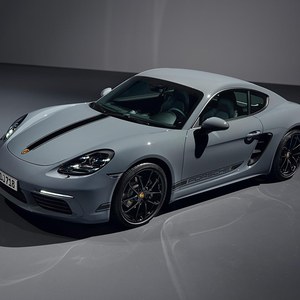
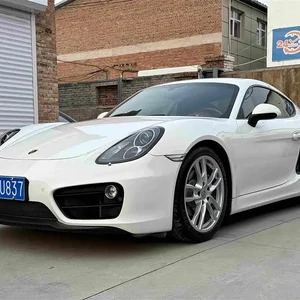
View all listings →Real units currently on ChinaCarDirect with per-unit asking prices and MOQ. Availability updates live from the catalogue.

How to buy a Porsche Cayman from China
-
1
Define the vehicle brief
Choose the destination, steering preference, seating needs and preferred engine character. Decide whether the priority is touring usability, an atmospheric naturally aspirated engine or a more focused performance trim.
-
2
Shortlist individual live listings
Review Porsche Cayman listings on ChinaCarDirect and compare individual vehicles rather than relying on a model-level price. Check generation, engine, transmission, mileage, condition, options and seller location.
-
3
Verify identity and documentation
Request the VIN, build sheet, ownership records, service evidence, accident disclosure and detailed photographs. Confirm that the described steering configuration and specification match the physical car.
-
4
Request an itemized quote
Ask for the live vehicle price, MOQ, payment stages, Incoterm, export preparation, documentation, freight basis and delivery scope. Use the same landed-cost structure for competing quotations.
-
5
Confirm MOQ and payment protection
Obtain the MOQ for the exact SKU in writing, especially when consolidating several vehicles. Verify the beneficiary, refund terms and inspection condition before paying a deposit.
-
6
Complete a pre-shipment inspection
Use an independent inspector to check the VIN, bodywork, underbody, wheels, tyres, fluids, mechanical condition and warning lights. Resolve discrepancies before the balance payment and release.
-
7
Arrange shipping and clearance
Confirm the transport method, loading plan, marine insurance, export documents and destination broker. Track customs, duty, tax, registration and LHD or RHD homologation before delivery.
Cayman vs rivals
| BMW Z4 | The Z4 is the closest open-top rival, pairing rear-drive handling with a convertible two-seat layout. Choose it for open-air use; choose the Cayman for fixed-roof security, hatch access and a more compact coupe-car presentation. |
|---|---|
| Toyota GR Supra | The GR Supra competes on performance, distinctive styling and inline-six appeal, with a different cabin and luggage proposition. It is worth comparing for buyers who prioritize engine identity and bold design over the Cayman's compact, rear-engined balance. |
| Audi TT RS | The TT RS is a compact, high-performance 2+2 with quattro all-wheel drive and a turbocharged five-cylinder engine. It suits buyers wanting more traction and broad premium-brand familiarity rather than the Cayman's rear-drive format. |
Frequently asked questions
How is Porsche Cayman export pricing determined?
The vehicle price starts with the individual car's year, generation, trim, engine, transmission, mileage, condition and options, then reflects currency and market demand. Freight, insurance, port handling, duties, taxes and delivery belong in the landed-cost calculation unless expressly included. Check the exact price, MOQ and availability on the live ChinaCarDirect unit listing, then obtain written confirmation for the selected vehicle.
What engine and powertrain options should I expect?
The Cayman is gasoline-powered and rear-wheel drive. Across generations, the family includes 2.0-litre turbo, 2.7-litre naturally aspirated, 2.5-litre turbo, 2.9-litre, 3.4-litre and 4.0-litre flat-six applications, depending on trim. Manual or PDK availability also depends on model year and market, so verify the engine, transmission and market specification on each listing.
Is a new or used Porsche Cayman better for export?
New inventory offers a documented condition and may come with a stated warranty, while used cars can provide better access to a specific trim and an established depreciation position. The trade-off is condition risk because used examples may need tyres, brakes, service or corrective work sooner. Inspect evidence, mileage, accident history and service records before deciding.
How does MOQ work when buying a Cayman?
MOQ is set by the seller and transaction, not by the Cayman model itself. A listing may accept one unit, while a particular allocation or consolidated shipment may have different conditions that must be confirmed in writing. If buying several vehicles, request mixed-SKU terms and specify the destination, steering configuration and required documents.
What determines shipping time and cost?
Shipping time and cost depend on the transport method, route, port congestion, customs clearance, insurance and last-mile distance. Request a door-to-door quotation with loading, securing, documentation, destination charges and delivery identified. Transit estimates remain planning guidance until the carrier has accepted the booking.
Are Porsche Cayman spare parts readily available?
Parts availability depends on the engine and trim, but common service items are generally easier to source than collision-specific components. Before purchase, ask the destination dealer or specialist to confirm tyres, brake parts, suspension pieces, electronics and service intervals for the exact vehicle. Cross-border lead time and counterfeiting risk should also be assessed.
Is a right-hand-drive Cayman available for export?
RHD Caymans exist because the model has been sold in right-hand-drive markets, but availability changes and cannot be inferred from the broad live inventory. Request the steering position, market of origin and VIN before ordering, then have the destination broker confirm eligibility and local safety or emissions requirements. A later conversion may affect cost, registration and insurance.
How do I order a Porsche Cayman from China?
Start with the live Cayman listings, compare individual vehicles and send a request for quotation with the destination, steering preference and expected order type. Confirm the live price, MOQ, payment milestones, ownership documents, inspection, Incoterm and shipping plan in writing. Release funds only against the agreed milestones, pausing if title or compliance issues remain unresolved.
Ready to source the Porsche Cayman?
Request a current Cayman quotation from ChinaCarDirect and have the live vehicle price, MOQ, documents and landed-cost assumptions confirmed before shipment.
Request a quote