
Porsche Panamera Export Buying Guide for Overseas Buyers
Plan a Porsche Panamera export purchase with guidance on trims, pricing, MOQ, shipping, compliance, rivals and live sourcing for overseas buyers.
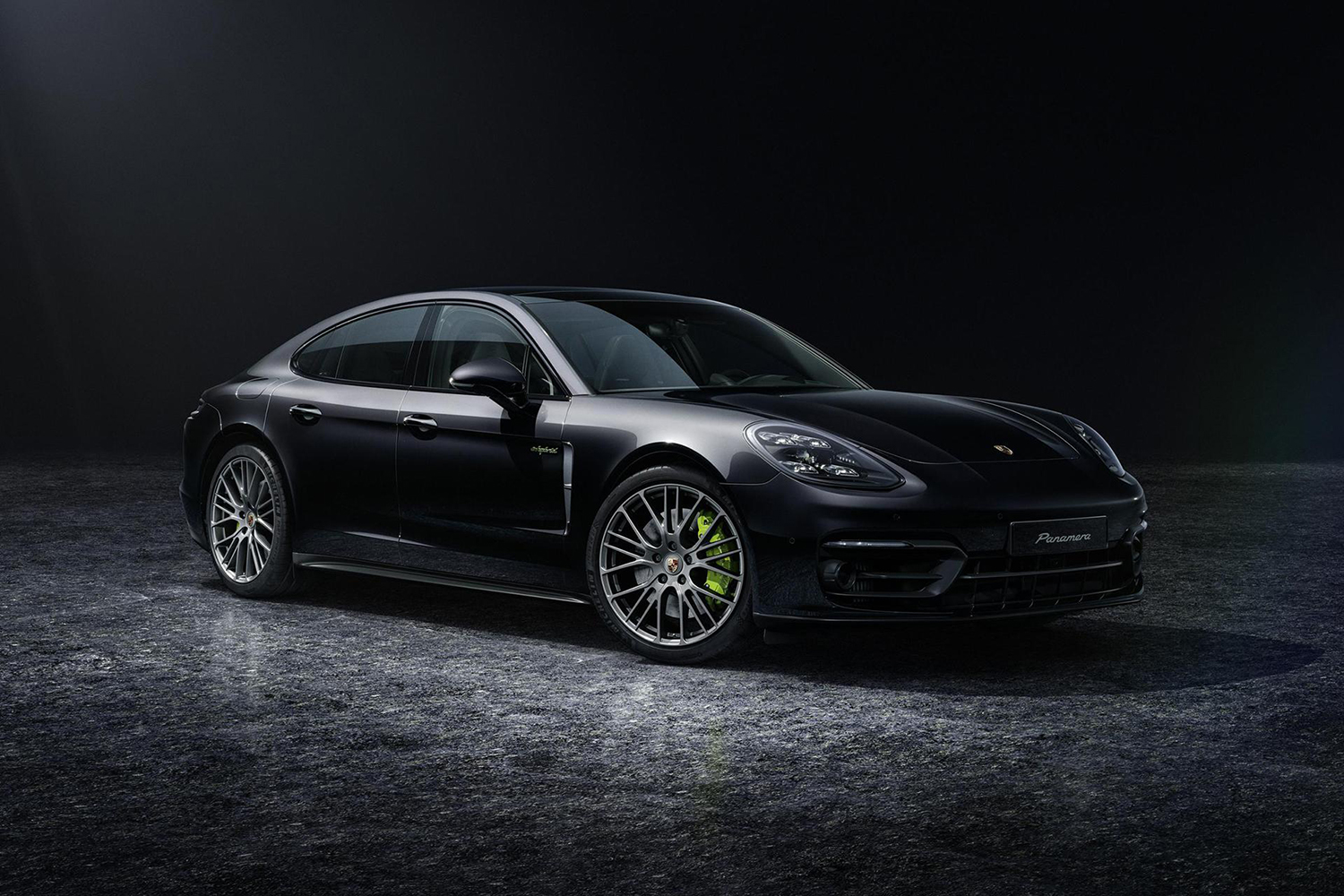
At a glance
- The Panamera blends Porsche performance with four-door and hatchback practicality for overseas dealers and wholesale buyers.
- Lineup choices include 2.9T and 3.0T V6 models, 4.0T performance derivatives, E-Hybrid, Sport Turismo and long-wheelbase cars.
- New cars can provide clearer warranty and condition documentation, while used cars require stronger inspection and history checks.
- Export pricing depends on trim, year, condition, options, freight, Incoterm, destination charges and exchange-rate effects.
- Live ChinaCarDirect listings and written quotations provide current unit prices, availability, MOQ and commercial terms.
Why the Porsche Panamera matters for export markets
The Panamera occupies a distinctive middle ground: it combines the low, focused shape and rear-biased handling associated with Porsche with four doors, a usable rear seat and a large hatch. That combination gives it broader appeal than a two-door sports car without turning into a conventional luxury saloon. For overseas dealers and wholesale buyers, it is easier to position to customers who want performance image, executive comfort and practical luggage capacity in one vehicle, particularly where sports sedans remain culturally established. The challenge is not explaining the appeal; it is matching bodystyle, powertrain and market specification to the importing country.
Export demand is strongest when the buyer understands Panamera as a premium sports-derived fastback rather than an electric vehicle or a conventional business sedan. Dealers can merchandise the 2.9T and 3.0T petrol models to performance-oriented customers who also need a second row, while GTS, Turbo and 4.0T versions serve affluent buyers seeking a more dramatic engine and chassis character. Sport Turismo and long-wheelbase derivatives answer different needs, giving an importer a broader retail ladder than a single body style would provide. The exact mix should follow local registration rules, not overseas sales expectations.
A Panamera program can also be built around the differentiators that survive the export journey: recognizable model hierarchy, flexible body-style choice and a high-comfort fastback driving position. Importers should assess local Porsche service access, spare-parts lead times and residual-value expectations before committing to a large order, because premium buyers often compare ownership confidence as closely as driving performance. The right export strategy is therefore to match an actual live vehicle to a defined customer segment, not to buy generically and hope the badge alone creates demand for each market at the required specification.
- Sports-derived four-door with hatchback usability.
- Sedan, Sport Turismo and long-wheelbase variants.
- Match trims to local premium demand.
Model range, trims and powertrain variants: how the lineup is structured and how to choose
The core Panamera hierarchy separates rear-wheel-drive 2.9T and 3.0T variants from four-wheel-drive models badged 4 or 4S, although equipment and market configurations can vary by year. The 2.9T and 3.0T use turbocharged V6 petrol engines and form the sensible core for buyers who want Porsche performance without moving to the V8. For fleet or dealer stock, a mixed ladder that includes the standard fastback, Sport Turismo and Executive Long Wheelbase creates clearer customer choices than ordering only one highly specified derivative, because each serves a different use case in the importing market.
The 4.0T family is the high-performance branch, with GTS and Turbo labels expressing different positions in the range. GTS is generally the enthusiast-led choice, emphasizing chassis response and a track-oriented character, while Turbo is the flagship expression with greater luxury and performance equipment. Buyers should not infer mechanical contents from the badge alone because Chinese-market cars may differ from global variants and may include market-specific naming. The VIN, build specification and option list are the decisive documents for confirming engine, drivetrain and standard equipment. Treat pictures and trim badges as clues, not proof.
Panamera E-Hybrid adds a petrol-electric powertrain for buyers whose markets reward lower local emissions or permit plug-in access, but it should not be chosen on an assumed electric range. Battery capacity, usable electric range, charging specification and fuel consumption can differ by model year, equipment and homologation, so those figures must be verified in the live listing and documents. Sport Turismo prioritizes cargo flexibility, Executive Long Wheelbase prioritizes rear-passenger room, and Platinum Edition mainly represents a trim and equipment choice rather than a separate powertrain. Verify the exact configuration before ordering.
- V6 2.9T and 3.0T core trims.
- GTS and Turbo anchor 4.0T performance.
- Verify E-Hybrid details by model year.
New vs used Porsche Panamera: how export inventory is structured and how buyers choose
A Panamera offered for export may be described as new, unregistered or previously registered, and those labels refer to different risk profiles. A genuinely new vehicle should have traceable factory delivery, clean title history and warranty documentation, but the buyer must still verify the exact status rather than infer it from the model year. A low-mileage later car can be more desirable than an older example, while an early registered vehicle may carry more history and fewer warranty benefits. Condition labels should therefore be checked in the live listing before calculating landed cost or retail positioning.
Used Panamera sourcing is attractive when the buyer wants a specific older specification, factory options or potentially lower acquisition outlay without waiting for the right new configuration. The trade-off is uncertainty: mileage alone does not reveal accident repair, paintwork, software history, wear or mechanical condition, and imported parts may not be original. Request a recent inspection, vehicle history, service records, photographs of the underside and wheels, and a VIN-based production date. A pre-purchase inspection in the export market or an independent inspection before shipment gives the importer stronger evidence than listing photographs alone.
Rather than treating new and used vehicles as interchangeable inventory, build a retail mix around customer economics and risk tolerance. New cars suit buyers who value documented warranty, known delivery condition and simpler presentation; used cars suit buyers who accept inspection work in exchange for potentially lower acquisition cost and access to particular trims. Dealers should compare expected reconditioning, financeability and warranty support rather than assuming one category is more profitable. Exact condition, availability and per-unit terms should always be taken directly from the current live Panamera listings on ChinaCarDirect.
- Verify status beyond model year.
- Used cars need inspection and history.
- Compare warranty and reconditioning needs.
How export pricing works: the factors behind a live listing price, and how to read one
A live Porsche Panamera export price is the result of several layers: vehicle acquisition cost, market adjustments, transport and destination charges, and the commercial terms attached to the listing. The underlying vehicle value is shaped by model year, 2.9T/3.0T/4.0T powertrain, body style, drivetrain, mileage or condition, factory options, provenance and market demand. For a hybrid, the production year and verified battery or electric-system condition are especially important. A quote that appears low on the vehicle page may not be a complete landed cost. Always clarify the included cost elements in writing.
Read the listing line by line rather than treating the displayed amount as a universal Panamera price. Confirm whether it is an FOB-style vehicle amount or includes documentation, inland transport, insurance, ocean freight, duty and taxes; Incoterms define the point where seller and buyer responsibilities transfer. Exchange-rate movements, fuel or container surcharges, port congestion, routing, cargo dimensions and insurance cover can also change the final payable amount. Request the same commercial structure for every shortlisted vehicle so trim differences are not confused with shipping differences, and document the agreed structure before final approval.
The most reliable export price guide is therefore a repeatable comparison, not a fixed online figure. Normalize each candidate by year, trim, condition, options, destination, Incoterm and currency, then add the destination charges your importer will actually incur. Be cautious with unusually broad ranges, because they can mix body styles, model years and commercial scopes. Current per-unit prices and availability are shown in live listings, while a written ChinaCarDirect quotation is the better route when a buyer needs a firm landed budget or multiple vehicles aligned under one shipment with documented terms.
- Separate vehicle value from landed charges.
- Normalize quotes by Incoterm and currency.
- Check live listings for current prices.
MOQ, ordering and payment: single units vs consolidating a container
MOQ is a transaction term, not a characteristic of the Panamera model. Some vehicle listings may be available to professional buyers on a single-unit basis, while seller-specific rules, payment conditions or shipping plans may encourage consolidation. Do not infer the MOQ from the model or from a search result: confirm the order quantity, unit designation and whether the quoted vehicle is held for an individual buyer or allocated to a consolidated container. Record any minimum in the pro forma invoice or written sales terms before transferring funds and retaining evidence.
A sensible ordering sequence begins with vehicle selection, document verification and a written specification, followed by a pro forma invoice or contract that states the vehicle, options, price, Incoterm, MOQ, payment schedule and cancellation terms. Payment commonly uses a deposit with the balance linked to documentary milestones, but the exact sequence and methods are seller- and destination-specific. Confirm the payee matches the contracting entity, use traceable bank transfer, and avoid payment before the VIN, title and export documents have been independently checked. Ownership transfer should not be confused with dispatch from the port.
When several Panameras are needed, consolidation can improve freight efficiency by grouping vehicles with compatible documentation, destination and handover requirements. The saving is not automatic: a mix of standard fastbacks, long-wheelbase cars and Sport Turismo variants can create loading, weight-distribution or space issues, while urgent or high-value units may be better moved separately. Ask the exporter or freight forwarder for loading plan, container type, securing method, insurance value, estimated sailing route and destination charges. Decide whether speed, segregation or freight efficiency matters most before approving the consolidation plan in writing.
- Confirm MOQ and unit status.
- Tie payments to verified documents.
- Consolidate compatible vehicles and terms.
Shipping, homologation and market compliance caveats: LHD/RHD and import rules by country
Panamera exports commonly move by enclosed road vehicle to the port and then by RoRo or container service, but the method follows the port, destination and vehicle value. The exporter should document the VIN, engine and gearbox details, keys, documents, condition at loading and the vehicle’s secured position. Before booking, verify whether the selected unit fits the intended carrier or container, whether battery-related equipment requires special handling for an E-Hybrid, and whether insurance begins at the agreed Incoterm location. These checks reduce the risk of a shipment that is technically complete but commercially exposed.
Right-hand-drive availability cannot be assumed from a model name. Some Panameras may have been built for left-hand-drive markets, while genuine right-hand-drive production depends on model year, factory specification and the particular source vehicle; aftermarket steering conversions are a separate category with different legal, warranty and market-value implications. Buyers should ask for the steering position, VIN, homologation type and original build plate, and have a local specialist inspect any converted car. Local registration rules may distinguish factory right-hand drive from a converted left-hand-drive vehicle before registration or resale in the destination country.
Import rules are destination-specific, so the same Panamera cannot be assumed to be registrable everywhere. The importer must check age and emissions limits, customs valuation, VAT or sales tax, import duty, safety and equipment requirements, insurance, emissions-zone eligibility and local rules for used or previously registered cars. Translation and certification of the registration certificate, commercial invoice, packing list and any required technical documents may also be necessary. ChinaCarDirect can connect the vehicle inquiry with an export process, but final customs clearance and road legality remain the importer’s responsibility in the destination market.
- Verify steering position and homologation.
- Check tax, duty and emissions rules.
- Document loading condition and insurance.
Who should buy the Panamera — and who should pick a different vehicle
The Panamera is a strong fit for a buyer who wants sports-car response and design but cannot justify a two-door coupe in daily use. It works particularly well for premium dealers serving executives, performance enthusiasts and customers needing a second row or hatchback carrying capacity. The standard fastback is the most versatile starting point: the 2.9T or 3.0T balances pace, comfort and operating cost better than a V8 derivative for broader demand, while Sport Turismo and long-wheelbase variants serve clearly identified use cases in the importing market and should be matched accordingly.
It is less suitable for buyers whose priorities are a battery-electric drivetrain, low running energy use or a purpose-built SUV platform. An E-Hybrid may ease local-emissions concerns, but buyers should not treat it as a full substitute for a BEV without confirming charging access, real-world electric range and tax treatment. Nor is the Panamera the right choice for a high-utility fleet requiring extensive cargo capacity, a commercial duty cycle or the lowest acquisition cost. Dealers should avoid positioning it as a volume utility vehicle simply because the model badge carries premium appeal.
Ownership expectations should also match the vehicle. Premium performance cars can carry higher insurance, tyre, brake and scheduled-service costs than mainstream executive cars, and local technician availability varies by country. A buyer focused on lowest cost of ownership may be better served by a more efficient sedan or a differently engineered luxury estate. A buyer already familiar with Porsche service standards, able to source genuine parts and comfortable with depreciation should get more value from the Panamera’s combination of performance, refinement, usability and strong road presence over time.
- Best for sporty four-door usability.
- Standard fastback serves broad demand.
- Weak fit for BEV or utility priorities.
- Check local ownership costs.
Main rivals and how the Panamera compares
The Mercedes-AMG GT 4-Door is the closest conceptual rival because it also combines a low four-door body with high performance, although its silhouette is more coupe-like. It tends to appeal more strongly to buyers who prioritize an obvious supercar character, while Panamera buyers often value rear-seat comfort, luggage usability and a broader mix of less extreme trims. Availability, local homologation and service costs should be compared directly rather than assuming the AMG badge is automatically the better imported choice for a particular destination market and customer profile before selecting an import candidate.
The BMW M8 Gran Coupe competes in the same premium four-door performance territory and may attract customers who prefer a high-output flagship with a more traditional luxury-car presentation. The Panamera offers a broader hierarchy from V6 rear-drive cars through four-wheel-drive and V8 versions, so dealers can cover more price-conscious performance buyers with one model family. The M8 can suit buyers committed to the most powerful badge, but buyers should compare engine character, rear space, boot utility, fuel use and local ownership costs in their destination market and local service network.
The Audi RS 7 Avant is a useful rival for buyers who want performance plus an estate body, though its styling and model range serve a narrower audience than the Panamera family. More broadly, the Panamera competes with premium sports sedans, performance four-doors and electrified executive cars, but no single rival matches every combination of hatch access, rear accommodation, V6 choice and V8 availability. The decisive comparison is not badge prestige; it is the locally registered specification, verified condition, service network and landed cost of the exact vehicle being considered.
- AMG GT 4-Door: supercar-led alternative.
- M8 Gran Coupe: flagship performance rival.
- RS 7 Avant: estate-performance alternative.
Live Porsche Panamera export inventory
View all listings →Real units currently on ChinaCarDirect with per-unit asking prices and MOQ. Availability updates live from the catalogue.
Porsche Panamera New Energy 2017 Panamera 4 E-Hybrid Executive Long Wheelbase 2.9T
How to buy a Porsche Panamera from China
-
1
Define the target specification
Choose the preferred body style, powertrain, drivetrain, seating and luggage requirements. Use the customer segment and destination market to decide whether a standard fastback, Sport Turismo, long-wheelbase or E-Hybrid best fits.
-
2
Compare live inventory
Search the current Panamera listings and compare model year, trim, condition, mileage, options and documentation. Check each live listing for its current per-unit price, availability and MOQ rather than relying on a general catalogue figure.
-
3
Verify the exact vehicle
Request the VIN, build sheet, factory option list, ownership documents, service history and detailed photographs. For an E-Hybrid, verify the battery, electric-range and charging information applicable to that specific production year.
-
4
Request a normalized quotation
Ask for a written quote that separates the vehicle price from inland transport, documentation, insurance, freight, duty, taxes and other destination charges. Confirm the Incoterm, payment milestones, allocation and cancellation terms.
-
5
Clear destination compliance
Verify steering position, homologation, emissions eligibility, customs valuation and local registration requirements. Obtain specialist advice for converted vehicles or any specification that may not be accepted in the destination country.
-
6
Secure documents and shipping
Approve the pro forma invoice after checking the contracting entity and payee, then complete payment against agreed documentary milestones. Arrange inspection, loading documentation, insurance, freight booking, tracking and handover under the confirmed terms.
Panamera vs rivals
| Mercedes-AMG GT 4-Door | It offers a more overtly supercar-led alternative with strong four-door performance. The Panamera generally provides a broader rear-drive and four-wheel-drive hierarchy, more practical luggage access and a wider selection of less extreme trims. |
|---|---|
| BMW M8 Gran Coupe | The M8 is a strong flagship-performance competitor with a more traditional luxury-car presentation. The Panamera covers more powertrain and price-position choices, making it easier for a dealer to serve both rear-drive V6 buyers and V8-oriented customers. |
| Audi RS 7 Avant | The RS 7 Avant combines high performance with estate-body practicality and directly challenges the Panamera Sport Turismo. Its narrower model range and distinctive design appeal to buyers who place greater emphasis on Audi performance and styling. |
Frequently asked questions
How is the Porsche Panamera export price determined?
ChinaCarDirect’s live Panamera listings show the current per-unit price, while exact availability and MOQ are confirmed on the relevant listing. The amount reflects year, trim, powertrain, condition, options and provenance, while freight, insurance, inland transport, duty, taxes, exchange rates and the chosen Incoterm affect the landed total. Ask for a written quote separating vehicle price from destination charges.
Which Porsche Panamera engine and powertrain options should I compare?
The petrol range spans 2.9T and 3.0T turbocharged V6s and 4.0T V8 derivatives such as GTS and Turbo; the E-Hybrid combines a petrol engine with an electric motor. Drivetrain and body style vary across the range. Because Panamera battery, electric-range and charging specifications can differ by model year and market, verify those figures in the live listing and build documents.
Are used Panameras better value than new cars for export?
New Panameras can provide clearer condition and warranty documentation, while used cars may provide access to a desired trim or a potentially lower acquisition outlay. Used vehicles add uncertainty around mileage, repairs, wear, service history and original parts, so inspection and history evidence are essential. Check the current condition field and per-unit details in live listings.
What is the MOQ when buying a Porsche Panamera from China?
MOQ is set within each commercial arrangement rather than being a fixed model rule. A listing may permit a single-unit purchase to a professional buyer, while seller terms, payment requirements or consolidation plans may set a different minimum. Confirm the MOQ, unit allocation, price and shipping scope on the specific listing or in a written quotation before paying.
How long does Panamera shipping take, and what affects cost?
Transit time depends on the origin port, destination port, carrier schedule, customs clearance and inland delivery; a vehicle can spend significant time beyond the ocean leg. Cost is driven by transport method, route, fuel and congestion surcharges, insurance, documentation, port charges and applicable duties or taxes. Compare a door-to-door landed quote rather than relying on a generic sailing time.
How are spare parts sourced for an imported Panamera?
Use the VIN, build date and exact model designation to identify parts, then ask the exporter whether the component is original, remanufactured or aftermarket. Genuine parts and known alternative suppliers may have different lead times and costs, while local Porsche service support can simplify installation. Verify availability before promising a repair or importing a component independently.
Can I buy a right-hand-drive Panamera for export?
Right-hand-drive availability depends on the factory build of the specific car, not merely the Panamera name. Genuine factory right-hand-drive vehicles and left-hand-drive cars converted to right-hand drive may be treated differently by registration, safety, warranty and value rules. Confirm steering position, VIN, homologation type and local approval before ordering.
How do I order a Porsche Panamera from China?
Start with live ChinaCarDirect Panamera listings, compare the body style, trim, condition, documents and listing MOQ, then submit the shortlisted unit details through the RFQ process. Confirm a written specification, Incoterm, payment milestones, export documents, inspection, insurance and freight plan before payment. The seller or exporter should then coordinate handover and shipment against the agreed terms.
Ready to source the Porsche Panamera?
Send your preferred Panamera specification, destination and shipment plan to ChinaCarDirect for a current unit quote and export review.
Request a quote