
Roewe Feifan R7 Export Buying Guide for Dealers
Plan a Roewe Feifan R7 import from China with trim guidance, stable EV specs, export-price factors, MOQ, shipping, compliance, and rival comparisons.
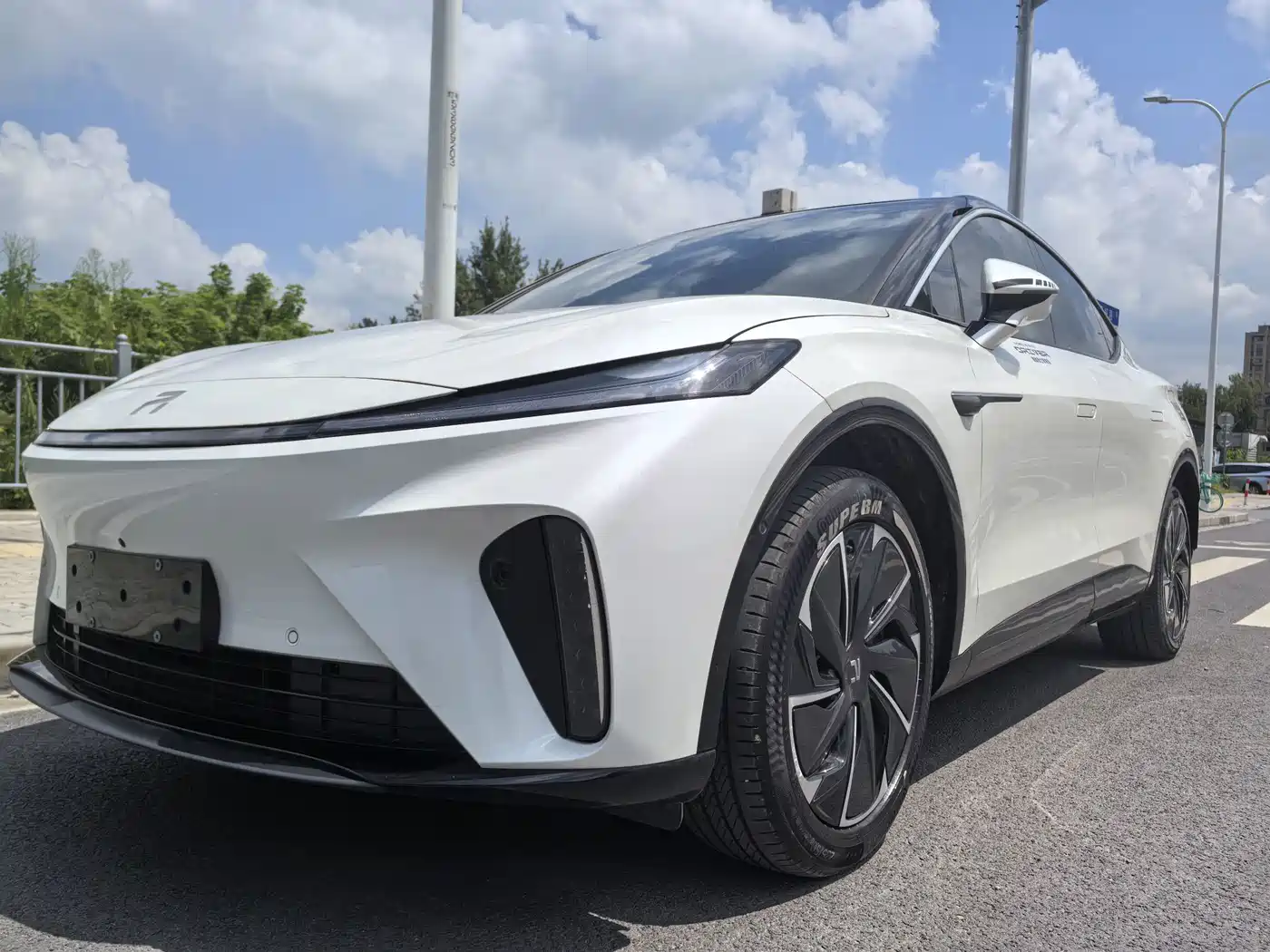
At a glance
- The Feifan R7 is a Chinese-made battery-electric compact crossover suited to value-focused overseas buyers.
- Standard Premium and Advanced editions define the sourcing range, but battery and motor details must be confirmed by model year and VIN.
- New R7 supply offers the cleanest specification trail; used vehicles require battery, mileage, accident, and warranty checks.
- Current per-unit export prices and MOQ must be checked in live inventory because they are not fixed model-wide values.
- LHD/RHD suitability, homologation, charging compatibility, and aftersales support determine whether the model is commercially viable.
Why the Roewe Feifan R7 matters for export markets
The Roewe Feifan R7 occupies a useful middle ground in the export EV market: a compact crossover with Chinese battery-electric architecture, familiar SUV packaging, and equipment that can appeal to value-focused dealers and fleet buyers. Rather than competing only as a budget import, it gives a retailer a recognizable R-series model with a modern cabin and electric running costs. Its export relevance is strongest where Chinese brands are gaining acceptance and operating cost, rather than prestige, drives the buying decision. Professional importers should still treat local homologation and aftersales support as decisive.
The model is part of SAIC Motor’s broader manufacturing and export ecosystem, which can give an importer more procurement options than a small independent EV brand. That does not mean every overseas market has a deep Roewe network, but it makes aftersales planning central to the decision. Before committing, ask where the nearest capable service point is, how battery and software faults are supported, and whether replacement modules or electronic components can be obtained for the exact model year. Fleet operators should test uptime commitments rather than relying on showroom features.
Global demand for this type of R7 is shaped by policy, charging infrastructure, import rules, and how buyers compare total ownership cost with combustion vehicles. It is most persuasive in cities and corridors where daily mileage is predictable, electricity is available, and a distributor can maintain the model. It is less persuasive where range testing, sparse service coverage, or conservative resale expectations dominate. For an overseas buyer, the R7 matters because it shows how a Chinese compact EV can offer a balanced proposition, but only when the destination market can support it.
- Chinese-made electric crossover.
- Dealer and fleet fit.
- Service and homologation.
Model range, trims and powertrain variants: how the lineup is structured and how to choose
The R7 lineup is easy to navigate at a high level but should not be reduced to trim names alone. Standard Premium Edition is the common entry point seen in sourcing, while Advanced Edition denotes a higher-equipped vehicle. Model year remains essential because batteries, motors, software, and equipment can change within a model life. A live listing must therefore be matched to its VIN and edition, not accepted because the body shape and badges look identical. Ask the supplier for a configuration sheet and the original equipment list before comparing units.
Published Chinese-market R7 specifications commonly show a single electric motor driving the front wheels, with 60.5 kWh/500 km CLTC and 66.5 kWh/605 km CLTC battery-range pairings. The exact pairing for an Advanced Edition or a later model year must be verified rather than inferred from the trim label. CLTC is a Chinese laboratory cycle and should not be read as a European WLTP or US EPA figure. Overseas range also changes with wheel size, speed, temperature, load, and charging losses, so homologated data and real-world test routes matter for buyers.
Choose the version by duty cycle, not by the largest headline range. A delivery fleet with predictable urban routes may prioritize usable capacity, vehicle condition, and charging access, while a cross-regional buyer needs verified range margin and a realistic charging plan. The R7’s SUV form can carry five people, but payload, roof-rack limits, and towing approval should be checked separately from passenger comfort. Compare battery capacity, motor output, charging connector, and real-world range together; a larger pack does not remove the need for compatible infrastructure at the destination depot.
- Two export editions.
- Verify battery by VIN.
- Match charging to duty.
New vs used Roewe Feifan R7: how export inventory is structured and how buyers choose
R7 export supply can include new vehicles from earlier model years rather than a deeply developed used-car channel, and the exact model-year mix should be checked live. That structure favors buyers who want documented condition, factory warranty route, and repeatable specifications. It does not mean every unit is current production, nor that “new” removes all inspection work. Model-year age can affect software, parts, battery warranty, and local type approval. A used Roewe Feifan R7 may be available through private owners or local imports, but requires a different sourcing and inspection process before purchase.
New inventory is usually cleaner when a dealer needs color-matched stock, identical specifications, and the strongest link to factory support. Its acquisition cost can be affected by model-year age, discount status, and the selected battery or trim, and an earlier vehicle is not necessarily equipped like a newer one. A used Roewe Feifan R7 may offer a more attractive acquisition equation, but the lower outlay should be weighed against mileage, remaining battery warranty, accident repair, and uncertainty over long-term parts support. Depreciation can be harder to forecast for this model.
Condition should be proved, not argued. For a new listing, request the VIN, build date, factory configuration, odometer reading, tire and battery condition, warranty start date, and evidence that the vehicle is export-eligible. For a used car, add an independent inspection, battery state-of-health report where available, service records, title checks, and confirmation of accident or flood exposure. A dealer should also ask whether software updates have been applied and whether replacement parts match the exact vehicle. Check current availability in the live R7 inventory rather than inferring it from an old photograph.
- New: clearer specification.
- Used: inspect battery.
- Verify VIN and warranty.
How export pricing works: the factors behind a live listing price, and how to read one
A Roewe Feifan R7 export price is a transaction quote, not a fixed model price. Model year, edition, battery option, motor specification, color, production status, and condition affect its baseline. Currency movements, seller margin, payment terms, and order volume can also change the quote. Freight may be embedded or itemized depending on the Incoterm. Treat an online figure as a starting reference for that unit, while a wholesale buyer should request a written quotation tied to VIN or configuration, including the applicable freight basis and currency before the buyer gives approval in writing.
To read a live listing, separate the vehicle price from landed cost. Confirm whether the seller quotes EXW, FOB, CIF, or another Incoterm, and identify excluded charges. Import duty, VAT or sales tax, customs brokerage, local registration, insurance, port handling, inspection, storage, demurrage, and inland delivery may all sit outside the advertised amount. Similar vehicles can therefore produce different delivered costs if one quote includes sea freight and another does not. Ask for the charge schedule, currency, payment milestones, and validity period in the same written response before buyer approval and retain it.
Pricing changes as quotations age. A seller may reserve a unit only for a defined period, and exchange-rate or freight adjustments can alter the final invoice. Binders should specify trim and battery, any restoration or delivery charge, whether the vehicle is new or used, and what happens if it fails pre-shipment inspection. For a container order, request an allocation list rather than one price for mixed editions. The binding current price, availability, and MOQ should be checked on ChinaCarDirect’s live listings before approval, because an archived enquiry cannot guarantee the present position.
- Compare trim and condition.
- Separate vehicle and landed costs.
- Check Incoterm and validity.
MOQ, ordering and payment: single units vs consolidating a container
MOQ is a supplier and listing term, not a fixed property of the Feifan R7 name. Some programs accept one evaluation vehicle, while a container program may require an allocation or offer a better rate at volume. Read the live MOQ and have the seller confirm it in the quotation; do not infer it from a photographed vehicle. A one-vehicle order can suit testing, a dealer launch, or a fleet pilot, but offers less freight leverage and may carry a higher unit shipping cost. Consolidation helps only when vehicles and specifications are compatible.
When planning a container, build the assortment around one model year and a narrow set of battery and trim combinations. Mixing model years can complicate software, parts stocking, and buyer expectations; mixed customer orders can create allocation disputes. Confirm dimensions and securing requirements with the forwarder before calculating loading capacity, and decide whether to sell direct to fleets, place cars with a distributor, or hold them for dealers. Better freight utilization can lower landed cost per vehicle, but ties up capital and increases exposure to slow sales. Weigh that benefit against inventory-age risk.
A sound ordering sequence begins with an RFQ and pro forma invoice identifying each vehicle, configuration, price basis, and payment terms. Many B2B workflows use a deposit to reserve stock, inspection before the balance, and settlement against documents. The sequence depends on the supplier agreement, so never infer that a deposit is refundable or that inspection rights survive shipment unless the contract explicitly says so. Name the inspection party, discrepancy remedy, release conditions, and cancellation terms. Payment protection should follow the agreed route, while the buyer remains responsible for ownership and export documents.
- Confirm listing-specific MOQ.
- Consolidate compatible vehicles.
- Tie payment to inspection.
Shipping, homologation and market compliance caveats: LHD/RHD and import rules by country
Most R7 vehicles come from a left-hand-drive China-market base; right-hand-drive availability should not be assumed. Some destination markets require RHD; others permit LHD but impose different rules. A conversion can affect safety approvals, warranty, software, parts, and resale, so ask whether the vehicle is factory RHD or needs conversion, and request evidence before shipment. Do not treat a steering-wheel swap as equivalent to homologated RHD supply. For an RHD-only market, proceed only after the importer and local authority confirm the configuration and accept the required documents for that specific market before contracting.
Import and homologation rules are country-specific, and approval matters more than whether the car physically arrives. Depending on the market, the importer may need whole-vehicle type approval, a Certificate of Conformity, emissions and safety compliance, customs valuation and classification, local registration, radio and software approval, and charging compatibility. European and other UNECE-linked destinations can have approval implications for a China-built car; the United Kingdom, Gulf markets, and ASEAN countries have their own regimes. Appoint a knowledgeable customs broker and confirm the applicable rules before placing a non-refundable order in writing.
Battery logistics deserve a separate plan. The exporter and carrier must classify the vehicle and lithium battery correctly, provide required safety documentation, and use a method permitted for the route. Depending on the booking, the R7 may move as a complete vehicle by roll-on/roll-off service or with the battery under dangerous-goods controls; the forwarder should confirm the method. Before loading, reconcile the VIN, bill of lading, commercial invoice, packing list, export declaration, service records, and charging accessories. Complete and document charger, software, or compliance work before customs clearance, not after arrival.
- Confirm factory steering configuration.
- Country rules differ.
- Check battery transport papers.
Who should buy the Feifan R7 — and who should pick a different vehicle
The Feifan R7 fits an overseas buyer who wants a practical electric crossover, a modern cabin, and Chinese supply-chain value without moving into a full-size premium SUV. It is particularly relevant to urban dealers, ride-hailing or delivery fleets with dependable charging access, and importers building an affordable EV range. It also suits a distributor that can bundle charging support, warranty administration, and aftersales training into the offer. The strongest business case comes when local electricity, route patterns, duty treatment, and residual-value assumptions all support the vehicle’s total-cost proposition in that market.
The R7 is a weaker choice where charging is unreliable, daily mileage is high but routes are long, or the destination has little Roewe-trained service capacity. It may suit buyers poorly who require proven resale performance, a mature nationwide parts network, or guaranteed right-hand-drive availability without conversion. Executive fleets prioritizing brand familiarity, long-distance comfort, and established European residual data may prefer a segment rival. Commercial operators should remember that passenger-cargo classification and tax rules can differ even when the vehicle is the same. Compliance and utilization should outweigh badge value in practice.
Use a structured decision scorecard before buying Roewe Feifan R7 from China. Compare homologated range with the longest realistic duty cycle, the charging connector and local network, landed cost after tax and freight, parts lead time, technician availability, warranty handling, and expected holding time. Then test the proposition with a controlled deployment rather than an oversized speculative order. Review the result using actual energy use, availability, maintenance events, and buyer feedback. This reveals whether the R7’s proposition survives in your market, rather than relying on a Chinese-market specification sheet or one-time promotional quote.
- Best for urban fleets.
- Needs charging and service.
- RHD buyers need alternatives.
Main rivals and how the Feifan R7 compares
The closest export-market comparisons include the BYD Yuan Plus, sold in many markets as the ATTO 3; the GAC Aion V, another Chinese-made electric crossover; and the Leapmotor C10, which competes from a larger, more configurable family. All offer the appeal of a modern EV crossover sourced from China, but their value depends on local brand recognition, homologation, service coverage, and charging compatibility. The R7 should not be declared a winner from brochure figures alone. The useful comparison is which model can be supported, insured, and resold profitably in the buyer’s market.
Against the Yuan Plus/ATTO 3, the R7 presents a larger, comfort- and technology-oriented crossover, while BYD may benefit from broader recognition in some markets. Against the Aion V, deciding factors may be local homologation, software, parts, and dealer support rather than headline range. The C10 offers greater size and broader powertrain choice, useful for fleet segmentation, but its local configuration must be checked. For the R7, the strongest argument is fit: a well-supported example at the right landed cost can often beat the newest rival model or the most famous one.
A rigorous shortlist should place the R7 and each rival on the same destination-market basis: approved configuration, usable range, charging access, warranty coverage, spare-parts lead time, service capability, delivered cost, and realistic resale. Where the R7 has less local recognition, demonstrate the proposition through a controlled pilot and transparent ownership data rather than aggressive inventory. If its service network, battery warranty, or homologation cannot support planned volume, choose the rival that can. If those fundamentals are solved, the R7 can offer dealers a differentiated, value-oriented EV without moving into the premium segment.
- Yuan Plus: wider reach.
- Aion V: direct rival.
- C10: added flexibility.
Live Roewe Feifan R7 export inventory
View all listings →Real units currently on ChinaCarDirect with per-unit asking prices and MOQ. Availability updates live from the catalogue.
How to buy a Roewe Feifan R7 from China
-
1
Define the destination requirements
Identify the required steering configuration, homologation route, charging connector, import duty treatment, realistic duty cycle, and local service coverage before selecting a vehicle.
-
2
Select the model year and battery
Use the live listing to confirm the edition, battery capacity, motor output, and equipment. Do not assume that the same trim name represents an identical specification across model years.
-
3
Review the live unit listing
Check the displayed per-unit price, year, trim, condition, MOQ, seller information, images, and current availability. Use the RFQ form to request confirmation for the exact vehicle.
-
4
Request an itemized quotation
Specify the destination port and Incoterm, then request a breakdown for the vehicle, freight, insurance, duties, taxes, port charges, inspection, documentation, and payment schedule.
-
5
Verify the vehicle and supplier
Confirm the VIN, build date, odometer, battery condition, service history, ownership status, export eligibility, warranty coverage, and pre-shipment inspection rights.
-
6
Lock MOQ and payment terms
Put the required quantity, model-year allocation, deposit, balance, inspection procedure, discrepancy remedy, document release, and cancellation terms in writing.
-
7
Plan compliant shipping and clearance
Appoint a forwarder and local customs broker to confirm battery classification, transport method, securing requirements, VIN documentation, duties, and pre-delivery inspection.
Feifan R7 vs rivals
| BYD Yuan Plus / ATTO 3 | A more internationally recognized compact EV alternative with broadly similar export logic. Choose it where BYD dealer familiarity and charging support dominate; consider the R7 for its larger cabin and equipment-led positioning, subject to local homologation. |
|---|---|
| GAC Aion V | A close Chinese-made electric crossover rival whose size and feature set create direct showroom overlap. Local parts access, service support, homologated range, and delivered cost are often more decisive than brochure positioning. |
| Leapmotor C10 | A larger family rival that can offer more cabin or powertrain flexibility depending on the approved market version. It may suit fleets needing size segmentation, while the R7 is simpler to position as a compact electric crossover. |
Frequently asked questions
How is Roewe Feifan R7 export pricing determined?
The live price reflects model year, trim, battery version, options, condition, currency movements, seller terms, and the selected Incoterm. Freight, insurance, duties, taxes, port charges, and inland delivery may be separate from the vehicle figure. ChinaCarDirect’s live R7 inventory shows the current per-unit price and availability that should govern a purchase decision.
What powertrain and range should I expect?
The Feifan R7 is a battery-electric crossover using a single electric motor and front-wheel drive on commonly documented versions. Published pairings include a 60.5 kWh battery with 500 km CLTC and a 66.5 kWh battery with 605 km CLTC, but the exact edition or model year must be checked. CLTC is a Chinese test cycle, so destination-certified range and a real-world charging plan should guide the purchase.
Is a new or used Roewe Feifan R7 better for export?
New vehicles generally provide a clearer condition history, factory warranty route, and repeatable specifications. Used vehicles can suit cost-sensitive buyers, but battery condition, mileage, accident history, remaining warranty, and parts support require stronger verification. Compare the actual unit rather than assuming one condition category is automatically cheaper or safer.
How does MOQ work for the Feifan R7?
MOQ is a supplier and listing term, not a fixed model-wide rule. Some listings may accept one evaluation vehicle, while container programs can use allocation and volume conditions; confirm the current field and written quotation on the live listing. Budget the purchase using the exact seller’s terms rather than an assumed catalogue minimum.
What determines shipping time and cost?
Shipping time and cost depend on origin and destination ports, carrier capacity, vehicle dimensions, battery classification, Incoterm, insurance, and customs work. Ask the forwarder for a port-to-port or door-to-door breakdown, including handling, documentation, and destination charges. A vehicle quote is not a complete freight quote unless the stated Incoterm says so.
Are spare parts available for the Roewe Feifan R7?
Availability depends on the destination distributor, exact model year, battery and motor configuration, and whether the vehicle is LHD or RHD. Before purchase, ask for parts lead times, diagnostic access, software support, battery-module service, and a recommended initial stock list. Confirm that warranty work can be handled locally or through an agreed regional process.
Can I obtain a right-hand-drive Feifan R7?
Most R7 supply is based on a left-hand-drive China-market configuration; RHD availability should never be assumed. Ask whether the exact car is factory RHD or converted, and have the local authority confirm the configuration and required documents. A conversion can affect approval, warranty, software, parts availability, and resale value.
How do I order a Roewe Feifan R7 from China?
Start with the live Feifan R7 listings, choose the exact edition and battery, and send the unit identifiers in an RFQ. Compare the written quotation, MOQ, deposit, inspection, balance, and document schedule, then appoint a forwarder and customs broker before release. The buyer remains responsible for confirming ownership, homologation, and import eligibility.
Ready to source the Roewe Feifan R7?
Send the destination, quantity, trim, battery, and steering configuration through the RFQ form for a unit-specific export quotation.
Request a quote