
Roewe I6 Max Ev Export Buying Guide for Dealers
Export buying guide for the Roewe I6 Max Ev, covering EV range versions, pricing factors, ordering, compliance, shipping and key alternatives.
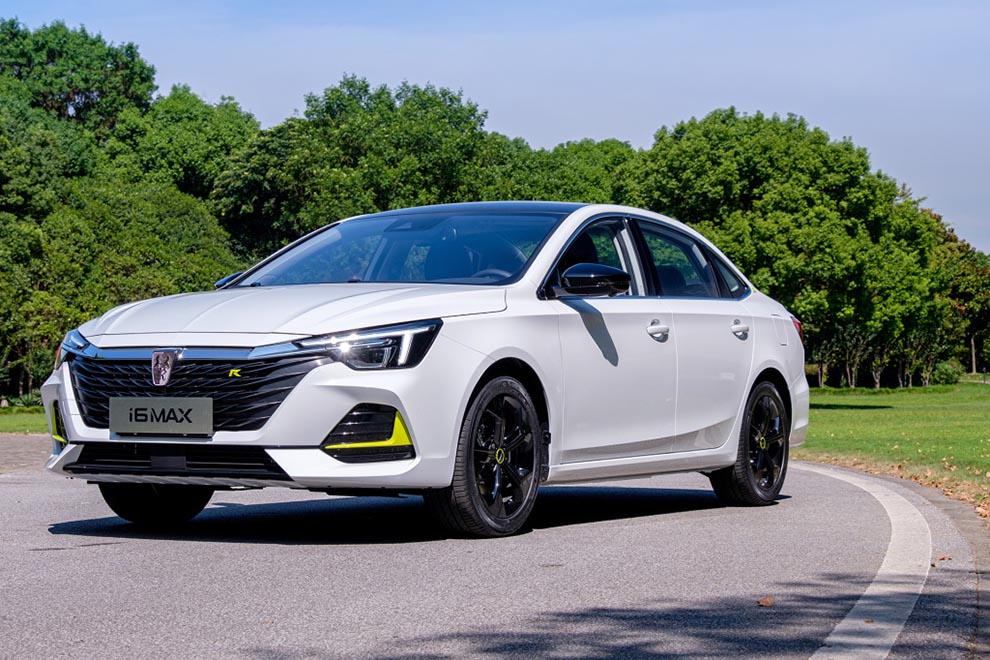
At a glance
- The Roewe I6 Max Ev is a compact electric sedan positioned for urban private buyers and managed fleets.
- The model is offered in EV 420, EV 500 and EV 600 range-labelled versions with different equipment grades.
- A 1.5T PHEV I6 MAX record may appear in broader searches and must not be confused with a battery-electric vehicle.
- Certified range, battery capacity, charging, exact equipment and export documentation should be checked for each live listing.
- Pricing, MOQ, availability and market suitability remain specific to the individual vehicle and destination.
Why the Roewe I6 Max Ev matters for export markets
Roewe I6 Max Ev occupies the compact electric family-car segment, giving overseas buyers an alternative to larger premium sedans and smaller urban hatchbacks. Its practical case rests on a familiar four-door layout and several range-labelled EV versions rather than on a single headline specification. For importers and dealers, that means a vehicle that can be assessed against mainstream compact EVs on packaging, equipment and operating cost. It is especially relevant where electrified private transport is becoming normal but buyers still expect a conventional sedan body and familiar charging, servicing and resale expectations.
For a dealer, the model can fit a city-focused EV category where customers want lower running costs without moving to a van or crossover. Fleet operators may also consider it for staff travel or mixed urban routes, provided charging shifts can be controlled. The buying case becomes weaker where vehicles must travel long distances between charging opportunities, operate in severe climates, or depend on a dense local service network. Export suitability therefore starts with duty-cycle analysis, not simply the attractive range badge on the listing that may not translate directly into homologated overseas range.
Roewe’s China manufacturing base can be attractive to buyers seeking access to a large domestic vehicle ecosystem, but the brand name alone does not guarantee convenient parts supply after export. Dealers should establish a local parts plan, confirm diagnostic access, and understand which software, warranty, and battery services the importer can support. The most credible export proposition combines the model’s compact EV positioning with a documented service pathway. Current unit configuration, condition, certification status, and commercial terms should then be verified through live inventory rather than inferred from the model family.
- Offered in 420-, 500-, and 600-labelled EV versions.
- Battery-only and PHEV records require separate review.
- Serviceability and charging access determine export fit.
Model range, trims and powertrain variants: how the lineup is structured and how to choose
The I6 Max EV range is organized around three battery-electric labels: EV 420 Sunroof Special Edition, EV 500 Sunroof Premium, and EV 600 Skyview Premium Edition. The numbers identify range-oriented versions, while the accompanying words distinguish equipment grades; they should not be treated as a complete specification sheet. A buyer still needs the certified range, battery capacity, motor output, charging data, and standard equipment for the exact unit. That discipline is especially important when comparing China-market listings with vehicles sold under different test cycles abroad and local homologation rules for that market.
Choosing among the 420, 500, and 600-labelled versions starts with route length, load, climate, and charging access. The lower-labelled car may suit shorter urban duties or a tighter acquisition budget, while higher labels may reduce range anxiety for regional travel. That is a use-case comparison, not a guarantee of superiority, because tyre choice, speed, elevation, temperature, and charging losses affect real-world distance. Buyers should model an energy reserve around their longest normal route and ask the seller for the range figure applicable to the vehicle’s actual certification before signing an order.
Search results may also show a 1.5T PHEV Cool Sky Intelligent Drive Supreme Edition under the broader I6 MAX naming, so buyers must distinguish battery-electric cars from the plug-in hybrid before comparing specifications or economics. The PHEV combines a combustion engine with electric assistance, but its electric-only range, fuel consumption, battery arrangement, and charging capabilities should be read from its own listing. For a fleet requiring predictable fuel flexibility, that version may be relevant; for a zero-tailpipe-emission operating model, remain with an EV-labelled vehicle and verify local rules in the destination market.
- EV 420: lower range-oriented version label.
- EV 500: intermediate range-oriented version label.
- EV 600: highest range-oriented version label.
- Trim wording does not replace a unit-level equipment check.
New vs used Roewe I6 Max Ev: how export inventory is structured and how buyers choose
New I6 MAX EV export inventory is typically easier to compare because configuration, mileage, paint, and equipment can be established before payment. Buyers can align a 420, 500, or 600-labelled version with a defined market and reject a unit that has the wrong charging or documentation profile. The trade-off is that a new purchase commits more capital before local homologation, installation, and residual-value risks are fully visible. A prudent dealer therefore builds a written specification and inspection checklist instead of accepting descriptive trim names as proof of the delivered vehicle before release.
Used Roewe I6 Max Ev can make sense when acquisition cost matters more than factory configuration or when a buyer wants a proven model already familiar to local technicians. The risks are concentrated in battery state of health, accident repair quality, high-voltage component condition, software history, and remaining manufacturer or importer support. Ask for service records, inspection documents, battery diagnostics, recall completion, and evidence of charging use. A lower purchase price can be erased by battery repair uncertainty, difficult parts sourcing, or weaker insurance and resale prospects for the destination market.
New-versus-used decisions should use total cost per kilometre or mile and include charging, insurance, maintenance, downtime, compliance, and expected resale. A test car can be useful for one-vehicle dealers, while a fleet may prefer standardized new units that simplify training and warranty administration. Used supply for a relatively recent EV nameplate can also be less predictable than the general used-car market, especially for a specific range version. Use the live listings to identify what is actually offered, then request condition evidence and an RFQ on the exact vehicle rather than relying on a generic used-car description.
- New units simplify configuration and warranty planning.
- Used units require battery and repair evidence.
- Total cost should include compliance and downtime.
How export pricing works: the factors behind a live listing price, and how to read one
A live Roewe I6 Max Ev price is the output of several variables, not a permanent model-wide figure. Model year and trim affect depreciation and equipment; the EV 420, 500, or 600 version, battery specification, mileage, condition, and originality can affect comparability. For a PHEV result, engine, hybrid system, and electric range belong in the same assessment. Exchange rates, freight, insurance, port charges, taxes, documentation, and the selected Incoterm can also change the amount ultimately payable. Compare only quotations that use the same currency, vehicle specification, and trade term consistently throughout the comparison.
Read each listing line by line and separate the vehicle price from the landed cost. Confirm whether the amount covers one VIN, several units, or a mixed batch; whether it is ex-factory, FOB, CIF, or another basis; and whether export documents, inspection, and inland transport are included. Check the displayed model year, exact trim wording, range label, battery version, mileage, condition, colour, options, and any repair history. Ask whether the quoted amount is valid for the current unit and what change would trigger a repricing. The live listings are the authoritative source for each binding number.
Buyers should build a spreadsheet that converts the listing quote into an expected landed cost and then into a retail or fleet operating cost. Add ocean or air freight, cargo insurance, terminal and customs charges, destination taxes, registration, inspection, port handling, financing, and the currency exposure between order and payment. Quote requests should state the destination, Incoterm, quantity, required configuration, and desired delivery window so responses can be compared fairly. Price alone is not a bargain if the vehicle cannot be registered economically or lacks a serviceable specification for the market.
- Compare trim, range version, year, condition, and mileage.
- Confirm currency, quantity, Incoterm, and included fees.
- Use live listings for the current binding quote.
MOQ, ordering and payment: single units vs consolidating a container
For a wholesale buyer, MOQ is a commercial condition attached to an individual quotation, so buyers should confirm it for the selected listing rather than infer it from the model name. Some offers may accommodate a single vehicle, while others may be structured around a batch or container. Ask what quantity the supplier is prepared to release, whether mixed trims can share one order, and whether the MOQ changes with payment method or trade term. ChinaCarDirect should be checked for the current per-unit MOQ shown or confirmed on each live record, because the displayed offer is the only reliable basis for the transaction.
A single-unit purchase can suit a dealer testing demand, an importer establishing a service process, or a fleet placing a trial order. It offers lower capital exposure, but the vehicle-level price may not capture the same logistics efficiency as a consolidated shipment. Before paying, request a pro forma invoice showing the VIN or SKU, specification, quantity, unit price, currency, Incoterm, delivery location, payment schedule, validity period, and documents included. Have the seller entity and bank beneficiary checked against the platform communication and invoice. Deposits and balances should be released only against agreed milestones and satisfactory inspection evidence.
Consolidating several vehicles into one container can improve freight planning and give a fleet more configuration control, but it also concentrates risk in one shipment. Check that every VIN is individually allocated, that paint, trim, range version, and charging requirements are acceptable, and that export documentation identifies the correct units. Mixed configurations may complicate later sales, insurance, or registration if the destination treats them differently. Request both a consolidated shipment quote and an alternative landed-cost calculation, with written responsibilities for export declaration, loading, insurance, discharge, customs clearance, and final delivery.
- Confirm MOQ on each selected live listing.
- Request a pro forma invoice before any deposit.
- Price single-unit and consolidated freight scenarios separately.
Shipping, homologation and market compliance caveats: LHD/RHD and import rules by country
Electric vehicles require careful transport planning because the battery is regulated as a dangerous-goods cargo. Ask the carrier or freight forwarder for the vehicle’s battery test summary, UN 38.3 documentation where applicable, state-of-charge handling plan, and compliance with the selected sea or air route. Do not assume a China-market vehicle can be loaded without checking battery isolation, protection during rolling, and carrier acceptance. The exporter should identify whether the vehicle travels as used cargo, loose vehicle, or other approved category, because the required declaration and securing plan can differ by mode.
Most China-market vehicles are configured for left-hand drive, and the I6 MAX EV should not be assumed to be offered in right-hand drive. Buyers needing RHD should request confirmation of steering-wheel position, pedal and control arrangement, lighting, displays, charging hardware, and the vehicle identification record before contracting. A physical conversion can involve parts, labor, inspection, warranty, and residual-value issues, so it is rarely equivalent to a factory RHD conversion. If right-hand-drive is mandatory, prioritize a documented, market-approved example rather than assuming the model name guarantees availability in every required market before shipment.
Homologation is country-specific, and a vehicle certified for China is not automatically certified for the destination. Depending on the market, the importer may need safety and emissions approvals, electromagnetic-compatibility evidence, radio and connectivity approval, cybersecurity or software compliance, local language materials, VIN or registration compliance, and insurance acceptance. Plug-in hybrid imports may face additional rules relating to fuel use or emissions, while an EV may still be affected by charging and battery-document requirements. Build these checks into the pre-shipment stage and make payment or release conditional on written confirmation from qualified local compliance advisers.
- Request battery transport and dangerous-goods documents.
- Confirm factory RHD; do not assume conversion.
- Complete destination homologation before final release.
Who should buy the I6 Max Ev — and who should pick a different vehicle
The I6 Max EV is a strong candidate for an importer targeting compact electric sedans for urban customers, company fleets, or ride-hailing operations with dependable charging access. It can also suit a distributor seeking several Roewe range labels without stepping into larger, costlier vehicle classes. A dealer should still model service technician training, diagnostic software, high-voltage safety, spare-part holding, and residual value before committing. The best business case is one where charging infrastructure and after-sales support are planned alongside the vehicles, not added only after the first units arrive overseas for resale.
A different vehicle may be more appropriate where drivers regularly cover long routes, operate in extreme temperatures, lack reliable charging, or need factory right-hand drive in the destination market. Fleets with unpredictable charging access should examine the listed I6 MAX PHEV or a conventional hybrid, while fleets committed to zero tailpipe emissions should remain with the BEV. Buyers prioritizing a mature local service network, a proven residual-value history, or very high towing requirements should compare established alternatives. Those needs must be translated into homologated range, utility, and total-cost tests rather than assumptions about badge or body style.
Before placing a fleet order, run a commercial worksheet covering purchase, freight, insurance, registration, charging installation, routine servicing, tyres, software support, and expected resale. Test the assumptions against the longest duty cycle, carrying load, climate, and driver behavior. Ask for the live quote on each desired VIN, then require an inspection against an agreed checklist, including panel condition, interior wear, high-voltage warnings, charging function, software screens, mileage, and accessories. A successful export purchase is the one that remains economical after compliance, operating, and downtime costs, not merely the one with the most attractive initial listing.
- Best for urban fleets with managed charging.
- PHEV deserves consideration where charging is intermittent.
- Reject if local service or homologation support is weak.
Main rivals and how the I6 Max Ev compares
The closest direct sedan comparison is the BYD Qin PLUS EV. It targets a similar compact electric-car buyer with a different combination of range versions, equipment, software, and brand recognition in export markets. The I6 MAX EV may appeal to distributors already working with Roewe or seeking its distinctive trim hierarchy, but the decision should be made on the exact battery, range, charging, warranty, and landed cost. Compare like-for-like units rather than allowing one manufacturer’s headline range figure to outweigh differences in destination certification or after-sales reach in the destination country.
The GAC Aion S is another relevant compact electric sedan for fleet and private buyers who value an established export alternative. Its comparison with the I6 MAX EV should focus on usable interior space, standard equipment, battery and charging data, software update policy, parts availability, and proven resale prospects in the intended market. Neither badge guarantees the better business outcome. If the Aion S is available in the required configuration with a stronger local service proposition, it may be the safer choice; if the Roewe offers a better-equipped or more suitable range version, the decision can reverse.
The MG4 offers a different buying proposition because it is a compact electric hatchback rather than a conventional sedan. That body format can change cargo use, rear-seat access, and fleet suitability, while equipment and range options depend on market and model year. It remains useful as a price-and-equipment benchmark for buyers who prioritize packaging or want a broader export brand comparison. The final shortlist should contain the I6 MAX EV plus two or three direct alternatives, each scored on the same route, charging, compliance, service, and total-cost assumptions. Current live quotations complete the comparison.
- BYD Qin PLUS EV: direct electric-sedan comparison.
- GAC Aion S: fleet and private-buyer alternative.
- MG4: compact hatchback with different utility.
Live Roewe I6 Max Ev export inventory
View all listings →Real units currently on ChinaCarDirect with per-unit asking prices and MOQ. Availability updates live from the catalogue.
How to buy a Roewe I6 Max Ev from China
-
1
Define the operating requirement
Map the longest route, typical load, climate, charging access and annual utilization before choosing a vehicle.
-
2
Select the exact powertrain and version
Choose among the EV 420, EV 500 and EV 600 labels using the live specifications, and exclude the PHEV if battery-only operation is required.
-
3
Review live inventory
Check the current per-unit quote, MOQ, vehicle identifiers, photos, trim wording and seller information for every shortlisted listing.
-
4
Request a binding quotation
Ask for a pro forma invoice stating the specification, currency, quantity, Incoterm, destination, payment schedule, validity period and included documents.
-
5
Clear compliance and shipping
Confirm LHD or RHD suitability, destination homologation, battery transport documents, freight plan, insurance responsibility and estimated charges.
-
6
Inspect before final payment
Use an agreed inspection checklist covering VIN, mileage, panels, interior, high-voltage warnings, charging operation, software and accessories. For a used vehicle, also request battery diagnostics and repair records.
-
7
Complete payment and shipment
Release funds against agreed milestones, verify export documents, arrange secure loading and insurance, and track customs clearance through destination delivery.
I6 Max Ev vs rivals
| BYD Qin PLUS EV | A direct compact electric sedan rival with a different range and equipment portfolio. Choose it when its local service footprint and like-for-like landed quote are stronger; choose the I6 Max Ev when Roewe support or a specific trim better fits the market. |
|---|---|
| GAC Aion S | A relevant electric sedan for private and fleet buyers that may offer a different combination of space, software, equipment and local parts support. The better choice depends on the exact Roewe configuration, destination service coverage and live quote. |
| MG4 | A compact electric hatchback alternative rather than a direct sedan format. Compare cargo access, rear-seat use, charging, equipment and live pricing to determine which body type fits the fleet or customer. |
Frequently asked questions
How is Roewe I6 Max Ev export pricing determined?
The live price is influenced by model year, trim, range version, battery specification, condition, mileage, exchange rates, freight, insurance, taxes, documentation and the selected Incoterm. Read each unit record carefully and compare quotations using the same currency, configuration and trade term. Current binding prices are shown on the live Roewe I6 Max Ev listings.
Which powertrain and range options are available?
The EV-labelled versions are EV 420, EV 500 and EV 600, with trim names indicating equipment grades. Some broader I6 MAX records may identify a 1.5T PHEV, which should not be confused with a battery-electric car. Because the numbers are version labels, confirm certified range, battery capacity, motor output and test cycle on the exact listing.
Is a used Roewe I6 Max Ev worth buying?
A used example can reduce acquisition cost and may already suit local technicians, but battery condition and repair history become more important. Request service records, battery diagnostics, recall evidence, high-voltage checks and documented charging history. Compare the total operating and compliance cost with a new vehicle rather than looking only at the acquisition price.
What is the MOQ for the Roewe I6 Max Ev?
MOQ is determined for the individual quotation and may depend on the seller, configuration and order structure. Some offers may accept one vehicle, while others may be structured around a batch or container. Check the current MOQ shown or confirmed for each live listing, and request a separate quote for any intended consolidation.
How long does shipping take and what affects the cost?
Transit time and cost depend on the origin and destination ports, transport mode, battery handling, cargo volume, carrier availability, insurance, terminal charges and the Incoterm. An individual vehicle and a consolidated shipment should be quoted separately because their logistics economics differ. Ask the forwarder for the chargeable method, expected sailing or flight window, and all destination charges.
Can spare parts be ordered for the exported vehicle?
Parts can generally be sourced through the manufacturer or specialist channels, but availability and lead time vary by component and market. Ask for a high-frequency parts list covering tyres, lamps, brake components, cabin filters, chargers and electronic modules. The importer should also confirm diagnostic access, warranty responsibility and the realistic local stock-holding plan.
Is right-hand-drive Roewe I6 Max Ev availability guaranteed?
No. China-market examples are commonly left-hand drive, and factory right-hand drive should not be assumed from the model name. Buyers requiring RHD should request a documented example and verify steering, controls, lighting, charging equipment and homologation before contracting. A physical conversion is not automatically equivalent to a factory RHD specification.
How do I order a Roewe I6 Max Ev from China?
Start with the live listings, shortlist the exact VIN or SKU, and send an RFQ stating the destination, quantity, configuration and Incoterm. Review the pro forma invoice, seller details, payment milestones and document schedule before paying. Complete the agreed inspection, compliance checks and shipping plan, then release the balance and track customs clearance and delivery.
Ready to source the Roewe I6 Max Ev?
Send ChinaCarDirect your destination, quantity, required version and Incoterm to request a current Roewe I6 Max Ev export quote.
Request a quote