
Roewe Rx5 Export Buying Guide for Dealers and Fleets
Buy a Roewe Rx5 from China with practical guidance on trims, export pricing, MOQ, shipping, compliance and powertrain choice for dealers and fleet buyers.
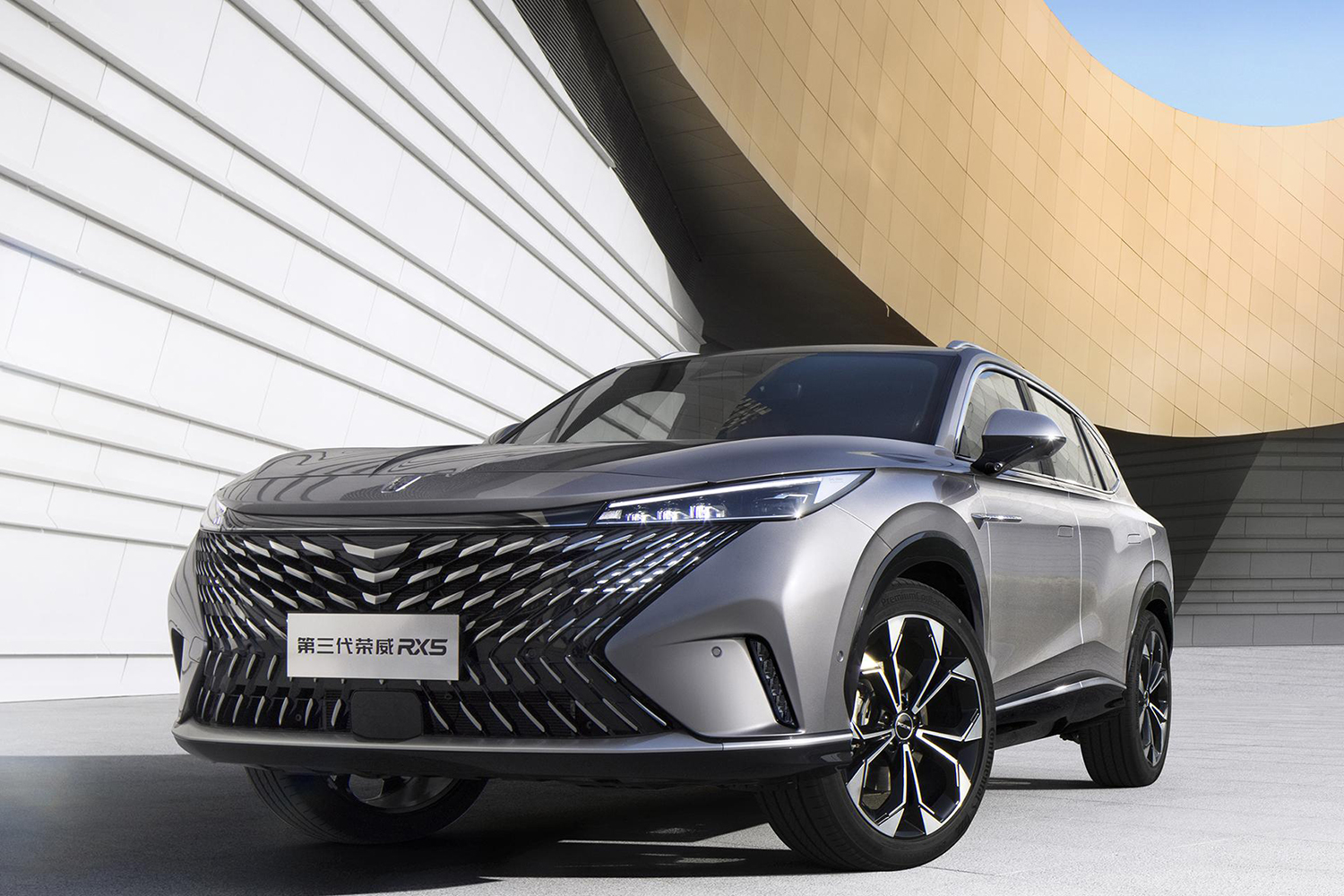
At a glance
- Choose among gasoline, plug-in hybrid and battery-electric branches according to charging access and duty cycle.
- Match transmission, drive layout and equipment to the destination rather than relying on edition names.
- Compare new and used units on condition, lifecycle cost, battery health and local support.
- Read the live unit quote and include freight, duty, tax, insurance and handling in the landed total.
- Confirm MOQ, Incoterm, payment milestones, inspection and homologation before committing funds.
Why the Roewe Rx5 matters for export markets
The Roewe Rx5 occupies the compact-SUV space that many overseas buyers use as a practical alternative to larger crossovers. Its appeal comes from a broad selection of gasoline, plug-in hybrid and battery-electric derivatives, combined with familiar equipment themes such as Internet and 4G-connected trims. For distributors, that mix can serve urban fleets, ride-hailing operations and retail buyers without moving into a larger, less manageable vehicle class. The model's powertrain labels also make it important to match the exact variant to local infrastructure rather than treating every Rx5 listing as interchangeable.
Global demand for this segment is usually driven less by outright performance than by operating practicality. A compact SUV offers passenger space and a higher seating position while remaining manageable for urban parking, road use and fleet deployment. The Rx5 line's mix of manual and automatic applications, two-wheel-drive and four-wheel-drive versions, and different cabin grades gives importers room to assemble a market-specific range. Those choices matter more than headline trim badges when fleet utilization and resale expectations are decisive. Buyers should test whether local fuel, charging and servicing support the selected configuration.
For export planning, the model should be positioned as a value-oriented Chinese compact SUV rather than assumed to carry the same residual value or dealer support as a long-established domestic mainstream name. Internet-connected editions may also depend on services, apps or data arrangements designed for China, so overseas usability must be checked. Buyers who can establish reliable parts supply, correct homologation and a credible resale proposition will find the Rx5 more straightforward to commercialize than one bought only on listing price. That distinction is central to a sound export business case.
- Multiple powertrains widen market fit.
- Connected trims need service checks.
- Local support protects resale.
Model range, trims and powertrain variants: how the lineup is structured and how to choose
The family is structured around recognizable naming groups rather than one global specification sheet. Gasoline listings include RX5, RX5 MAX and PLUS-branded applications with 20T, 30T, 300TGI, 330TGI and 1.5T designations. Manual and automatic transmissions appear, while 20T and 30T trims are shown in both two-wheel-drive and four-wheel-drive forms. These labels help identify the powertrain family, but the exact engine output, dimensions and equipment must be confirmed for each vehicle. Edition names signal trim positioning, but can obscure differences in safety kit, infotainment and cabin finish that matter to a buyer.
For a conventional fleet, the decision starts with duty cycle. A 1.5T or turbo-labelled version may suit operators prioritizing predictable fuel, servicing and lower acquisition complexity, while higher-output applications can suit buyers seeking performance reserve. Manual transmissions can reduce acquisition complexity for cost-sensitive drivers, whereas automatics are easier for mixed-ability fleets and urban traffic. Drive configuration should follow route, load and weather needs. The listing's VIN-specific specification is more reliable than inferring performance from a badge. Do not assume every route needs four-wheel drive, or that a higher trim improves commercial efficiency.
Hybrid and electric branches change the buying question from fuel logistics to energy availability. The 500 PHEV designation identifies a plug-in-hybrid application for buyers seeking electric capability alongside a gasoline engine, while ERX5 EV400 identifies the battery-electric version. Neither label alone establishes usable electric range, charging time, battery capacity or consumption in the destination climate. Compare the VIN-linked technical data, charger compatibility and real operating profile before choosing either branch over conventional gasoline. A vehicle suited to a Chinese city may not suit regions with sparse charging or predictable long-distance fuel demand.
- Match drive layout to route.
- Transmission varies by trim.
- Verify charging and battery data.
New vs used Roewe Rx5: how export inventory is structured and how buyers choose
Export inventory for the Rx5 is structured across production years, model derivatives and condition categories, so a useful shortlist starts with the generation rather than the badge. Newer vehicles generally represent later design and technology cycles, while used stock can make older generations or higher-specification configurations accessible. Because the same trim name may appear across model years, compare VIN, production date, engine and body details together. Never assume that a used RX5 MAX or PLUS unit matches a current RX5 specification. This is particularly important when preparing a mixed-fleet catalogue.
New units can suit importers who want a defined condition, contemporary connected features and a cleaner basis for warranty or homologation discussions. Their apparent purchase premium should be evaluated against lower initial uncertainty, expected downtime and the cost of rectifying wear or missing equipment. A new vehicle is not automatically compliant in an overseas market, however: local safety, emissions and software requirements still apply. Confirm the intended configuration before treating the latest model year as the lowest-risk export choice. Dealer training, charging setup and after-sales supply may still need separate work.
Used units can reduce acquisition cost while exposing buyers to age, mileage and wear. For gasoline vehicles, inspect service history, fluid leaks, tyres, brakes, transmission behavior and accident repair. For the ERX5 EV400 or a 500 PHEV, add a battery state-of-health report, charging-cycle history and confirmation that the high-voltage battery has not been modified or flooded. The relevant comparison is total cost over the planned holding period, not simply the difference between the new and used purchase invoices. A well-documented used unit may be more dependable than an undocumented example.
- Match year, derivative and VIN.
- New does not mean compliant.
- Check electric battery health.
How export pricing works: the factors behind a live listing price, and how to read one
A live Rx5 export price is the output of several variables rather than a fixed model-level tariff. The vehicle year, derivative, trim, engine or battery version, transmission, drive configuration, mileage, condition and optional equipment all influence dealer acquisition cost. Market conditions also matter: exchange rates, local availability, supplier stock, freight costs and the chosen Incoterm can move the landed total. A useful quote should therefore state what is included and what remains payable by the buyer. Comparing two listings is meaningful only when their specifications and commercial scopes are equivalent.
Read each live listing as a commercial document, not just a catalogue entry. Check whether the displayed amount refers to the vehicle alone, domestic Chinese delivery, export preparation or an export-ready package. Note the Incoterm and named place, because responsibility for loading, carriage, insurance and destination handling changes at that point. Review whether documents, inspection, charging accessories, local maps or connected-service support are included. If a term is ambiguous, request a written line-by-line quotation before placing an order. Current binding figures appear against each live unit, not as an old range.
Exporters often revise quotations as exchange rates, freight schedules or sourcing costs change, so a dated message may stop being valid quickly. Build the total cost in a worksheet that separates vehicle price, inland transport, export charges, sea or air freight, insurance, customs duty, taxes, port charges and dealer margin. Use the same destination and Incoterm when comparing suppliers. Where possible, ask for an all-in and a vehicle-only price so the commercial scope is visible without confusing seller margin with logistics cost. ChinaCarDirect live listings show the current per-unit price, MOQ and availability.
- Compare equivalent vehicles only.
- Use one Incoterm throughout.
- Confirm written quote inclusions.
MOQ, ordering and payment: single units vs consolidating a container
MOQ is a supplier’s commercial rule, so it should be read from the selected live listing rather than inferred from the model. Wholesale programs, trial orders and special configurations may therefore use different thresholds. Exporters may accept a single vehicle for a trial order, set a multi-unit requirement for certain configurations, or offer a lower threshold when several buyers consolidate stock. Ask what the MOQ applies to: one trim, mixed models or the entire consolidated shipment. Also establish whether a reservation counts toward the threshold and whether the minimum changes after a vehicle has been inspected or placed into production. Get it in writing.
Container consolidation can make small mixed orders commercially practical, but it adds coordination risk. A freight forwarder or exporter may group vehicles from several buyers, with each party responsible for its own units and charges. Confirm the approved vehicle list before stuffing, how customs documents identify each vehicle and owner, and what happens if one unit is damaged or cannot be exported. Consolidation can reduce freight cost per vehicle, yet it can also delay release if paperwork, inspection or payment for another buyer’s vehicle is incomplete. Verify liability before shipment.
A typical order process starts with a unit selection and written specification, followed by a refundable or staged deposit, production or stock confirmation, inspection, balance payment and release against agreed documents. Payment methods and protection should be defined in the contract, especially for bank transfers and deposits. Nominate the inspection standard, photograph the vehicle at handover and specify the document set needed for customs. Clear milestone terms reduce the chance that a nominal discount is offset by financing, storage or demurrage costs. Use consistent terms for both deposits and balances.
- Read each live unit's MOQ.
- Set inspection and payment milestones.
- Clarify document duties.
Shipping, homologation and market compliance caveats: LHD/RHD and import rules by country
Transport method should follow urgency, route, value and consolidation plans. Ro-ro vessels commonly handle finished vehicles; container or flat-rack arrangements may suit smaller lots, specialist cargo or vehicles that cannot roll efficiently. Air freight can reduce transit time but is rarely the economical choice for a full fleet. Exporters arrange loading and inland movement differently, so the quotation should state the port or terminal, cut-off dates, insurance and release process. The same Incoterm and destination must be used when comparing transport offers. Schedule buffer for customs inspection and terminal congestion.
Import rules are destination-specific and cannot be settled by choosing a left- or right-hand-drive vehicle. The importer must confirm type approval, emissions rules, safety and equipment requirements, VIN and customs documentation, age restrictions, duties, taxes and local registration. Local authorities may require modifications or documentation that should be planned before shipment rather than after arrival. A vehicle built for China may include features, labels or software assumptions that do not satisfy another market. Pre-clearance through an experienced local customs adviser is therefore part of vehicle procurement, not an afterthought in practice.
Steering configuration is another sourcing variable. LHD is generally easier to source for many export programs, but RHD examples may be available in selected trims or through specialist channels, and neither should be assumed for every unit. Buyers with electrified versions should request the battery test summary, shipping declaration and charger information needed for lawful transport and destination charging. Also check whether connected apps, maps, voice functions and service support operate in the target language and region. These checks can prevent a technically sound vehicle from becoming commercially stranded after arrival.
- Check destination approval early.
- Verify RHD availability.
- Request battery shipping papers.
Who should buy the Rx5 — and who should pick a different vehicle
The Rx5 best fits an importer or dealer that can turn Chinese sourcing into a structured retail or fleet programme rather than a one-off resale. It offers useful choice across compact SUVs, multiple energy types and a broad ladder of editions, allowing the buyer to match equipment and cost with customer expectations. The strongest case is in markets where the vehicle’s size, feature set and operating profile make sense, and where the importer can arrange homologation, parts, technician training and residual-value planning. Those capabilities turn sourcing options into a sellable product.
For fleet buyers, the Rx5 can make sense where predictable operating costs, connected features and a conventional SUV format matter. The choice between gasoline, plug-in hybrid and battery-electric versions should follow charging access, daily mileage, route predictability and depot economics. A plug-in hybrid may ease the transition where charging is incomplete, while a battery-electric unit needs dependable charging and realistic range management. Used vehicles may suit lower-mileage or secondary-duty fleets, provided battery condition and maintenance evidence support the intended service life. Tax and insurance treatment should also be modeled by destination.
Choose a different vehicle when the application demands a proven resale record, extensive local service coverage, a specific emissions or charging standard, or a load capability outside the Rx5’s passenger-SUV role. Dealers in markets with low Chinese-brand awareness may also prefer a more familiar nameplate. Commercial vans or pickup-based fleets may suit duty cycles better than an SUV, while premium crossovers may be necessary for buyers focused on brand prestige. The decision should compare total operating and ownership risk, not only acquisition cost or trim content. Do not force a marginal fit.
- Best for structured fleet programmes.
- Match energy to infrastructure.
- Reject marginal fits.
Main rivals and how the Rx5 compares
The closest alternatives depend on whether the buyer is comparing gasoline models, electrified versions or the whole compact-SUV proposition. The Chery Tiggo 7 is a direct Chinese-brand competitor with broad international recognition and overlapping SUV dimensions. It can be attractive where buyers recognize Chery’s export network or want a different design and powertrain mix. The Rx5’s case rests more on Roewe’s connected-car positioning and its broad RX5, MAX, PLUS and electrified naming; local service strength should decide which brand carries less risk. Compare certified specifications, not brochure positioning alone in each market.
The MG HS is another credible compact-SUV comparison, especially for buyers already familiar with SAIC-related products and markets where MG has established distribution. Both marques offer Chinese-developed crossovers with gasoline and electrified strategies, so the practical distinction often comes down to the exact variant, warranty support, parts pricing and homologation. An Rx5 buyer should not assume that a similarly priced MG vehicle has equivalent equipment or battery provisions. A like-for-like quotation and local compliance review are more useful than badge-level comparisons. Test the complete ownership case for the intended destination.
The Changan CS35 Plus provides a third relevant Chinese export comparison, particularly where buyers prioritize a different compact-SUV platform and established regional distribution. As with the Rx5, its appeal comes from modern styling, a broad equipment ladder and several powertrain strategies in different markets. Changan may fit better where its local after-sales footprint is stronger; the Rx5 may be preferable where a specific trim, connected functions or model branding align with the customer brief. Neither should be reduced to engine output alone. Check safety mandates, battery warranty, software support and parts availability.
- Compare certified specifications.
- Check service and parts support.
- Assess total ownership risk.
Live Roewe Rx5 export inventory
View all listings →Real units currently on ChinaCarDirect with per-unit asking prices and MOQ. Availability updates live from the catalogue.
Roewe Roewe RX5 2020 20T Automatic 4G Connected Surpass Flagship Edition
Roewe Roewe RX5 2020 20T Manual 4G Connected Surpass Flagship Edition
Roewe Roewe RX5 2020 20T Automatic 4G Connected Surpass Flagship Edition
How to buy a Roewe Rx5 from China
-
1
Define the market and duty cycle
Specify the destination country, steering requirement, routes, annual mileage, charging access and whether the programme is for retail, fleet or mixed use. Use those requirements to select the relevant Rx5 derivative and powertrain.
-
2
Shortlist exact live inventory
Review the live Roewe Rx5 listings and compare model year, derivative, VIN, transmission, drive configuration, equipment and condition. Do not treat similarly named trims from different years as equivalent.
-
3
Verify vehicle and export documents
Request the vehicle title, identification records, maintenance history where available, and the documents required for export. For electrified versions, also request battery-health and high-voltage shipping information.
-
4
Complete the destination compliance review
Confirm LHD or RHD configuration, type approval, emissions rules, safety equipment, charging compatibility and connected-service support with local specialists. Resolve modifications and registration requirements before shipment.
-
5
Request a destination-specific landed quotation
Ask for vehicle cost, inland transport, export charges, freight, insurance, duty, tax, handling and dealer margin to be separated. Use the same Incoterm and destination when comparing suppliers.
-
6
Confirm MOQ and payment terms
Check the MOQ shown for the selected live unit and state whether it applies to one trim, mixed models or a consolidated shipment. Agree the deposit, inspection, balance-payment and document-release milestones in the contract.
-
7
Inspect, ship and register
Complete the agreed pre-shipment inspection, record vehicle condition and release payment against verified documents. Coordinate loading, freight, customs clearance, arrival inspection and destination registration.
Rx5 vs rivals
| Chery Tiggo 7 | A direct Chinese compact-SUV rival with broad export recognition and a comparable audience of fleet and retail buyers. The Rx5 may be more attractive where its specific trim, connected functions or model range matches the programme, while the Tiggo 7 can carry less risk where Chery's local service network is stronger. |
|---|---|
| MG HS | A credible alternative for buyers familiar with MG or the wider SAIC product ecosystem, particularly in established overseas markets. Both vehicles offer Chinese-developed compact crossovers, so equipment, warranty, parts support and the exact powertrain should determine which provides the better landed commercial package. |
| Changan CS35 Plus | A close Chinese export competitor with modern styling and overlapping equipment and powertrain strategies. Changan may be the better fit where its regional after-sales footprint is stronger, while the Rx5 can suit importers seeking a particular edition, connected feature set or model identity. |
Frequently asked questions
How is Roewe Rx5 export pricing determined?
Export pricing is calculated from the exact vehicle and deal scope. Year, trim, powertrain, transmission, drive configuration, mileage, condition, exchange rates, freight, insurance, duties, taxes and the chosen Incoterm can all change the total. ChinaCarDirect's live Roewe Rx5 listings show the current per-unit figure; request a written, destination-specific quotation for the binding offer.
What Roewe Rx5 specs confirm the engine, powertrain and range?
The family includes gasoline versions labelled 1.5T, 20T, 30T, 300TGI and 330TGI, a 500 PHEV branch and the ERX5 EV400 battery-electric derivative. Those labels do not provide a complete homologated specification. Ask for the VIN-linked engine output, transmission, battery capacity, electric range, motor output, consumption and charging details before comparing capability.
Should a buyer choose a new or used Roewe Rx5?
New units reduce condition and history uncertainty; used units may lower acquisition cost and provide access to a different generation or specification. A gasoline vehicle needs service and accident-history checks, while a PHEV or EV also needs battery state-of-health and high-voltage documentation. Compare expected downtime, warranty support, operating cost and residual value over the planned holding period.
How does Roewe Rx5 wholesale MOQ work?
MOQ is set per exporter, configuration and commercial arrangement; it is not a universal Rx5 rule. Some offers accept one vehicle, while others require a batch or consolidated order. Read the MOQ shown on each live listing and ask whether it applies to one trim, mixed models or the whole shipment.
What determines export shipping time and cost?
Shipping time and cost depend on origin and destination ports, transport mode, vehicle availability, consolidation, customs clearance, documentation and terminal congestion. Sea carriage is generally lower-cost for vehicle volume, while air freight prioritizes speed. The quotation should name the Incoterm, route, cut-off dates, insurance and charges payable by the buyer.
How should buyers assess Roewe Rx5 spare-parts support?
Parts support should be assessed before purchase, especially for less common trims or newer connected systems. Ask the supplier for a VIN-based parts list, consumable specifications, software support, diagnostic procedure, warranty channel and realistic lead times for commonly needed items. Include these costs and expected downtime in the operating model rather than treating them as post-sale details.
Is right-hand-drive Roewe Rx5 availability guaranteed?
RHD availability depends on the exact source vehicle and trim; it cannot be inferred from the Rx5 model name. Ask the seller to confirm steering configuration from the VIN and photographs, and verify whether the vehicle was produced for the destination market. If no suitable RHD unit is available, compare the cost of sourcing one against conversion and the compliance implications.
How do I order a Roewe Rx5 from China?
Start with the live Roewe Rx5 inventory, shortlist the exact vehicle and request a written specification and landed quote. Confirm MOQ, payment milestones, inspection, title and export documents before paying. After stock and production confirmation, complete inspection and balance payment, then coordinate loading, freight, customs clearance and destination registration.
Ready to source the Roewe Rx5?
Send your destination, preferred powertrain, quantity and budget guidance to ChinaCarDirect for a unit-specific Roewe Rx5 export quote.
Request a quote