
Škoda Kodiaq Export Buying Guide for Overseas Buyers
Buy Škoda Kodiaq from China with a clear view of TSI trims, seating, drivetrain, export pricing, MOQ, shipping, homologation and key rivals before ordering.
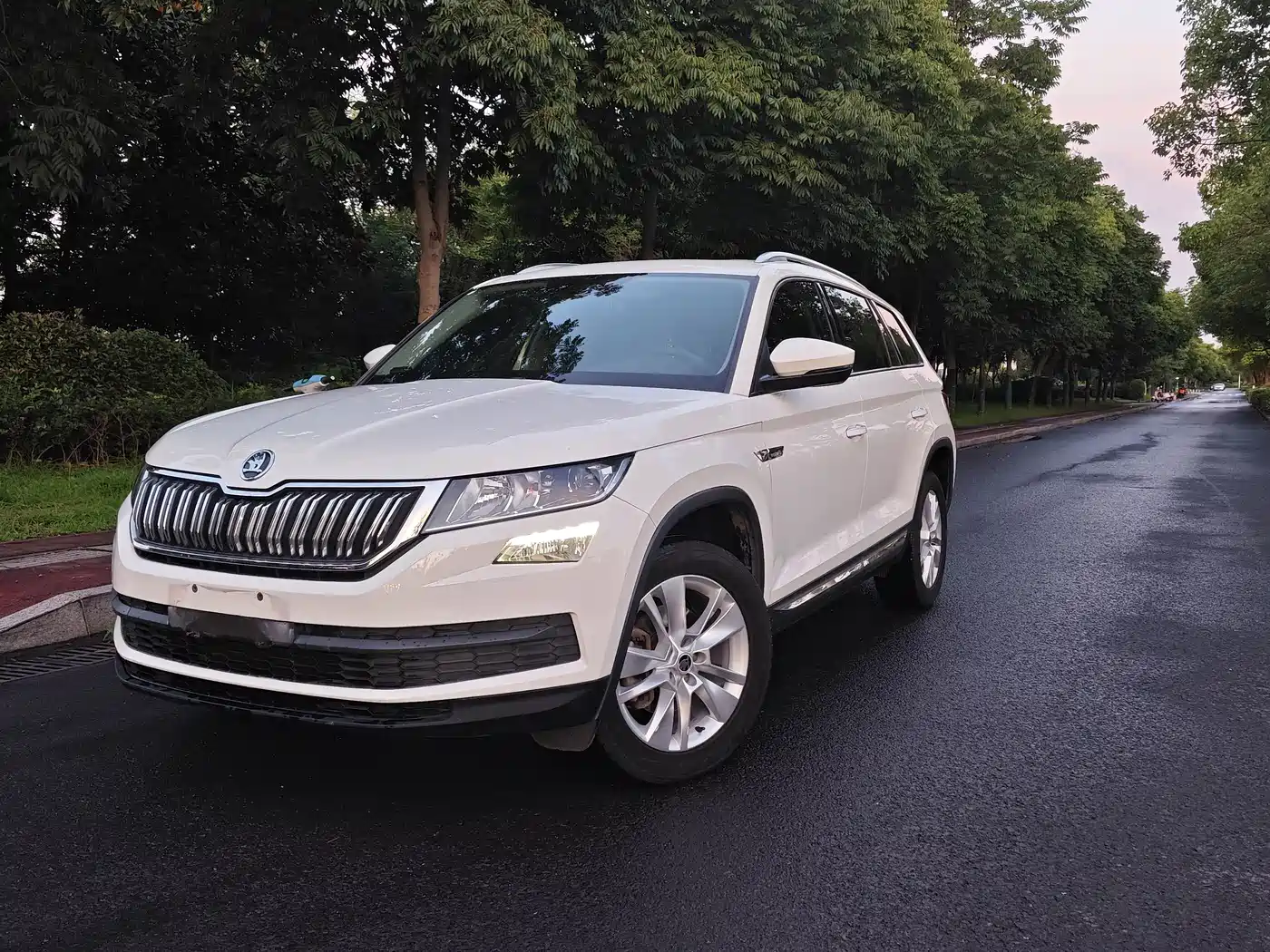
At a glance
- TSI330 and TSI380 petrol versions provide distinct power levels for economy-led and performance-oriented buyers.
- Two- and four-wheel-drive Kodiaqs can be matched to paved-road use, light-duty fleets, and all-weather traction expectations.
- Five- and seven-seat layouts serve families, passenger fleets, and dealers with different cargo or third-row needs.
- Trim labels include Standard, Comfort, Luxury, Premium, Flagship, and selected GT versions.
- Current per-unit prices, availability, and MOQ must be checked in the live listings before ordering.
Why the Škoda Kodiaq matters for export markets
The Kodiaq occupies a useful middle ground in the family-SUV market: it offers a substantial cabin and available seven-seat layouts without moving into the bulky territory of a full-size off-roader. For export buyers, that combination makes it attractive to importers serving family demand, airport-transfer operators, and dealer groups looking for a practical vehicle with recognizable European branding. Its TSI powertrains also fit markets where petrol fueling infrastructure is established. It is particularly relevant to buyers who want passenger-car comfort, flexible luggage capacity, and a model that can be ordered in different seating and drivetrain configurations without committing to a specialist off-road package.
Global demand is not driven by one isolated specification, so the export decision should begin with the destination customer rather than a prestige badge. Dealers can position the TSI330 as the lower-output, efficiency-focused entry point and the TSI380 as the stronger high-performance option, while two-wheel-drive versions suit paved-road buyers and four-wheel-drive versions address traction and all-weather expectations. The Kodiaq’s recognizable badge and established three-row formula can simplify market education. Neither label guarantees local suitability; however, taxes, service access, and approval remain decisive for every importing business and fleet operator alike.
Because the model is sold in China with multiple generations and market-specific equipment, export sourcing must separate durable mechanical attributes from version-specific presentation. TSI330 and TSI380 identifiers, two- or four-wheel drive, five- or seven-seat capacity, and the visible GT treatment are stable points for comparison. Trim names, option fit, emissions version, and equipment can vary, so dealers should verify the VIN and physical vehicle rather than infer them from an attractive listing title. For fleet buyers, this discipline prevents a nominally identical shipment from becoming an unexpectedly equipped or non-compliant order.
Model range, trims and powertrain variants: how the lineup is structured and how to choose
The lineup should be read as three linked decisions: engine output, seating, and drivetrain. TSI330 versions serve buyers who prioritize operating economy and straightforward road use; TSI380 versions add the stronger performance envelope for full loads, overtaking, or mountainous routes. Two-wheel drive is typically the simpler choice for urban and highway duty, while four-wheel drive is relevant where grip or poor-weather confidence matters. Exact transmission and output must always be confirmed for the specific listing. A trim package can change the equipment level without changing those core mechanical choices.
Seat count changes the vehicle’s role more than the trim badge suggests. A five-seat Kodiaq gives families and executive-transfer fleets a larger, more flexible luggage area, while the seven-seat model serves larger households, chauffeur operations, and dealer customers who specifically need a third row. The SUV roofline and two-box shape also make it easier to load bulky goods than a conventional saloon, although roof-rail and interior-geometry limits still apply. Buyers should test the third row rather than relying on the word “seven-seat,” because usable space and luggage capacity vary between luggage configurations and market versions.
Trim names provide a useful hierarchy, but not a substitute for an equipment sheet. The export range includes labels such as Standard, Comfort, Luxury, Premium, and Flagship, as well as GT versions on selected cars. Comfort-oriented cars may suit value-led fleet buyers; luxury-oriented cars generally add more cabin convenience and presentation, while flagship cars are aimed at buyers prioritizing equipment. Because China and destination-market equipment can differ, request a VIN-specific list before comparing apparent value. Photographs, option codes, and the original sales specification are the safest evidence for every purchase decision.
- TSI330: economy-led petrol choice
- TSI380: stronger performance tier
- Five seats: cargo flexibility
- Seven seats: third-row utility
New vs used Škoda Kodiaq: how export inventory is structured and how buyers choose
Export inventory should be read as a structured market rather than a single homogeneous product. Kodiaq cars may be described as pre-facelift, facelift, or GT, with TSI330 or TSI380 engines, two- or four-wheel drive, five or seven seats, and China V or China VI versions appearing in the naming structure. These labels help define the car, but the production date, VIN, condition field, odometer reading, and option list determine what a buyer is actually purchasing. Treating the title as a complete specification is a common source of export disputes. Confirm all of them in the live record.
New inventory can include cars made in different periods, so “new” should be interpreted as documented sale condition rather than proof that a vehicle was recently produced. Check the manufacturing date, invoice, warranty start, VIN, and whether any panel or component has been repaired or replaced. A genuinely unused car should be assessed for transport damage, 12-volt battery and fluid condition, and completeness; an aged new vehicle may instead carry stock-carrying, maintenance, or homologation implications. For fleet buyers, warranty transferability and PDI records can matter as much as cosmetic appearance at handover.
A used Kodiaq can make sense for a dealer seeking a lower acquisition commitment, a familiar model for local servicing, or a specific configuration that is harder to source new. The trade-off is condition uncertainty: compare mileage against service history, inspect structural repair, suspension and engine condition, and test the transmission, infotainment, lighting, air conditioning, and seat mechanisms. Ask whether the odometer is verified and whether the VIN appears in official vehicle records. Never infer mechanical condition from the model year or exterior alone before agreeing to the balance payment.
- Match VIN to trim and options
- Check production date and warranty
- Inspect service and repair history
How export pricing works: the factors behind a live listing price, and how to read one
A Kodiaq export quote is not a single universal number that can be copied from another vehicle. The starting vehicle price changes with production year, exact trim, TSI version, drivetrain, seating, condition, mileage, options, and market demand. Export-facing costs can then move with the renminbi exchange rate, freight route, marine insurance, terminal and handling charges, documentation, payment fees, and the selected Incoterm. Destination duties, taxes, registration, and compliance work may sit outside the supplier’s quote. Therefore, separate vehicle price from landed-cost calculation before comparing competing offers or approving payment internally.
When reading a live listing, first confirm what the quoted amount covers and whether the seller is quoting ex-works, FOB, CIF, or another delivery term. Then check whether the VIN and vehicle description match the trim, engine, seats, and condition. Review any photographed damage, the odometer, warranty statement, and inclusions such as documents, inspection, or domestic transport. Treat a low headline figure as incomplete until freight, insurance, taxes, and destination charges are placed on the same basis. Use the same cost template for every candidate before requesting a final quotation.
The most reliable comparison is like-for-like: compare the same year band, engine, drivetrain, seating, condition, and delivery scope across available Kodiaq listings. A cheaper five-seat car is not a direct substitute for a seven-seat Flagship, and a factory-new description does not erase repair history. Buyers should request a written quotation tied to the VIN, including the delivery term, validity period, payment schedule, and exclusions. Exact current vehicle prices are shown per unit in the live inventory. Any landed total should then be calculated in the destination currency and local charges where applicable.
- Compare like-for-like configurations
- Separate vehicle and freight costs
- Confirm quote scope and exclusions
MOQ, ordering and payment: single units vs consolidating a container
Minimum order quantity is a seller and listing condition, not a permanent property of the Kodiaq. Some export offers may accept a single vehicle, while others require a batch or limit a model, trim, color, or production run. Do not infer terms from the brand or model name: check the MOQ field on the selected listing and ask the supplier in writing whether mixed configurations count toward the same threshold. The deposit and balance conditions should be linked to the same agreed terms. This prevents a compliant-looking order from being rejected at booking.
A single-unit purchase is useful for testing demand, testing a dealer’s service capability, or securing a particular VIN without tying up the full value of a vehicle consignment. Its disadvantage is that freight, documentation, and fixed handling costs are spread across fewer units, so the landed economics can be less efficient. Before proceeding, ask whether the seller has a consolidation program, whether the vehicle can be combined with other orders, and how long the vehicle may remain in the origin warehouse. Record that storage period in the contract or sales agreement.
Container-scale wholesale buying can improve commercial efficiency through consolidated loading, shared freight arrangements, and stronger negotiation of production or purchase terms. It also concentrates risk: a damaged or non-compliant vehicle can affect the consignment, mixed trims complicate allocation, and a large balance may be due before the vehicles are released. Agree the vehicle mix, inspection standard, replacement remedy, payment milestones, and release evidence in advance. Where an importer needs specific homologation, build the required quantity into the order rather than assuming available stock will match the intended sales plan and launch date.
- Check MOQ on each listing
- Confirm mixed-model order rules
- Agree deposit and balance triggers
Shipping, homologation and market compliance caveats: LHD/RHD and import rules by country
China-built Kodiaqs are commonly offered with left-hand-drive configuration, while some importing businesses need right-hand-drive vehicles. A buyer must establish whether the car is factory RHD, locally converted RHD, or LHD before making a commitment. For RHD use, inspect steering-wheel position, instrument cluster, lighting, indicators, wipers, and dashboard equipment, and ask for conversion records. A steering-wheel swap alone is not evidence that the vehicle meets local type-approval or registration requirements. The VIN and approval documents must remain consistent throughout. Check whether the destination accepts converted examples under its rules without restriction.
Import compliance is determined by the destination country, not by the China V or China VI label alone. The importer may need a valid VIN, customs paperwork, proof of ownership, emissions evidence, safety conformity, roadworthiness inspection, insurance, and local registration. Depending on the market, duties, VAT or GST, excise, environmental charges, and modifications can affect both eligibility and cost. Work with a customs broker or local compliance specialist before paying the balance, and verify that the exact engine and emission version can be registered and insured commercially there too.
Transport method should match the vehicle and route. Finished Kodiaqs may move by roll-on/roll-off carrier or, where carrier and loading conditions allow, container; the choice affects cost, transit handling, and exposure to weather and handling damage. Freight depends on origin and destination ports, vessel or vehicle-carrier space, route disruption, terminal handling, insurance, and the delivery term. Photograph the car at handover, document existing marks, inspect on arrival, and use an agreed claims process rather than treating the bill of lading as proof of condition. Agree how pre-shipment and arrival inspections affect release of the balance payment.
- Verify destination type approval
- Confirm LHD or RHD configuration
- Document condition before transport
Who should buy the Kodiaq — and who should pick a different vehicle
The Kodiaq is a strong fit for family-oriented dealers, ride-hailing operators needing a roomy conventional car, airport transfer businesses, and fleet buyers who value seven-seat flexibility without moving to a van. The combination of SUV access, a conventional TSI powertrain, and multiple seat and drivetrain choices lets an importer match several price-conscious customer groups. It is particularly suitable where local customers prefer a petrol SUV, recognizable Škoda branding, and a model offered in configurations suited to both family and business use. For these buyers, parts planning and residual-value support should be arranged before launch.
It is less suitable for buyers whose priorities are very low operating cost, urban emissions compliance, or the cargo volume of a commercial panel van. Markets with an electrified-fleet mandate may also favor hybrid or battery-electric alternatives even if the Kodiaq is comfortable and familiar. Buyers wanting sports-car handling, minimal exterior dimensions, or genuine off-road capability should look elsewhere: the Kodiaq is a road-biased family SUV, and four-wheel drive does not turn it into a specialist utility vehicle. Assess those use cases before comparing trim prestige or imported-market availability carefully.
The decision also depends on the importer’s total-cost model rather than the vehicle badge alone. Check local taxation, insurance class, fuel availability, expected parts lead times, technician familiarity, and resale demand. A model with a seven-seat layout may open a larger family segment, while a five-seat car can be easier to stock for corporate use. If local homologation is doubtful or the destination has no viable service network, a more readily approved rival may reduce launch risk and total ownership friction. Pilot with a manageable order before scaling after market testing.
- Best for families and passenger fleets
- Choose TSI380 for greater performance
- Use AWD where traction justifies it
Main rivals and how the Kodiaq compares
The Volkswagen Tiguan Allspace is the closest conceptual rival because it also competes in the five- and seven-seat family-SUV segment and benefits from similar Volkswagen Group engineering familiarity. For an importer already supporting the group, parts, training, and residual-value planning may be easier, while market-specific engine choices can differ. The Kodiaq is often considered for strong cabin and packaging value; the deciding questions are local dealer coverage, equipment, and the exact quotation rather than badge preference. For fleet managers, compare boot volume, optional equipment, and aftersales terms before selecting either model.
The Hyundai Santa Fe is a credible family-SUV competitor with a similar focus on usable passenger space and, in some markets, hybrid or electrified alternatives. It may appeal to buyers prioritizing a different badge, established local support, or electrified powertrain options that the petrol Kodiaq does not offer. The Kodiaq’s case rests on its TSI range, available seating configurations, and export sourcing flexibility. Compare aftersales access, fuel-use expectations, safety equipment, and destination approval before deciding. Neither model is automatically cheaper after tax and freight or easier to approve locally in every market.
The Kia Sorento is another direct competitor, particularly where buyers compare a large family SUV with five- or seven-seat availability and a broad dealer network. Kia’s hybrid and combustion options can influence fleet economics, while the Kodiaq offers a distinctive alternative for dealers seeking Škoda demand and a simpler TSI-only export proposition. The best choice depends on landed cost, warranty support, parts access, and customer preference in the destination market. A direct specification review is more useful than a generic brand ranking. Test both against the actual buyer profile carefully.
Live Škoda Kodiaq export inventory
View all listings →Real units currently on ChinaCarDirect with per-unit asking prices and MOQ. Availability updates live from the catalogue.
Škoda Kodiaq 2018 Facelift TSI330 5-seat 2WD Premium Luxury Edition
How to buy a Škoda Kodiaq from China
-
1
Define the destination requirement
Confirm the destination market’s LHD or RHD requirement, type-approval route, tax position, and local service capability before selecting a vehicle.
-
2
Choose the configuration
Select TSI330 or TSI380, two- or four-wheel drive, and five or seven seats according to customer demand and operating conditions.
-
3
Shortlist live vehicles
Review current Kodiaq listings and verify the VIN, production date, condition, mileage, options, emissions designation, and stated equipment.
-
4
Request a written quotation
Ask for a VIN-linked quote showing the vehicle price, MOQ, delivery term, freight scope, documentation, payment schedule, and validity period.
-
5
Validate homologation and logistics
Have a customs broker or local compliance specialist confirm registration eligibility and calculate destination taxes, charges, and modification requirements.
-
6
Order and inspect
Complete the agreed deposit process, review ownership and invoice documents, and use a defined pre-shipment inspection before releasing the balance.
-
7
Ship and complete the import
Record vehicle condition at handover, arrange insured transport, complete customs clearance, and inspect the car against the agreed condition record on arrival.
Kodiaq vs rivals
| Volkswagen Tiguan Allspace | The closest Volkswagen Group alternative for five- and seven-seat buyers, with similar parts familiarity where supported. Choose the Allspace when local VW service coverage or its market-specific powertrain range is stronger; choose Kodiaq for its distinct Škoda positioning and available TSI and seating combinations. |
|---|---|
| Hyundai Santa Fe | A direct family-SUV competitor that may appeal where established Hyundai support or electrified variants are priorities. The Kodiaq suits buyers seeking petrol TSI choices and five- or seven-seat export configurations, but the final decision should follow local approval, equipment, and landed-cost checks. |
| Kia Sorento | The Sorento competes closely for family and fleet buyers seeking a large SUV with five- or seven-seat options. The Kodiaq is a differentiated choice for dealers serving Škoda demand and seeking a straightforward TSI range; compare warranty, parts access, fuel-use expectations, and resale support in the destination market. |
Frequently asked questions
How is Škoda Kodiaq export pricing determined?
The live price reflects the exact vehicle’s year, trim, TSI version, seating, drivetrain, condition, mileage, and options, with freight, insurance, exchange rates, and Incoterm potentially changing the landed total. Compare the scope of each quote, then check current per-unit prices in the live Kodiaq listings before requesting a VIN-linked quotation.
Which engine, drivetrain, and seating options are available?
The Kodiaq range is structured around TSI330 and TSI380 petrol versions, with 2WD/FWD or 4WD/AWD configurations and five- or seven-seat bodies depending on the trim. The exact transmission, output, emissions version, and equipment must be confirmed from the live listing and VIN rather than inferred from the model name.
What are the main new-versus-used Kodiaq trade-offs?
New-condition cars may carry warranty and pre-delivery inspection advantages, while used cars can suit a lower-commitment pilot or a specific configuration; either requires inspection of the VIN, mileage, service history, repairs, and completeness. Age alone should not determine the purchase.
How does MOQ work when ordering a Kodiaq?
MOQ is set by the seller and listing and may apply to a model, trim, color, or production batch, so check the selected record and obtain written confirmation for a single unit or mixed order. A dealer can request consolidation into a larger consignment, but the vehicle mix, payment milestones, and release conditions should be agreed before paying.
What determines Kodiaq shipping time and cost?
Origin and destination ports, available carrier space, route conditions, vehicle or container handling, marine insurance, terminal charges, documentation, and the selected Incoterm all affect freight. Build a buffer into launch plans and obtain an all-in delivered or clearly scoped shipment quotation rather than relying on transit time alone.
Can buyers source spare parts for an export Kodiaq?
Yes, but parts should be ordered by VIN, model generation, trim, and left- or right-hand-drive configuration; many components are not interchangeable across facelift, GT, and RHD-converted versions. Before launch, compare China-sourced lead times and cost with a local Škoda dealer or distributor to avoid carrying excessive slow-moving stock.
Is a right-hand-drive Škoda Kodiaq available for export?
RHD availability depends on the particular vehicle and seller, and a factory RHD car is not the same as an LHD car with the steering wheel changed. Confirm the original build specification, conversion records, lighting and instrument compatibility, and whether the destination will accept and register that configuration before ordering.
How do I order a Škoda Kodiaq from China?
Start with the live Kodiaq inventory, select a configuration that meets the destination requirement, and request an RFQ tied to the listing or VIN. The supplier should confirm price scope, MOQ, payment milestones, document list, inspection, shipping term, and delivery plan before the balance is paid.
Ready to source the Škoda Kodiaq?
Send a Kodiaq RFQ with your destination, seating, and drivetrain needs to request a VIN-linked quote against current live inventory.
Request a quote