
Škoda Octavia Export Buying Guide for Overseas Buyers
Buy a Škoda Octavia from China with confidence: compare trims, understand export pricing, ordering, shipping, homologation and leading segment rivals.
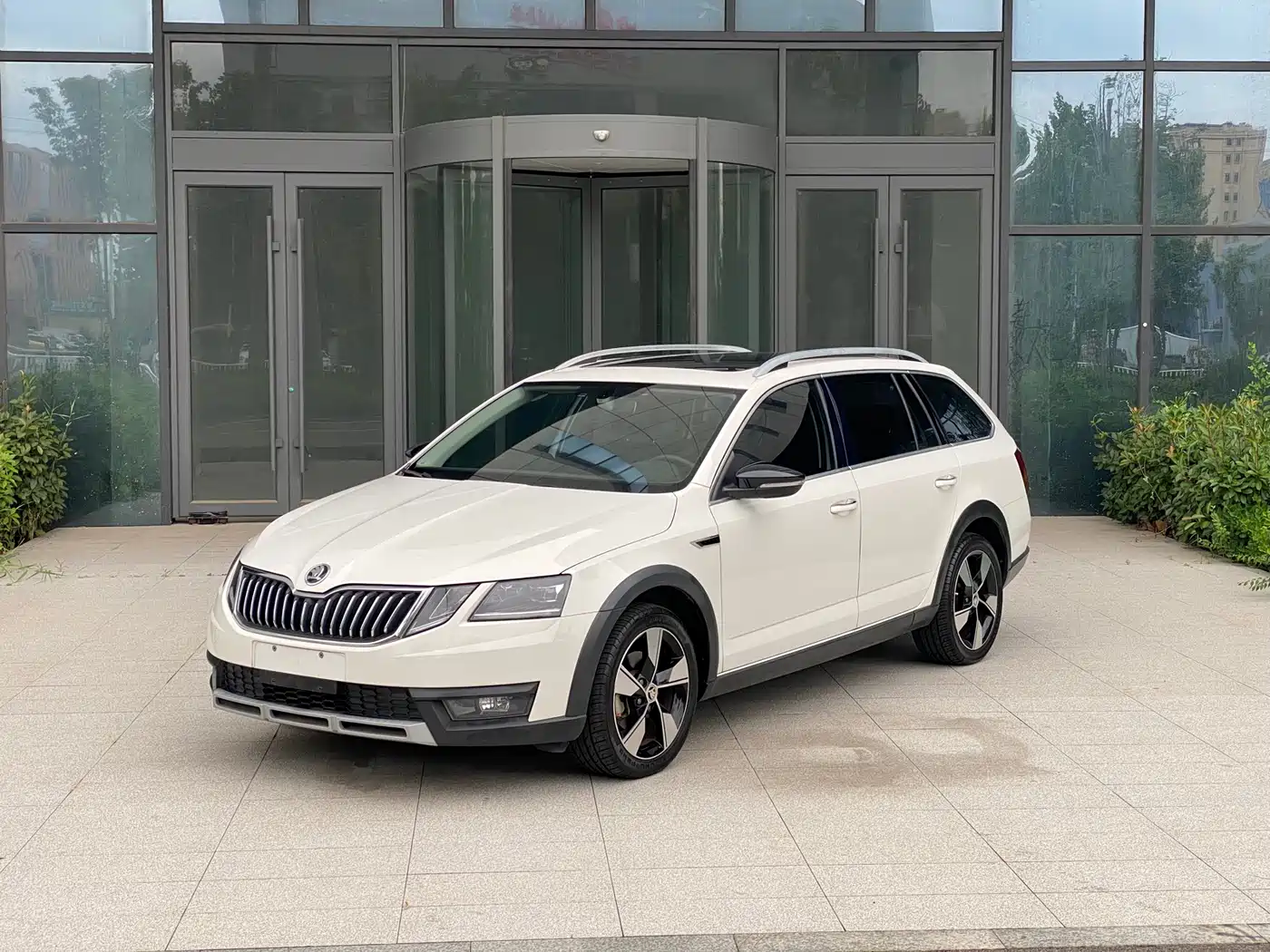
At a glance
- The Octavia pairs compact-car efficiency with practical estate-style passenger and cargo space.
- TSI230 and TSI280 petrol versions allow a deliberate economy-versus-performance choice.
- DSG, Comfort, Luxury and Flagship naming should be matched to the exact vehicle’s option list.
- New cars favour fleet consistency, while used cars demand stronger condition and history checks.
- Live listings carry the current per-unit terms; landed pricing must also include freight, compliance and local charges.
Why the Škoda Octavia matters for export markets
The Škoda Octavia occupies a practical middle ground in the compact family-car segment: it combines a low-cost, fuel-efficient powertrain with more usable passenger and luggage space than a typical small hatchback. That balance makes it relevant to overseas dealers serving commuters, company-car fleets and family buyers who need a car that remains comfortable on longer journeys. For buyers sourcing a Škoda Octavia for export, the attraction is not novelty or luxury branding, but the possibility of importing a well-understood model at a sensible total cost while retaining familiar service categories and a broad choice of practical trim levels.
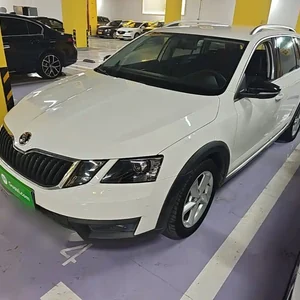
Demand for the Octavia is strongest where buyers value space efficiency more than sporty styling. The liftback and estate versions suit different missions: the liftback is easier to place in dense cities, while the wagon’s extended roofline and tailgate suit luggage, trade equipment and family travel. The China-linked export examples use wagon nomenclature, so an importer should treat body style as a key specification to confirm rather than assume that every Octavia offered under the model name has identical packaging. This also affects loading access and the fit of accessories designed for a specific body.
For export planning, global familiarity is useful but secondary to legal and commercial checks. Dealers should confirm the engine, transmission, emissions version, steering position, equipment and document package for each vehicle. The model’s established identity can help with parts identification and customer confidence, yet it does not remove destination-country type approval, customs, taxation or warranty obligations. A disciplined purchase starts by matching the exact Chinese-market specification to the market in which it will be registered. This is particularly important where used examples may have been registered or maintained under different local rules.
- Prioritise usable space and running cost over badge appeal.
- Confirm the required body style before comparing wagons and liftbacks.
- Treat Chinese emissions labels as origin-market information only.
Model range, trims and powertrain variants: how the lineup is structured and how to choose
The relevant Octavia range is not one uniform specification. Škoda has sold the model in liftback and estate forms, and the export naming seen here repeatedly identifies the car as a Wagon. Buyers should therefore start by separating body style from trim, engine and emissions version. The TSI230 and TSI280 designations form the core choice in this market, while Comfort, Luxury and Flagship names describe equipment tiers. A listing title alone may compress several of those variables, so the seller’s full specification is essential. Confirm every option before treating equivalent-looking trims as interchangeable.
The TSI230 and TSI280 options should be treated as different performance and operating-cost propositions rather than cosmetic badges. The lower-numbered TSI230 is the logical choice when fuel economy, purchase outlay and routine fleet use dominate; the TSI280 is the higher-output option when stronger performance justifies the additional consumption. Exact output, torque, emissions and tax treatment can differ by market and production specification, so request the confirmed figures instead of relying on the numeric engine label. Use manufacturer documentation to confirm whether either version meets local towing or load requirements. For fleets, compare confirmed output and expected fuel use on the intended routes.
DSG is the common transmission designation in the China-linked Octavia examples, making drivetrain familiarisation easier for workshops accustomed to automated gearboxes. Trim choice then determines which comfort, convenience and technology equipment is present, while China V or China VI wording identifies the origin-market emissions version. Neither designation guarantees admission elsewhere. Buyers should compare the actual option list, verify that equipment works, and decide whether the higher trim’s additional cost creates enough resale or customer value for their market. A lower trim may standardise a fleet, while a high specification may improve retail appeal without guaranteeing stronger residuals.
- Match TSI230 to economy-led fleet use and TSI280 to stronger performance needs.
- Treat Comfort, Luxury and Flagship as equipment tiers, not engine guarantees.
- Verify DSG, emissions version and option list on the specific vehicle.
New vs used Škoda Octavia: how export inventory is structured and how buyers choose
New and used Octavia export inventory should be evaluated as two different procurement channels. New examples are typically described by model year, trim, engine and factory condition, which can simplify fleet standardisation and reduce uncertainty about wear. Used examples require a closer condition assessment because mileage alone does not reveal accident repair, paintwork, suspension wear, fluid history or the completeness of the original equipment. Always use the live listing’s condition and documentation fields rather than assuming how a year or trim title describes its history. This matters when ownership, climate or repair histories differ.
A new vehicle normally offers the cleanest basis for a predictable fleet specification, but it does not automatically provide the lowest landed cost. Dealer fees, transport, taxation and option content can outweigh an attractive listing price. A used Škoda Octavia can reduce acquisition cost and may suit buyers with a firm replacement budget, yet it transfers more uncertainty about durability, maintenance and future residual value. The correct choice depends on the buyer’s tolerance for downtime and whether vehicles will be sold, leased or placed in high-intensity service. For commercial use, require service evidence and independent inspection.
Availability should be read at vehicle level, not inferred from a model filter. Exporters change stock continually, and a listing may represent a single physical vehicle with its own condition, documents and commercial terms. Dealers buying repeatedly should compare live options without assuming that similar titles are interchangeable, then set a written acceptance checklist covering identity, odometer disclosure, exterior and interior condition, mechanical checks, equipment and export paperwork. That process makes the final choice auditable and reduces the risk of ordering the wrong configuration. For used cars, request dated photographs, identification records and declared damage history.
- Use condition, mileage and repair history as separate inspection criteria.
- Match vehicle condition to downtime tolerance and fleet use.
- Confirm current availability and terms in each live listing.
How export pricing works: the factors behind a live listing price, and how to read one
Export pricing is the result of several interacting variables rather than one fixed Octavia rate. Model year, trim, TSI engine choice, gearbox, mileage, condition, equipment and China V or China VI version can alter the vehicle-level asking price. Exchange-rate movements, inland transport, export handling, documentation, ocean freight, insurance and the selected Incoterm also affect what the buyer ultimately pays. A responsible comparison separates the seller’s vehicle price from charges that belong to freight, customs, tax, registration and local delivery. Basing a decision on the headline number alone can therefore create a misleading comparison.
Read each live listing as a set of commercial terms attached to a specific vehicle. Confirm whether the displayed amount is an FOB, CIF, EXW or another basis, because the point at which risk and cost transfer affects the buyer’s obligations. Check whether the seller includes export clearance, inland haulage, port charges, freight, insurance and documentation. Then build a destination comparison that adds only the costs applicable to the selected Incoterm, leaving taxes and registration to the importer’s local adviser where necessary. Also confirm quote validity, payment deadlines and allocation of a sold unit.
The most reliable way to compare Chinese-market Octavia offers is to normalise the quotations. Place every vehicle on the same Incoterm and destination port, confirm the engine, trim, condition and included documents, then ask for the freight and handling components separately. Treat currency conversion as an input to be refreshed when the quote is accepted, not as a permanent assumption. ChinaCarDirect’s live Octavia inventory is the authoritative place to see the current per-vehicle terms; request a written quotation before committing funds or budgeting freight, duty, taxes and a final landed cost.
- Compare quotations on the same Incoterm and destination.
- Separate vehicle price from freight, duty, tax and local charges.
- Use live listings for current per-unit terms.
MOQ, ordering and payment: single units vs consolidating a container
Minimum order quantity is a seller and listing term, not a universal property of the Octavia model. Some export sellers may take one vehicle, while others require several units or a full vehicle consignment, depending on the vehicle’s location, preparation and shipping plan. Buyers should read the MOQ field in each live listing and have it repeated on the proforma invoice. A single-unit purchase offers flexibility but may carry less favourable freight economics; a consolidated consignment can improve logistics but reduces the ability to tailor every vehicle to a specific customer requirement.
A Škoda Octavia wholesale order should move from selection to written terms, deposit, balance, inspection, release and shipment. The proforma invoice should identify each vehicle by listing reference or chassis number and state the specification, price basis, Incoterm, payment schedule, documentation, inspection requirement and cancellation condition. Payment methods and timing vary by seller and destination, so use only the arrangement stated in the verified quotation and invoice. Buyers should understand who owns the vehicle at each stage, when title passes and what evidence is retained if a dispute arises. For larger orders, inspect independently before final payment.
Container consolidation is primarily a logistics decision, not simply a way to obtain a lower unit price. Combining compatible vehicles can spread fixed charges such as origin handling, documentation and freight across more units, but it also creates shared scheduling and allocation risk. Confirm that every car has the required inspection, protection and export clearance before loading. Agree how damage found after loading will be documented and claimed, and keep the shipping plan separate from vehicle selection so that urgent retail demand does not force an unsuitable purchase into a consolidated shipment.
- Treat MOQ as a vehicle-specific commercial term.
- Put specification, Incoterm and payment milestones in writing.
- Inspect before release and document damage after loading.
Shipping, homologation and market compliance caveats: LHD/RHD and import rules by country
Steering configuration is one of the first checks for any imported vehicle. A left-hand-drive car is straightforward only for a destination that accepts that layout; right-hand-drive markets may require a specific factory version or create conversion, safety, insurance and registration complications. Do not assume every Chinese-market Octavia has the same hand, because the steering position must be confirmed in the listing and invoice. If a right-hand-drive requirement cannot be met, changing the steering assembly is usually inferior to sourcing the correct factory configuration. Confirm that local workshops can service the exact vehicle without modification.
Import eligibility is determined by the destination country, not by the vehicle’s China V or China VI label. A buyer may need local type approval, emissions compliance, safety and roadworthiness checks, customs documentation, age restrictions, tariff classification and evidence of lawful origin. Taxes and duties can also depend on displacement, engine type, vehicle category and the importer’s status. These rules can change, so use a customs broker or local compliance specialist and obtain written confirmation for the exact configuration before releasing funds or shipping. A roadworthy Chinese vehicle may still need local certification elsewhere.
Treat shipping and compliance as one coordinated workstream. Agree the Incoterm, named place, loading and discharge ports, carrier, booking party, insurance, inspection point and documentation deadline before the vehicle moves. Confirm the certificate of conformity, ownership or customs documents, invoice, packing list and vehicle identification records are consistent. Photograph the car at handover and again after transport, and record any discrepancy through the agreed inspection and claims process. This protects the importer from discovering an administrative mismatch only after the container has arrived. Used vehicles may face stricter age and condition import rules.
- Confirm factory steering configuration before ordering.
- Validate homologation and customs rules for the destination.
- Align inspection, documents, insurance and shipping deadlines.
Who should buy the Octavia — and who should pick a different vehicle
The Octavia is a strong candidate for importers and dealers that prioritise usable space, conventional controls and manageable operating costs. It suits family-car dealers, company fleets, ride-hailing operations where luggage is routinely carried, and buyers seeking a more practical alternative to a small hatchback. The wagon format can make high-value equipment easier to transport while retaining a car that is easier to road and service than a large premium estate. The strongest business case is usually built around volume, consistent specification and straightforward resale. Also check whether local tax bands favour this class.
It is less suitable for buyers whose priority is battery-only operation, ultra-low running costs, compact city dimensions or a high-status badge. An EV or plug-in hybrid may make more sense where charging infrastructure is reliable and local incentives favour electrification. A premium executive estate may be better for chauffeured, executive or high-comfort requirements, while a pickup or van may serve commercial users whose payload needs exceed passenger-car capacity. Those alternatives should be compared on total operating cost rather than purchase price alone. Performance buyers should verify that the TSI meets local expectations.
The right Octavia decision should be made against a clear operating brief: body style, engine output, trim equipment, expected annual distance, service network, import rules and the buyer’s acceptable downtime risk. For fleets, standardising one engine and trim can simplify training, parts and resale; for retail buyers, equipment and condition may matter more. Compare several alternatives on the same basis, including fuel, maintenance, insurance, freight, homologation and expected holding costs. Only then does a listing’s commercial terms become meaningful rather than merely promotional. A test drive and independent inspection help compare unfamiliar export trims.
- Best for family, fleet and luggage-carrying buyers.
- Less suitable for EV-only, premium-badge or compact-city priorities.
- Compare total operating and compliance costs across alternatives.
Main rivals and how the Octavia compares
The closest alternatives depend on the destination, but three real segment rivals are the Volkswagen Golf Variant, Hyundai i30 Wagon and Kia Ceed SW. All offer the familiar estate-car format, yet their relative strengths differ. The Golf is closely related to the Octavia and appeals to buyers familiar with the Volkswagen Group, while the i30 and Ceed compete on mainstream value, equipment and efficiency. Model-year availability and local homologation can change the competitive set, so compare the versions that can actually be registered and supported locally. Use the same body, engine and market assumptions for comparison.
Relative to the Golf Variant, the Octavia generally offers a more spacious and practical estate package, which can reduce the appeal of an even smaller premium-badged alternative. The Hyundai i30 Wagon often presents a strong value-oriented alternative with a modern mainstream image, but buyers should compare exact equipment, warranty and service arrangements. The Kia Ceed SW similarly competes on usability and efficiency, yet powertrain availability differs by country. In each case, the deciding evidence should be the destination-specific specification, not a generic model badge. Local brand familiarity and parts support can influence resale as much as acquisition cost.
Choose the Octavia when its combination of space, petrol efficiency, a common DSG gearbox and established service knowledge provides a better business fit than the alternatives. Choose the Golf Variant for a more compact, strongly badge-led premium approach; evaluate the i30 Wagon when value and local brand equity are priorities; and consider the Ceed SW when its market-specific powertrain and equipment package are better aligned. Before ordering, obtain comparable quotations, verify servicing arrangements and factor in resale provisions. The best rival is the one that meets the importer’s compliance and total-cost requirements more closely.
- Golf Variant: smaller, premium-badge alternative.
- i30 Wagon: value-oriented mainstream alternative.
- Ceed SW: practical rival with market-dependent powertrains.
Live Škoda Octavia export inventory
View all listings →Real units currently on ChinaCarDirect with per-unit asking prices and MOQ. Availability updates live from the catalogue.
How to buy a Škoda Octavia from China
-
1
Define the destination and compliance route
Identify the destination country, required steering configuration, import category, applicable tax treatment and expected annual mileage. This determines which vehicles can be registered without uneconomic modification.
-
2
Compare Škoda Octavia specs and options
Choose the required body style, TSI230 or TSI280 version, DSG specification and equipment tier. Obtain the complete option and emissions list rather than relying only on the listing title.
-
3
Review and shortlist live vehicles
Use the live Octavia inventory to compare the vehicles currently available. The current price, MOQ and availability are shown per unit, so check the particular listing rather than relying on a model-level summary.
-
4
Verify the vehicle and document package
Request identification records, dated photographs, equipment confirmation, service history where relevant and the proposed export documents. For used vehicles, investigate accident repair, paint, mileage and wear independently.
-
5
Normalise the written quotation
Compare vehicles under the same Incoterm and destination, separating the vehicle price from freight, insurance, customs, tax and local delivery. Confirm how long the quotation remains valid and when payment is due.
-
6
Place the order and control payment
Review the proforma invoice, MOQ, allocation, ownership transfer, inspection condition and payment milestones before paying. Ensure the selected vehicle remains identified by its listing reference and chassis number.
-
7
Inspect, release and ship
Arrange pre-loading and pre-release inspection, photograph the vehicle and confirm insurance and cargo documents. Track loading, shipment and arrival, and record any condition discrepancy through the agreed claims process.
Octavia vs rivals
| Volkswagen Golf Variant | The Golf Variant is a smaller, closely related estate with stronger premium-badge appeal. The Octavia generally prioritises more passenger and cargo practicality, making it the better fit for buyers seeking space efficiency without moving to a full-size estate. |
|---|---|
| Hyundai i30 Wagon | The i30 Wagon is a mainstream alternative often considered for value, equipment and efficiency. The Octavia may offer a more established European estate identity and a larger practical package, but buyers should compare local warranty, servicing and exact powertrain options. |
| Kia Ceed SW | The Ceed SW competes directly for buyers seeking a practical estate with modern mainstream features. Engine and hybrid availability vary by country, so the strongest choice depends on destination-specific homologation, equipment and total ownership costs. |
Frequently asked questions
How is Škoda Octavia export pricing determined?
Export price is set at vehicle level and changes with model year, trim, TSI version, mileage or condition, equipment, emissions specification, currency movements, freight, insurance and Incoterm. Compare like-for-like units on the same terms, then ask for freight and local charges separately. The current exact figure and MOQ for each vehicle are shown in its live ChinaCarDirect listing and should be confirmed in a written quotation.
Which Škoda Octavia engine and transmission options are available?
The China-linked Octavia range includes TSI230 and TSI280 gasoline versions paired with DSG, together with China V and China VI naming. Those labels distinguish powertrain and origin-market emissions versions but do not provide every destination-specific output or approval. Confirm exact power, torque, fuel consumption, gearbox and compliance on the selected unit.
Is a new or used Škoda Octavia better for export?
New cars are usually easier to standardise and assess for wear; used cars can suit a fixed replacement budget but carry more condition and history risk. Compare service records, mileage, accident repair, paint, equipment and downtime tolerance rather than choosing from model year alone. Current new and used availability is shown per vehicle in the live listings.
What is MOQ, and can I order one Škoda Octavia?
MOQ is set by the seller and listing, not fixed for the model. Some offers may be available as a single vehicle, while others may require a lot or container consignment. Read the MOQ on the live listing and have the quantity and unit allocation written into the proforma invoice before payment.
What affects shipping time and cost for an Octavia export?
Transit time and freight cost depend on origin and destination ports, carrier and vessel schedule, container availability, season, vehicle preparation, documentation and insurance. Compliance inspections and last-mile delivery can also change the total. Ask for a port-to-port or door-to-door quotation under a named Incoterm and valid period.
Can I order spare parts for an exported Octavia?
Spare parts are ordered by exact vehicle code, engine, trim, build period and sometimes steering side; a model name alone is not enough. The Octavia’s established family makes many parts identifiable, but China-market equipment can differ from other markets. Confirm references with the seller and check local dealer or independent workshop support before importing.
Is right-hand-drive Škoda Octavia availability guaranteed?
Right-hand-drive availability depends on the specific factory variant and live inventory, not the Škoda model name. Confirm steering position in the listing, quotation and vehicle photos, and ensure it matches destination registration rules. Converting a left-hand-drive vehicle may affect safety, insurance, registration and parts, so use the correct factory configuration where possible.
How do I order a Škoda Octavia from China?
Start on the live Octavia listings, shortlist the body, engine and trim, then send an RFQ with the destination, Incoterm, quantity and compliance questions. Review the proforma invoice, document package, payment milestones, inspection terms and shipping plan before paying. The vehicle should remain identifiable by listing reference and chassis number through inspection, release and shipment.
Ready to source the Škoda Octavia?
Request a written Octavia quotation and confirm the exact vehicle, Incoterm, documentation and compliance path through the ChinaCarDirect RFQ team.
Request a quote