
Tank 500 Ev Export Buying Guide for Dealers and Fleets
Compare Tank 500 Ev trims, powertrains, export pricing, ordering and shipping to source a large luxury SUV from China with confidence and clarity.
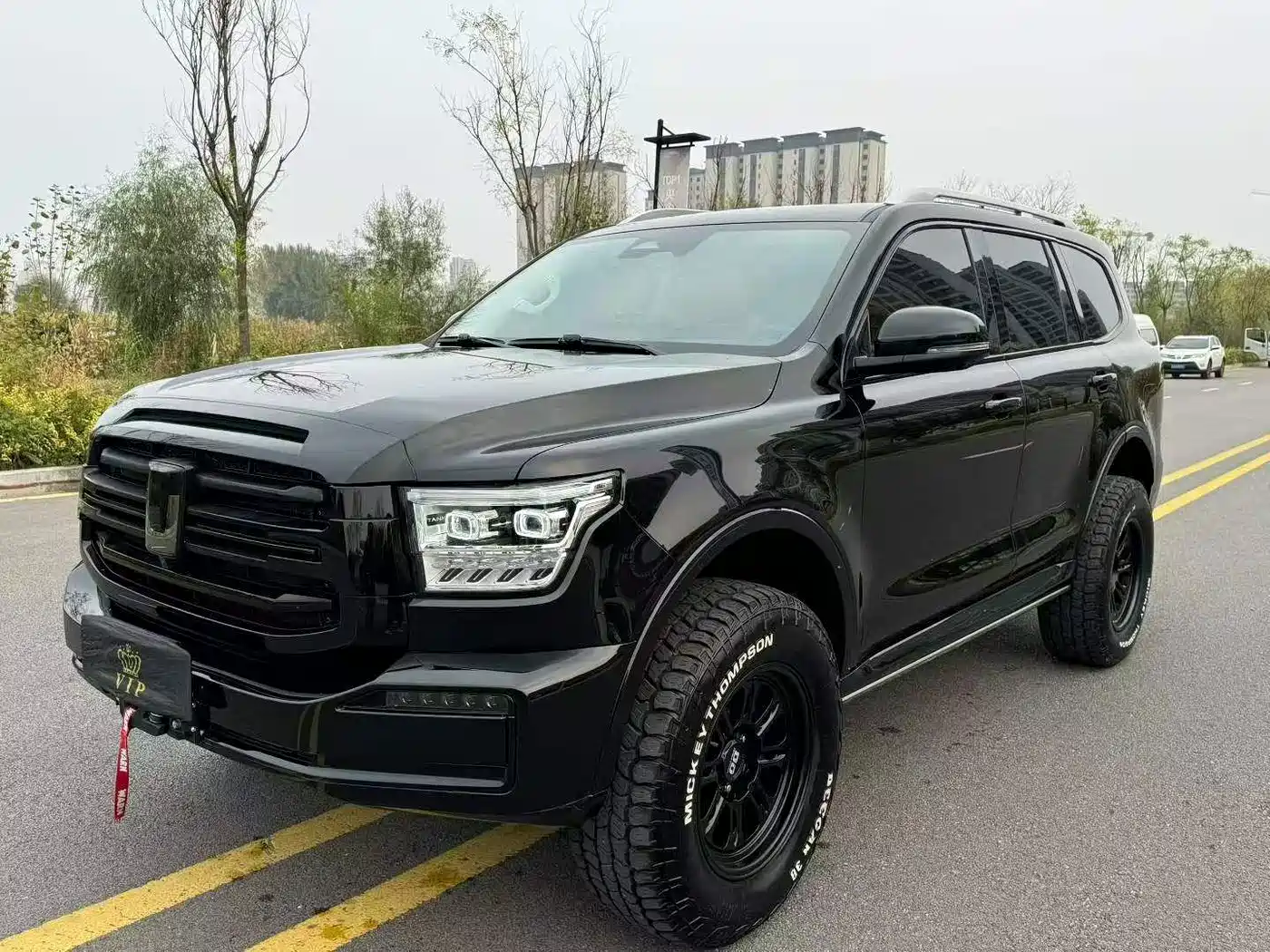
At a glance
- The Tank 500 Ev spans distinct energy types: the Hi4-T plug-in hybrid and the Hi4-Z battery-electric version.
- Its full-size luxury-SUV format suits flagship dealer programmes rather than price-led volume importing.
- Hi4-T supports mixed-distance operation, while Hi4-Z depends on reliable charging and disciplined route planning.
- Review the current price, MOQ, availability, condition and exact trim shown for each live ChinaCarDirect unit.
- Landed cost, homologation, steering configuration and parts support can determine suitability more than the vehicle quote.
Why the Tank 500 Ev matters for export markets
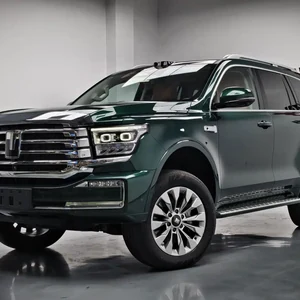
The Tank 500 Ev occupies the upper end of the Chinese export SUV market: it combines a full-size, rugged-looking body with premium interior positioning and electrified drivetrain options. For global importers, that matters because the model can serve as a flagship rather than a volume entry product. It appeals to buyers who want visual presence, space and high equipment content while reducing dependence on conventional fuel through the Hi4-T plug-in hybrid or the fully electric Hi4-Z. That combination creates interest among importers building electrified premium ranges and fleet operators seeking a commanding passenger vehicle.
Demand should not be confused with universal marketability. A vehicle this large can face high freight, insurance, parking and registration costs, while some countries impose taxes based on engine size, battery value, emissions or vehicle classification. The Hi4-T can suit destinations with incomplete charging networks but still has a combustion engine, whereas the Hi4-Z is more credible where electricity is reliable, fleet charging is controlled and EV incentives support premium purchases. Dealers should therefore build a business case around local operating conditions instead of assuming export-market demand will transfer unchanged between markets.
Export buyers should also separate brand appeal from logistics readiness. Strong styling and a premium cabin can help a dealer justify showroom positioning, but every unit must be matched to the destination’s road environment, charging pattern and homologation route. Inspect the exact vehicle rather than relying on a family-level description, especially because “Ev” covers materially different powertrains. The Tank brand hub can help identify the correct starting point for a shortlist. A useful first step is to compare route needs, available charging and local rules before requesting a binding landed-cost quotation.
- Hi4-T serves mixed-distance routes.
- Hi4-Z suits dependable charging routes.
- Positioning suits flagship importers.
- Freight and rules constrain demand.
Model range, trims and powertrain variants: how the lineup is structured and how to choose
The Tank 500 Ev line-up must first be decoded by energy source. Hi4-T denotes the plug-in-hybrid family: a petrol engine, electric motor and rechargeable battery work together, with the vehicle able to operate electrically for a limited distance. Hi4-Z denotes the battery-electric version, where traction comes entirely from electric motors and there is no combustion engine. Labels such as Smart Edition describe a trim or equipment position, not a substitute for checking the powertrain. For procurement, treat each name on the vehicle plate and listing as a separate configuration to verify.
For Hi4-T buyers, the practical advantage is operational flexibility rather than a simple EV-versus-petrol argument. Electric-only driving can suit fixed routes with dependable charging, while the engine supports longer-distance use where charging gaps remain. That makes the hybrid relevant to regional distributors, executive fleets and mixed urban/intercity duty cycles. However, total range is not the same as electric range: ask for the battery capacity, certified electric-only range, combined range and charging protocol in the exact destination specification. Do not transfer a China-certified figure to another test cycle or assume every market uses the same connector.
Hi4-Z buyers are choosing a fully electric operating model and should evaluate charging as part of the vehicle purchase, not as an accessory added later. Depot charging, route duration, climate, load and realistic driver behavior all affect the usable range. A high-voltage fast-charging architecture can improve turnaround between shifts, but the destination connector, charger power and software compatibility must be verified. For trim selection, compare equipment, seating and comfort against the same Hi4-Z listing rather than comparing it with Hi4-T on range figures. They should also confirm local access to trained service support.
- Confirm Hi4-T versus Hi4-Z first.
- Request battery and charging details.
- Smart Edition is a trim label.
- Match powertrain to operating routes.
New vs used Tank 500 Ev: how export inventory is structured and how buyers choose
Export inventory is structured around model year, trim, powertrain and condition. New vehicles provide a known configuration and avoid uncertainty from prior commercial or private use; used examples can offer a different acquisition profile, particularly when an importer accepts an earlier production vehicle. The marketplace does not make one option automatically cheaper or better. Buyers should read the condition, odometer, ownership history and equipment fields on each live listing rather than infer them from the model name or model year. For an electric or plug-in hybrid, battery evidence becomes part of that condition review.
A new Tank 500 Ev is generally the cleaner choice for a dealer that needs predictable specification, current software and a straightforward warranty claim. Fleet buyers may prefer it for the same reason: every vehicle delivered to the same branch should have the same trim, charging equipment and condition standard. Before ordering, verify production date, mileage reading, tire condition, paint and panel status, VIN matching and which manufacturer warranty applies in the destination country. “New” does not remove the need for pre-delivery inspection. It also avoids interpreting wear from high utilization.
A used Tank 500 Ev can suit a buyer with a lower acquisition budget or a requirement for a specific earlier configuration, but the discount or price premium should be evaluated against measurable condition risk. For Hi4-Z, request battery state-of-health evidence, charge-cycle information, diagnostic reports and confirmation that high-voltage software is current. For Hi4-T, also examine engine hours, hybrid-system faults, service records and battery condition. Independently inspect accident repair, underside condition and charging faults before accepting the vehicle. Title documents, import history and the seller’s right to export must also be verified.
- New units reduce configuration uncertainty.
- Used BEVs require battery-health evidence.
- Used hybrids require system checks.
How export pricing works: the factors behind a live listing price, and how to read one
A Tank 500 Ev export price is a negotiated output, not a fixed market price. The live amount can move with model year, Hi4-T versus Hi4-Z, trim and equipment, production date, condition, mileage, paint choice and currency exchange. Logistics then alter the landed result through vehicle freight, marine insurance, port handling, inland transport, documentation and destination charges. Because Incoterms decide which party carries each cost, compare only quotations that use the same delivery term and destination. A quoted vehicle amount may exclude several of those costs entirely. Confirm inclusions in writing.
Read a live listing as a specification, not just a headline number. Confirm the year, exact trim, energy type, battery or range version, transmission, steering position, mileage, condition and listed options. Then ask whether the displayed price is FOB, CIF, EXW, DDP or another basis, and whether the seller or buyer arranges export documentation, insurance and transport. Check that all photos, the VIN and the written quote describe the same unit. Exact current prices and unit-level terms on ChinaCarDirect should always be confirmed in live inventory. An RFQ should restate every term clearly.
Use quotes to make like-for-like comparisons, not to chase the smallest visible amount. Compare the same destination, Incoterm, production year, trim and condition, then add known freight, duty, tax and registration costs on the buyer’s side. An older Hi4-T and a newer Hi4-Z are not equivalent products, and a lower equipment specification can offset a lower vehicle quote. Ask for quote validity, payment milestones, inspection rights, cancellation terms and the party responsible for charges if the vehicle fails agreed inspection. That comparison clearly reveals the true cost of each configuration before shipment.
- Compare identical years, trims and conditions.
- Separate vehicle price from landed cost.
- Confirm freight, insurance and Incoterm.
MOQ, ordering and payment: single units vs consolidating a container
Minimum order quantity is a transaction term, not a fixed characteristic of the Tank 500 Ev. A live seller may accept one vehicle for a trial or dealer stock, while a factory, wholesale programme or container consolidation can impose different terms. Confirm the MOQ shown against the specific listing and include it in the pro forma invoice and sales contract. Buyers should not infer a blanket quantity from one unit’s availability, and sellers should not imply a mixed fleet without written confirmation. Clarify whether units may be split by trim for that order.
Consolidating several vehicles can improve shipment planning, but it adds coordination work. Confirm that all units meet the same destination-market specification, that each VIN and invoice is traceable, and that one inspection standard covers the group. Check whether the supplier, consolidator or freight forwarder controls booking, lashing, insurance and customs declarations. Batteries for BEV and PHEV vehicles may require additional dangerous-goods documentation, so a consolidator should confirm compliance rather than assume the vehicle can travel as ordinary cargo. Charging equipment, keys and loose accessories should also be inventoried before loading in the manifest.
A sound export order follows a controlled sequence: specification, quotation, contract, inspection, payment, documents and dispatch. The pro forma invoice should identify the unit, trim, options, Incoterm, total price, deposit, balance trigger, production or dispatch deadline, inspection standard and refund conditions. Use a traceable payment channel and the seller’s verified business details; avoid payment instructions sent only through an unsolicited message. The release of the balance should correspond to documented inspection and shipment readiness, not merely to a verbal assurance. Keep every amendment and inspection record together with the signed contract.
- Confirm listing-specific MOQ in writing.
- Consolidate only compatible documented units.
- Link final payment to inspection.
Shipping, homologation and market compliance caveats: LHD/RHD and import rules by country
Large SUVs create a specific freight profile. Depending on the origin, destination and carrier, vehicles may travel on roll-on/roll-off vessels or with a specialist vehicle-carrier service. Transit time and cost depend on sailing availability, port congestion, handling, route, season, insurance and destination delivery—not simply distance. Obtain a written freight quotation and confirm whether it covers origin terminal charges, loading, ocean freight, destination charges and inland delivery. Battery-equipped vehicles also require the relevant dangerous-goods and battery documentation for the selected route. The qualified forwarder should verify all of this in advance.
Steering configuration is a critical order check. Vehicles prepared for the Chinese market are commonly left-hand drive, but the destination may require right-hand drive or may accept both only after local review. Do not assume a steering conversion is available or harmless: pedals, lighting, wipers, safety systems, charging access, spare tools and software can all be affected. Ask for the VIN-specific steering position and destination conformity, and obtain evidence of any conversion, its parts, workmanship and warranty treatment before placing a firm order. Availability can also differ substantially by trim and source.
Import and road use are governed by the destination, so homologation cannot be reduced to a shipping document. Depending on the country, the importer may need type approval, emissions or noise compliance, VIN matching, local safety or battery approvals, software and radio compliance, and proof of roadworthiness. Duties, registration taxes, emissions zones and fleet incentives can change the business case. Before contracting, have a local customs broker or homologation specialist review the exact model year and specification, while the seller supplies traceable vehicle and export documents. Do not rely on generic importer claims.
- Verify LHD or RHD locally.
- Use compliant battery shipping documents.
- Complete homologation before contracting.
- Inspect vehicle and software pre-dispatch.
Who should buy the 500 Ev — and who should pick a different vehicle
The Tank 500 Ev fits an importer seeking a premium, visually distinctive large SUV and a buyer that can support premium ownership costs. Hi4-T is the more practical choice where routes extend beyond dependable charging or where drivers need one vehicle for both electric and combustion-powered travel. Hi4-Z suits organizations with controlled depot charging, strong electricity supply and routes that can be completed with sensible charging margins. In both cases, the business case should include insurance, servicing, tyres, software and residual-value risk. A low acquisition cost alone does not make it efficient.
It is a weak fit for buyers whose priorities are a small purchase price, easy urban parking, simple operation or minimal international compliance. A vehicle with this size and equipment content can be cumbersome in dense cities and costly to insure, register or repair. Fully electric buyers without reliable charging should not force a Hi4-Z purchase, while buyers with no need for the larger body should compare more efficient premium SUVs. Fleet managers should also test route simulation rather than rely on a headline range or a published laboratory cycle value alone.
A structured decision avoids choosing by appearance alone. Map daily routes and charging windows, calculate payload and passenger needs, review local tax and incentive rules, test local parts support and identify likely resale channels. Then compare total cost over the intended holding period rather than only the vehicle quote. For a dealer pilot, one carefully selected configuration may be more informative than a large mixed order; for fleet procurement, standardization usually simplifies training, charging and maintenance. The best choice is the powertrain that fits operations, not automatically the newest or highest-specified trim.
- Choose Hi4-T for uneven charging coverage.
- Choose Hi4-Z with depot charging.
- Reject oversized models for tighter needs.
Main rivals and how the 500 Ev compares
Competitive comparison should use the buyer’s market and operating model, because “large luxury SUV” covers very different propositions. The closest Chinese-market analogue is the BYD Yangwang U8, which also pairs luxury positioning with off-road styling and electrified drivetrains. The Tank 500 Ev offers an additional route into that segment through the Hi4-T hybrid family and Hi4-Z electric family. However, branding, software, service coverage and homologation can outweigh a specification-sheet advantage, especially for a first importer entering an unfamiliar country. Compare the exact imported version on paper, not a headline domestic specification or trim.
Against the BYD Yangwang U8, the Tank 500 Ev should be judged on the buyer’s priority: electrified range strategy, equipment, regional parts supply and the ability to satisfy local type approval. The U8 is the more direct like-for-like rival for buyers seeking a technology-forward Chinese flagship, so a hands-on specification and landed-cost comparison is essential. A more established alternative comes from Toyota: the Land Cruiser 300 offers a different ownership proposition based on a body-on-frame luxury utility vehicle, mature market recognition and established after-sales familiarity, but it does not offer the same Hi4-T/Hi4-Z choice.
The Lexus LX is another credible premium full-size comparator for buyers focused on refinement, brand prestige and established residual-market support rather than plug-in flexibility. It can suit markets where long-term service and resale confidence outweigh an EV strategy, although it remains a combustion-powered alternative and may bring higher acquisition and fuel costs. The Tank 500 Ev is most attractive when the buyer wants Chinese export supply, bold design and a choice of hybrid or fully electric configurations. Whichever model is shortlisted, verify local certification, parts, charging or fuel infrastructure and total ownership cost.
- BYD Yangwang U8: closest electrified Chinese rival.
- Land Cruiser 300: established body-on-frame rival.
- Lexus LX: service-led combustion benchmark.
Live Tank 500 Ev export inventory
View all listings →Real units currently on ChinaCarDirect with per-unit asking prices and MOQ. Availability updates live from the catalogue.
How to buy a Tank 500 Ev from China
-
1
Define the destination and use case
Identify the importing country, expected routes, charging access, local tax rules and required steering configuration. Have a local customs or homologation adviser check the intended model year before committing funds.
-
2
Choose the powertrain and trim
Compare Hi4-T and Hi4-Z against the operating environment rather than by headline range. Review the exact Smart Edition or Hi4-Z equipment list against the Hi4-T alternatives.
-
3
Review the live vehicle listing
Check the current unit price, MOQ, availability, model year, trim, condition, mileage and equipment fields. Ensure the photos, VIN and written description match the same vehicle.
-
4
Request comparable quotations
State the destination, desired Incoterm and number of vehicles in the RFQ. Ask for a breakdown covering the vehicle, freight, insurance, documentation, origin handling and destination charges.
-
5
Lock the order and payment terms
Use a pro forma invoice that records the unit, options, total price, deposit, balance trigger, inspection standard, dispatch deadline and cancellation conditions. Verify the seller’s business and payment details independently.
-
6
Inspect before final payment
Complete a pre-delivery inspection covering mileage, VIN, paint, panels, tyres, fluids, charging, software and high-voltage condition where applicable. Tie the final payment to documented acceptance.
-
7
Arrange compliant shipping
Confirm the carrier, Incoterm, insurance, battery documentation, export papers and delivery plan with a qualified freight forwarder. Retain the inspection report and shipping record with the sale contract.
500 Ev vs rivals
| BYD Yangwang U8 | The closest Chinese-market direct rival for a technology-forward, large electrified luxury SUV. The U8 also spans electrified formats, so compare the exact imported powertrain, charging, local approval and landed cost rather than assuming the brands are interchangeable. |
|---|---|
| Toyota Land Cruiser 300 | A credible body-on-frame alternative for buyers who prioritize established utility credentials and service familiarity over the Tank’s Hi4-T/Hi4-Z choice. Its combustion-powered positioning in principal export markets creates a different operating and tax case. |
| Lexus LX | A service-led premium full-size comparator for importers focused on refinement, residual-market confidence and long-term dealer support. It does not provide the Tank 500 Ev’s plug-in or fully electric configuration, so the choice is between a different ownership model and an electrified one. |
Frequently asked questions
How is Tank 500 Ev export pricing determined?
Pricing is driven by model year, trim, Hi4-T or Hi4-Z powertrain, options, condition, exchange rates, freight, insurance and the selected Incoterm. The price shown on a live listing is therefore the starting point for that specific unit, not a guaranteed landed cost. Check current per-unit prices and terms in the live Tank 500 Ev inventory, then request an RFQ with the destination and delivery term stated.
What powertrain and range should I expect?
Hi4-T is a plug-in hybrid with a petrol engine and rechargeable battery, while Hi4-Z is fully battery-electric. Range figures depend on battery version and test cycle, so do not compare a hybrid’s combined range with a BEV’s electric range. Ask for usable battery capacity, certified range, charging connector and destination-specific figures for the exact listing.
Is buying a used Tank 500 Ev practical?
New vehicles generally offer a known configuration, current software and a cleaner warranty claim; used vehicles may suit buyers seeking an earlier configuration or different acquisition economics. Used examples require closer scrutiny of mileage, service history, accident repair, high-voltage battery condition and title. A new unit still needs pre-delivery inspection and documentation checks.
What is the MOQ for a Tank 500 Ev order?
MOQ is set for the specific transaction or listing, not by the Tank 500 Ev model name. Some sellers may accept a single vehicle, while factory or consolidated orders can require more units; confirm the applicable quantity in writing. The live listing should be checked for its current unit-level terms, and the RFQ should state the intended order quantity.
What determines shipping time and cost?
Shipping time and cost depend on origin and destination ports, carrier schedules, congestion, seasonality, insurance, handling and inland delivery. Large SUVs may move by roll-on/roll-off or a specialist vehicle-carrier service, while battery-equipped vehicles need route-compliant dangerous-goods documentation. Ask the freight forwarder for an all-in quotation under a named Incoterm.
How are spare parts handled after export?
Parts planning starts with the destination’s local service network and the model’s availability there. Buyers should request a parts list covering routine service items, tyres, body panels, charging equipment and high-voltage components where applicable. The seller or freight forwarder should explain how parts will be ordered, shipped and cleared after delivery.
Is right-hand-drive Tank 500 Ev availability guaranteed?
Chinese-market vehicles are commonly left-hand drive, while right-hand-drive requirements vary by country and trim. Availability of a suitable steering configuration must be confirmed for the exact listing; a conversion should not be assumed. Check local approval, equipment, software and warranty implications before ordering.
How do I order a Tank 500 Ev from China?
Start by selecting the destination, powertrain and trim, then review the live Tank 500 Ev listings. Ask for a written quotation and pro forma invoice covering the VIN, options, condition, Incoterm, payment milestones, inspection standard and dispatch deadline. Complete payment through a verified channel, retain inspection records and use a customs or homologation specialist before shipment.
Ready to source the Tank 500 Ev?
Request a destination-specific Tank 500 Ev quote and confirm the current live listing, trim, MOQ, Incoterm and shipping plan.
Request a quote